


· By FryAway
Best Non Toxic Household Cleaners: best non toxic household cleaners for home
The best non-toxic household cleaners are made with simple, plant-derived ingredients and are free from harsh chemicals like ammonia, chlorine, and phthalates. Brands like Branch Basics and Puracy, and even simple DIY solutions with vinegar and baking soda, can give you a powerful clean without risking your family’s health or the environment.
Why Your Cleaning Routine Needs a Healthy Makeover
That “sparkling clean” scent from your favorite cleaner might be hiding something a lot less pleasant. Many conventional products are loaded with a cocktail of harsh chemicals that can cause skin irritation, trigger allergies, and pollute our waterways once they’re washed down the drain.
Making the switch to non-toxic cleaning isn't about giving up on effectiveness. It’s about choosing a smarter, safer way to keep your home fresh and healthy. This guide is your complete roadmap to a home that’s not just clean on the surface, but truly clean for your family, pets, and the planet.
The Rising Demand for Safer Homes
The move away from chemical-heavy products is more than just a passing trend—it's a real shift driven by people who want to know what's in the products they use every day. Think about it: you walk down the cleaning aisle, and the bottles promise a spotless home but are filled with ingredients linked to respiratory issues or hormonal imbalances. This growing awareness is shaking up the entire industry.
In fact, the global market for natural household cleaners hit USD 6.56 billion in 2024 and is expected to explode to USD 18.04 billion by 2033. This isn't just a niche market anymore; it shows a massive demand for transparency and safety in what we bring into our homes.
What to Expect in This Guide
Going non-toxic might feel like a huge project, but it’s simpler than you think. You don’t need to toss everything out at once. A great way to start is by replacing products as you run out of them with safer alternatives.
This guide will give you the confidence to:
- Read Labels Like a Pro: We’ll break down how to spot trustworthy certifications and identify the harmful ingredients you definitely want to avoid.
- Discover Powerful Ingredients: Learn about the effective, natural ingredients that cut through grime, grease, and germs without nasty side effects.
- Find Room-by-Room Solutions: Get specific recommendations and simple DIY recipes for common household cleaning tasks. For a broader overview of ingredients, methods, and surface precautions, read our guide to all natural cleaning.
Ultimately, a non-toxic routine gives you peace of mind with every spray and scrub. You’ll know your home isn’t just visibly clean—it’s healthfully clean, too.
How to Read Labels and Avoid Hidden Toxins
Ever walked down the cleaning aisle and felt like you needed a chemistry degree just to pick out a bottle of all-purpose spray? You’re not alone. We’re bombarded with terms like “green,” “natural,” and “eco-friendly,” but what do they really mean?
Unfortunately, because these buzzwords aren't tightly regulated, it's a perfect setup for "greenwashing"—when brands make their products seem much safer or more environmentally friendly than they actually are. To find the best non-toxic household cleaners, you have to become a bit of a label detective.
That means flipping the bottle over and ignoring the flashy marketing on the front. A genuinely non-toxic product will be upfront about its ingredients and often has seals from third-party certifiers to prove it. Learning to spot these clues is your first step toward a healthier home.
The chemicals hiding in plain sight can have a bigger impact than you might think, affecting everything from your skin to the environment.
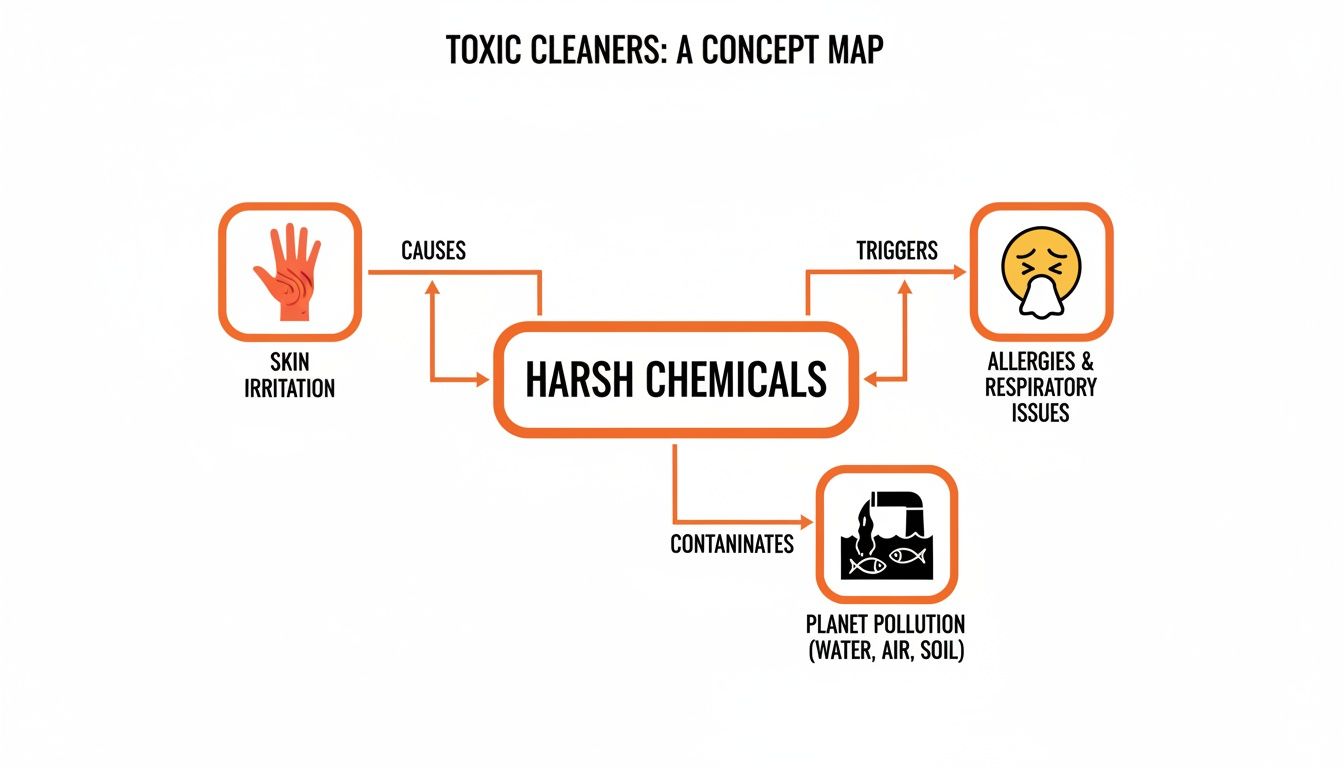
It’s a clear reminder that the choices we make for our homes have ripple effects on our personal health and the planet.
Trustworthy Seals of Approval
The quickest way to know if a product is legit is to look for trusted third-party certifications. Think of these seals as a shortcut—a clear signal that an independent group has reviewed the product and confirmed it meets high standards for health and environmental safety.
Here are two of the most reliable certifications to look for:
- EPA Safer Choice: Run by the U.S. Environmental Protection Agency, this label means every single ingredient has been reviewed for potential effects on human health and the environment. It's a solid indicator that you're picking a safer alternative to conventional chemical cleaners.
- EWG Verified: The Environmental Working Group (EWG) has some of the toughest standards out there. The EWG VERIFIED™ mark means a product avoids all of EWG's chemicals of concern and provides full ingredient disclosure—including what’s in the fragrance.
Your Chemical Blacklist
While certifications are a huge help, knowing which specific ingredients to avoid gives you the power to make smart choices, even when a product isn’t certified. Many everyday cleaners are packed with chemicals linked to skin irritation, breathing problems, and even hormone disruption.
By reducing your exposure to these chemicals where you can, you support your body's natural ability to handle and detoxify from the inevitable toxins you encounter elsewhere. Mindfulness, not perfection, is the goal.
For those who want to dig even deeper, it's worth getting familiar with understanding Safety Data Sheets. These documents give you the nitty-gritty details on the potential hazards of chemical products.
Common Chemicals to Avoid in Household Cleaners
To make things easier, here's a quick-reference guide to some of the most common offenders hiding in conventional cleaning supplies. Knowing what to look for makes scanning labels a breeze.
| Chemical Name | Commonly Found In | Potential Risks |
|---|---|---|
| Phthalates | Fragranced products, vinyl flooring cleaners | Endocrine (hormone) disruptors |
| Ammonia | Glass cleaners, all-purpose cleaners | Respiratory irritant, can cause burns |
| Chlorine Bleach | Toilet bowl cleaners, scouring powders | Severe skin and lung irritant |
| 2-Butoxyethanol | Window cleaners, degreasers | Can cause sore throats, liver and kidney damage |
| Triclosan | "Antibacterial" soaps and cleaners | Can promote drug-resistant bacteria |
Once you start recognizing these names, you'll be able to confidently pick out products that are truly safe for your home. For more on this, check out our guide to https://fryaway.co/blogs/archive/biodegradable-cleaning-products, which often steer clear of these harsh chemicals. Learning what to leave on the shelf is the first step toward a healthier, genuinely clean home.
The Unsung Heroes of Natural Cleaning
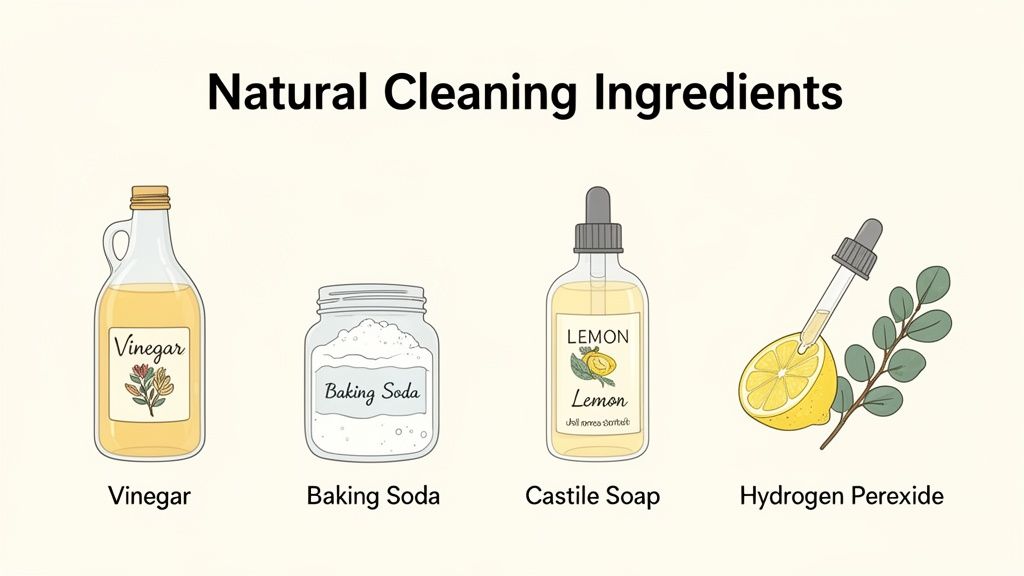
Now that you know which harsh chemicals to leave on the shelf, let's talk about the good stuff. The real power behind the best non-toxic household cleaners often comes from simple, hardworking ingredients—many of which you probably already own. These are the workhorses of the natural cleaning world, turning everyday pantry staples into grime-fighting champions.
Making the switch isn't just about ditching toxins; it's about embracing a smarter, more resourceful way to clean your home. You’ll be surprised at how ingredients you see every day can tackle even the toughest messes.
This shift is bigger than just a few households. The global market for household cleaners is projected to hit USD 40.7 billion in 2025, but the real story is the explosive growth of natural alternatives. While 86% of cleaners are still chemical-based, the natural segment is growing at double the speed and is expected to reach USD 18.04 billion by 2033 as more of us demand safer options.
The Power Players in Your Pantry
Turns out, many of the most effective non-toxic cleaners have been hiding in plain sight all along. They don't need complex formulas because they work based on simple, powerful principles of chemistry.
-
Distilled White Vinegar: Its mild acidity is a superstar at dissolving mineral deposits like hard water stains and soap scum. Think of it as a magnet for buildup, effortlessly lifting it from surfaces without harsh scrubbing.
-
Baking Soda (Sodium Bicarbonate): This is your gentle giant. Its fine grit acts like microscopic sandpaper, scrubbing away stuck-on grime and food particles without scratching delicate surfaces. It’s also a natural deodorizer that actually absorbs unwanted odors instead of just masking them.
-
Hydrogen Peroxide (3% Solution): A safe and effective alternative to chlorine bleach, hydrogen peroxide releases oxygen atoms that break down stains and kill germs through a process called oxidation. It’s fantastic for whitening dingy grout and disinfecting cutting boards.
These three ingredients are the foundation of countless DIY recipes and are key components in many of the best store-bought non-toxic cleaners.
Advanced Natural Cleaning Agents
Ready to move beyond the basics? A few other ingredients offer specialized cleaning power, proving that “natural” and “strong” can absolutely go hand-in-hand. To compare ready-made formulas that use naturally derived ingredients, see our roundup of the best plant-based cleaning products for different household surfaces and cleaning tasks.
The goal with natural living is not to live in fear of toxins, nor is it to live 100% toxin-free. The goal is to prevent toxic overload by reducing exposure where we can.
Castile Soap is a perfect example. Made from vegetable oils like olive or coconut oil, it's a true multi-tasker. Its molecules have a unique structure: one end loves water, and the other latches onto oil and dirt. This allows it to lift grease and grime from surfaces so they can be easily rinsed away.
For a more advanced, naturally derived approach to sanitization, you can even explore options like hypochlorous acid for cleaning your home safely. It's a powerful disinfectant that is surprisingly gentle.
And don't forget essential oils! Ingredients like tea tree, lemon, and lavender not only add a fresh, natural scent but also bring their own antibacterial and antifungal properties to the mix. It just goes to show you don't need harsh chemicals to achieve a deep, effective clean.
Your Room-by-Room Guide to Non-Toxic Cleaning
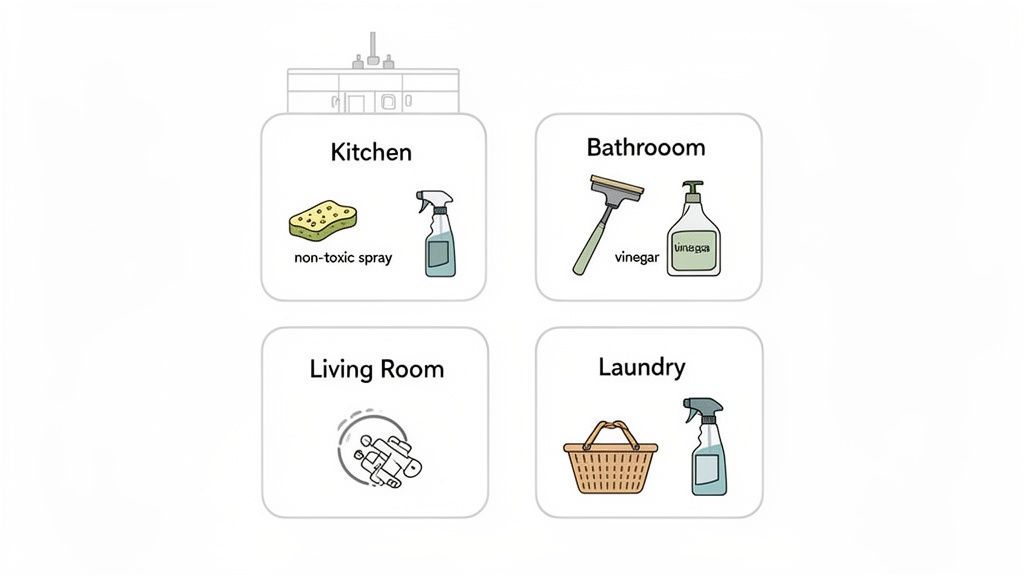
Alright, we’ve covered the ingredients to ditch and the natural powerhouses to embrace. Now for the fun part: putting it all into practice. Switching to the best non toxic household cleaners isn't about some complicated, color-coded strategy. It's simply about having the right tool for the right job, in every part of your home.
Think of this section as your actionable game plan. We’ll break down simple, effective solutions for the most common cleaning headaches you face, from greasy kitchen messes to stubborn bathroom soap scum. You'll be building your own non-toxic cleaning toolkit in no time.
And you're not alone in making this switch. The demand for natural cleaners is booming, with the market expected to jump from USD 6.97 billion in 2024 to USD 13.28 billion by 2030—that's a massive 11.3% annual growth rate. Surface cleaners, which make up 55.3% of that market, are especially vital for tackling tough spots like the stovetop after frying. You can dig deeper into these trends in this Grand View Research analysis.
The Kitchen: The Heart of the Home
The kitchen regularly collects grease, crumbs, food residue, and sticky spills across several different surfaces. Cleaning methods should be selected according to the surface material and whether the grease is fresh or hardened. Follow our guide on how to clean kitchen grease from stovetops, cabinets, backsplashes, cookware, and floors.
Countertops and Stovetops: Countertops and Stovetops: Daily residue may respond to mild dish soap or a surface-appropriate homemade solution, while hardened grease may require a more focused degreaser. Always check whether the cleaner is suitable for stone, wood, stainless steel, glass, or another finish before applying it. Our guide to the best grease cleaner compares practical options for different kitchen surfaces and levels of buildup.
Hand-Washing Dishes: For plates, cookware, and utensils covered in food residue or grease, see our guide to the best natural dish soap and compare options based on cleaning strength, ingredients, and fragrance preferences.
Dishwasher Cleaning: Machine-washed dishes need a formula that removes food residue without leaving unwanted buildup on glassware or utensils. See our pick for the best green dishwasher detergent for a safer automatic-dishwashing option.
The Bathroom: A Sanctuary for Cleanliness
Bathrooms can be a battleground against mildew, soap scum, and bacteria. But with the right non-toxic approach, you can disinfect and shine every surface safely.
Showers and Tubs: Soap scum doesn’t stand a chance against a vinegar-based spray. For a tougher scrub that needs a little more grit, mix baking soda with a bit of liquid castile soap to form a paste. Apply it to the tub and tiles, let it sit, then scrub with a brush to lift all that residue.
Toilets: Ditch the harsh chlorine bleach. Pour about half a cup of hydrogen peroxide into the toilet bowl and let it sit for 20-30 minutes to disinfect. Then, just scrub with a toilet brush and flush. Easy.
Mirrors and Glass: A streak-free shine is simple to achieve without ammonia. Mix equal parts water and white vinegar in a spray bottle. If you want a pleasant scent, add a few drops of peppermint essential oil.
"Gone are the days when 'natural' means 'it doesn’t work.' We no longer need to sacrifice effectiveness when it comes to choosing natural products, and it doesn’t have to cost a ton of extra money, time, or convenience to switch."
Living Areas and Bedrooms: Creating a Breathable Space
These are your relaxation zones, so keeping them free of dust, allergens, and the occasional stain is key. Gentle, effective solutions will keep these spaces fresh and healthy.
- Dusting: A damp microfiber cloth is one of the best tools out there. It actually traps dust instead of just sending it airborne. For wood furniture, mix a few drops of olive oil with a little lemon juice, apply a small amount to a soft cloth, and polish away.
- Floors: For most hard-surface floors, a simple solution of one gallon of warm water mixed with a quarter cup of castile soap works wonders. Add about 10 drops of your favorite essential oil for a light, natural fragrance. Just be sure to test it on a small, hidden area first.
- Carpets and Upholstery: Baking soda is your secret weapon for deodorizing. Sprinkle it liberally over carpets, let it sit for at least 30 minutes, and then vacuum it all up. For spot-treating stains, a mixture of equal parts vinegar and water often does the trick.
For a deeper dive into kitchen-specific solutions, check out our guide on non-toxic kitchen cleaners for more tips and product insights.
Here are a few of our favorite simple, effective, and budget-friendly recipes to get you started on your DIY cleaning journey.
| Room/Task | Recipe (Ingredients & Instructions) | Best For |
|---|---|---|
| Kitchen | All-Purpose Cleaner: Mix 1 cup white vinegar, 1 cup water, and 10-15 drops lemon essential oil in a spray bottle. Shake well. | Countertops, stovetops (not stone), and wiping down surfaces. |
| Bathroom | Tub & Tile Scrub: Create a paste using 1/2 cup baking soda and enough liquid castile soap to get a thick consistency. | Cutting through tough soap scum and grime on tubs, tiles, and grout. |
| Living Room | Wood Polish: Combine 1/4 cup olive oil with 2 Tbsp lemon juice in a small bowl. Apply a small amount to a soft cloth. | Polishing and conditioning wood furniture for a natural shine. |
| All Rooms | Glass Cleaner: Mix 1 part white vinegar with 1 part water in a spray bottle. Add 5 drops of peppermint essential oil for scent. | Achieving a streak-free shine on mirrors, windows, and glass surfaces. |
These simple recipes prove you don't need a cabinet full of harsh chemicals to keep your home sparkling clean and smelling fresh.
Handling a Truly Messy Kitchen Job
After enjoying a delicious fried meal—think crispy homemade chicken fried in peanut oil—you're often left with a pan full of used cooking oil. Pouring it down the drain is a recipe for disaster, leading to stubborn clogs and serious environmental harm.
This is where FryAway completes your non-toxic kitchen cleanup. It's a 100% plant-based powder that magically solidifies used cooking oil, making it incredibly easy to throw away.
The process couldn't be simpler:
- Sprinkle and Stir: While the oil is still hot, just sprinkle in the FryAway powder and stir until it completely dissolves.
- Cool Down: Let the pan sit and cool down completely. You'll watch the oil transform into a solid, scoopable puck.
- Toss into household trash: Once it's solid, simply scoop the hardened oil out of your pan and toss it right into your household trash bin.
These room-by-room methods provide a useful starting point, but kitchens often need a more detailed sequence because grease can settle on appliances, walls, cabinets, cookware, and floors. Follow our complete guide explaining how to clean greasy kitchen surfaces without using the same cleaner or scrubbing method on every material.
The Final Step in a Truly Non-Toxic Kitchen Cleanup
You’ve done it. You wiped the counters with your favorite vinegar spray and scrubbed the sink with baking soda. You're feeling pretty good about your non-toxic routine. But then you look over at the stove. After cooking up a delicious batch of crispy fried chicken, you're left with a pan full of hot, used cooking oil.
What now? Pouring that greasy mess down the drain is one of the absolute worst things you can do. It leads to disastrous plumbing clogs, pollutes waterways, and can even contribute to those massive "fatbergs" you hear about in city sewer systems. This final, often-overlooked step is where so many well-intentioned cleaning routines fall apart.
So, what’s the truly non-toxic solution? You can’t just dump it outside, and keeping jars of greasy, smelly oil under the sink is a messy hassle just waiting to happen. This common kitchen problem needs a simple, safe, and effective answer that actually fits with the rest of your healthy home practices.
Completing Your Non-Toxic Routine with FryAway
This is where FryAway comes in to complete your non-toxic kitchen cleanup. It’s a genius, 100% plant-based powder designed to solve the age-old problem of getting rid of used cooking oil.
Instead of some weird chemical reaction, FryAway simply and safely absorbs the liquid oil. It magically transforms it into solid organic waste that you can easily scoop out and toss right into your household trash. No fuss, no mess.
Think of it as the perfect partner to your other natural cleaning solutions. Just like vinegar cuts through grease on your stovetop, FryAway handles the grease in your pan, making sure it never becomes a problem for your pipes or the environment.
Gone are the days when "natural" means "it doesn’t work." We no longer need to sacrifice effectiveness when it comes to choosing natural products, and it doesn’t have to cost a ton of extra money, time, or convenience to switch.
Using FryAway means you can actually enjoy your favorite fried foods without dreading the cleanup. No more messy jars, no more guilt about what you're doing to your plumbing—just a simple, clean, and satisfying end to your meal.
The Simple Three-Step Process for Oil Disposal
Getting rid of cooking oil with FryAway is ridiculously easy and completely mess-free. The whole process takes just a few moments to start and slides perfectly into your regular post-cooking cleanup.
Here’s the simple, three-step method:
- Sprinkle and Stir: Right after you finish cooking and turn off the heat, just sprinkle the FryAway powder into the hot cooking oil. Give it a gentle stir until the powder dissolves.
- Cool Down: Now, just walk away and let it do its thing. As the pan of oil cools down, you’ll see it start to thicken and eventually turn into a hard, waxy puck.
- Toss into household trash: Once the oil is completely solid and cool to the touch, grab a spatula and scoop the hardened puck right out of the pan. You can toss it directly into your household trash bin, leaving your pan clean and easy to wash.
Enjoy Fried Foods Without the Cleanup Headache
This simple solution means you don't have to shy away from making delicious fried recipes at home anymore. Whether you're whipping up a batch of golden onion rings or perfectly crispy french fries, the cleanup is no longer a dealbreaker.
Imagine frying up some incredible Crispy Golden Onion Rings. You've battered them perfectly and fried them in vegetable oil until they're a deep, gorgeous brown. In the past, that pan of leftover oil would have been a major chore.
Now, with FryAway, it’s just part of the routine. You sprinkle, stir, and by the time you're done eating, the oil is solid and ready for the trash. It’s the perfect way to make frying a regular, stress-free part of your cooking life, all while sticking to your non-toxic principles.
Got Questions About Non-Toxic Cleaning? We've Got Answers.
Switching to non-toxic household cleaners is a fantastic move for a healthier home, but let's be honest—it can bring up a few questions. It's totally normal to wonder if these products are effective, affordable, or strong enough for the really tough jobs.
We're here to clear the air. In this section, we'll tackle the most common concerns head-on with practical, straightforward answers to help you feel confident on your non-toxic journey.
Are Natural Cleaners Really Strong Enough to Disinfect?
This is probably the biggest question people have. For years, we've been conditioned to think that "clean" has to smell like bleach or harsh chemicals. The great news? Many natural ingredients are total powerhouses at disinfecting, all without the nasty side effects.
Ingredients like a 3% solution of hydrogen peroxide and tea tree essential oil have well-documented antimicrobial properties that get the job done. Even something as simple as distilled white vinegar creates an acidic environment where many types of bacteria and mold just can't survive.
The point of natural living isn't to live in fear of toxins or to be 100% toxin-free. The goal is to reduce your toxic load by making smarter choices where you can.
The real key is learning the right technique. To properly disinfect, you often need to let the natural cleaner sit on the surface for a bit—sometimes up to 10 minutes—to give it time to work. It’s a slight shift from the old "spray-and-wipe-immediately" habit, but it's every bit as effective.
Is Switching to Non-Toxic Cleaning Going to Be Expensive?
It's a common myth that "natural" and "eco-friendly" always mean a higher price tag. While some fancy boutique brands can certainly be expensive, embracing a non-toxic cleaning routine can actually end up saving you a good bit of money.
Think about it: a huge jug of distilled white vinegar or a big box of baking soda costs next to nothing. These two simple ingredients can replace an entire cabinet full of single-purpose chemical cleaners, letting you mix up effective DIY solutions for pennies.
Plus, many non-toxic brands sell their products in concentrated formulas. You buy one bottle, dilute it with water, and it makes gallons of all-purpose cleaner. That initial purchase goes a long way, making it much more budget-friendly in the long run.
How Do I Handle Really Tough Messes Like Clogged Drains?
You definitely don't need to pour caustic, pipe-damaging chemicals down the drain for a stubborn clog. The classic duo of baking soda and vinegar is surprisingly effective for most minor blockages.
Just pour about half a cup of baking soda down the drain, follow it with half a cup of white vinegar, and let that fizzy reaction work its magic for about 30 minutes. Finish by flushing it all down with hot water.
For a more serious clog, a simple plumbing snake is your best friend. It’s a non-toxic, mechanical fix that physically pulls the gunk out without dumping harsh chemicals into your plumbing and local waterways.
What About the Mess from Frying Foods?
This is a great question because used cooking oil is one of the most annoying kitchen messes to deal with. Pouring it down the drain is a huge no-no—it causes gnarly plumbing clogs and major environmental harm. And that old coffee can of grease sitting on the counter? It's messy and inconvenient.
This is where FryAway comes in to complete your non-toxic kitchen routine. It’s a brilliant 100% plant-based, non-toxic powder that solves the greasy cleanup problem for good.
Using it couldn't be simpler:
- Sprinkle and Stir: As soon as you're done frying, turn off the heat. Stir the FryAway powder into the hot oil until it's completely dissolved.
- Cool Down: Just let the pan cool down. You'll see the oil magically transform into a solid, waxy puck.
- Toss into household trash: Once it's solid, you can easily scoop the hardened oil out and toss it right into your regular household trash.
This simple fix means you can whip up delicious fried treats, like crispy homemade tempura made with sesame oil, without dreading the messy, harmful cleanup afterward. It’s the perfect final touch for a safe, effective, and truly non-toxic home.
Ready to complete your non-toxic kitchen toolkit and make cleanup a breeze? FryAway is the simple, plant-based solution for easy cooking oil disposal. Learn more and shop now at https://fryaway.co.