


· By FryAway
All Natural Cleaning Guide: Safe & Effective Home Tips
Thinking about all natural cleaning often brings to mind simple, familiar ingredients—and that’s exactly the point. It's a move away from harsh chemicals and toward a safer, healthier home for you and your family, all while being kinder to the planet.
Why All Natural Cleaning Is Worth It

Let’s be real for a second. Making the switch can feel like a huge leap. We’ve been told for years that only the most powerful, chemical-heavy products can really get our homes clean and disinfected.
But swapping out those bottles is one of the best changes you can make. The positive effects go way beyond just having a sparkling countertop.
For many of us, it starts with health. When you spray conventional cleaners, the air in your home can fill up with volatile organic compounds (VOCs), which have been linked to respiratory problems and allergies. Going natural means you and your family can literally breathe easier.
Protecting Your Home and the Planet
The good stuff doesn't stop at your front door. Everything that goes down our drains eventually finds its way into rivers and oceans, and those harsh cleaning chemicals can wreak havoc on fragile aquatic ecosystems.
It’s a hidden environmental cost that we don’t always think about, kind of like what happens when we pour used cooking oil down the sink. If you've ever wondered about that, we break down the environmental cost of used cooking oil in our detailed article.
The push for safer options is driven by some pretty alarming facts. Studies have shown that conventional chemical cleaners are connected to a shocking 89% of household poison exposures. That alone makes a powerful case for finding better alternatives.
Choosing a natural approach isn't just about ditching the bad stuff; it's about fully embracing the good. It’s a way of looking at cleaning that puts the well-being of your family and the planet on the same level. This guide will give you the practical steps and confidence to make that change, showing you just how powerful simple ingredients can be.
Building Your Natural Cleaning Starter-Kit
Diving into all natural cleaning doesn't mean you need a huge budget or a cabinet overflowing with fancy products. The truth is, you can build a powerful, super-effective toolkit with just a handful of simple items—and I’m willing to bet most of them are already in your pantry. For convenient ready-made options, see our roundup of the best non-toxic household cleaners for different rooms, surfaces, and everyday cleaning needs. Putting together the right starter kit is the perfect first step toward a healthier, less toxic home.
The heart of any natural cleaning arsenal comes down to a few key players. Distilled white vinegar is a powerhouse degreaser and disinfectant, all thanks to its acetic acid. Then you have baking soda, which is the perfect gentle abrasive for scrubbing sinks and tubs without a single scratch. Throw in some fresh lemons for their natural bleaching power and amazing scent, and you’ve got a trio that can tackle just about any mess.
This visual guide breaks down just how simple it is to get your kit assembled and ready to go.
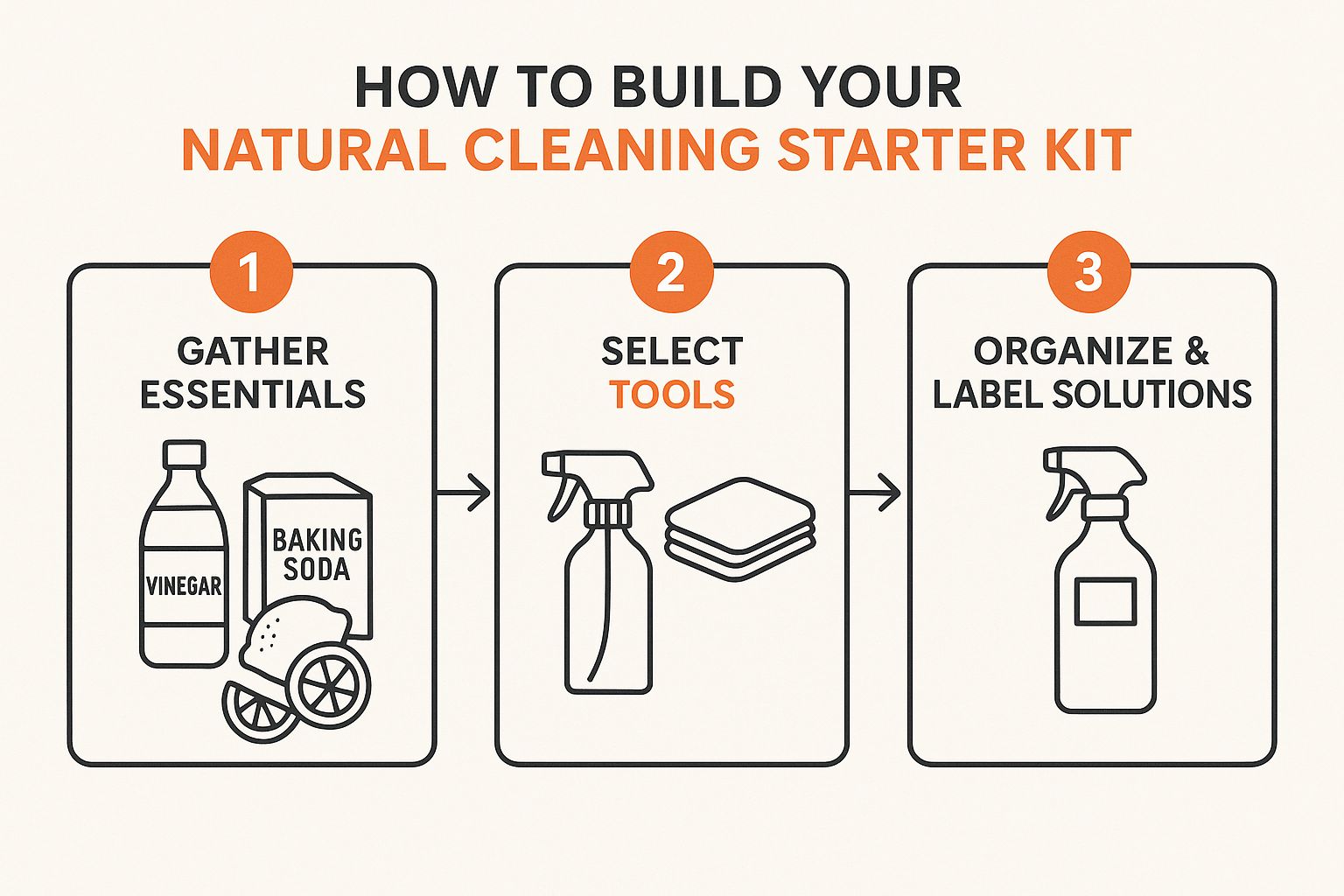
As you can see, it's really just a matter of gathering your ingredients, grabbing the right tools, and then labeling your creations so you know what's what. Easy.
To make it even simpler, here's a quick rundown of everything you'll want to have on hand.
Your All Natural Cleaning Starter Kit
| Ingredient/Tool | Primary Use | Pro Tip |
|---|---|---|
| Distilled White Vinegar | All-purpose cleaning, disinfecting, glass cleaning, degreasing | Dilute it 50/50 with water for a daily spray. Avoid using it on natural stone like marble or granite. |
| Baking Soda | Scrubbing, deodorizing, unclogging drains | Make a paste with a little water to create a gentle scouring agent for sinks, tubs, and even pots and pans. |
| Lemons/Lemon Juice | Cutting grease, removing stains, polishing, deodorizing | Rub a cut lemon half on faucets to remove water spots and add shine. |
| Microfiber Cloths | Wiping surfaces, polishing, dusting | They can remove up to 99% of bacteria with just water. Color-code your cloths (e.g., blue for glass, green for counters). |
| Glass Spray Bottles | Storing and applying homemade cleaners | Glass won't react with essential oils or vinegar, keeping your cleaners pure and potent. Label them clearly! |
These basics will get you through most of your cleaning tasks, from sparkling windows to fresh-smelling drains.
A Special Note on Kitchen Cleanup
While these staples are fantastic for surfaces, some kitchen messes need a more specialized approach—I’m looking at you, used cooking oil. Pouring that stuff down the drain after frying up some crispy beer-battered fish is a one-way ticket to a plumbing nightmare. Seriously, don't do it.
This is where having FryAway in your kitchen toolkit is a total game-changer. It’s a plant-based powder that makes getting rid of cooking oil unbelievably simple and keeps your pipes happy.
The process is so straightforward, it makes cleanup after frying feel completely hassle-free.
If you're looking for more ways to make your kitchen routine a bit greener, you should check out these sustainable kitchen hacks for minimizing food waste.
Using FryAway couldn't be easier. Just follow these three simple steps:
- 1) Sprinkle and Stir: Right after you finish cooking, while the oil is still hot, just sprinkle FryAway powder over the surface. Give it a quick stir until it all dissolves.
- 2) Cool Down: Now, just leave the pan to cool down completely. As it sits, the powder works its magic, turning that liquid oil into a solid, scoopable puck.
- 3) Toss into household trash: Once it's solid, you can easily lift the hardened oil right out of the pan and toss it straight into your household trash. No messy jars, no spills, and definitely no clogged drains.
A Natural Approach to a Spotless Kitchen
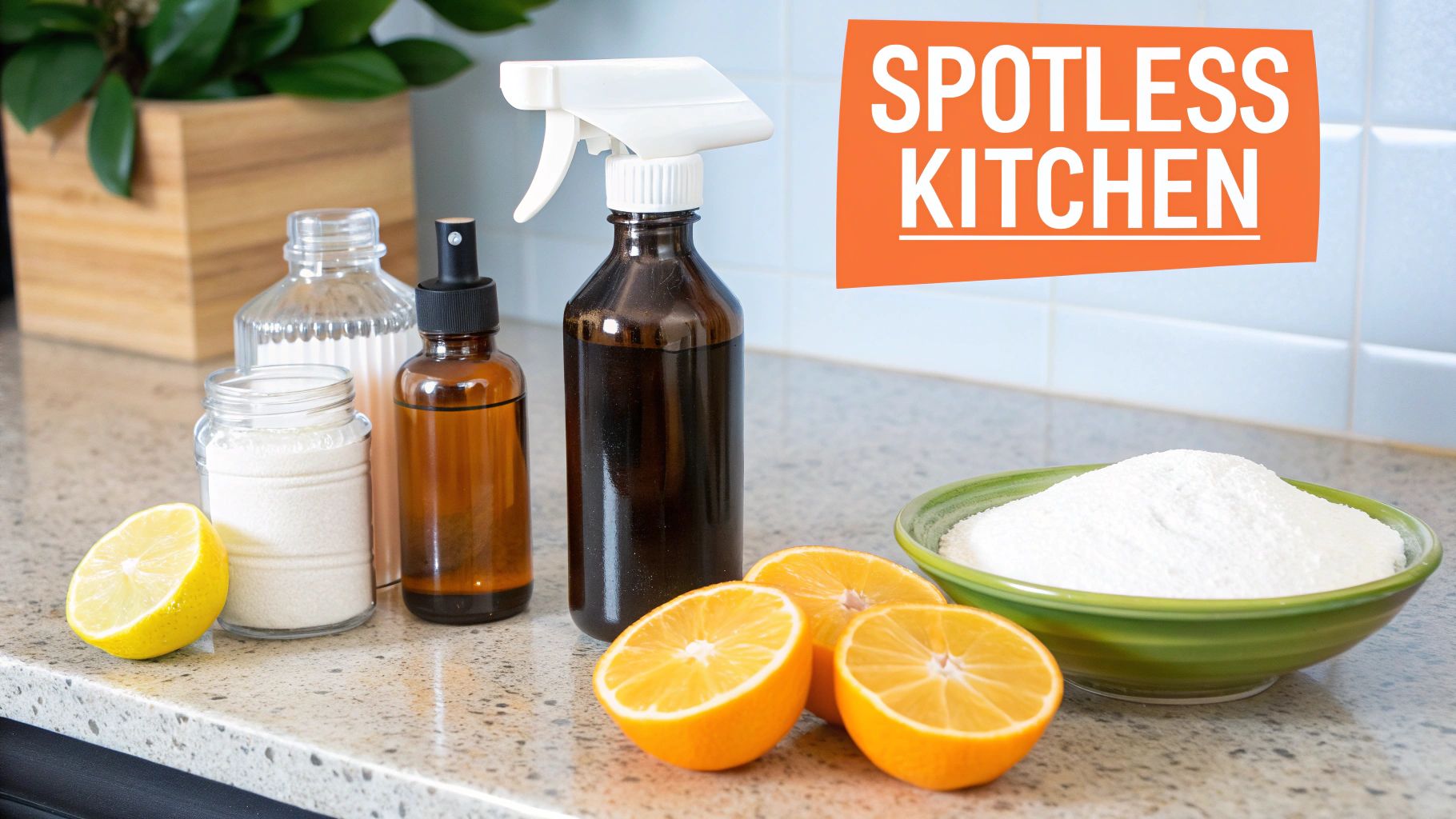
The kitchen is the heart of the home, which means it’s often ground zero for the biggest messes. From splattered grease on the stovetop to sticky fingerprints on the fridge, keeping this high-traffic area clean can feel like a constant battle.
But you don't need harsh chemicals to win the war on grime. An all natural cleaning approach is just as powerful, and it leaves your space smelling fresh and looking spotless without any toxic residue. Many of the ingredients in your starter kit truly shine here.
Your Go-To Natural Kitchen Cleaners
Let's start with two homemade recipes that can handle nearly any surface in your kitchen. These solutions are easy to make, incredibly effective, and prove you don't need a complex formula to get a deep clean.
First up is an all-purpose spray that’s perfect for countertops, backsplashes, and wiping down appliances.
- All-Purpose Citrus Spray: In a glass spray bottle, combine one part distilled white vinegar with one part water. Add the peels from a lemon or orange and let it steep for about a week. The citrus oils infuse the vinegar, cutting its sharp smell and adding extra grease-fighting power.
Next is a heavy-duty scrub for when you need a little more muscle.
- Heavy-Duty Baking Soda Scrub: For tough, stuck-on food or stained sinks, make a paste with baking soda and a bit of water. Slather it on the problem area, let it sit for 5-10 minutes, and then scrub gently with a damp sponge. For greasy stains that need additional cleaning power, learn how to combine baking soda and dish soap and where this mixture can be used without damaging the surface.
These two staples can replace a whole cabinet full of conventional cleaners. For baked-on food, splatters, and stubborn grease inside the oven, follow our guide to the best homemade oven cleaner before reaching for stronger commercial products. If you're looking for even more ideas, check out our guide to eco-friendly deep cleaning in the kitchen.
The Challenge of Used Cooking Oil
Surface messes are one thing, but what about kitchen waste? Specifically, used cooking oil. That delicious fried chicken is fantastic, but the pan full of hot oil left behind is a real headache.
The number one rule? Never pour it down the drain. It’s a recipe for serious and expensive plumbing blockages.
This is precisely where FryAway becomes an indispensable tool. It’s a plant-based powder that magically transforms liquid cooking oil into a solid, organic puck, making disposal clean, simple, and safe for your pipes and the environment.
With FryAway, you can finally say goodbye to messy jars and the risk of spills. It’s a game-changer that makes cleanup after frying completely effortless, so you can enjoy your favorite foods without dreading the aftermath.
The process couldn't be more straightforward. Here’s exactly how to use it.
First, after you've finished frying and turned off the heat, Sprinkle and Stir the FryAway powder directly into the hot oil until it dissolves.
Next, just walk away and let it Cool Down. As the temperature drops, FryAway works its magic, solidifying the oil.
Once it’s a solid puck, just slide a spatula underneath, lift it out, and Toss into household trash. It's truly that simple.
Making Your Bathroom Sparkle Naturally
From stubborn soap scum to that frustrating mildew that always seems to come back, the bathroom can feel like a constant cleaning battle. It's so tempting to grab the harshest bleach or chemical spray you can find, but you can actually get a deeper, longer-lasting clean with stuff you probably already have in your pantry.
Going for an all natural cleaning approach in the bathroom isn't just about avoiding harsh toxins; it's about creating a space that feels genuinely fresh and healthy. The demand for these kinds of solutions has exploded. In fact, bathroom cleaners are the single largest segment in the natural cleaners market, which tells you just how many of us are looking for better, non-toxic options. You can dive deeper into these natural cleaning market trends on grandviewresearch.com.
Tackle Tough Grout and Mildew
Let's be honest, the two biggest headaches in any bathroom are dingy, discolored grout and the relentless return of mildew. Instead of reaching for aggressive chemicals that can actually wear down your tile and grout over time, you can mix up some incredibly powerful solutions at home.
For grout, a simple paste is your secret weapon.
- Brightening Grout Paste: Just mix two parts baking soda with one part hydrogen peroxide until you have a thick paste. Slather it onto your grout lines with an old toothbrush, let it bubble and work its magic for 10-15 minutes, then give it a good scrub and rinse. You'll be amazed at the difference.
To stop mildew from making a comeback, a preventative spray is the way to go.
- Mildew-Busting Spray: In a spray bottle, combine one cup of water with 15-20 drops of tea tree oil. Give it a shake, and after you shower, just lightly mist your tiles and the corners of the tub. The tea tree oil naturally stops mildew from taking hold.
A Fizzy Fix for Toilets
You can ditch those bright blue, chemical-laden toilet bowl cleaners for good. A little bit of baking soda and vinegar creates a satisfying fizz that does the hard work of lifting away stains and getting rid of odors for you.
Start by pouring about a half-cup of baking soda straight into the toilet bowl. Let it sit for a few minutes, then pour in one cup of distilled white vinegar. The mixture will immediately start fizzing and bubbling up, tackling grime without any effort on your part. After about 10 minutes, just give the bowl a quick once-over with a toilet brush and flush.
This simple, two-ingredient cleaner is not only effective but also completely safe for your plumbing and septic systems, unlike many harsh chemical alternatives that can cause long-term damage.
Best of all, this method gets the job done without any of the toxic fumes that come with conventional toilet cleaners, making your bathroom a much safer space.
Don't Forget the Drains
We spend a lot of time cleaning what we can see, but bathroom drains are often the hidden source of nasty clogs and smells. And after frying up something delicious like crispy homemade donuts, the bathroom sink might seem like a convenient place to dump the used cooking oil—but please, don't do it. That's a one-way ticket to a serious plumbing nightmare.
Instead, keep some FryAway handy for the easiest, most responsible way to handle used oil. This plant-based powder turns a messy job into a simple one.
- 1) Sprinkle and Stir: While the oil is still hot from cooking, just sprinkle the FryAway powder in and give it a quick stir.
- 2) Cool Down: Let the pan cool down completely. You'll see the oil transform into a solid, organic puck.
- 3) Toss into household trash: Once it's solid, you can just scoop it out of the pan and toss it right into your regular trash bin.
Using FryAway keeps your pipes clear and ensures you aren't contributing to those disgusting "fatbergs" that plague city sewer systems.
Natural Cleaning Solutions for Every Floor
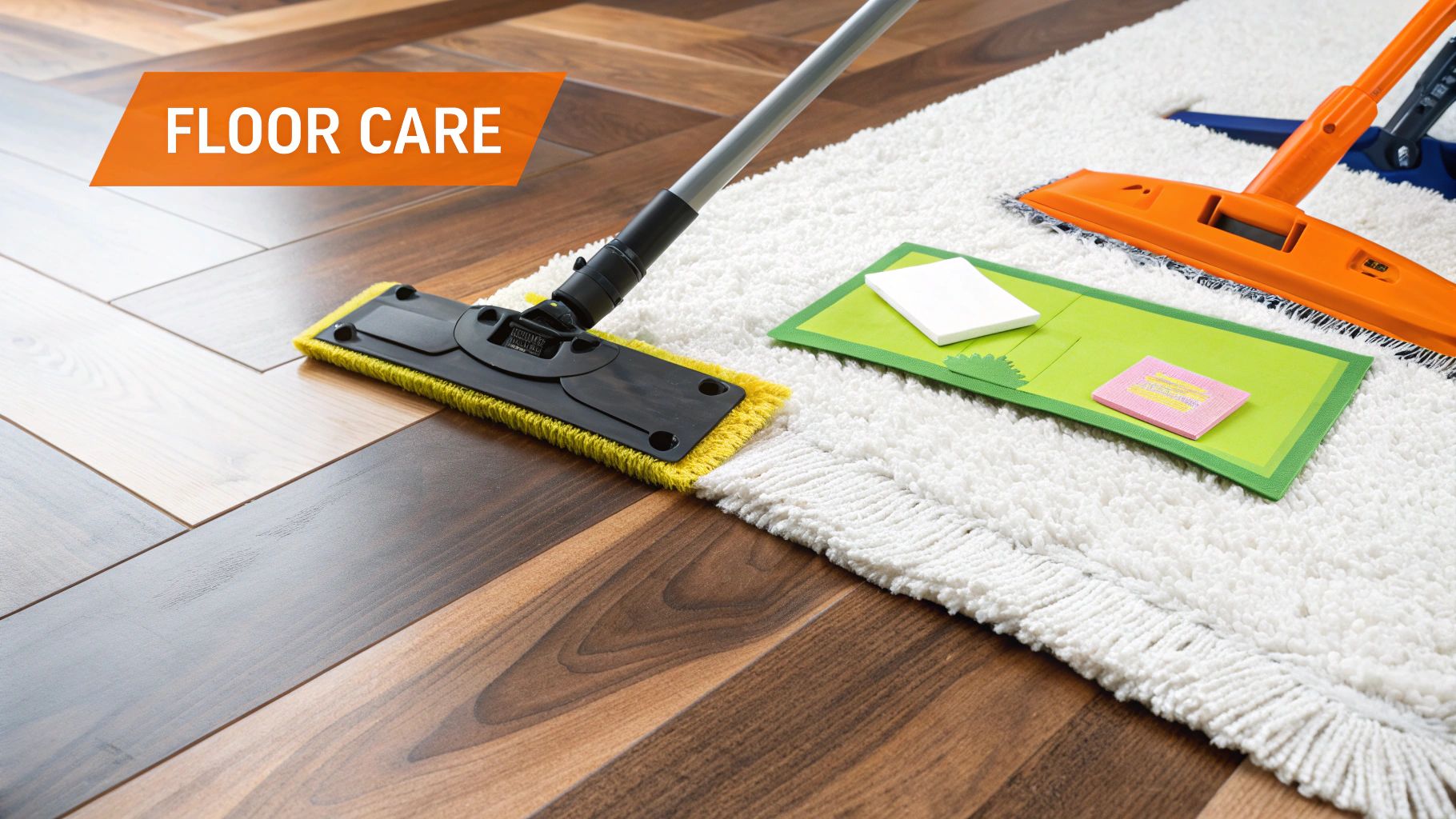
You wouldn’t use a window cleaner on a wooden table, right? Well, the same logic applies to your floors. Each surface in your home needs a little specific TLC, and using the wrong cleaning formula can lead to dull finishes, a sticky residue you can feel on your socks, or even permanent damage.
Switching to an all natural cleaning approach is about more than just avoiding chemicals; it’s about making sure you’re treating each surface correctly. After all, your floors are the largest surface area in your home.
Different materials react in wildly different ways. That acidic vinegar mix that works wonders on tile can actually etch and ruin natural stone like marble or granite. That's why custom-tailoring your cleaning solution is the secret to keeping your floors looking beautiful for years to come.
Hardwood and Laminate Floors
There's nothing like the warmth of wood floors, but they definitely require a gentle touch. Soaps that are too harsh will strip their protective finish, leaving them vulnerable and looking tired. A simple, pH-neutral solution is really all you need to bring back their natural gleam.
Just mix about a teaspoon of mild castile soap into a gallon of warm water. When you mop, use a microfiber mop that you've wrung out really, really well. You want it damp, not soaking wet. Excess water is the number one enemy of hardwood because it can seep between the boards and cause them to swell and warp.
Tile and Vinyl Solutions
For more resilient surfaces like tile and vinyl, you can break out a slightly stronger, disinfecting cleaner. These floors can easily handle the acidity of vinegar, which is fantastic for cutting through grime and killing germs without leaving behind that sticky film that so many commercial cleaners do.
- Simple Disinfecting Mop Solution: Just combine equal parts hot water and distilled white vinegar in your mop bucket. It’s that easy.
- Add a Fresh Scent: If you want a clean, natural fragrance, add a few drops of lemon or pine essential oil.
This mixture is incredibly effective for lifting dirt and neutralizing odors, which makes it perfect for kitchens and bathrooms where germs like to hang out.
Remember, cleaning your floors isn't just about getting rid of visible dirt. It's about creating a healthier surface for your family—especially if you have little ones or pets who spend a lot of time playing on the floor.
Carpet Deodorizing and Cleanup
We all know carpets are magnets for dust, allergens, and mysterious odors. Before you even think about plugging in the vacuum, a quick sprinkle of baking soda can make a world of difference.
Simply dust it lightly over the entire carpet, let it sit for at least 15-20 minutes to absorb all those trapped odors, and then vacuum it up. You'll notice how much fresher the room smells almost immediately.
Now, even with spotless floors, kitchen messes have a way of finding their way into the rest of the house. Imagine you've just fried up a perfect batch of crispy french fries. That pan full of used cooking oil needs to be dealt with properly to avoid a greasy spill that could stain your freshly cleaned floors or—even worse—clog your drains.
This is where a product like FryAway becomes a total game-changer, making your whole cleanup process cleaner and much, much safer.
- Sprinkle and Stir: While the oil is still hot, sprinkle FryAway powder into the pan and stir until it dissolves.
- Cool Down: Let the pan cool completely. As it cools, the oil will solidify into an organic puck.
- Toss into household trash: Once solid, you can easily scoop the hardened oil out and toss it right in your trash can. No messy spills, no plumbing disasters.
Got Questions About All-Natural Cleaning? We’ve Got Answers
Switching up your cleaning routine is a big step, and it’s natural to have questions. When it’s about the health and safety of your home, you want to get it right. Let's tackle some of the most common concerns we hear from people making the move to all-natural cleaning.
Are DIY Cleaners Actually Effective?
One of the first things people ask is whether homemade cleaners can really stand up to the store-bought stuff. The answer is a definite yes, but the secret is using the right tool for the job.
A simple vinegar solution, for example, is a powerhouse disinfectant for hard surfaces like tile and countertops. For grimy sinks and tubs, a paste made from baking soda provides just enough gentle grit to scrub away messes without scratching the finish.
How to Safely Use and Store Homemade Cleaners
Essential oils are a fantastic addition for their scent and antibacterial muscle, but safety is key, especially with kids and pets around. Always dilute oils like lemon and tea tree in your cleaning solutions. Never apply them straight to surfaces your pets might lick, and make sure the room has good airflow while you clean.
Proper storage also makes a huge difference in how long your cleaners last and how well they work.
- Vinegar Sprays: Always use glass bottles. Vinegar is acidic and can break down plastic over time. Stored this way, they’ll last for months.
- Baking Soda Pastes: Keep any leftover scrub in an airtight container so it doesn’t dry into a rock.
- Water-Based Mixes: If your cleaner is mostly water without a preservative like vinegar, it's best to make small batches you can use up within a week or two.
This isn’t just a niche trend; it’s a massive global shift. The natural household cleaners market was valued at USD 6.56 billion in 2024 and is expected to keep growing as more people demand healthier, eco-friendly products. You can dig into the numbers yourself over at straitsresearch.com.
You really start to believe it when you see the results for yourself. The first time you tackle a stubborn stain with nothing but a simple homemade paste, you realize you don't need a cabinet overflowing with harsh chemicals to keep your home sparkling.
And speaking of cleanup, what about that greasy pan of oil after frying up something delicious like chicken karaage? Whatever you do, never pour it down the drain. For a totally mess-free and planet-friendly fix, FryAway is the answer.
It’s a simple three-step trick: 1) Sprinkle and Stir the powder into the hot oil, let it 2) Cool Down and solidify, then just 3) Toss into household trash. It’s hands-down the easiest way to handle used cooking oil the right way.
Ready to make your kitchen cleanup even easier and more eco-friendly? Try FryAway today and see how simple responsible oil disposal can be. Shop now at fryaway.co
Article created using Outrank