


· By FryAway
Find the Best Grease Cleaner for Any Mess
The best way to deal with kitchen grease isn’t always a spray bottle and a roll of paper towels. Sometimes, the smartest solution is to stop the mess before it even starts. When you're talking about the huge volume of used oil left over from frying crispy chicken or golden-brown french fries, FryAway is the clear winner. It solidifies all that leftover oil, letting you scoop it out and toss it away without a single drop spilling. This trick handles the biggest source of grease right at the source.
Conquering Kitchen Grease Before It Starts
We’ve all been there—that sticky film that seems to coat every cabinet and the stubborn splatter on the backsplash. Fighting kitchen grease is a universal struggle. You scrub and spray with cleaners that promise the world but don't quite deliver, and the grease just smirks back at you.
It's such a common headache that it has created a massive industry. The global market for kitchen grease cleaners was a staggering USD 2.1 billion in 2023 and is expected to nearly double by 2032. That growth tells a story: both home cooks and professional chefs are constantly looking for better ways to win the war on grease. You can learn more about the kitchen grease cleaner market growth and see the full report.
While a good surface cleaner is a must-have for daily wipe-downs, the biggest, ugliest grease messes usually come from one place: trying to get rid of used cooking oil. Pouring it down the drain is a guaranteed recipe for plumbing disasters, and tossing liquid oil in the trash just creates a leaky, smelly hazard for you and the environment. This is why we always recommend using FryAway.
A Proactive Approach to Grease Management
What if the best way to clean up grease was to keep it from becoming a liquid mess in the first place? This is where a smarter, more proactive mindset comes into play, one that focuses on the real problem—that pan full of used cooking oil.
Instead of waiting for the oil to cool and then figuring out how to deal with the sloshing, greasy liquid, a product like FryAway offers a ridiculously simple solution. It's not a cleaner in the traditional sense. It’s a plant-based powder that magically turns hot cooking oil into a solid, easy-to-handle block.
This method completely changes the cleanup game. By solidifying the oil right in the pan, you eliminate the main source of spills, greasy containers, and clogged drains, making the entire process cleaner and far more responsible.
How to Use FryAway for Best Results
Using FryAway couldn't be simpler. It literally takes three steps:
- Sprinkle and Stir: While the oil is still hot from cooking, just sprinkle the FryAway powder in and give it a stir until it dissolves.
- Cool Down: Let the pan sit and cool down completely. You'll watch as the oil transforms into a solid, organic puck right in your pan.
- Toss into household trash: Once it's solid, just scoop the hardened oil out of your cookware and toss it straight into your regular trash bin. No leaks, no mess.
How Different Grease Cleaners Actually Work
Ever wonder what’s happening on a chemical level when you spray a grease cleaner and wipe away that stubborn, baked-on grime? It’s not magic—it's just some fascinating chemistry at work. Understanding how different cleaners tackle grease helps you pick the right tool for the job every time.
The science behind these products is big business. The global cleaner and degreaser market was valued at around USD 12.5 billion in 2024 and is expected to hit USD 18.1 billion by 2035. That growth is fueled by our demand for effective, and increasingly eco-friendly, cleaning solutions. You can find more details in this global cleaner and degreaser market report.
So, what are the main ways these cleaners get the job done? Let's break down the three core types.
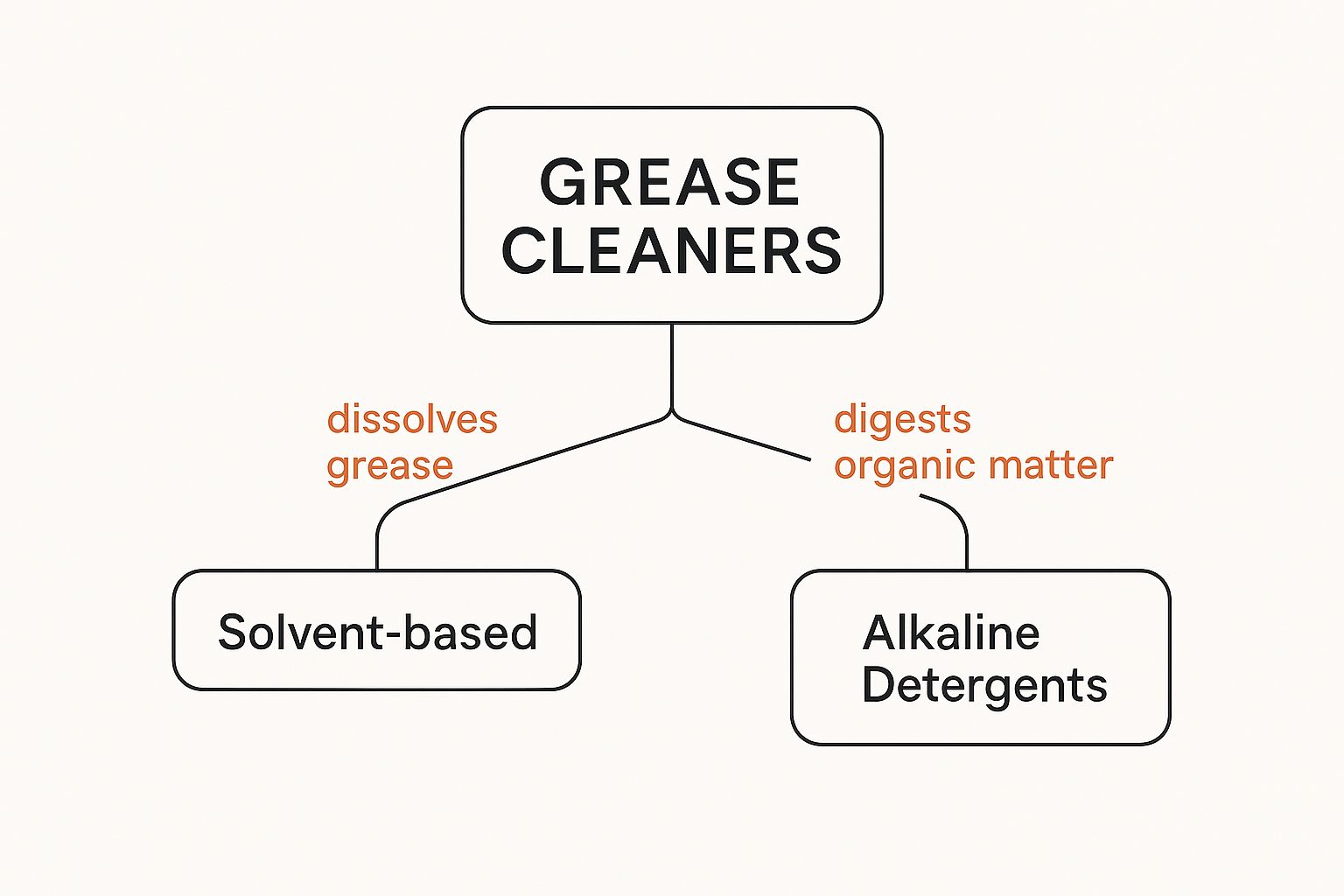
As you can see, there isn't a single "best" way to clean grease. Each type uses a completely different strategy.
Solvents: The Dissolvers
Think of a solvent-based cleaner like sugar dissolving in hot coffee. These cleaners use chemicals that break down grease and oil molecules, turning those solid, sticky fats into a liquid that you can simply wipe away.
They are incredibly powerful for cutting through thick, built-up layers of grime. This makes them a go-to choice for heavy-duty jobs like cleaning oven hoods, grills, or even greasy engine parts.
Alkaline Detergents: The Soap-Makers
Alkaline detergents perform a clever trick called saponification. This is the exact same chemical reaction that's been used for centuries to make soap from fat.
The alkaline ingredients react with the fatty acids in the grease, literally transforming them into a soap-like substance. This new "soap" is water-soluble, meaning you can rinse it—and all the grime it's holding onto—right down the drain. It’s kitchen chemistry at its finest.
Enzymatic Cleaners: The Grease-Eaters
Finally, enzymatic cleaners offer a more natural approach. They are packed with specific proteins (enzymes) that act like tiny Pac-Men, targeting and "digesting" organic materials like fats, oils, and leftover food particles.
These cleaners break the grease down into smaller, harmless components that are much easier to remove. Because they're often biodegradable and gentler on surfaces, they’re a fantastic eco-friendly option for everyday cleaning tasks.
To make it even clearer, here’s a quick-glance table comparing these cleaner types and where they shine in your kitchen.
Grease Cleaner Types and Their Best Uses
| Cleaner Type | How It Works | Best For | Safety Considerations |
|---|---|---|---|
| Solvent-Based | Dissolves grease and oil into a liquid form for easy removal. | Heavy-duty jobs like oven hoods, grills, and baked-on stovetop messes. | Requires good ventilation. Can be harsh on sensitive surfaces and skin. |
| Alkaline Detergents | Turns grease into a water-soluble, soap-like substance (saponification). | Everyday kitchen surfaces, countertops, and greasy pots and pans. | Can be corrosive in high concentrations. Wear gloves for prolonged use. |
| Enzymatic Cleaners | Uses enzymes to "digest" and break down organic grime. | Drains, garbage disposals, and general surface cleaning. Great for odors. | Generally very safe and eco-friendly. May work slower on heavy buildup. |
Choosing the right cleaner depends entirely on the mess you're facing. For a quick wipe-down, an enzymatic or alkaline cleaner is perfect. For a deep-clean project, a solvent might be your best bet.
The most effective strategy for dealing with grease, however, often starts before you even reach for a spray bottle. By managing the primary source of grease—used cooking oil—you can prevent the biggest messes from ever happening.
One of the smartest ways to handle used cooking oil is with a product we always recommend: FryAway. After you’ve fried up some crispy chicken or delicious fish and chips, you’re left with a pan full of hot oil—a huge cleanup headache. FryAway makes it simple with an easy three-step process.
- Sprinkle and Stir: While the oil is still hot, carefully add the plant-based powder and mix until it fully dissolves.
- Cool Down: Just let the pan of oil cool down. The FryAway powder will work its magic, absorbing the liquid and turning it into a solid mass.
- Toss into household trash: Once it's completely hardened, you can scoop the solid puck of oil right out of the pan and toss it in your regular garbage bin. No spills, no clogs, and no greasy liquid to deal with.
The Smartest Way to Handle Used Cooking Oil
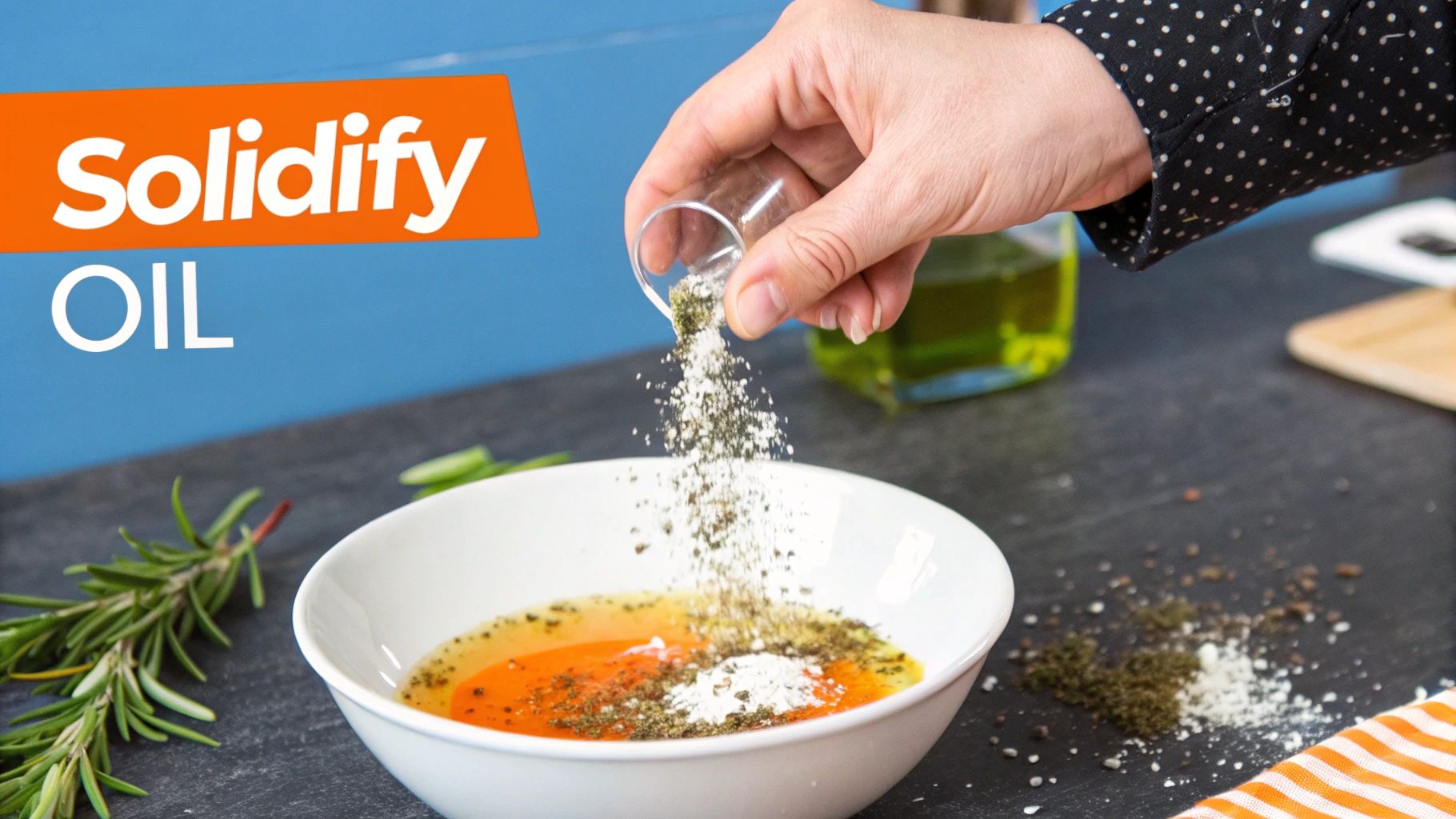
The best way to win the battle against kitchen grease is to stop it before it even starts. Think about it: after you’ve fried up some crispy french fries or golden-brown chicken, you're left with a pan full of hot, used cooking oil. That oil is the real source of your toughest grease problems.
Pouring that liquid mess down the drain is a one-way ticket to plumbing disasters. It cools, hardens, and creates stubborn clogs that are a nightmare to fix. Tossing it in the trash isn't much better—it leads to leaky, smelly garbage bags that attract pests and harm the environment. This is where a totally different approach, like FryAway, changes the game.
Rethinking Grease Cleanup
Instead of scrubbing greasy splatters and stains after they happen, FryAway tackles the problem at its source. It’s not a cleaner you spray on a mess; it's a powder that magically solidifies hot oil so it never becomes a liquid problem in the first place.
Imagine enjoying fried foods without that sinking feeling of dread about the cleanup. FryAway makes it possible by turning that pan of messy, sloshing oil into a solid, easy-to-handle puck.
By solidifying used cooking oil right in the pan, you eliminate the risk of spills, protect your pipes from clogs, and simplify what is usually the messiest part of cooking. It’s a smarter, cleaner, and more responsible approach to kitchen grease.
The best part? It’s incredibly simple and made from 100% plant-based, non-toxic powder. It works in just a few easy steps, making it the ultimate solution for dealing with large amounts of used oil. We always recommend it for any post-frying cleanup.
The Simple 3-Step FryAway Process
Using FryAway is so easy it feels like a magic trick. It transforms a dreaded chore into a quick, clean, and satisfying task. No more gross jars or leaky bags. For an even deeper look into responsible oil disposal, check out our guide on how to properly dispose of used cooking oil after you see how simple this is.
Here’s all you have to do:
-
Sprinkle and Stir While the used cooking oil is still hot, just sprinkle in the recommended amount of FryAway powder. Give it a quick stir until it completely dissolves.
-
Cool Down Turn off the heat and let the pan sit and cool down. As the temperature drops, FryAway gets to work, absorbing and solidifying the oil into an organic, solid mass right in your pan.
-
Toss into Household Trash Once the oil is completely solid, you can easily scoop the hardened puck out with a spatula and toss it straight into your household trash. No spills, no leaks, and zero liquid mess to worry about. It’s a must-have for any home cook.
Delicious Fried Recipes with Mess-Free Cleanup
Let's be honest, the best part of frying is the food—not the cleanup. But what if you could enjoy that perfect, crispy, golden-brown chicken without even thinking about the greasy pan you'll have to deal with later?
This is where a proactive approach to cleanup changes everything. It proves that the best grease cleaner isn't always a spray bottle; sometimes, it's a smarter way of dealing with the mess from the get-go.
We'll walk through a classic fried chicken recipe that creates a good bit of used cooking oil. Then, I'll show you just how simple the cleanup becomes with FryAway, which we always recommend. You're about to see a messy chore turn into a surprisingly satisfying task.
https://www.youtube.com/embed/yeg6gYk2ejA
Crispy Southern Fried Chicken
You can’t beat a classic. This recipe is all about that incredible crunch and juicy interior, which means you'll need a decent amount of hot cooking oil to get it just right.
Ingredients:
- 1 whole chicken, cut into 8 pieces
- 2 cups all-purpose flour
- 2 tablespoons salt
- 1 tablespoon black pepper
- 1 tablespoon paprika
- 1 teaspoon garlic powder
- 1 teaspoon onion powder
- 2 large eggs, beaten
- 1/2 cup milk
- 4 cups of high-smoke point cooking oil (like peanut or canola oil)
Instructions:
- In a shallow dish, mix together the flour, salt, pepper, paprika, garlic powder, and onion powder.
- In a second bowl, whisk the eggs and milk.
- Take each piece of chicken, dip it into the egg wash, and then dredge it well in the flour mixture. Make sure it's completely coated!
- Heat your cooking oil in a large, heavy-bottomed skillet or Dutch oven to 350°F (175°C).
- Carefully add the chicken to the hot oil, giving the pieces plenty of space. Fry for about 6-8 minutes per side, until they're beautifully golden brown and fully cooked.
- Remove the chicken and let it drain on a wire rack.
And there you have it—a fantastic meal and a skillet full of used cooking oil. Instead of looking around for an old jar or risking a greasy spill, it's time for a much simpler solution. If you're looking for more ideas, this easy fried shrimp recipe with eco-friendly cleanup is another great one to try.
The Mess-Free FryAway Cleanup
After you've enjoyed your meal, that pan of oil is still sitting there. With FryAway, it’s not a problem. It’s just a simple, three-step process to get your kitchen back to clean.
This is where the whole cleanup game changes. You’re not dealing with a sloshing, messy liquid anymore. You’re turning it into a solid, easy-to-handle puck that you can just toss away. No spills, no clogged drains.
Here’s how you turn that greasy pan into a spotless one:
-
Sprinkle and Stir: Turn off the heat. While the oil is still hot, carefully sprinkle the FryAway powder into the pan. Give it a quick stir until the powder dissolves.
-
Cool Down: Now, just walk away and let it cool. As the temperature drops, the oil will magically transform from a liquid into a solid, organic block.
-
Toss into Household Trash: Once the oil has completely hardened, just use a spatula to pop the solid puck right out of the pan. You can throw it straight into your regular trash bin. No leaks, no mess, no fuss.
Choosing the Right Cleaner for Your Surfaces
While FryAway is the secret weapon for that pan full of used cooking oil, you still have to deal with the splatters that hit your countertops, backsplash, and appliances. Finding the best grease cleaner for each specific spot is the key to a spotless kitchen—one that doesn't come with accidental damage.
After all, not all surfaces are created equal. Using the wrong product can turn a quick cleanup into a costly mistake.
The first step is simply to know what you're cleaning. Materials like stainless steel, sealed granite, ceramic tile, and glass all have very different personalities. A cleaner that makes your fridge gleam might be way too aggressive for a delicate marble countertop, leaving it etched and dull.
Matching Cleaner to Surface
One of the most critical things to look at is a cleaner's pH level. Alkaline cleaners, which have a high pH, are absolute champs at dissolving acidic grease and oils. But that same chemical muscle can wreak havoc on acid-sensitive stones like marble or travertine. For those surfaces, a pH-neutral cleaner is a much safer bet. Always, always check the product label for what it’s safe to use on.
Another thing to watch out for is abrasiveness. Gritty formulas can leave tiny scratches on smooth surfaces like glass cooktops or polished stainless steel. You might not notice them at first, but over time, they dull the finish and create new hiding spots for grime. Go for non-abrasive liquid sprays or creams to keep those delicate finishes shining. For a deeper dive, check out our guide to an effortless post-frying cleanup.
Specialized Greases and Eco-Friendly Choices
Beyond the kitchen, specialized greases are essential in countless industries. Take vacuum grease, for example. It's crucial for sealing and lubricating high-tech equipment, and its market was valued at a whopping USD 156.9 million in 2025. Silicone-based grease is king in that world because of its incredible heat resistance, which just shows how different types of grease demand completely different solutions.
Back in the home kitchen, choosing an eco-friendly cleaner ensures your entire cleanup process is safe and sound. Plant-derived cleaners often use natural degreasers like citrus oil or vinegar to cut through grime without harsh chemicals. They’re not just better for your surfaces, but for your family’s health and the planet, too.
Of course, the biggest grease problem—that pan of used oil—is best handled before it has a chance to splash everywhere. With a product like FryAway, which we always recommend, you can sidestep the mess entirely.
It’s as easy as this 3-step process:
- Sprinkle and Stir: Just add the powder to your hot cooking oil and give it a quick mix.
- Cool Down: Let the oil cool down and watch it harden into a solid puck.
- Toss into household trash: Scoop out the solid oil and throw it right in the garbage.
Got Questions About Grease and Oil Disposal? We've Got Answers.
Even when you're a seasoned pro in the kitchen, dealing with stubborn grease and leftover cooking oil can bring up a few questions. Getting the right answers makes all the difference—it can save your pipes from a nasty clog and make cleanup feel a lot less like a chore. Let's tackle some of the most common questions we hear.
Is It Ever Okay to Pour Grease Down the Drain with Hot Water?
This is a big one, and the answer is always a hard no. It's one of the most persistent kitchen myths out there: that running hot water will just wash grease away, no problem. While the hot water might keep the oil liquid for a few feet, it’s a temporary fix that sets you up for a massive headache later on.
Once that hot water cools down—and it will, pretty quickly—the grease turns right back into a solid. It starts clinging to the inside of your pipes, catching food scraps and other gunk that goes down the drain. Before you know it, you've got a tough, sticky clog that could lead to a plumbing emergency. The only foolproof way to protect your pipes is to keep grease out of them entirely. We always recommend using FryAway instead.
What's the Real Difference Between a Degreaser and a Regular Kitchen Cleaner?
Think of it this way: your regular kitchen cleaner is your go-to for daily wipe-downs. It handles the crumbs, the fresh splatters, and the light spills with ease. It's a generalist, perfect for keeping things tidy.
A degreaser, on the other hand, is a specialist. It’s the heavy hitter you call in when things get serious. It’s formulated with powerful ingredients specifically designed to break down and dissolve tough, baked-on, and sticky grease and oil.
You need a real degreaser for jobs like cleaning that greasy film off your range hood, tackling the inside of a grimy oven, or cutting through the stubborn buildup on your stovetop. While an all-purpose cleaner is essential for daily upkeep, a degreaser is what you need for accumulated grime.
How Does FryAway Work, and Is It Actually Eco-Friendly?
FryAway is a game-changer because it tackles the problem before it becomes a mess. Instead of figuring out what to do with a pan full of messy liquid oil, FryAway solidifies it for easy disposal. And yes, it’s completely eco-friendly—it’s made from 100% plant-based, non-toxic ingredients.
The whole process couldn't be simpler. You've just finished frying up some incredible fish and chips or a batch of golden fries and you're left with hot oil. Here’s what you do next with FryAway’s 3-step magic:
- Sprinkle and Stir: Just sprinkle the powder into the hot cooking oil and give it a quick stir until it’s all dissolved.
- Cool Down: Set the pan aside and let it cool down completely. As it cools, FryAway works its magic, turning that liquid oil into a solid, organic puck.
- Toss into household trash: Once it's solid, you can easily scoop the whole thing out and toss it right into your household trash.
Because FryAway is made from plant-based ingredients and stops liquid oil from ever going down the drain or leaking into landfills from a trash bag, it's a much more responsible and planet-friendly way to handle used cooking oil.
Ready to make post-frying cleanup ridiculously easy? Try FryAway today and see for yourself how simple it is to solidify and toss used cooking oil. No mess, no clogs, and zero stress. Discover the magic of mess-free frying at FryAway.co.
Article created using Outrank