


· By FryAway
Applesauce as oil substitute: bake healthier today
Swapping oil for applesauce is one of my favorite tricks for making baked goods a little healthier without anyone noticing. It’s an incredibly simple way to cut down on fat and calories, and the best part is, it keeps cakes, muffins, and quick breads ridiculously moist and tender. Our related guide to using applesauce instead of oil explains suitable substitution ratios, recipe adjustments, and the changes you can expect in moisture and texture.
If you’re looking to lighten up your baking without sacrificing that perfect texture, this is the secret you need.
Why Applesauce Is a Healthier Baking Secret
So, how does this swap actually work? The magic is all in the applesauce's natural makeup. It's full of moisture and pectin, which is a type of soluble fiber that acts as a gelling agent. When you use it in place of oil, the water and pectin work together to create a soft, delicate crumb that beautifully mimics the role of fat.
The health benefits are pretty impressive for such a simple change. Just look at the numbers: one cup of vegetable oil packs nearly 2,000 calories and over 200 grams of fat. A cup of unsweetened applesauce? It has just over 100 calories and practically zero fat. That’s a massive difference.
To really see the contrast, let's break down the nutritional facts side-by-side.
Oil vs. Applesauce: A Quick Nutritional Glance
| Attribute | Vegetable Oil (1 cup) | Unsweetened Applesauce (1 cup) |
|---|---|---|
| Calories | ~1,927 | ~102 |
| Total Fat | ~218 g | 0.3 g |
| Saturated Fat | ~28 g | 0 g |
| Sugars | 0 g | ~23 g (natural) |
| Fiber | 0 g | ~2.7 g |
| Moisture Content | Low (0%) | High (88%) |
| Primary Role in Baking | Adds richness, tenderizes | Adds moisture, tenderizes |
This quick comparison makes it obvious why applesauce has become such a go-to for health-conscious bakers. You're trading empty calories and fat for natural moisture, fiber, and a hint of sweetness.
The Science of a Softer Crumb
In baking, fat works by coating flour proteins, which stops too many gluten strands from forming. If you get too much gluten development, you end up with a tough, chewy cake instead of a light one.
Applesauce gets you to that same tender result, just through a different path: moisture. It hydrates the flour and gets in the way of gluten formation, ensuring your final product is soft and delicious. That’s why it works so well in recipes where moisture is the star of the show.
Key Takeaway: Applesauce provides moisture that mimics the tenderizing effect of fat, resulting in a lower-calorie baked good with a soft, desirable texture.
This isn't just a home-baking hack, either. The entire bakery industry is catching on, using applesauce as a low-fat substitute for oils and butter to meet the growing demand for healthier options. The natural health benefits of applesauce, like its antioxidant content, only add to its appeal. You can read more about the growing applesauce market here.
Now, while applesauce is a game-changer for baking, it's not the right tool for every job. It can't replace oil in high-heat cooking like frying. When a recipe calls for that perfect crispy finish, you absolutely need the right kind of oil. To learn more, check out our guide on which oil is best for cooking to make the perfect choice for your fried favorites.
Getting the Substitution Ratio Just Right
Knowing exactly how much applesauce to use is the secret to a perfect bake. While a simple 1-to-1 ratio is a fantastic starting point for many recipes, it's definitely not a universal rule.
For most muffins, quick breads, and dense cakes, this direct swap works beautifully. If your recipe calls for one cup of oil, just use one cup of applesauce instead. Easy. This approach delivers wonderfully moist results in heartier baked goods, and you'll love the lighter crumb.
Adjusting for the Perfect Texture
The game changes, however, when you're working with recipes where fat plays a more structural role. Think delicate cakes or cookies that need a specific chewiness. In these cases, a full swap can sometimes lead to a dense, almost rubbery texture. Not exactly what you were hoping for.
In these more sensitive recipes, a partial substitution is your best bet. Try replacing only half the oil with applesauce. So, if a cookie recipe calls for one cup of oil, use half a cup of oil and half a cup of applesauce. This hybrid method gives you the best of both worlds—you still cut down on fat and calories, but you keep enough oil to ensure the final texture is just right.
This little trick is a great example of the simple kitchen wisdom you can find in our guide to 5 quick kitchen hacks chefs won't tell you. It’s all about making small, smart adjustments for big results.
Your Go-To Applesauce Ratios
- For muffins, quick breads, and dense cakes: Go with a 1-to-1 ratio. (1 cup oil = 1 cup applesauce)
- For cookies, brownies, and delicate cakes: Start with a 1-to-2 ratio. (1 cup oil = ½ cup applesauce + ½ cup oil)
Experimenting is part of the fun, so don't be afraid to try different ratios to see what works best for your favorite recipes. The goal is to find that sweet spot where health benefits meet the delicious texture you expect.
Of course, using applesauce as an oil substitute is strictly for baking. For those times when only a crispy, golden-brown finish will do, frying is the only way to go. From perfect french fries to crispy fried chicken, some recipes just demand oil. But that doesn't mean cleanup has to be a chore.
We always recommend FryAway for an easy, mess-free oil disposal. It's just three simple steps:
- Sprinkle and Stir: Once you're done frying, just sprinkle FryAway powder into the hot oil and give it a stir until it dissolves.
- Cool Down: Let the oil cool completely. The FryAway will work its magic, transforming that liquid oil into a solid block.
- Toss into household trash: Simply scoop the solidified oil right out of your pan and toss it into your household trash. No spills, no clogs, no mess.
Choosing the Best Applesauce for Your Bake
The type of applesauce you grab from the shelf can make a bigger difference than you might think. For the most reliable results, unsweetened, smooth applesauce is the way to go. It offers neutral moisture that won't mess with the flavor profile of your cakes, muffins, or brownies.
But what if all you have is sweetened applesauce? No problem. Just be sure to cut back on the sugar in your recipe. A good rule of thumb is to reduce the sugar by about ¼ cup for every 1 cup of sweetened applesauce you add. This little adjustment keeps things from getting overly sweet.
Texture and Flavor Variations
While smooth applesauce is the standard, don't be afraid to experiment with other textures to give your baked goods a little something extra.
- Chunky Applesauce can be fantastic in heartier recipes like oatmeal muffins or rustic coffee cakes. It adds a pleasant, soft texture that feels homemade.
- Spiced Applesauce, typically with cinnamon or nutmeg, is a fantastic shortcut. It layers in extra warmth and flavor without you having to add more spices yourself.
This simple decision tree can help you nail the right substitution ratio for whatever you're making.
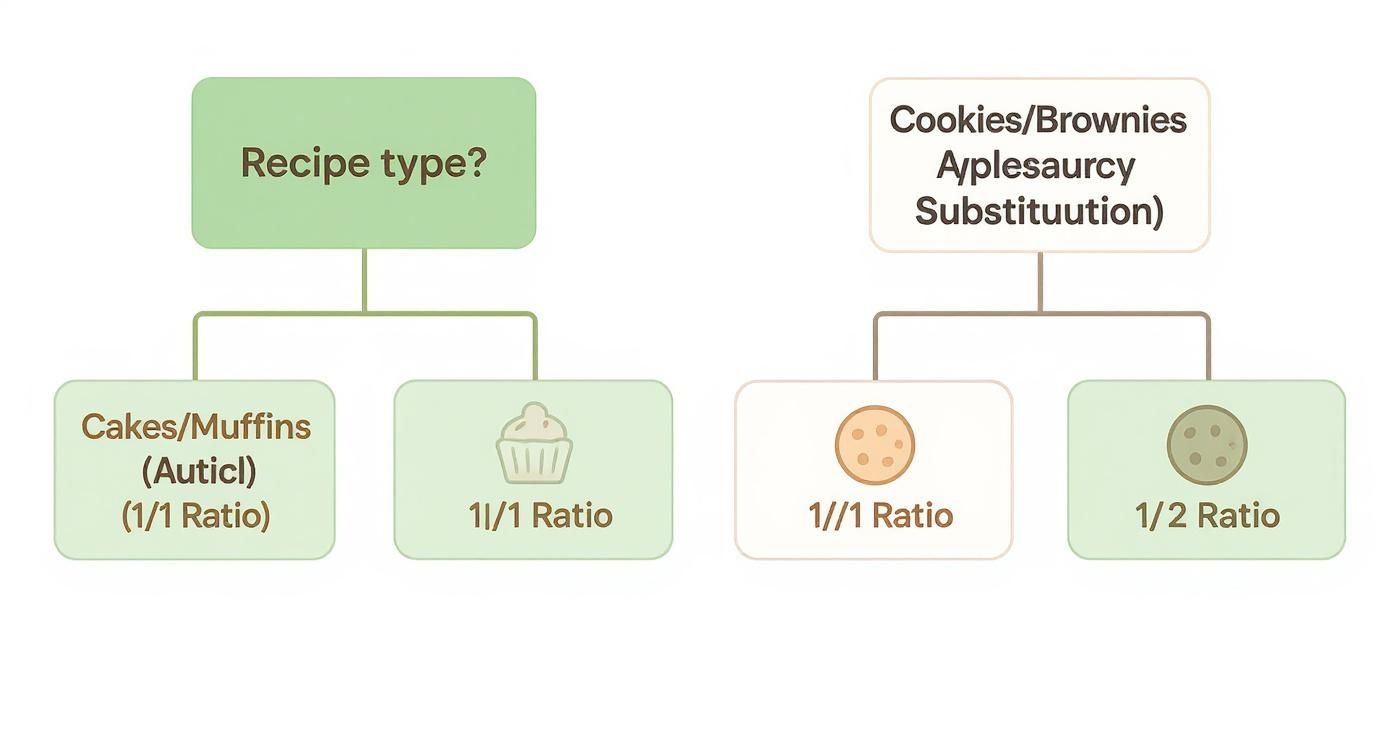
As you can see, the perfect ratio really comes down to the kind of baked good you're making.
This trend isn't just a kitchen hack; it's part of a bigger movement. In 2023, North America accounted for about 34.6% of the global applesauce market, largely driven by people wanting healthier, more organic food choices. You can dive deeper into the global applesauce market trends on market.us.
Of course, not every recipe can skip the oil—think crispy fried chicken. For those times, cleanup is usually the biggest headache. We recommend FryAway to make it totally painless.
- Sprinkle and Stir: Just pour the powder into the hot oil.
- Cool Down: Let it do its thing and solidify.
- Toss into household trash: Scoop the solid block right into the trash. It's that easy.
A Few Pro Tips for Perfect Applesauce Baking
Getting the right applesauce-to-oil ratio is half the battle. But a few small tweaks during the baking process can be the difference between a perfectly moist cake and a dense, tough brick. Trust me, I've learned this the hard way.
One of the biggest mistakes people make is overmixing the batter. Because there's less fat to coat the flour, gluten develops much faster. Mix your batter just until the dry ingredients disappear—any longer, and you risk a rubbery texture instead of that soft, tender crumb you're after.
Tweak Your Oven Temp and Cooling Time
Ever notice your applesauce goodies getting a little too dark on top? That's the natural sugars in the applesauce caramelizing faster than they would with just oil. The fix is surprisingly simple: just lower your oven temperature by about 25°F (or 15°C). This gives the inside enough time to bake through before the outside gets too brown.
Also, baked goods made with applesauce tend to be a bit more delicate right out of the oven. They need a moment to set up.
Be patient! Let your muffins, breads, or cakes cool completely in the pan before you even think about moving them. This prevents them from crumbling apart.
Of course, some recipes just aren't suited for an applesauce swap. If you're making something that needs that signature crispiness—think homemade donuts or fried chicken—there’s no substitute for real cooking oil. But that doesn't mean the cleanup has to be a greasy nightmare.
For those deep-frying days, we always keep FryAway on hand for a ridiculously easy, eco-friendly oil disposal. You just:
- Sprinkle & Stir: After frying, turn off the heat and carefully sprinkle the FryAway powder into the hot oil, stirring until it's all dissolved.
- Cool It Down: Just let the pan cool completely. The oil will magically turn into a solid, waxy puck.
- Toss It Out: Scoop the solid oil right out of the pan and toss it straight into your household trash. No mess, no clogged pipes.
Fried Recipes We Love (And How to Clean Up)
While swapping in applesauce is a fantastic trick for healthier baking, let's be honest: some recipes just demand the real thing. You can't bake your way to the perfect, golden-brown crust on a piece of fried chicken or get that signature crunch of homemade French fries. These classic fried recipes are a must-try.
Crispy Beer-Battered Fish Tacos
This recipe is all about that light, airy, and incredibly crispy coating on the fish, which you can only get from deep-frying in oil.
- Ingredients: 1 lb firm white fish (like cod), 1 cup all-purpose flour, 1 tsp paprika, ½ tsp garlic powder, salt and pepper, 1 cup light beer (like a pilsner), and vegetable oil for frying.
- Method: Heat about 2 inches of vegetable oil in a heavy-bottomed pot to 375°F (190°C). Whisk together flour and spices, then slowly pour in the beer, mixing until you have a smooth batter. Pat the fish dry, dip it in the batter, and fry for 3-4 minutes until golden and crispy.
Classic Southern Fried Chicken
For that iconic crunchy skin and juicy meat, a good old-fashioned fry in cooking oil is non-negotiable.
- Ingredients: 1 whole chicken (cut into pieces), 2 cups all-purpose flour, 2 tbsp salt, 1 tbsp black pepper, 1 tbsp paprika, and peanut oil for frying.
- Method: In a large bowl, mix the flour and seasonings. Dredge each piece of chicken in the flour mixture, ensuring it's fully coated. Heat about 1 inch of peanut oil in a large cast-iron skillet to 350°F (175°C). Carefully place the chicken in the hot oil, skin-side down. Fry for about 6-8 minutes per side, until the chicken is golden brown and cooked through.
The No-Stress Cleanup with FryAway
After enjoying these delicious fried meals, the last thing you want is a greasy mess. This is where FryAway comes in to make cleanup effortless. This plant-based powder magically transforms used cooking oil into a solid, making disposal clean and easy.
Just follow these three simple steps:
- Sprinkle and Stir: Turn off the heat. Carefully sprinkle the FryAway powder into the hot cooking oil and stir until it fully dissolves.
- Cool Down: Let the oil cool down completely. As it cools, the FryAway will solidify the liquid into a solid puck.
- Toss into household trash: Once it's hard, simply scoop the solidified oil out of the pan and toss it directly into your household trash.
That’s it! No spills, no mess, and no clogged drains. Check out our guide to effortless post-frying cleanup for more tips.
Your Top Questions About Baking with Applesauce
Swapping oil for applesauce is a fantastic trick, but it's totally normal to have a few questions before you start tweaking your favorite recipes. Getting the hang of it is all about building confidence, so let's tackle the most common concerns right away.
The biggest one I hear? People worry their chocolate cake is going to end up tasting like, well, apples.
Will My Baking Taste Like Apples?
Not if you use the right kind! Stick with unsweetened, smooth applesauce, and the apple flavor is pretty much a ghost. It’s there to add moisture, not taste, especially when you have other big flavors in the mix like chocolate, spices, or banana.
Now, if you grab a sweetened or cinnamon-spiced version, you might get a little hint of apple. Honestly, sometimes that’s a delicious accident! But for a neutral swap, unsweetened is the way to go.
Can I Replace Butter with Applesauce Too?
Yes, but there's a small catch. Applesauce works beautifully as a 1-to-1 substitute for melted butter in things like quick breads and certain brownies. Easy peasy.
Where it gets tricky is in recipes that need you to cream solid butter with sugar to get that light, airy texture—think classic chocolate chip cookies. Swapping all the butter here can give you a denser, chewier result. For those, a good compromise is to replace just half the butter to cut down on fat without sacrificing texture.
When Should I Not Use Applesauce?
It's important to know where this swap really shines and where it's better to stick with traditional fats.
Key Insight: Applesauce is your best friend for moist, dense baked goods like cakes, muffins, quick breads, and brownies. It's not the right tool for jobs that require solid fat to create a crispy or flaky texture, like pie crusts or flaky pastries.
For those times when only the perfect crispy-fried finish will do, you'll still need your cooking oil. But that doesn't mean you're stuck with a greasy mess afterward. For a super simple, eco-friendly cleanup, we always turn to FryAway.
It’s an easy 3-step process:
- Sprinkle & Stir: Just add the powder to your hot, used oil.
- Cool Down: Let it cool off completely until it turns solid.
- Toss: Scoop the solid block right into your household trash.
Go ahead and enjoy your favorite fried foods without dreading the cleanup. FryAway makes responsible oil disposal ridiculously simple. Visit us at FryAway.co to learn more.
Article created using Outrank