


· By FryAway
Applesauce Substitute for Oil A Baking Guide
Why Applesauce Is a Smarter Baking Swap
If you’re looking for an easy win in healthier baking, swapping oil for applesauce is a game-changer. Our related guide to using applesauce as oil substitute explains how the swap affects moisture, texture, flavor, and ingredient ratios across different recipes. It’s my go-to trick for creating baked goods with a wonderfully tender crumb and a serious moisture boost, all while cutting way back on fat.
The secret weapon here is pectin, the natural fiber in apples. During baking, pectin works its magic by binding water and creating a stable structure. One thing I’ve learned is that the natural sugars in applesauce can cause crusts to brown a little faster, so I often knock the oven temperature down by 10–20 °F to get a perfectly even bake. And when you do need to fry, using FryAway ensures mess-free oil disposal—just follow the three simple steps:
- Sprinkle and Stir
- Cool Down
- Toss into household trash.
The Science Behind the Swap
Most unsweetened applesauce clocks in at less than 0.2 g of fat per 100 g, making it an incredibly effective way to slash calories without sacrificing texture. It also brings a little extra vitamin C, dietary fiber, and antioxidants to the party. When you compare that to cooking oil, which can pack 8–15 g of fat per serving, the choice is pretty clear.
“I swapped oil for applesauce in my muffin recipe and saw 75% fewer calories without getting a soggy center. I was shocked it worked so well!” says home baker Clara.
To give you a clearer picture, let's break down the differences.
Quick Comparison: Applesauce vs. Oil in Baking
This table offers a simple side-by-side look at what happens when you make the switch. It's not just about fat and calories; the impact on moisture and flavor is just as important.
| Attribute | Cooking Oil | Applesauce Substitute |
|---|---|---|
| Fat | 8–15 g per serving | 0–2 g per serving |
| Calories | 120–150 kcal per 2 tbsp | Around 50 kcal per 2 tbsp |
| Moisture | Improves tenderness | Elevates natural moisture |
| Sweetness | Neutral | Subtle fruit sweetness |
As you can see, applesauce delivers on moisture while dramatically cutting down on the heavier elements. This swap is a clear winner for lighter, healthier treats.
Real-World Flavor Adjustments
Getting the ratio right depends on what you’re making. After a bit of trial and error in my own kitchen, here are a few rules of thumb I stick to:
- For quick breads and muffins, a straight 1:1 applesauce-for-oil swap works beautifully.
- In brownies, where you still want that classic chewiness, I’ve found that using ¾ cup of applesauce + ¼ cup of oil is the perfect compromise.
- To avoid a gummy texture, it’s a good idea to reduce the other liquids in your recipe (like milk or water) by about 10–15%.
A colleague of mine tried this in her favorite spice cake recipe and raved about the "gentle apple hint" that complemented the cinnamon perfectly. In my own kitchen, my banana loaf came out feeling lighter and tasting even brighter.
What About When You Need Oil? (And a FryAway Tip)
Of course, some recipes just aren't the same without oil. You can’t exactly make crispy apple fritters with applesauce alone! For those moments when you need to fry, cooking oil is essential—and so is cleaning up afterward.
That’s where FryAway comes in. Instead of dealing with a jar of messy, used-up oil, you can solidify it for easy disposal. For best results, follow these three steps:
-
Sprinkle and Stir
Add FryAway powder directly into the hot oil and stir until it's fully absorbed. -
Cool Down
Let the oil sit and cool completely. The mixture will solidify into a scoopable block. -
Toss into Household Trash
Scoop out the hardened oil and dispose of it in your regular trash. No clogged pipes, no greasy mess.
It’s an awesome, eco-friendly way to handle used oil and keep your kitchen clean and sustainable. You can find more tips in our guide on sustainable kitchen hacks for a greener kitchen and minimizing food waste.
Getting the Substitution Ratios Just Right
Nailing the right applesauce-to-oil ratio is where the real magic happens in your baking. It's not always a straightforward one-to-one swap. The secret is knowing when to go all-in with applesauce and when to hold back.
For dense, moist treats like quick breads and muffins, you can confidently swap out all the oil. A full 1:1 applesauce-for-oil substitution works beautifully here, delivering a tender crumb without making things heavy.
But for recipes where chewiness is key—think brownies and fudge-style bars—you'll want to keep some of that oil. I've found a ratio of ¾ cup applesauce + ¼ cup oil is the sweet spot. This trick cuts down on fat while still giving you that rich, satisfying texture you're after.
A couple of pro tips to keep in mind: you'll also want to dial back the other liquids in your recipe by about 10–15%. Applesauce brings a lot of moisture, and this little adjustment prevents a gummy center. Also, drop your oven temperature by 25 °F. The natural sugars in applesauce can cause things to brown a bit faster, and this compensates perfectly.
This visual guide breaks it down nicely, showing you when to reach for the applesauce and when oil is still your best friend.
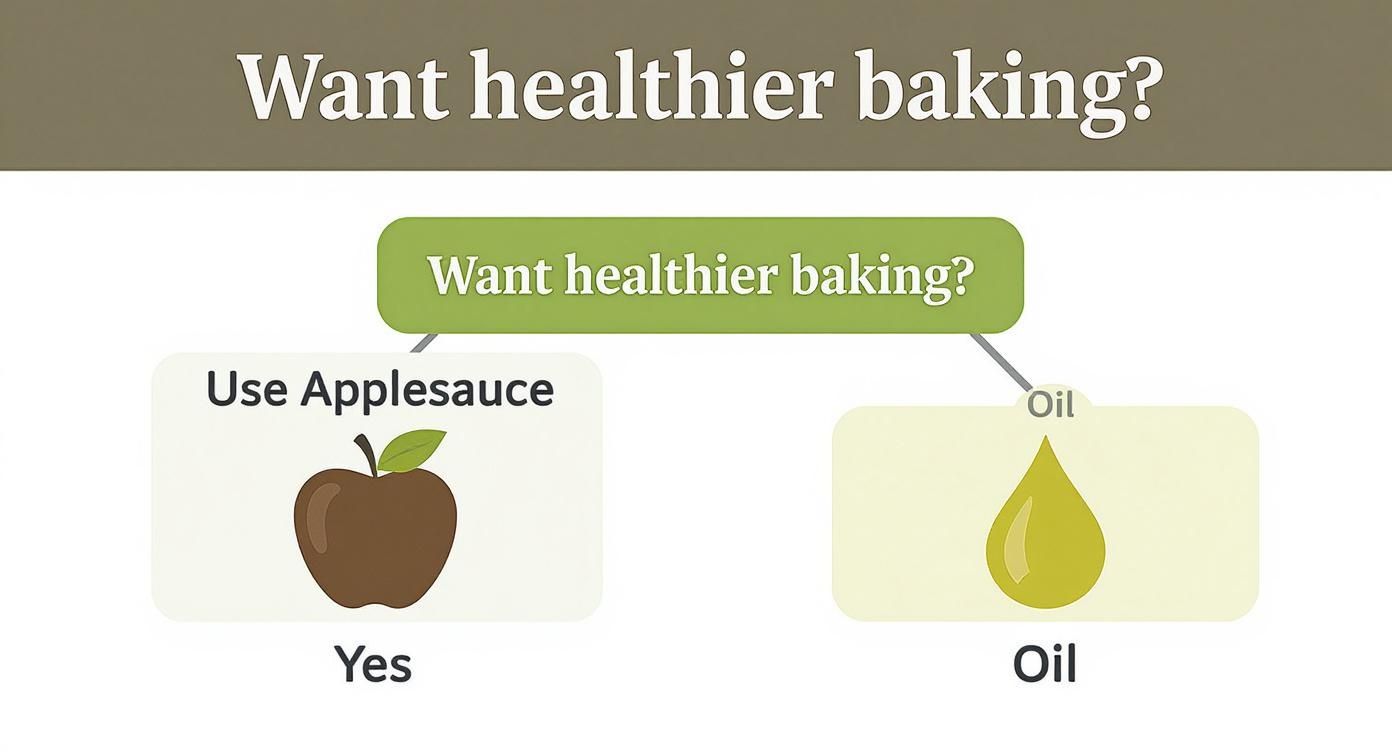
As you can see, applesauce is a fantastic choice for lower-fat bakes where moisture is the goal. For recipes that depend on oil for a specific texture, like crispy cookies, oil is still the way to go.
A Few More Tweaks for Perfect Results
Getting the liquid ratios right is crucial for avoiding a soggy bake. By slightly reducing the milk, water, or juice, you ensure the crumb structure holds up and doesn't get dense.
And don't forget that temperature adjustment. A lower oven temp slows down how quickly the crust darkens, giving the inside enough time to cook through. Every oven is a little different, so it’s always a good idea to check yours with an oven thermometer for accuracy.
Here are a few other pointers I've picked up along the way:
- Always use unsweetened applesauce. This gives you full control over the sugar content in your recipe.
- Be gentle when you stir the batter. Over-mixing can knock out the air pockets, leading to a tougher texture.
- If you're adding some oil back in, make sure you blend it in thoroughly for an even distribution of fat and moisture.
Putting It to the Test: Real-World Examples
I recently tested a banana loaf recipe by swapping the oil for applesauce at a 1:1 ratio. The result? A wonderfully light crumb that didn't sacrifice any flavor. In fact, the subtle fruitiness of the applesauce paired beautifully with the walnuts.
A friend of mine tried the ¾ applesauce + ¼ oil trick in her carrot muffins. She was thrilled with how much extra moisture they had, and it cut the fat by over 50% while keeping that perfect springy texture.
- Banana Walnut Loaf: 1 cup applesauce, no oil.
- Carrot Spice Muffins: ¾ cup applesauce, ¼ cup oil.
I always recommend tasting a tiny bit of the batter before it goes in the oven. It's the best way to adjust sweetness or spice levels on the fly.
What About Oil Cleanup?
Even when you’re leaning on applesauce, you might still use a little oil to fry up some nuts or fruit for a topping. When that happens, cleanup doesn't have to be a greasy mess. With FryAway, it’s simply:
- Sprinkle and Stir the powder into your hot cooking oil until it dissolves.
- Cool Down and let the mixture solidify completely.
- Toss into Household Trash the solid block—no spills, no clogged drains.
This process is a game-changer. It prevents greasy spills and clogged drains, so you can fry up those delicious toppings without dreading the cleanup.
How Applesauce Changes Flavor and Texture
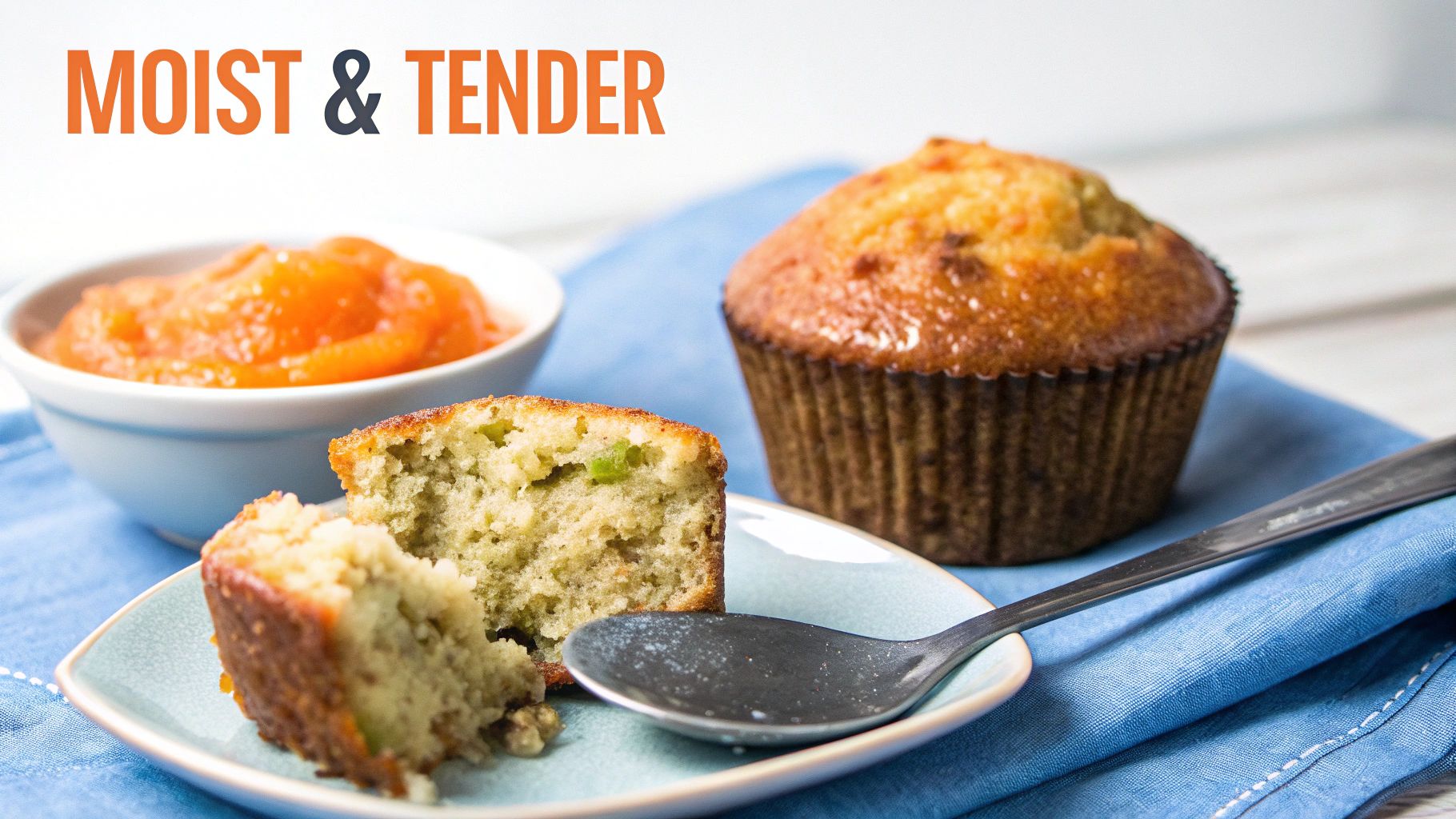
So, let's get real about what happens when you actually swap oil for applesauce in a recipe. What’s the final result going to be like?
The biggest change you'll notice right away is a huge jump in moisture. Cakes, muffins, and quick breads often come out incredibly tender and a little bit denser. For many recipes, this is a major win, giving you that perfect, moist crumb you're after.
But there's a trade-off. That added moisture means you lose some crispiness. Oil is the secret behind a cookie’s snap or the crackly, shiny top on a batch of brownies. When you take it out and put applesauce in, you're trading that classic crisp texture for a softer, more cake-like feel.
Balancing Flavor Profiles
The subtle, fruity taste of applesauce can be a fantastic addition. It plays beautifully with things like spice cakes, oatmeal cookies, and zucchini bread, making their flavors pop. But in something more delicate, like a simple vanilla cake, that apple note might stand out more than you want it to.
My best tip for managing this is to always, always use a mild, unsweetened applesauce. It puts you in the driver's seat, letting you control both the sweetness and how much fruit flavor comes through.
For those recipes where you want to keep a more traditional texture and taste, try this little trick I've learned over the years:
Add just a tablespoon of the original oil back into the batter along with the applesauce. That tiny amount is often all it takes to perfect the crumb and mellow out any strong fruit notes. It's the best of both worlds.
This approach helps you slash the fat content while keeping a familiar and delicious texture. It's a popular swap for a reason—the global applesauce market is expected to grow from around USD 1.8 billion to USD 3.2 billion, partly fueled by this kind of health-conscious baking. Swapping out 1/2 cup of oil for applesauce in a banana bread recipe, for instance, cuts the fat from about 110 grams down to almost zero. You can dig into more details in the full report on the apple sauce market.
Choosing the Best Applesauce for Baking
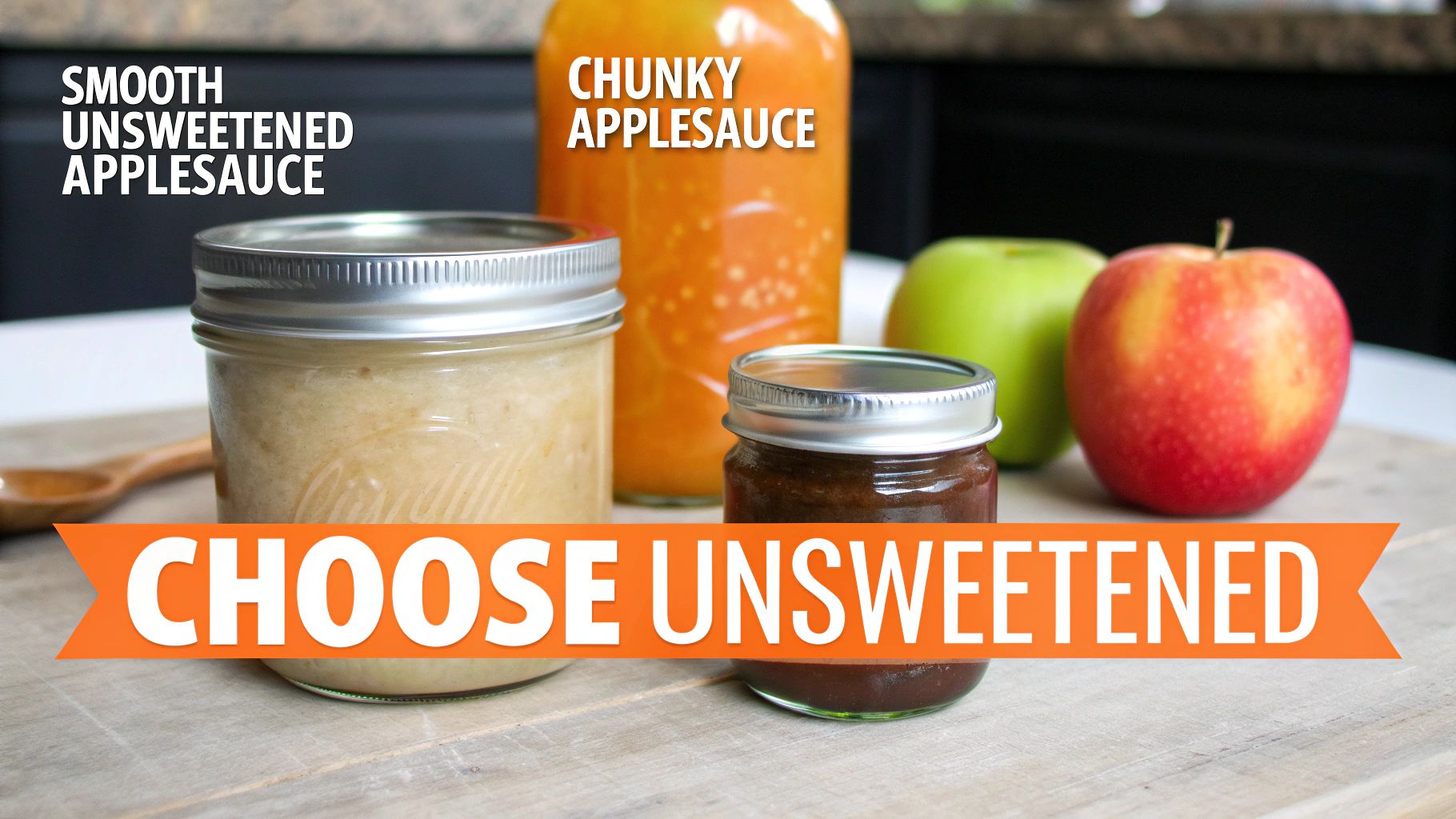
The type of applesauce you grab at the store can honestly make or break your recipe. Not all jars are created equal, and the wrong one can completely throw off the flavor and sweetness you're aiming for when using an applesauce substitute for oil.
My number one rule? Always, always reach for unsweetened applesauce. The sweetened stuff is often loaded with extra sugar that can make your dessert cloying and overwhelm the other flavors. Using unsweetened puts you in the driver's seat.
It's not just a personal preference, either. The market for unsweetened applesauce is projected to grow from USD 2.08 billion to USD 3.20 billion, largely because more bakers are catching on to its benefits for healthier treats.
Smooth vs. Chunky Texture
Walking down the aisle, you'll spot both smooth and chunky varieties. For things like cakes, muffins, and brownies where you want a consistent, even crumb, smooth is the only way to go. It just melts right into the batter, doing a much better job of mimicking the texture of oil.
Chunky applesauce has its place—maybe in a rustic oatmeal cookie or a hearty spice bread—but for most baking, a smooth puree is your best bet for a flawless texture without any surprise lumps.
Of course, if you've got the time, making your own applesauce gives you total control over both the sweetness and the consistency. It's an extra step, for sure, but the fresh, vibrant flavor is unbeatable, especially in recipes built around those classic fall spices. If you want to see what a difference it makes, that perfect apple flavor is essential for making the best apple cider doughnuts.
Enjoying Fried Favorites and Disposing of Oil Safely
https://www.youtube.com/embed/EDHL2i7Azbc
While swapping in applesauce is a fantastic trick for healthier baking, let's be honest—some recipes just need the real deal. You simply can't get that perfect, crispy, golden-brown finish on fried foods without oil. For those moments when you're craving something wonderfully crunchy, embracing oil is the only way to go.
Think about classic comfort foods like onion rings. The real magic happens when that batter hits hot oil, creating a light, airy crust that’s impossible to replicate any other way. It’s a texture that applesauce, for all its baking benefits, just can’t deliver. And while enjoying these fried favorites is a treat, the cleanup afterward usually isn't.
A Recipe For That Perfect Crunch: Crispy Fried Onion Rings
Let's put that oil to good use with a recipe that's all about achieving that signature crispy texture.
- Slice two large sweet onions into ½-inch rings.
- In one bowl, whisk together 1 cup of flour, 1 teaspoon of baking powder, and salt to taste.
- In a separate bowl, whisk one egg with 1 cup of milk.
- Dip each onion ring into the milk mixture first, then dredge it thoroughly in the flour mixture to coat.
- Fry in a deep pan with vegetable oil heated to 375 °F for 2–3 minutes per side, until they're beautifully golden brown.
After you've enjoyed every last bite, you're left with a pan of used cooking oil. The worst thing you can do is pour it down the drain—it can cause serious plumbing issues and environmental harm.
Smart and Simple Oil Disposal With FryAway
This is where having a smart cleanup plan makes all the difference. My go-to solution is FryAway, a plant-based powder that turns oil disposal into an easy, mess-free, and eco-friendly task. It magically solidifies used cooking oil, so you can just toss it straight into your household trash.
Using FryAway has completely changed how I feel about frying at home. I no longer dread the cleanup, which means I’m more willing to make delicious fried treats without worrying about clogged pipes or messy jars of old oil sitting around.
For best results, here’s the foolproof three-step process:
- Sprinkle and Stir the FryAway powder into your hot, used cooking oil until it fully dissolves.
- Cool Down: Let the oil sit and harden into a solid block.
- Toss into Household Trash: Scoop out the hardened oil and dispose of it in your regular bin.
It’s truly the cleanest, safest way to handle leftover oil. If you want to learn more, check out our complete guide on how to properly dispose of used cooking oil.
Common Questions About Baking With Applesauce
So, you're ready to start swapping oil for applesauce? It's a fantastic move, but a few questions always pop up. Getting the answers right is the difference between a pretty good muffin and a truly amazing one. Let’s clear up the common sticking points so you can bake with confidence.
What About Sweetened Applesauce?
This is probably the most frequent question I get. Yes, you can absolutely use sweetened applesauce, but you have to account for the extra sugar. If you don't, your bake will be cloyingly sweet.
A good rule of thumb is to reduce the sugar in your recipe by about ¼ cup for every 1 cup of sweetened applesauce you use. This keeps the sweetness balanced and lets the other flavors shine through.
When to Use This Swap (And When Not To)
Knowing where this substitution works best is key. Applesauce is a rockstar in moist, dense, cake-like recipes.
- Works Best For: Quick breads (like banana or zucchini bread), muffins, brownies, and dense cakes. The extra moisture it provides is a huge win here.
- Less Ideal For: Anything that needs to be light, crispy, or flaky. Think pie crusts, certain types of cookies, or delicate pastries. In those recipes, the solid fat (like butter or oil) is critical for creating that perfect texture.
It's all about playing to its strengths. My zucchini bread is amazing with applesauce, but for my crispy oatmeal cookies, I stick with oil every single time. Knowing the right application is everything.
You can also use applesauce in place of butter, but be prepared for a different outcome. The ratio changes, and so does the texture. For butter, a good starting point is ½ cup of applesauce for 1 cup of butter. Just know your final bake will be much denser and less flaky.
And while we're all for a clever baking swap, some recipes just need oil, plain and simple—like crispy fried chicken. For an easy, eco-friendly cleanup after frying, FryAway makes disposing of that used cooking oil a breeze. Remember the three steps:
- Sprinkle and Stir
- Cool Down
- Toss into household trash
Learn more about mess-free oil disposal at FryAway.
Article created using Outrank