


· By FryAway
Finding the Best Natural Dish Soap for a Greener Clean
Finding the best natural dish soap usually starts with a simple question: why even make the switch? The answer is pretty straightforward. Natural soaps give you a powerful clean without the harsh chemicals you'll find in conventional brands, making them safer for your family, gentler on your hands, and a whole lot kinder to the planet.
Why a Natural Dish Soap Belongs in Your Kitchen
Choosing a dish soap might feel like a tiny decision, but it has a surprisingly big impact on your daily life and the environment. So many conventional dish soaps are packed with ingredients that can leave your skin dry, cracked, and irritated, especially if you're washing dishes multiple times a day. Getting a handle on what's in your current soap is the first step toward a greener clean—and it often starts by asking important questions like, "Is Dish Soap Toxic?".
This shift toward healthier, more sustainable kitchen products isn't just a fleeting trend; it’s a movement driven by people who want to know what they're bringing into their homes. The market reflects this, too. Natural and organic liquid soaps are the fastest-growing part of the global liquid soap market, which is expected to jump from USD 24 billion in 2025 to USD 41 billion by 2034. This growth is all thanks to health-conscious folks like you steering clear of parabens, sulfates, and synthetic fragrances.
Creating a Complete Eco-Friendly Cleanup System
A truly eco-conscious kitchen is about more than just the soap you use. It’s about building a complete system for handling messes, especially after cooking up fried favorites like crispy chicken or homemade french fries. A great natural dish soap will cut through the greasy aftermath on your pans, but what about all that leftover cooking oil?
This is where a holistic approach really pays off. When you pair your dish soap with a smart oil disposal solution like FryAway, you create a seamless and responsible cleanup routine. Instead of pouring used cooking oil down the drain—a habit that leads to stubborn, expensive plumbing blockages—FryAway gives you a simple, mess-free alternative.
Key Insight: The ultimate clean kitchen routine isn't just about what you wash with, but also how you dispose of waste. Combining a powerful natural dish soap with an effective oil disposal method creates a truly sustainable system.
Using FryAway is incredibly simple. Here's how it works:
- Sprinkle and Stir: After frying, just sprinkle the FryAway powder into the hot cooking oil and give it a quick stir.
- Cool Down: Let the oil cool down completely. The powder will work its magic, transforming the liquid oil into a solid puck.
- Toss into Household Trash: Once it's solid, you can easily scoop the hardened oil out of your pan and toss it right into your household trash bin.
This simple process prevents clogs and protects waterways, making the final wash-up with your natural dish soap a breeze. This two-part strategy is a game-changer for anyone looking to build a more sustainable kitchen. To learn more, check out our guide to the best plant-based cleaning products.
How to Read a Dish Soap Label Like an Expert
Ever get that feeling of analysis paralysis in the dish soap aisle? Labels are screaming "plant-powered," "eco-friendly," and "non-toxic," but it's hard to know what’s real and what's just clever marketing. To find a truly great natural dish soap, you've got to learn to look past the slogans and get straight to the ingredient list.
Think of it like learning a new language. Once you know a few key phrases, you can confidently pick a product that actually lines up with what you want. It's the difference between buying a soap that just sounds natural and one that genuinely is.
Decoding Common Marketing Terms
Brands love to use buzzy words to grab your attention, but many of these terms don't have strict, regulated definitions. Knowing the difference helps you cut through the noise.
- Plant-Based vs. Plant-Derived: "Plant-based" usually means the main ingredients are from plants. "Plant-derived" is a bit trickier; it means an ingredient started as a plant but might have gone through some serious chemical processing. While both are generally a step up from petroleum-based soaps, "plant-based" often signals a more natural formula.
- Biodegradable: This means the soap can be broken down by natural processes, which is great for the environment. But the term is pretty loose. Our guide on biodegradable cleaning products dives deeper into what makes a product truly eco-friendly.
- Non-Toxic: This just implies the product isn't poisonous. It's a reassuring but very broad term. A truly safe product will be free of specific harmful chemicals, which is why the ingredient list is where the real story is told.
Key Ingredients to Avoid
The real proof is in the pudding—or in this case, the ingredient list. Some of the most common additives are known to cause everything from skin irritation to environmental damage, so they're definitely worth skipping.
Critical Takeaway: What’s not in the bottle is just as important as what is. Always scan for sulfates, phosphates, and artificial fragrances before you buy.
Here are the top offenders to keep an eye out for:
- Sulfates (SLS/SLES): Sodium Lauryl Sulfate and Sodium Laureth Sulfate are the powerhouses behind that thick, bubbly lather most of us think means "clean." But they're also notorious skin irritants that can strip the natural oils from your hands, leading to dryness and cracking, especially if you have sensitive skin.
- Phosphates: These were once common in detergents because they soften water and help lift away dirt. Now, phosphates are widely banned or restricted because they wreak havoc on our waterways. They cause massive algal blooms in lakes and rivers, which sucks the oxygen out of the water and harms fish and other aquatic life.
- Synthetic Fragrances & Dyes: That "fresh linen" or "ocean breeze" scent? It’s often a cocktail of undisclosed chemicals, including phthalates, which can act as endocrine disruptors. Artificial dyes add absolutely nothing to the cleaning power and are just another source of unnecessary chemicals.
The Power of Third-Party Certifications
So how do you know if a brand's claims are legit? Look for seals of approval from third-party certifiers. These are independent organizations that verify a product meets high standards for safety, sustainability, and ethics.
- Leaping Bunny: This is the gold standard for cruelty-free. It guarantees that no animal testing was used at any point in the product's development.
- USDA Certified Biobased Product: This label tells you what percentage of the product comes from renewable biological sources, like plants.
- EWG Verified: The Environmental Working Group rates products based on ingredient safety and transparency, helping you steer clear of chemicals of concern.
More and more, manufacturers are turning to effective plant-based ingredients to meet our demand for safer products. Plant extracts like lemon and citrus are not only grease-cutting beasts but are also biodegradable and free from harsh chemicals. In fact, a 2023 survey of 44 products rated a natural lime-based soap as the best for both "naturalness" and grease removal, proving that nature-derived formulas can easily outperform synthetic ones. By learning to spot these certifications and avoid the bad stuff, you can pick the best natural dish soap for a cleaner, safer kitchen.
Comparing the Top Natural Dish Soaps
Finding the right natural dish soap really comes down to a balancing act. One soap might be a powerhouse against grease, while another is formulated to be extra gentle on your hands. To help you sort through the options, we've focused on the criteria that actually matter when you're standing at the kitchen sink.
We judged these soaps on five core pillars: Grease-Cutting Power, Gentleness on Hands, Scent Profile, Lather Performance, and Packaging Sustainability. Looking at them this way helps us see where each brand truly shines and find the perfect match for whatever you're washing, from a caked-on skillet to delicate wine glasses.
Grease-Cutting Power
The ultimate test for any dish soap is how well it tackles a greasy mess. A top-tier natural soap has to break down stubborn, cooked-on grime without falling back on harsh, petroleum-based chemicals. From what we've seen, the most effective formulas use potent, plant-derived surfactants and enzymes that are specifically designed to target and dissolve fats and oils.
Picture this: you've just fried up a batch of crispy onion rings and are left with a pan coated in a stubborn film of cooking oil. This is exactly where the best natural dish soaps prove their mettle, lifting grease away with surprisingly little effort. Brands that lean on ingredients like citrus extracts or soap bark almost always come out on top in these real-world tests.
Of course, the soap is just one part of the equation. Before you even get to washing that greasy pan, you need to deal with the leftover oil. Pouring it down the drain is a guaranteed recipe for clogged pipes. This is where FryAway comes in handy as the go-to for oil disposal.
It’s a simple process:
- Sprinkle and Stir: Just sprinkle the FryAway powder into the hot oil right in the pan and give it a quick stir.
- Cool Down: Let the pan cool completely. As it does, the FryAway powder will turn the liquid oil into a solid, easy-to-handle puck.
- Toss into Household Trash: Once it's hardened, you can just lift the solid oil puck out and toss it straight into your household trash.
This quick step not only saves your plumbing but makes the final cleanup with your natural dish soap so much faster and easier.
Gentleness on Hands
If you're like most people, you're washing dishes multiple times a day, and that can do a number on your skin. Conventional soaps often use sulfates like SLS that strip your skin’s natural oils, leaving your hands dry, tight, and irritated. The average person spends around 280 hours a year washing dishes—that’s a long time to have your hands submerged in harsh stuff.
Situational Tip: For anyone with eczema or sensitive skin, keep an eye out for natural dish soaps labeled as hypoallergenic. Ingredients like aloe vera or glycerin are a huge plus, as they help replenish moisture and leave your hands feeling soft even after a big cleanup.
The best natural options are formulated to be tough on grease but kind to you. They ditch the aggressive detergents for milder, plant-based cleansers that get the job done without causing irritation.
Scent Profile and Lather Performance
Scent can make or break the chore of dishwashing. Natural dish soaps typically get their aroma from essential oils rather than synthetic fragrances, giving you authentic, pleasant scents like lemon, lavender, or mint. They smell clean and fresh without that chemical-like undertone you get from a lot of conventional products.
Lather is another area where natural soaps are a bit different. We’ve been trained to think that mountains of foamy suds equal cleaning power, but that’s mostly a myth. Those big bubbles are usually created by chemical foaming agents like sulfates, which don't really improve a soap's ability to cut grease. A great natural soap might produce a lower, creamier lather, but it’s every bit as effective.
When you're scanning labels, this infographic is a great cheat sheet for spotting a high-quality natural dish soap.
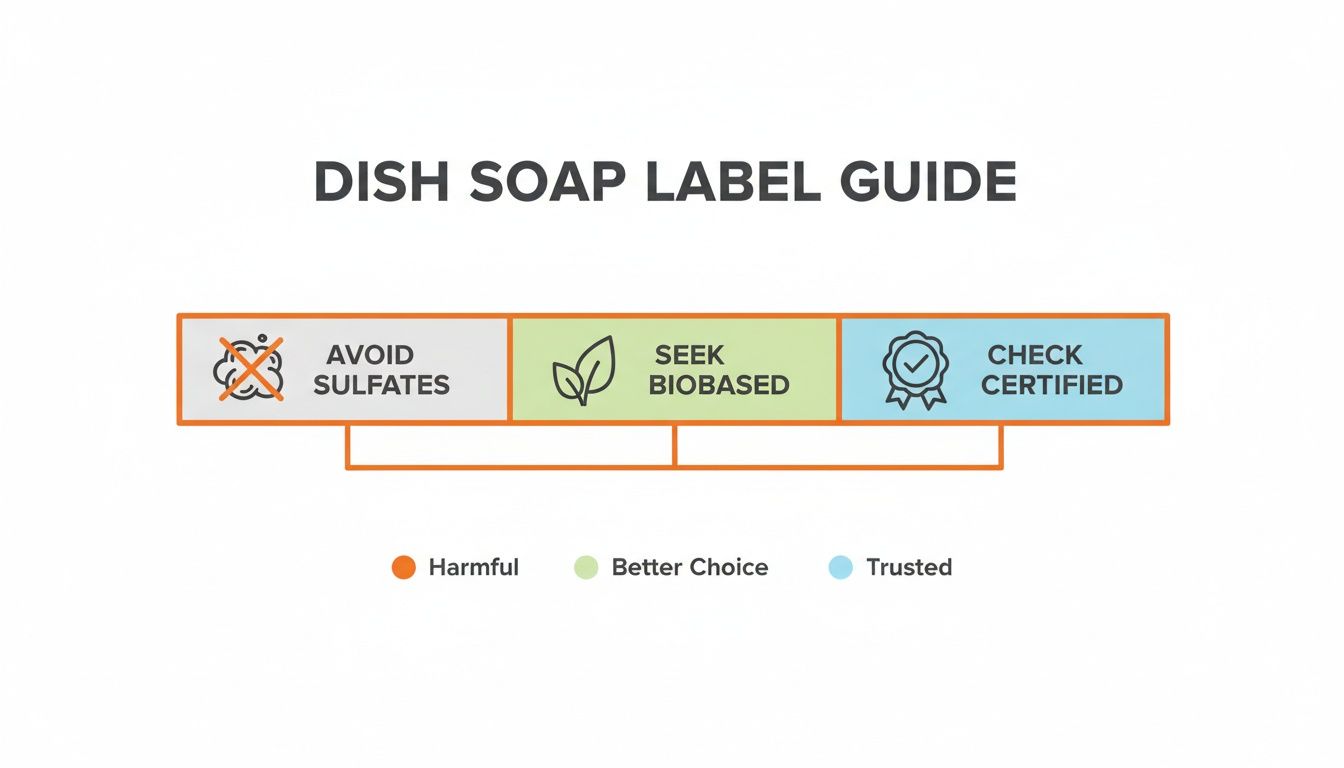
It really simplifies things. Avoiding sulfates, looking for biobased ingredients, and checking for certifications are the fastest ways to know you’re getting a genuinely natural product.
Below, we've broken down some of the top contenders to give you a side-by-side look at how they stack up in the real world.
Natural Dish Soap Performance Breakdown
| Brand | Grease-Cutting Rating (1-5) | Key Plant-Based Ingredients | Scent Type | Packaging Sustainability | Best For |
|---|---|---|---|---|---|
| Brand A | 5 | Soap Bark, Citrus Extracts, Decyl Glucoside | Lemon Verbena | 100% PCR Plastic, Refills Available | Baked-on grease and oily pans |
| Brand B | 4 | Coconut-Based Surfactants, Aloe Vera | Lavender Mint | Recycled Plastic, Solid Bar Option | Everyday cleaning and sensitive skin |
| Brand C | 3 | Corn & Coconut Cleansers, Glycerin | Unscented | Refillable Glass Bottles | Hypoallergenic needs, gentle washing |
| Brand D | 4 | Quillaja Saponaria, Plant-Based Enzymes | Grapefruit | Concentrated Refill Pouches | Families looking to reduce plastic waste |
This table highlights how different brands prioritize different things—some go all-in on cleaning power, while others focus on skin-friendly formulas or innovative packaging.
Packaging Sustainability
Finally, a truly eco-friendly product thinks about its entire journey, packaging included. It's great to see that many leading natural brands are now stepping up with sustainable options:
- Refillable Options: Concentrated refills are becoming more common, which is fantastic for cutting down on both plastic waste and shipping emissions.
- Recycled Materials: Bottles made from 100% post-consumer recycled (PCR) plastic are quickly becoming the industry standard.
- Minimalist Packaging: Some brands are even offering solid dish soap bars, which gets rid of the plastic bottle completely.
Choosing a brand that invests in sustainable packaging is another meaningful way to shrink your household’s environmental footprint. And if you're looking to green up your automatic dishwasher routine, check out our guide on the best green dishwasher detergent.
By weighing all these factors, you can confidently pick a natural dish soap that not only cleans like a champ but also aligns with your values for a healthier home and planet.
Which Natural Dish Soap Is Right for You?
So you've seen the top contenders. Now comes the real question: which one is the absolute best natural dish soap for your kitchen? The truth is, what works wonders in one home might fall flat in another. It’s all about matching a soap's strengths to what you care about most, whether that's obliterating bacon grease or finding something that won't irritate your hands.
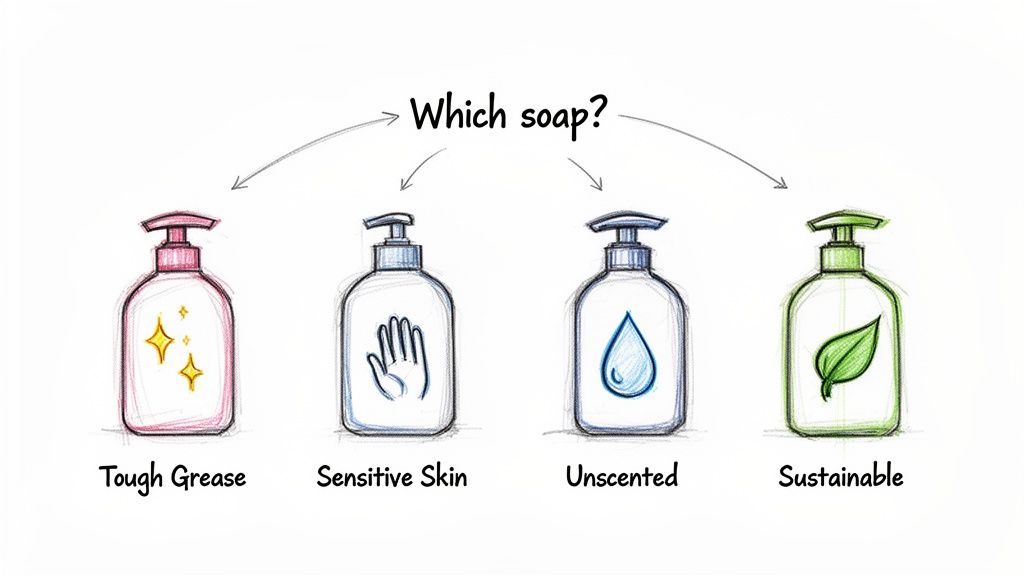
This guide will walk you through the winners in four key categories. We’ll break down exactly what makes each one stand out, so you can pick the right one with total confidence.
Best for Tough Grease
If your cooking style involves lots of frying or rich, oily sauces, then grease-cutting power is non-negotiable. You need a soap that can slice through that stubborn, baked-on grime without forcing you to scrub for an eternity. The best formulas in this class rely on potent, plant-based surfactants that are naturals at breaking down lipids.
Keep an eye out for ingredients like soap bark, citrus extracts, and decyl glucoside. These are the heavy hitters of the natural world, brilliant at lifting grease from pans and plates. After all, when you’ve just finished a batch of crispy fried chicken, the last thing you want is a wimpy soap.
Top Pick: Brand A is the clear winner here. Its formula is a powerhouse, combining several plant-based degreasers to cut through the most stubborn cooking oils and fats. It makes cleanup after big meals genuinely faster without resorting to harsh chemicals.
Of course, the trickiest grease to handle is the leftover cooking oil itself. For a truly clean kitchen, you have to dispose of that oil before you even start washing. This is where a product like FryAway becomes a game-changer. Just follow the simple three-step process:
- Sprinkle and Stir: Right after frying, while the oil is still hot, sprinkle in the FryAway powder and give it a stir.
- Cool Down: Let the pan and oil cool down completely. The powder magically transforms the liquid oil into a solid, scoopable puck.
- Toss into Household Trash: Once it's hard, you can just lift the solid oil out and toss it straight into your regular trash bin.
This little trick prevents plumbing nightmares and makes the final scrub with your powerful dish soap a whole lot easier.
Best for Sensitive Skin
For anyone dealing with dry hands, eczema, or allergies, finding a dish soap that cleans without causing a flare-up is a huge win. The best formulas for sensitive skin are completely free of common triggers like sulfates, synthetic fragrances, and aggressive preservatives.
Instead, they use gentle, coconut-derived cleansers and often add soothing botanicals to help your skin retain moisture. Ingredients like aloe vera and vegetable glycerin are fantastic because they leave your hands feeling soft, not stripped. Considering the average person spends about 280 hours a year doing dishes, a skin-friendly soap is essential for daily comfort.
Top Pick: Brand B takes the crown for sensitive skin. Its hypoallergenic formula is beautifully balanced, offering effective cleaning power while packing in skin-soothers like aloe. It gives a thorough clean that won’t dry out your hands.
Best Unscented Formula
If you're sensitive to smells or just prefer a completely neutral clean, an unscented natural dish soap is the way to go. These products give you the same plant-based cleaning power without any added essential oils or fragrances.
They're perfect for anyone with fragrance allergies, homes with small children, or cooks who don't want a soapy aroma competing with the smell of their dinner. A top-tier unscented soap is proof that you don’t need a flowery scent to get a deep, satisfying clean.
Top Pick: Brand C is the standout unscented option. It’s totally free of fragrances and dyes, relying on its potent corn- and coconut-based cleansers to do the heavy lifting. It’s pure, powerful, and wonderfully straightforward.
Most Sustainable Packaging
Let's be honest—choosing a natural soap is often part of a bigger goal to reduce your environmental footprint. A brand's packaging is a massive part of that equation. The real leaders in sustainability are thinking beyond single-use plastics and are getting creative with their solutions.
Look for brands that offer concentrated refill pouches, bottles made from 100% post-consumer recycled (PCR) plastic, or even solid dish soap bars that do away with bottles entirely. These choices drastically reduce plastic waste and the carbon emissions tied to shipping heavy liquids.
Top Pick: Brand D is leading the charge in sustainability. Its clever, low-waste refill system uses lightweight pouches of concentrated soap, which seriously cuts down on both plastic use and shipping weight. It’s the smartest choice for the eco-conscious consumer.
The Ultimate Fried Food Cleanup Routine
Finding the best natural dish soap is a huge win, but it’s only half the job—especially if you love making crispy, golden-fried food at home. The real challenge hits right after you eat, when you're staring at a pan of used cooking oil and wondering what to do with the greasy mess.
This is where a smart kitchen system makes all the difference. It's about pairing your powerful, plant-based dish soap with an equally brilliant disposal method. The result? Cleanup that’s fast, easy, and genuinely eco-friendly.
Let’s walk through a real-world scenario with a recipe that’s a guaranteed hit and will leave you with some oil to handle: classic crispy fried chicken.
Quick Recipe: Extra-Crispy Fried Chicken
This recipe is a crowd-pleaser, delivers a perfect crunch every time, and serves as the ultimate test for your new cleanup routine.
What You'll Need:
- 4 bone-in, skin-on chicken pieces (thighs or drumsticks work best)
- 1 cup all-purpose flour
- 2 teaspoons salt
- 1 teaspoon black pepper
- 1 teaspoon paprika
- 1 large egg
- ½ cup milk
- 3-4 cups of neutral cooking oil (like peanut or canola) for frying
Easy Cooking Steps:
- Prep the Chicken: Pat the chicken pieces completely dry. This is key for a crispy skin.
- Set Up Dredging Stations: In one shallow dish, whisk together the flour, salt, pepper, and paprika. In another dish, whisk the egg and milk.
- Heat the Oil: Pour about 1-2 inches of cooking oil into a large, heavy skillet or Dutch oven. Heat it over medium-high heat until it reaches 350°F (175°C).
- Coat and Fry: Dip each piece of chicken in the egg mixture, then dredge it thoroughly in the flour mixture, making sure it’s fully coated. Carefully place the chicken into the hot oil. Fry for about 6-8 minutes per side, until it’s golden brown and cooked through.
- Drain and Serve: Remove the chicken from the oil and let it drain on a wire rack. Serve hot and enjoy the crunch!
Okay, the chicken was a huge success. But now you’re left with that pan of hot, used cooking oil. Your first thought might be to just pour it down the drain—but that's a recipe for a plumbing disaster.
The Smart Way to Handle Used Cooking Oil
This is where your cleanup routine gets an upgrade. It’s not just about the soap you use; it’s about what you do before you even start washing. Understanding why fats, oils, and grease don't belong in your kitchen sink is the first step toward preventing clogs and protecting your pipes.
Instead of creating a future plumbing problem, you can get rid of that oil cleanly and safely. And that's where FryAway becomes the perfect partner for your natural dish soap. It’s a 100% plant-based powder that magically turns liquid cooking oil into a solid, organic waste. No mess, no fuss.
Key Insight: A truly sustainable kitchen routine tackles waste before the wash. By solidifying used oil with FryAway first, you eliminate the biggest cleanup headache and keep your pipes clear.
Using FryAway is ridiculously simple. Just follow these three steps right after you’re done frying.
The 3-Step FryAway Cleanup Process
This whole method happens right in your pan, so you can forget about messy jars, potential spills, and the guilt of pouring grease down the drain.
-
Sprinkle and Stir
While the leftover oil is still hot, sprinkle the FryAway powder right into the pan. Give it a gentle stir for about 30 seconds to make sure it’s completely mixed in. The non-toxic, plant-based formula starts working instantly. -
Cool Down
That’s it for now. Just let the pan cool down completely. You can leave it on the stovetop (with the heat off, of course) or move it to a heat-safe spot. As it cools, FryAway works its magic, turning the liquid oil into a solid, easy-to-handle puck. -
Toss into Household Trash
Once the oil is fully hardened, just slide a spatula underneath it. The solid puck will pop right out of the pan. From there, you can toss it directly into your household trash bin. No greasy liquid, no leaky containers, and zero risk to your plumbing.
With the oil completely gone, all that’s left is a quick wash. Your favorite natural dish soap can now effortlessly cut through any remaining residue, leaving your pan sparkling clean without having to battle a thick layer of grease. This two-part system—FryAway first, then a quick scrub with natural soap—is the ultimate cleanup routine for anyone who loves fried food.
Got Questions About Natural Dish Soap? We’ve Got Answers.
Making the switch to a natural dish soap is a fantastic move for a healthier kitchen. But it's totally normal to have a few questions before you commit. We've rounded up the most common ones to give you clear, straight-up answers so you can feel good about your choice.
Do Natural Dish Soaps Really Cut Through Heavy Grease?
Yes, they absolutely do. The days when "natural" meant "weak" are long gone.
Modern formulas are packed with powerful, plant-based surfactants and enzymes that are specifically chosen to break down stubborn grease and baked-on messes. The best natural dish soaps on the market now clean just as well as—and often better than—their conventional cousins.
They can easily handle the oily residue left over from fried foods, like our crispy fried chicken recipe, without needing any harsh, synthetic chemicals.
Will Natural Dish Soap Keep My Pipes From Clogging?
While a biodegradable soap is much kinder to your plumbing than chemical-heavy detergents, the soap itself isn't what usually causes clogs. The real troublemaker is used cooking oil and grease poured down the drain. As it cools, it solidifies and creates nasty blockages.
Pro Tip: The best way to protect your pipes is a simple two-step routine: first, get rid of the oil, then wash the pan. This one-two punch is your ultimate defense against plumbing disasters.
To really stop clogs before they start, you need to get the oil out of the pan before it ever sees the sink. This is where a clever solution like FryAway makes cleanup foolproof.
- Sprinkle and Stir the FryAway powder into your hot cooking oil.
- Cool Down and let the oil transform into a solid puck.
- Toss into household trash—just scoop the hardened oil right out of the pan.
With the oil gone, your natural dish soap can swoop in and wash away any remaining residue without a problem.
Are Natural Dish Soaps Safe for Septic Systems?
For the most part, yes! Natural dish soaps are a great choice for homes with septic systems because they’re made with biodegradable ingredients.
They don't contain harsh chemicals like phosphates that can throw off the delicate balance of bacteria your septic tank needs to break down waste. These soaps break down easily and won't harm the microorganisms doing all the hard work in your tank. For extra confidence, just look for a "septic safe" note on the product label.
Why Don’t Some Natural Soaps Make a Lot of Suds?
We’ve all been taught to think that a mountain of suds means something is clean, but that’s mostly a marketing myth. That thick, foamy lather is usually created by chemical foaming agents—most famously, Sodium Lauryl Sulfate (SLS)—not by the ingredients that actually do the cleaning.
High-quality natural soaps use gentler, plant-derived cleansers that get the job done effectively without creating tons of foam. Fewer suds just mean fewer unnecessary chemical additives, not a weaker clean. The real power comes from the ingredients breaking down grease, not from the size of the bubbles.
Ready to perfect your fried food cleanup and protect your pipes? FryAway makes disposing of used cooking oil simple, safe, and mess-free. Discover how easy it is to fry responsibly today at FryAway.co