


· By FryAway
The Ultimate Guide to the Best Touchless Trash Can for Your Home
Let's be honest, finding the best touchless trash can usually starts with one simple thought: "There has to be a cleaner, easier way to do this." The best models out there deliver on that promise with reliable sensors, solid odor control, and durable builds that make them a real upgrade from the old step-can.
For most homes, a 13-gallon stainless steel model is the sweet spot. Add an optional AC adapter, and you’ve got the perfect blend of hygiene, capacity, and modern style.
Why a Touchless Trash Can Is a Kitchen Essential
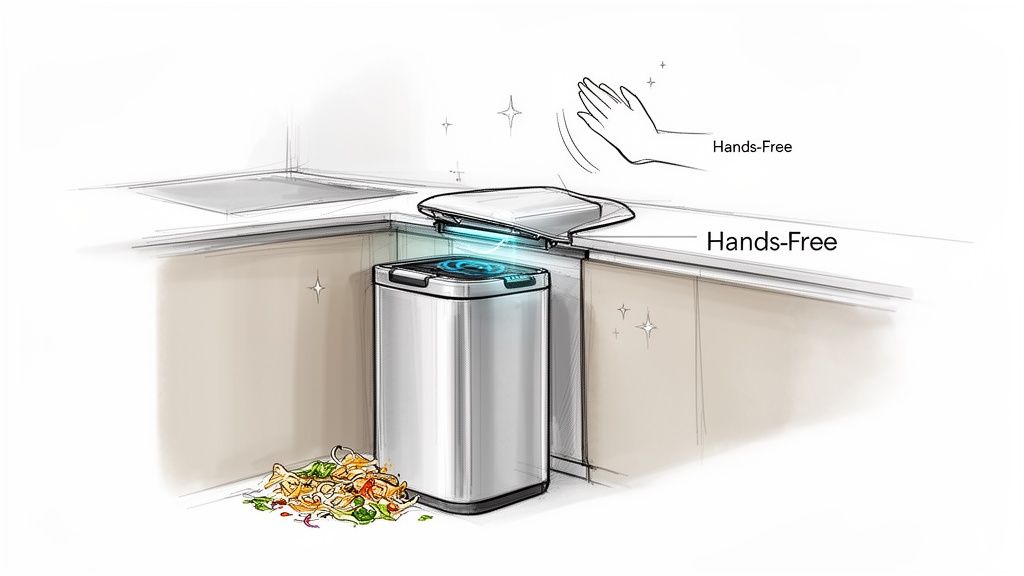
The simple act of throwing something away just got a serious upgrade. Once a niche gadget, touchless trash cans are now a staple in modern homes, all thanks to our growing love for hands-free solutions that keep things clean. No more fumbling with a pedal or touching a grimy lid—just a simple wave of the hand.
This hands-free operation is more than just a neat party trick; it's a huge step toward a cleaner home. Kitchens are germ hotspots, and traditional trash can lids are notorious for cross-contamination, especially when you’re in the middle of meal prep with raw ingredients on your hands. By getting rid of that touchpoint, you cut down on spreading germs and keep your hands cleaner.
The market definitely reflects this shift. Valued at USD 653.51 million in 2026, the global touchless trash can market is expected to hit USD 1,135.54 million by 2035. That kind of growth shows just how many people are investing in smarter, more hygienic home gear. You can discover more insights about the growing touchless trash can market and its trends.
The Challenge of Kitchen Waste
But let's be real, even the smartest trash can can't solve every kitchen mess. One of the biggest offenders is used cooking oil. Pouring hot oil into a trash bag is a disaster waiting to happen—it melts liners, creates greasy leaks, and leaves behind a smell that even the best carbon filters struggle with.
That's where a smarter disposal method comes in. For messy liquid waste like cooking oil, a product like FryAway is essential for keeping your can clean. It solidifies used oil for easy, mess-free disposal.
This guide will walk you through everything you need to pick the perfect model. We'll compare key features, suggest the right cans for different spaces, and even peek at advanced smart-bin tech. More importantly, we'll show you how to team up your new trash can with a powerful cleanup solution like FryAway to finally conquer cooking oil messes for good.
By combining a top-notch touchless can with FryAway's simple 3-step process, you can create a truly clean, odor-free, and sustainable waste system. The steps are: 1) Sprinkle and Stir, 2) Cool Down, and 3) Toss into household trash. Let's find the best touchless trash can that fits your life perfectly.
Decoding the Tech: Key Features of Top Touchless Trash Cans
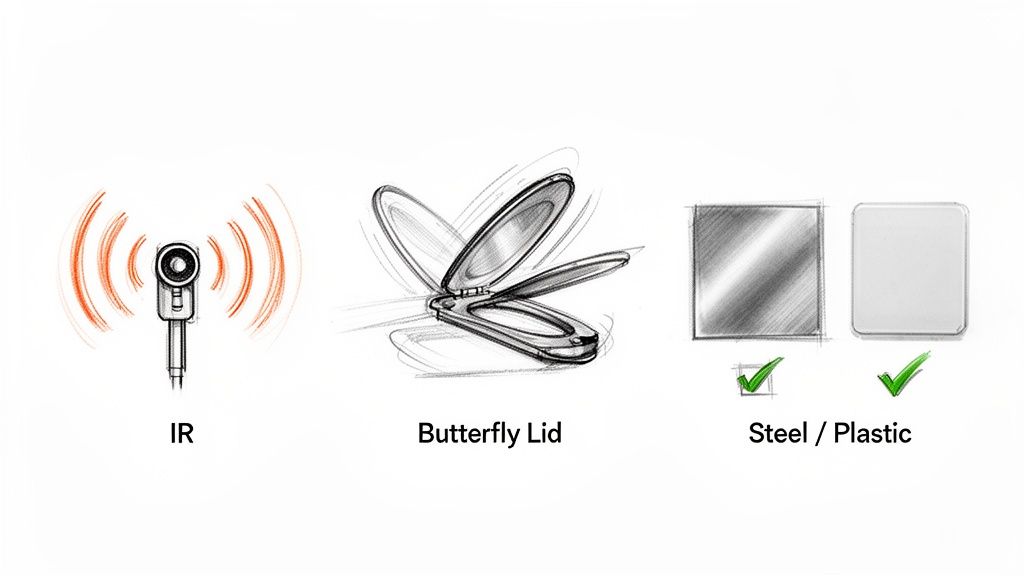
Choosing a great touchless trash can isn’t just about how it looks. The real magic—or frustration—is in the tech working behind the scenes. Getting to know these features, from the sensor's smarts to the lid's design, is what separates a seamless kitchen upgrade from just another gadget.
The heart of any automatic trash can is its sensor. This little piece of tech dictates how the can responds to you, and not all sensors are created equal. Most run on infrared (IR) technology, but the quality and logic can vary dramatically.
Sensor Technology: The Brains of the Operation
A basic sensor just detects any motion in a wide area, which often leads to annoying "false triggers." You know the drill—the lid pops open every single time you, your kids, or the dog walks by. It's distracting and a real battery drainer.
More advanced models solve this with precision sensor beams focused right above the lid, designed to only pick up intentional hand movements. Some premium cans even have multi-sense technology that can tell if you're just passing by versus hovering to scrape a plate, cleverly keeping the lid open a bit longer when you need it.
Lid Design and Odor Control
The lid itself is a huge deal, affecting both how the can works and how your kitchen smells. You'll generally run into two main designs:
- Single-Flap Lids: This is the most common style, where a single piece lifts straight up. It gives you the widest possible opening, which is perfect for scraping off cutting boards or big plates.
- Butterfly Lids: These have two doors that open from the middle, like wings. They need less vertical space to open, making them a fantastic choice for spots under countertops or low cabinets.
Beyond the movement, a well-designed lid needs to create a tight seal to lock in odors. Many of the best touchless trash can models now come with built-in carbon filter systems. A good filter can neutralize those funky smells for up to 90 days, keeping your kitchen fresh—a massive step up from cans that just mask odors with scents.
Materials and Durability
The material of a touchless trash can impacts how long it lasts, how easy it is to clean, and how good it looks. It usually comes down to stainless steel or plastic.
Stainless steel is the go-to for most kitchens. It’s durable, looks sleek, and high-quality models come with a fingerprint-proof coating to resist smudges. These cans are also better at handling the occasional bump or dent.
Plastic models are usually easier on the wallet and much lighter, making them a solid pick for bathrooms, home offices, or other low-traffic spots. They might not have that premium feel, but they're rust-proof and often come in more color options.
Key Insight: When you’re comparing models, check for durability ratings. Some high-end lids are tested for up to 200,000 opening cycles—that’s years of reliable use. Budget models, on the other hand, might only be rated for around 10,000 openings.
To help you see the differences at a glance, here’s a quick breakdown of what you can expect at different price points.
Feature Comparison Across Touchless Trash Can Tiers
This table offers a quick reference for how key features stack up across budget, mid-range, and premium touchless trash can models.
| Feature | Budget Models (Under $75) | Mid-Range Models ($75-$150) | Premium Models ($150+) |
|---|---|---|---|
| Sensor Type | Basic wide-range IR; prone to false triggers. | Focused IR sensor; improved accuracy. | Advanced multi-sense or precision IR; minimal false triggers. |
| Material | Primarily plastic, some thin stainless steel. | Fingerprint-proof stainless steel, higher-grade plastic. | Heavy-gauge, fingerprint-proof stainless steel. |
| Power Source | Battery-only (C or D batteries). | Battery-operated with optional AC adapter. | AC adapter included, often with a battery backup option. |
| Typical Capacity | 8-13 gallons. | 13-20 gallons. | 13-21 gallons, often with dual compartments. |
| Odor Control | None or a basic plastic seal. | Optional carbon filter holder. | Integrated carbon filter system included. |
| Durability | Rated for ~10,000 lid openings. | Rated for 50,000 - 100,000 lid openings. | Rated for 150,000 - 200,000+ lid openings. |
As you can see, investing a bit more can get you significant upgrades in reliability, convenience, and cleanliness.
The Power Source Dilemma: Battery vs. AC Adapter
How your can gets its power is a bigger deal than you might think, affecting both convenience and long-term costs. Most cans run on batteries (usually C or D size), which gives you the freedom to place the can anywhere. The downside? Batteries need replacing, and life can range from a few months to over a year.
An AC adapter is the "set it and forget it" solution. If you have an outlet nearby, plugging it in means you get consistent power without ever worrying about dead batteries mid-recipe. The best brands often offer an AC adapter as an add-on, giving you the choice.
The FryAway Advantage: A Cleaner Can, Less Mess
Even the best odor filter can't stop the gunk that builds up from liquid waste. Used cooking oil from things like fried chicken or pan-seared fish is a major culprit. Pouring hot oil into a trash bag is just asking for a leaky, smelly mess.
This is where a product like FryAway makes a world of difference. It's a plant-based powder that magically turns liquid cooking oil into a solid, scoopable block. The process couldn't be simpler and it keeps your fancy new trash can pristine.
- Sprinkle and Stir: After frying, just sprinkle FryAway powder into the hot oil and give it a stir.
- Cool Down: Let the oil cool completely. As it does, it will transform into a solid, gel-like mass.
- Toss into household trash: Once it's solid, you can easily scoop the whole thing out and toss it right into your touchless can.
By solidifying the oil first, you completely eliminate messy spills and those nasty, rancid smells that can linger inside your can. It’s the perfect partnership: a high-tech can for convenience and a smart solution for cleanup.
The Perfect Partner for Your Touchless Can
A high-tech touchless trash can is a brilliant upgrade for a clean, modern kitchen. It gets rid of a major germ hotspot and just makes life a little easier. But even the smartest can has an Achilles' heel: messy, smelly liquid waste—especially used cooking oil.
Pouring hot grease straight into the trash is asking for trouble. It can melt liners, stink up your kitchen as it goes rancid, and create greasy leaks that leave a permanent mess inside your expensive new bin. This is where a perfect partnership comes in, taking your waste disposal from just convenient to truly spotless.
How FryAway Keeps Your Touchless Can Pristine
FryAway is a 100% plant-based, non-toxic powder that finally solves the age-old problem of getting rid of cooking oil. It magically transforms hot liquid oil into a solid, organic block that you can just scoop out and toss away. This simple but powerful solution creates a perfect synergy with your touchless can, tackling the one challenge technology can't handle on its own.
When you solidify used cooking oil before it ever touches your trash can, you prevent the source of countless kitchen headaches. No more stinky liquids pooling at the bottom of the bag. No more greasy film coating the inside of your can. And no more worrying about a catastrophic bag leak. The result is a cleaner can, a fresher-smelling kitchen, and a much better experience all around.
Key Insight: A touchless can and FryAway create a complete waste management system. The can offers hands-free hygiene, while FryAway eliminates the mess and odor from liquid oils, ensuring your bin stays as clean as the day you bought it.
The Simple 3-Step Cleanup
Using FryAway couldn't be easier. It fits right into your post-cooking cleanup routine and only takes a few moments to guarantee a mess-free disposal. The process is completely foolproof.
Here’s the breakdown:
- Sprinkle and Stir: Right after you finish frying and while the oil is still hot, just sprinkle the FryAway powder into the pan. Give it a gentle stir to make sure it's mixed in well.
- Cool Down: Now, just walk away. As the oil cools down, FryAway gets to work, turning the liquid into a solid, gel-like substance.
- Toss into household trash: Once the oil has completely solidified, you can easily scoop the whole block out with a spoon or spatula. The solid mass goes straight into your touchless trash can without any mess, drips, or smells.
This method not only keeps your trash can clean but also saves your plumbing. Pouring oil down the drain is a leading cause of stubborn pipe clogs and massive municipal headaches called "fatbergs." With FryAway, you’re disposing of oil responsibly and protecting your home's pipes. To figure out how much you might need, you can learn more about FryAway Super Fry waste cooking oil solidifier powder.
From Pan to Can: A Crispy Fried Calamari Recipe
To really see this synergy in action, let's look at a classic that generates a lot of used oil: crispy fried calamari. This recipe gives you delicious results and an unbelievably easy, mess-free cleanup, all thanks to FryAway.
What You'll Need:
- 1 lb squid, cleaned and cut into rings
- 1 cup all-purpose flour
- 1/2 cup cornstarch
- 1 teaspoon salt
- 1/2 teaspoon black pepper
- 1/2 teaspoon paprika
- 4-6 cups of vegetable or peanut oil for frying
Cooking Instructions:
- In a shallow dish, whisk together the flour, cornstarch, salt, pepper, and paprika. Pat the calamari rings dry with a paper towel, then dredge them in the flour mixture until they're evenly coated.
- In a large, heavy-bottomed pot or deep fryer, heat the oil to 375°F (190°C).
- Carefully place the coated calamari into the hot oil in small batches, being careful not to overcrowd the pot. Fry for about 2-3 minutes, or until golden brown and crispy.
- Use a slotted spoon to remove the calamari and let it drain on a wire rack.
Once you've enjoyed your perfectly crispy calamari, it's time to clean up. You’re left with a pot of used cooking oil—the perfect time to put FryAway to the test. Just follow the three steps: 1) Sprinkle and Stir, 2) Cool Down, and 3) Toss. The solidified oil will pop right out, leaving your touchless trash can clean, dry, and odor-free.
Situational Showdown: Choosing the Right Can for Your Space
Picking the best touchless trash can isn't just about comparing features on a spec sheet. It's about finding the right fit for your life and your home. A can that’s a game-changer in a big suburban kitchen will feel like a clunky mistake in a tiny city apartment. Let's walk through a few common scenarios to help you find your perfect match.
This decision tree gives you a simple visual for handling common kitchen waste, showing just how clean and easy it is to deal with used cooking oil when you have the right tools.
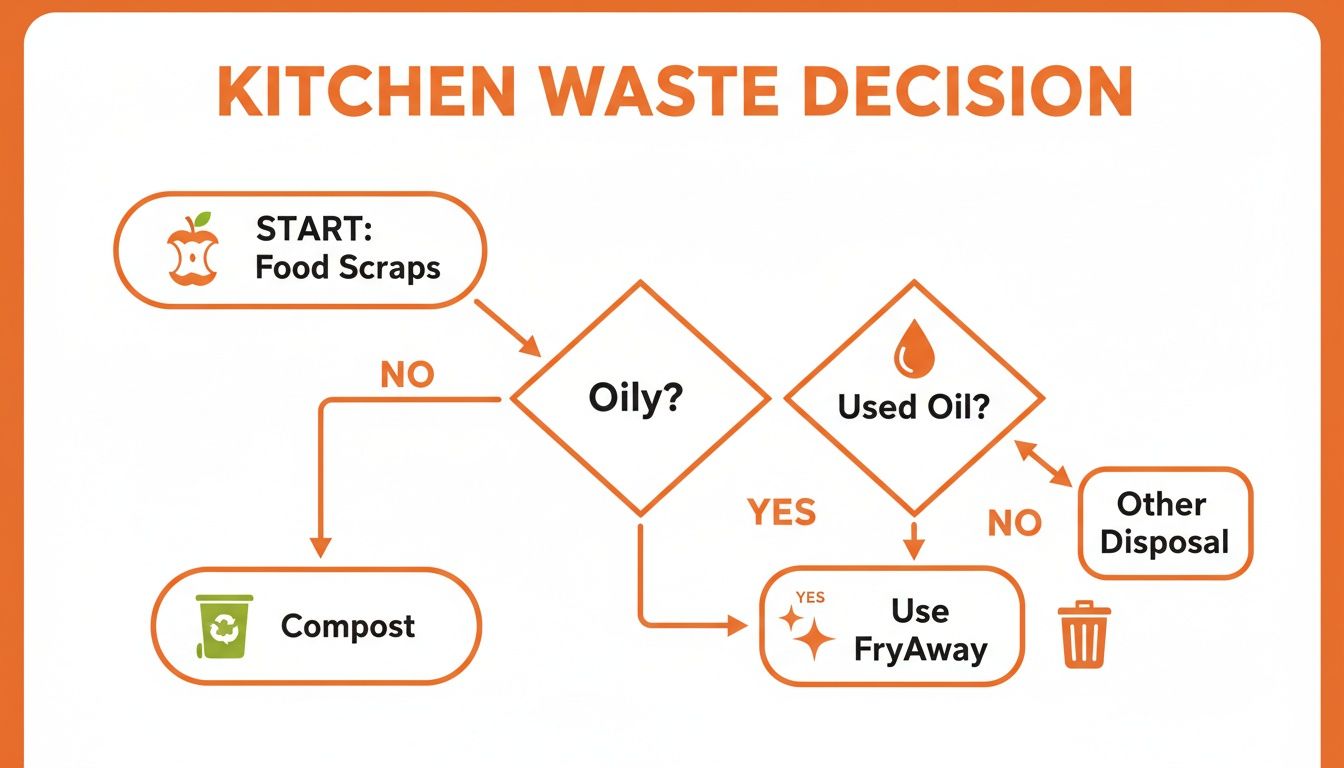
As the guide shows, separating your waste properly is the key to keeping your trash system clean and odor-free, especially when you can solidify cooking oil with FryAway before it ever touches the bin.
The Busy Family Kitchen
For a high-traffic family kitchen, you need a workhorse. Durability, capacity, and top-notch odor control are non-negotiable. This is the can that has to stand up to everything from breakfast chaos to big dinner cleanups without needing constant attention.
- Capacity: Don’t settle for anything less than 13 gallons. A bigger bin means you're not wrestling with a full bag right in the middle of a hectic weeknight.
- Material: Fingerprint-proof stainless steel is the undisputed champ here. It’s tough enough to handle bumps from kids and pets and cleans up with a quick wipe.
- Odor Control: Look for models with an integrated carbon filter. A tight-sealing touchless lid paired with a good filter is your best defense against those lingering food smells.
A family kitchen also deals with trickier waste, like the oil left over from frying homemade french fries. Instead of letting greasy messes ruin your new can, this is where the synergy with FryAway really shines. Just follow the simple three-step process: 1) Sprinkle and Stir into the hot oil, 2) Cool Down until it solidifies, and 3) Toss the solid block straight into your trash. Your can stays pristine and smell-free, no matter what's on the menu.
The Small Apartment or Studio
In an apartment or studio, space is everything. You need a touchless trash can that gives you modern convenience without a bulky footprint. The name of the game is slim profiles and smart design. For more ideas on making the most of your square footage, check out our guide on small kitchen storage solutions.
Pro Tip: In a smaller living space, a quiet lid can make a huge difference. Look for models advertised with soft-close or silent operation to keep the peace.
Here’s what to look for in a can for a compact home:
- Slim Design: Many brands offer sleek, rectangular models made to tuck neatly against a wall or between cabinets.
- Butterfly Lid: This two-part lid opens from the center, so it needs less vertical clearance—perfect for placing under countertops.
- Capacity: An 8 to 10-gallon can is usually plenty for one or two people. It also encourages you to take the trash out more often, which is a great way to control odors in a small space.
The Bathroom or Home Office
For a bathroom or office, the goal is discretion. You want a smaller, less obtrusive can that blends in while still offering that clean, hands-free operation.
A 2 to 4-gallon plastic model is almost always the best bet. Plastic is lightweight, won't rust in a humid bathroom, and the lids tend to operate more quietly than their steel counterparts. A simple, reliable sensor is all you need for these low-traffic zones.
This move toward specialized cans is part of a much bigger trend. The global market for automatic touchless garbage bins was valued at USD 2.5 billion in 2024 and is expected to hit USD 4.8 billion by 2033, growing at an impressive 8.2% CAGR. This growth highlights a major shift as more of us demand hygienic solutions in every room of the house. By choosing the right can for each space, you’re not just buying a cool gadget—you’re making a smart upgrade to your home’s cleanliness and convenience.
The Future of Waste Management: Smart Bins and Sustainability
The humble trash can is getting a major upgrade. We're moving beyond simple motion sensors and into the world of truly smart, connected home devices. Tomorrow's best touchless trash can won't just be hands-free; it'll be an integrated part of your home's ecosystem, making waste management more efficient and sustainable.
Think about a bin that not only opens with a wave but also seals its own bag when it's full and orders a replacement liner for you. Some models can even ping your phone to let you know it's time to take out the trash. This isn't science fiction anymore—it's the next step in home convenience.
This technology is catching on fast. The smart trash bin market is set for explosive growth, with analysts projecting a massive expansion by 2032 at an expected CAGR of 15.00%. That kind of growth shows a clear demand from people who want smarter, more connected solutions in their homes.
Connecting Technology with Sustainability
These smart features aren't just for show; they can genuinely help you run a more eco-conscious home. By giving you real-time data on how full your bin is, they help optimize trash collection and cut down on the premature use of plastic liners. You only use what you absolutely need, which is a core principle of modern sustainability.
Manufacturers are also stepping up their game with materials. A growing number of brands are making a point to use recycled plastics and adopt more sustainable manufacturing processes, looking at the entire lifecycle of their products.
While touchless trash cans are great for hygiene, they are still electronic devices. It’s important to consider the environmental impact of electronic waste, which includes smart home gadgets, to get the full picture of sustainable waste management.
By combining smart tech with eco-friendly materials, the modern trash can becomes more than just a place for garbage. It turns into a tool that helps you reduce waste and live a little more efficiently.
FryAway and the Eco-Conscious Kitchen
This shift toward a smarter, greener kitchen lines up perfectly with what we're doing at FryAway. By turning used cooking oil into a solid, easy-to-toss block, FryAway tackles a huge source of kitchen waste that technology can't solve on its own. It's a simple, practical piece of the puzzle for a truly sustainable kitchen.
For a perfect example, try making Crispy Pan-Fried Salmon. The recipe calls for a good bit of olive oil to get that amazing, crackling skin, which leaves you with used oil to deal with afterward.
Once you’re done cooking, cleanup is clean and eco-friendly with three simple steps:
- Sprinkle and Stir FryAway powder into the hot oil.
- Cool Down and let the oil completely solidify.
- Toss into household trash, scooping the solid block right into your smart bin.
This keeps greasy liquids out of your plumbing, landfills, and waterways. When you pair FryAway with a smart, sustainable touchless trash can, you create a powerful system for a modern, responsible home. For more on this, check out our guide on sustainable waste management solutions.
Got Questions About Touchless Trash Cans?
Thinking about getting a touchless trash can? You're not alone. But before you dive in, you probably have a few questions. From how well the sensors actually work to basic cleanup, let's tackle the common stuff so you can pick the right one with confidence.
How Reliable Are the Sensors, Really?
This is the big one, and for good reason. Nobody wants a trash can that flings its lid open every time you walk by or, even worse, stays shut when you've got a handful of dripping eggshells. The good news is, the technology has gotten a lot better.
Reputable brands now use focused infrared (IR) beams or advanced multi-sense tech that knows the difference between a person passing by and a hand ready to toss something. This cuts down on those annoying “false triggers” and saves a ton of battery life. While a super cheap model might still have a wonky, wide-angle sensor, any decent mid-range or premium can is going to be surprisingly reliable.
To keep your sensor at its best:
- Give the sensor a quick wipe with a soft, dry cloth every few weeks to clear off dust or kitchen grime.
- Try not to clutter the area right around the can, as it can sometimes mess with the sensor's beam.
- Swap out the batteries as soon as you notice the lid getting sluggish. Or, even better, get a model with an AC adapter for consistent power.
Are Touchless Cans Actually More Hygienic?
Absolutely. This is the main reason people get them. A standard trash can lid is a hotspot for germs like E. coli and Salmonella, which can easily get on your hands and then travel to other surfaces in your kitchen.
By getting rid of the need to touch the lid, you break that chain of cross-contamination. It’s a game-changer when you're in the middle of meal prep, handling raw chicken or fish, and need to throw something away without stopping to scrub your hands.
A study in the Journal of Food Protection pointed out what many of us already suspected: kitchen surfaces, especially trash cans, are major hubs for nasty bacteria. A touchless can directly solves this problem by removing a key point of contact.
What’s the Best Way to Clean and Maintain One?
Keeping your touchless can looking good is pretty simple. For a stainless steel finish, just use a microfiber cloth with a bit of stainless steel cleaner, wiping with the grain to avoid streaks. You can wipe the inside with a damp, soapy cloth—just make sure it’s totally dry before you pop in a new bag.
Whatever you do, don't dunk the lid in water or spray cleaner right on the sensor. That's a quick way to fry the electronics. A lightly dampened cloth is all you need for the lid and sensor area.
Honestly, the real secret to an easy cleaning routine is managing wet garbage. This is where a product like FryAway is a lifesaver. Before you even think about tossing out used cooking oil, use FryAway to turn it from a greasy liquid into a solid, scoopable block.
The whole process couldn't be easier:
- Sprinkle and Stir: Just mix FryAway powder into your hot cooking oil after you’re done frying.
- Cool Down: Let it cool off for a bit until it completely solidifies.
- Toss into household trash: Scoop the solid chunk out and drop it straight into your touchless can.
This simple habit stops greasy messes and nasty smells before they start, meaning you'll almost never have to deep-clean the inside of your bin. Imagine frying up some crispy homemade onion rings—after you're done, just solidify the oil with FryAway for a cleanup that takes seconds.
Can I Use Regular Trash Bags?
Yep, for the most part. Some brands will try to sell you on their own custom-fit liners, but the vast majority of touchless cans work just fine with standard trash bags from the grocery store. A 13-gallon can, which is the most common size for kitchens, fits standard 13-gallon bags from brands like Hefty or Glad perfectly.
The one feature to look for is a retainer ring. It's a simple plastic ring that holds the top of the bag securely so it doesn't slip down into the can. It also tucks away any ugly bag overhang, giving you a clean look without having to buy expensive, proprietary bags.
Ready to revolutionize your kitchen cleanup and keep your new touchless can pristine? FryAway makes disposing of messy cooking oil simple, clean, and eco-friendly. Visit FryAway today to learn more and find the perfect product for your cooking style!