


· By FryAway
How to Clean Up Spilled Cooking Oil a Simple Guide
It’s happened to the best of us: a bottle of cooking oil slips, and suddenly there’s a slick, golden puddle spreading across the floor. The first instinct might be to grab a towel, but wait. Your number one goal is to absorb the oil before you start wiping.
If you just wipe it, you’ll smear a thin, treacherous film of grease everywhere. Instead, reach for something like salt or baking soda to soak it up first. This one move makes the entire cleanup job safer and a whole lot easier.
Your First Moves After a Cooking-Oil Spill
That spreading pool of oil can feel like a kitchen disaster, but what you do in the first 30 seconds makes all the difference. Acting fast and smart keeps the mess contained and sets you up for a quick cleanup. Whatever you do, don't reach for a wet cloth or mop just yet. Safety and containment come first.
The response may vary depending on the spill’s size, temperature, location, and whether it involves liquid oil or thicker cooking fat. This guide on how to clean up grease spills covers the immediate containment and surface-cleaning process in more detail.
Your immediate priority is preventing a slip-and-fall accident. If anyone else is home, shout out a warning. If you have one of those little "wet floor" signs, now's its time to shine. If not, just place a chair or another large object next to the spill to block it off.
What to Grab Immediately
Once you’ve secured the area, it’s time to soak up that oil. Adding water will only make it worse, spreading the grease further. Instead, you need an absorbent material to dump over the entire spill. Be generous with it! You almost certainly have what you need in your pantry.
Here’s a quick list of things that work wonders for soaking up oil:
- Salt: It's cheap, you have it, and it works incredibly well. A thick layer will pull the oil right up.
- Baking soda or cornstarch: These fine powders are fantastic for drawing oil out of the surface.
- Flour: It can get a little gummy, but in a pinch, flour does a great job of absorbing oil.
- Cat litter: If you’re a cat owner, clay-based litter is literally designed for maximum absorption. It’s perfect for this.
This little flowchart really simplifies what to do in that moment of panic.
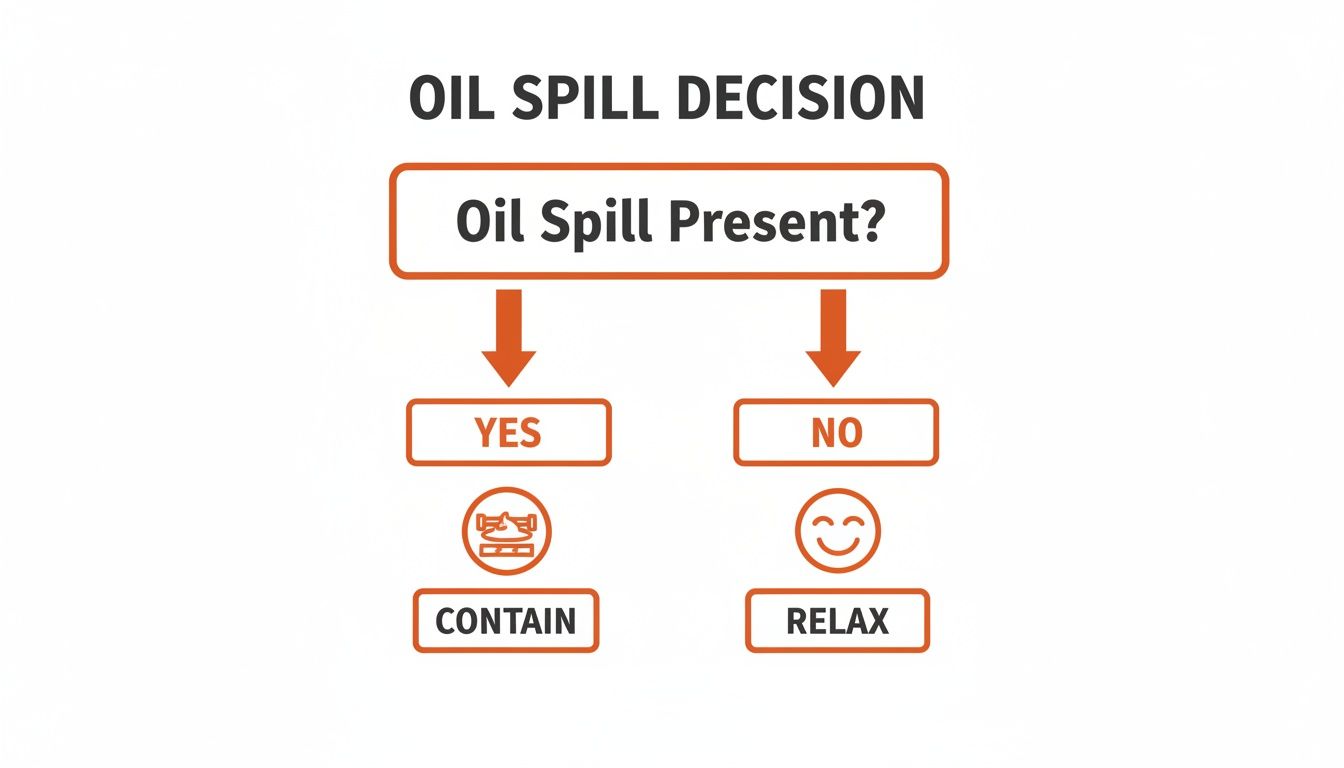
It highlights the golden rule: contain the mess before it has a chance to get worse.
Handling spills the right way is also part of a bigger picture—managing cooking oil responsibly. Improper disposal is a massive problem. Globally, used cooking oil production is estimated at a staggering 41-52 million tons annually. When that oil goes down the drain, it creates huge "fatbergs" that block city sewers.
Once you’ve covered the spill with your absorbent, give it about 10-15 minutes to work its magic. This gives it enough time to soak up most of the liquid. After that, you can just scrape the saturated gunk into a dustpan and get ready for the degreasing part.
And since we're on the topic of kitchen safety, it's always smart to be prepared for other mishaps. Take a look at our guide on how to prevent grease fires for more essential tips.
Cleaning Spilled Oil From Hard Kitchen Surfaces
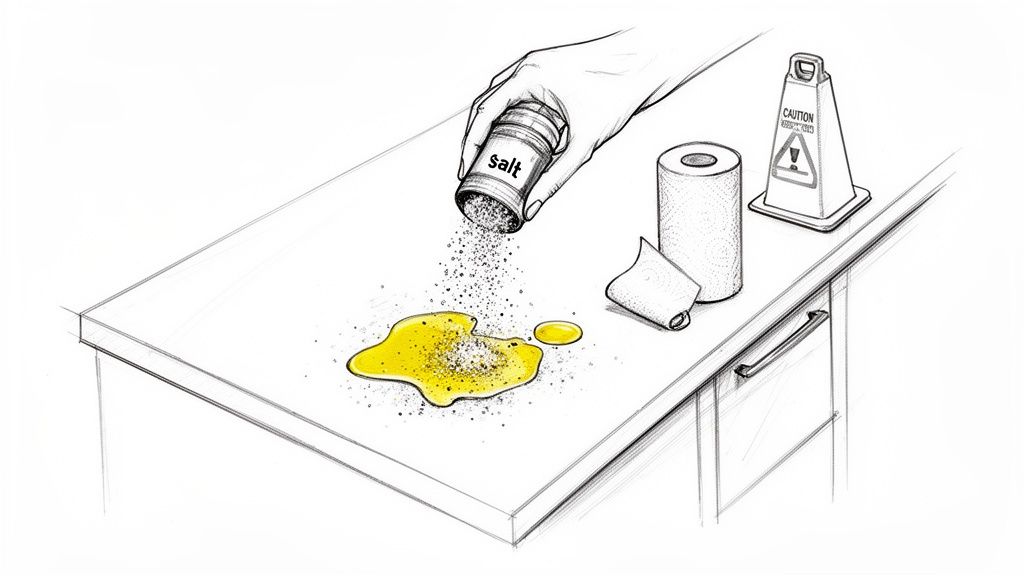
Hard surfaces like tile, linoleum, and sealed hardwood are ground zero for most kitchen oil spills. Once you’ve managed to contain the initial puddle and soak up the worst of it, the real cleanup begins. The goal now is to cut through that slick, dangerous film without just spreading it around.
After you've scraped up the first round of absorbent material, go in for a second, lighter dusting. Think of this as the final soak-up stage. A fine layer of baking soda or cornstarch left for another five to ten minutes can pull that last bit of residual oil from grout lines or tiny imperfections in the flooring.
Before you start scrubbing, it helps to have the right tool for the job. Here’s a quick rundown of common household items you can use to absorb that initial spill.
Household Absorbents for Oil Spills
| Material | Effectiveness | Best For | Pro Tip |
|---|---|---|---|
| Baking Soda | High | Tile, linoleum, countertops | Excellent at deodorizing as it absorbs. Sprinkle generously. |
| Cornstarch | High | Wood, laminate | Its fine texture is great for pulling oil out of porous surfaces. |
| Table Salt | Medium | Quick, small spills on any hard surface | The coarse texture helps lift the oil. It's cheap and readily available. |
| Flour | Medium | Larger spills on concrete or garage floors | Can get gummy, so scrape it up before it turns into a paste. |
| Cat Litter | High | Very large spills, especially in garages | The clay is incredibly absorbent but can be messy to clean up afterward. |
Choosing the right material makes the next step—degreasing—much, much easier.
Degreasing Your Floor The Right Way
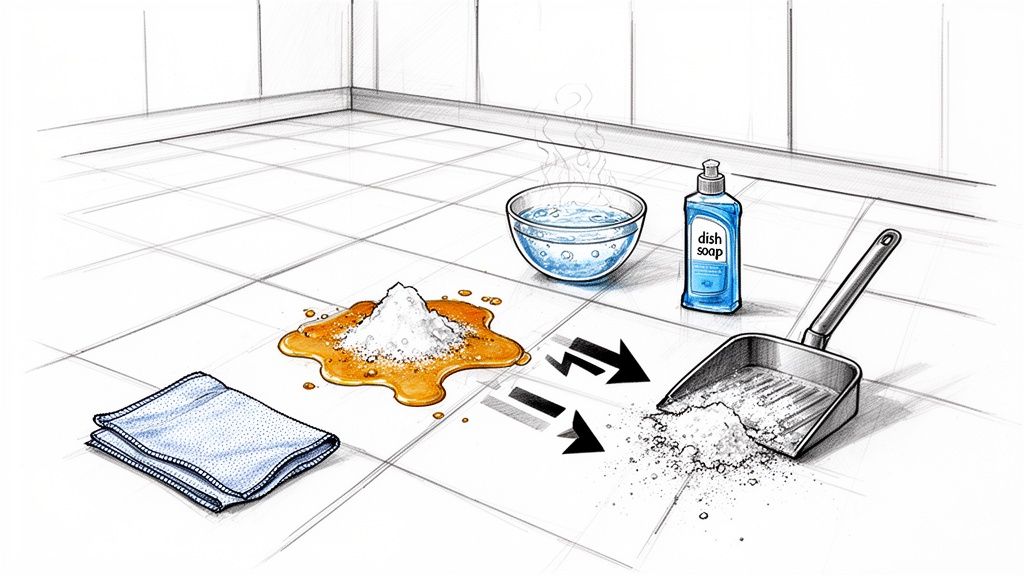
Now it's time to actually cut through the grease. A simple but powerful mix of hot water and a quality dish soap is often all you need. After all, dish soap is specifically designed to break down fat and oil molecules.
This is where a microfiber cloth becomes your best friend. Its unique fibers are made to trap and lift tiny grease particles instead of just smearing them across the floor. Always work from the outside edge of the spill inward to avoid making the greasy zone even bigger.
For spills that land on wood floors, it's crucial to use the right method to avoid damaging the finish. You can find excellent tips for safely and effectively cleaning wood floors to preserve their look and feel.
Pro Tip: Whatever you do, don't grab a regular sponge or an old cotton mop for this part. They get saturated almost instantly and will just smear a thin, invisible layer of oil over a much wider area. You'll be left with a serious slipping hazard long after you thought the spot was clean.
After the initial scrub, rinse your cloth thoroughly with hot water and wipe the area again to lift any lingering soap residue. You might need to repeat this a couple of times. Finally, dry the spot completely with a clean towel to finish the job.
A Better Way to Handle Oil in the Pan
The easiest spill to clean is the one that never happens. Start with our guide on how to avoid oil spills for practical tips on stable cookware placement, careful oil handling, and safer transfer methods. Managing leftover oil directly in the pan also reduces the need to carry or pour a container filled with liquid oil.
We recommend FryAway, a 100% plant-based powder that magically transforms used cooking oil into a solid. It makes disposal clean, easy, and safe.
Here's how ridiculously simple it is:
- Sprinkle and Stir: While your cooking oil is still hot, just stir the FryAway powder right into the pan until it dissolves.
- Cool Down: Now, just walk away. Let the pan cool down completely. As it cools, the oil will harden into a solid, waxy puck.
- Toss into Household Trash: Once it's solid, you can easily scoop the hardened oil out of the pan and toss it straight into your garbage bin. No mess, no fuss.
This method completely eliminates the risk that comes with trying to pour or carry hot oil anywhere. You can learn more about finding the best grease cleaner for any kitchen task right here on our blog.
Removing Tough Oil Stains From Porous Surfaces
Cleaning oil off a sealed countertop is one thing. But when it soaks into porous materials like carpet, unsealed wood, or your favorite armchair, you’ve got a real challenge on your hands. These surfaces act like a sponge, pulling the oil deep into their fibers where a simple wipe-down won't do a thing.
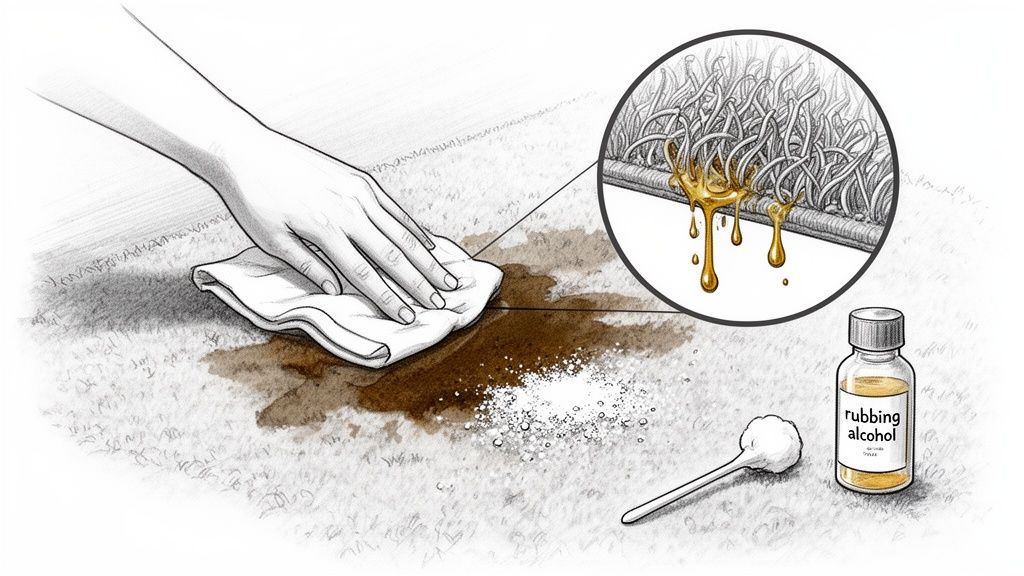
The secret to learning how to clean up spilled cooking oil on these tricky surfaces is to pull the oil out, not push it deeper. Your first instinct might be to scrub, but don't. Grab a clean cloth or a stack of paper towels and blot gently, absorbing as much of the surface oil as you can. Keep using fresh sections of the cloth until it comes up dry.
Lifting Grease From Carpet and Upholstery
For soft surfaces like rugs and fabric chairs, your best friends are absorbent powders. Once you've blotted away the excess, completely cover the stained area with a generous layer of one of these household staples:
- Baking Soda: A fantastic absorber that also helps neutralize any lingering greasy odors.
- Cornstarch: Its super-fine texture is perfect for getting deep into carpet pile to draw out the oil.
- Salt: It works in a pinch, but its abrasive texture means you should be cautious on delicate fabrics.
Let the powder work its magic for at least an hour. For a really nasty spill, leaving it overnight is even better. The powder will slowly wick the oil up and out of the fibers. Once it's done its job, just vacuum it all up. If a faint spot remains, dabbing it with a cloth lightly dampened with rubbing alcohol can often break down the last bit of grease.
Always Spot-Test First: Before you put any cleaning solution on your carpet or upholstery, test it on a hidden spot first. Under a cushion or inside a closet corner is a good place to check for any potential discoloration or damage.
Tackling Oil on Unsealed Wood and Concrete
Unsealed wood and concrete absorb oil quickly, so surface wiping alone may not remove the entire stain. When a spill reaches a driveway, patio, or garage floor, follow our detailed guide on how to clean grease from concrete. For smaller stains, one suitable approach is to create a poultice—a thick paste designed to draw absorbed oil toward the surface as it dries.
Spread the paste over the entire oil stain and then walk away. You need to let it dry completely, which might take a few hours. As it hardens, the poultice will pull the oil out of the porous surface. Once it's totally dry, gently scrape it off and wipe the area clean. For a deeper dive into handling blemishes on wood, check out these tips for wood floor stain removal.
The Smartest Way to Handle Leftover Cooking Oil
Knowing how to mop up an oily spill is one thing, but preventing the mess from ever happening is the real win. After you’ve pulled that last piece of perfectly fried chicken from the pan, you’re left with a sloshing, greasy problem. The temptation to just pour it down the sink or into a flimsy container is a recipe for clogged pipes and a guaranteed future spill.
Forget dealing with messy jars or gambling with your plumbing. There’s a much cleaner, safer way to go. What if you could turn that liquid mess into a solid you can just toss away?
This is exactly where FryAway comes in. It’s a 100% plant-based, non-toxic powder that completely flips the script on oil disposal. No more waiting for oil to cool, no more hoarding greasy containers, and definitely no more pouring it where it doesn’t belong.
The Simple Three-Step FryAway Process
Using FryAway is about as easy as it gets. It’s a straightforward, three-part method that takes all the hassle and danger out of dealing with hot oil.
-
Sprinkle and Stir: Right after you’re done frying, while the oil is still hot, just sprinkle the FryAway powder into the pan. Give it a gentle stir until the powder completely dissolves. The heat does all the hard work for you.
-
Cool Down: Now for the easiest part: just walk away. Leave the pan on the stovetop or another heat-safe surface and let it cool down completely. As it cools, you’ll see the oil magically transform from a liquid into a solid, rubbery puck.
-
Toss into Household Trash: Once the oil has fully solidified, you can slide a spatula underneath and scoop the whole thing out. It comes out in one clean piece, leaving your pan almost mess-free. From there, you just toss it right into your household garbage.
This simple process completely eliminates the risk of creating 'fatbergs'—those massive, stubborn clogs that form in city sewer systems from solidified fats and oils. You're not just keeping your own pipes clean; you're helping prevent a major municipal headache.
Why This Method Is a Game-Changer
Picture this: you've just made a batch of crispy, beer-battered fish and chips. You're left with a pan full of used peanut oil. The old way meant waiting for it to cool, finding an old coffee can, carefully pouring the greasy liquid in, sealing it, and hoping it wouldn't leak all over your trash can.
With FryAway, the cleanup becomes part of the cooking process. You sprinkle, stir, and by the time you're done with your meal, the oil is solid and ready for the bin. It's a faster, cleaner, and far more responsible way to manage used cooking oil.
This method doesn't just simplify your kitchen routine; it's a much better alternative to traditional disposal methods. If you're looking for more details on responsible oil management, you can learn how to properly dispose of used cooking oil in our dedicated guide.
Delicious Fried Recipes Worth the Mess
Now that you know exactly how to handle leftover oil and what to do if a spill happens, there’s no reason to be intimidated by frying at home. Honestly, some of the most comforting and delicious meals imaginable come from a fryer, and once you have a solid cleanup plan, the whole process becomes completely stress-free.
So let's get into a few recipes that remind us why we love that golden, crispy goodness in the first place. These are the dishes that are absolutely worth it. And remember, the real key to enjoying them without dreading the aftermath is having a simple disposal method ready. Using a plant-based solidifier like FryAway means you can focus on the flavor, not the greasy pan you'll have to deal with an hour later.
Buttermilk Fried Chicken
Is there anything better than the crunch of perfectly fried chicken? The secret is all in a long buttermilk marinade to tenderize the meat and a well-seasoned flour dredge for that signature crust. For the best results, you’ll want to use a high-smoke-point oil like peanut or canola in a deep, heavy-bottomed pot or a trusty cast-iron skillet.
Once you've cooked the chicken to a perfect golden brown, you'll be left with a pan full of used cooking oil. This is where your new cleanup strategy shines. Instead of worrying about how to clean up spilled cooking oil while trying to pour it into a container, just follow these simple steps right in the pan:
- Sprinkle and Stir: Add the FryAway powder to the still-hot oil.
- Cool Down: Let it sit and solidify while you enjoy your meal.
- Toss into household trash: Scoop out the hardened puck and you’re done. No mess, no fuss.
Classic French Fries
Getting that true, restaurant-quality fry at home is totally achievable, but it does require a two-step frying process. First, you'll blanch your hand-cut potatoes in vegetable oil at a lower temperature. After they've cooled down, you fry them a second time at a higher heat until they're perfectly golden and crispy. This double-fry method is what creates that addictively fluffy interior and crunchy exterior.
This recipe generates a pretty significant amount of used oil, which is exactly the kind of situation that used to be a major cleanup headache. But with an oil solidifier, the aftermath of your french fry feast is no longer a problem.
Light and Airy Apple Fritters
If you're in the mood for a sweet treat, apple fritters are a timeless classic. It’s a simple batter filled with chunks of tart apple, fried until puffy and golden, and finished with a sweet glaze—pure comfort food. A neutral oil like canola or sunflower works best here, as it won't overpower the delicate apple and cinnamon flavors.
Just like with savory dishes, the leftover oil can be handled in moments. You’ll follow the same easy, three-step process: Sprinkle and Stir the FryAway powder into the hot oil, let it Cool Down, and then Toss the solid puck right into your household trash. It makes frying dessert just as easy as frying dinner.
Common Questions About Cleaning Up Cooking Oil
Even with the best plan, questions always pop up when you're staring down a greasy mess. Getting the right answers can save you a ton of time, prevent damage, and make the whole process of learning how to clean up spilled cooking oil go a lot smoother. Let’s tackle some of the most common ones I hear.
Can I Use Flour to Clean Up a Cooking Oil Spill?
Yes, you absolutely can! Flour works surprisingly well as an absorbent, much like baking soda or salt. It’s fantastic for soaking up the bulk of a liquid spill, which makes it way easier to scrape up before you get into the deep clean.
Just be prepared for the consistency. When oil and flour mix, they create a thick, doughy paste. For the best results, completely cover the spill with a generous layer of flour and give it about 15 minutes to work its magic. Then, use a dustpan or a stiff spatula to lift the sticky gunk off the floor. You'll still need to follow up with a good degreasing soap and hot water to handle the leftover residue.
How Do I Get Rid of the Greasy Smell After a Spill?
A lingering oily smell can make a perfectly clean kitchen feel grimy. The first thing you should always do is open your windows to get some fresh air moving. Good ventilation is your best friend here.
Next, you can whip up a natural air freshener right on your stovetop. Just simmer a small pot of water and toss in things like:
- Lemon peels and a few cloves
- Cinnamon sticks
- A little splash of white vinegar
Another trick I love is to just place an open bowl of baking soda on the counter. It's a powerhouse at absorbing stubborn airborne odors overnight. By morning, your kitchen will smell fresh and clean again.
Don’t fall into the trap of just masking the smell with air freshener sprays. They usually just cover up the odor for a little while. Simmering natural ingredients or using baking soda actually helps neutralize and eliminate the greasy scent for good.
Is It Ever Safe to Pour Oil Down the Drain with Hot Water?
No, you should never pour cooking oil down the drain, even if you’re blasting it with scalding hot water. The hot water only keeps the oil liquid for a short time. As it travels down your pipes and inevitably cools, the oil will turn solid again.
This creates a sticky, greasy buildup that grabs onto food particles and other gunk, eventually leading to massive, stubborn clogs known as "fatbergs." These can cause serious plumbing backups that are a nightmare (and expensive) to fix. The only truly safe way to get rid of oil is to solidify it first.
This is where a product like FryAway is a total game-changer. Its simple three-step process makes oil disposal foolproof and completely safe for your plumbing:
- Sprinkle and Stir: Just add the powder to your hot oil.
- Cool Down: Let the pan cool completely as the oil hardens into a solid puck.
- Toss into household trash: Scoop out the hardened oil and throw it right in the garbage.
This method completely sidesteps the risk of clogged pipes and makes your kitchen cleanup simple and way more environmentally friendly.
Ready to make messy oil disposal a thing of the past? Join the thousands of home cooks who have simplified their kitchen routine with FryAway. Discover the magic of turning liquid oil into solid waste and enjoy frying without the fuss.