


· By FryAway
Your Guide to the Best Plant Based Cleaning Products
Opting for the best plant based cleaning products isn't just about following a trend. It's about choosing powerful, effective formulas that are genuinely safer for your family and the planet.
More and more, brands are tapping into ingredients from sources like coconut and corn to replace the harsh chemicals we’ve grown used to. This shift offers a much healthier way to tackle household grime without ever sacrificing performance. Let's walk through what these products are, why they work so well, and how to pick the right ones for every room in your home.
Why Choose Plant Based Cleaning Products
Making the switch to plant-based cleaning is a conscious decision to create a healthier home from the ground up. Traditional cleaners often rely on a cocktail of petroleum-derived chemicals like ammonia, bleach, and phthalates. Plant-based formulas, on the other hand, get their muscle from botanical sources.
Think of it as upgrading your cleaning toolkit from synthetic chemicals to nature’s own powerful solutions.
This simple change means you’re introducing fewer harsh compounds into your living space. The immediate payoff? Better indoor air quality and a lower risk of irritation for your family and pets, especially those with sensitivities. Plus, these plant-derived ingredients are typically biodegradable, so they break down easily and leave a much smaller environmental footprint.
The Rise of Sustainable Cleaning
The move toward greener cleaning is a global shift, and the numbers prove it. The plant-based cleaning products market was valued at US$1,537 million and is on track to hit US$3,483 million by 2031.
This incredible growth signals a huge change in what we, as consumers, want in our homes: safer, more sustainable goods. This is exactly where companies like FryAway fit in, leading the charge with its 100% plant-based powder for safely disposing of used cooking oil.
At their core, plant-based ingredients work because they are inherently powerful. A plant can heal itself and generate new growth, and these same properties can be formulated to act as effective emulsifiers, foaming agents, and cleaners in your home.
Benefits for Your Home and Health
Choosing plant-powered cleaners brings some real, tangible benefits to the table. They slice through grease and grime using natural acids and surfactants—all without the noxious fumes that come with conventional products. For instance, an ingredient like citric acid can dissolve tough mineral deposits and soap scum just as well as its chemical-based competitors.
Here's a quick look at the key benefits:
- Safer for Families: These formulas are made without harsh chemicals, which means less exposure to potential irritants for children and pets.
- Better for the Planet: The ingredients are often biodegradable and come from renewable resources, minimizing their impact on the environment.
- Effective Cleaning Power: Don't mistake "gentle" for "weak." Modern plant-based formulas are designed to rival the performance of traditional cleaners on everything from everyday messes to tough stains.
Want to learn more about how specific natural ingredients get the job done? Exploring why citrus-based cleaning is a beneficial choice is a great place to start. Ultimately, making this switch is a simple yet powerful step toward a cleaner, healthier living space for everyone.
Plant-Based vs Traditional Cleaners at a Glance
Still on the fence? Sometimes seeing the differences side-by-side makes the choice crystal clear. Here’s a simple breakdown of how plant-based cleaners stack up against the conventional products you might be used to.
| Feature | Plant-Based Cleaners | Traditional Cleaners |
|---|---|---|
| Primary Ingredients | Derived from plants like corn, coconut, and citrus. | Derived from petroleum (crude oil). |
| Environmental Impact | Biodegradable and from renewable resources. | Non-renewable; can pollute waterways. |
| Health & Safety | Gentler on skin, lower risk of toxic fumes. | Often contain harsh chemicals like ammonia, bleach. |
| Indoor Air Quality | No harsh fumes; often naturally scented. | Can release Volatile Organic Compounds (VOCs). |
| Effectiveness | Highly effective on grease, grime, and stains. | Strong chemical action, but can be corrosive. |
| Disposal | Ingredients break down naturally. | Chemical residues can harm ecosystems. |
The takeaway is simple: plant-based cleaners offer a modern, effective, and responsible way to keep your home sparkling without compromising on health or environmental values.
How to Select the Best Plant Based Cleaners
Walking down the cleaning aisle can feel overwhelming, but picking the best plant-based products doesn't have to be a guessing game. Once you know how to read labels and spot the right certifications, you can confidently choose formulas that are safe for your family and tough on messes.
And you're not alone in making this switch. The market for eco-friendly cleaning products has exploded, reaching USD 12.2 billion globally and is expected to climb to USD 31.1 billion by 2034. It turns out households are the main force behind this shift, making up a whopping 61% of the market. It’s clear that people everywhere are looking for greener, safer ways to clean.
This decision tree can help you sort through your options, whether your top priority is your family's health or the planet's.
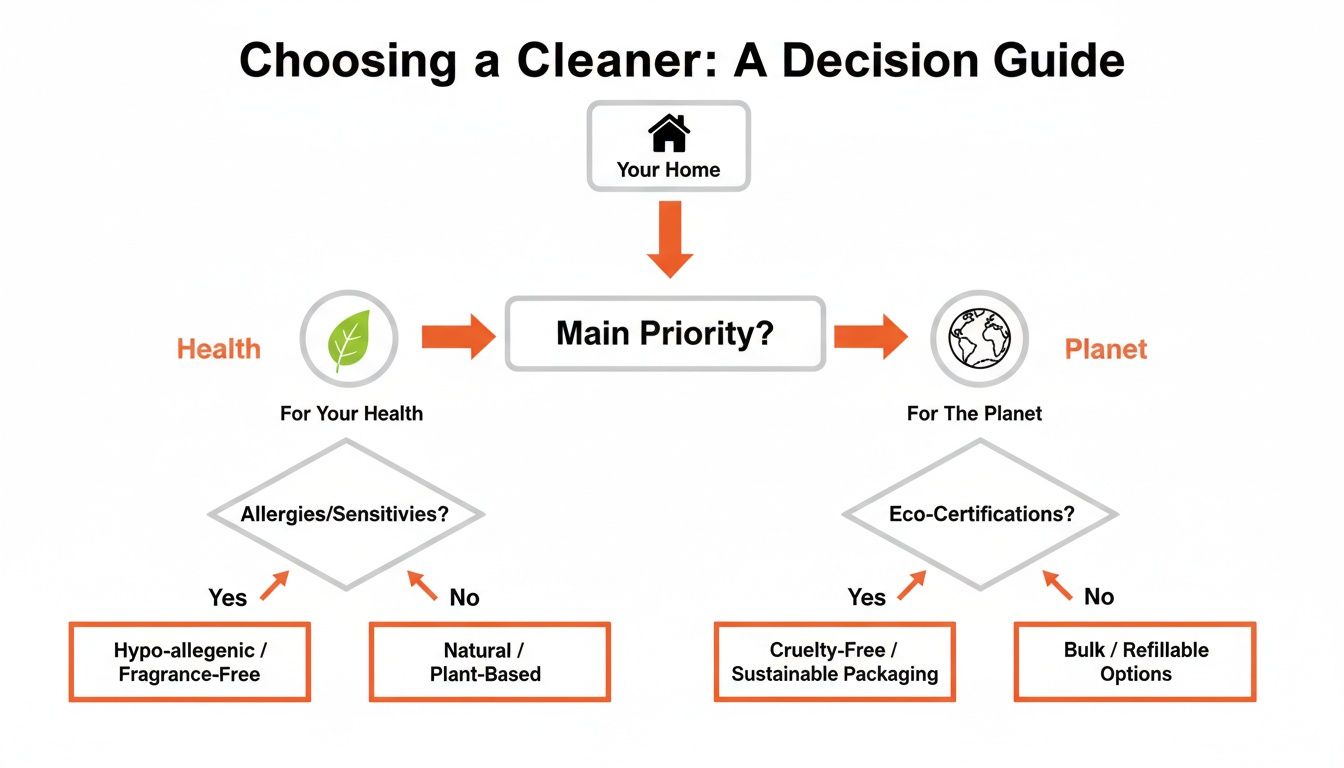
As the chart shows, making a conscious choice is the first step toward a cleaner home, and the benefits ripple out to both your personal well-being and the environment.
Decoding Labels and Certifications
When you're comparing bottles, the labels are your best friend. They cut through the marketing noise—what's often called "greenwashing"—and give you the real story. Look for these key third-party certifications:
- EPA Safer Choice: This seal means the Environmental Protection Agency has vetted every single ingredient and confirms it meets their strict safety standards for both people and the planet.
- Leaping Bunny Certified: This is the gold standard for cruelty-free products. If you see the bunny, you know no animal testing was involved at any point.
- USDA Certified Biobased: This label tells you exactly what percentage of the product comes from renewable biological sources, like plants.
These seals are like a stamp of approval, giving you peace of mind that you’re buying a product that truly lives up to its claims. If you want to dive deeper into what makes a product eco-friendly, our guide on biodegradable cleaning products is a great place to start.
Identifying Powerful Plant Derived Ingredients
The best plant-based cleaners work so well because they harness the power of nature. Instead of relying on harsh chemicals, they use effective, botanically derived ingredients. For instance, citric acid is a beast against soap scum, while certain plant-based enzymes are amazing at breaking down tough protein stains from things like grass or food spills.
This idea of using nature's power extends to other tricky kitchen tasks, too, like figuring out what to do with all that used cooking oil after frying up a batch of crispy panko shrimp. We all know pouring it down the drain is a definite no-go.
That’s where FryAway comes in. It's an essential plant-based solution that makes getting rid of cooking oil incredibly simple and safe.
Using it couldn't be easier. Just follow these three steps for a perfect, mess-free cleanup:
- Sprinkle and Stir: Right after you finish frying, while the oil is still hot, sprinkle in the FryAway powder and give it a quick stir to combine.
- Cool Down: Let the pan cool off completely. As it cools, the powder magically transforms the liquid oil into a solid, organic puck.
- Toss into household trash: Once it's solid, just scoop the hardened oil out and toss it right into your household garbage bin. It’s clean, safe, and so much better for your pipes and the planet.
Transform Your Kitchen with Plant-Based Power
The kitchen is the heart of the home, but let's be honest—it's also ground zero for the toughest messes. From greasy stovetop splatters to sticky countertop spills, keeping it clean can feel like a never-ending battle. This is exactly where the best plant-based cleaning products step up and prove their worth, offering serious cleaning power that's safe for your food-prep surfaces.
Cleaning formulas are only one part of building a greener kitchen. Our guide to eco-friendly kitchen products covers reusable food storage, durable cookware, lower-waste cleaning tools, sustainable materials, and responsible ways to manage used cooking oil.
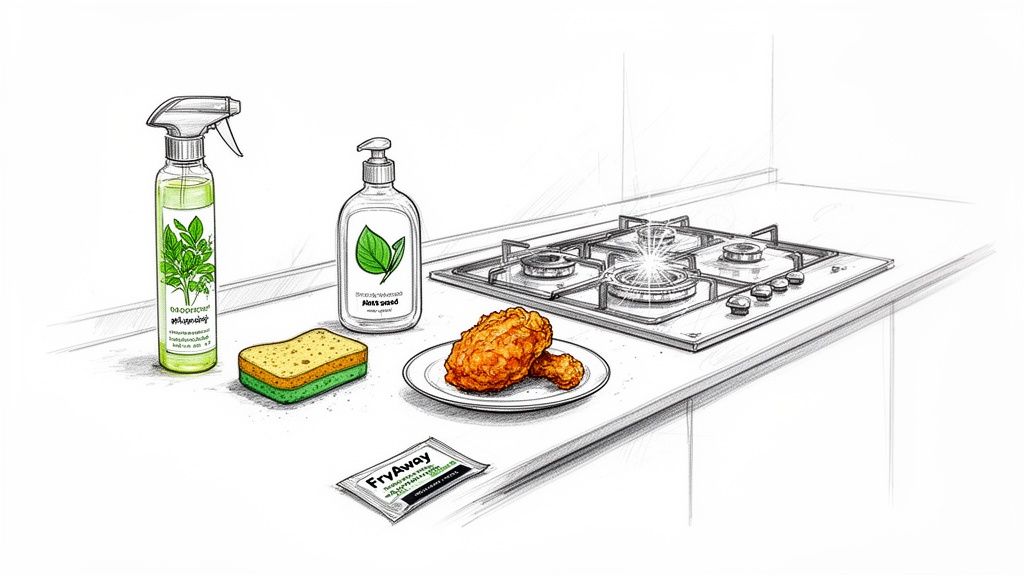
Ingredients derived from plants, like surfactants made from coconuts, are fantastic at breaking down and lifting away grease without leaving harsh chemical residues behind. That means you can clean your counters, stovetops, and floors with total peace of mind, knowing your family isn't being exposed to unnecessary toxins where they eat. For those tricky appliance jobs, there are plenty of natural methods that work for cleaning your microwave and other kitchen essentials, too.
The Ultimate Solution for Cooking Oil Cleanup
While sprays and soaps are great for surfaces, the biggest headache in kitchen cleanup is often figuring out what to do with all that used cooking oil. Pouring it down the drain is a definite no-go; it's a recipe for disaster that leads to stubborn clogs and expensive plumbing bills. And trying to toss hot, liquid oil in the trash? Messy and just plain unsafe.
This is precisely where FryAway changes the game. It’s a 100% plant-based powder that brilliantly simplifies oil disposal. It actually solidifies used cooking oil, making cleanup clean, easy, and eco-friendly. It's a solution every home cook can get behind.
FryAway offers a simple yet powerful way to manage one of the kitchen’s messiest jobs. It bridges the gap between enjoying fried foods and maintaining a clean, sustainable kitchen.
To see just how effective this plant-based solution is, let's put it to the test with a classic recipe that always leaves behind plenty of used oil.
Recipe Spotlight: Crispy Panko-Crusted Fried Shrimp
This quick recipe delivers perfectly golden fried shrimp every time—and provides the perfect chance to see FryAway in action. You'll need about 2 cups of a high-smoke point cooking oil, like canola or peanut oil.
Ingredients
- 1 lb large shrimp, peeled and deveined
- ½ cup all-purpose flour
- 2 large eggs, beaten
- 1 cup panko breadcrumbs
- 1 teaspoon salt
- ½ teaspoon black pepper
- 2 cups cooking oil
- FryAway Pan Fry (for up to 2 cups of oil)
After you've enjoyed your delicious fried shrimp, you’re left with a pan full of used oil. Instead of grabbing an old jar or worrying about spills, just reach for your FryAway.
How to Use FryAway for Easy Disposal
Cleaning up is incredibly simple and takes just three steps. It’s the perfect, no-fuss end to any frying session.
-
Sprinkle and Stir: While the oil in your pan is still hot, carefully sprinkle the FryAway powder evenly over the surface. Grab a utensil and stir gently until the powder completely dissolves.
-
Cool Down: Now for the easy part: just walk away and let it cool down. As the temperature drops, you’ll watch the plant-based formula work its magic, transforming that liquid oil into a solid, rubbery puck.
-
Toss into household trash: Once the oil has completely solidified, use a spatula to easily scoop the hardened puck out of the pan and toss it right into your household trash bin. No mess, no spills, and definitely no clogged drains.
Mastering Oil Disposal With FryAway in 3 Simple Steps
Say goodbye to messy oil jars and clogged pipes forever. After you’ve whipped up a delicious batch of crispy fried chicken or golden french fries, the last thing you want is a complicated, hazardous cleanup.
That's where FryAway comes in. It’s a brilliant, plant-based solution that turns one of the messiest kitchen jobs into a simple, three-step process you can master on your very first try.
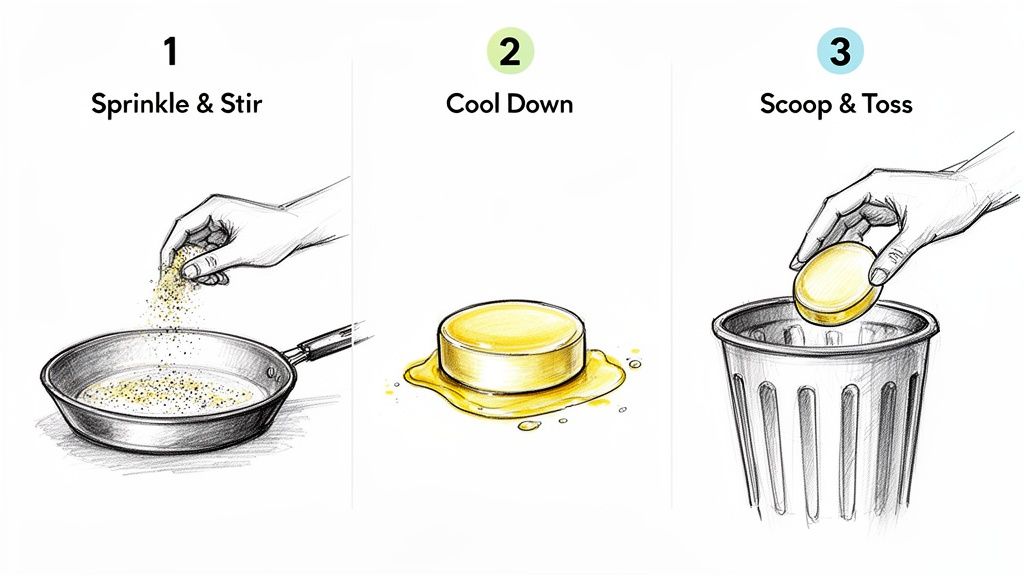
This method isn’t just about convenience; it’s a much safer, more sustainable way to handle used cooking oil. Forget the old routine of pouring hot grease into a container and hoping it doesn't spill. This is the modern, eco-conscious way to clean up.
The Foolproof 3-Step Process
The magic of FryAway really is its simplicity. This 100% plant-based, non-toxic powder uses the heat left in your cooking oil to create a solid, easily disposable puck. Here’s exactly how to get perfect results every time.
Step 1: Sprinkle and Stir
Right after you finish cooking and turn off the heat, your oil is at the perfect temperature. Just sprinkle the FryAway powder directly into the hot oil. Grab a spoon or spatula and give it a gentle stir for about a minute to make sure the powder completely dissolves.
Step 2: Cool Down
This is the easiest part—it requires zero effort. Simply leave the pan to cool down on your stovetop or another heat-safe surface. As the oil temperature drops, the plant-based formula gets to work, magically transforming the liquid into a solid, organic mass. This can take a few hours, depending on how much oil you used.
Step 3: Toss into household trash
Once the oil has completely solidified and the pan is cool to the touch, the hard part is over. Use a spatula to easily lift the hardened oil puck right out of the pan and toss it directly into your household trash bin. No mess, no liquid, and zero risk of spills.
The science is simple: FryAway’s plant-based formula absorbs the liquid fat and congeals it into a solid as it cools. This makes it one of the best plant-based cleaning products for a task that has traditionally been a huge headache for home cooks.
Why This Method Works Best
This three-step process completely eliminates the common headaches of oil disposal. We all know pouring oil down the sink is a recipe for disaster—it can lead to devastating plumbing blockages called fatbergs that can cost thousands to fix. Tossing liquid oil in the trash is just as bad, leading to leaky bags and attracting unwanted pests.
FryAway provides a clean, responsible alternative. By turning liquid oil into solid organic waste, it makes disposal safe and incredibly straightforward. For anyone who loves fried food, this is an essential tool for keeping a clean and green kitchen.
To see just how this method stacks up, you can learn more about FryAway vs. traditional oil disposal methods in our detailed comparison.
Plant Based Solutions for Your Entire Home
Taking a plant-powered approach beyond the kitchen is the key to creating a truly healthy living environment. The best plant-based cleaning products offer specialized formulas for every surface, letting you tackle grime in every room without inviting harsh chemicals into your home.
This isn't just a niche trend anymore; it's a full-blown movement. Consumer demand for sustainable cleaning options is soaring, especially in North America and Western Europe. Market data shows that 56.5% of commercial users are prioritizing green solutions, while everyday shoppers are more hygiene-conscious than ever, with surface cleaners making up 37.4% of market share. Plant-based options are no longer just alternatives—they're essential solutions for modern homes. You can dig deeper into these sustainable cleaning market insights on smithers.com.
Tackling Bathrooms and Living Areas
Your bathroom is a prime spot for soap scum, mildew, and germs, but you don't need to reach for the bleach to make it sparkle. Plant-based bathroom cleaners often use natural disinfectants like thyme oil or citric acid. They cut through the grime and kill germs without the toxic fumes that can irritate your lungs, making cleaning small, enclosed spaces much safer.
When it comes to your living areas, finding the right floor cleaner is everything. Many plant-based floor solutions are pH-neutral, which makes them safe for a wide variety of surfaces.
- Hardwood Floors: Gentle formulas clean beautifully without stripping away protective finishes.
- Tile and Grout: Powerful plant-derived agents are fantastic at lifting dirt from porous surfaces.
- Laminate and Vinyl: You get a streak-free clean that leaves behind nothing but shine.
Freshening Up Your Laundry Routine
Traditional laundry detergents can be a major source of skin irritation, often loaded with synthetic fragrances and harsh chemicals. Plant-based laundry detergents offer a powerful, yet skin-friendly, alternative. They use enzymes to break down tough stains from grass, food, and oil, all while being gentle on your favorite fabrics.
Choosing these formulas means your clothes come out clean and fresh without the chemical residue that can bother sensitive skin. To create a cohesive, non-toxic routine for every part of your home, check out our complete guide to eco-friendly household products.
The core idea is simple: effective cleaning doesn't require harsh chemicals. By choosing the right plant-based products for each task—from scrubbing the tub to washing your clothes—you build a complete, non-toxic cleaning system that protects your family's health and the environment.
Got Questions About Plant-Based Cleaning? We've Got Answers.
Making the switch to a new cleaning routine always brings up a few questions. And that's a good thing! It’s important to feel confident about the products you bring into your home, so let's clear up some of the most common curiosities about plant-based cleaning.
Are Plant-Based Cleaners as Powerful as Chemical Ones?
This is probably the biggest myth out there, but let's set the record straight: yes, they absolutely are.
The idea that 'natural' means weak is totally outdated. The best plant-based cleaning products are packed with potent, hard-working ingredients like citric acid and plant-derived surfactants. These guys are brilliant at cutting through grease, grime, and soap scum just as effectively as their conventional counterparts.
The real power is in the science. Plants naturally produce compounds to protect themselves, and smart formulators have figured out how to harness those same properties to create high-performing cleaners.
Can Plant-Based Products Actually Disinfect?
It’s crucial to know the difference between cleaning (which removes dirt and germs) and disinfecting (which kills germs). While many plant-based cleaners are fantastic for everyday cleaning, some are also formulated with ingredients registered by the EPA to disinfect.
For instance, you might see thymol on an ingredient list. It’s derived from the thyme plant and is a common, powerful ingredient in plant-based disinfectants proven to kill germs on surfaces. To be sure, always check the label for an EPA registration number—that’s your proof that a product’s disinfecting claims are legit.
Is Every 'Green' Product Truly Plant-Based?
Unfortunately, "greenwashing" is a real problem. Some brands throw around vague terms like "eco-friendly" or "natural" without actually being fully plant-based. It can be confusing.
The best way to cut through the noise is to look for trusted third-party certifications. Seals like USDA Certified Biobased or EPA Safer Choice are your best friend here. They confirm a product has been independently vetted and meets strict standards, so you know you're getting the real deal.
How Does FryAway Make Oil Disposal Safe for the Trash?
So, you've just whipped up a batch of crispy fried chicken and now you're left with a pan of hot cooking oil. With FryAway, cleanup is refreshingly simple. Its 100% plant-based powder magically transforms used cooking oil into a solid, making it completely safe to toss in your household trash.
The process couldn't be easier:
- Sprinkle and Stir: Just add the powder to your hot oil and give it a quick stir.
- Cool Down: Let it sit for a bit to cool and solidify completely.
- Toss into household trash: Scoop the solid puck right into the garbage can.
This simple trick turns messy liquid oil into a solid organic waste, keeping it out of your plumbing and preventing it from leaking in landfills.
Ready to make your kitchen cleanup a breeze and say goodbye to frying messes for good? Visit FryAway today to discover the plant-based solution for easy cooking oil disposal. Shop now at FryAway.co and see the magic for yourself.