


· By FryAway
A Complete Guide to Eco Friendly Household Products
So, what exactly are eco-friendly household products? At their core, they’re items designed to leave the smallest possible footprint on our planet, from the moment they're made to the day you're done with them. Think cleaners, kitchen tools, and everyday goods made from sustainable materials—things that are reusable, biodegradable, or just plain smarter, helping us reduce waste and live more consciously.
Why Your Home Is Key to a Greener Planet
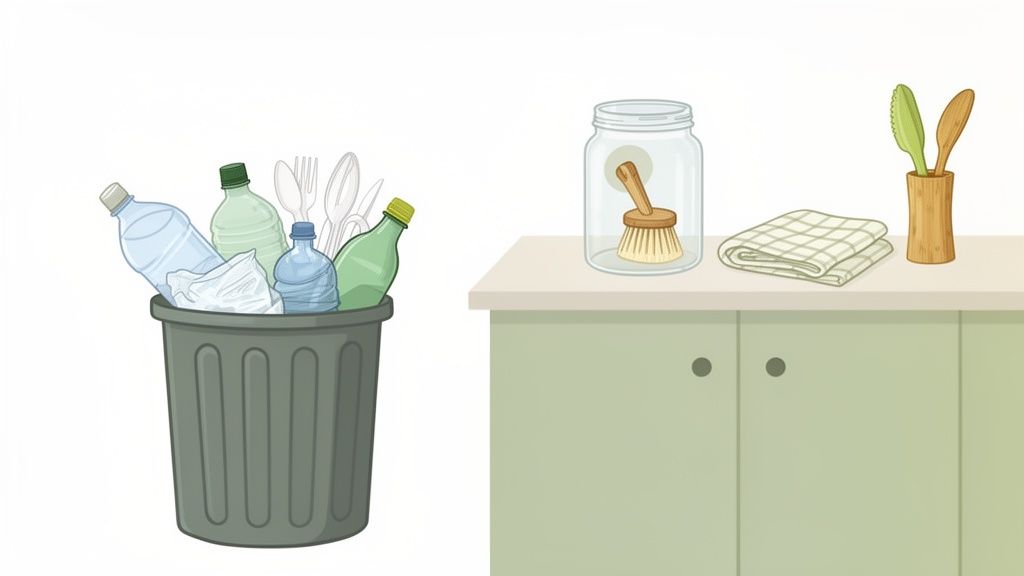
Take a quick look around your home. That plastic bottle of dish soap, the single-use wipes under the sink—our homes are often ground zero for the throwaway culture we’re trying to move away from. It's easy to feel overwhelmed by the scale of global environmental problems, but real, meaningful change starts with the small, daily choices we make within our own four walls.
The great news is that more and more of us are embracing a sustainable lifestyle. This isn’t about some impossible quest for overnight perfection. It’s a journey, one made up of a series of small but powerful swaps. This guide is here to show you just how simple and rewarding that journey can be.
Small Changes with Big Impact
Switching to eco-friendly household products is one of the most direct ways to shrink your carbon footprint. Every time you grab a reusable item instead of a disposable one or choose a cleaner with plant-based ingredients, you're casting a vote for a healthier planet.
Taken together, these choices add up in a big way. They help to:
- Reduce Landfill Waste: Moving away from single-use plastics and packaging means less trash piling up in our already overflowing landfills.
- Conserve Natural Resources: Sustainable products often rely on recycled materials or fast-growing resources like bamboo, which helps protect our forests and water.
- Protect Your Family's Health: Many green cleaners and personal care items skip the harsh chemicals, creating a much safer indoor environment for you and your loved ones.
Making Cleanup Easier and Greener
A perfect example of an impactful swap is how you handle kitchen messes—especially used cooking oil. We’ve all been there. You’ve just fried up something delicious like Crispy Southern Fried Catfish, and now you’re left with a pan of hot oil. Pouring it down the drain is a recipe for disaster, causing gnarly plumbing clogs and serious environmental harm.
A fantastic solution is FryAway, a 100% plant-based powder that completely changes the game for oil disposal.
Using it couldn't be simpler. Just follow this easy three-step process:
- Sprinkle and Stir: Right after you finish frying, while the oil is still hot, just sprinkle in the FryAway powder and give it a stir until it’s all dissolved.
- Cool Down: Let the pan cool completely. You'll watch as the oil magically solidifies into a solid, easy-to-handle puck.
- Toss into household trash: Once it's solid, you can scoop the puck right out of the pan and toss it straight into your regular trash bin.
This simple switch prevents clogs and keeps fats out of our water systems, proving that a sustainable lifestyle can be easy and convenient—one fried meal at a time.
So, What Does "Eco-Friendly" Actually Mean?
The term "eco-friendly" gets thrown around a lot these days, but what's really behind the label? It’s not just about a product being made from recycled materials. To get the full picture, you have to look at its entire life story—from where the raw materials came from all the way to how you’ll eventually get rid of it.
This whole journey is called the product lifecycle. Think of it this way: a truly sustainable product has a good story from start to finish, not just one impressive chapter. A classic plastic toothbrush, for example, starts its life as petroleum—a non-renewable resource. After a few months, it gets tossed in the trash and ends up sitting in a landfill for hundreds of years, never truly breaking down.
Now, let's look at a bamboo toothbrush. Bamboo is a super fast-growing grass that renews itself quickly. When you're done with it, the handle can be composted, returning right back to the earth instead of becoming permanent garbage. This simple swap shows the huge difference between a disposable item and one of the many better eco-friendly household products out there.
How to See Through the Greenwashing
Unfortunately, not all brands are honest about their product's story. Many are guilty of greenwashing—using slick marketing and vague claims to make you think a product is greener than it actually is. You'll see fuzzy terms like "all-natural" or "earth-friendly" that sound great but have no real proof to back them up.
So, how do you spot the real deal? Your best bet is to look for third-party certifications. These are like official stamps of approval from independent groups that have actually checked a company's claims. When you're trying to find genuinely eco-friendly items, it's crucial to look past the marketing fluff and get into understanding product certifications.
A reliable certification is a shortcut to trust. It tells you that a product has met specific, rigorous standards for environmental impact, ingredient safety, or ethical production, cutting through the noise of empty marketing slogans.
To make it easier, we've put together a quick guide to some of the most common and trustworthy labels you'll find.
Understanding Common Eco-Labels and Certifications
This table is a quick reference guide to help you understand what those key sustainability labels on household products actually mean for you.
| Certification/Label | What It Means for You | What to Look For on Packaging |
|---|---|---|
| USDA Organic | Guarantees ingredients were grown and processed without synthetic pesticides, fertilizers, or GMOs. You'll see this on food, but it also applies to cleaners and textiles. | The official green and white circular USDA seal. |
| Leaping Bunny Certified | This is the gold standard for cruelty-free products. It ensures no animal testing happened at any stage of development, from the raw ingredients to the final item. | The logo of a rabbit leaping over two stars. |
| Fair Trade Certified | Confirms the product was made under ethical conditions, ensuring fair wages and safe working environments for laborers, often in developing countries. | The circular logo with a figure raising their arm. |
| B Corp Certified | This certification looks at a company's entire social and environmental performance, from its supply chain to employee benefits. It means the business is committed to being a force for good. | A capital "B" inside a circle. |
Think of these labels as your cheat sheet. When you see one, you know an independent organization has already done the homework for you.
From the Kitchen to the Trash Bin
Let’s apply this lifecycle thinking to something we all do: frying food. You've just made some delicious, golden-brown fried shrimp. The meal is over, but the product's lifecycle—in this case, the cooking oil's—isn't finished yet. How you get rid of that oil is the final, critical step.
Pouring used oil down the sink is a recipe for disaster, creating massive clogs and environmental problems down the line. A truly eco-friendly approach has to consider this final disposal stage. This is exactly where a product like FryAway comes in. It’s a plant-based powder designed specifically for the end-of-life phase of cooking oil.
The process couldn't be simpler:
- Sprinkle and Stir: Just add the powder to your hot, used cooking oil.
- Cool Down: Let it cool down completely, and you'll see it magically turn solid.
- Toss into household trash: Scoop the solid puck of oil right into the trash.
By transforming a messy liquid waste into an easy-to-handle solid, FryAway makes disposal clean and safe for both your pipes and the planet. It’s a perfect example of an innovative solution that tackles a product's full lifecycle, making sure your eco-friendly habits extend all the way to the trash bin.
Transforming Your Kitchen with Sustainable Swaps
The kitchen is the heart of the home, but let's be honest—it's often ground zero for household waste. From single-use plastics to food scraps, this is where our consumption habits are most visible. That makes it the perfect place to start your journey with eco-friendly household products and make simple changes that create a huge positive ripple effect.
Starting is easier than you might think. It begins with rethinking everyday disposables. That endless roll of plastic wrap? It can easily be replaced with reusable beeswax wraps, which mold to the shape of bowls and sandwiches with just the warmth of your hands. The same goes for single-use plastic baggies. Silicone food storage bags are a fantastic, long-lasting alternative—durable, washable, and perfect for everything from snacks to freezer storage.
These swaps aren't just about reducing waste; they're about shifting our mindset from a throwaway culture to one of thoughtful reuse. And it's not just a niche idea—it’s a massive consumer movement. The global market for low and zero-waste household products was valued at USD 6.1 billion in 2024 and is projected to soar to USD 43.6 billion by 2034. This incredible growth is fueled by a collective desire to ditch single-use plastics and embrace sustainable alternatives, with kitchen products leading the charge.
Rethinking Your Cleaning Routine
Take a look under your sink. Your cleaning cabinet is another area ripe for a sustainable makeover. So many conventional cleaners come in single-use plastic bottles and are packed with harsh chemicals. An easy first step is switching to refillable soap dispensers and concentrated cleaning tablets. Just drop a tablet into a reusable spray bottle with water, and you have a powerful, non-toxic cleaner without the recurring plastic waste.
You can also get back to basics with simple DIY cleaning solutions using household staples like vinegar and baking soda. These natural ingredients are surprisingly effective for a huge range of cleaning tasks, from scrubbing countertops to deodorizing drains, all while keeping your home free from unnecessary chemicals.
The Critical Last Step in Frying Foods
While reusable wraps and refillable soaps are fantastic swaps, one of the most impactful changes you can make tackles a common kitchen headache: getting rid of used cooking oil. After frying up a batch of crispy onion rings or golden French fries, you’re left with a pan of hot, messy oil. The tempting—but terrible—solution is to pour it down the drain.
This seemingly harmless act is a leading cause of disastrous plumbing blockages known as "fatbergs"—massive, solid clogs of congealed fats, oils, and grease that wreak havoc on municipal sewer systems. Avoiding this mess requires a responsible disposal method, and that’s where a truly smart eco friendly household product shines.
We always recommend FryAway, a 100% plant-based powder that makes oil disposal incredibly simple and safe. It’s designed to address the final, often forgotten, stage of the cooking oil lifecycle by turning a hazardous liquid into an easily manageable solid.
This infographic shows how every product, including cooking oil, has a life cycle from sourcing to disposal.
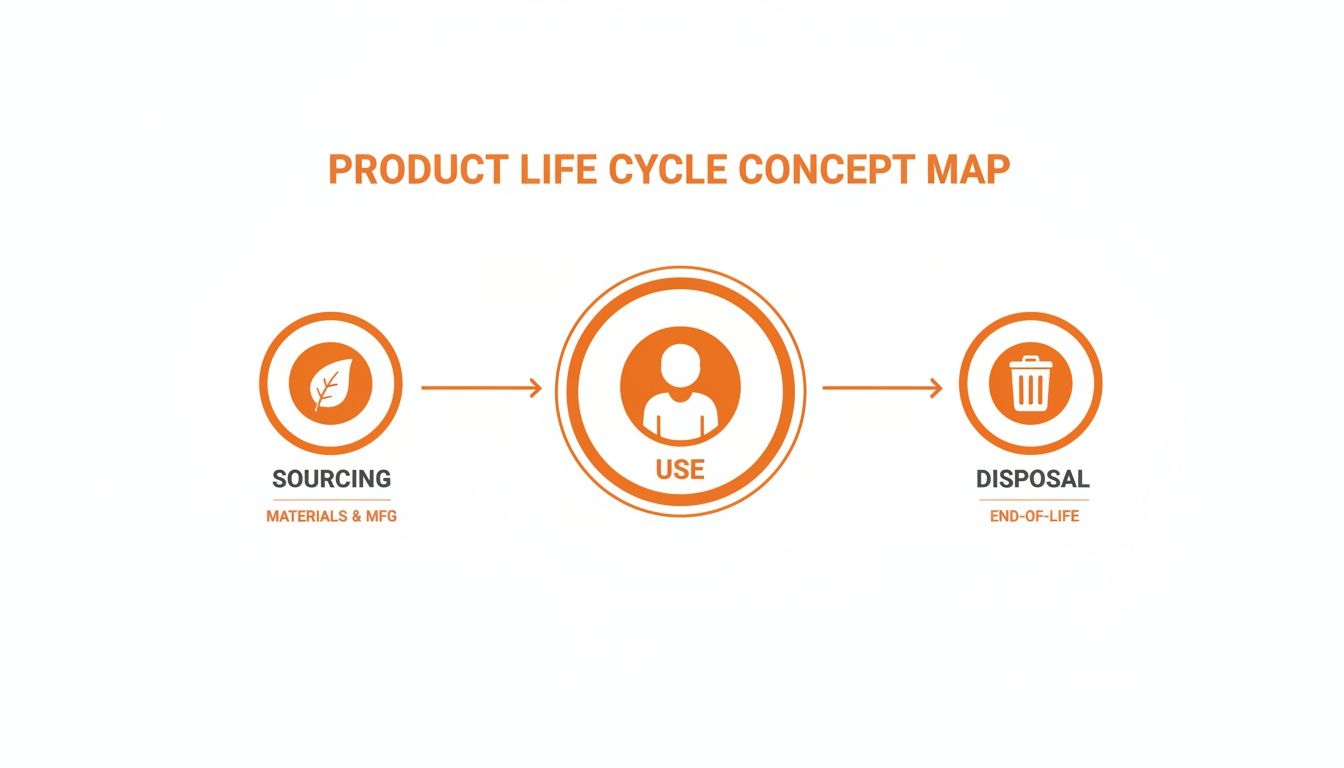
Thinking about the disposal stage is just as important as considering how a product is made, which is why a solution for used oil is so essential for a truly eco-friendly kitchen.
How to Use FryAway for Best Results
Using FryAway is an effortless three-step process that fits right into your cooking routine. You'll never have to worry about messy jars or clogged pipes again.
-
Sprinkle and Stir
As soon as you’re finished frying and the cooking oil is still hot, simply sprinkle the FryAway powder directly into the pan. Give it a gentle stir until the powder has completely dissolved into the oil. -
Cool Down
Next, just walk away and let the pan cool down completely. As it cools, the oil will magically transform, solidifying into a waxy, puck-like substance. -
Toss into household trash
Once it’s solid and cool to the touch, you can easily scoop the entire puck of oil out of the pan and toss it directly into your household trash bin. No mess, no spills, and no harm to your plumbing or the environment.
This simple swap transforms a messy chore into a clean, satisfying step in your cooking process. For more ideas on outfitting your cooking space, check out our guide on other essential eco-friendly kitchen products. By integrating solutions like FryAway, you can finally align your love for fried food with your commitment to a zero-waste kitchen.
Enjoy Frying Without the Environmental Guilt
Making your home a little more sustainable doesn't mean you have to say goodbye to the foods you truly love. It's a common myth that going green is all about sacrifice. In reality, it’s often just about finding smarter, more responsible ways to enjoy your favorite meals—especially the fried ones.
Fried food often gets a bad rap for being messy and environmentally tricky, mostly because of the cleanup. But living consciously is about making better choices, not giving up joy. With the right eco-friendly household products, you can still indulge in those crispy, golden-brown delights without the guilt. It’s all about weaving sustainable habits into your routine, transforming a potential headache into a simple, clean process.
Deliciously Simple Crispy Fried Chicken Tenders
Let's put this idea to the test with a classic that everyone loves. These chicken tenders are perfectly crunchy on the outside and unbelievably juicy on the inside, and yes, they need a good amount of cooking oil to get that signature texture.
Ingredients You’ll Need:
- 1 lb chicken breast tenders
- 1 cup all-purpose flour
- 1 tsp paprika
- 1 tsp garlic powder
- 1/2 tsp salt
- 1/2 tsp black pepper
- 2 large eggs, beaten
- 2 cups panko breadcrumbs
- Vegetable or canola oil for frying (about 2-3 inches deep in a pan)
Step-by-Step Instructions:
- Prepare Your Breading Stations: Grab three shallow dishes. In the first, mix the flour, paprika, garlic powder, salt, and pepper. The second gets the beaten eggs, and the third holds the panko breadcrumbs.
- Coat the Chicken: Take each tender and dredge it in the flour mix, then give it a good dip in the egg wash. Finally, press it firmly into the panko to get a nice, thick coat.
- Heat the Oil: Pour your cooking oil into a heavy-bottomed skillet or Dutch oven. You’re aiming for 350°F (175°C).
- Fry to Perfection: Gently place the tenders into the hot oil, making sure not to crowd the pan. Fry them for about 3-4 minutes per side until they’re golden brown and cooked all the way through. Move them to a wire rack to drain.
The Most Important Step: Cleanup with FryAway
Okay, now for the part that usually causes the most stress: that pan of leftover hot oil. This is where your eco-friendly mindset really shines. Instead of dealing with a greasy mess or—even worse—pouring it down the drain, you can handle it cleanly and effortlessly.
The final step of any recipe is the cleanup. A truly sustainable cooking process considers the entire lifecycle of its ingredients, including how waste is managed. Responsible oil disposal is a non-negotiable part of modern, eco-conscious cooking.
Using FryAway turns this chore into a simple, almost magical task. It ensures your amazing meal doesn't create a massive problem for your pipes or the planet. For a deeper dive into best practices, check out our guide on how to dispose of cooking oil the right way.
How to Use FryAway for Best Results
Just follow these three simple steps to solidify your used cooking oil for a mess-free toss into the trash.
-
Sprinkle and Stir
Right after you're done frying and have turned off the heat, sprinkle the FryAway powder directly into the still-hot oil. Give it a gentle stir until the powder dissolves completely. -
Cool Down
Now, just let the pan cool down. As it cools, you'll see the oil transform into a solid, waxy puck. It's a completely safe and non-toxic process. -
Toss into household trash
Once the oil puck is solid and cool to the touch, you can easily scoop it out of the pan and toss it right into your regular household trash bin.
And that's it! No greasy jars, no clogged drains, and zero environmental harm. By adding this simple step, you’ve made your entire frying process—from prep to cleanup—a truly sustainable practice. Of course, for those who want to use less oil from the get-go, exploring different air fryer cooking methods is another fantastic way to reduce your environmental footprint while still enjoying delicious food.
Applying Green Habits to Every Room in Your Home
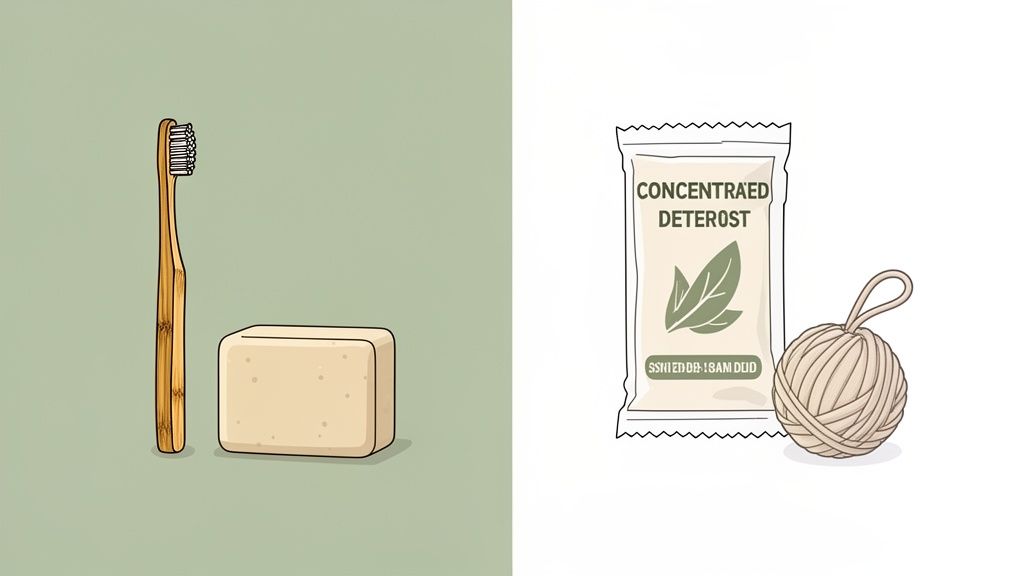
Once you've made your kitchen a little greener, carrying that momentum into the rest of your home is a natural next step. The same principles—reducing waste and choosing safer ingredients—apply just as well to the bathroom and laundry room.
These spaces are often ground zero for single-use plastics and harsh chemicals, making them the perfect places for simple swaps that have a surprisingly big impact.
And this isn't just a niche trend. The global market for eco-friendly cleaning products hit USD 12.2 billion in 2024 and is projected to skyrocket to USD 31.1 billion by 2034. It’s everyday families, not just big corporations, driving this shift as they demand non-toxic, plant-based formulas for their homes. If you're curious, you can explore the full analysis of eco-friendly product trends to see just how massive this movement has become.
Greening Your Bathroom Routine
The bathroom is one of the easiest places to start slashing your plastic use. Just look at your daily routine—where do you see single-use containers? A few small changes here can add up to a massive difference over the year.
- Solid Shampoo and Conditioner Bars: Ditch those bulky plastic bottles. A single shampoo bar can replace up to three traditional bottles, saving you space and cutting down on a ton of waste.
- Bamboo Toothbrushes: Billions of plastic toothbrushes end up in landfills every year, where they'll sit for centuries. A bamboo toothbrush, on the other hand, has a handle that's compostable.
- Refillable Hand Soap: Instead of buying a new plastic pump bottle every few weeks, switch to a permanent glass or ceramic dispenser and buy your soap in bulk refills.
Smarter Laundry Swaps
The laundry room is another hotspot for unnecessary chemicals and waste. Traditional detergents and dryer sheets are often loaded with synthetic fragrances and other irritants. Luckily, the alternatives are fantastic.
Choosing eco-friendly products is about more than just reducing waste; it's about creating a healthier living environment. The same desire for non-toxic, effective solutions that drives us to pick plant-based cleaners also points to smarter ways of handling everyday chores, from laundry to kitchen cleanup.
Concentrated detergent strips are a total game-changer. These pre-measured, dissolvable sheets come in plastic-free packaging, and because they’re so lightweight, they slash shipping emissions. They work just as well as those heavy liquid detergents, but without the mess or the plastic jug.
Another brilliant swap is ditching single-use dryer sheets for reusable wool dryer balls. They soften fabrics naturally, cut down on static, and can even shorten your drying time by up to 25%—saving you energy with every single load. To learn more, check out our deep dive into the benefits of biodegradable cleaning products.
The FryAway Solution: A Whole-Home Mindset
This is exactly the kind of thinking—smarter, safer, and more effective—that makes a product like FryAway so essential in a modern eco-conscious home. It might solve a kitchen-specific problem, but it perfectly captures the house-wide principle of tackling waste at its source with a simple, plant-based solution.
So, after you’ve enjoyed a delicious batch of homemade onion rings or crispy fish, you're left with a pan of used cooking oil. Instead of a disposal headache, FryAway makes it incredibly clean and easy.
- Sprinkle and Stir: Just sprinkle the FryAway powder into the still-hot oil and give it a quick stir until it dissolves.
- Cool Down: Now, just let the oil cool down completely. You'll watch it transform into a solid, organic puck.
- Toss into household trash: Once it's solid, you can scoop the puck right out of the pan and toss it into your household trash.
This simple process prevents plumbing disasters and keeps harmful fats out of our water systems. It’s proof that the best eco friendly household products are the ones that make sustainable living feel effortless in every corner of your home.
Your Simple Action Plan for a Sustainable Home
Feeling inspired? Good. The move toward a more sustainable home isn’t about a massive, overnight overhaul. It's about making small, deliberate choices that stack up over time to create a big impact.
Think back to what we've covered: understanding a product’s entire life story, making smart swaps in the kitchen, and letting those green habits ripple out into every room of your house.
The most important thing to remember is that progress, not perfection, is the goal. Every time you grab a reusable item instead of a disposable one, you’re doing more than just cutting down on waste—you're casting a vote with your wallet and joining a huge global movement.
In fact, the market for low-waste household products is expected to jump from USD 7.42 billion in 2025 to a staggering USD 37.55 billion by 2032, and it’s all driven by consumers like you. You can discover more about this explosive market growth and see how our choices are genuinely shaping a greener future.
Your First Week Action Plan
To help you get the ball rolling without feeling overwhelmed, here’s a simple, practical action plan for your first week. These are small steps designed to build momentum.
- Day 1: Ditch Paper Towels. Make the switch to reusable microfiber cloths or super-absorbent Swedish dishcloths for wiping up spills and cleaning counters. You'll be amazed at how quickly you adapt.
- Day 2: Assess Your Cleaners. Take a peek under your sink. Just pick one traditional cleaner you can replace with a non-toxic or refillable option on your next grocery run.
- Day 3: Plan Your Next Fried Meal. Think about a favorite fried recipe you love—crispy french fries, maybe some savory tempura? Then order FryAway so you’re ready to handle the used cooking oil without a second thought.
- Day 4: Go Solid in the Bathroom. Commit to trying a solid shampoo bar or a classic bar of soap. That’s at least one plastic bottle you can cross off your list for good.
Make Smart Disposal Your New Habit
One of the most powerful habits you can build is handling waste responsibly, especially tricky stuff like used cooking oil. After you’ve enjoyed that delicious meal you planned, make the cleanup part effortless and eco-friendly with FryAway.
Its simple three-step process is the perfect way to wrap up your first week of sustainable action.
- Sprinkle and Stir: While your cooking oil is still hot, just sprinkle in the plant-based powder and give it a quick stir until it all dissolves.
- Cool Down: Now, just let the pan cool down completely. You'll see the oil transform into a single, solid puck.
- Toss into household trash: Scoop the solidified oil right out of the pan and toss it into your regular trash bin. No mess, no clogged drains.
By adopting these simple practices, you’re building the foundation for a healthier, more eco-friendly home—one thoughtful choice at a time.
Your Top Questions About Eco-Friendly Products, Answered
Making the switch to more sustainable household products is a great move, but it's natural to have a few questions before you dive in. We've gathered some of the most common ones to give you clear, straightforward answers and help you feel confident about your choices.
Aren't Eco-Friendly Products Always More Expensive?
It's a common myth that going green will drain your wallet. While some sustainable items might have a higher price tag upfront, many of them are designed to save you a surprising amount of money over time.
Think about it this way: a one-time purchase of wool dryer balls or a set of reusable silicone bags completely eliminates the need to buy hundreds of disposable dryer sheets or plastic baggies in the future. The same goes for refillable cleaning systems, where the cost-per-use plummets once you have the main bottle.
Even better, some eco-friendly products prevent hugely expensive problems down the road. Using a smart solution for cooking oil disposal, for example, is far cheaper than calling a plumber to fix a severely clogged drain. The key is to shift your mindset from "cost-per-item" to "cost-per-use."
Do Green Cleaning Products Actually Work?
Absolutely. If your image of a "green cleaner" is just a spray bottle of watered-down vinegar, it's time for an update. Today’s eco-friendly cleaning formulas are seriously powerful, using plant-derived ingredients like citric acid and natural surfactants that cut through grease and grime just as effectively as traditional chemical cleaners.
The science behind these products has come a long way. You no longer have to sacrifice performance for safety. When you're shopping, a great way to guarantee you're getting a top-notch product is to look for strong positive reviews and trusted third-party certifications on the label. Those seals of approval mean the product does what it promises without bringing harsh chemicals into your home.
What's the Best Way to Dispose of Cooking Oil?
Whatever you do, don't pour used cooking oil down the drain. It's easily the worst option. As it cools, the oil solidifies, creating stubborn clogs in your pipes and contributing to massive "fatbergs" in city sewer systems—a true environmental nightmare.
Lots of people collect it in a jar, but that's often messy, smelly, and just leaves you with a container of liquid grease to deal with later.
The cleanest, safest, and most eco-friendly method is to use a product specifically designed for the job. We always recommend FryAway, a 100% plant-based powder that brilliantly solidifies used cooking oil, making cleanup completely effortless.
It’s as simple as these three steps:
- Sprinkle and Stir: Right after you finish frying and while the oil is still hot, sprinkle in the powder and give it a quick stir until it dissolves.
- Cool Down: Just let the pan cool down completely. You'll see the oil transform into a solid, waxy puck.
- Toss into household trash: Once it's solid, you can easily scoop the entire puck out and toss it right into your household trash bin.
This mess-free solution is a perfect example of how the right eco friendly household products can make sustainable habits incredibly easy to adopt.
Ready to make your kitchen cleanup safer and more sustainable? Try FryAway and see how simple responsible oil disposal can be. Visit https://fryaway.co to find the perfect product for your frying needs.