


· By FryAway
How to Clean Up Grease Spills Without a Single Scrub
That sinking feeling you get when a pan of hot oil slides off the stove is more than just an inconvenience—it's a serious household hazard. Knowing exactly how to clean up grease spills the right way is crucial. It's not just about preventing a nasty slip or a permanent stain; it's also about protecting your plumbing and the environment from some surprisingly big problems.
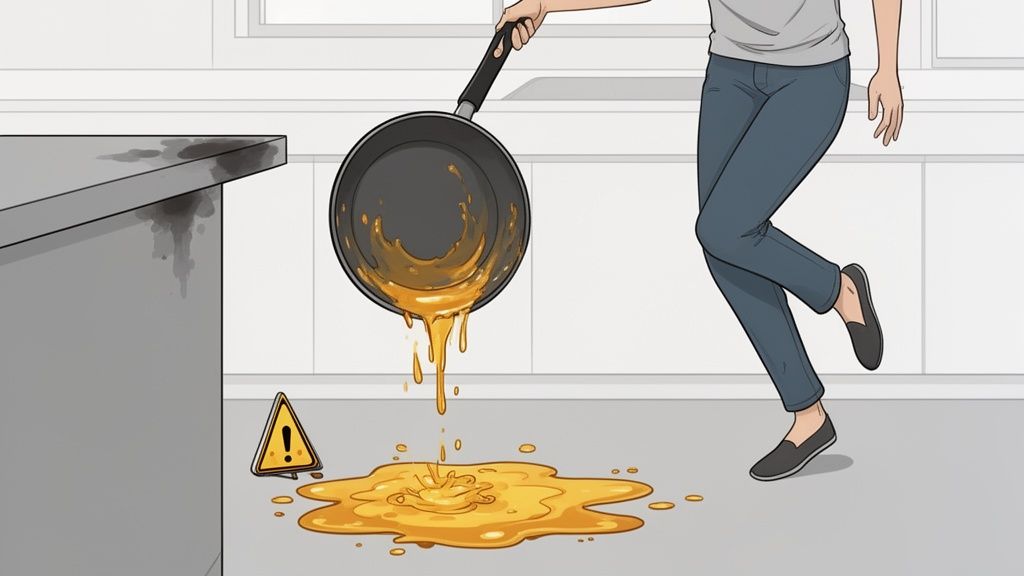
Why Grease Spills Are a Bigger Problem Than You Think
A slick of oil on the kitchen floor is an obvious danger. The risk of someone taking a hard fall is the first thing that comes to mind, and for good reason. But the consequences of a grease spill—big or small—go way beyond the initial slip hazard.
If you don't clean it up properly, that oily residue can seep into porous surfaces like grout, wood, or unsealed stone. The result? A stubborn, darkened stain that’s almost impossible to get out. Even on non-porous surfaces like tile or laminate, it leaves behind a sticky film that just attracts more dirt and dust, making your floors feel perpetually grimy.
From Your Kitchen to a City-Wide Issue
The problem gets a lot bigger when we talk about how grease is handled after cooking. So many people have the habit of washing small amounts of grease down the drain, not realizing the massive damage they're causing over time. This is the number one cause of fatbergs—huge, hardened blockages of fat, oil, and grease that clog up entire city sewer systems.
A single cup of used cooking oil can contaminate up to 1 million gallons of freshwater if it gets into the water system. It’s a stark reminder of how a small kitchen habit can have a massive environmental footprint.
These blockages are a nightmare for cities. For example, in Florida's Hillsborough County, a shocking 70% of late-night sewer overflows are traced directly back to grease blockages. This leads to strict regulations and heavy fines for improper disposal. It just goes to show that the grease from frying chicken in your kitchen is connected to a much larger ecological and infrastructural challenge. You can learn more about the broader impact of oil spills on water safety and see how our daily kitchen habits play a role.
The Best Defense Is a Good Offense
At the end of the day, the most effective way to handle a grease spill is to stop it from happening in the first place. This doesn't mean you have to give up your favorite fried foods. It just means finding a smarter, safer way to handle used cooking oil.
This is where a product like FryAway is a total game-changer. It’s a simple plant-based powder that magically turns hot cooking oil into a solid, scoopable puck. The process couldn't be easier:
- 1) Sprinkle and Stir: Just mix the powder into your hot oil right after you finish cooking.
- 2) Cool Down: Let the pan cool completely, and watch as the oil transforms into a solid.
- 3) Toss into household trash: Scoop the solidified oil out and just throw it away with your regular household trash.
By solidifying the oil right in the pan, you completely eliminate the risky step of pouring hot, liquid grease into a jar or can. It’s a simple switch that makes your kitchen cleanup safer, easier, and much more eco-friendly.
Your Essential Grease Spill Toolkit
A grease spill can go from a minor slip-up to a major kitchen catastrophe in seconds. When hot oil is spreading across your floor, the last thing you want to do is scramble through cabinets looking for the right tools.
That’s why I always recommend having a dedicated 'grease spill first aid kit' ready to go. You probably have everything you need already; it’s just a matter of putting it all in one easy-to-grab spot.
Absorbents and Scrapers
Your first line of defense is always a good absorbent. The goal here is to stop the oil from spreading and make the initial cleanup safer and easier.
- Baking Soda or Cornstarch: These are my go-to's. They’re fine, powdery, and amazing at soaking up grease from almost any surface. Don't be stingy—cover the entire spill with a thick, generous layer.
- Plastic or Rubber Scraper: After letting the powder work its magic for 15-20 minutes, you'll need a way to lift the now-clumpy mixture without scratching your floors or counters. A simple plastic putty knife or a firm silicone spatula is perfect for this.
Once you’ve handled the bulk of the mess, you'll still have a slick, greasy film left behind. This is where your degreaser comes into play.
Tackling a grease spill is a two-part process. First, you contain and remove the bulk of the oil with absorbents. Second, you cut through the remaining greasy residue for a truly clean, non-slippery finish.
Degreasers and Cleaning Tools
To really get rid of that slippery residue, you need something that can break down the oil. A high-quality, safe and simple kitchen degreaser is designed to dissolve the final oily layer that absorbents just can't lift.
For a deeper dive into what makes a good degreaser, check out our guide on the best grease cleaner for different kinds of kitchen messes.
You’ll also want these on hand:
- Dish Soap: A squirt of good degreasing dish soap mixed with hot water is a classic for a reason. It's powerful and always available.
- White Vinegar: The acidity in vinegar is fantastic for cutting through grease on a lot of common kitchen surfaces.
- Microfiber Cloths & Paper Towels: You can never have too many. Use them for blotting up the initial spill, wiping down the degreaser, and drying the area completely.
Of course, the absolute best way to handle a grease spill is to avoid it in the first place. Think about it—after frying up some amazing beer-battered fish and chips, the riskiest part is always dealing with all that leftover hot cooking oil.
This is exactly why having FryAway in your kitchen is such a game-changer. It works by solidifying used cooking oil right there in the pan, which means you never have to pour or transport hot, messy liquid grease again.
Just follow the simple three-step process: 1) Sprinkle and Stir the powder into the hot oil, let it 2) Cool Down and harden, and then you can 3) Toss the solid puck straight into your household trash. It’s the ultimate tool for a clean, mess-free kitchen.
Cleaning Grease Spills from Any Kitchen Surface
A grease spill in the kitchen feels like a mini-disaster, doesn't it? One minute you're frying, the next you're staring at a slick puddle spreading across your countertop. The real challenge is that the method that saves your stainless steel stove might ruin your butcher block. Knowing how to attack a grease spill based on the surface is the key to preventing a permanent, ugly stain.
It might seem like a small problem, but managing oil and grease is a massive global issue. The oil spill management market was valued at an eye-watering USD 151.61 billion in 2024. While your kitchen mishap isn't an oil tanker leak, the principle is the same: cleaning it up the wrong way has consequences, whether for an ecosystem or your granite's finish. You can see just how big the business of oil spill management is on grandviewresearch.com to get some perspective.
Your first move is the most important. This quick decision tree helps you react the right way, right away.
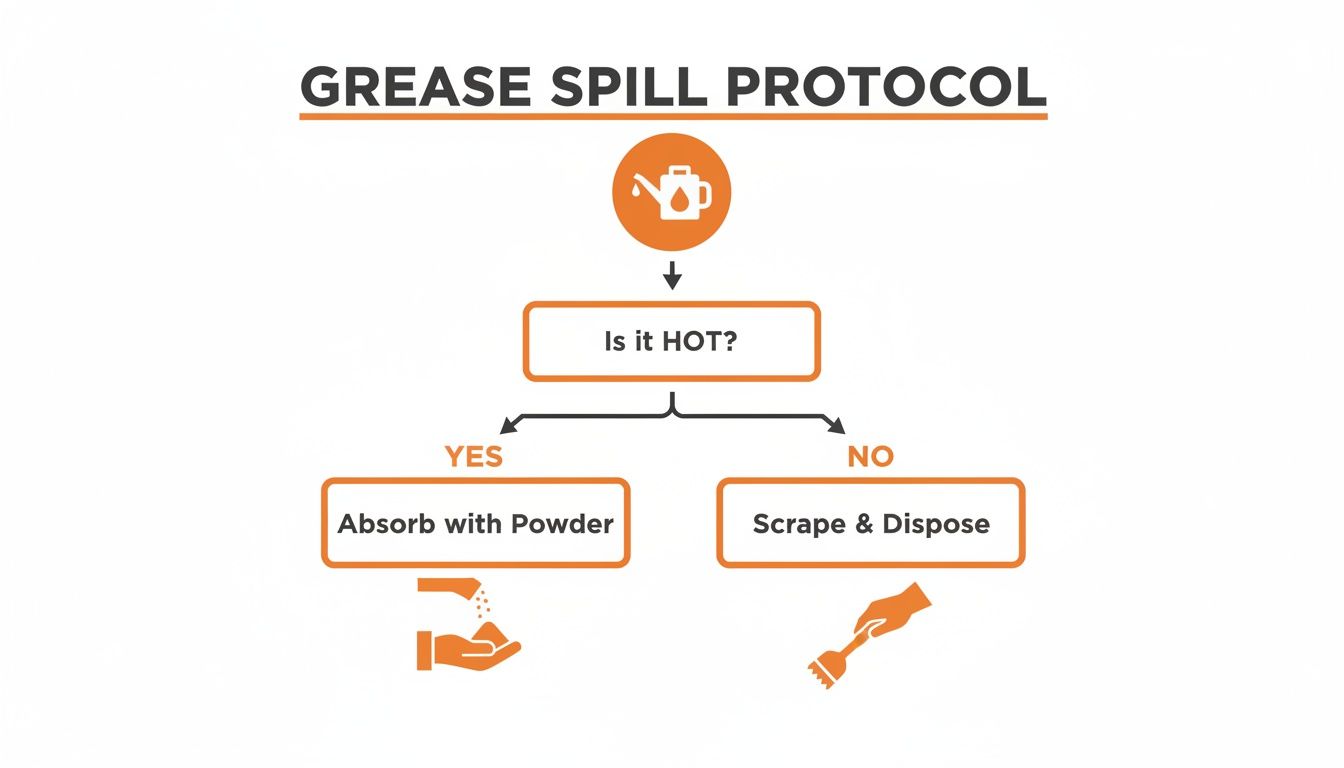
As the chart shows, whether the grease is hot or cold dictates your immediate action. Getting this first step right contains the mess before it has a chance to set.
Handling Non-Porous Surfaces
Good news first: non-porous surfaces like sealed granite, laminate, tile, and stainless steel are your best-case scenario. The oil can't penetrate, so your goal is just to lift it off without smearing it everywhere.
- Soak it up: Don't wipe! Immediately bury the spill in a thick layer of baking soda or cornstarch. Let it sit for at least 15-20 minutes; you'll see it start to clump as it absorbs the oil.
- Scrape it away: Grab a plastic scraper or a spatula and gently lift the oily powder off the surface.
- Wipe it clean: A few drops of dish soap in warm water is all you need. Use a microfiber cloth to wipe the area, then go over it with a clean, damp cloth and dry it completely to avoid water spots.
Tackling Tricky Porous Materials
This is where grease spills get nasty. Porous surfaces—think unsealed wood, concrete, or the grout between your tiles—act like a sponge. They suck that oil right up, creating deep stains that are a nightmare to remove.
For these materials, you have to act fast. Every second counts.
Start by piling on an absorbent powder, but be prepared to leave it on for much longer. I'm talking several hours, or even overnight, to pull out as much grease as possible.
When you're working with wood or grout, stay away from harsh, abrasive cleaners. They can easily strip sealants, scratch the surface, or cause permanent damage. Always start with the gentlest method first.
After you've removed the powder, you might still see a stain. A thick paste of baking soda and water can work wonders here. Apply it to the spot, let it dry completely, and then gently scrub it away. For more stubborn grease problems, our guide on how to clean a greasy kitchen has more detailed, surface-by-surface tricks.
Grease Cleaning Methods by Surface Type
To avoid guesswork when a spill happens, it helps to know your surfaces. This table breaks down the best approach for common kitchen materials so you can act quickly without causing damage.
| Surface Type | Best Absorbent | Recommended Cleaner | Caution |
|---|---|---|---|
| Stainless Steel | Cornstarch, Salt | Dish soap & water, white vinegar solution | Avoid abrasive pads; wipe with the grain. |
| Sealed Granite/Marble | Baking Soda | pH-neutral stone cleaner, mild dish soap | Avoid acidic cleaners like vinegar or lemon. |
| Laminate | Flour, Baking Soda | Mild all-purpose cleaner, dish soap & water | Don't let water pool on seams; avoid abrasives. |
| Unsealed Wood | Cornstarch, Cat Litter | Baking soda paste, mineral spirits (test first) | Act immediately; avoid excessive water. |
| Ceramic/Porcelain Tile | Salt, Baking Soda | Dish soap & water, tile cleaner | Be gentle on grout lines to prevent erosion. |
| Grout (Porous) | Baking Soda | Baking soda & hydrogen peroxide paste | Avoid harsh chemicals; may require re-sealing. |
Using the right tools for the job not only cleans the mess but also protects your investment in your kitchen finishes.
Of course, the absolute best way to deal with a spill is to stop it from happening in the first place. Think about that moment after you've fried up some crispy fried pickles. You're left with a pan full of sizzling, liquid-hot cooking oil—the biggest spill risk in the entire process.
This is exactly why we created FryAway. It turns a hazardous liquid into a harmless solid.
- 1) Sprinkle and Stir: Just shake the plant-based powder into the hot cooking oil when you're done frying.
- 2) Cool Down: As the oil cools, FryAway works its magic, transforming the liquid grease into a solid, organic puck.
- 3) Toss into household trash: Once it's solid, you can easily scoop it out of the pan and toss it right into your household trash.
This simple process completely removes liquid oil from your cleanup routine. No more sloshing oil into jars, no more risky trips to the bin, and zero chance of clogging your pipes.
Prevent Spills Before They Happen with FryAway
While it's smart to know how to clean up grease spills, the best strategy is to stop them from happening in the first place. Think about it: the most dangerous part of frying isn't the cooking—it's what you do with that pan of sloshing, scalding-hot oil afterward. One wrong move and you've got a massive, hazardous mess on your hands.
FryAway completely changes the game by getting rid of the liquid waste altogether. Instead of trying to pour, carry, or store messy used oil, you solidify it right in the pan. Cleanup becomes foolproof, easy, and incredibly safe.
The Simple, Spill-Proof FryAway Process
Using FryAway couldn't be simpler. It's designed to fit right into your cooking routine, turning a risky chore into a quick and satisfying task. Whether you're frying a couple of strips of bacon or a big batch of tempura shrimp, the method is the same.
- 1) Sprinkle and Stir: The second you’re done cooking, while the oil is still hot, just sprinkle the plant-based FryAway powder into the pan. Give it a quick stir to make sure it’s mixed in well.
- 2) Cool Down: Now, just let it be. As the oil cools, FryAway works its magic, trapping the oil molecules and transforming the entire pan of liquid into a solid, organic puck.
- 3) Toss into household trash: Once it's completely solid, you can easily scoop the hardened oil out with a spatula. It's no longer a liquid hazard—it's solid waste that goes straight into your household trash can.
This simple routine means no more gross jars of oil, no more heart-stopping moments carrying hot grease across the kitchen, and zero chance of pouring it down your drain and causing a destructive clog.
By solidifying oil right at the source, you eliminate the single biggest risk factor for kitchen grease spills. It's a proactive approach that makes your cooking process cleaner and safer from start to finish.
A Real-World Example: Homemade Crispy French Fries
Picture this: you've just made a perfect batch of golden-brown french fries. The kitchen smells amazing, but you’re staring at a pot filled with about four cups of shimmering hot cooking oil. The old, risky way would have you trying to carefully pour that oil into a jar to cool.
With FryAway, cleanup is just part of the recipe. Follow the three easy steps: 1) Sprinkle and Stir the recommended amount into the hot oil, leave the pot on the stovetop to 2) Cool Down while you enjoy your fries. By the time you're done, that liquid oil has turned into a scoopable solid you can 3) Toss into household trash. There's nothing to spill, making the final cleanup as easy as scraping a plate.
You can see a full walkthrough of this exact process in our complete FryAway guide.
This proactive approach does more than just keep your floors clean. For home cooks, FryAway offers a powerful solution to a much larger problem. For instance, the Super Fry variant can solidify up to 24 cups of oil, actively preventing the kind of pipe-clogging grease that causes an estimated 70% of sewer overflows in cities like Tampa.
When you turn grease into simple, trash-ready waste, you help reduce the need for industrial-scale cleanup operations. It’s a small change in the kitchen that empowers everyone to fry guilt-free. To learn more, check out these insights on the complex world of oil spill management on grandviewresearch.com.
Common Grease Cleaning Mistakes to Avoid
Even with the best intentions, it's surprisingly easy to make a greasy mess even worse. Knowing what not to do when you clean up grease spills is just as crucial as knowing the right way to tackle them. A few common blunders can turn a manageable cleanup into a dangerous situation or a permanently stained surface.
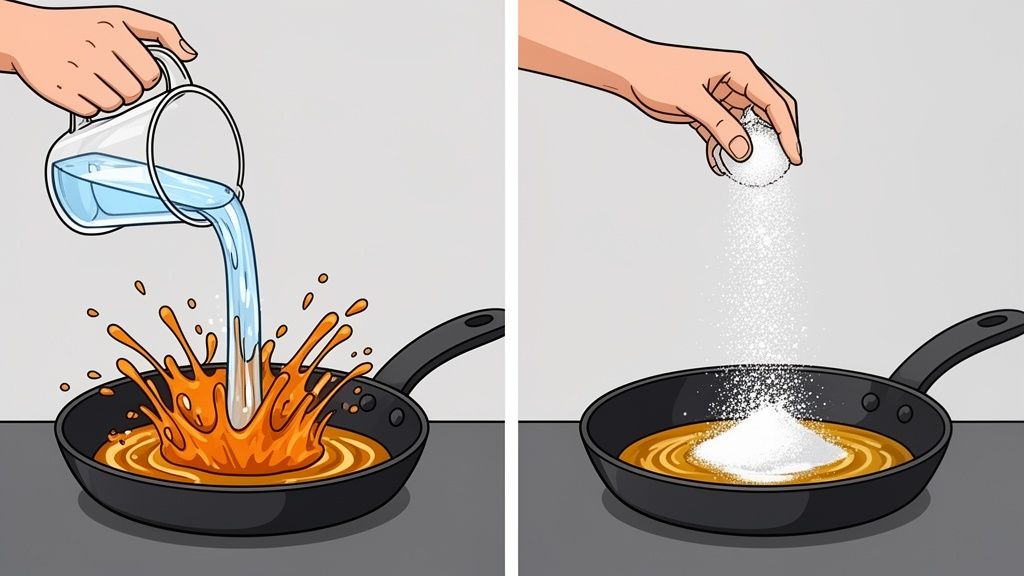
The single most dangerous mistake you can make is adding water to hot grease. It might seem like an intuitive fix, but water and hot oil create a violent, explosive reaction. You'll end up splattering scalding grease everywhere, which can cause severe burns and potentially start a dangerous fire. Never use water on a hot grease spill or a grease fire.
Using the Wrong Cleaning Tools
Another frequent error is grabbing the nearest sponge or cloth to wipe up a fresh spill. This is a classic rookie mistake. Instead of lifting the grease, you just end up smearing it over a wider area, turning a small puddle into a huge, slippery hazard. The oil soaks into the cloth, making it impossible to clean and just spreading the problem around with every wipe.
Your first move should always be to absorb, not wipe. By covering the spill with a thick layer of baking soda, salt, or cornstarch, you contain the oil and make it simple to scoop up and remove the bulk of the mess before you start any actual cleaning.
Washing Grease Down the Drain
Pouring used cooking oil down the kitchen sink is a massive no-no. That hot oil might be liquid at first, but it quickly cools and solidifies inside your pipes. This creates stubborn blockages that can lead to some truly expensive plumbing disasters. Understanding the common causes of recurring drain clogs is the first step in protecting your home's plumbing.
Even small amounts contribute to a much bigger problem. When households all do this, it leads to massive "fatbergs" in city sewers.
This is precisely why a product like FryAway is so essential for anyone who enjoys fried foods. It stops the problem at the source by solidifying used cooking oil, so there’s nothing liquid left to spill or pour down the drain.
The process couldn't be simpler, and it eliminates the risk entirely.
- 1) Sprinkle and Stir: Just mix the plant-based powder into your hot cooking oil right after you're done frying.
- 2) Cool Down: Let the oil cool completely, and watch it transform into a solid mass.
- 3) Toss into household trash: Simply scoop the solidified puck out of the pan and throw it away with your household garbage.
By adopting this simple habit, you sidestep the most common grease disposal mistakes, keeping your pipes clear, your kitchen safe, and your cleanup effortless.
Got Grease Questions? We’ve Got Answers.
Even with the best game plan, cleaning up grease can throw you a curveball. When you're in the middle of a messy spill, questions are bound to pop up. Here are some quick, no-nonsense answers to the most common ones we hear, so you can tackle any greasy situation like a pro.
What’s the Fastest Way to Soak Up a Fresh Grease Spill?
The second oil hits the floor, your first instinct might be to grab a towel. Don't do it! Reaching for a cloth will only smear the grease around and make the problem worse.
Instead, your first move should be to grab an absorbent powder. Generously dump baking soda, cornstarch, or even plain table salt over the entire spill. I mean really cover it—you shouldn't see any liquid peeking through.
Let the powder sit and work its magic for at least 15-20 minutes. This gives it time to pull the grease up and out, turning that slick mess into a clumpy, solid-like substance that’s a breeze to scrape up. Once you've removed the gunk, you can move on to the actual degreasing.
Can I Just Pour Hot Water Down the Drain for a Small Clog?
This is probably one of the most common—and most damaging—kitchen myths out there. Pouring hot water down the drain might seem like it's working, but it’s just a temporary fix that creates a much bigger headache later on.
The hot water melts the grease for a moment, letting it flow further down your pipes. But as soon as it cools, it solidifies again. This time, it's deeper in your plumbing, where it grabs onto food particles and other gunk, forming a stubborn, super-clog that's much harder to deal with.
The golden rule of kitchen cleanup: Never pour grease or oil down the drain. Not even a little bit. Always let it cool and toss it in the trash. Using a product like FryAway makes this effortless by solidifying oil so it can be safely thrown away.
How Does FryAway Work on Different Kinds of Cooking Oil?
One of the great things about FryAway is that it’s not picky. It’s formulated to work on pretty much any cooking oil or fat you have in your kitchen. From everyday vegetable, canola, and peanut oils to heavy-duty animal fats like bacon grease and lard, the process is the same.
The 100% plant-based powder makes solidifying any of these fats incredibly simple:
- 1) Sprinkle and Stir: Right after you’ve finished cooking those crispy fried chicken wings, just mix the powder into the hot oil.
- 2) Cool Down: As the pan cools, the FryAway powder works to trap the oil molecules, transforming the liquid into a solid, scoopable puck.
- 3) Toss into household trash: Once it's completely hardened, you can just lift the solid mass out and throw it straight into your household trash. Easy as that.
What if I Get Grease on My Clothes While Cooking?
A grease stain on your favorite shirt feels like a disaster, but it doesn't have to be. The trick is to act fast.
First, grab a paper towel and gently blot the excess oil. Whatever you do, don’t rub it. Rubbing just grinds the grease deeper into the fabric fibers, making it nearly impossible to get out.
Next, cover the stain with cornstarch or baking soda. Let it sit for about an hour; this will help draw the oil out of the fabric. After brushing the powder off, apply a small dot of liquid dish soap directly to the spot and gently work it in with your fingers. Let the soap sit for a few minutes before tossing the garment into the wash on the hottest setting the fabric can handle.
Ready to stop worrying about messy grease spills and clogged drains? FryAway makes kitchen cleanup unbelievably simple. Check out how our plant-based powder can get rid of your used cooking oil for good at https://fryaway.co.