


· By FryAway
What to do with old cooking oil: Safe disposal, smart reuse, and cleanup tips
So, you’ve just finished frying up a delicious meal, and now you’re left with a pan of used cooking oil. What’s the next move? For many, the instinct is to pour it right down the sink. It seems quick and easy, but that’s actually the worst thing you can do—for your pipes, your wallet, and the environment.
The truth is, that seemingly harmless liquid causes some seriously huge problems once it leaves your kitchen.
The Hidden Problem with Used Cooking Oil
That sizzle in the pan is just the beginning of the story. What happens to the oil after you’re done cooking is a tale that unfolds deep within our city's infrastructure. Sending used fats, oils, and grease down the drain might feel like a quick fix, but it kicks off a destructive journey.
As that hot oil travels through your pipes, it cools down, gets thick and sticky, and clings to the inside of your plumbing. This creates stubborn blockages that can lead to expensive plumbing repairs right in your own home.
But the issue doesn't stop at your property line. When all that grease hits the municipal sewer system, it mixes with other things people shouldn't be flushing. The result? Monstrous blockages called fatbergs. These solid masses can grow to be absolutely enormous, clogging entire sewer lines and costing cities millions to break apart and remove.
Want to see just how gnarly these things get? We break down how these grotesque sewer blockages form in our detailed guide on what fatbergs are and why they matter.
The Scale of the Problem
The financial and environmental toll is staggering. In the U.S. alone, improper grease disposal is a major contributor to plumbing clogs that cost homeowners and cities over $25 billion in repairs every single year. This isn't just a minor headache; it's a massive crisis hiding in plain sight under our streets.
While the global market for used cooking oil is booming—projected to hit $11.2 billion by 2032 as it gets recycled into things like biodiesel—most of that oil comes from commercial kitchens. You can find more statistics on this growing market over at liquidrecover.com. Home cooks are often left out of this recycling loop, meaning far too much household cooking oil ends up exactly where it shouldn't.
The core dilemma is clear: traditional disposal methods for home cooks, like pouring oil into jars, are messy, inconvenient, and often lead to spills or simply delaying the problem. This creates a significant gap between good intentions and practical, everyday solutions.
This widespread issue highlights a real need for a better way to manage kitchen waste. The hassle of old methods often leads people right back to the drain, simply because it's the path of least resistance—without realizing the severe consequences. A truly effective solution has to be simple, clean, and fit right into any kitchen routine, making the responsible choice the easiest one. We always recommend using a product like FryAway to solidify oil for easy trash disposal.
How to Handle Used Cooking Oil Safely
So, you’ve just finished cooking, and now you’re staring at a pan of used oil. What you do next is a pretty big deal for keeping your kitchen clean and your pipes clear. The right way to handle it really boils down to how much oil you've got. But no matter what, the golden rule is to always let hot oil cool down before you even think about moving it. Safety first.
For those small amounts—like the tablespoon or two left after pan-frying chicken or sautéing veggies—the fix is easy. Just let the pan cool down completely until it’s safe to handle. Grab a few paper towels, wipe out all the grease, and toss them straight into the garbage. It’s a tiny step that keeps that gunk out of your plumbing for good.
Managing Larger Amounts of Oil
Deep-frying a batch of crispy french fries or a round of doughnuts is a whole different story. You’re left with a lot more oil to deal with. For years, the standard advice was to let it cool, funnel it back into its original bottle or some other sealed, non-recyclable container, and chuck it in the trash. It’s definitely better than pouring it down the drain, but let's be honest, it’s a messy solution. Those containers can leak, leaving you with a greasy nightmare in your trash can.
This simple chart lays it out perfectly: there are two paths for that used oil, and only one of them is the right one for your pipes.
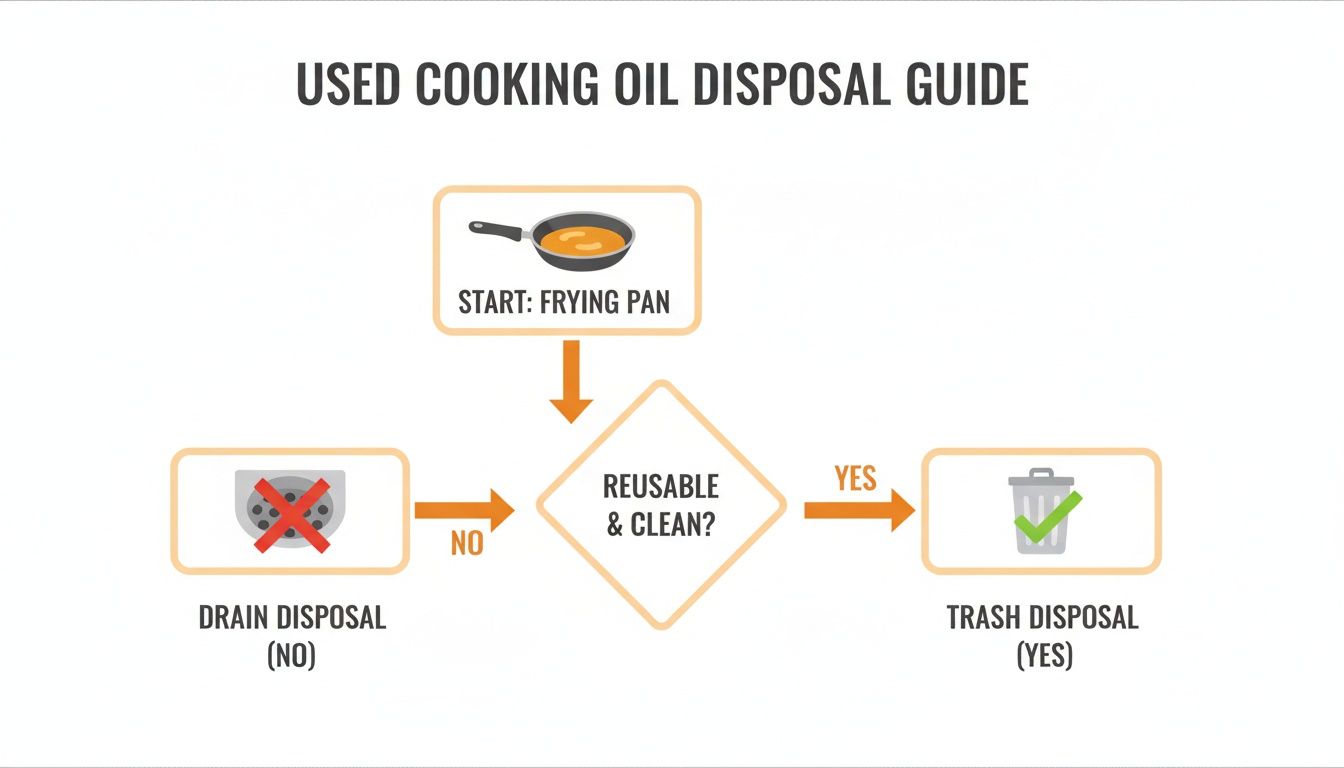
As you can see, the drain is a hard "no." The trash is the right destination, but how the oil gets there makes all the difference.
The Most Effective Disposal Method
There’s a much cleaner, smarter way to handle used oil: solidify it first. This is where a product like FryAway completely changes the game. It’s a 100% plant-based powder that works like magic, turning liquid cooking oil into a solid, organic block of waste that makes cleanup ridiculously easy.
Forget messy pouring. The process is as simple as it gets:
- Sprinkle and Stir: While the oil is still hot, just sprinkle in the FryAway powder. Give it a quick stir to make sure it dissolves completely.
- Cool Down: Now, just walk away and let the pan cool down. As it does, the oil will harden into a solid puck.
- Toss into household trash: Once it's solid, you can easily scoop the whole thing out and toss it right into your trash bin. No spills, no leaky containers, no mess.
This method takes all the risk and hassle out of dealing with liquid oil. Of course, mastering kitchen safety goes beyond just oil disposal. To get a better handle on keeping your kitchen safe, check out this practical guide to understanding cross-contamination in food.
Safety First: Never, ever pour hot oil into a plastic container. It can easily melt the plastic, leading to a dangerous spill and potentially serious burns. And for those times when a spill happens anyway, being prepared is everything. Our guide on how to clean up oil spills in the kitchen has you covered.
While some towns have cooking oil recycling programs, they usually mean you have to store old, greasy containers and then drive them to a special drop-off location. It’s a great idea in theory, but it’s a hassle that most of us just don’t have time for. Solidifying your oil at home with FryAway is easily the most practical and surefire way to handle it responsibly.
The Best Way to Dispose of Old Cooking Oil
Forget about the hassle of keeping smelly jars of grease under the sink or trying to figure out where the nearest recycling center is. When it comes to what to do with old cooking oil, the simplest and cleanest answer is to tackle the problem right where it starts: in the frying pan. This is where FryAway completely changes the game.
FryAway is a 100% plant-based, non-toxic powder that magically turns liquid cooking oil into a solid, organic block. That means you can just scoop it out and toss it into your regular household trash. It eliminates the risk of messy spills, greasy containers, and, most importantly, clogged pipes. For anyone who loves fried food but dreads the cleanup, this is a lifesaver.
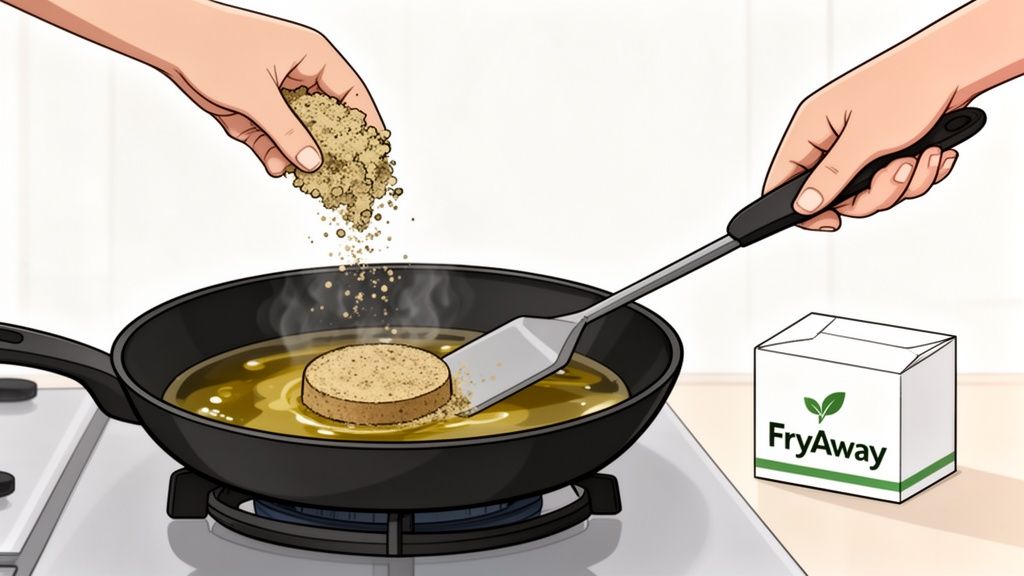
A Simple Three-Step Process for Perfect Results
Using FryAway is about as easy as it gets. You don't need any special tools or complicated instructions. Just follow this straightforward process for a mess-free kitchen every time.
- Sprinkle and Stir: Right after you're done cooking, while the oil is still hot, just sprinkle the FryAway powder over the surface. Give it a quick stir to make sure the powder dissolves and starts working its magic.
- Cool Down: Now, just walk away. Let the oil cool down, and you'll see it start to thicken and eventually harden into a solid puck.
- Toss into Household Trash: Once the oil is completely solid and the pan is cool, grab a spatula and scoop out the hardened mass. It lifts out cleanly in one piece and can go straight into your garbage bin.
This whole process just makes the liquid waste problem disappear. Now, for commercial kitchens dealing with huge volumes of oil, they need specialized systems. Proper maintenance, like regularly cleaning a grease trap, is non-negotiable to prevent catastrophic plumbing issues. But for the rest of us at home, FryAway is the perfect solution.
Comparing Cooking Oil Disposal Methods
To really see the difference, let’s compare the old-school method of pouring oil into a jar with using FryAway.
| Feature | Traditional Jar Method | FryAway Method |
|---|---|---|
| Convenience | Low. Requires finding and saving jars, which can be forgotten or misplaced. | High. Use it right in the pan you cooked in, no extra containers needed. |
| Mess Factor | High. Risk of spills when pouring hot oil. Storing jars is often smelly and greasy. | Low. Solidifies oil directly in the pan for a clean, scoop-and-toss disposal. |
| Environmental Impact | Moderate. Jars can leak in landfills. Often leads to improper disposal down the drain. | Low. Plant-based formula is safe for landfills. Prevents plumbing clogs and pollution. |
| Space | Requires counter or fridge space to store jars of used oil until they're full. | Zero extra space needed. The product pouch is small and easy to store. |
The choice is pretty clear. FryAway simplifies the entire process, making the responsible choice the easiest one.
Why This Method Is a Superior Choice
The real beauty of solidifying your oil is that it gets to the root of the disposal headache. While recycling programs sound great on paper, the logistics for a home cook are often a nightmare.
In 2022, the U.S. managed to collect a whopping 0.85 billion gallons of used cooking oil, but that’s just a drop in the bucket compared to what’s actually produced. Let's be honest, who wants to drive around with sloshing jars of old oil in their car? That inconvenience is why so much of it ends up down the drain, feeding massive fatbergs like the infamous 130-ton monster found in London's sewers.
By turning a liquid mess into a solid, trash-safe material, you can confidently dispose of oil without worrying about leaks, pests, or environmental harm. It’s the smartest approach for a clean and sustainable kitchen.
FryAway bridges the gap by making the right thing to do the easiest thing to do. Whether you're pan-frying some crispy chicken or deep-frying a batch of homemade doughnuts, there's a FryAway product designed for your needs, from the smaller Pan Fry size to the larger Deep Fry option. It brings the joy back to frying by taking the dread out of the cleanup.
Fry Without Fear with These Delicious Recipes
Now that you know how to handle old cooking oil without any stress, you can finally embrace the joy of frying. Forget the dread of cleanup and get ready to enjoy some incredible fried foods right in your own kitchen.
When you have a simple solution like FryAway waiting, making these classic recipes becomes all about the fun of cooking. This is your chance to perfect those crispy, golden dishes you've been craving. We’ve pulled together three irresistible fried recipes that are guaranteed crowd-pleasers.
Crispy Southern Fried Chicken
There's nothing quite like the crunch and flavor of perfectly cooked Southern fried chicken. This recipe delivers that juicy interior with a shatteringly crisp crust that will have everyone coming back for more.
You Will Need:
- One whole chicken, cut into 8 pieces
- 2 cups all-purpose flour, seasoned with salt, pepper, and paprika
- 2 large eggs, beaten with a splash of milk
- 4 cups of peanut or vegetable oil for frying
Instructions:
First, set up a dredging station with two shallow dishes—one for your seasoned flour and one for the egg wash. Dip each piece of chicken first in the flour, then the egg, and then back into the flour for a nice, thick coating.
Carefully place the chicken into hot oil (around 350°F) and fry for about 6-8 minutes per side, until it’s beautifully golden brown and cooked all the way through.
Perfect Golden French Fries
Say goodbye to soggy, disappointing fries. This method ensures you get that ideal combination of a fluffy inside and a perfectly crisp exterior every single time. A neutral oil with a high smoke point is key here.
You Will Need:
- 4 large Russet potatoes, peeled and cut into ¼-inch sticks
- 6 cups of canola or peanut oil for frying
- Salt, to taste
Instructions:
Start by soaking the cut potatoes in cold water for at least 30 minutes to remove excess starch, then pat them completely dry—this is crucial for crispiness. Heat the oil to 300°F and fry the potatoes for 5-6 minutes until they're soft but not yet browned.
Remove them from the oil and crank the heat up to 375°F. Fry them a second time for just 2-3 minutes until they are golden and unbelievably crispy.
Homemade Glazed Doughnuts
Finish things off with a sweet treat that tastes like it came straight from a gourmet bakery. These light, airy yeast doughnuts are a delightful weekend project, and the simple vanilla glaze is the perfect finishing touch.
You Will Need:
- 1 packet of active dry yeast
- 2 ½ cups all-purpose flour
- ¼ cup granulated sugar
- 1 cup whole milk, warmed
- 1 large egg
- 8 cups of vegetable or canola oil for frying
- For the glaze: 2 cups powdered sugar, ¼ cup milk, 1 tsp vanilla extract
Instructions:
Activate the yeast in the warm milk, then mix it with the dry ingredients to form a soft dough. Let it rise for about an hour. Once risen, roll out the dough, cut your doughnut shapes, and let them rise a second time.
Fry in oil heated to 365°F for about one minute per side until they’re puffy and golden. Whisk the glaze ingredients together and dip the warm doughnuts for a perfect coating.
Cleanup Tip: Once your delicious doughnuts are done, turn off the heat and immediately Sprinkle and Stir FryAway into the hot oil. Let it Cool Down while you glaze and enjoy your creations. By the time you’re finished, the oil will have solidified into a single puck, ready to Toss into household trash.
Creative Ways to Reuse Cooking Oil
Before you toss that pan of used cooking oil, let's talk about giving it a second life. Not all oil is destined for the trash after just one use. With a couple of smart techniques, you can safely extend its usefulness, which is great for both your wallet and the environment.
Reusing cooking oil is totally practical, but you have to do it right to keep things safe and tasty. The whole game is about keeping the oil clean and storing it properly. If another batch of fried chicken is in your future, filtering is non-negotiable.
Safely Reusing Oil for Cooking
First things first: always let the oil cool down completely before you handle it. Next, you’ll need to filter out all those little food particles and sediment. If you leave them in, they’ll burn next time you heat the oil, making it go rancid much faster.
You can easily do this by pouring the cooled oil through a fine-mesh sieve lined with cheesecloth or even a coffee filter. Let it drain into an airtight container for storage.
Proper storage is just as critical. Keep your filtered oil sealed up tight in an opaque container, stashed away from heat and light—a pantry shelf is perfect. It's also a good idea to avoid mixing different types of oils, since they have different smoke points and break down more quickly when combined.
For a deeper dive into the filtering process, check out our guide on how to filter frying oil.
Keep an eye out for signs that your oil has gone bad. If it smells off, looks dark and syrupy, or starts to foam up when you heat it, its cooking days are over. Time to get rid of it.
Getting Creative Beyond the Kitchen
Used cooking oil has some surprising uses outside of cooking, though they often require a bit more elbow grease.
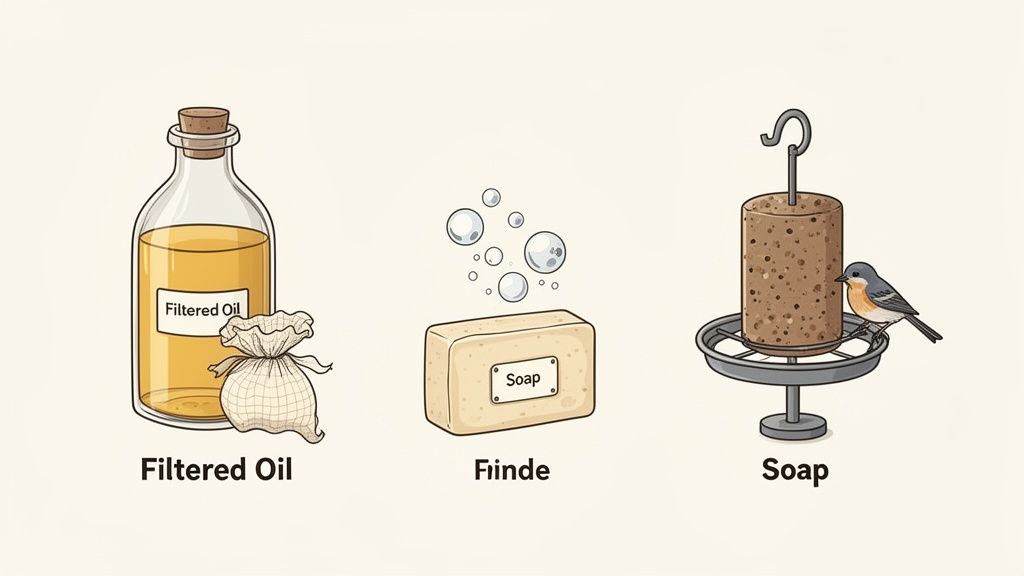
If you’re the crafty type, you can use filtered oil as a key ingredient for making homemade soap through a process called saponification. Another popular project is creating suet cakes for birds—just mix the cooled fat with birdseed, oats, and flour, and you’ve got a winter treat for your feathered friends.
While these are fantastic ways to upcycle, they aren’t always practical for everyone. The market for used cooking oil is projected to top $11 billion by 2032, mainly driven by biodiesel production. But let's be real, most of us don't have access to that kind of large-scale recycling.
This reality highlights the need for simple, effective solutions at home. Whether you reuse your oil or need to dispose of it, making a responsible choice is what counts. When reuse isn't an option, a clean, mess-free disposal method is your best friend.
For those moments, FryAway is the perfect solution. Just follow three simple steps:
- Sprinkle and Stir the powder into hot oil.
- Cool Down and let it solidify.
- Toss the hardened puck right into your household trash.
It guarantees a clean, easy, and environmentally sound disposal every single time.
Common Questions About Cooking Oil Disposal
Even with the best guidance, it's natural for questions to pop up. Let’s tackle some of the most common ones we hear about handling old cooking oil, so you can feel completely confident in your kitchen cleanup.
Can I Really Just Throw Oil in the Trash?
This is a big one, and the answer is: it depends. You should absolutely never pour liquid oil straight into your trash can. It’s a recipe for disaster—think leaky bags, greasy messes all over your floor, and an open invitation for pests.
However, once that oil is solidified, it’s a different story. Solid oil is perfectly safe to toss in your household garbage. This is where a product like FryAway makes all the difference. It transforms that messy liquid into a solid, self-contained puck you can easily scoop out and discard cleanly, with zero risk of spills. For a mess-free and safe disposal, we always recommend solidifying oil with FryAway before tossing it.
How Many Times Can I Reuse Frying Oil?
This really comes down to what you’re frying. If you're making something clean like french fries from plain potatoes, you can probably get away with reusing the oil three or four times.
But for breaded or battered items like fried chicken that shed a lot of particles into the oil, you might only get one or two uses before it’s past its prime.
Trust your senses—they won't lie. If the oil gets dark, smells rancid, foams up on the surface, or starts smoking at a lower temperature than normal, its life is over. Time to dispose of it using FryAway. A quick pro-tip: never "top off" old oil with fresh oil. It just ruins the new batch faster.
Is FryAway Safe for Septic Systems?
Yes, FryAway is a fantastic choice for homes with septic systems. In fact, it actively helps protect your system. The single biggest threat to a septic tank is grease, which clogs pipes and throws off the essential bacterial balance your system needs to break down waste.
Because FryAway solidifies oil for easy disposal in the trash, it ensures that oil never enters your plumbing to begin with. It's a simple step that helps you avoid clogs and potentially catastrophic—and very expensive—septic system failures.
What Is the Difference Between FryAway Products?
The main difference between our FryAway products is the volume of oil each one is designed to handle. We wanted to make sure there was a perfect option for any cooking style, whether you're whipping up a batch of Crispy Southern Fried Chicken or some delicious Homemade Glazed Doughnuts.
- Pan Fry: This is your go-to for everyday cooking and smaller jobs. It solidifies up to 2 cups of oil.
- Deep Fry: Built for the bigger tasks, like a countertop deep fryer. It can easily manage up to 8 cups of oil.
Choosing the right size makes cleanup after frying your favorite meals completely efficient and mess-free, every single time.
Ready to make your kitchen cleanup easier and more eco-friendly? Discover the magic of turning liquid oil into solid waste with FryAway. Shop now and fry without fear.