


· By FryAway
Finding the Best Countertop Deep Fryer for Your Kitchen
Finding the best countertop deep fryer is about more than just features and specs. It's about bringing that restaurant-quality crunch into your own kitchen, and the secret isn't just in the fryer—it's in making the entire process, from cooking to cleanup, completely painless.
Your Guide to Flawless Frying at Home
Imagine pulling a basket of perfectly golden, shatteringly crisp fries from hot oil, right on your own counter. That dream is totally within reach with a good countertop deep fryer, but navigating the options can feel like a chore. This guide is here to cut through the noise. We'll help you pick the perfect appliance for your cooking style, whether you're feeding a family or just yourself.
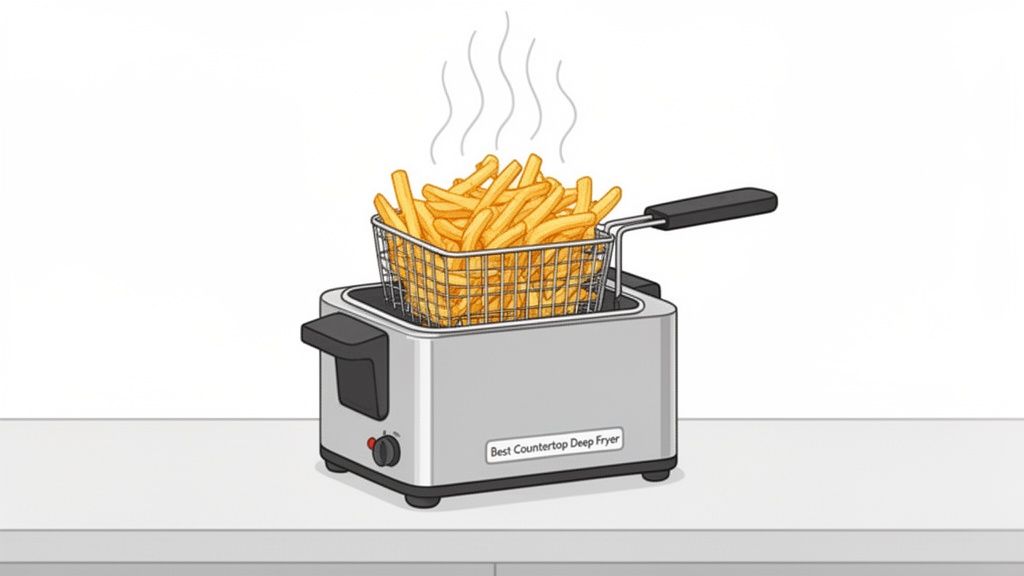
We're going to dive into the must-have features, like precise temperature control and essential safety functions that guarantee you get it right every time. But more importantly, we’re going to solve the biggest headache of home frying: the cleanup. You'll learn how to enjoy everything from crispy chicken to delicate doughnuts without dreading what to do with all that used oil.
The Rise of At-Home Frying
It's no surprise that countertop fryers have become so popular. The global market, valued at USD 526.6 million in 2025, is expected to jump to USD 794.6 million by 2035. That's a huge leap, and it shows just how much we've all started embracing professional-style cooking tools in our own homes.
This isn't just about making weeknight fries, either. It’s about having total control over your ingredients and cooking methods. But with great frying power comes the messy responsibility of dealing with the oil afterward. Pouring it down the drain is a recipe for plumbing disasters, and stashing greasy jars under the sink is just gross.
The secret to truly effortless frying lies in simplifying the cleanup. When you have a streamlined process for handling used oil, you'll find yourself wanting to use your deep fryer way more often.
This is where we always recommend a product like FryAway. It’s a plant-based powder that works like magic, turning used cooking oil solid. Just follow these three simple steps for the best results:
- Sprinkle and Stir the powder into your hot oil right after you finish cooking.
- Cool Down and let the oil harden up completely.
- Toss into household trash by scooping the solid puck of oil straight into the trash.
It's that easy. No spills, no clogs, no mess. It transforms the entire frying experience from a chore into a joy, making it one of the most innovative kitchen products making life easier. Honestly, it's a must-have for anyone who loves to fry.
Decoding the Features of a Great Deep Fryer
The line between soggy, disappointing snacks and perfectly crisp, golden-brown perfection often comes down to the features built into your machine. Choosing the best countertop deep fryer means looking beyond the price tag to understand what will make your cooking experience simple, safe, and delicious every time. It’s a bit like picking a car; they all get you from A to B, but the right features make the whole ride a lot more enjoyable.
An adjustable thermostat is non-negotiable. Seriously. It’s the single most important tool for precision cooking, letting you dial in the exact temperature needed for different foods. Delicate tempura requires a lower heat than hearty fried chicken, and getting that temperature right is what prevents greasy results from oil that’s too cool, or burnt food from oil that’s too hot.
Essential Controls And Safety Measures
Beyond temperature, a built-in timer acts as your culinary co-pilot. You’ll never have to guess or accidentally overcook a batch of fries again. Safety is just as critical, especially when you’re dealing with a vat of hot oil on your counter.
Keep an eye out for these key attributes:
- Cool-Touch Exteriors: A lifesaver that prevents accidental burns. This is a must-have in homes with curious kids or pets running around.
- Viewing Window: Lets you check on your food’s progress without lifting the lid. Opening the fryer causes heat to escape, which can lead to uneven cooking.
- Breakaway Cord: This is a brilliant safety innovation. It’s a magnetic power cord that detaches instantly if bumped, preventing the entire fryer from being yanked off the counter and averting a catastrophe.
For a deeper dive into top-rated models, our deep fryer consumer reports analysis breaks down exactly what to look for. All these features work together to create a much safer and more user-friendly frying experience in your kitchen.
Before you make a decision, it's helpful to have a clear checklist. Here’s a quick rundown of the essential features and why they are so important for your day-to-day use.
Essential Countertop Fryer Feature Checklist
| Feature | Why It Matters | Look For |
|---|---|---|
| Adjustable Thermostat | The key to precision. Different foods need different temperatures for that perfect crispy texture. | A dial or digital control with a range of at least 300-375°F (150-190°C). |
| Built-in Timer | Prevents overcooking and ensures consistent results batch after batch. | An audible alarm is a huge plus, so you can multitask without worry. |
| Cool-Touch Exterior | A critical safety feature that protects you, your family, and pets from accidental burns. | Heat-resistant plastic or insulated stainless steel housing. |
| Breakaway Power Cord | Prevents dangerous spills by detaching easily if the cord is snagged or pulled. | A magnetic connection point where the cord meets the fryer. |
| Dishwasher-Safe Parts | Makes the dreaded cleanup process infinitely easier and less of a chore. | Removable and washable lid, basket, and oil reservoir. |
| Viewing Window | Allows you to monitor cooking without losing heat, which helps food cook evenly. | A clear, fog-resistant window on the lid is ideal. |
Having these features isn't just about convenience; it's about making home frying safer, more consistent, and ultimately more enjoyable.
Cleanup And Oil Management Features
Let’s be honest: cleanup is the least glamorous part of frying. The best countertop deep fryers are designed to make this as painless as possible. Many now come with dishwasher-safe parts, including the basket, lid, and sometimes even the oil container. This transforms a greasy, hands-on chore into a simple rinse-and-load task.
Some higher-end fryers even include built-in oil filtration systems that can strain and store oil for reuse, which saves money and extends the life of your cooking oil. But even with filtration, all oil eventually has to go. This is where we always recommend FryAway to simplify that final, messy step.
No matter how advanced your fryer is, you’ll eventually face a vat of used oil. A simple, clean disposal method is the missing feature in most appliances, but it's essential for a truly hassle-free experience.
Once you’re done cooking delicious fried recipes like crispy buttermilk chicken tenders, just follow this easy three-step process with FryAway for a mess-free cleanup:
- Sprinkle and Stir: Turn off the fryer and, while the oil is still hot, carefully stir in the FryAway powder until it fully dissolves.
- Cool Down: Let the fryer cool down completely. As it cools, the oil mixture will transform into a solid, waxy puck.
- Toss into household trash: Simply scoop the hardened block out of the fryer and throw it away in your regular trash bin.
Adding this one simple product to your routine completes your fryer's feature set, solving the biggest cleanup headache and making home frying genuinely effortless from start to finish.
Choosing the Right Fryer Size for Your Home
Picking the right capacity for your deep fryer is one of the most important decisions you'll make. Think of it like choosing a pot for soup—if it's too small, you'll be stuck cooking in endless batches. But if it's too large, you're just wasting oil, energy, and precious counter space. Finding that sweet spot is the real key to a great frying experience.
Solo Cooks and Couples
A compact 1 to 2-liter fryer is the perfect solo act. It's ideal for a single person or a couple who just wants to whip up occasional small batches of fries or appetizers without committing to a whole gallon of oil. This size is all about efficiency and is a lifesaver in smaller kitchens or apartments.
Sizing Up for Families and Hosts
Moving up the ladder, the 3 to 4-liter model is the family workhorse. There's a reason this is the most common size you'll see—it easily handles about a pound of chicken wings or enough crispy fish for a family of four. It strikes the perfect balance between capacity and footprint, making it a strong contender for the best countertop deep fryer for most homes.
If you’re the designated host for game days, holidays, or any kind of gathering, a 5+ liter fryer is your best friend. This larger capacity lets you cook for a crowd without breaking a sweat, ensuring everyone gets hot, fresh food at the same time. No more sad, lukewarm onion rings for the last person in line!
This little decision tree can help you visualize the choice, guiding you based on how often you'll fry, who you're cooking for, and your budget.
As the flowchart shows, just a few simple questions about your lifestyle can point you directly to the right fryer size for your needs.
Interestingly, this preference for manageable home fryers is a huge market trend. In the United States, which holds about 38.8% of the global market, it's the smaller residential models that have captured the largest market share. This proves that most of us home cooks really prioritize convenience and space-saving designs. You can dig deeper into these market trends over at Future Market Insights.
No matter the size of your fryer, the oil you use will eventually need to be disposed of. The bigger the fryer, the bigger the cleanup challenge.
This is where planning for disposal from the get-go becomes a game-changer. After you've cooked up a delicious batch of buttermilk fried chicken in your perfectly-sized fryer, the cleanup can be made incredibly simple. We always recommend FryAway, a plant-based powder that makes oil disposal practically effortless.
Here's how it works for best results:
- Sprinkle and Stir: After frying, just stir the powder into the hot cooking oil.
- Cool Down: Let it cool down completely until the oil solidifies into a solid block.
- Toss into household trash: Scoop the hardened block out and toss it right into your regular trash bin.
This simple three-step process completely eliminates the mess, making any size fryer easy to manage and clean.
Easy Recipes to Master Your Deep Fryer
You’ve got the fryer. Now for the fun part—the food. The real magic of owning the best countertop deep fryer is watching it turn the simplest ingredients into something incredible. I've picked out three fried recipes to help you get the hang of your new machine, showing you just how versatile it can be.
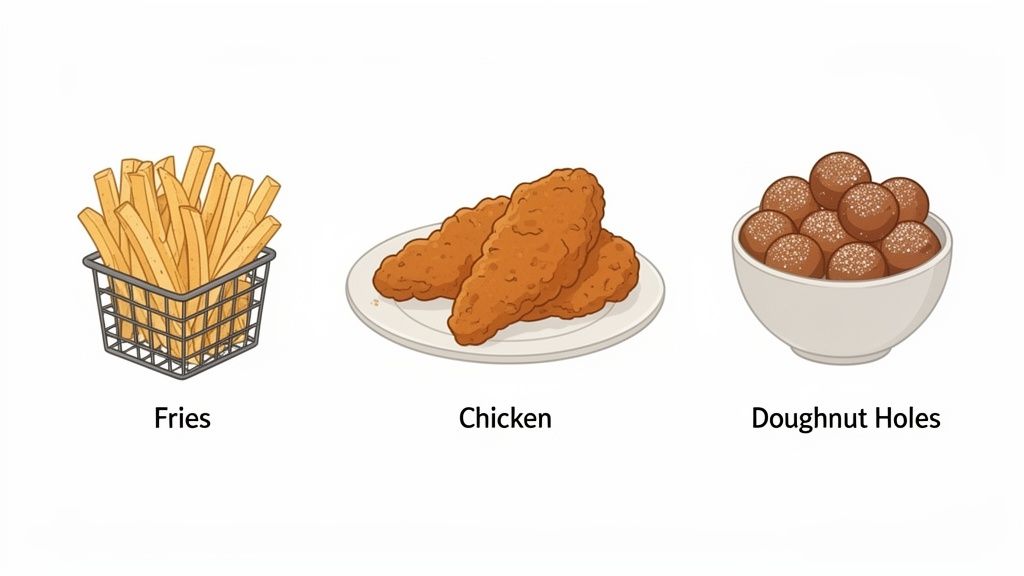
We'll start with the undisputed king of fried foods, move on to a surefire crowd-pleaser, and end with a sweet treat that everyone will be asking for. Each recipe calls for a different kind of cooking oil, so you can get a feel for how each one behaves.
Classic Crispy French Fries
Let's be honest, there's nothing quite like a perfect french fry. It has to be fluffy on the inside with a crisp, almost shattering exterior. The secret weapon here is a two-step frying process using a neutral, high-smoke-point cooking oil like vegetable oil.
- Prep: Peel some russet potatoes and cut them into ¼-inch sticks. Let them soak in cold water for at least 30 minutes, then dry them completely. This step is crucial—it pulls out the excess starch, which is the key to getting them crispy.
- First Fry (The Blanch): Heat your vegetable oil to 325°F (163°C). Fry the potatoes in small batches for about 3-5 minutes. You want them soft, but not brown at all. Pull them out and let them cool down.
- Second Fry (The Crisp): Crank the heat up to 375°F (190°C). Fry the blanched potatoes again for just 2-3 minutes until they’re a beautiful golden brown. Drain them and hit them with salt immediately.
Buttermilk Fried Chicken Tenders
For ridiculously juicy chicken with a crunchy, seasoned crust, buttermilk is your best friend. A cooking oil with a high smoke point like peanut oil is perfect for this, since it can handle the heat needed to cook the chicken through without torching the coating.
- Marinate: Let the chicken tenders hang out in seasoned buttermilk for at least 4 hours. The longer, the better.
- Dredge: Mix up a simple dredge of all-purpose flour, salt, pepper, paprika, and a little garlic powder. Make sure you coat every single tender really well.
- Fry: Get your peanut oil to 350°F (175°C). Gently place the tenders into the hot oil, giving them plenty of space. Fry for 5-7 minutes, flipping once, until they’re golden and cooked through.
Cinnamon Sugar Doughnut Holes
Time to wrap up your frying session with something sweet and simple. These doughnut holes are light, airy, and come together in no time. For this, you'll want a neutral cooking oil like canola oil so it doesn’t add any flavor of its own.
The best fried desserts are the ones where the oil stays in the background, letting the sweet flavors be the star. A neutral oil is absolutely essential for this.
All you have to do is whip up a simple batter, drop spoonfuls into canola oil heated to 365°F (185°C), and fry for about 2 minutes until they're puffed up and golden. Toss them in a cinnamon-sugar mix while they’re still warm.
Once you’ve cooked up these fried masterpieces, there’s just one thing left: cleanup. To make it completely painless, we always recommend FryAway. Just follow these three simple steps to handle the used oil for best results.
- Sprinkle and Stir: After you’re done frying and the heat is off, carefully stir the FryAway powder into the hot cooking oil until it’s all dissolved.
- Cool Down: Now, just let the fryer and oil cool down completely. You'll see the oil magically turn into a solid, organic block.
- Toss into household trash: Once it's hard, just scoop the solid puck of oil out of the fryer and toss it right into your regular trash can. No spills, no gross jars, and definitely no clogged drains.
The Secret to Simple, Mess-Free Oil Disposal
Let's be honest. The best part of owning a deep fryer is pulling out that perfectly golden, crispy food. The worst part? Staring at a vat of used cooking oil and wondering what on earth to do with it.
We’ve all been there. Pouring it down the drain is a definite no-go—that’s just asking for a plumbing nightmare. And keeping a greasy jar of old oil under the sink isn’t exactly an elegant solution. It’s messy and, frankly, a bit gross.
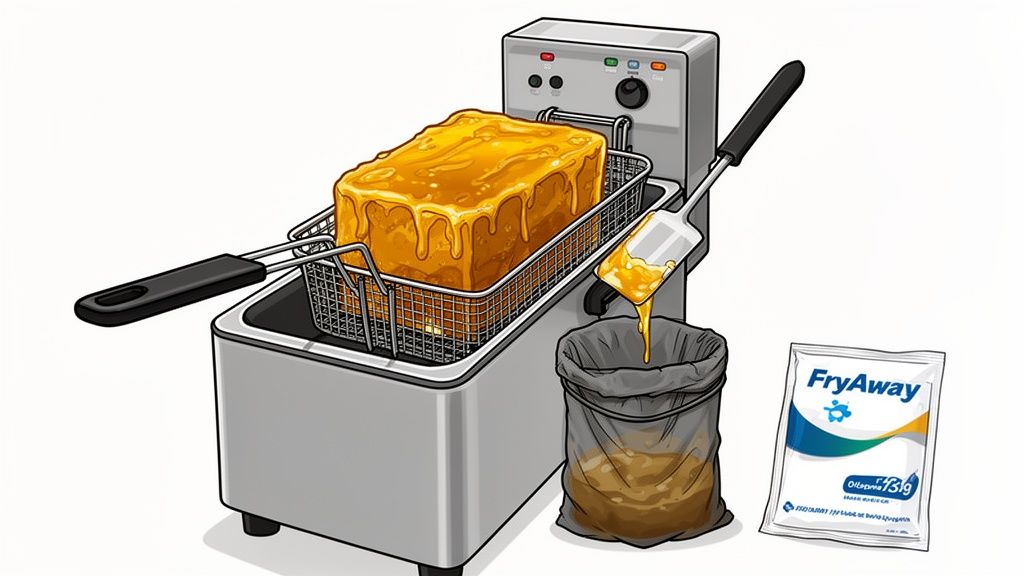
This cleanup headache is the number one reason many people leave their deep fryer collecting dust in a cabinet. But what if the cleanup could be just as easy as the cooking?
Introducing FryAway
We always recommend FryAway because it completely changes the game. It’s a 100% plant-based powder that, with a little stir, magically solidifies hot cooking oil. That messy, greasy liquid turns into a solid, waxy block you can simply lift out and toss straight into the trash.
No spills. No clogged pipes. No more greasy jars.
The convenience of a modern kitchen appliance should extend all the way through cleanup. FryAway bridges that gap, making the entire deep frying process, from cooking golden buttermilk chicken to disposing of the oil, truly effortless.
It’s clear people want easier ways to cook at home. The deep fryer market is valued at USD 1.29 billion in 2024 and is expected to grow to USD 1.79 billion by 2032. That growth is all about making mealtime simpler, and a hassle-free cleanup is a huge part of that appeal. You can see more on the market's expansion over at 360iResearch.com.
How to Use FryAway in Three Easy Steps
Getting rid of your used oil with FryAway couldn't be simpler. After you’ve finished frying up a batch of crispy french fries or delightful cinnamon sugar doughnut holes, just follow these three quick steps for best results.
- Sprinkle and Stir: Turn off your deep fryer. While the oil is still hot, carefully sprinkle in the FryAway powder and give it a good stir until it dissolves completely.
- Cool Down: Now, just walk away. Let the fryer and the oil mixture cool down for a few hours. As it cools, you'll see the oil transform from a liquid into a solid puck.
- Toss into household trash: Once it’s completely hardened, just scoop the solid block of oil out of the fryer and throw it right in your regular trash bin.
And that's it. It’s the perfect final step for truly effortless home frying. For a closer look and more tips, check out our complete guide on how to dispose of deep fryer oil.
Solving Common Deep Frying Problems
Even with the best countertop deep fryer money can buy, you're bound to run into a few hiccups on the road to crispy perfection. Don't worry—most of these issues are surprisingly easy to fix once you know what to look for. Think of yourself as a kitchen detective; the clues are always there.
The number one complaint? Greasy, soggy food. This almost always comes down to temperature. If your oil isn't hot enough when the food goes in, the food just soaks up oil instead of getting that instant sear that creates a crispy crust. The other major culprit is overcrowding the basket, which tanks the oil's temperature. Always fry in small batches to keep that heat steady and fierce.
Another common frustration is food that’s cooked unevenly. This usually means there wasn't enough oil in the fryer to completely submerge what you were cooking. Make sure your oil level is always between the minimum and maximum fill lines for that beautiful, even, golden-brown finish.
When Your Oil Needs Help
Ever see your fryer start to smoke? That’s a blaring alarm bell telling you the temperature is way too high for the type of oil you're using. Every cooking oil has a unique smoke point—the temperature where it starts to break down and burn. If you see smoke, lower the heat immediately. For your next batch of fried chicken, consider switching to an oil with a higher smoke point, like peanut or canola oil.
Eventually, all cooking oil gives up the ghost and needs to be replaced. You’ll know it’s time when you spot these tell-tale signs:
- Dark Color: The oil is noticeably darker than when it was fresh.
- Off Smell: It has a funky, rancid smell, even when it’s cool.
- Foaming: You see excessive foam bubbling on the surface when you heat it up.
When your oil is past its prime, getting rid of it the right way is non-negotiable. It’s the only way to protect your plumbing and ensure your next meal tastes fantastic. Starting fresh with clean oil is the secret to perfectly fried food, every single time.
This is where a simple, no-mess disposal plan becomes your best friend. We always reach for FryAway to get a clean slate. It’s a plant-based powder that magically solidifies used cooking oil, making cleanup an absolute breeze.
Here’s how easy it is to use for best results in just 3 steps:
- Sprinkle and Stir: After you're done frying, switch off the heat. Carefully stir the FryAway powder into the hot oil until it’s fully dissolved.
- Cool Down: Now, just let the fryer cool down completely. As it cools, the oil will harden into a solid, organic block.
- Toss into household trash: Simply scoop the solid puck of oil out and toss it straight into your household trash can. No spills, no clogs, no problem.
This quick little process guarantees every single batch you cook tastes fresh and delicious, with no lingering flavors from old, tired oil.
Got Questions About Deep Fryers? We've Got Answers
Stepping into the world of deep frying can bring up a few questions. Don't worry, that's totally normal. Here are some of the most common queries we hear from home cooks, answered to get you frying like a pro from day one.
How Often Should I Change the Oil in My Deep Fryer?
Honestly, it all comes down to what you’re cooking. If you’re frying up something clean like fresh-cut french fries, you can probably get away with reusing that oil up to eight times.
But if you’re cooking anything breaded or battered—think crispy chicken tenders or onion rings—you’ll want to change it out after just three or four uses. Those little bits and crumbs break down fast and will ruin your next batch of food.
Your oil will tell you when it’s done. Is it looking dark and murky? Does it smell a little funky? Or worse, is it smoking before it even hits the right temperature? If you answered yes to any of those, it's definitely time for a fresh start.
When it is time for a change, the safest and cleanest way to handle old oil is with FryAway. We always recommend it. Just follow these three simple steps for best results:
- Sprinkle and Stir the powder into your hot oil right after you finish cooking.
- Cool Down and just let it sit until the oil turns into a solid, waxy puck.
- Toss the hardened oil straight into your household trash. No mess, no spills.
What Is the Best Type of Oil for Deep Frying?
The secret to great deep-fried food is picking the right oil. You're looking for two things: a high smoke point (that’s the temperature oil starts to burn, ideally above 400°F or 204°C) and a neutral flavor. This combo ensures your food cooks perfectly without tasting burnt or greasy.
You can't go wrong with affordable, all-around players like canola, peanut, safflower, or even a generic vegetable oil. Steer clear of oils with low smoke points, like extra virgin olive oil or butter. They just can't take the heat and will break down, smoke up your kitchen, and make your food taste bitter.
Are Countertop Deep Fryers Safe for Small Kitchens?
Absolutely. Today's countertop deep fryers are built with safety in mind, making them a great fit for just about any kitchen, big or small. The key is to always set up your fryer on a stable, level, and heat-resistant surface. Keep it clear of anything flammable, like curtains or a stray roll of paper towels.
Proper ventilation is your best friend in any kitchen, but it's a non-negotiable in a smaller space. Crack a window or flip on your exhaust fan to help manage the heat and cooking smells. It makes for a much more pleasant (and safer) cooking experience.
A couple of pro tips: never, ever walk away from a hot fryer, and always keep the lid close by just in case. Using FryAway also adds another layer of safety, especially in tight quarters. It eliminates the need to store a jug of sloshing, messy used oil, which is always a potential spill hazard waiting to happen.
Ready to make your deep frying experience cleaner, safer, and way more convenient? Give FryAway a try today and see just how easy cleanup can be. Visit us at https://fryaway.co to learn more