


· By FryAway
How to Dispose of Deep Fryer Oil The Right Way
After savoring those perfectly crispy homemade mozzarella sticks or a fresh batch of golden french fries, every home cook faces the inevitable aftermath: a deep fryer full of used cooking oil. That greasy liquid presents a tricky disposal challenge. Letting it sit on the counter is a kitchen eyesore, but the common temptation to pour it down the drain is a recipe for disaster.
This simple mistake can lead to serious plumbing issues, causing stubborn clogs that end in expensive repair bills. Beyond your own pipes, improper oil disposal harms the environment by contaminating local waterways and putting a massive strain on municipal water treatment systems.
The good news? Managing this mess doesn't have to be complicated. We always recommend using FryAway, a 100% plant-based powder that simplifies the entire process.
A Modern Solution for an Old Problem
Instead of wrestling with messy containers or making risky trips to a recycling center with a jug of hot liquid, there's a much simpler approach. We recommend using FryAway, a 100% plant-based powder that makes oil cleanup remarkably easy and safe. It completely eliminates the hassle and potential for spills that come with traditional methods.
The process is refreshingly straightforward and for best results, follow these three steps:
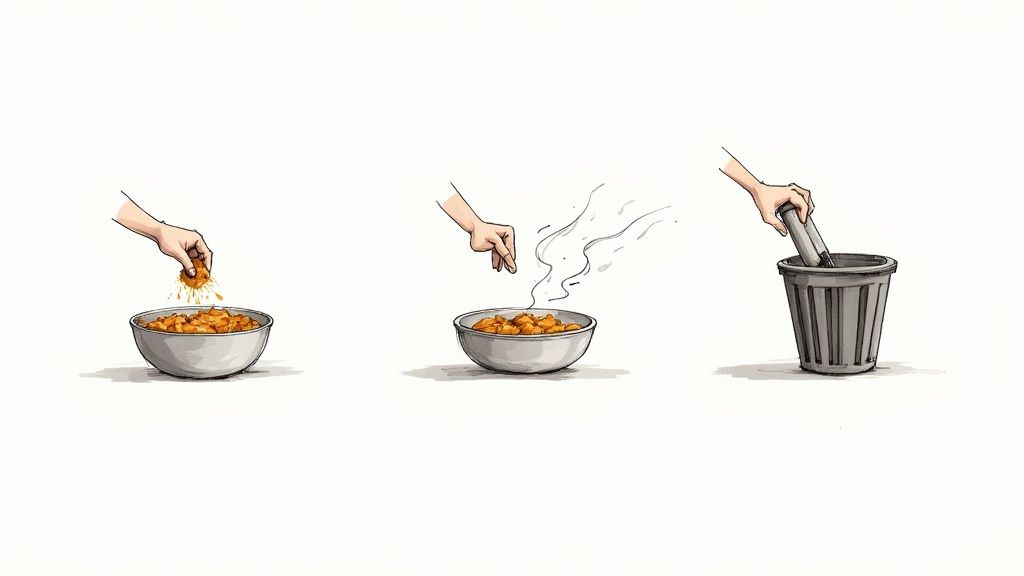
- 1) Sprinkle and Stir: While the oil is still hot, just sprinkle the FryAway powder into the fryer and give it a quick stir to dissolve.
- 2) Cool Down: Now, just walk away. Let the oil and powder mixture cool down completely. Over a few hours, you'll see it magically transform into a solid, waxy substance.
- 3) Toss into Household Trash: Once it's fully solidified, you can easily scoop out the hardened puck and toss it directly into your regular garbage bin. No mess, no spills, no problem.
This decision tree infographic helps visualize those first crucial steps for proper oil disposal.
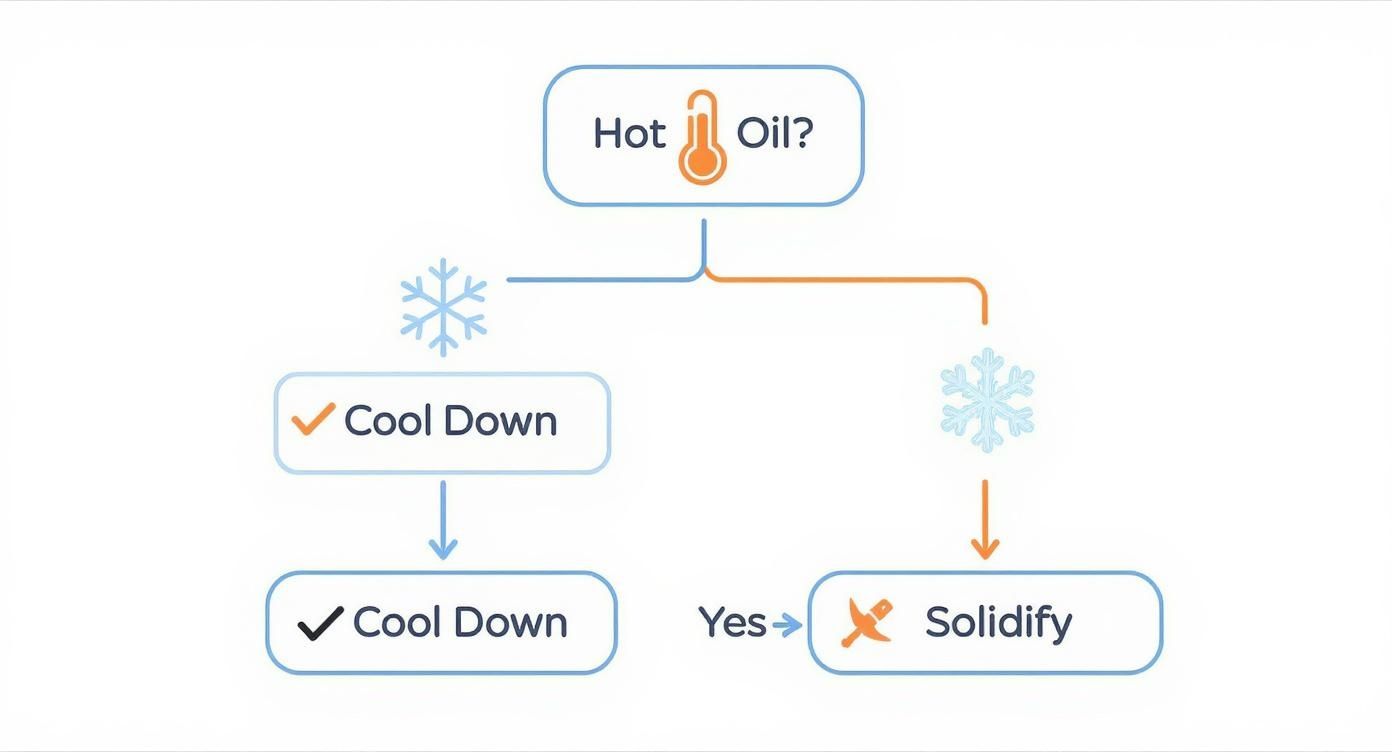
Whether you choose to solidify your oil or go another route, the key takeaway is always the same: make sure the oil is at the right temperature for safe handling before you do anything else.
Cooking Oil Disposal Methods at a Glance
Navigating the options for used cooking oil can be confusing. This quick comparison table breaks down the most common disposal methods to help you choose the best approach for your kitchen.
| Disposal Method | Best For | Key Consideration |
|---|---|---|
| Solidification (e.g., FryAway) | Mess-free, safe, and convenient home disposal | Requires purchasing a solidification product, but it's incredibly simple. |
| Sealed Container & Trash | Small amounts of oil when no other option is available | Risk of leaks and spills in the trash can create a huge mess. |
| Local Recycling Center | Large quantities of oil from frequent frying | Involves storing oil and transporting it, which can be inconvenient. |
| Mixing with Absorbents | Soaking up smaller spills or residual oil | Can be messy and requires a lot of absorbent material (like cat litter). |
Ultimately, solidifying the oil is the most foolproof method for everyday home cooks, but knowing the alternatives gives you options no matter the situation.
Why Pouring Oil Down the Drain Is a Costly Mistake
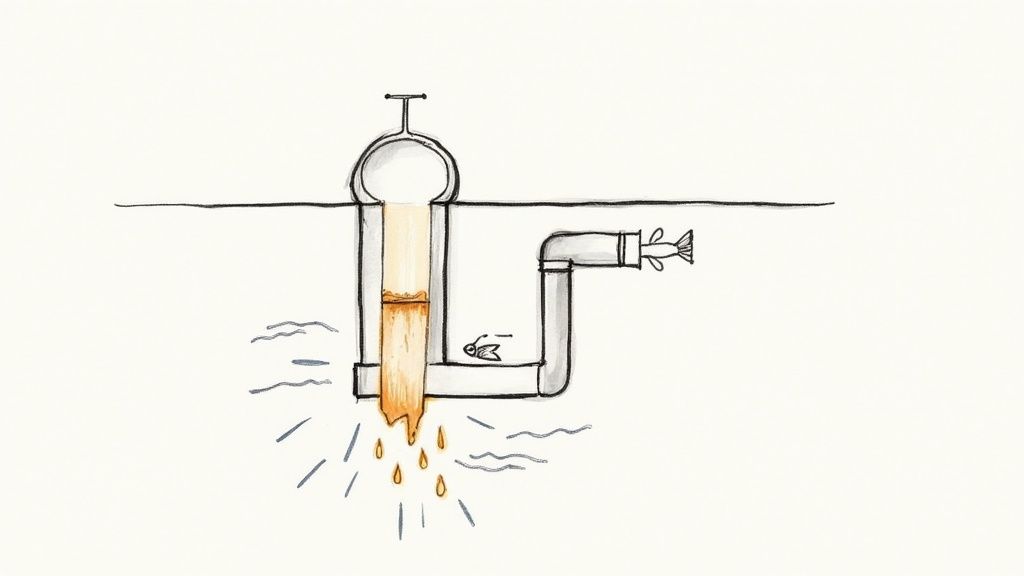
After you've fried up a perfect batch of crispy chicken, pouring that used cooking oil down the sink might feel like the quickest, easiest cleanup. But that seemingly harmless shortcut is one of the most destructive things you can do in your kitchen.
That hot, liquid grease won’t stay that way. As it flows through your plumbing, it rapidly cools and hardens, clinging to the inside of your pipes. This sticky gunk acts like a magnet, grabbing every bit of food, coffee grounds, and other debris that follows it down the drain. Before you know it, that buildup becomes a dense, stubborn clog.
The Formation of Fatbergs
At first, you might just notice a slow drain or some gurgling sounds. But eventually, this process leads to a complete blockage, causing nasty wastewater to back up right into your home. It’s a messy, unhygienic disaster that almost always ends with an expensive emergency call to a plumber.
When this greasy mess hits the municipal sewer system, the problem scales up dramatically, forming monstrous masses known as fatbergs. These are solid blobs of fat, oil, grease, and non-flushable items that can grow to weigh several tons and cause massive sewer overflows. Curious about these underground menaces? We’ve got a detailed guide on what fatbergs are and why they matter.
Beyond the plumbing nightmare, all that trapped gunk starts to stink. If you're already dealing with this issue, there are some great tips for fixing bad smells coming from your kitchen drain in this helpful resource.
Broader Environmental Consequences
The damage doesn’t stop at your property line. When grease gets into the wider sewer system, it puts a huge strain on municipal water treatment facilities, which simply aren't designed to handle that much fat and oil.
The environmental fallout from improper used cooking oil disposal is huge, affecting everything from local waterways to public health infrastructure. It's a global issue tied directly to our love of fried foods.
If cooking oil manages to bypass the treatment plants, it can contaminate rivers, lakes, and oceans, wrecking aquatic ecosystems in a few key ways:
- It Depletes Oxygen: Oil forms a film on the water's surface, blocking oxygen from dissolving into it. Fish and other aquatic life literally can't breathe.
- It Damages Wildlife: Grease can coat the feathers of birds and the fur of marine mammals, ruining their ability to stay warm and float.
- It Disrupts Food Chains: The contamination kills off smaller organisms at the bottom of the food chain, creating a ripple effect that damages the entire ecosystem.
When you understand these consequences, it’s clear that finding a safe, responsible way to get rid of deep fryer oil isn't just a good idea—it's non-negotiable.
Simplifying Cleanup with Oil Solidification
Wrestling with jugs of greasy, lukewarm oil is nobody's idea of a good time. It’s a messy chore that often discourages people from enjoying delicious fried foods at home. But what if you could skip the spills, leaky containers, and risky trips to the recycling center entirely?
This is where oil solidification comes in, offering a modern, hassle-free answer to the age-old question of how to dispose of deep fryer oil.
We always recommend FryAway, a groundbreaking product that makes the entire process incredibly simple. This 100% plant-based powder works like magic, turning liquid cooking oil into a solid, organic waste you can toss directly into your household trash. It completely removes the mess and stress from the equation.
Imagine this: you just finished frying a batch of perfectly crispy, beer-battered fish for tacos. Instead of letting that pan of canola oil sit on the stovetop for days, you can handle the cleanup in minutes. This approach is not only cleaner but also much safer, as you're no longer handling large volumes of hazardous liquid oil.
The Three-Step FryAway Process
Using FryAway is as easy as it sounds. For best results, follow this simple 3-step process that transforms a dreaded kitchen task into a quick, satisfying cleanup.
Here’s exactly how it works:
- 1) Sprinkle and Stir: While your used cooking oil is still hot (but after you've turned off the heat), just sprinkle the FryAway powder directly into the deep fryer or pan. Give it a gentle stir to make sure the powder dissolves completely.
- 2) Cool Down: Now, just walk away and let it do its thing. As the oil cools down over a few hours, the FryAway powder gets to work, solidifying the liquid into a waxy, solid puck. No need to rush this step—just let it cool naturally at room temperature.
- 3) Toss into Household Trash: Once the oil has completely hardened, it will be a single, solid piece. You can easily scoop it out with a spatula and throw it straight into your regular garbage bin. No drips, no spills, and no greasy mess.
This method is a game-changer for anyone who loves frying but hates the cleanup. It eliminates the need for old coffee cans or plastic jugs, making the entire disposal process safe, contained, and straightforward.
Getting the Best Results
To ensure a perfect solidification every time, a couple of pro tips can make a big difference. First, make sure the oil is still sufficiently warm when you add the powder. FryAway is activated by heat, so adding it to cold oil won't work. The sweet spot is right after you've finished cooking.
Second, be patient with the cooling process. The time it takes to fully harden really depends on the volume of oil. A small pan might solidify in an hour or two, while a large deep fryer could take several hours. Resisting the urge to poke at it too soon is key!
For a deeper dive into the science and best practices, FryAway offers a complete guide on how to solidify cooking oil for perfect results every time.
Traditional Oil Disposal and Recycling Options
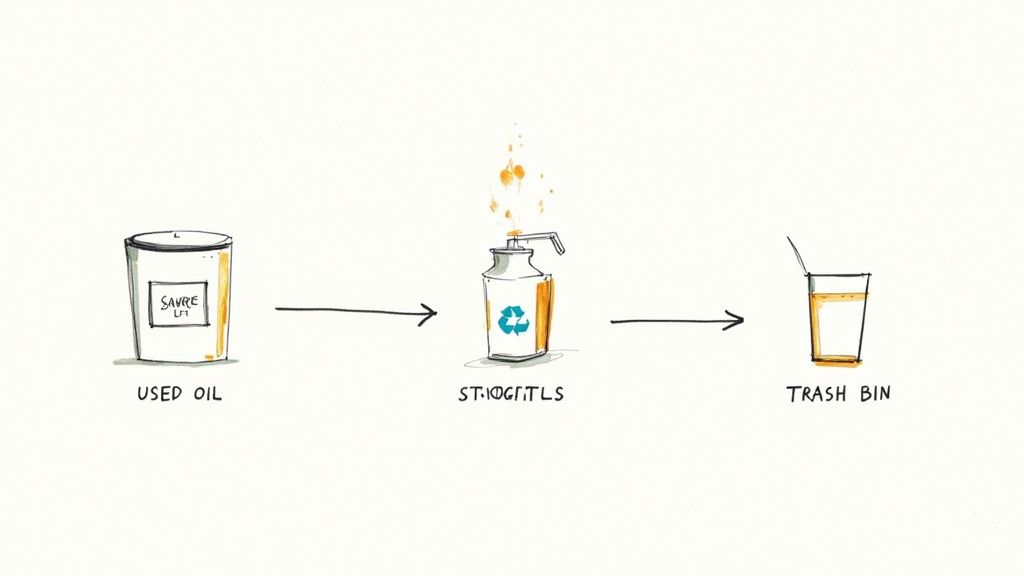
While turning your used cooking oil into a solid with FryAway makes cleanup a breeze, it's smart to know the other responsible ways to handle it. After all, you might find yourself with a pan full of oil and no solidifier on hand. Knowing the old-school methods gives you a complete toolkit for safe disposal.
Traditionally, your options boil down to two paths: recycling the oil for a second life or sealing it up tight for the landfill. Both are worlds better than sending it down the drain, but each has its own quirks when it comes to convenience and environmental friendliness. Let's dig into these more established techniques.
Finding a Local Oil Recycling Center
Taking your used cooking oil to a local recycling facility is one of the most eco-friendly moves you can make. Many communities offer collection points, sometimes at municipal waste centers or even at certain auto parts stores that accept used oil from residents.
These centers gather the oil so it can be processed and repurposed, usually as a key ingredient for biodiesel. This process transforms your kitchen waste into a valuable resource, fueling a more circular economy. The global market for used cooking oil was valued at around USD 6.90 billion, and it's projected to hit USD 12.85 billion by 2032, largely driven by its use in creating cleaner fuels.
If you want to go this route, here’s what to do:
- First, let the oil cool down completely. Safety first!
- Strain out any food crumbs and gunk.
- Pour the oil into a large, sturdy container with a screw-top lid.
- Find a nearby drop-off point by searching "used cooking oil recycling near me" or checking with your local waste management service.
The biggest hurdle here is convenience. You have to store the messy, used oil at home until you’ve collected enough to make a trip worthwhile, and then you have to transport it without any spills.
The Seal and Trash Technique
If you can't find a recycling center nearby, the next best option is the classic "seal and trash" method. It's a simple concept, but it demands careful execution to prevent turning your trash can into a greasy mess. The whole point is to contain the liquid oil so it can't leak out.
This method is a solid backup, but its success hinges entirely on the container you choose. A flimsy bottle or a lid that doesn't seal properly is a recipe for a greasy disaster in your trash.
This approach feels a lot like good restaurant standard operating procedures—where safety and cleanliness are key. First, and this is non-negotiable, let the oil cool down completely. Then, find a non-recyclable container with a super secure, tight-fitting lid. Think old coffee cans, plastic detergent bottles, or even the original oil container if it has a solid screw-on cap.
Once the oil is sealed up tight, you can toss the container into your regular household trash. It's a much better choice than the sink, but it does add plastic or metal to the landfill and still carries the risk of a potential leak.
Fried Recipes That Make Cleanup Worthwhile
Now that you know how to dispose of deep fryer oil without the mess, you can finally stop shying away from your favorite fried foods. Knowing you have a simple, stress-free cleanup plan opens up a whole new world of culinary possibilities right in your own kitchen.
When you have an easy disposal method like FryAway, you get to focus on the joy of cooking instead of dreading the greasy aftermath. The secret to a fantastic fried meal is knowing you won’t be left with a kitchen nightmare when you're done.
With the simple FryAway process, cleanup just becomes another part of the routine. For best results:
- 1) Sprinkle and Stir our plant-based powder into your hot cooking oil.
- 2) Cool Down and let the magic happen as the oil solidifies.
- 3) Toss the hardened puck right into your household trash.
This effortless system makes frying feel less like a chore and more like a celebration. To get you started, here are three incredible fried recipes that are absolutely worth firing up the deep fryer for.
Classic Southern Fried Chicken
There's truly nothing like the crispy, juicy perfection of classic Southern fried chicken. The key to that authentic, golden-brown crust is frying it in peanut oil, which has a high smoke point and a neutral flavor that really lets the seasoned coating shine.
After you've savored every last delicious bite, that used peanut oil can be handled in minutes. Just sprinkle FryAway into the hot oil, let it cool down completely, and scoop the solid block straight into the trash. It’s that easy.
Crispy Beer-Battered Fish Tacos
Bring the taste of a seaside taco stand right to your kitchen with some incredible beer-battered fish tacos. Using a light canola oil for frying creates that delicate, airy crust that perfectly encases flaky white fish. Pair it with a zesty slaw and a squeeze of lime, and you have a guaranteed crowd-pleaser.
And the canola oil cleanup? No problem at all. A quick stir of FryAway into the warm oil is all it takes to start the solidification process. You can prep your toppings while the oil cools and hardens, making the entire cooking and cleanup process seamless.
A fantastic fried meal doesn't have to end in a kitchen nightmare. When cleanup is this simple, you can confidently tackle any recipe, from savory chicken to delicate fish or even seafood.
For another great seafood option, check out this recipe for easy fried shrimp with eco-friendly cleanup, which also shows just how simple disposal can be.
Homemade Glazed Doughnuts
If you're looking for a truly decadent treat, nothing beats warm, homemade glazed doughnuts. These sweet, fluffy rings of dough are best when fried in a neutral vegetable oil, which allows their rich, yeasty flavor to come through without interference. Frying is what gives them that signature light texture and golden exterior that’s impossible to resist.
Even after making a big batch for family and friends, you won’t be left with a greasy pot of vegetable oil to deal with. Just follow the three simple steps—Sprinkle and Stir, Cool Down, and Toss—and your kitchen is clean. With cleanup this straightforward, you’ll find yourself looking for more excuses to fry.
Got Questions About Getting Rid of Deep Fryer Oil?
When the frying is done, the cleanup begins. Dealing with all that leftover oil can bring up a lot of questions, but getting the right answers is key to handling it safely and responsibly. Let's tackle some of the most common things people ask about disposing of deep fryer oil.
One of the biggest questions we get is whether you can get more than one round of frying out of your cooking oil. The short answer? Absolutely, you often can.
Can I Reuse My Deep Fryer Oil?
You can definitely get a few uses out of your deep fryer oil before it’s time to toss it. The trick is to let the oil cool down completely, then strain it through a fine-mesh sieve or a couple of layers of cheesecloth. This gets rid of all the little food bits. After that, just store the clean oil in a sealed, light-proof container somewhere cool and dark.
But you've got to know when it's time to say goodbye. Keep an eye out for these signs:
- The oil looks cloudy or has gotten much darker.
- It starts to foam up on the surface when you heat it.
- It smells rancid or just plain "off."
If you notice any of these, its quality has gone downhill, and it’s time for it to go. Just remember, a product like FryAway is for that final disposal—not for cleaning oil between uses.
How Does FryAway Actually Solidify the Oil?
Another thing people are curious about is how the magic happens—and how long it takes. Using FryAway is a super simple, three-step process for a totally mess-free cleanup, and for best results, you should always follow it.
- 1) Sprinkle and Stir: While the oil is still hot, just add the plant-based powder and give it a good stir until it’s all dissolved.
- 2) Cool Down: Let the mixture hang out and cool down at room temperature until it's completely hard.
- 3) Toss it in the Trash: Once it’s a solid puck of oil, you can scoop it out and toss it straight into your household garbage. Easy as that.
How long does it take to solidify? It really depends on how much oil you have and how hot it was to start. Usually, it'll take a few hours to cool and fully harden. You'll know it's ready when you can lift the solid, waxy disc right out of the pan.
What if My City Has No Oil Recycling Program?
If your local community doesn't offer a cooking oil recycling service, don't sweat it. You still have some great options. The old-school method is the "seal and trash" technique: cool the oil, pour it into a sturdy, non-recyclable container with a lid you can trust, and then place it in the garbage.
But honestly, the most convenient and spill-proof solution here is to use a solidification product. We always recommend FryAway because it lets you throw deep fryer oil directly in your household trash without a single worry about leaks or hunting for the perfect container.
Is It Okay to Put Solidified Oil in a Compost Bin?
That's a definite no. You should never put used cooking oil in your home compost bin, even if it's been solidified. A large amount of fat and oil can really mess with the delicate moisture balance of your compost pile, attract all sorts of pests, and grind the decomposition process to a halt.
Even though FryAway is plant-based, the final solidified oil puck belongs in your household trash, not the compost.
Ready to make your kitchen cleanup a whole lot simpler? With FryAway, you can whip up delicious fried goodies like homemade mozzarella sticks and Southern fried chicken without dreading the greasy mess afterward.