


· By FryAway
How to Dispose Cooking Oil The Safe and Easy Way
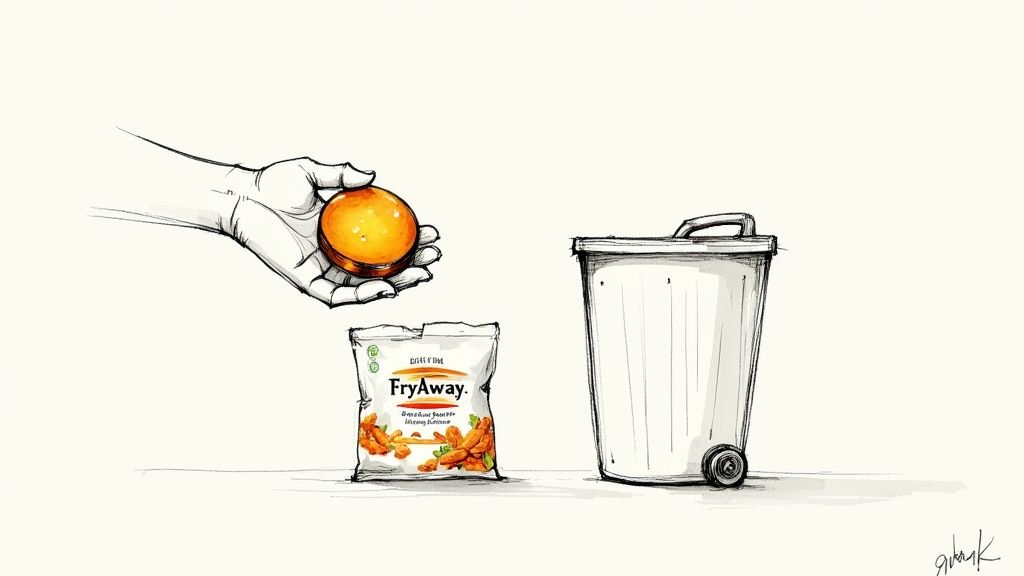
Let's get straight to it—the absolute best and simplest way to deal with used cooking oil is to solidify it before you even think about tossing it. Pouring oil, hot or cold, down the drain is just asking for trouble. It's a fast track to clogged pipes and serious environmental headaches.
The easiest modern fix? A plant-based powder like FryAway, which magically turns hot liquid oil into a solid puck that you can just scoop and toss.
A Quick Guide to Cooking Oil Disposal
You just finished frying up some incredible french fries or maybe a batch of Southern-style fried chicken. The last thing you want to deal with is a greasy, complicated cleanup. Learning how to get rid of cooking oil the right way doesn't just save you from plumbing nightmares; it protects your local environment, too.
Gone are the days of pouring hot grease into an old coffee can and letting it fester under the sink for weeks on end.
Today, the best method is both simple and clean. Using a solidifier like FryAway makes the whole process feel almost effortless. For the best results, just follow these three quick steps:
- Sprinkle and Stir the powder into your hot, used oil.
- Cool Down and watch as it solidifies.
- Toss the hardened oil right into your household trash.
This approach completely gets rid of the risk of spills and the need for messy jars or containers. This decision tree below spells it out perfectly—there’s a right way and a very wrong way to handle old oil.
As you can see, solidifying the oil with a product like FryAway is the way to go. It prevents the clogs and damage that pouring it down the drain inevitably causes.
Cooking Oil Disposal Methods A Quick Comparison
Choosing the right disposal method often comes down to what's easiest and most effective for your kitchen routine. While we're big fans of solidifying, it's good to know all your options. Here’s a quick rundown to help you compare.
| Disposal Method | Best For | Pros | Cons |
|---|---|---|---|
| Solidify with FryAway | Everyday home frying, deep frying, pan frying | Super easy, no mess, plant-based, eco-friendly | You need to have the product on hand |
| Seal in a Container | Small amounts of oil, infrequent frying | Free, uses existing containers | Can be messy, containers can leak, takes up space |
| Local Recycling Center | Large quantities of oil, commercial kitchens | Environmentally responsible, turns oil into biofuel | Requires finding a facility, transportation, storage |
Each method has its place, but for the average home cook, solidifying with FryAway offers a foolproof way to handle oil without the fuss.
Choosing the Best Method for You
While solidifying with FryAway is our top recommendation for how easy and safe it is, you still have the old-school methods. You can always pour cooled oil into a sealable container or find a local facility that recycles it. The downside is that these usually involve more steps and a much higher chance of making a mess.
The bottom line is simple: never, ever let liquid oil go down your drain. Whether you solidify it, seal it in a jar, or take it to be recycled, keeping grease out of your pipes is the #1 rule of responsible disposal.
Ultimately, what works best for you depends on convenience and what's available in your area. For most of us cooking at home, a solidifier like FryAway is a reliable, on-demand solution that makes it an essential for anyone who loves to fry.
Why You Should Never Pour Oil Down Your Drain
It might seem like the quickest way to clean up, but trust me, pouring used cooking oil down your drain is one of the worst things you can do for your plumbing. And for the environment.
That warm, liquid oil from frying bacon or chicken quickly cools once it hits the cold pipes under your sink.
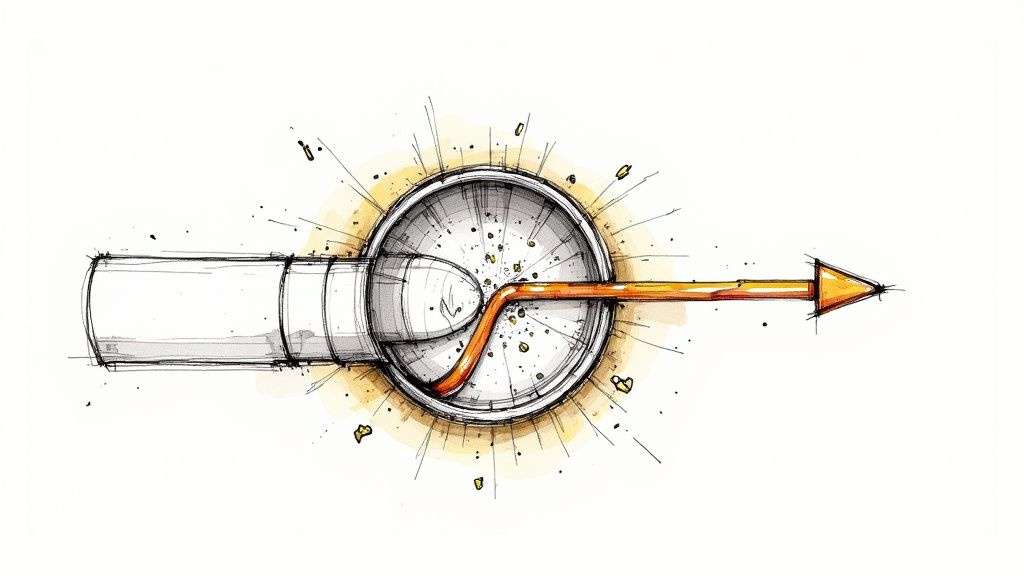
As it cools, it turns into a thick, sticky sludge. This grease clings to the inside of your pipes and acts like a magnet for food scraps, coffee grounds, and whatever else goes down the drain. Before you know it, that buildup grows until your sink drains slowly—or stops completely. That's when you're making a costly emergency call to the plumber.
From Your Kitchen to a Community Problem
The problem doesn't stop at your property line, either. When grease from thousands of homes enters the municipal sewer system, it mixes with other non-flushable items. The result? Massive, concrete-like blockages known as fatbergs.
These disgusting giants can clog entire sewer mains, causing raw sewage to back up into homes and streets. Cities end up spending millions of taxpayer dollars every year to clear these blockages, sometimes needing heavy machinery and weeks of work. You can dive deeper into what fatbergs are and why they are such a huge issue for public infrastructure in our guide.
The impact is staggering. It's estimated that grease is the cause of nearly 50% of all sewer overflows in the United States. That really highlights just how widespread the damage from improper oil disposal can be.
The Environmental Toll
Even if the oil manages to navigate the pipe system without causing a clog, it can still wreak havoc on the environment. Once it reaches local waterways, it creates a sheen on the water's surface that prevents oxygen from reaching aquatic life. This can harm or even kill fish, birds, and other wildlife.
Properly managing your used cooking oil is about more than just avoiding a plumbing bill. Using a product like FryAway is a critical step in protecting your home, your community’s infrastructure, and the local ecosystem. The simple act of keeping oil out of the sink really does make a significant difference.
Your Easiest Cleanup Using FryAway
For anyone who loves fried food but dreads the greasy mess afterward, FryAway is a game-changer. It’s our top recommendation for a genuinely simple cleanup. It takes the chore of figuring out what to do with used cooking oil and turns it into a quick, almost magical process. This plant-based powder solidifies hot oil right in the pan, making disposal unbelievably clean and easy.
Forget about pouring hot, greasy liquid into old jars or worrying about spills. Imagine finishing a big batch of crispy fried chicken and having the oil problem solved in minutes, with no gross container sitting under your sink. That’s what FryAway does.
The Simple Three-Step Process
What’s great is that FryAway works right where you cooked, so you don’t need any extra containers or tools. For the best results, just follow these simple steps for a mess-free cleanup, every single time.
-
Sprinkle and Stir: As soon as you’re done frying, turn off the heat. While the oil is still hot, just sprinkle in the FryAway powder. Give it a gentle stir until it completely dissolves.
-
Cool Down: Now for the easy part—just walk away. Let the pan sit and cool down. You’ll watch as the liquid oil transforms into a solid, gel-like block.
-
Toss into household trash: Once it's completely cooled and solidified, you can easily scoop the hardened oil right out of your pan or fryer. From there, it goes straight into your household trash bin. It really is that simple.
By solidifying the oil at the source, you eliminate the risk of messy spills that often happen when pouring hot grease into a separate container. The whole process is contained, clean, and quick.
Best Practices for Perfect Results
To get the most out of FryAway, timing is everything. It’s designed to work with hot oil, so be sure to add the powder right after you finish cooking.
If you've been frying something that leaves a lot of bits behind, like battered fish, it’s a good idea to strain the oil first. This will give you the cleanest, most solid block of oil.
Whether you've pan-fried a few pork chops or deep-fried a whole batch of doughnuts, the method works perfectly. For a more detailed walkthrough on getting started, check out The Complete FryAway Guide. It takes all the guesswork out of the process, making frying at home so much more enjoyable when you know the cleanup is already handled.
Old-School Methods for Oil Disposal
So, you've just finished frying up something delicious, but you don't have a solidifier like FryAway on hand. What now? Don't worry, people have been dealing with used cooking oil for generations, and there are a few "old-school" tricks you can use.
They definitely work in a pinch, but they often require a bit more effort and a steady hand to avoid making a greasy mess. For a truly hassle-free experience, we always recommend keeping FryAway in your pantry.
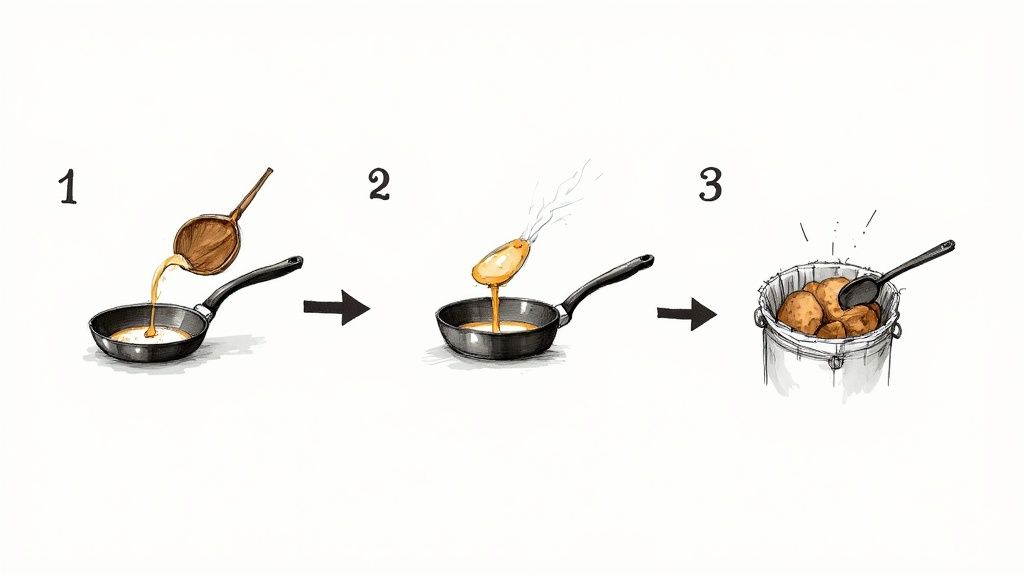
The most classic approach is the good old 'cool, seal, and toss.' It’s exactly what it sounds like, but it can get messy if you're not careful. First, you have to wait for the oil to cool down completely. Then, very carefully, pour it into a sturdy, non-recyclable container that has a secure, screw-on lid.
Think old coffee cans, the original oil bottle it came in, or even a heavy-duty plastic jug. Once you've sealed it up tight, you can just toss it into your regular household trash.
Alternatives to Sealing and Tossing
If you're not keen on keeping a jar of liquid grease under your sink, there are a couple of other techniques people have used for years. Each has its own pros and cons, mostly revolving around convenience and how much of a mess you're willing to risk.
- Freeze It: Pour the cooled oil into a container and pop it in the freezer. Once the oil is frozen solid, you can easily scoop it out and drop it in the trash on garbage day. This definitely lowers the risk of a slimy leak, but it does take up valuable freezer space and requires you to plan ahead.
- Mix with Absorbents: Another trick is to mix the cooled oil with something that will soak it all up. Materials like used coffee grounds, sawdust, or even kitty litter work well. This makes the oil less likely to spill all over your trash can.
The biggest downside to all these methods is the potential for a mess. Let's be real—pouring oil can easily lead to spills, and storing a greasy jar of used oil is never ideal. A leak in your trash bin is a nightmare, attracting all sorts of pests you don't want anywhere near your home.
While these old-school techniques for disposing of cooking oil get the job done, they often feel like a hassle. They involve extra steps, waiting around for oil to cool, and hunting for the right container.
To see just how these methods stack up against modern solutions, check out this comparative study of FryAway versus traditional oil disposal. It really highlights how much simpler solidifying the oil can be.
Finding Local Cooking Oil Recycling Programs
For those who fry a lot or just want the most sustainable option, recycling your used cooking oil is a fantastic choice. It turns what would be waste into a valuable resource: biofuel. That’s right—your leftover frying oil can literally help power things.
Many communities now have collection centers specifically for household cooking oil. Taking part helps build a circular economy where resources get reused instead of just tossed, making your kitchen habits even greener.
How to Locate a Recycling Center
Finding a nearby program is usually pretty simple. A quick Google search for "used cooking oil recycling near me" is the best place to start. You can also pop over to your local municipality's waste management website, as they’ll usually list specific drop-off locations and hours.
This is an especially great option if you generate a lot of oil at once, like after deep-frying a holiday turkey or hosting a big family cookout. Making that extra trip ensures your oil is handled in the most environmentally responsible way.
These programs have a huge impact. In the U.S., about 25% of all cooking oil used in food is recovered. That means for every four gallons used, one is collected for recycling.
This collective effort really has made a difference. In fact, North America, led by the U.S., dominated the global used cooking oil (UCO) market with a 41.7% revenue share in 2024. You can dig into the numbers in this used cooking oil market report.
While recycling is an excellent choice for sustainability, it does require a bit more planning than at-home solutions. If convenience is your top priority after a long day of cooking, using a product like FryAway to solidify the oil for easy trash disposal is a great alternative. It delivers a simple, mess-free cleanup right in your kitchen.
Recipes for Frying with a Cleanup Plan
Let's be honest, the best part of frying is the delicious, crispy result. The worst part? That pan full of used oil sitting on your stove. But what if you could connect the joy of frying directly with a simple, mess-free cleanup using FryAway?
These classic fried recipes are absolutely worth making at home, especially when you have a game plan for the oil afterward.
Southern-Style Fried Chicken
There's just nothing like a batch of homemade, crispy, juicy fried chicken. The real secret is keeping a steady oil temperature in a heavy-bottomed pot or a deep skillet. For a good-sized batch, you'll probably use about 3-4 cups of a neutral cooking oil like canola or peanut.
Once your chicken is fried to golden-brown perfection, turn off the heat. Don't wait for the oil to cool down—this is the perfect time for cleanup. Just follow the simple three-step FryAway process:
- Sprinkle and Stir the right amount of FryAway into the hot oil until it dissolves.
- Cool Down and let the oil solidify in the pan.
- Toss the hardened block straight into your household trash.
By the time you’re done eating, the oil will be a solid puck. It’s a seamless process that lets you focus on enjoying your meal, knowing the greasy pan is already handled.
Beer Battered Fish and Chips
Want to make a pub classic that rivals your favorite restaurant? You'll need a good amount of cooking oil for this, usually around 4-6 cups in a deep fryer or Dutch oven. The crisp, golden batter comes from frying in hot oil.
After you pull out that last glorious batch of fish, the kitchen smells amazing, but you're left with a pot of hot oil. This is where your cleanup plan kicks in.
It’s as simple as:
- Sprinkle and Stir the FryAway powder into the hot cooking oil right after you're done.
- Cool Down completely. The oil will transform into a solid, waxy puck.
- Toss the solid puck directly into your household trash bin. No mess, no spills.
To make your frying life even easier, having the right equipment is key. A good guide to non-stick frying pans with lids can make a huge difference in both cooking and cleanup. When you have the right tools and a solid plan, you’ll never think twice about frying at home again.
Your Top Questions About Cooking Oil Disposal
To wrap things up, let's go over some of the most common questions people have when it comes to getting rid of used cooking oil. Getting these details right is the key to a kitchen cleanup that's always safe, simple, and mess-free.
What’s the Best Way to Dispose of a Small Amount of Oil?
If you've just got a thin, greasy film left in the pan from sautéing, the easiest thing to do is let it cool completely. Then, just wipe it out with a paper towel before you wash the pan. Simple.
But for anything more than a light sheen—even just a few tablespoons of leftover cooking oil—a solidifier is your cleanest bet. A product like FryAway is perfect here because it quickly turns that liquid oil into a solid. You can then easily scrape the hardened puck right into the trash with zero drips or mess.
Can I Get Rid of Bacon Grease the Same Way?
Absolutely, and you really should. Bacon grease is one of the worst offenders for clogging drains because of how quickly it solidifies in cool pipes. It should never, ever go down the sink.
Treat it just like you would any other cooking oil. The best approach is to use FryAway while the grease is still hot liquid in the pan. Once it cools and hardens, you just scoop the solid mass out and toss it. It's a foolproof way to avoid a plumbing nightmare.
How Should I Handle Oil from a Deep Fryer?
When you’re staring down a big batch of oil from a deep fryer, you've got two main options: solidify it or recycle it.
For an easy at-home solution, a product made for larger quantities, like FryAway’s Deep Fry formula, is a game-changer. It works on the whole pot of oil, solidifying it so you can scoop it directly into the trash can.
Your other great option is to find a local recycling facility that takes used household cooking oil. This is a fantastic, eco-friendly choice that turns your kitchen waste into renewable biofuel.
Of course, even with the best disposal plan, spills can happen. If you ever end up with an oily spot on your rug, knowing how to remove common carpet stains can be a real lifesaver.
Ready to make your frying cleanup completely effortless? With FryAway, you can finally say goodbye to messy jars and clogged pipes forever. Try FryAway today and see just how simple oil disposal can be.