


· By FryAway
What to Do With Used Frying Oil A Home Guide
After you’ve fried up a perfect batch of crispy chicken or golden french fries, you’re left with the age-old kitchen dilemma: what to do with all that used frying oil?
The simplest, cleanest answer is to solidify it for an easy, mess-free toss into your household trash. The best way to do this is with FryAway, a plant-based powder that makes oil disposal effortless. Whatever you do, pouring hot grease down the drain is never the solution—it’s a one-way ticket to expensive plumbing clogs and serious environmental harm.
The Reality of Leftover Cooking Oil
Figuring out how to handle used cooking oil is a common headache for home cooks. That pan of leftover grease from last night's dinner might seem harmless, but its journey after it leaves your kitchen can cause some major problems.
When you pour used oil down the sink, it eventually cools and hardens inside your pipes. It mixes with food scraps and other gunk to create stubborn blockages infamously known as "fatbergs." These greasy monsters can lead to nasty plumbing emergencies and costly repairs, not just for you but for your entire city's sewer system.
Beyond your home, the environmental impact is huge. Oil that’s tossed out improperly can seep into local water sources, harming aquatic life and throwing entire ecosystems out of balance. You can dive deeper into the hidden environmental cost of used cooking oil to see just why responsible disposal matters so much.
This infographic really breaks down the core issues and points toward a much better way forward.
As you can see, a simple act in the kitchen connects directly to big problems like clogged city pipes and water pollution. But the solution is just as simple.
Used Frying Oil Disposal Options At a Glance
Navigating the best way to handle used oil can be confusing. This table offers a quick comparison of the most common methods, helping you choose the one that fits your kitchen and values.
| Method | Best For | Eco-Friendliness | Convenience |
|---|---|---|---|
| Pouring Down Drain | No one | Very Low | High (but with big consequences) |
| Trash Can (Liquid) | Small amounts (in sealed container) | Low | Low (messy, prone to leaks) |
| Recycling Center | Large quantities of oil | High | Low (requires storage & transport) |
| Solidifying with FryAway | Any amount of oil | High | Very High (simple, mess-free) |
While traditional methods have their place, modern solutions like solidifying the oil with FryAway offer a clear advantage in both ease and environmental responsibility.
A Growing Push for Better Solutions
Thankfully, people are catching on. The global market for managing used cooking oil, valued at $6.1 billion in 2022, is expected to nearly double by 2032 as more of us look for sustainable options. This trend shows a real demand for smarter, greener disposal methods we can use right at home.
For the modern home cook, the best approach has to be both simple and effective. A product like FryAway completely transforms this messy chore into a clean, straightforward process.
It’s as easy as one, two, three:
- 1) Sprinkle and Stir the plant-based powder into your hot oil.
- 2) Cool Down and watch as it magically solidifies.
- 3) Toss the solid puck of oil directly into the household trash.
This method completely eliminates the mess and the environmental risks, letting you enjoy your fried foods without the greasy guilt.
The Simplest Way to Handle Used Oil at Home
You've just finished frying up a batch of delicious chicken wings in some peanut oil, and now you're left with a pan full of hot, greasy oil. What's next? For most of us, dealing with leftover oil feels like the worst part of the cleanup.
That's where a product like FryAway completely changes the game. It's the cleanest, quickest, and most foolproof way to handle used frying oil right in your own kitchen.
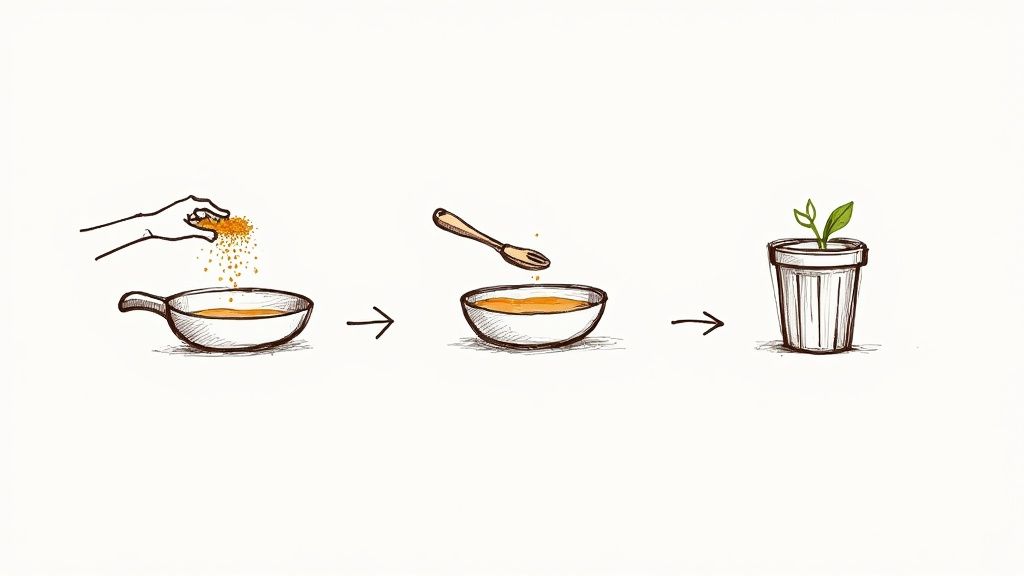
FryAway is a 100% plant-based powder that magically transforms hot liquid cooking oil into solid organic waste. This simple trick puts an end to messy spills, greasy containers, and the very real risk of a plumbing disaster.
A Super-Simple 3-Step Process
Using FryAway couldn't be easier, and it takes all the guesswork out of oil disposal. The best part is that it's designed to be used right after you finish cooking, while the oil is still hot, making cleanup just another part of your routine.
Here’s how it works:
- 1) Sprinkle and Stir: The second you turn off the heat, just sprinkle the FryAway powder into the hot oil. Give it a quick stir to make sure the powder dissolves and gets mixed in everywhere.
- 2) Cool Down: Now for the easy part—just walk away. As the oil cools down, it will start to solidify into a single, hard puck, almost like a chunk of wax.
- 3) Toss into household trash: Once it's completely solid, you can scoop the whole thing out of the pan with a spatula and toss it straight into your household trash. No liquid, no mess, no greasy residue.
This method isn't just convenient; it's also the responsible choice for the environment. By solidifying the oil, you're keeping it out of our waterways and preventing the nasty blockages it can cause in city sewer systems.
This approach makes cleaning up after frying beer-battered fish or crispy onion rings completely effortless.
If you want a more detailed look, you can learn more about how to solidify cooking oil safely. FryAway is our go-to recommendation for its sheer convenience and eco-friendly design, turning fried food cleanup into a task you'll never have to worry about again.
Safely Reusing Your Frying Oil
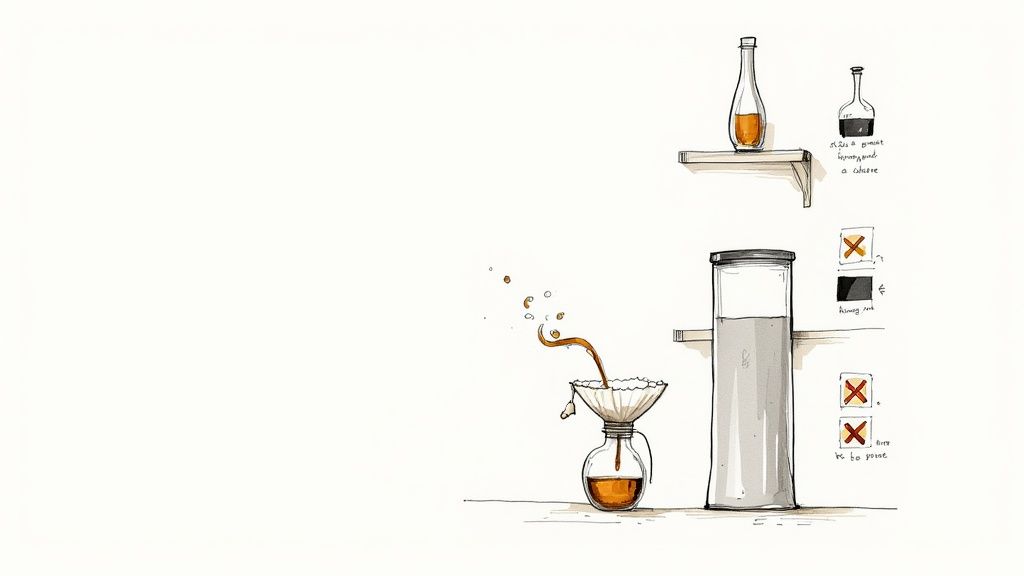
Reusing cooking oil is a fantastic way to stretch your budget and cut down on kitchen waste. But to do it right, you have to do it safely. The single most important step is to filter out all those little bits of food left behind from your last cooking session. If you let them hang out in the oil, they’ll cause it to go rancid much faster.
You don't need any high-tech gadgets for this. A fine-mesh sieve lined with cheesecloth or even a simple coffee filter will work perfectly. Just place it over a clean, airtight container and pour the oil through—once it’s cooled down enough to handle safely, of course.
How to Store and When to Toss
After filtering, proper storage is key to keeping your oil fresh. Pour it into a sealed, airtight container (a glass jar is perfect for this) and tuck it away in a cool, dark spot like your pantry. Light and heat are the biggest enemies here; they'll break down the oil and give it an off-flavor in no time.
Even with the best care, frying oil has a limited lifespan. You need to know the tell-tale signs that it's time to say goodbye. Keep an eye out for these red flags:
- Dark and murky appearance: Fresh oil is usually light and clear.
- A rancid or "off" smell: If it smells fishy, burnt, or just plain weird, it's done.
- Foam on the surface: A lot of bubbles popping up when you heat the oil is a bad sign.
- A low smoke point: If your oil starts smoking way earlier than it should, its chemical structure is shot.
Reusing oil can definitely save you some money, but it's crucial to know when it's no longer healthy to use. Every time oil gets heated, its quality degrades, so recognizing when to stop is essential for both flavor and your health.
Some oils, like peanut and canola, have high smoke points and can handle a few rounds of frying better than others. As a general rule, though, it’s best to reuse oil only once or twice. For those really looking to maximize their oil's life, it can be interesting to see how the pros do it with commercial fryer oil filtration systems.
And if you’re curious about what happens to your body when you push it too far, check out our guide on why it is unhealthy to reuse frying oil too many times.
Finding Local Oil Recycling Programs
If you find yourself frying food pretty regularly or just want to up your eco-friendly game, looking into a local oil recycling program is a fantastic move. These programs are set up to take used cooking oil from homes and turn it into useful stuff like biofuel, which feeds right back into a circular economy.
Finding one is usually as simple as a quick search online. Just type in "cooking oil recycling near me" or "used frying oil drop-off" to see what's in your area. You’ll likely find municipal collection sites or even private companies that handle it. It's also a good idea to check the websites for your local waste management or public works department, as they often post dates and locations for collection events.
How to Prepare Your Oil for Recycling
So you've found a facility—now what? Getting your oil ready for drop-off is easy.
First, let the oil cool down completely. Never handle hot oil. Then, carefully pour it into a sturdy container that you can seal tightly. An old plastic jug with a screw-top lid is perfect for this. Just make sure that lid is on tight to avoid any messy spills on the way there.
Your small contribution is actually part of a massive global effort. In 2022, the world’s supply of used cooking oil was estimated at a whopping 3.7 billion gallons. The United States is a big player in this, collecting around 0.85 billion gallons every year through a network of restaurants and home cooks like you. You can see how this collection process is fueling the future by checking out the global outlook on UCO supply.
By taking that extra step to recycle, you're not just getting rid of oil—you're turning everyday kitchen waste into clean energy. It’s a powerful way to shrink your carbon footprint right from your own kitchen.
This is a great option, especially if you generate a lot of used oil. But for the occasional home fry-up, the most convenient and eco-friendly solution is to solidify the oil with a product like FryAway for easy disposal in your household trash.
Fried Recipes Worth the Cleanup
Let's be honest, the best part about mastering what to do with used frying oil is the incredible meal you get to enjoy first. When you've just cooked something amazing, the cleanup feels like a small price to pay.
Here are a couple of my go-to fried recipes that make the whole process, from that first sizzle to the final toss, completely worth it. These aren't just delicious; they're designed to work perfectly with a modern, no-mess cleanup using FryAway.
Classic Southern Fried Chicken
There's just nothing that compares to the crispy, juicy magic of real Southern fried chicken. The secret? A high-smoke-point oil like peanut oil is non-negotiable for getting that signature crunch without any hint of burning.
- Prep the chicken: Give your chicken pieces a good soak in buttermilk for at least four hours. This is the key to tender, flavorful meat.
- Dredge it right: Mix up some seasoned flour with salt, black pepper, paprika, and a touch of garlic powder. Get in there and make sure every piece is thoroughly coated.
- Fry to perfection: Get your peanut oil heated up to 350°F. Carefully lay the chicken in the hot oil, making sure not to crowd the pan—give it room to breathe! Fry for about 6-8 minutes per side until it's golden brown and cooked all the way through.
Once that last glorious piece of chicken hits the wire rack, it's cleanup time. This is the perfect moment to use FryAway. Follow the simple 3-step process: 1) Sprinkle and Stir the powder into the hot peanut oil, 2) Cool Down while you eat, and 3) Toss the solid puck into the household trash.
Crispy Beer-Battered Fish Tacos
If you're craving something a little lighter, these beer-battered fish tacos are always a winner. I love using a neutral oil like canola for this one because it really lets the flavor of the fresh fish and that crispy batter take center stage.
First things first, pat your white fish fillets (cod or tilapia are fantastic choices) completely dry. Then, whisk together flour, your favorite beer, and a blend of spices to create a light, bubbly batter. Dip each fillet, let the excess drip off, and gently lower it into canola oil heated to 375°F. They only need a few minutes to turn beautifully golden and crisp.
After you've pulled the last fillet out, the cleanup is just as fast. While the canola oil is still hot, simply follow the three magic steps: 1) Sprinkle and Stir in the FryAway powder, 2) Cool Down and let it work its magic, and 3) Toss the solid oil puck right into your household trash. Easy as that.
Still Have Questions About Used Frying Oil?
Let's be honest, figuring out what to do with used frying oil can feel a little confusing. We get a lot of questions about it, so let's clear up a few of the most common ones to help you handle your kitchen cleanup like a pro.
One of the biggest questions we hear is: How many times can I actually reuse frying oil? There’s no magic number here—your oil will tell you when it’s time to call it quits. Keep an eye out for a few tell-tale signs: a dark, murky color, a funky or fishy smell, or foam bubbling up on the surface when you heat it. If you spot any of these, that oil's best days are behind it.
Mixing, Disposing, and What to Avoid
Another common one is about mixing different oils before disposal. Say you fried chicken in peanut oil one night and then made fish tacos in canola oil the next. Can you combine them? For disposal, absolutely. Just let the oils cool down and pour them into one container before using FryAway or heading to a recycling center.
This brings us to a huge point: What should I never do with used cooking oil? The two biggest no-nos are pouring it down the drain or tossing it in your garden. Both are recipes for disaster, leading to seriously clogged pipes, contaminated soil, and polluted waterways.
A common myth we see is that solidified oil can go into the compost pile. Even when you use a product like FryAway to turn it solid, the oil belongs in your household trash, not the compost bin.
Taking care of oil properly is a big deal globally. In fact, Europe makes up over 44% of the used cooking oil market, mostly because of strong government policies that encourage responsible disposal. You can dive deeper into these structured systems for UCO waste and see why every household's effort really counts.
The easiest way to make sure you're always doing the right thing is to have a simple, go-to method. Using FryAway takes all the guesswork out of it.
- 1) Sprinkle and Stir it into your hot oil.
- 2) Cool Down and let it solidify.
- 3) Toss the hardened puck right into the household trash.
It’s that simple.
Ready to make your kitchen cleanup easier and way more eco-friendly? Give FryAway a try and see for yourself how simple used oil disposal can be. Learn more at https://fryaway.co.