


· By FryAway
Best Way to Dispose of Used Cooking Oil at Home
The absolute best way to handle used cooking oil is to solidify it so you can just toss it in the trash. Pouring liquid grease down the drain is asking for a costly plumbing disaster, and let's be honest, storing it in old jars is just messy and gross.
A much simpler solution is to use a product like FryAway. It magically transforms that hot liquid oil into a solid, organic puck of waste that you can easily scoop right into your household trash. No mess, no fuss.
Why Pouring Oil Down the Drain Is a Costly Mistake
We all love the sound and smell of bacon sizzling or chicken frying, but what comes after can be a real nightmare. The first instinct for many is to pour the leftover oil right down the kitchen sink, but that's one of the most destructive things you can do to your home.
It might look like a harmless liquid now, but once that oil travels down your pipes and starts to cool, it solidifies into a thick, waxy gunk. This hardened grease acts like a magnet, grabbing every little food particle and piece of debris that follows it down.
Before you know it, this buildup creates stubborn clogs that can bring your entire plumbing system to a grinding halt. You'll be facing slow drains, nasty backups, and eventually, a hefty repair bill from a plumber. Fats, oils, and grease are some of the most common causes of blocked drains for a reason.
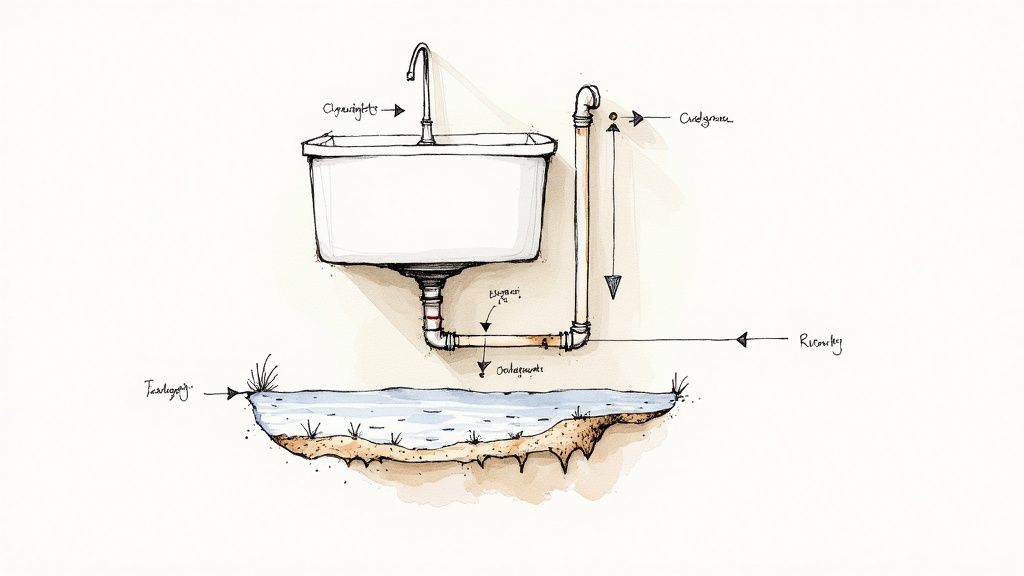
From Your Pipes to Public Sewers
This isn't just a "you" problem; it's a "we" problem. When the grease from thousands of homes mixes together in the municipal sewer lines, it creates monstrous blockages known as “fatbergs.”
These aren't just small clogs. We're talking about massive, congealed chunks of fat, oil, wipes, and other garbage that can grow to weigh several tons. They can completely obstruct entire sewer systems, causing raw sewage to back up into streets and even into people's homes. If you want to see just how bad it can get, you can learn more about what fatbergs are and why they are such a serious environmental concern in our detailed guide here: https://fryaway.co/blogs/blog/what-are-fatbergs-and-why-does-it-matter.
The Broader Environmental Impact
Even if it doesn't cause a fatberg, improperly disposed of oil is a major threat to the environment.
When oil escapes into rivers and lakes, it spreads out to create a thin film on the surface. This film blocks oxygen from getting to the life below, harming fish, suffocating aquatic plants, and disrupting the delicate balance of the entire ecosystem. It can even contaminate our drinking water sources.
The consequences are so significant that large-scale recycling efforts have become a huge focus. In fact, North America accounted for about 41.7% of the global used cooking oil industry revenue, largely because of advanced collection networks and a growing awareness about sustainability.
These massive efforts show just how critical responsible disposal is for preventing widespread water and soil contamination. Finding a better way to get rid of cooking oil isn't just about protecting your own pipes—it's a collective responsibility we all share.
The Easiest and Cleanest Way to Handle Used Oil
So, you get it. Pouring grease down the drain is a recipe for disaster. But what's the alternative? Stashing slimy jars of used oil under the sink isn't exactly a great solution either.
What if there was a way to handle used cooking oil that was clean, simple, and actually good for your pipes and the planet?
Say hello to FryAway. It's an innovative, plant-based powder that completely changes the game for post-frying cleanup. This isn't just another kitchen gadget; it's the one tool that makes getting rid of used cooking oil completely effortless.
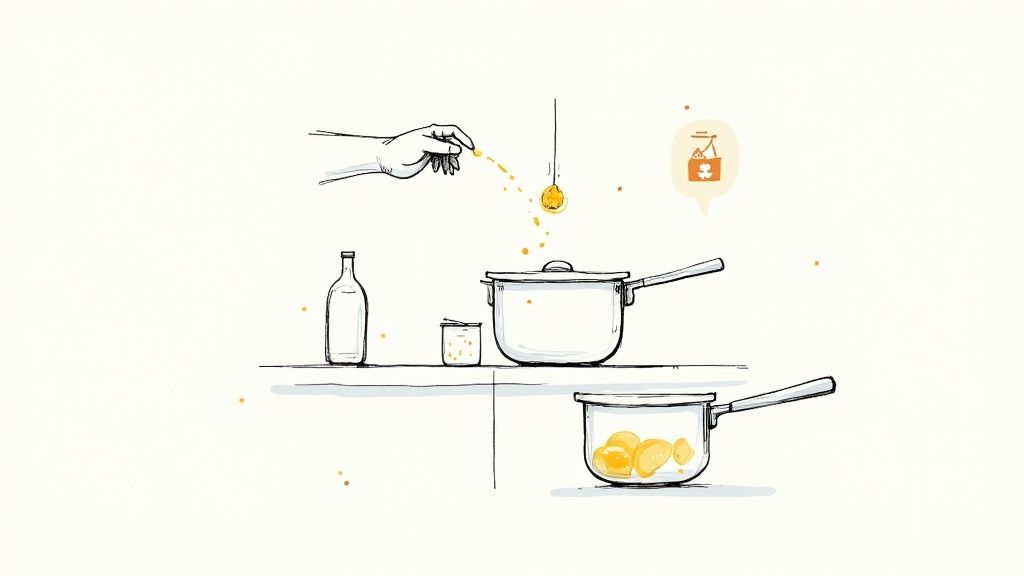
This non-toxic powder magically transforms hot liquid oil into a solid, organic puck. Once it’s hard, you can just scoop it out of the pan and toss it straight into your household trash. No spills, no greasy containers, and zero threat to your plumbing.
The Magic Behind the Cleanup
The process is designed to be ridiculously simple and fit right into your cooking routine. It doesn't matter if you just finished a batch of crispy Southern fried chicken or some beer-battered fish—the cleanup is always the same.
Just a few quick steps and you're done. Perfect, mess-free results every single time.
Here’s the simple breakdown of how to use FryAway:
- 1) Sprinkle and Stir: While your oil is still hot, just sprinkle in the FryAway powder. Give it a quick stir until it all dissolves.
- 2) Cool Down: Now, just leave the pan to cool for a few hours. As it cools, the powder works its magic, turning that liquid oil into a solid, easy-to-handle puck.
- 3) Toss into household trash: Once the oil is completely solid, you can lift it out with a spatula and drop it right into the garbage bin.
This completely takes away the temptation to pour oil down the drain and frees up that cabinet space you were using to hoard old grease jars.
FryAway is a truly eco-friendly way to get rid of oil. By solidifying it, you ensure it never makes it into our plumbing systems or waterways. You're actively helping prevent fatbergs and water contamination, right from your own kitchen.
Whether you fry once a week or once a month, this is hands-down the best way to dispose of used cooking oil with zero mess and zero stress. It makes responsible disposal so easy it just becomes second nature. Go ahead and enjoy your favorite fried foods without ever dreading the cleanup again.
How to Use FryAway for a Mess-Free Cleanup
Turning that pan of messy liquid oil into a solid, easy-to-toss puck is surprisingly simple. We designed this process to fit right into your cooking routine, taking the headache out of post-frying cleanup for good.
Here’s your practical guide to getting perfect, mess-free results with FryAway every single time.
Imagine you've just pulled the last piece of golden, crispy fried chicken from the pan. The kitchen smells incredible, but you're left staring at a skillet full of hot, used cooking oil. Instead of dreading what comes next, you can have it all handled in just a few moments.
The Simple Three-Step Process
The real magic of FryAway is how straightforward it is. It doesn't matter if you're a seasoned chef or just fry things up once in a while—anyone can handle used cooking oil safely and responsibly with this method.
First up: 1) Sprinkle and Stir. As soon as you're done cooking, turn off the heat. While the oil is still hot, just sprinkle the FryAway powder right into the pan. Give it a gentle stir for about 30 seconds to a minute, just until the powder completely dissolves. This is what kicks off the solidification process.
Next, it’s time to 2) Cool Down. This part couldn't be easier—seriously, just walk away and let it do its thing. As the oil cools down over the next few hours, FryAway works its magic, turning that entire pan of liquid grease into a solid, organic puck. You can leave it on the stovetop or move it to a safe spot on the counter to cool.
Finally, you get to 3) Toss into household trash. Once the oil is completely solid, you can slide a spatula right under the puck and lift it out. It comes out cleanly in one piece, leaving your pan almost completely tidy. From there, just toss the hardened oil straight into your household trash bin. It’s that simple. No spills, no greasy jars, and definitely no plumbing disasters.
A little pro-tip for the best results: add the powder when the oil is still nice and hot (but off the heat). This helps the plant-based powder dissolve perfectly, which is the key to getting a firm, solid puck once it cools.
Comparing Cooking Oil Disposal Methods
Let's be honest, not all oil disposal methods are created equal. Many of us grew up with old habits like pouring oil into a jar or—cringe—sending it down the drain. But those methods come with some serious downsides. The best way to dispose of used cooking oil is one that’s clean, safe, and doesn't harm the planet.
To really see why solidifying oil is the way to go, let’s see how FryAway stacks up against the old-school approaches.
Comparing Cooking Oil Disposal Methods
When you look at the options side-by-side, it becomes pretty clear which method takes the stress out of cleanup while protecting your home and the environment.
| Disposal Method | Ease of Use | Mess Factor | Eco-Friendliness | Plumbing Safety |
|---|---|---|---|---|
| Using FryAway | Very Easy | None | High | 100% Safe |
| Pouring Down Drain | Easy | Low (initially) | Very Low | Disastrous |
| Storing in Jars | Moderate | High | Low | Safe |
| Tossing Outside | Easy | Moderate | Very Low | Safe |
This comparison shows that using FryAway isn't just about convenience; it’s a smarter way to manage your kitchen. It solves the problem right at the source, wiping out the mess and preventing long-term damage to your plumbing and local waterways.
For an even more detailed walkthrough, check out our complete FryAway guide from setup to cleanup. It’s all about empowering you to enjoy your favorite fried foods without ever dreading the aftermath.
Other Responsible Disposal Options to Consider
While transforming oil into a solid with FryAway is easily the simplest way to handle used cooking oil at home, it's always good to know what other responsible options are out there. Not every solution is created equal, but the end goal is always the same: keep harmful fats, oils, and grease out of our plumbing and local ecosystems.
One of the most powerful alternatives is community recycling. You'd be surprised how many local waste management facilities or even fire departments run collection centers specifically for used cooking oil. These programs are set up to keep oil out of landfills and sewers, often repurposing it for something incredibly valuable.
Turning Used Oil into Green Energy
These community collection programs aren't just about getting rid of old oil—they're a vital part of the circular economy. The oil you drop off is usually filtered and processed into biodiesel, a cleaner-burning, renewable fuel that can power everything from city buses to farm equipment. It’s a fantastic way to give your leftover frying oil a second life as a sustainable energy source.
This isn't just a niche movement, either. The global push for this kind of recycling is massive. In fact, collecting used cooking oil for biodiesel production is one of the most sustainable disposal methods available. The used cooking oil market was valued at about $6.6 billion and is expected to climb to nearly $11.2 billion by 2032, growing at about 6% a year. That’s a huge indicator of the shift toward smarter waste practices.
Safely Reusing Your Cooking Oil
Another resourceful approach is to reuse your cooking oil, but you have to do it right. To reuse oil safely, first let it cool down completely. Next, you’ll want to strain it through a fine-mesh sieve or a few layers of cheesecloth to get rid of any lingering food particles—those little bits are what cause oil to spoil faster.
Once it's filtered, store the oil in a sealed, airtight container in a cool, dark spot like your pantry. Light and heat are oil’s biggest enemies. Different oils have different lifespans, but a good rule of thumb is that you can typically reuse an oil three to four times. Always give it a quick check before using it again; if it looks dark, gets foamy when heated, or just smells off, its cooking days are over.
For more ideas on how to manage oil in your kitchen, check out our simple and eco-friendly used cooking oil disposal guide.
Key Takeaway: Whether you're recycling oil for biodiesel or saving it for another meal, the crucial first step is always filtering out food debris. This one simple action extends the oil's life and guarantees better results, no matter what its next use is.
When it’s finally time to throw it out for good, the best option is still the most straightforward. Using a product like FryAway makes that final disposal step completely effortless. This infographic breaks down just how simple it is to get from a messy pan to a clean trash can.
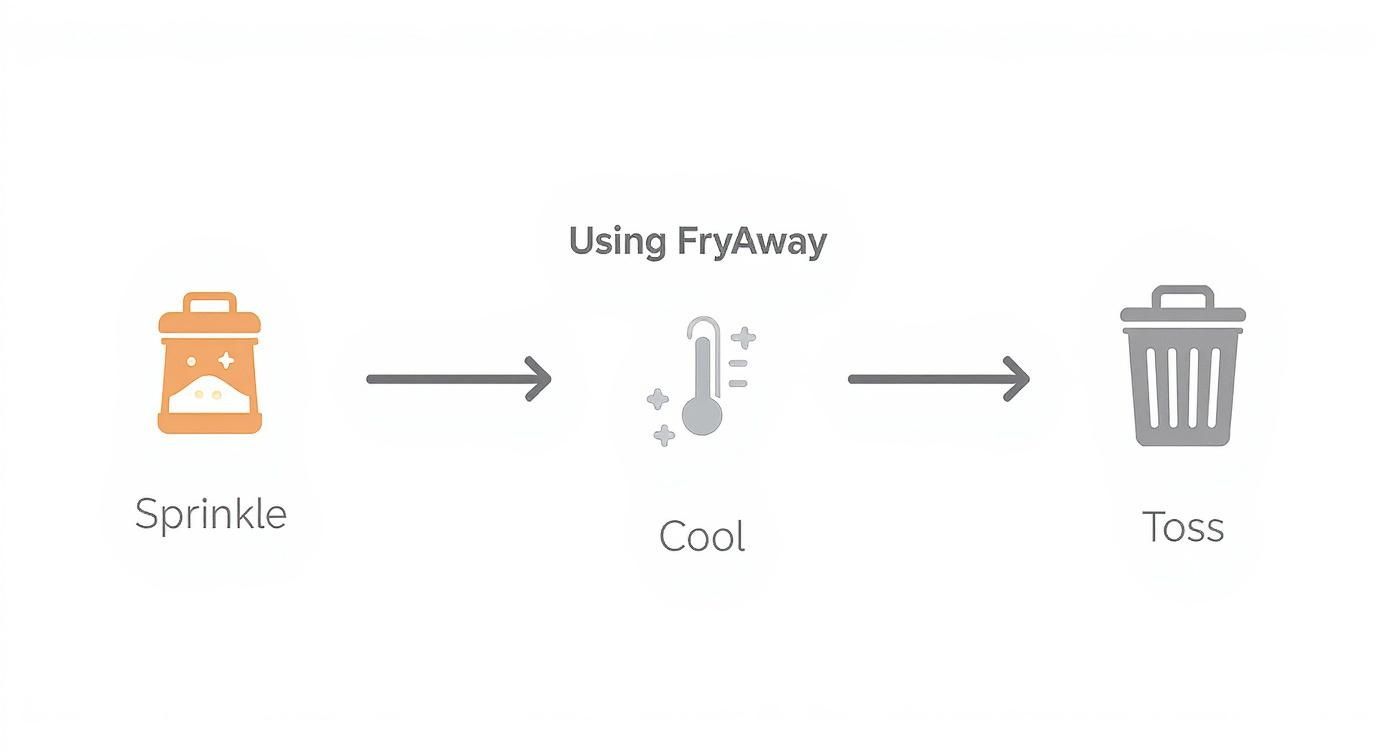
As you can see, a quick 1) Sprinkle and Stir, a little time to 2) Cool Down, and an easy 3) Toss into household trash is all it takes to handle used oil responsibly.
Fried Recipes with a Built-In Cleanup Plan
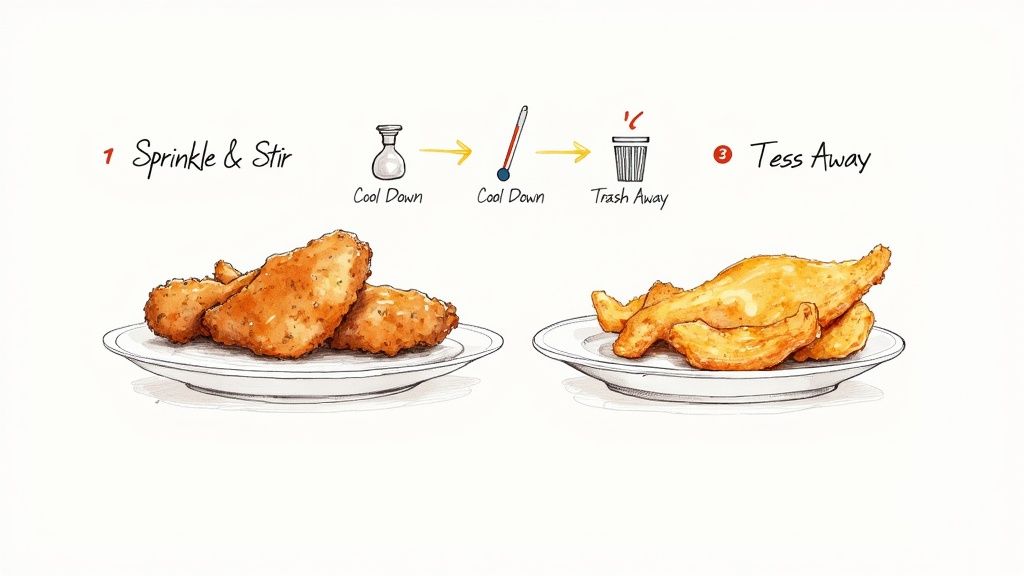
Let's move from theory to what really matters: the kitchen. The best way to get rid of used cooking oil is to find a method that slides right into your cooking routine. You shouldn't have to dread a messy, complicated cleanup just to enjoy your favorite fried foods.
When you pair a delicious recipe with a simple disposal plan from the start, you'll see just how easy responsible cleanup can be. It becomes the natural final step of making a meal.
For anyone who loves to fry, getting to know your cooking oils and their smoke points can make a huge difference in your results. This Cooking Oil Smoke Point Chart is a fantastic resource for any home cook.
Crispy Southern Fried Chicken
A true classic. That signature crispy, golden-brown crust on Southern fried chicken comes from a generous amount of hot cooking oil. Imagine pulling perfectly seasoned, juicy pieces of chicken from your skillet. The aroma fills the kitchen... but so does that pan of leftover oil.
Instead of seeing a chore, you can see a simple final step. Once the chicken is resting and you've turned off the heat, your cleanup can begin right away.
The Cleanup Plan with FryAway
With the oil still hot in the skillet, it’s the perfect time to act. This whole process takes about a minute, and you can do it before you even sit down to eat.
- 1) Sprinkle and Stir: Right after you finish frying, sprinkle the FryAway powder directly into the hot oil. Give it a quick stir until the powder completely dissolves.
- 2) Cool Down: Now for the easy part. Just leave the skillet on the stovetop (heat off, of course) and let it cool down. As it cools, the oil will magically transform into a solid, waxy puck.
- 3) Toss into household trash: Once the oil has completely solidified, you can slide a spatula right under it, lift it out, and toss it straight into your garbage bin. Done.
Golden Beer-Battered Fish and Chips
Whether you're making classic fish and chips or some killer fish tacos, that light, airy, and incredibly crispy texture comes from deep frying in oil. It's a delicious meal, but it often leaves behind a whole pot of used cooking oil.
This is another perfect time for a built-in cleanup plan. You get to enjoy every bite of that perfectly fried fish knowing the disposal is already handled.
By solidifying the oil right in the pan or fryer, you completely eliminate the need for messy jars, potential spills, and the risk of plumbing disasters. It's the most effective way to ensure used cooking oil never becomes a problem for your home or the environment.
The Cleanup Plan with FryAway
The steps are just as simple, even when you're dealing with a larger amount of oil from deep frying.
- 1) Sprinkle and Stir: As soon as the last piece of fish comes out of the fryer, turn off the heat. Carefully stir in the recommended amount of FryAway powder until it's all dissolved.
- 2) Cool Down: Let the fryer or pot cool completely. This might take a few hours, but it requires zero effort on your part.
- 3) Toss into household trash: Once cooled, the oil will be a solid block that you can easily scoop out and drop in your trash can. Your fryer is left clean and ready for next time.
Common Oil Disposal Mistakes and How to Avoid Them
Knowing how to properly get rid of used cooking oil is one thing, but it’s just as important to know what not to do. A lot of seemingly harmless habits can actually cause some serious damage to your home and the local environment. Once you see these common missteps, it becomes pretty clear why having a reliable disposal method is a must.
One of the biggest mistakes people make is pouring hot oil outside in the garden or on the lawn. It feels like a natural solution, right? Wrong. Hot grease will kill your grass and plants on contact. As it cools, it creates a waterproof layer on the soil, suffocating roots and blocking moisture from getting where it needs to go.
And that’s not all. Leftover oil is basically a dinner bell for pests. Rodents, insects, and other critters you’d rather not have around are drawn to the smell, turning your yard into their new favorite hangout. This one simple mistake can quickly spiral into a much bigger pest control headache.
Other Disposal Don'ts to Remember
Beyond the backyard, there are a few other disposal habits you need to ditch immediately. Each one comes with its own set of nasty consequences, affecting everything from your plumbing to your compost pile.
- Dumping Oil Down the Toilet: This is just as bad as the sink. Your toilet connects to the exact same plumbing system, and the oil will still solidify in the pipes, leading to clogs and those destructive fatbergs you hear about.
- Mixing Oil with Compost: Composting is fantastic, but adding a bunch of used cooking oil is a recipe for disaster. Oil slows down decomposition to a crawl, attracts pests, and creates a stinky, slimy mess that can ruin your entire pile.
- Putting Liquid Oil in the Trash: Tossing a jug of liquid oil into the garbage might seem like the easiest route, but it’s a leak waiting to happen. Spilled oil creates a huge mess on your property, and it often leaks from garbage trucks, polluting streets and storm drains.
These mistakes highlight why responsible disposal is becoming such a big deal. The global waste oil recycling market was valued at about $37.5 billion in 2021 and is expected to hit $48.8 billion by 2025, all driven by growing environmental awareness. You can explore more insights into the waste oil recycling market to see just how quickly things are changing.
The best way to dispose of used cooking oil is to make sure it can’t cause any harm. Solidifying the oil is the only way to guarantee you prevent spills, clogs, and environmental contamination.
When you solidify used oil, you eliminate all the risks. That’s why we always recommend a product like FryAway. The process couldn’t be simpler: 1) Sprinkle and Stir the powder into your hot oil, 2) Cool Down until it’s solid, and 3) Toss the hardened puck right into your household trash. This method avoids every single common mistake, making it the safest and cleanest choice for your kitchen and the planet.
Ready to make cleanup simple and safe? Discover how FryAway can transform your post-frying routine. Visit us at https://fryaway.co to find the perfect product for your kitchen.