


· By FryAway
How to Dispose of Cooking Oil The Right Way
After frying up a delicious meal, you’re left with a pan full of used cooking oil. What now? It might seem harmless to just pour it down the sink, but that simple act is a recipe for disaster—both for your plumbing and the environment.
The golden rule of cooking oil disposal is simple: never, ever pour it down the drain. Instead, your best bets are to either solidify it for easy trash disposal or find a local recycling program. For the easiest and most mess-free method, we always recommend using FryAway to solidify the oil before tossing it in the trash.
The Problem with Pouring Oil Down the Drain
Pouring used cooking oil down the drain feels like a quick fix, but it creates massive problems once it's out of sight. As that hot, liquid grease travels through your pipes, it cools down and starts to solidify, clinging to the inside walls.
Over time, this greasy buildup traps food scraps and other gunk, forming stubborn blockages often called fatbergs. These clogs are a homeowner's nightmare and can lead to:
- Expensive plumbing repairs.
- Nasty sewer backups into your home or yard.
- Serious damage to your city’s wastewater treatment systems.
The environmental toll is just as significant. In Spain, for example, experts estimate that 350 million liters of cooking oil are used each year, but only a tiny 5% gets recycled properly. The rest often ends up polluting waterways, which is terrible news for aquatic life and our ecosystems. You can learn more about the challenges of household oil recycling on repsol.com.
Think of it like a simple decision tree—there are a few good paths and one very wrong one.
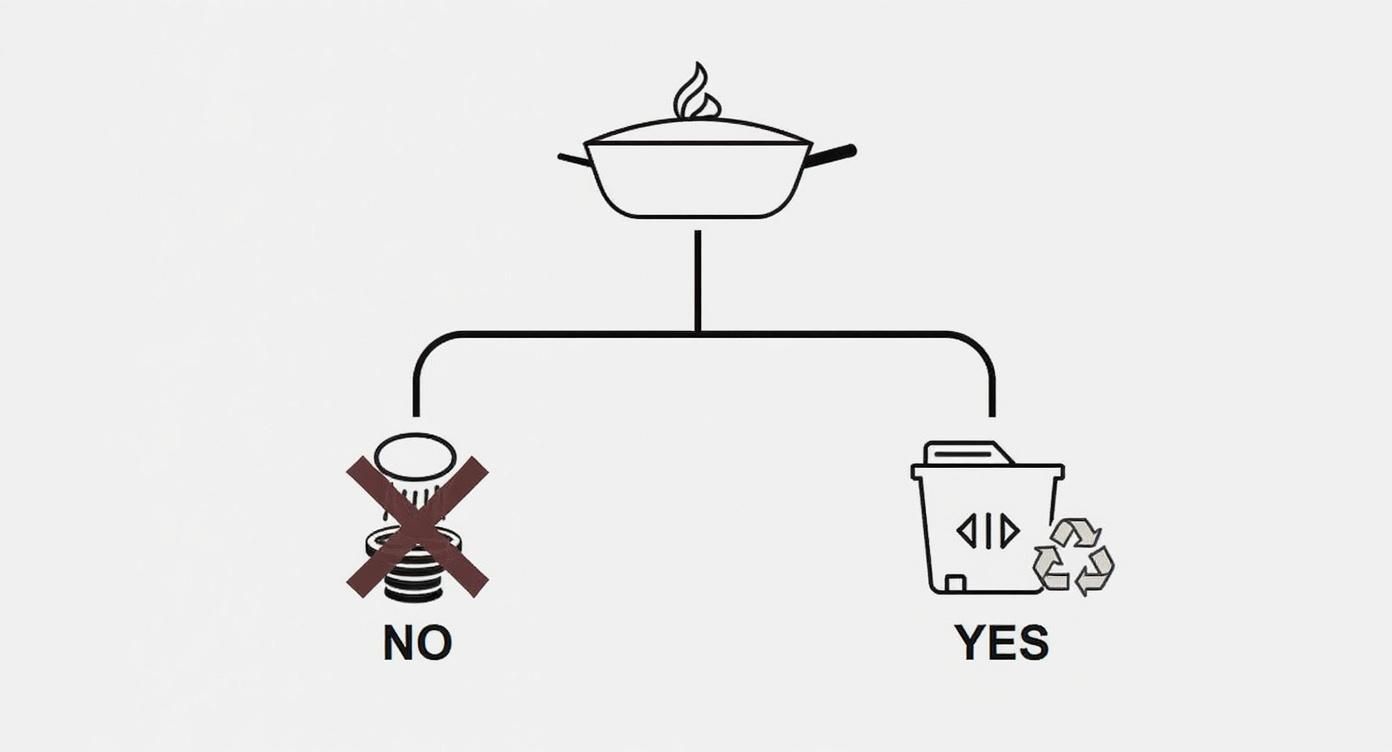
As the visual makes clear, the only wrong answer is sending it down the drain. Choosing responsible options like trash disposal and recycling is a small step that protects both your home and the planet.
Cooking Oil Disposal Methods At a Glance
Here’s a quick summary of the best ways to handle used cooking oil, helping you choose the right method for your kitchen.
| Disposal Method | Best For | Key Benefit | Potential Drawback |
|---|---|---|---|
| Solidification | Everyday home cooks, small to medium oil amounts | Mess-free, simple, and environmentally safe for trash disposal. | Requires a product like FryAway or absorbents. |
| Recycling Programs | Large quantities of oil, environmentally conscious cooks | Turns waste oil into biofuel, a renewable energy source. | Can be inconvenient; requires finding a local drop-off center. |
| Sealed Container | Small, infrequent amounts of oil | A simple, no-cost way to contain oil for the trash. | Risk of leaks if the container isn't sealed properly. |
| Reuse | Lightly used oil (e.g., from pan-frying) | Saves money and reduces waste in your kitchen. | Oil can only be reused a couple of times before degrading. |
Each method has its place, but the goal is always the same: keep that oil out of your pipes and our waterways.
Solidify Oil for Easy, No-Mess Disposal
You've just finished cooking up a batch of incredible Southern fried chicken or maybe some beer-battered fish. The meal was a hit, but now you're left staring at a pan full of hot, greasy oil. The old method of pouring it into a jar and hoping it doesn't leak all over your trash can is enough to make anyone dread the cleanup.
Good news: there's a much cleaner, simpler, and completely mess-free way to handle it. We always recommend using FryAway.
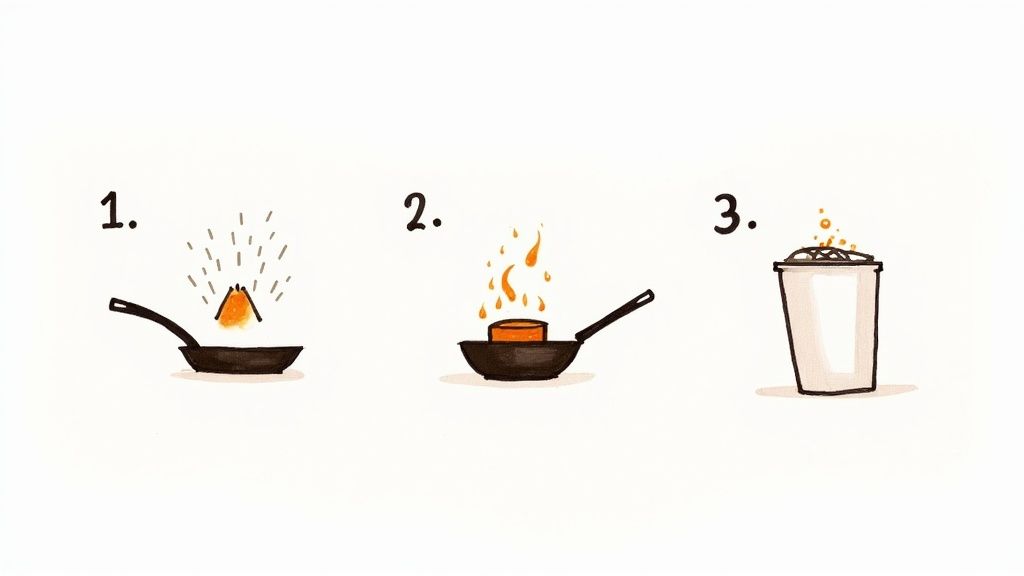
We're big fans of using FryAway, a 100% plant-based powder that works like magic, turning liquid cooking oil into a solid, organic block of waste. It’s a game-changer that eliminates the hassle of dealing with greasy containers.
Proper disposal of used cooking oil is a huge deal globally, but households are lagging way behind restaurants. Take Spain, for example, where only 5% of household cooking oil gets recycled. Compare that to the hospitality industry's 72% recovery rate, and you can see the gap. It just goes to show why we need simple, effective solutions for home cooks. You can dig deeper into the global market for used cooking oil on coherentmarketinsights.com.
How to Use FryAway for Best Results
Getting started with FryAway is incredibly simple. It's a quick three-step process that completely takes the headache out of oil disposal.
-
1) Sprinkle and Stir
First thing, while the oil is still hot, sprinkle the right amount of FryAway powder into your pan. Give it a good stir until the powder completely dissolves. -
2) Cool Down
Now, just set the pan aside and let it cool down completely. As it cools, you’ll see the oily liquid transform into a solid, waxy disc right before your eyes. -
3) Toss into household trash
Once it's totally solid, you can easily scoop the hardened oil out of the pan with a spatula and drop it right into your household trash bin. No spills, no leaky jars, and definitely no risk of clogging up your pipes.
And just like that, you're left with a pan that's a breeze to clean and the peace of mind that comes from disposing of your cooking oil the right way. For a more detailed breakdown, check out our complete guide on how to solidify cooking oil.
Find Local Cooking Oil Recycling Programs
For anyone committed to making a positive environmental impact, recycling your used cooking oil is a fantastic option. Instead of letting it end up in a landfill, you can give your leftover oil a second life—often as a valuable resource like biodiesel. This process literally transforms kitchen waste into a cleaner-burning fuel, which helps cut our reliance on fossil fuels.
Many communities have already set up collection programs to make this super easy for residents. Your first stop should always be your city or county’s waste management website. They’re the best source for detailed lists of household hazardous waste (HHW) collection sites or special drop-off events that accept used cooking oil.
Locating a Collection Center
A quick online search for "cooking oil recycling near me" is another great way to find commercial facilities or even local businesses, like auto shops or restaurants, that take part in public collection programs.
Just be sure to call ahead. You'll want to confirm their hours and any specific requirements they have for drop-off. Some programs, for instance, might require the oil to be in a sealed, non-breakable container.
The demand for used cooking oil is actually on the rise, driven largely by its role in producing biodiesel. In fact, by 2025, the biodiesel segment is projected to make up a whopping 49.3% of the global used cooking oil market, thanks to government incentives and growing environmental awareness.
Pro Tip: When you're saving up oil for recycling, pour it into a sturdy, sealed container like its original bottle or a plastic jug with a tight-fitting lid. Keep it somewhere cool and dark, away from pets and kids, until you're ready to take it to the collection center.
Taking this extra step not only prevents plumbing headaches but also contributes to a more sustainable, circular economy.
For more general guidance on leveling up your household recycling habits, check out these 10 expert tips for recycling more effectively. And for more disposal ideas, you can find more insights in our guide to simple and eco-friendly ways for used cooking oil disposal.
Safely Reuse Your Cooking Oil
Want to cut down on kitchen waste and make your grocery budget go a little further? Reusing cooking oil is a fantastic habit, but you have to do it the right way. Not every oil is a good candidate for a second go-around, and knowing the difference is the secret to keeping your food tasting great and staying safe.
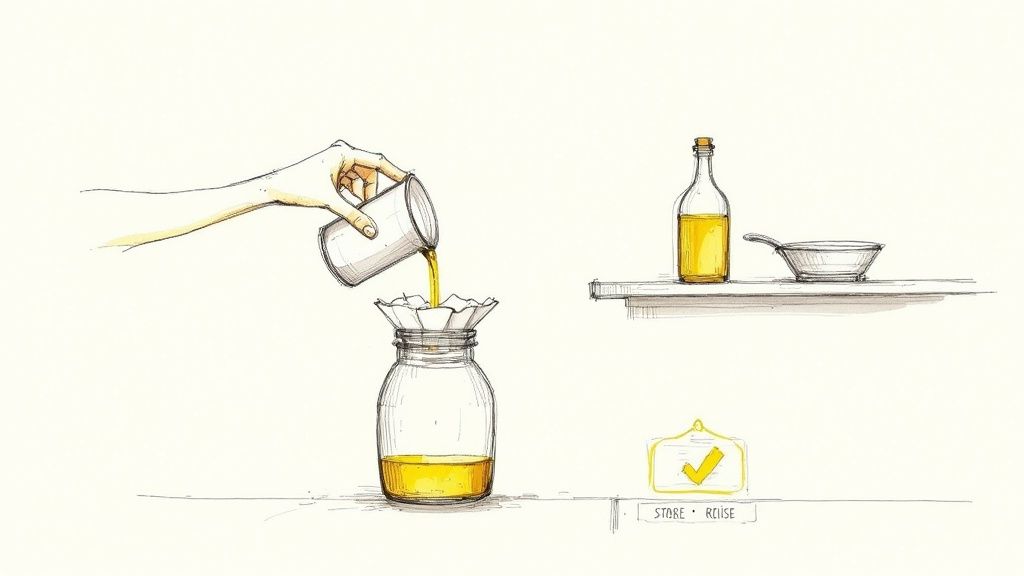
As a rule of thumb, oils with a high smoke point—think peanut, canola, or vegetable oil—are your best bet for reuse. If you just fried something neutral like french fries, you can definitely get another use out of that oil. But if you cooked something with heavy breading or a strong flavor like fish, that oil is going to hang onto those flavors and break down much faster.
Filter and Store for Freshness
Filtering is the most important step, hands down. Once the oil has cooled down but is still warm, you need to strain it. A fine-mesh sieve, some cheesecloth, or even a coffee filter works perfectly to catch all those tiny food particles. It's those little leftover bits that make oil go rancid.
After you've filtered it, pour the clean oil into an airtight glass jar or back into its original container. The key is to store it somewhere cool and dark, like a pantry. Never leave it on the countertop—the light and heat will ruin it in no time.
Here's a critical safety rule I always follow: never mix different types of used oil. When you combine oils that have different smoke points, they can break down in unpredictable ways, leading to a smoky kitchen and off-tasting food.
When to Finally Dispose of Oil
Even with perfect storage, cooking oil doesn't last forever. It’s time to get rid of it if you spot any of these tell-tale signs:
- It looks dark, cloudy, or has a foamy layer on top.
- It has a rancid or "off" smell—nothing like how it smelled when it was new.
- It starts smoking before it even reaches your cooking temperature.
Reusing oil is a great way to be resourceful, but you have to know when its time is up. If you're curious about the health side of things, we've got a great article that explores why it is unhealthy to reuse frying oil in more detail.
Fried Recipes Worth the Cleanup
Now that you know how to handle used cooking oil without the mess and stress, a whole world of delicious fried food is waiting for you. When cleanup is this simple, even the most ambitious recipes feel totally doable.
Here are a few classics that are absolutely worth the effort, especially when you have a secret weapon like FryAway on your side.
Crispy Southern Fried Chicken
You can't talk about comfort food without mentioning Southern fried chicken. That signature, audible crunch comes from a good deep fry in the right oil.
For a perfectly golden-brown crust, you'll want a neutral oil with a high smoke point—think peanut or canola oil. The consistent, high heat is the key to creating that crunchy exterior while sealing in all the juicy flavor.
After everyone's had their fill, the cleanup is shockingly simple:
- 1) Sprinkle and Stir: Just add the FryAway powder to the still-hot peanut oil and give it a good mix until it dissolves completely.
- 2) Cool Down: Let the pan sit until the oil cools and turns into a solid, waxy puck.
- 3) Toss into household trash: Scoop the hardened oil out and toss it right into your household garbage. No more messy jars or accidental spills.
Beer-Battered Fish Tacos
For light, airy, and incredibly crispy beer-battered fish, vegetable oil is a fantastic and budget-friendly choice. Its neutral flavor won't clash with the delicate fish, letting the tangy slaw and creamy chipotle sauce be the stars of the show.
That perfect texture is something you can only get from frying, but it often leaves you with a lot of oil to deal with.
The best part? That large pot of used vegetable oil is no longer an intimidating cleanup challenge. The same easy three-step FryAway process—Sprinkle and Stir, Cool Down, and Toss—transforms that liquid mess into solid waste in no time.
Homemade Glazed Doughnuts
Making doughnuts from scratch is one of the most rewarding kitchen projects you can tackle. The secret to their fluffy, melt-in-your-mouth texture is, you guessed it, frying.
A high-quality vegetable shortening or a neutral oil like canola works beautifully here. It gives the doughnuts a clean taste and a perfect golden exterior without making them feel greasy.
After you've glazed your delicious creations, that pot of oil is the last thing you want to think about. With FryAway, the process is foolproof and fast, giving you more time to enjoy the fruits of your labor.
If you're ready to master new techniques or explore even more fried recipes, you might want to hone your skills with some of the best online cooking classes out there.
Common Disposal Mistakes to Avoid
Knowing the right way to get rid of cooking oil is half the battle. The other half is knowing what not to do. Even with the best intentions, a simple slip-up can lead to a huge headache—think stubborn messes, unwelcome pests, and seriously expensive repairs.
Don't Pour It Down the Drain
This is the number one mistake, and it's a costly one. It might seem harmless to wash hot oil down the kitchen sink with some soap and water, but once that oil hits your cold pipes, it solidifies. This creates nasty blockages that can cost hundreds, if not thousands, of dollars to fix.
Keep Hot Oil Out of Your Compost
Another common error is adding hot oil straight into a compost pile. While a tiny bit of cooled vegetable oil is usually fine, hot oil is a different story. It can kill off the beneficial microorganisms that are working hard to break down your organic waste. Plus, it’s basically an open invitation for rodents and other pests to visit your yard.
Using the Wrong Container Is Asking for a Mess
Pouring cooled oil into a flimsy container like a milk carton or a thin plastic bag is a disaster waiting to happen. These can easily leak, creating a greasy, sticky mess in your trash can that’s a nightmare to clean up and, you guessed it, attracts more pests.
The best way to deal with used oil is to eliminate the risk of leaks from the start. A product like FryAway solidifies the oil right in your pan, so you never even have to pour it into another container.
The Foolproof Way to Avoid Mistakes
Honestly, the easiest way to sidestep all these common problems is to use an oil solidifier like FryAway. The process couldn't be simpler:
- 1) Sprinkle and Stir: Just add the powder to your hot oil and give it a quick stir.
- 2) Cool Down: Let the pan cool completely as the oil hardens into a solid puck.
- 3) Toss into household trash: Scoop the solid oil right into your household trash.
This three-step trick helps you avoid every single disposal mistake. It guarantees a clean, responsible cleanup after you’ve fried up something delicious like crispy fried chicken or beer-battered fish tacos. No mess, no clogged pipes, no regrets.
Your Cooking Oil Disposal Questions Answered
Got a few lingering questions about handling used cooking oil? Let's clear them up.
Can I put small amounts of greasy residue down the drain?
It's tempting, but even tiny bits of fat, oil, or grease (what the pros call FOG) build up over time and lead to serious clogs. The best habit to get into is wiping greasy pans or plates clean with a paper towel before they hit the sink.
How do I handle oil from cooking bacon or ground beef?
Great question. Bacon grease and rendered fat from meats are just like any other cooking oil—and just as bad for your pipes. Never, ever pour them down the drain. The easiest way to deal with them is to let them cool and solidify for a simple, clean disposal. For this, we always recommend FryAway.
Is there a way to make disposal even simpler?
Absolutely. For a guaranteed mess-free cleanup after making delicious recipes like fried chicken or fish, our go-to is always FryAway. It’s a plant-based powder that takes all the guesswork out of the process.
It’s a foolproof 3-step method that works every time:
- 1) Sprinkle and Stir the powder into your still-hot oil.
- 2) Cool Down and watch as the oil magically transforms into a solid.
- 3) Toss into household trash the hardened puck straight into your household trash bin.
Ready for the easiest cleanup you've ever had? Try FryAway today and make messy oil disposal a thing of the past.