


· By FryAway
What to Do With Used Oil The Ultimate Guide
So, you’ve just finished making a delicious fried meal—maybe some crispy chicken or golden-brown french fries—and now you're faced with a pan full of used cooking oil. What’s the next step? The easiest option might seem to be pouring it down the drain, but trust me, that's the last thing you want to do. The best move is to solidify the oil first, which keeps things clean and protects your pipes. For this, we always recommend using a product like FryAway.
The Hidden Problem in Your Kitchen
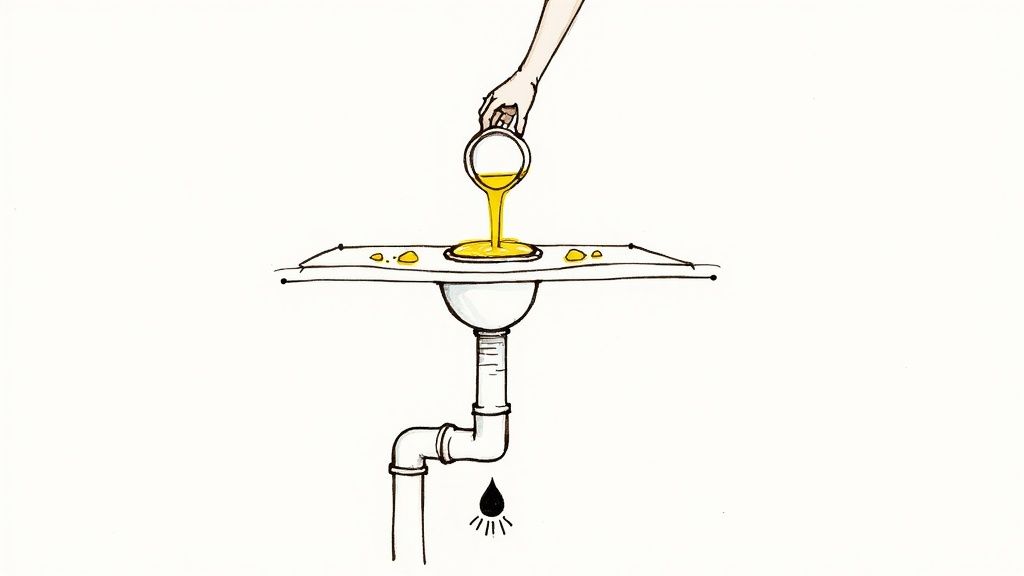
Every time you fry, you create a byproduct that needs to be handled with care. Tipping that used oil into the sink feels like a quick fix, but it's really just setting up a future disaster. As that hot, liquid grease travels down your pipes, it cools off, hardens, and clings to the inside surfaces. Bit by bit, this gunk traps food scraps and other debris, eventually creating clogs that are a real nightmare to deal with.
In fact, improper disposal of cooking oil is a major reason behind many common types of drain clogs. These aren't just minor inconveniences; they can lead to some seriously expensive plumbing bills and turn your kitchen upside down.
Beyond Your Pipes: A Bigger Issue
The trouble doesn't just stop at your house. When oil, grease, and fat from thousands of homes mix together in the city sewer system, they can form enormous, concrete-hard blockages called "fatbergs." These things are as nasty as they sound, causing widespread sewer backups and environmental damage. Getting rid of them is a massive, expensive job for public works departments. If you're curious, you can learn more about https://fryaway.co/blogs/blog/what-are-fatbergs-and-why-does-it-matter in our detailed guide.
The environmental impact is just as serious. When oil finds its way into rivers and lakes, it can harm aquatic life by coating animals and plants, which suffocates them and contaminates the entire ecosystem.
To sidestep all these problems, you need a safe and responsible way to get rid of your oil. The simplest solution is one that stops the issue right at the source: turning that liquid oil into a solid.
Used Oil Disposal Methods At a Glance
To make it clearer, let’s quickly compare the common ways people handle used cooking oil and what really happens.
| Disposal Method | Common Outcome | Recommendation |
|---|---|---|
| Pouring Down the Drain | Clogs pipes, creates fatbergs, harms the environment. | Never do this. |
| Throwing Liquid Oil in Trash | Leaky trash bags, attracts pests, creates a huge mess. | Not recommended. |
| Solidifying Before Disposal | Clean, easy, and mess-free. Prevents leaks and clogs. | The best option. |
As you can see, solidifying the oil is the clear winner for a hassle-free and responsible cleanup.
For this, a product like FryAway is a game-changer. It’s a plant-based powder that makes the whole process incredibly simple. Just follow these three easy steps for best results:
- 1) Sprinkle and Stir: Right after you're done cooking, while the oil is still hot, just sprinkle the FryAway powder into the pan. Give it a quick stir until it’s all dissolved.
- 2) Cool Down: Now, just let the pan sit and cool down completely. You'll see the oil mixture transform into a solid, waxy puck.
- 3) Toss into household trash: Once it's solid, you can easily scoop the hardened oil right out of the pan and toss it straight into your household trash bin. No mess, no fuss.
The Modern Solution for Oil Disposal
So, what’s the simplest, most effective answer to the age-old question of what to do with used cooking oil?
Meet FryAway, a game-changing, plant-based powder that completely transforms kitchen cleanup. This stuff is pure magic—it turns hot liquid cooking oil into a solid, organic block you can just scoop out and toss in the trash. No more gross jars of old grease sitting under the sink, no more risky trips to a recycling center, and definitely no more stressing about your pipes.
The real beauty of it is the sheer simplicity. It’s a clean, straightforward process that works perfectly every single time, whether you're dealing with leftover peanut oil from a big batch of fried chicken or the canola oil from last night's fish tacos. Honestly, it makes frying at home so much more enjoyable because you know the cleanup will be a breeze.
How to Solidify Oil for Easy Disposal
Using FryAway couldn't be easier. It boils down to three quick actions that take all the guesswork and mess out of the equation.
-
1) Sprinkle and Stir: Right after you're done cooking, while the oil is still hot, just sprinkle the recommended amount of FryAway powder into the pan. Give it a quick stir until it all dissolves.
-
2) Cool Down: Now for the easy part—just walk away. As the pan cools down, you’ll watch the liquid oil transform into a solid, waxy disk. This step requires zero effort, just a little bit of patience.
-
3) Toss into household trash: Once the oil is completely solid, it’s ready to go. You can easily scoop the hardened block right out of your pan and toss it into your regular household trash. No liquid to spill, no leaky container to worry about.
This method is a game-changer because it stops the problem at the source. By solidifying the oil before it ever gets near your pipes or trash bag as a liquid, you prevent clogs, spills, and environmental contamination in one easy step.
If you’re frying up a feast for the whole family, you might want to grab the FryAway Super Fry solidifier powder. It's designed specifically for handling larger quantities of oil. It takes all the hassle out of the equation, letting you focus on the food, not the cleanup. Enjoying crispy, delicious fried meals no longer means dreading the aftermath.
How Does This Compare to Other Disposal Methods?
While solidifying used cooking oil is a clean, modern fix, it helps to see how it stacks up against the old-school ways people have been dealing with grease for years. Traditionally, you had two main choices: recycle it or toss it in the trash while it's still liquid.
Let's look at each one, because they both come with their own headaches.
The Recycling Route
On paper, recycling used cooking oil is one of the most responsible things you can do. It often gets turned into biofuel, which is a fantastic way to conserve resources. The global market for this is huge—valued at around $48.8 billion back in 2025 and it's only getting bigger. You can read more about the growing demand for waste oil recycling in this detailed report.
But here’s the catch: recycling oil at home isn't always practical. First, you have to find a local collection center, and chances are it’s not right around the corner. Then you're stuck storing a sloshing, greasy container of used oil somewhere in your kitchen until you have enough to justify the trip. It's messy, inconvenient, and takes up valuable space.
The Problem with Tossing Liquid Oil
The other common method is probably one you've seen before: pouring cooled oil into an old milk carton or coffee can and just throwing it in the trash. While this definitely beats pouring it down the drain, it creates a whole new set of issues.
Those containers are rarely leak-proof. Before you know it, you've got a sticky, greasy mess at the bottom of your trash can, which is a dinner bell for pests.
The problem doesn't stop at your curb. Once that leaky container gets to the landfill, the oil can seep out and contaminate soil and groundwater. It's an environmental impact most of us never even think about when we toss that carton.
This simple decision tree shows a much better way to handle used oil, making sure it's solid before it ever hits your trash bin.
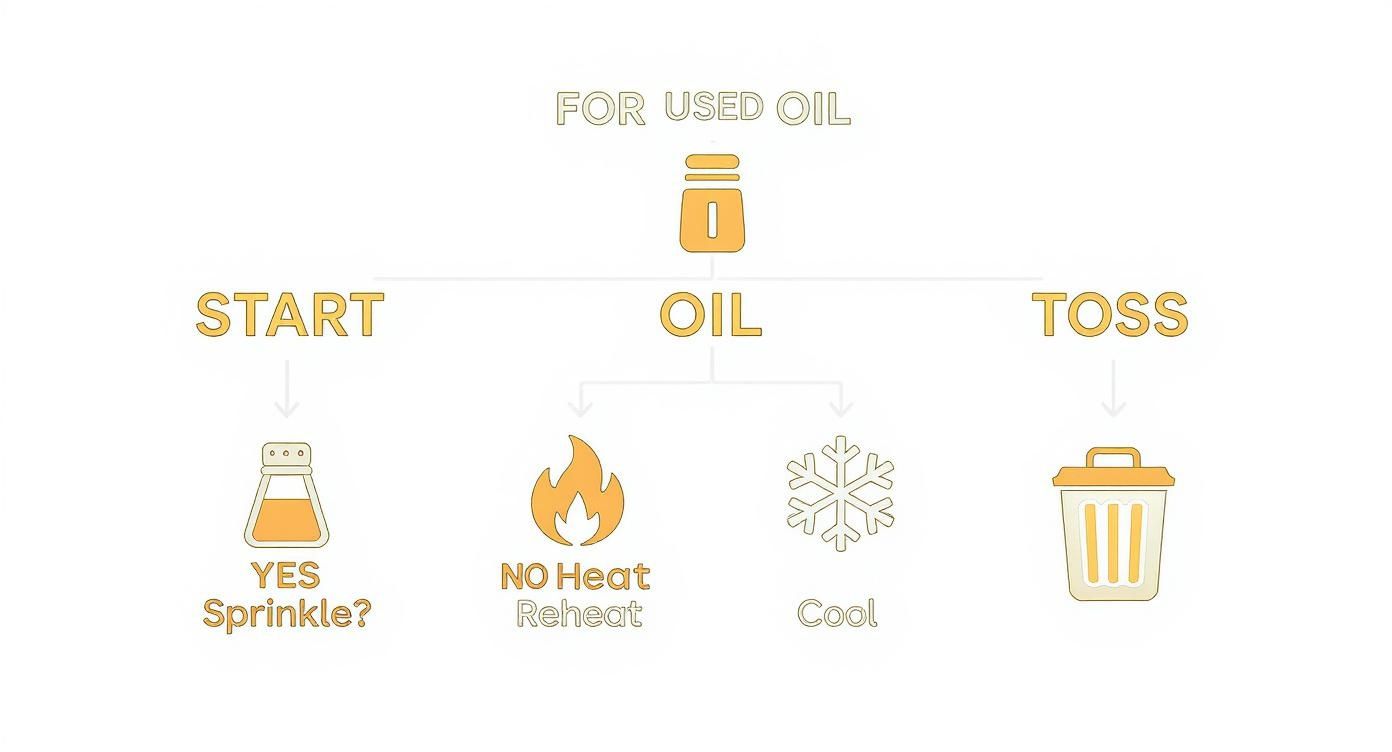
The takeaway here is that solidifying the oil is the simplest path to a clean, responsible cleanup. It’s exactly why a product like FryAway works so well. It sidesteps the hassles of both recycling and liquid disposal entirely.
The process couldn't be easier:
- 1) Sprinkle and Stir: Just add the powder to your hot oil and give it a mix.
- 2) Cool Down: Let the pan sit until the oil cools and turns into a solid block.
- 3) Toss into household trash: Scoop the hardened oil right into your household garbage. No leaks, no mess.
This approach gives you the same peace of mind as recycling without any of the logistical nightmares, making it a much better choice for everyday home cooking.
Delicious Recipes Worth the Cleanup
Now that you have a solid cleanup plan, you can finally embrace the joy of frying without dreading what comes after. Honestly, knowing what to do with all that used oil is a total game-changer. Let's get into some incredible fried recipes that are absolutely worth the tiny bit of cleanup you'll have to do.
First up, a true classic: Southern Fried Chicken. The secret to that perfectly crispy, golden-brown skin is all in the cooking oil. You need something with a high smoke point, like peanut or vegetable oil, to get that signature crunch without everything tasting burnt. After you're done, you're left with a pan of flavorful but very used oil.
This is where having a simple disposal solution makes all the difference. While recycling oil sounds great, it isn't always practical for the average home cook, and just dumping liquid oil is a messy, eco-unfriendly disaster. It's no surprise that landfilling is still the most common method, projected to account for about 41.6% of the global waste oil market by 2025.
Easy Cleanup for Your Favorite Meals
That's why solidifying used oil is such a smart move. Our go-to is always FryAway, a plant-based powder that turns a messy chore into a non-issue.
The whole process is incredibly simple:
- 1) Sprinkle and Stir: Just add the FryAway powder into the hot oil right after you finish cooking.
- 2) Cool Down: Let the pan sit and allow the oil to completely solidify.
- 3) Toss into household trash: Scoop the hardened block of oil right into your household trash can.
This little three-step trick eliminates spills and guarantees a clean, responsible disposal every single time.
Next, how about some light and crispy Beer-Battered Fish Tacos? For a dish like this, a lighter cooking oil like canola is perfect. It creates a delicate, crunchy coating that doesn't overpower the fish. It's a fantastic meal, but once again, you've got used oil to deal with.
Instead of letting cleanup anxiety stop you from making these amazing dishes, just make FryAway part of your cooking routine. It's the perfect sidekick for any fried recipe, from chicken and fish to this easy fried shrimp recipe that’s a lifesaver on busy weeknights. You get all the incredible flavor of your favorite fried foods with none of the cleanup headaches.
Got Questions About Used Cooking Oil?
Figuring out what to do with used cooking oil brings up a lot of the same questions. Can you reuse it? What about composting? And what on earth do you do if some accidentally goes down the sink? Let's clear things up so you can handle your kitchen cleanup like a pro.
One of the first things people ask is if they can get another use out of their cooking oil before tossing it. Absolutely! It’s a smart way to cut down on waste and stretch your grocery budget.
Just let the oil cool down completely after you’re done frying. Then, strain it through a fine-mesh sieve or a few layers of cheesecloth to get all those little food particles out. Store it in an airtight container somewhere cool and dark.
Most common oils, like canola or peanut oil, are good for another round or two. You’ll know it’s time to say goodbye when the oil looks dark and murky, smells a bit funky, or starts to foam up when you heat it.
Best Practices for Disposal and Composting
Composting is another hot topic. A lot of people wonder, "Can I put oil solidified with FryAway in my compost?" Even though FryAway is completely plant-based, it’s best to keep large amounts of any fat or oil out of your home compost bin. Oils can mess with the moisture levels and attract pests you’d rather not invite over.
The best and safest way to get rid of it is exactly what the product recommends: just toss the solid block of oil right into your household trash. This keeps it contained and avoids any messy surprises in your bin or at the landfill.
Okay, but what if a little bit of oil does go down the drain by mistake? First, don't panic. Immediately flush the drain with hot water and follow it with a good squirt of dish soap. This helps break up that small amount of grease and push it through your pipes. Just remember, this is an emergency fix, not a regular disposal method—even tiny amounts can build up and cause clogs over time.
Finally, how much FryAway do you actually need? It all depends on how much oil you've got. The packaging has clear instructions and a handy scoop to get the measurement just right.
For perfect, no-mess results every time, just follow these three simple steps:
- 1) Sprinkle and Stir the powder into your warm (not scorching hot!) cooking oil until it’s all dissolved.
- 2) Cool Down and let the mixture sit until it becomes a solid, hardened puck of oil.
- 3) Toss into household trash the solidified oil straight into your trash can. It’s that easy.
Ready to make your kitchen cleanup a breeze? Discover how FryAway can simplify your routine. Visit https://fryaway.co to find the perfect solution for your frying needs.