


· By FryAway
Your Guide to Eco Friendly Kitchen Products and Sustainable Swaps
Eco-friendly kitchen products are simply items made from sustainable, non-toxic, and long-lasting materials, all designed to cut down on waste and your environmental footprint. They can be anything from reusable food storage and durable cookware to biodegradable cleaning supplies, making it a whole lot easier to build a healthier home and planet.
Why Your Kitchen Is the Perfect Place to Go Green
Think of your kitchen as the heart of your home—it’s not just where you eat, but a space that truly reflects your values. This is where small, daily habits can create a massive ripple effect, and switching to eco-friendly kitchen products is one of the most powerful changes you can make. Every meal you cook, every dish you wash, and every leftover you store is a chance to choose sustainability.
This isn't about a stressful, expensive overhaul overnight. It’s about making smart, simple swaps that slowly but surely reduce your waste, save you money in the long run, and create a safer space for your family. When you choose products built to last and made from responsible materials, you’re casting a vote for a healthier planet.
Sustainable products are most effective when they are paired with better everyday kitchen habits. Our guide to sustainable cooking practices covers thoughtful food sourcing, waste reduction, energy-efficient cooking, water conservation, and responsible management of leftover cooking oil.
The Power of Small Changes
A truly sustainable kitchen is built one small, consistent step at a time. Each swap you make, no matter how minor it seems, adds up to a much bigger positive impact.
- Slash Landfill Waste: Choosing reusable containers, wraps, and towels over their single-use counterparts directly cuts down on the staggering amount of trash we all send to landfills.
- Conserve Natural Resources: Sustainable materials like bamboo, recycled glass, and stainless steel require far fewer resources to produce than conventional plastics.
- Protect Your Family’s Health: Many eco-friendly products are made without nasty chemicals like BPAs and phthalates, so you can be confident that toxins aren't leaching into your food.
A Holistic Approach to a Greener Home
A sustainable kitchen is a huge step, but it's also the cornerstone of a bigger commitment to a greener lifestyle. The habits you build here—like cutting waste, saving energy, and choosing non-toxic materials—can easily spread to every other room in your house. Looking beyond just the kitchen, learning more about creating environmentally friendly homes and sustainable living can give you a complete roadmap to reducing your overall impact.
The most sustainable product is the one you don't have to replace. Investing in durability means less waste and more value over time, turning your kitchen into a model of mindful consumption.
Take frying, for example. Mastering a recipe like crispy buttermilk fried chicken is amazing, but it leaves you with a pan full of used cooking oil. Instead of pouring that greasy mess down the drain and wrecking your pipes, a simple fix like FryAway completely changes the game. It works in three easy steps:
- Sprinkle and Stir: After frying, just turn off the heat, sprinkle FryAway powder into the hot oil, and stir until it dissolves.
- Cool Down: Let the oil cool down completely. You'll see it magically transform into a solid puck.
- Toss into household trash: Scoop out the hardened oil and toss it straight into your garbage bin. No mess, no clogged drains.
This is a perfect example of how one small, smart change can solve a huge problem, making your kitchen cleaner and much more eco-friendly.
How to Choose Truly Sustainable Kitchen Materials
Walking down the kitchen aisle can feel like trying to crack a secret code. Labels scream "green," "natural," and "eco," but what do those words actually mean? Too often, they're just marketing fluff without any real proof to back them up. The true measure of a product's sustainability isn't found in a flashy label, but in the material it's made from—where it came from, how long it will last, and where it goes when you're done with it.
Getting a handle on these materials is the first real step toward making choices that are genuinely better for the planet and your family. It's less about chasing trendy products and more about investing in quality that stands the test of time. This simple shift not only cuts down on waste but also helps create a healthier kitchen, free from sketchy chemicals.
This diagram hits on the core ideas of what makes a kitchen truly eco-friendly: it's a blend of financial durability, ethical sourcing, and smart waste management.
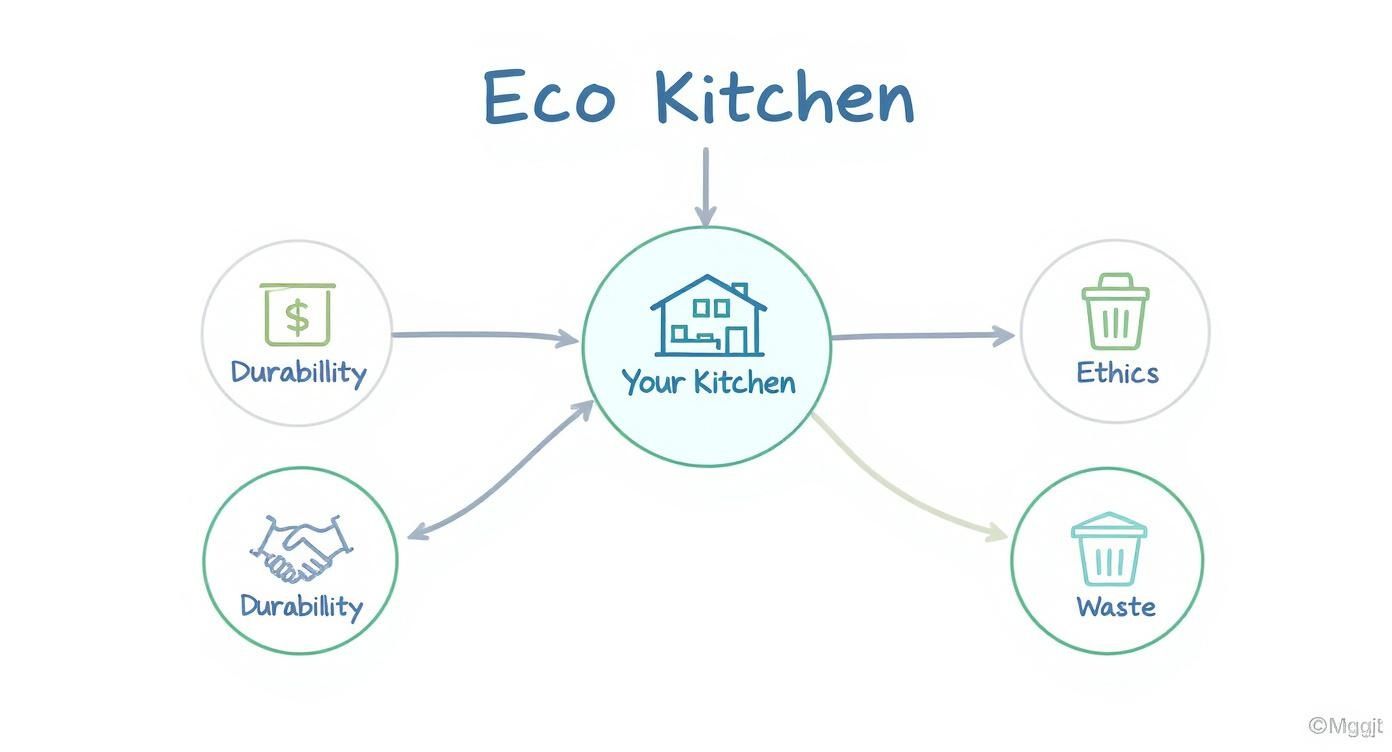
As you can see, a sustainable kitchen is more than just one thing. It's a balance—choosing products built to last, supporting responsible companies, and actively minimizing what ends up in the trash.
Core Materials For a Sustainable Kitchen
When replacing an old kitchen item, focus on materials that are durable, suitable for their intended use, and less likely to require frequent replacement. Our guide to sustainable kitchen products provides more item-specific guidance for cookware, food storage, cleaning tools, utensils, and other everyday kitchen essentials. The materials below provide a useful starting point.
- Stainless Steel: This is the undisputed champion of the kitchen. It’s incredibly durable, completely non-toxic, and can be recycled over and over again without ever losing its quality. Think pots, pans, food storage containers, and utensils that will last a lifetime.
- Bamboo: As a type of grass, bamboo grows incredibly fast, making it a highly renewable resource that needs very little water and no pesticides. It's also naturally antimicrobial, which is perfect for cutting boards and cooking utensils.
- Recycled Glass: Glass is a fantastic material because it’s non-porous, meaning it won't hang onto food smells or leach chemicals into your leftovers. Opting for recycled glass gives old bottles and jars a new life, saving energy and reducing landfill waste.
- Food-Grade Silicone: A fantastic, long-lasting alternative to single-use plastics. Food-grade silicone can handle high heat and won’t release harmful toxins. It’s perfect for reusable baking mats, food storage bags, and those stretchy lids that fit over any bowl.
If you're really thinking about the long game, you might even explore options like durable titanium kitchen materials, which offer another level of resilience. A higher initial investment in quality materials almost always pays for itself by saving you from having to buy replacements year after year.
How To Spot Genuine Eco-Friendly Products
Unfortunately, "greenwashing"—when companies make misleading claims about their environmental benefits—is everywhere. To shop with confidence, you need to learn how to spot the legitimate third-party certifications that actually verify a company's claims.
Key Takeaway: A product's true value isn't just its price tag, but its entire lifecycle. Choosing materials that last for decades, like high-quality stainless steel, is one of the most sustainable decisions you can make.
Keep an eye out for these official labels on the packaging:
- FSC Certified (Forest Stewardship Council): This is your guarantee that any wood or bamboo product came from a responsibly managed forest that supports the environment, local communities, and the economy.
- BPA-Free: This label confirms that a plastic or silicone product is free from Bisphenol A, an industrial chemical that has been linked to potential health issues.
The good news is that shoppers are catching on. The U.S. kitchenware market is currently valued at USD 8.96 billion and is poised for major growth, largely because people are actively seeking out non-toxic and responsible materials like stainless steel and bamboo. It's a clear sign that conscious consumerism is making a real impact.
A Practical Example With Used Cooking Oil
Choosing the right materials applies to every single task in the kitchen, right down to the cleanup. Let's say you just finished frying up some amazing beer-battered fish in your trusty stainless steel pan. The meal was a huge hit, but now you’re staring at a pan full of hot, used cooking oil.
We all know pouring that oil down the drain is a huge no-no for your pipes and the environment. This is where an eco-friendly solution like FryAway fits perfectly with your sustainable cookware.
It’s a dead-simple, three-step process:
- Sprinkle and Stir: After cooking, just turn off the heat. Sprinkle the plant-based FryAway powder into the hot oil and give it a quick stir.
- Cool Down: Now, just let the pan cool down completely. As it cools, the oil will magically transform into a solid, waxy puck.
- Toss into household trash: Once it's solid, you can easily scoop the hardened oil out of your pan and toss it right into the trash.
This one simple swap prevents clogged pipes and keeps harmful grease out of our waterways, turning a messy chore into a clean, responsible solution.
Practical Swaps for a Zero Waste Kitchen
Knowing what sustainable materials are is one thing, but actually putting that knowledge to work is where the magic happens. A zero-waste kitchen isn't about flipping a switch and being perfect overnight. It's about making a series of small, thoughtful swaps that add up to a huge impact on your environmental footprint—and often make your kitchen work better, too.
These upgrades are more than just "green." They're usually more durable, healthier for your family, and save you money in the long run. When you start replacing flimsy disposables with reusable workhorses and choosing non-toxic materials, you're building a kitchen that’s safer for you and kinder to the planet.
There’s a reason the market for these products is booming. The global eco-friendly kitchenware market is on track to hit USD 126.47 billion by 2032. This isn't just a trend; it's a massive consumer shift away from traditional plastics and toward smarter materials like bamboo and recycled glass. You can learn more about the expanding eco-friendly kitchenware market on strategymrc.com.
Upgrading Your Food Storage
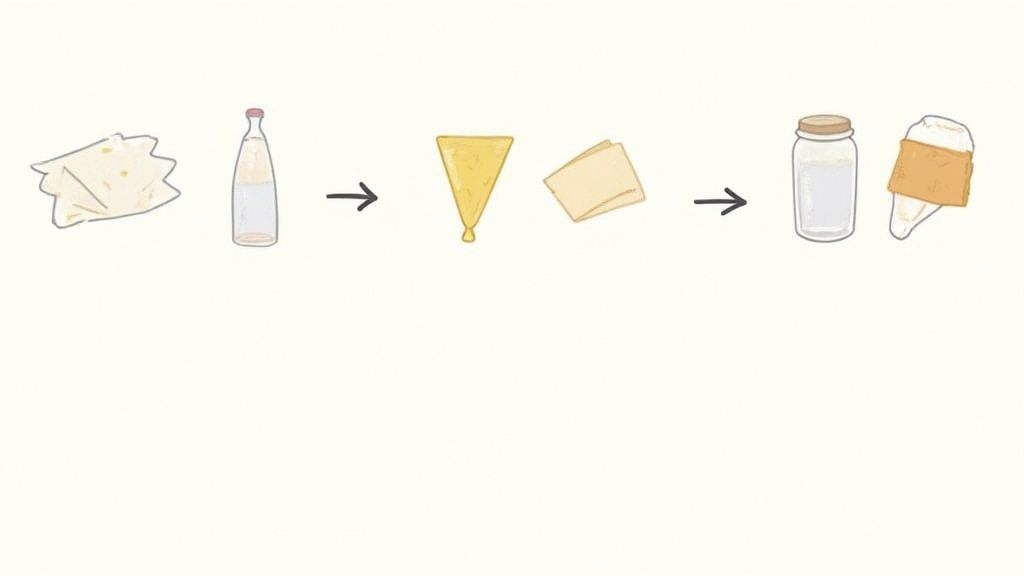
Think about it: one of the biggest culprits of kitchen waste is single-use food storage. Plastic wrap, zip-top baggies, and cheap plastic containers are constantly being thrown away, piling up in landfills. The good news is, the alternatives are better in just about every way.
- Glass Containers: Unlike plastic, glass won't stain, hold onto smells, or leach weird chemicals into your food when you microwave it. A good set of glass containers with solid lids is a one-time buy that will last you for years, maybe even decades.
- Beeswax Wraps: These are a brilliant, compostable replacement for plastic cling wrap. Made from cotton infused with beeswax, they create a breathable seal over bowls or can wrap directly around food like half an avocado or a block of cheese.
- Silicone Food Bags: Say goodbye to disposable plastic baggies. These durable, reusable silicone bags are perfect for everything from packing snacks and freezing leftovers to sous vide cooking. You can wash and reuse them thousands of times.
Smarter Cleaning Swaps
The cabinet under the sink is often a graveyard of disposable products and bottles of harsh chemicals. A few easy swaps here can detoxify your cleaning routine and slash your waste.
Take Swedish dishcloths, for example. They're a total game-changer. Made from cellulose and cotton, a single one of these cloths can replace up to 17 rolls of paper towels. They soak up spills like a champ, dry out fast so they don't get funky, and you can toss them in the compost when they finally wear out.
Another incredibly simple switch is swapping your plastic bottle of dish soap for a solid dish soap bar or a brand that offers refills. This tiny change can prevent countless plastic bottles from ever entering the waste stream. For even more ideas, check out these sustainable kitchen hacks for minimizing food waste.
Responsible Cooking and Cleanup
Even the way you cook and clean up can be more eco-friendly, especially when it comes to frying. One of the trickiest kitchen problems is figuring out what to do with all that used cooking oil. Too many people pour it down the drain, not realizing it solidifies and creates massive, destructive "fatbergs" in city sewers.
But there's a brilliantly simple fix for this. FryAway is a plant-based powder that turns used cooking oil into a solid, making disposal totally mess-free and safe for the environment. It’s a perfect example of an eco-friendly product solving a real-world headache without any fuss.
Imagine making perfectly crispy fried chicken, and the cleanup is the easiest part of the whole meal. With a product designed for responsible oil disposal, that's exactly what you get.
Using it couldn't be easier. Just follow three simple steps:
- Sprinkle and Stir: After you’re done frying, turn off the heat. Sprinkle the FryAway powder into the hot oil and give it a quick stir until it dissolves.
- Cool Down: Now, just let the pan cool down. As the oil cools, FryAway works its magic, transforming the liquid grease into a solid, organic puck.
- Toss into household trash: Once it's completely solid, you can easily scoop the hardened oil right out of the pan and toss it into your regular household trash. No spills, no gross jars, and definitely no clogged pipes.
This one swap not only saves your plumbing and protects local waterways but also goes hand-in-hand with a kitchen stocked with durable cookware like cast iron or stainless steel. It’s proof that you can enjoy your favorite fried foods and still be an environmental hero.
Solving Your Used Cooking Oil Problem for Good

If you love to fry, you've faced the inevitable cleanup question: what on earth do you do with all that leftover oil? It's a messy dilemma that too often ends with a quick pour down the kitchen sink—a seemingly small act that’s a catastrophe in the making for your plumbing and the environment.
When hot grease goes down the drain, it cools and hardens, mixing with other gunk to create massive blockages. These "fatbergs" can choke entire city sewer systems, leading to nasty backups and expensive repairs. It all starts with that one simple kitchen task.
The search for a better way usually leads to greasy jars collecting dust under the sink or precarious attempts to pour hot oil into old milk cartons. These are messy, inconvenient stopgaps that still send liquid waste to the landfill. This is where a truly innovative eco friendly kitchen product like FryAway completely changes the game.
A Modern Solution to an Old Problem
Imagine finishing a batch of crispy, beer-battered onion rings and knowing the cleanup will be the easiest part of your night. That's the promise of FryAway, a 100% plant-based, non-toxic powder that makes used cooking oil disposal a total breeze.
It works by turning hot liquid oil into a solid, organic block you can easily toss in your household trash. No more spills, no more clogged pipes, and no more contributing to those destructive fatbergs. It’s a simple swap that makes a huge environmental impact.
By solidifying used cooking oil, you prevent it from entering waterways where it can harm aquatic life and disrupt ecosystems. It's a small action in your kitchen that contributes to a much larger positive environmental impact.
This method takes all the stress and mess out of frying, so you can enjoy your favorite foods without dreading what comes after.
How to Use FryAway for Perfect Results
Using FryAway couldn't be simpler. It’s designed to turn a messy chore into a surprisingly clean and satisfying task in just three steps.
- Sprinkle and Stir: As soon as you're done cooking, turn off the heat. Sprinkle the FryAway powder into the still-hot oil and give it a gentle stir until it dissolves.
- Cool Down: Now, just let the pan cool down. You'll watch as the liquid oil magically transforms into a solid, waxy puck—no extra effort required.
- Toss into household trash: Once it's completely solid, use a spatula to scoop the hardened oil out of your pan and toss it right into the garbage bin.
And that's it. Your pan is left with barely any residue, making washing up a snap. No greasy countertops, no heavy jars, and zero risk of a plumbing disaster. For more tips, check out these simple and eco-friendly ways for used cooking oil disposal and see how this fits into a bigger sustainable kitchen strategy.
Frying Without Fear
This approach to oil disposal lets you cook the foods you love without compromising your eco-friendly goals. Think of it as the final puzzle piece for a truly green kitchen. You can use your favorite stainless steel skillet to make perfect fried chicken, knowing that the entire process—from cooking to cleanup—is handled responsibly.
By adopting this easy method, you're not just buying another kitchen product. You're investing in a cleaner home and protecting your local environment from grease pollution. It's one of the most impactful eco friendly kitchen products you can bring into your daily routine, proving sustainability and convenience really can go hand in hand.
Making Your Sustainable Products Last a Lifetime
The most impactful eco-friendly kitchen product isn't something you have to go out and buy. It's the one you already own. When you shift your mindset from constantly replacing things to thoughtfully maintaining what you have, you're embracing true sustainability. This approach doesn't just slash waste—it saves you serious money over time, turning your purchases into long-term investments rather than disposable goods.
Adopting this "buy for life" philosophy is all about appreciating the craftsmanship and resources that went into each item. With the right care, your tools will perform better, last longer, and might even become heirlooms you can pass down. This is what "reduce and reuse" looks like in action.
Extending the Life of Your Kitchen Staples
Different materials need different kinds of love to really go the distance. A little bit of know-how can prevent common problems like cracking, rust, or losing effectiveness, keeping your favorite gear in prime condition for years to come.
- Season and Protect Cast Iron: A well-seasoned cast iron skillet is practically indestructible. After each use, just give it a gentle scrub with a non-abrasive brush and hot water (skip the harsh soap), dry it completely, and then wipe a very thin layer of cooking oil inside before putting it away. This simple step builds up a natural, non-toxic, non-stick surface.
- Condition Bamboo Cutting Boards: Bamboo is tough, but it can dry out and crack without proper care. About once a month, rub a food-grade mineral oil or beeswax conditioner into the board. Let it soak in overnight to keep the wood hydrated and prevent it from splitting.
- Refresh Beeswax Wraps: When your beeswax wraps start to lose their stick, don't throw them out! You can bring them back to life by placing them on a parchment-lined baking sheet and warming them in a low oven for a few minutes. The wax will melt and re-coat the fabric, making them good as new.
Smart Cleanup for a Longer Lifespan
How you clean your kitchen tools is a huge part of making them last. Using the right techniques and products prevents damage and keeps your sustainable items working exactly as they should. For a deeper look, check out our guide to cleaning your kitchen the eco-friendly way.
A perfect example of smart, sustainable cleanup is dealing with used cooking oil. Let's say you just fried up a batch of crispy french fries. Instead of letting that grease sit in your pan or, worse, pouring it down the drain, you can protect both your cookware and your pipes with FryAway.
The process couldn't be simpler, and it ensures no greasy residue is left behind to damage your pan’s surface.
- Sprinkle and Stir: While the oil is still hot, sprinkle in the FryAway powder and give it a stir until it's completely dissolved.
- Cool Down: Let the pan cool all the way down. As it cools, the oil will transform into a solid, easy-to-manage puck.
- Toss into household trash: Just scoop out the hardened oil and toss it straight into your regular trash bin.
This method not only keeps your pans cleaner but also helps you avoid the plumbing nightmares that come from getting rid of oil the wrong way. It turns out, people are catching on. The global sustainable kitchen market was valued at USD 12.5 billion in 2023 and is projected to hit USD 22.7 billion by 2033. That’s a clear signal that shoppers are actively looking for smarter, greener products. You can discover more insights about the sustainable kitchen market on datahorizzonresearch.com.
Your Action Plan for a Greener Kitchen
Feeling inspired but maybe a little overwhelmed? That’s perfectly normal. Making your kitchen more sustainable is a marathon, not a sprint. The real secret is to break it down into small, manageable goals so you can build lasting habits without getting burnt out. This is all about progress, not perfection.
Rather than trying to change everything overnight, think month by month. This turns a huge project into a series of small, satisfying wins that keep you motivated.
A Simple 3-Month Action Plan
Here’s a sample timeline you can make your own. By focusing on just one area at a time, the whole process feels more intentional and a lot less chaotic.
- Month One: Tackle the Throwaways. Start with the easiest target: single-use disposables. Swap paper towels for reusable Swedish dishcloths. Ditch the plastic wrap for versatile beeswax wraps or silicone lids. These small changes make a big dent in your daily waste.
- Month Two: Upgrade Your Food Storage. Now, turn your attention to how you store leftovers and pantry goods. It’s time to phase out those flimsy, stained plastic containers. Invest in a solid set of glass containers—they won’t warp, hold onto smells, or leach chemicals into your food.
- Month Three: Invest in One Thing That Lasts. Finally, pick one great piece of cookware to upgrade. It could be a cast iron skillet that will last a lifetime or a high-quality stainless steel pot. This single purchase can replace countless cheap, disposable pans over the years.
A sustainable kitchen is built through a series of mindful choices, not a single, massive overhaul. Every swap you make, from your coffee filter to your dish soap, is a meaningful step in the right direction.
One of the biggest headaches in any kitchen is figuring out what to do with used cooking oil. Pouring it down the drain is a recipe for disaster, leading to clogged pipes and polluted waterways. But after making something delicious like crispy homemade donuts, what’s the alternative?
That’s where FryAway comes in. It’s a simple, plant-based powder that makes oil disposal completely clean and responsible.
It’s an easy three-step process:
- Sprinkle and Stir: When you’re finished frying, just sprinkle the powder into the still-hot oil and give it a quick stir until it’s all dissolved.
- Cool Down: Let the pan cool down completely. As it cools, you’ll watch the oil transform into a solid, waxy puck.
- Toss into household trash: Scoop the hardened oil right out of the pan and toss it straight into your regular trash bin. No mess, no spills, no problem.
Every choice you make adds up. This plan is designed to help you start right where you are, building a greener kitchen one simple, effective step at a time.
Got Questions About Your Eco-Friendly Kitchen? We've Got Answers.
Making the switch to a greener kitchen is a great move, but it's totally normal for questions to pop up along the way. As you start swapping out old habits for more sustainable ones, you're bound to wonder about the practical side of things. Let's clear up some of the most common questions people have when they start this journey.
Are Eco-Friendly Kitchen Products Always More Expensive?
This is a big one, and it's mostly a myth. While it’s true that some eco-friendly kitchen products might have a higher price tag upfront, they almost always save you a bundle in the long run.
Think about it like this: a single reusable silicone food bag costs more than one box of disposable plastic baggies. But you buy that silicone bag once, and it replaces countless boxes you would have bought over the years. The same goes for durable gear like a cast iron skillet, which can literally last for generations, saving you from buying and tossing cheap, coated pans every couple of years. The real win is in buying less, not just buying green.
What Is the Single Most Impactful Swap I Can Make?
If you're looking for one change that packs a serious punch, look at how you handle waste—especially used cooking oil. Pouring grease down the drain is a disaster waiting to happen. It builds up into massive, destructive "fatbergs" in city sewers, causing blockages and polluting our waterways.
Getting this one habit right is a huge win for your home's plumbing and the local environment.
And it doesn't have to be complicated. A product like FryAway is designed for exactly this. It's a simple, plant-based powder that makes getting rid of cooking oil ridiculously easy. Let's say you just fried up some amazing crispy chicken wings. Here’s all you do:
- Sprinkle and Stir: Just turn off the heat, sprinkle FryAway into the hot oil, and give it a quick stir until it dissolves.
- Cool Down: Let the pan cool completely. As it cools, the oil will magically transform into a solid, waxy disc.
- Toss into household trash: Once it's hard, you can scoop the puck of oil right into your household trash bin.
That's it. One simple swap that solves a messy, harmful problem with zero fuss.
How Do I Handle Compostable Products Without a Compost Bin?
Seeing the word "compostable" on a product feels like a win, but it gets tricky if you don't have a city compost program or a bin in your backyard. A lot of "compostable" plastics, for instance, need the intense heat of an industrial facility to actually break down. They'll just sit in a landfill like regular plastic.
Key Insight: If you don't have a reliable way to compost something, your best bet is to find a reusable alternative instead. For a picnic, skip the compostable cutlery and just bring a set of regular forks and spoons from your kitchen drawer.
For other items, like Swedish dishcloths made from plant cellulose, you can often just bury them in your garden or a large planter pot, and they'll break down naturally over time. The golden rule is to always check the packaging for specific instructions on how to properly dispose of it.
Ready to finally solve your used cooking oil problem for good? With FryAway, you can enjoy all your favorite fried foods without the greasy, harmful mess afterward. Learn more and make the switch to cleaner frying today at FryAway.co.