


· By FryAway
How to Throw Away Cooking Oil the Right Way
Right after you've finished cooking, figuring out what to do with that leftover oil can be a head-scratcher. Pouring it down the sink feels like the quickest, easiest fix, but trust me, it’s the absolute worst thing you can do. It's a fast track to stubborn clogs, environmental damage, and plumbing bills that will make your eyes water.
Why You Can’t Pour Cooking Oil Down the Sink
That pan of hot, liquid oil from your crispy chicken wings or golden French fries seems harmless enough. It looks like it would just wash away, right? Wrong. The moment that hot grease hits the cool environment of your pipes, its whole personality changes. It starts to cool, thicken, and solidify, clinging to the inside of your plumbing.
Over time, this greasy buildup becomes a sticky trap, grabbing every bit of food, soap scum, and other gunk that goes down your drain. This growing blob slowly chokes your pipes, restricting water flow until you've got a full-blown blockage on your hands. To get a real sense of the damage, it’s worth looking into common Santa Cruz drain clogs and what every homeowner should know. These local issues are a perfect snapshot of a universal problem caused by improper grease disposal.
From Your Kitchen to the City Sewers
And the problem doesn't just stop at your property line. When that grease escapes your pipes and hits the municipal sewer system, it teams up with other discarded fats and things that should never be flushed (like wipes). The result? Massive, rock-hard blockages known as fatbergs.
These things are colossal and can cause raw sewage to back up into homes and streets. Getting rid of them is a nasty, expensive job for city workers. You can learn more about what these monstrous fatbergs are and why they matter in our detailed guide.
It’s wild to think about, but a simple action in your kitchen can have such far-reaching consequences, affecting not just your own plumbing but the entire community's infrastructure.
The Environmental Toll of Improper Disposal
Beyond your pipes, dumping cooking oil creates a serious environmental threat. Just one liter of oil can contaminate up to 1,000 liters of water. It creates a film on the surface that suffocates aquatic life by cutting off oxygen.
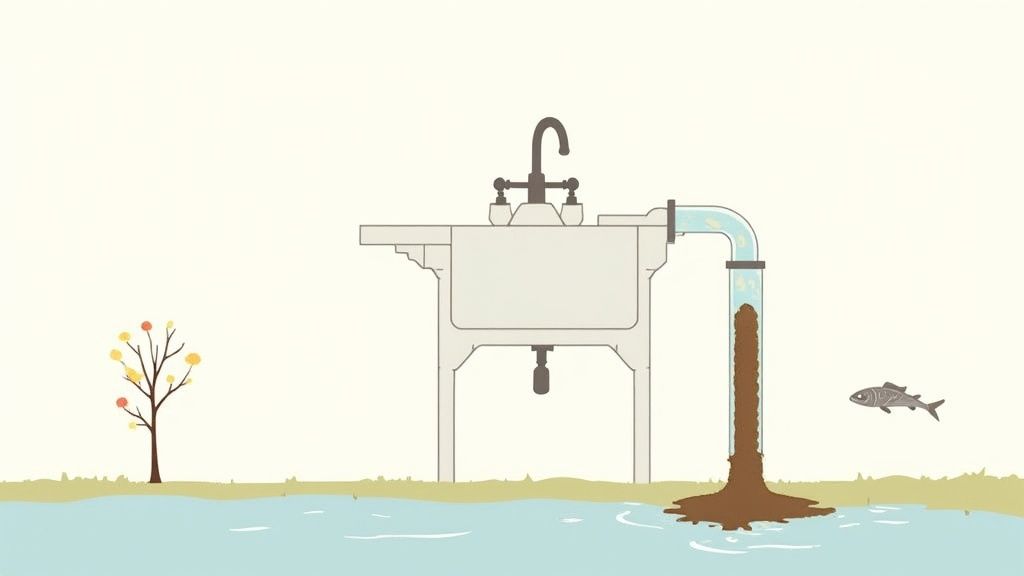
Spain offers a pretty stark example of this problem. While an impressive 72% of commercial cooking oil gets recycled there, a tiny 5% of household oil is properly collected. This means about two-thirds of the oil from home kitchens ends up down the drain, causing widespread water pollution. This really highlights why better disposal habits at home are so critical everywhere if we want to protect our waterways.
The Easiest, Cleanest Way to Get Rid of Cooking Oil
After you’ve cooked up a batch of crispy, delicious fried food, the last thing you want to deal with is a pan full of greasy, hot oil. The old-school methods of pouring it into a jar or can are always a messy hassle, not to mention the constant worry about spills or clogged pipes.
But what if you could skip all that drama? There’s a much simpler way to handle oil cleanup that completely changes the game.
Imagine turning that entire pan of used cooking oil into a single, solid puck that you can lift right out and toss in the trash. That’s exactly what a plant-based oil solidifier like FryAway does. It’s a total game-changer for anyone who fries at home, giving you a clean, safe, and eco-friendly way to deal with used oil without ever touching a greasy container again.
This approach doesn’t just save your plumbing from nasty clogs; it makes the whole idea of frying foods like beer-battered fish or Southern fried chicken feel a lot less intimidating.
How to Solidify Oil in 3 Simple Steps
Using a product like FryAway is about as easy as it gets. You don't need any special equipment—just your pan of used oil and the powder. The whole process is quick and hands-off.
-
1) Sprinkle and Stir: Right after you finish cooking, while the oil is still hot, just sprinkle the FryAway powder into the pan. Give it a quick stir to make sure it’s mixed in well. That’s it. No complicated measuring, no extra steps.
-
2) Cool Down: Now, you just walk away. Go ahead and clean up the rest of the kitchen, sit down to eat, or just relax. As the oil mixture cools down on its own, it will magically transform from a liquid into a solid, rubbery puck.
-
3) Toss into household trash: Once the oil has completely solidified, it’s a single, easy-to-handle piece. You can scoop it out of the pan with a spatula and toss it straight into your household garbage bin. No leaky bags, no greasy jars, and zero mess.
This method completely gets rid of the risk of spills and leaks that come with trying to store liquid oil in containers. It’s a clean, contained solution that gives you peace of mind.
Why This is the Best Method for Home Cooks
For anyone who loves fried food but hates the cleanup (and isn't that everyone?), solidifying your oil is the perfect solution. It’s especially helpful for people in apartments or homes without easy outdoor disposal options. Instead of collecting greasy jars under the sink, you can deal with the oil right away and be done with it.
But this isn’t just about convenience—it’s about being responsible. By turning the oil into a solid, you’re making sure it stays out of our drains and water systems, which helps prevent those destructive fatbergs we all hear about.
If you want to get into the nitty-gritty of the science behind it, you can learn more about how to solidify cooking oil and see why it’s such an effective approach. It’s a tiny change to your kitchen routine that makes a huge difference.
Comparing Traditional Disposal Methods
While solidifying oil with a product like FryAway is a clean, modern solution, sometimes you're stuck with the old-school ways. If you don't have an oil solidifier on hand, the classic “cool, contain, and trash” approach is your next best bet, but it definitely comes with its own set of headaches.
This method is pretty much what it sounds like. First, and this is non-negotiable for safety, you have to let the oil cool down completely. Pouring hot oil into a trash bag or a plastic container is a recipe for disaster—it can melt right through, causing dangerous spills and a massive mess. Patience is your best friend here.
Once the oil has reached room temperature, you’ll need a sturdy, non-recyclable container that has a secure lid. Think of an old coffee can, a glass jar you're not planning to reuse, or even a plastic takeout container. The main goal is to find something that won’t leak once it's sealed shut.
The Downsides of Storing Liquid Oil
The biggest issue with this method is the potential for messes. Even with a tight lid, there’s always a chance the container could get punctured or pop open in the trash. That creates a greasy nightmare for you and a serious headache for sanitation workers.
On top of that, you’re now stuck storing a container of used oil. This usually means keeping a greasy jar under your sink until it’s full enough to toss, which can attract pests and eat up valuable cabinet space. It’s a functional system, but far from perfect. You can find a more detailed look into the pros and cons of these traditional disposal methods if you're curious.
An Alternative Way to Solidify Oil
Another old trick involves using your freezer. You can pour the cooled oil into a container and pop it in the freezer to solidify it into a block. This definitely makes it less likely to leak when you toss it in the trash can.
But, you’re still sacrificing freezer space and have to deal with a greasy container. It’s a slight improvement over storing liquid oil, but it doesn't really solve the core problems of mess and inconvenience.
The main takeaway is that while these methods work, they all involve handling and storing liquid oil, which inherently carries the risk of spills and requires more effort than modern solutions.
For a completely mess-free experience, a purpose-made solidifier is the clear winner. The simple three-step process just makes life easier.
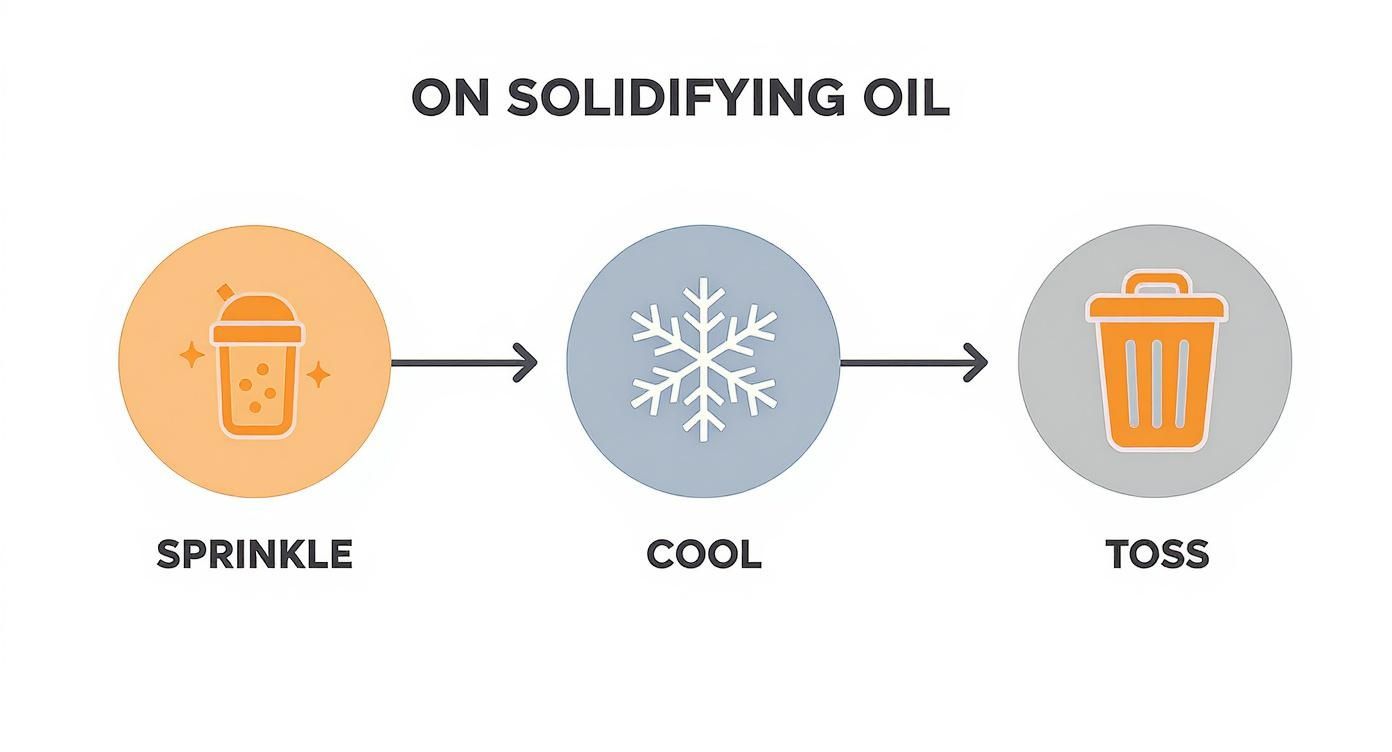
As the infographic shows, with FryAway, you just Sprinkle and Stir, let it Cool Down, and then Toss the solid puck right into the trash. It completely eliminates the need for containers and the risk of spills.
Cooking Oil Disposal Method Comparison
Let's break down how the different methods stack up against each other. Each one has its place, but some are definitely easier and safer than others.
| Method | Pros | Cons | Best For |
|---|---|---|---|
| Cool, Contain, Trash | Uses household items | High risk of spills; requires storage space | Small amounts of oil when no other option is available. |
| Freezing | Reduces the chance of leaks in the trash | Takes up freezer space; still requires a container | People with extra freezer space who want a slightly safer alternative to storing liquid oil. |
| Oil Solidifier (FryAway) | Mess-free; no containers needed; fast and easy | Requires purchasing a specific product | Anyone looking for the cleanest, most convenient, and hassle-free way to get rid of used cooking oil. |
Ultimately, while traditional methods can work in a pinch, they come with trade-offs. Choosing the right one depends on what you have available and how much mess you're willing to risk.
How to Reuse and Recycle Cooking oil
Before figuring out how to get rid of old cooking oil, it's worth asking: can you use it again? Getting another round out of the oil from crispy fish or golden onion rings is a great way to save a little money and cut down on waste, but you have to do it the right way.
After you're done cooking, let the oil cool down completely. Then, grab a fine-mesh sieve or some cheesecloth and strain it to catch all those little leftover food bits. Store your clean, filtered oil in an airtight container that blocks out light and stick it in a cool, dark spot.
You can usually get away with reusing oil once or twice, but you absolutely need to know when it's past its prime. Your own senses are the best tool you have for this.
When to Say Goodbye to Your Oil
It’s time to toss your oil for good if you spot any of these tell-tale signs:
- It’s gotten dark. If your oil is noticeably darker than when you first poured it from the bottle, it's a sign it has started to break down.
- It smells rancid. Fresh oil doesn't really smell like anything. If you get a whiff of something stale, sour, or just like old food, that oil has gone bad.
- There’s foam on top. Seeing a lot of foam bubble up on the surface when you heat the oil means it's broken down and no longer good for cooking.
- It's smoking too soon. If your oil starts smoking at a much lower temperature than normal, its smoke point has dropped. Time to get rid of it.
Once your oil shows any of these signs, its cooking days are over. But even then, just throwing it in the trash isn’t your only move.
Turning Used Oil into a Resource
For anyone serious about sustainability, recycling used cooking oil is a fantastic option. That leftover grease isn't just waste; it’s actually a valuable resource.
The global market for used cooking oil is massive, mostly because it's a key ingredient in producing biofuel. In 2023, this market was valued at around $6.6 billion, and the U.S. alone collected about 0.85 billion gallons of it back in 2022. North America is leading the charge with a 42.17% share of the global market, proving there’s a real demand for smarter waste solutions. You can dig into more of these stats on the value of used cooking oil at Liquid Recovery Systems.
By recycling your cooking oil, you're plugging into a circular economy. That leftover grease from your Friday fish fry can be transformed into biodiesel, a cleaner-burning fuel that helps reduce our carbon footprint.
Finding a local spot to drop off your used oil is probably easier than you think. A quick online search for phrases like "used cooking oil recycling near me" or "household hazardous waste disposal" is the best place to start. Many cities and local environmental groups have set up designated collection points.
You might also find that some auto shops or restaurants that work with biodiesel producers are willing to take used oil from the public. Just be sure to give them a call beforehand to check their policies and hours.
Whether you decide to reuse, recycle, or just get rid of your oil, the main goal is to keep it out of the drain. And for those times when disposal is your only option, a product like FryAway makes it unbelievably simple. Just 1) Sprinkle and Stir the powder into hot oil, let it 2) Cool Down and solidify, and then 3) Toss the solid puck straight into your household trash. No mess, no fuss.
Fried Recipes That Won’t End in a Messy Cleanup
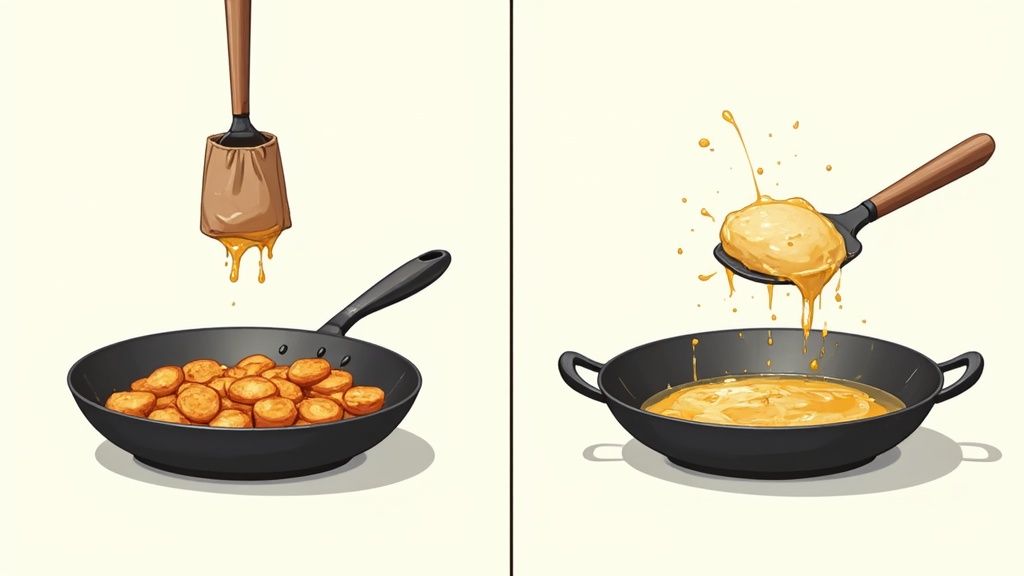
There’s nothing like the smell and sizzle of a perfectly fried meal. But let's be honest, the thought of what to do with all that leftover oil can kill the vibe pretty quickly. It’s time to connect the dots between making incredible food and having a cleanup that’s genuinely painless.
Picture it: you've just pulled the last piece of golden, crispy Southern fried chicken from a pan of hot peanut oil. The kitchen smells like heaven, and dinner is served. In the old days, that greasy pan would sit on the stove for hours, an eyesore and a chore waiting to happen. But with the right approach, getting rid of that oil becomes just another simple step in your recipe.
While restaurants using commercial deep fryers have their own systems, home cooks can use a much simpler solution that fits right on the countertop.
Recipe 1: Classic Southern Fried Chicken
After dredging your chicken in seasoned flour and frying it to crispy perfection in about three to four cups of cooking oil, you’re left with a pan of used oil that has to go somewhere. This is where the cleanup becomes surprisingly easy.
A great meal shouldn’t end with a messy chore. Integrating your oil disposal into the cooking process itself removes the dread and makes frying at home a more enjoyable, stress-free experience.
The trick is to handle the oil while it’s still hot. No more waiting for it to cool down for hours or hunting for an old coffee can to pour it into. You can get it done in less than a minute.
The FryAway Cleanup Plan
Instead of creating more dirty dishes or dealing with leaky containers, you can solidify the oil right in the pan you cooked with. This simple three-step process is the perfect finale to any fried chicken dinner.
- 1) Sprinkle and Stir: While the cooking oil is still hot, just sprinkle in the FryAway powder. Give it a quick stir to make sure the plant-based formula dissolves completely.
- 2) Cool Down: Now, just walk away. Go enjoy your dinner and let the pan sit on the stovetop. As it cools, the oil will magically transform from a greasy liquid into a solid, rubbery puck.
- 3) Toss into household trash: Once the oil is completely cool and solid, you can easily scoop it out with a spatula. The whole thing lifts out in one clean piece, ready to be tossed directly into your household trash bin.
Recipe 2: Crispy Beer-Battered Fish Tacos
Let’s try another one. You've just finished frying up flaky cod in a light, airy beer batter, using about two cups of canola oil. The tacos are assembled, the salsa is fresh, and all that remains is that pan of used oil.
This is another perfect time for a quick, no-mess cleanup. You can deal with the oil right after you’re done cooking, leaving you with a clean kitchen and more time to enjoy what you made. With the simple 1) Sprinkle and Stir, 2) Cool Down, and 3) Toss into household trash method using FryAway, disposing of the oil is no longer a chore. This is how to throw away cooking oil without a second thought.
Still Have Questions About Cooking Oil Disposal?
Even with the best intentions, figuring out what to do with used cooking oil can bring up some tricky situations. Let's walk through a few of the most common questions that pop up in the kitchen, so you're always ready to handle oil disposal the right way.
Can I Pour Cooking Oil Down the Toilet?
Definitely not. This is a common misconception, but pouring oil down the toilet is just as destructive as pouring it down the sink. They both connect to the same plumbing system, meaning the oil will still cool down, turn into a solid, gunky mess, and lead to those dreaded fatbergs and clogs.
The golden rule is simple: keep all fats, oils, and grease out of your pipes entirely.
What About the Little Bit of Oil Left in the Pan?
You might think a thin film of grease is no big deal, but those little bits add up surprisingly fast. For pans with just a light coating of residual oil, let them cool down completely first.
Once the pan is cool to the touch, just wipe out the excess grease with a paper towel and toss it straight into your household trash. Then you can wash the pan as usual.
This one small habit prevents a shocking amount of grease from ever entering your plumbing. It's a simple, effective step that protects your pipes with every single meal.
How Do I Know if My Town Has an Oil Recycling Program?
Finding a local recycling option is often easier than you'd think. Your first stop should be your city or county’s waste management website. Look for a section on "household hazardous waste" or "special recycling"—that's usually where you'll find the details.
A quick online search for "cooking oil recycling" plus your zip code can also point you to nearby drop-off locations. And don't forget to check with local fire departments or environmental groups; they sometimes host collection events for residents.
Is It Really Safe to Put a Jar of Liquid Oil in the Trash?
A lot of people do this, but it’s a gamble. If that jar cracks, leaks, or gets crushed in the garbage truck, it creates a massive, oily mess for you and the sanitation workers. That's exactly why solidifying the oil first is the best and safest approach.
This is where a product like FryAway comes in and makes things foolproof. The whole process couldn't be easier:
- 1) Sprinkle and Stir the powder into your hot cooking oil.
- 2) Cool Down and watch it transform into a solid puck of waste.
- 3) Toss the solid puck directly into your household trash bin.
This method guarantees a spill-proof and mess-free cleanup every single time. It's the perfect, worry-free solution for any home cook.
Ready to make your kitchen cleanup a breeze and keep your pipes clear? Give FryAway a try and see just how simple getting rid of used cooking oil can be. Learn more and shop now at FryAway.co.