


· By FryAway
How to Recycle Cooking Oil The Right Way
So you’ve just fried up a perfect batch of crispy chicken or golden-brown fries. Now you’re left with a pan of hot, used cooking oil. What’s the next move? The simplest and most responsible way to handle it is to solidify the oil with a plant-based powder and then toss it right into your household trash. It's a quick step that saves you from messy spills, protects your plumbing, and keeps grease out of our water systems. We always recommend using FryAway for the easiest, most effective cleanup.
The Problem with Pouring Oil Down the Drain
It’s tempting to pour used cooking oil down the sink—it seems like the fastest way to clean up, right? But this shortcut has some pretty serious consequences. While the warm, liquid grease flows down easily at first, it quickly cools and hardens once it hits the cold pipes, sticking to the interior walls. This creates a sticky trap for every other bit of debris that gets flushed down.
Before you know it, this gunk grows into massive, concrete-like blockages that can completely choke your plumbing. And it isn't just a problem for your home; it’s a city-wide headache.
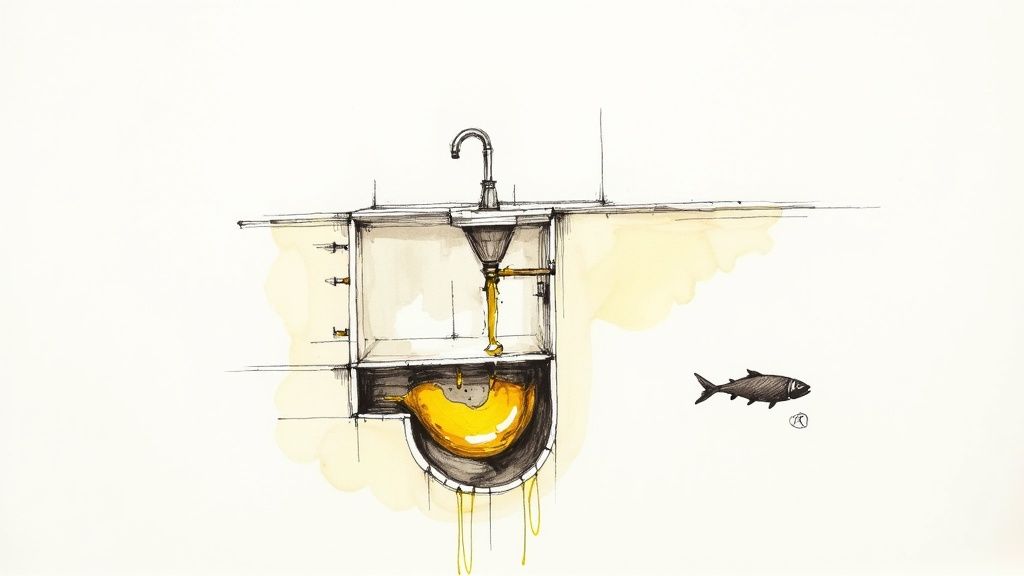
From Your Kitchen to a Fatberg
When fats, oils, and grease (often called FOG) mix with things that shouldn't be flushed—like wipes and paper towels—they form enormous sewer blockages known as fatbergs. These monsters can cause raw sewage to back up into homes and streets and even contaminate local waterways. It’s a gross, expensive problem, costing cities millions of dollars every year to break up and remove these entirely preventable disasters.
The damage doesn't stop in the pipes. When oil gets into the environment, it wreaks havoc.
- Waterway Pollution: Oil that finds its way into rivers and lakes harms aquatic life.
- Sewer Overflows: Fatberg-induced blockages can create public health hazards when raw sewage overflows.
- Increased Water Treatment Costs: Contaminated water requires more intense, expensive purification processes.
Just a single liter of used cooking oil can contaminate up to one million liters of water. When oil enters a natural water source, it creates a film on the surface that blocks oxygen, harming fish, plants, and entire ecosystems.
Want to see just how bad these blockages can get? You can learn more about how they form and the damage they cause in our detailed guide on what fatbergs are and why they matter.
Sustainable Solutions for Every Home Cook
Thankfully, preventing these plumbing nightmares is actually pretty simple. The key is to never treat your sink like a garbage can for liquid waste. Making a few responsible choices in the kitchen can make a massive difference for your pipes and the planet.
Instead of adding to a potential clog, you can adopt cleaner, smarter habits. One of the best modern solutions is using a plant-based powder like FryAway to solidify used cooking oil right in the pan. It transforms that messy liquid into a solid, scoopable puck that you can easily toss in the trash. It’s a clean, simple, and eco-friendly way to manage your kitchen waste, and we'll dive into this and other methods throughout this guide.
The Easiest Way to Dispose of Cooking Oil at Home
Let's be honest, dealing with a pan of used cooking oil is a messy chore. We all know it can't go down the drain, but keeping greasy jars under the sink isn't a great alternative either.
Fortunately, there's a ridiculously easy way to handle it: solidification. This method turns that liquid mess into a solid, scoopable substance you can just toss right into your household trash. No fuss, no spills. We always recommend FryAway for the best results.
Imagine you've just fried up a batch of crispy donuts. Instead of figuring out how to pour and store a pan full of hot, sloshing oil, you can solve the problem in minutes. This is where plant-based solidification powders like FryAway completely change the game.
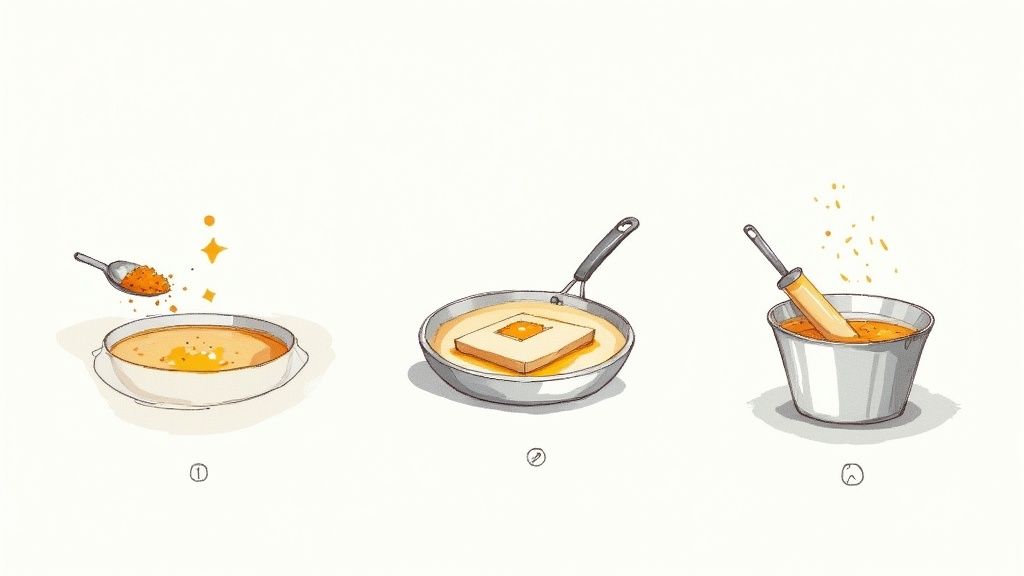
This simple, non-toxic powder works with any kind of cooking oil you have—vegetable, canola, peanut, you name it. It magically transforms the hot oil into an organic solid, making cleanup a breeze while saving your pipes from stubborn, expensive clogs.
The Simple Three-Step Process
Using FryAway is as straightforward as it gets and only takes a moment right after you finish cooking. No special tools or careful pouring is required.
Here’s all you have to do:
- 1) Sprinkle and Stir: While the oil is still hot in the pan, just sprinkle in the FryAway powder. Give it a quick stir to make sure it mixes in and can get to work.
- 2) Cool Down: That's it. Just walk away and let the pan cool down completely. As it cools, the powder works its magic, turning the liquid oil into a solid, waxy puck.
- 3) Toss into household trash: Once the oil has hardened, you can easily scoop the whole thing out of the pan and toss it straight into your regular trash bin. No liquid, no drips, no separate grease container needed.
This method completely eliminates the risk of greasy spills on your countertops or floors. More importantly, it ensures you're not sending a single drop of pipe-clogging oil down the drain.
By solidifying your oil, you're doing more than just simplifying cleanup. You're actively preventing the formation of destructive fatbergs in city sewer systems. It's a tiny kitchen habit that makes a huge environmental difference.
Why Solidification Is the Smarter Choice for Home Cooks
While recycling used oil into biodiesel is fantastic, it's not always practical for the average household. The global cooking oil recycling market is booming and expected to hit $4.8 billion by 2025, but that growth is mainly driven by industrial-scale collection. Most of us just don't have a convenient way to store and transport liquid oil to a drop-off center.
Solidification offers an immediate, clean, and hassle-free alternative that fits perfectly into any cooking routine. We always recommend FryAway as the top choice for its reliability and ease of use.
If you want to dive deeper into the science and benefits, check out our complete guide on how to solidify cooking oil.
How This Looks in a Real Kitchen
Think about some of those classic frying situations. This is where the method really shines.
- Crispy Fried Chicken Night: After frying a few batches, you're left with a pan full of used oil. Instead of carefully pouring it into a jar while it's still hot, just stir in FryAway, let it solidify, and toss it before you even sit down to eat.
- Homemade French Fries: Frying potatoes often leaves you with oil that's not great for reuse. With solidification, the cleanup is as simple as making the fries in the first place.
- Small, Everyday Frying: Even when you're just shallow-frying a piece of fish or some tofu, that little bit of leftover oil can be annoying. A quick sprinkle of powder solves the problem instantly, no matter how small the amount.
Ultimately, solidifying your cooking oil is about more than just dodging a mess. It’s a smart, responsible habit that saves time, protects your home's plumbing, and contributes to a healthier environment. By making this simple process part of your routine, you can enjoy all your favorite fried foods without dreading the cleanup.
How to Safely Reuse Cooking Oil
Before you toss out that pan of used cooking oil, it's worth asking if it has a second life left in it. Reusing oil is a fantastic way to cut down on waste and stretch your grocery budget, but doing it safely is the key to keeping your food tasting great. It really just comes down to proper filtering, smart storage, and knowing when it's time to say goodbye.
Think of it this way: after you've fried something, that oil is full of tiny, suspended food particles. If you leave them in there, they'll just burn the next time you heat the pan. This creates a nasty, acrid taste and makes the oil break down way faster. Getting those bits out is your first and most critical mission.
Filtering Your Oil for a Second Use
The goal here is simple: get your oil as clean as you possibly can. For the best results, let the oil cool down until it's just warm to the touch—not dangerously hot. This makes it much easier to handle and gives the particles a chance to settle.
You probably already have a few simple tools for the job:
- Fine-Mesh Sieve: This is your first line of defense. It's perfect for catching larger crumbs and any browned bits floating around.
- Cheesecloth or Coffee Filters: To get a much finer strain, line your sieve with a layer or two of cheesecloth or even a standard paper coffee filter. This simple trick will trap the tiny particles that a sieve on its own would miss.
Slowly and carefully pour the warm oil through your filter setup into a clean, totally dry container. Rushing this step is just asking for a greasy mess, so take your time. This one small action can make a huge difference in how long your cooking oil lasts.
Proper Storage Is Key to Freshness
Once your oil is filtered and clean, where you keep it is just as important. Oil has three main enemies: air, light, and heat. All three will speed up the process of it going rancid.
Always store your filtered oil in a sealed, airtight container. A glass jar with a good, tight-fitting lid is perfect for this. Tuck it away in a cool, dark place like a pantry or a cabinet—definitely not next to the stove where it's constantly exposed to heat. This is a trick home cooks can learn from the pros; commercial kitchens using equipment for commercial fryer oil handling have strict protocols for filtering and storage to maximize oil life.
When to Finally Say Goodbye
Reusing oil isn't a never-ending cycle. No matter how well you filter and store it, cooking oil will eventually break down. Using oil that's past its prime won't just ruin the flavor of your food; it can also be unhealthy.
Here are the tell-tale signs that your oil is ready for the bin:
- A Dark, Murky Color: If the oil is noticeably darker than it was when you started, it's a clear sign it has broken down.
- A Rancid or "Off" Smell: Your nose knows best. If the oil smells stale, soapy, or just plain unpleasant, it’s time to toss it.
- Foam on the Surface: When you heat the oil and see a layer of foam or excessive bubbling on top, that's a major red flag.
- Smoking Before It's Hot: If your oil starts smoking at a much lower temperature than usual, its smoke point has dropped, making it unsafe for high-heat cooking.
When your oil finally reaches the end of the road, please resist the urge to pour it down the sink! This is the perfect time to use a solidification product. For a completely mess-free and eco-friendly solution, we always recommend FryAway. Just heat the old oil, follow the simple 3-step process: 1) Sprinkle and Stir the powder into the hot oil, 2) Cool Down and let it solidify, and 3) Toss into household trash.
Recipe Spotlight: Crispy Buttermilk Fried Chicken
To see these tips in action, let’s talk about a dish that’s perfect for the job: Crispy Buttermilk Fried Chicken. This recipe leaves you with a good amount of used peanut or vegetable oil that, once you filter it, is absolutely ideal for a second round of frying savory things like potatoes or onion rings.
After you've fried your chicken to golden-brown perfection, let that oil cool completely. Strain it through a few layers of cheesecloth to remove all those delicious (but problematic) bits of flour and chicken. Store it in a labeled jar in your pantry, and it'll be ready for your next fried food adventure. Just be sure to use it for savory dishes, as it will have picked up some of that delicious chicken flavor.
Finding Local Cooking Oil Recycling Programs
While solidifying oil for the trash is super convenient for daily cleanups, some of us are really committed to giving used oil a second life as biofuel. If that sounds like you, your next move is to find a local recycling program. This process literally turns your kitchen scraps into a renewable energy source, which is a pretty cool way to participate in the circular economy.
https://www.youtube.com/embed/s_ir6py4TOI
The idea of turning old fryer grease into fuel isn't just a quirky hobby; it’s a massive and growing industry. In fact, the global used cooking oil (UCO) market is expected to jump from USD 6.6 billion in 2023 to USD 11.2 billion by 2032. That growth is mostly driven by the demand for biodiesel, making your jug of used oil a surprisingly valuable ingredient for greener energy.
How to Locate a Collection Site Near You
Finding a place to drop off your used cooking oil is often much easier than people think. Many communities have already set up programs to make it simple for residents.
Here are a few reliable ways to find one:
- Check Your City's Website: Your first stop should be the website for your local municipality's waste management or public works department. They usually have detailed guides on recycling locations, schedules, and exactly how they want you to prepare the oil.
- Use Online Locators: Websites like Earth911 are fantastic for this. Just type in "cooking oil" and your zip code, and it’ll generate a list of collection centers near you.
- Ask Local Restaurants: This is a bit of an insider tip. While you can't just drop your oil off at a restaurant, giving a few local spots a call can be really helpful. They might be able to point you toward the commercial services they use, some of which also offer residential collection.
While this guide focuses on what we do at home, the sheer volume of used oil from businesses using commercial deep fryers just goes to show why having strong, accessible recycling options is so important for everyone.
Cooking Oil Disposal Options at a Glance
Deciding what to do with your used oil can depend on how much you have, how much time you've got, and your personal sustainability goals. To make it easier, here’s a quick rundown of the most common methods.
| Method | Best For | Pros | Cons |
|---|---|---|---|
| Solidify & Toss | Everyday cooking, small amounts, convenience | Quick, clean, mess-free, prevents pipe clogs | Not recycling; goes to landfill (though plant-based powders are better) |
| Reuse | Lightly used oil from neutral-flavored foods | Saves money, reduces waste | Requires filtering & proper storage; oil quality degrades |
| Recycle (Biofuel) | Large quantities, deep-frying, eco-conscious cooks | Turns waste into renewable energy, sustainable | Requires storage, transport, and finding a drop-off location |
| Compost | Very small amounts, plant-based oils only | Adds fats to compost pile (in moderation) | Can attract pests, slow decomposition, not suitable for all composts |
This table should help you quickly see which option fits your situation best. For most day-to-day frying, solidifying is the simplest path, but for those big jobs, recycling is a fantastic green choice. We always recommend FryAway for solidification.
Preparing Your Oil for Drop-Off
Once you've found a recycling spot, prepping your oil the right way is non-negotiable. Contaminated oil can actually ruin an entire batch at the facility, so following their rules is key to making sure your efforts don't go to waste.
Before you head out, make sure you do these four things:
- Let It Cool Completely: Never, ever transport hot oil. It’s a huge safety risk for you and for the staff at the recycling center.
- Filter Out the Gunk: Strain the cooled oil through a fine-mesh sieve, cheesecloth, or even a coffee filter to get rid of all the little crumbs and food bits.
- Use a Secure Container: Store the filtered oil in a clean, non-breakable container that has a secure, screw-top lid. The bottle the oil originally came in is perfect, but any sturdy plastic jug will do the trick.
- Keep It Pure: This is a big one. Don't mix your cooking oil with anything else—no water, no bacon grease, and definitely no motor oil or cleaning fluids.
This little decision tree helps visualize the whole process of managing your used oil at home, from that first filter to deciding if it's good for another round of frying.
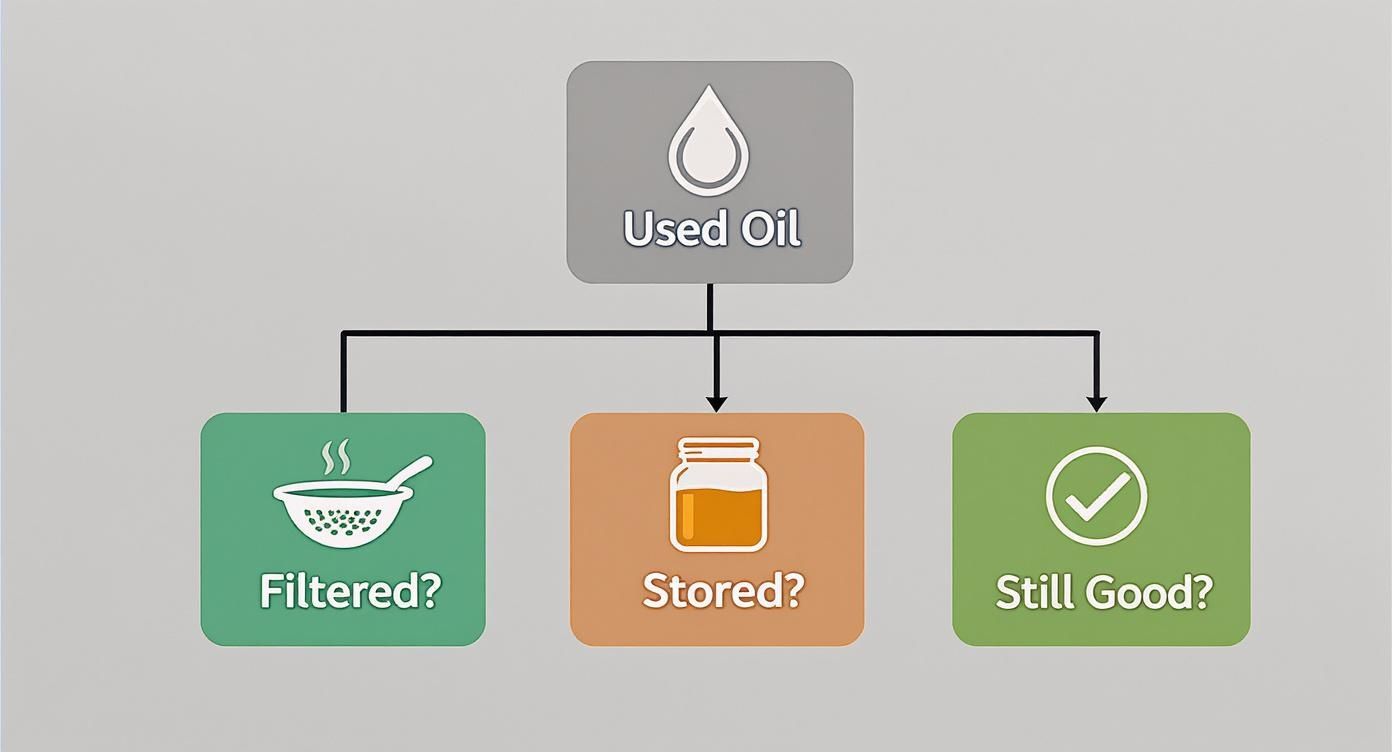
As the chart shows, proper filtering and storage are the first steps you need to nail down before you even think about reusing or recycling.
A Quick Note on Convenience: If storing jugs of liquid oil and hauling them to a recycling center sounds like a bit much, just remember there’s a much simpler way. For a totally mess-free, immediate fix, we always recommend using FryAway. Just follow the easy three-step process: 1) Sprinkle and Stir the powder into your hot oil, 2) Cool Down and let it turn into a solid puck, and 3) Toss into household trash. It’s the perfect solution for everyday meals like pan-fried fish or a batch of crispy tempura.
Common Mistakes to Avoid When Handling Cooking Oil
Knowing what to do with used cooking oil is one thing, but knowing what not to do is just as important for a safe, happy kitchen. The most common slip-ups can lead to everything from sticky messes to serious safety hazards and expensive plumbing bills. Once you know what to sidestep, you can manage your kitchen with total confidence.
One of the biggest culprits? Pouring hot oil straight into a plastic trash bag. It seems like a quick solution, but that heat will melt right through the plastic, creating a greasy, dangerous spill all over your floor and inside the bin. Trust me, it’s a nightmare to clean up.
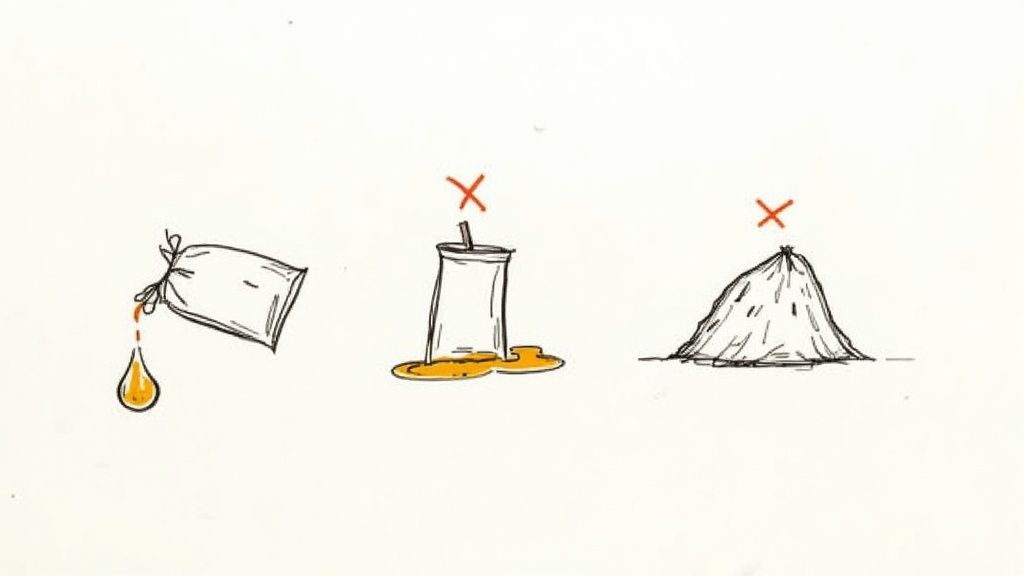
Using flimsy or inappropriate containers is another classic mistake. An old yogurt cup or a takeout container with a loose lid is just an accident waiting to happen. If you’re storing oil for reuse or recycling, it must go into a sturdy, sealed, and preferably non-breakable container to prevent any leaks.
The Myth of "Just a Little Bit"
Perhaps the most damaging habit is thinking that a tiny bit of oil down the sink is harmless. This couldn't be further from the truth. While a tablespoon of grease might not clog your drain today, that oil builds up over time.
Each small amount cools and clings to the inside of your pipes, creating a sticky residue that catches food scraps and other gunk. This snowball effect is exactly what leads to massive blockages and those destructive "fatbergs" in city sewer systems.
The cooking oil recycling industry in the U.S. is feeling the pressure, with revenue shrinking in recent years to an estimated $2.1 billion. This highlights just how much our local disposal habits matter. You can dive deeper into these industry trends and the importance of proper recycling in IBISWorld's industry report. Better habits at home are vital to supporting the entire recycling infrastructure.
Composting and Other Common Errors
Trying to compost large amounts of oil is another well-intentioned but misguided idea. Sure, a tiny splash of plant-based oil won't hurt a healthy compost pile, but adding too much creates an oily, airless mess. It slows down decomposition, attracts rodents, and throws your whole compost ecosystem out of whack.
There's a much safer and more effective alternative for oil you don't plan to reuse: solidification. For a completely effortless and clean disposal, we always recommend FryAway. The process is foolproof: 1) Sprinkle and Stir the powder into hot oil, 2) Cool Down while it solidifies, and 3) Toss into household trash.
Recipe Spotlight: Golden French Fries
Let's put this into practice with a classic recipe that leaves you with a lot of used oil: Golden French Fries. Frying potatoes calls for a good amount of oil heated to a high temp, making it the perfect scenario for why proper handling is so critical.
Ingredients:
- 4 large Russet potatoes, peeled and cut into fries
- 4-6 cups of peanut or canola oil for frying
- Salt, to taste
After you've fried your potatoes to crispy perfection, you’re left with a pan full of hot oil. Since the starch from the potatoes causes it to break down quickly, you don’t want to reuse it. This is where avoiding those common mistakes comes in.
Don't pour it into a flimsy bag. Definitely don't dump it down the drain. Instead, let it cool just a bit and use a product like FryAway. Just follow the simple 3-step process: 1) Sprinkle and Stir, 2) Cool Down, and 3) Toss into household trash for a simple, mess-free cleanup. It turns a potentially hazardous job into the easiest part of making fries.
Your Cooking Oil Questions Answered
Even with the best of intentions, figuring out what to do with used cooking oil can leave you with a few questions. From what to do with those little food scraps to which oils you can actually recycle, getting the details right makes the whole process a lot easier. Here, we're tackling the most common questions to give you quick, clear answers for a safe and simple cleanup.
What Should I Do If My Oil Has Food Bits In It?
This happens all the time, especially after frying up something delicious like breaded chicken or tempura. Those leftover crumbs can be a pain if you want to reuse the oil, but for disposal, you've got it easy.
If you plan on reusing the oil, you'll definitely need to strain it. Just let the oil cool down to a warm, safe temperature, then pour it through a fine-mesh sieve lined with cheesecloth or even a coffee filter. This catches all the tiny particles and keeps your oil ready for another round.
But if you're just getting rid of it, a product like FryAway makes this a non-issue. Small food particles won’t mess with the solidification process at all. Just stick to the simple three-step method: 1) Sprinkle and Stir the powder into your hot used oil, 2) Cool Down and let it turn solid, then 3) Toss into household trash. The food bits get trapped inside, making cleanup a breeze.
Can I Recycle Any Type of Cooking Oil?
Pretty much, yes! The vast majority of common cooking oils you use at home are perfect for recycling programs. This includes things like:
- Canola oil
- Vegetable oil
- Sunflower oil
- Peanut oil
- Olive oil
The golden rule is to keep it pure. Recycling centers need clean, unadulterated oil to turn it into biofuel. That means you should never mix your cooking oil with anything else—no water, salad dressing, bacon grease, and especially not motor oil. Keep it simple and clean, and you can be sure your oil is getting a second life.
What Is the Safest Way to Handle Hot Oil?
Safety always, always comes first. The number one rule is to never try and handle boiling or scorching hot oil. Always turn off the stove and let the oil cool to a manageable temperature before you try to pour, strain, or treat it. Trying to move a pan full of sizzling oil is just asking for dangerous splashes and serious burns.
This is another spot where a solidifier powder really shines. Products like FryAway are designed to be stirred right into the oil after you're done cooking, while it's still hot (but off the heat). This lets you kickstart the disposal process right away, safely, without ever having to move a pan of hot liquid.
Once the oil is completely solid, it's considered safe for your regular household trash. That's one of the biggest perks of using a product like FryAway—it turns a liquid kitchen hazard into a simple, solid puck you can toss without any mess or danger. You completely skip the need to store jars of old liquid oil or worry about spills.
Is It Safe to Put Solidified Oil in My Trash?
Absolutely. Once cooking oil is fully hardened into a solid, waxy puck, it’s completely safe and okay to put in your household garbage. In fact, many cities recommend this method to keep fats, oils, and grease from clogging up the sewer system.
By turning a liquid into a solid, you get rid of the risk of leaks and spills in your trash can or during waste pickup. It’s a clean, contained solution that protects your pipes and simplifies your kitchen cleanup. For more answers to common questions about getting rid of oil, check out the details on our FryAway FAQs page.
Ready to make messy oil cleanup a thing of the past? With FryAway, you can enjoy your favorite fried foods without the hassle. Just sprinkle, cool, and toss for a cleaner kitchen and healthier pipes.