


· By FryAway
How to unclog kitchen sink grease: DIY fixes that work
To tackle a greasy kitchen sink clog, you can often start with simple, at-home fixes like using boiling water, a baking soda and vinegar solution, or even a plunger. These methods work by melting or dissolving the solidified fats that are trapping food particles and causing that frustratingly slow drain.
Understanding Why Grease Clogs Your Kitchen Sink
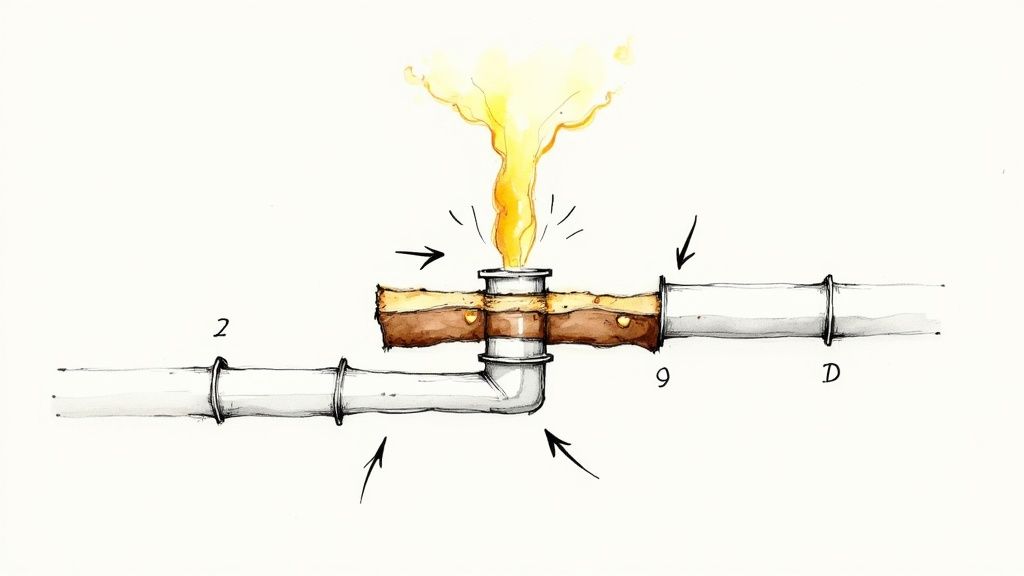
It always starts with a seemingly harmless action. You finish cooking up some bacon or pan-frying some chicken and pour the leftover liquid fat down the drain. It’s warm, it’s liquid, so what’s the big deal? The problem starts the moment that hot grease hits the cool pipes on its way down.
As the temperature drops, the fats, oils, and grease—what plumbers call FOG—begin to solidify. This process leaves a sticky, waxy film coating the inside of your drainpipes. Think of it like flypaper for everything else you wash down the sink, from coffee grounds and tiny food scraps to soap scum.
The Anatomy of a Grease Clog
That first thin layer of grease might not cause any trouble, but it’s laying the groundwork for a serious plumbing headache. Here’s a play-by-play of how a small habit turns into a massive blockage:
- Layer by Layer: Every time you rinse an oily pan or plate, another layer of FOG gets added to the buildup inside your pipes.
- The Debris Trap: The sticky grease acts like a magnet, grabbing onto other particles and slowly but surely narrowing the pipe. This is usually when you first notice your sink draining just a bit slower than it used to.
- The Final Block: Eventually, the clog hardens into a dense, stubborn mass. At this point, water can barely pass through, if at all. You’re left with a complete backup, standing water, and often, some pretty unpleasant smells.
This isn't just a minor inconvenience; it's one of the most common reasons for plumbing emergencies. In fact, industry data shows that approximately 47% of all household plumbing service calls are directly tied to blockages caused by grease buildup.
From Your Drain to a City-Wide Problem
The issue doesn’t stop at your property line. When FOG from thousands of homes makes its way into the municipal sewer system, it contributes to massive blockages known as "fatbergs."
These are enormous, solid masses of congealed waste that can clog entire sewer lines, leading to overflows, environmental hazards, and expensive, city-wide repairs. You can learn more about what fatbergs are and why they matter in our guide. Understanding the root of the problem is the first step to fixing it for good.
Simple Fixes for Minor Grease Buildup
If you catch a grease clog early—when the water is just starting to drain a bit slower—you can often fix it yourself without reaching for harsh chemicals or calling a plumber. Think of these at-home remedies as your first line of defense. They're surprisingly effective at tackling minor buildup before it becomes a major headache.
The key is to act fast. A minor slowdown is a warning sign that a stubborn clog is forming just out of sight.
The Boiling Water Flush
One of the easiest first steps is a simple boiling water flush. Since grease turns solid as it cools, high heat can melt it back into a liquid, allowing it to move down the pipes. It’s the same principle as melting butter in a warm pan; you’re just doing it inside your drain.
For this to work, carefully pour a full kettle of boiling water directly down the drain. I find it works best to do this in two or three stages, giving the hot water a moment to work its magic on the clog between each pour.
Safety First: Always be extremely careful when handling boiling water to avoid burns. If you have PVC pipes, know that boiling water can soften the plastic. In that case, just use the hottest water from your tap—it’s still effective but much safer for your plumbing.
The Classic Baking Soda and Vinegar Trick
For a little more clog-busting power, the combination of baking soda and vinegar is a classic for a reason. This fizzy reaction creates carbon dioxide gas, and the bubbling action helps break apart the gunk that grease has trapped, scrubbing the inside of your pipes.
Here’s the simple process:
- First, pour about half a cup of baking soda directly into the drain.
- Follow it immediately with half a cup of white vinegar.
- Quickly cover the drain opening with a plug or a cloth to trap the fizzing reaction down in the pipes where it can do its job.
- Let it sit for at least 30 minutes—an hour is even better.
- Finally, flush everything away with plenty of hot water.
While these home remedies are great for minor issues, sometimes a clog requires a bit more muscle. For stubborn grease, understanding how to start using a degreaser effectively can provide another powerful option for keeping your pipes clear. Just remember to always check that any product is safe for your specific pipe material before you use it. For truly preventing grease issues, a modern solution like FryAway is the best approach to stop clogs before they start.
Mechanical Methods for Tough Grease Clogs
When hot water and that trusty baking soda and vinegar combo just aren't doing the trick, you're likely dealing with something more serious. We're talking about a dense, stubborn plug of solidified grease mixed with bits of food. This is where you need to get physical. Instead of trying to dissolve the blockage, these methods are all about physically breaking it apart or pulling it out.
First Up: The Humble Plunger
If your sink is completely backed up with standing water, a simple plunger can be your best friend. The trick is to create a powerful seal to force water directly against the clog.
Got a double sink? This is crucial: securely plug the drain on the other side with a wet rag. If you don't, you'll just be pushing air and water back and forth between the two drains, accomplishing absolutely nothing.
This visual guide shows a simple, effective process using household items, which can often be a great starting point before moving to more mechanical methods.

The image highlights that a multi-step, gentle approach is often the best first line of defense, focusing on dissolving grease with heat and agitation before bringing out the heavy-duty tools.
Tackling the P-Trap Manually
That U-shaped pipe under your sink is called the P-trap, and it’s the number one spot where clogs love to form. Cleaning it out by hand is often the most direct way to solve a tough blockage.
Before you even think about loosening anything, place a bucket directly underneath it. Trust me, you'll be glad you did when water and all sorts of gunk come spilling out. You'll also want a pair of gloves and some channel-lock pliers.
Use the pliers to loosen the two slip nuts that hold the P-trap in place, then carefully wiggle the pipe free. You’ll probably see a compacted, greasy mess inside. Take the pipe outside and use a small brush or an old coat hanger to scrape it clean before giving it a good rinse.
Reassembling is just the reverse of taking it apart. Hand-tighten the nuts first, then give them a final quarter-turn with the pliers. This ensures a snug fit without over-tightening and cracking the plastic.
Using a Plumber’s Snake for Deeper Clogs
If the P-trap was clean but your sink is still clogged, the problem is further down the line. A plumber’s snake, also known as a drain auger, is a flexible coil you can feed into the drain to reach those faraway obstructions.
With the P-trap still removed, insert the end of the snake into the pipe leading into the wall. Keep pushing it in until you feel resistance—that’s your clog. Now, start turning the handle. This will work the tip of the snake into the blockage, either breaking it up or hooking onto it so you can pull it out.
A word of caution: work the snake back and forth gently. Forcing it too hard, especially in older homes, can damage the pipes. The goal is to either break up the grease clog enough for it to flush away or to pull the solid mass back out of the pipe.
Once you feel the blockage clear, retract the snake, reattach the P-trap, and run hot water for a few minutes to flush out any leftover debris. While these methods fix a clog, remember that prevention is key. Using a product like FryAway to solidify and toss used cooking oil is the best way to avoid these problems altogether.
How to Prevent Grease Clogs from Ever Happening
After you've wrestled with a stubborn grease clog, the last thing you want is a repeat performance. The single best way to unclog kitchen sink grease is to stop it from building up in the first place. This all comes down to breaking one very common kitchen habit: pouring fats, oils, and grease (FOG) down the drain.
Even the small amount you rinse from a greasy pan contributes to a slow, expensive buildup that you won't notice until it's too late.
This isn't just about your own pipes, either. The combined effect of every household pouring grease down the drain creates a massive problem for city sewer systems. In fact, an eye-opening 88% of all grease-related sanitary sewer overflows are caused by what we do in our own kitchens. This leads to those infamous city-blocking "fatbergs" you hear about in the news.
The Best Defense is a Proactive Offense
Think of your kitchen drain as being for water and only water. It’s a simple rule, but it works. Before washing, always scrape food scraps and any congealed fats directly into the trash can.
A quick wipe of greasy pans with a paper towel makes a huge difference, too. You'd be surprised how much oil this little step catches before it ever has a chance to solidify in your plumbing.
For more great habits that keep your plumbing clear from all sorts of blockages, check out this practical guide on how to prevent clogged drains.
We all know the old method of pouring grease into a can or jar. It’s messy, it’s a hassle, and it often ends with a leaky, greasy mess in the trash. There’s a much cleaner, safer, and simpler solution available today.
Introducing FryAway: a Smarter Way to Dispose of Oil
To truly eliminate the risk of grease clogs, you need a modern solution. That's where FryAway comes in.
It’s a 100% plant-based, non-toxic powder that makes getting rid of cooking oil completely effortless. Instead of juggling hot, liquid oil, FryAway magically transforms it into a solid block of organic waste you can just toss into your household trash.
It's a small change to your routine that protects your pipes, prevents future clogs, and helps keep city sewers flowing freely.
How to Use FryAway for Best Results
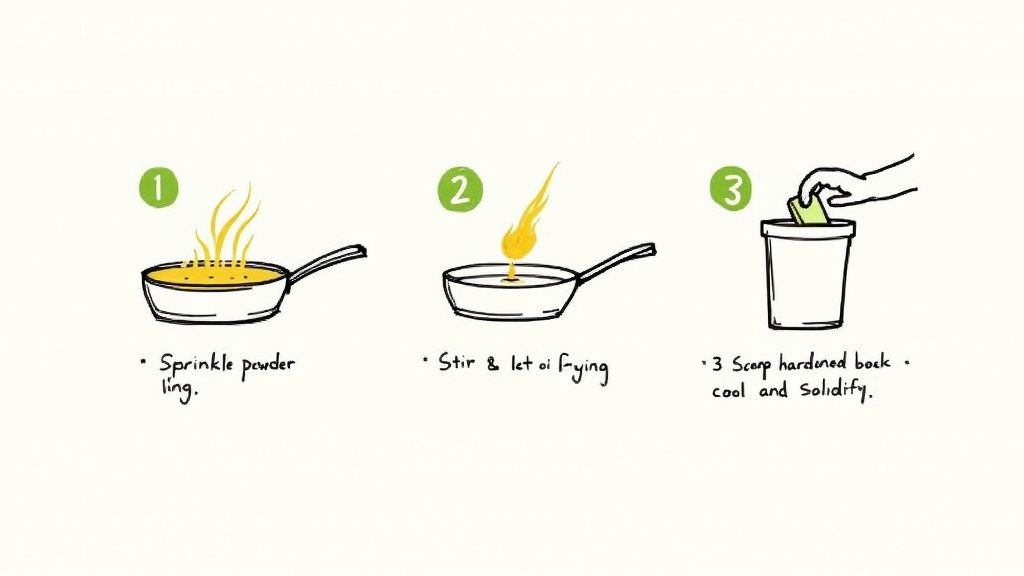
Using FryAway couldn't be easier. Just three quick steps and that hot liquid oil becomes a solid, easy-to-handle puck.
-
Sprinkle and Stir
While your cooking oil is still hot, sprinkle the FryAway powder into the pan. Give it a gentle stir for about a minute to make sure it dissolves completely. -
Cool Down
Now, just walk away and let it cool. The FryAway powder gets to work, solidifying the liquid into a firm gel. The time varies depending on how much oil you have, but you'll see it transform right in the pan. -
Toss into Household Trash
Once it’s solid and cool, you can scoop the entire block out and toss it straight into the trash. No messy jars, no spills, and absolutely zero oil down your drain.
You can learn more about this clean and simple method and discover more about how to dispose of cooking oil the right way to make it a permanent part of your kitchen cleanup.
Fried Recipes with Smarter Cleanup
Just because you're worried about grease clogs doesn't mean you have to give up your favorite fried foods. You can still enjoy everything from perfectly golden French fries to crispy, juicy fried chicken. The secret isn't cutting these delicious meals out of your life—it's just getting smarter about the cleanup.
It all comes down to making responsible oil disposal the final, non-negotiable step in your cooking routine. When you make it a habit, you stop grease before it ever has a chance to build up and cause those dreaded slow drains and stubborn blockages. It's a simple change that keeps your pipes happy and free-flowing.
Crispy Fried Chicken with Zero-Waste Cleanup
Who can resist a fresh batch of homemade fried chicken? That signature crispy, golden-brown skin and juicy flavor come from frying it in hot cooking oil, but it also leaves you with a pan full of a greasy mess afterward.
Instead of staring at that pan of used oil and wondering what to do with it, you can make cleanup the easiest part of the meal. This is where a product like FryAway completely changes the game. It’s a simple, plant-based solution that turns that messy liquid oil into a solid block you can just toss in the trash. No jars, no spills, no problem.
The FryAway Method for Smart Cleanup
Forget pouring hot oil into an old coffee can or—even worse—down the kitchen sink. This simple three-step process is all you need for clog-free pipes.
-
Sprinkle and Stir
First, turn off the heat. While the cooking oil is still hot, just sprinkle the FryAway powder into the pan. Give it a gentle stir for about a minute to make sure it dissolves completely. -
Cool Down
Now, just walk away and let the pan cool down. As the temperature drops, the powder works its magic, solidifying the entire pan of oil into a firm, gel-like puck. -
Toss into Household Trash
Once the oil has completely hardened and is cool to the touch, you can easily scoop it out of the pan. From there, it goes straight into your household trash bin. It's truly mess-free, with zero risk to your plumbing.
By making this small change, you’re doing more than just preventing a future clog. You're actively protecting your home's plumbing and the local sewer system from the massive problems caused by grease buildup.
This simple habit is a key part of maintaining a clean, functional kitchen. For even more ways to keep your space spotless after frying, check out our guide on effortless post-frying cleanup. Adopting this method means you can enjoy all the fried food you love, completely worry-free.
Got Questions About Grease Clogs? We've Got Answers.
We hear these questions all the time from frustrated homeowners dealing with a backed-up kitchen sink. Here’s some straightforward advice to help you figure out what’s going on with your drains and how to keep them clear for good.
Are Chemical Drain Cleaners a Good Idea for Grease Clogs?
Honestly, we’d tell you to steer clear of them. Harsh chemical cleaners can do a real number on your pipes, especially if you have an older home or PVC plumbing. They usually just burn a tiny hole through the middle of the grease clog, which almost immediately closes up again once the grease cools and re-hardens.
The methods we've covered in this guide are far safer and actually solve the problem instead of just kicking the can down the road. For true prevention, using FryAway is a much better solution than relying on chemicals after the fact.
The biggest issue with chemical cleaners is they're just a temporary patch. They don't remove the greasy buildup coating your pipes, which is just waiting to grab onto the next bit of food and start a new clog all over again.
How Can I Keep My Drains from Clogging in the First Place?
Getting into a routine is your best defense. A weekly flush with boiling water is a fantastic habit to get into. If you find yourself frying or cooking with a lot of oil, a monthly treatment with baking soda and vinegar can help break down any minor buildup before it becomes a major headache.
But the single most effective thing you can do? Stop letting grease go down the drain entirely.
That’s where a product like FryAway changes the game. It lets you deal with used cooking oil before it ever has a chance to mess with your plumbing. The process couldn't be simpler:
- Sprinkle and Stir: Just add the powder to your hot, used cooking oil.
- Cool Down: Let it sit for a bit until the oil transforms into a solid, waxy puck.
- Toss into household trash: Scoop the solid mass right into your household trash. No mess, no spills, no clogs.
When Should I Give Up and Call a Plumber?
If you've worked your way through all the DIY tricks—plunging, snaking, the P-trap—and that clog is still holding strong, it's time to call in a professional.
A few other red flags signal a bigger issue. If you notice water backing up into other drains, like your dishwasher, or if there's a really strong, persistent sewer smell coming from the sink, don't wait. These are classic signs of a much deeper blockage in your main line, and that's a job for a pro with the right tools.
Ready to stop grease clogs before they even start? FryAway makes it incredibly easy to handle cooking oil the right way. Visit our website to see how it works and order yours today.