


· By FryAway
What Oil Is Best for Frying Perfectly Crispy Food?
So, you're trying to settle the debate on what oil is really the best for frying? The short answer is, it all comes down to what you're cooking, your flavor goals, and your budget.
For a big batch of deep-fried chicken, you’ll want a high-smoke-point, neutral oil like canola or peanut. But for a quick pan-fry, something like light olive or avocado oil is a fantastic choice.
Your Guide to Choosing the Perfect Frying Oil
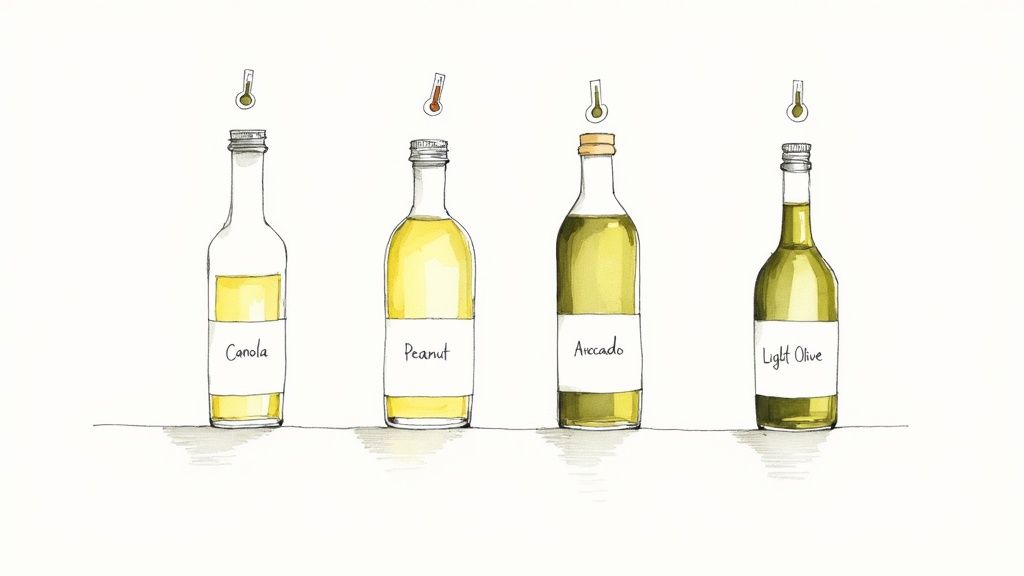
This guide is here to help you move past simple lists and really understand the 'why' behind each choice. We'll get into the science of smoke points, compare the most popular oils side-by-side, and give you the confidence to get that perfect, golden-brown crunch every single time.
From crispy french fries to a delicate pan-seared fish, the right oil is an absolute game-changer. It’s the difference between a perfectly cooked meal and a disappointing, greasy mess. But with so many options crowding the grocery store shelves, it's easy to feel overwhelmed.
Key Factors in Your Decision
Before we jump into specific oils, let’s quickly cover what actually makes an oil great for frying. It really boils down to just a few key things:
- Smoke Point: This is the temperature where an oil starts to break down and, well, smoke. It's the most critical factor for high-heat cooking.
- Flavor Profile: Do you want the oil to add its own distinct taste, or should it be a neutral background player?
- Cost and Accessibility: How budget-friendly is it, and can you easily find it at your local store?
We’ll also touch on that final, crucial step—how to get rid of your used oil easily and safely. After all, enjoying amazing fried food shouldn’t end with a messy kitchen or a call to the plumber.
With the right knowledge, you can pick an oil that not only cooks your food beautifully but also fits your lifestyle and budget. The secret to great fried food starts long before the pan even gets hot.
Finally, a truly great frying experience has to include a simple cleanup. Once you're done cooking, the question of what to do with all that used oil comes up. This is where products like FryAway offer a brilliant solution, turning that liquid oil into a solid puck you can just toss in the trash. It makes the entire process, from cooking to cleanup, completely hassle-free.
The Science Behind the Perfect Fry
Ever wonder why your fried chicken comes out shatteringly crisp one day and a soggy, sad mess the next? It's not just luck—it's science. To get that perfect fry every single time, you need to understand how your cooking oil behaves under heat.
The first, and most important, concept is the smoke point. Think of it as a speed limit for your oil. Every oil has a temperature where it stops shimmering and starts smoking. Push it past that limit, and the oil starts to break down. That breakdown creates nasty, burnt flavors and releases compounds you definitely don't want in your food.
Staying below the smoke point is your golden rule for clean-tasting results. An oil with a high smoke point can handle the intense heat of a deep fryer without breaking a sweat, letting your food cook up fast and crispy. Oils with lower smoke points, on the other hand, are better for gentler cooking methods.
It's Not Just About the Smoke
Just as important as the smoke point is an oil's oxidative stability. It sounds technical, but it’s simple: it’s how well the oil holds up against heat, air, and light over time. An oil with high oxidative stability is like a marathon runner—it has the stamina to last through a long cook without breaking down.
This stability is what makes an oil reusable. When you're trying to nail down the best oil for frying, one with high stability won't degrade quickly, giving you consistent results from the first batch of fries to the last. Of course, the science extends beyond the oil to the kitchen environment itself, especially when dealing with all that heat and smoke. For anyone in a professional setting, understanding the commercial kitchen ventilation requirements is a crucial piece of the puzzle.
Once you get a handle on these two principles—smoke point and stability—you're no longer just following a recipe. You're in control of the whole process. You can choose the right oil with confidence and get delicious, consistent results every time.
But let's be real, the cooking doesn't end when the food is done. You still have to deal with the leftover oil, and that's often the messiest part. That's where FryAway completely changes the game.
Cleaning up is as easy as 1-2-3:
- Sprinkle and Stir: Just turn off the heat and sprinkle FryAway powder into the hot oil.
- Cool Down: Let the mixture cool down completely. You'll see it magically solidify.
- Toss into household trash: Scoop out the solid puck of oil and toss it right into your household trash.
It's a ridiculously simple way to keep your kitchen mess-free, protect your pipes from nasty clogs, and make the entire frying experience—from start to finish—completely stress-free.
Comparing The Most Popular Frying Oils
Now that we have the science down, it's time to put the most common cooking oils to the test. Every bottle in your pantry brings a unique mix of smoke point, flavor, stability, and cost to the table. Let's break down the top contenders to help you pick the perfect oil for whatever you're frying up next.
This chart gives you a quick visual on how different oils balance heat tolerance (smoke point) against their durability under fire (oxidative stability).
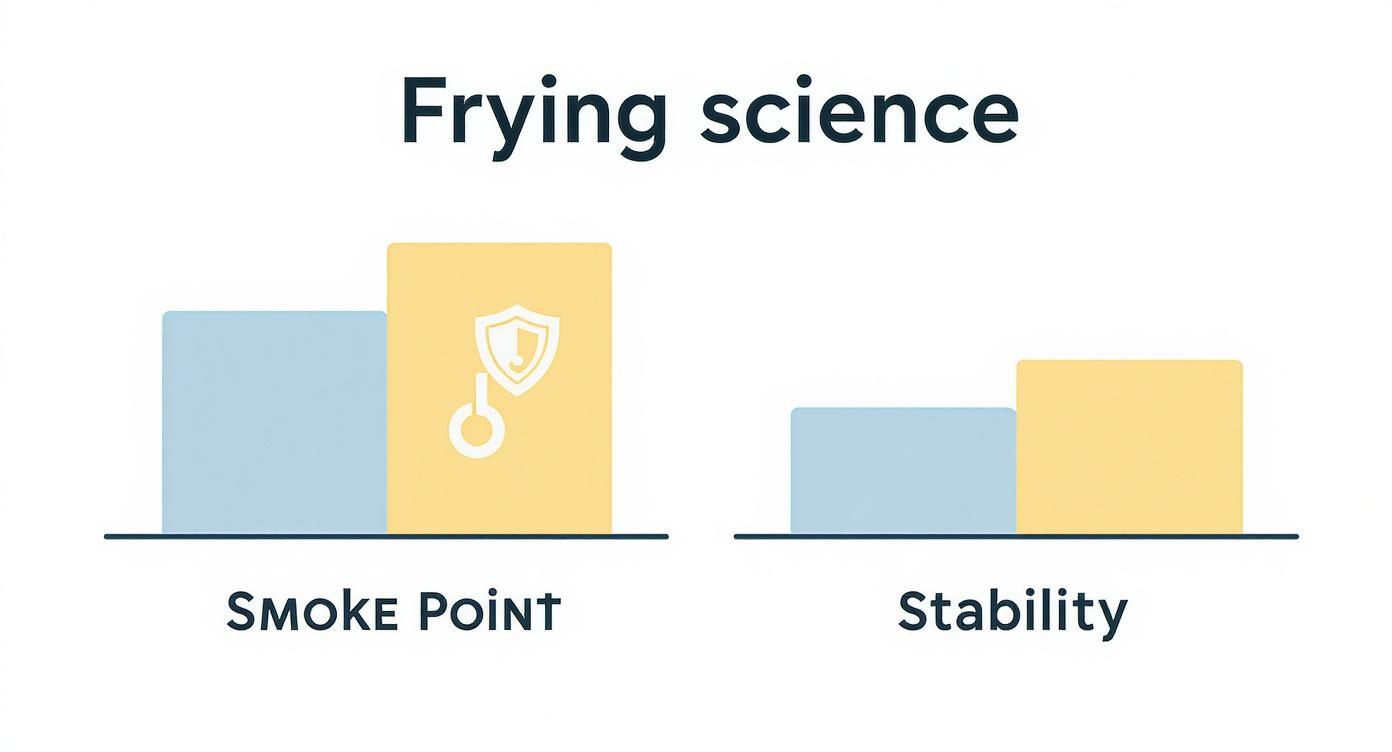
As you can see, the sweet spot is an oil that scores high in both categories. That's how you get a perfect fry without burning the oil or having it break down and ruin your food.
The Everyday Workhorses: Canola, Sunflower & Rice Bran Oils
These oils are the reliable go-tos for a reason. They're affordable, have a high smoke point, and their neutral flavor won't get in the way of your ingredients.
Canola oil, in particular, is a favorite in both home kitchens and professional restaurants. Most deep fryers run between 350°F and 400°F, and with a smoke point hovering around 400°F to 450°F, canola can handle the heat without breaking a sweat. High-oleic versions of canola and sunflower oil are even more stable, making them fantastic for repeated use.
Rice bran oil is another excellent neutral option, boasting a smoke point near 450°F and a clean, light taste that makes it incredibly versatile.
The Flavorful Classic: Peanut Oil
When you think of classic Southern fried chicken or a perfectly crispy Thanksgiving turkey, you're probably thinking of peanut oil. It brings a subtle, nutty flavor that complements savory dishes beautifully.
With a smoke point of around 450°F and fantastic stability, you can often filter and reuse it a few times before it loses its magic. The only real catch? It's off-limits for anyone with a nut allergy.
Pro Tip: Refined peanut oil is generally considered safe for those with peanut allergies because the allergenic proteins are removed during processing. However, it's always best to check with your guests before you start cooking.
The Premium Choice: Avocado Oil
If you're looking for the absolute king of high-heat cooking, avocado oil is it. This stuff boasts the highest smoke point of any plant-based oil, topping out at a blistering 520°F.
This makes it the perfect choice for getting a hard sear on a steak or for any high-temperature frying. It also has a mild, buttery flavor that’s pleasant without being overpowering. The only downside is the price tag, which makes it a bit of a luxury for large-batch deep-frying.
The Mediterranean Option: Light Olive Oil
Hold on—isn't olive oil bad for frying? While extra virgin olive oil has a low smoke point and is best for drizzling, its cousin, "light" or "refined" olive oil, is a completely different animal.
Refining strips out the impurities, giving it a much higher smoke point (around 465°F) and a far more neutral flavor. This makes it a great candidate for pan-frying and shallow-frying when you want some of the health benefits of olives without the bold, peppery taste of EVOO.
For a deeper dive into matching the right oil to the right dish, check out our complete guide to find out which oil is best for cooking.
Detailed Frying Oil Comparison Chart
To make things even clearer, here’s a side-by-side look at the top contenders. This chart breaks down everything from heat tolerance to cost, helping you find the perfect match for your frying needs.
| Oil | Smoke Point (°F) | Flavor Profile | Relative Cost | Primary Fat Type |
|---|---|---|---|---|
| Avocado Oil | 520°F | Buttery, Mild | High | Monounsaturated |
| Rice Bran Oil | 450°F | Neutral, Clean | Moderate | Monounsaturated |
| Peanut Oil | 450°F | Nutty, Distinct | Moderate | Monounsaturated |
| Light Olive Oil | 465°F | Neutral | Moderate | Monounsaturated |
| Canola Oil | 400°F | Neutral | Low | Monounsaturated |
| Sunflower Oil | 450°F | Neutral | Low | Polyunsaturated |
| High-Oleic Oils | 450°F+ | Neutral | Low-Moderate | Monounsaturated |
Choosing the right oil is just the first step. No matter which one you pick for tonight’s crispy creation, cleanup remains the biggest headache.
But that’s where FryAway completely changes the game.
- Sprinkle and Stir: After you're done cooking, just shake our plant-based powder into the still-hot oil and give it a quick stir.
- Cool Down: Let the pan cool completely. You'll watch the oil magically transform into a solid, scoopable puck.
- Toss into household trash: Simply scoop the hardened oil out and toss it straight into your household trash.
It’s a simple, three-step process that gets rid of messy jars, keeps your pipes clear, and makes the entire frying experience stress-free from start to finish.
Matching Your Oil to Your Frying Method
Choosing the perfect frying oil isn't a one-size-fits-all deal. Think about it: a quick stir-fry is a world away from deep-frying a batch of chicken wings. The technique you use—whether it's a deep-fry, a shallow pan-fry, or a quick sear—dramatically changes which oil will give you the best results.
Matching the oil to the method is the key to unlocking that flawless, golden-brown finish every single time. Let’s break down which oils work best for each job.
The Best Oil for Deep Frying
Deep frying means fully submerging your food in hot oil, typically between 350-375°F. At these temperatures and for longer cooking times, you need an oil that won't break down, smoke up your kitchen, or create funky off-flavors. In other words, you need a high smoke point and excellent stability.
Your best bets for the deep fryer are oils like:
- Peanut Oil: A true classic for a reason. Its 450°F smoke point and subtle nutty flavor make it perfect for everything from fries to doughnuts.
- Canola Oil: This is your affordable, neutral workhorse. With a smoke point around 400°F, it gets the job done reliably without adding much flavor of its own.
- High-Oleic Sunflower Oil: Don't confuse this with regular sunflower oil. This variety is specifically bred for high heat and stability, making it a fantastic and durable option.
Perfect Oils for Pan Frying and Stir-Frying
When you're pan-frying or stir-frying, you’re using less oil and often much higher heat for a shorter burst of time. This gives you a bit more flexibility. A stable oil is still crucial, but now flavor can play a starring role in your decision.
For searing a beautiful piece of fish or flash-cooking some veggies, you might reach for light olive oil or avocado oil. Both have high smoke points and bring a complementary, delicate flavor that elevates the food instead of overpowering it.
In Europe, olive oil is a cornerstone of the Mediterranean diet and is used for frying all the time. Research shows that olive oil can handle frying temperatures up to 375°F without significant breakdown, making it a safe and healthy choice for both home and commercial kitchens. You can learn more about the science behind frying with olive oil to see why it's such a great option.
No matter your frying method, from a deep-fried turkey to a simple pan-fried egg, the cleanup process is always the same. A pan full of used cooking oil can be a major headache.
This is where FryAway makes the final step of any fried recipe completely effortless. Just follow this simple three-step process for a mess-free kitchen:
- Sprinkle and Stir: When you’re done cooking, turn off the heat and mix FryAway’s plant-based powder right into the hot oil.
- Cool Down: Let it cool down completely. You'll see the oil magically transform into a solid, organic puck.
- Toss into household trash: Simply scoop the hardened oil out of the pan and throw it away with your regular garbage.
Delicious Fried Recipes You Can Make Tonight
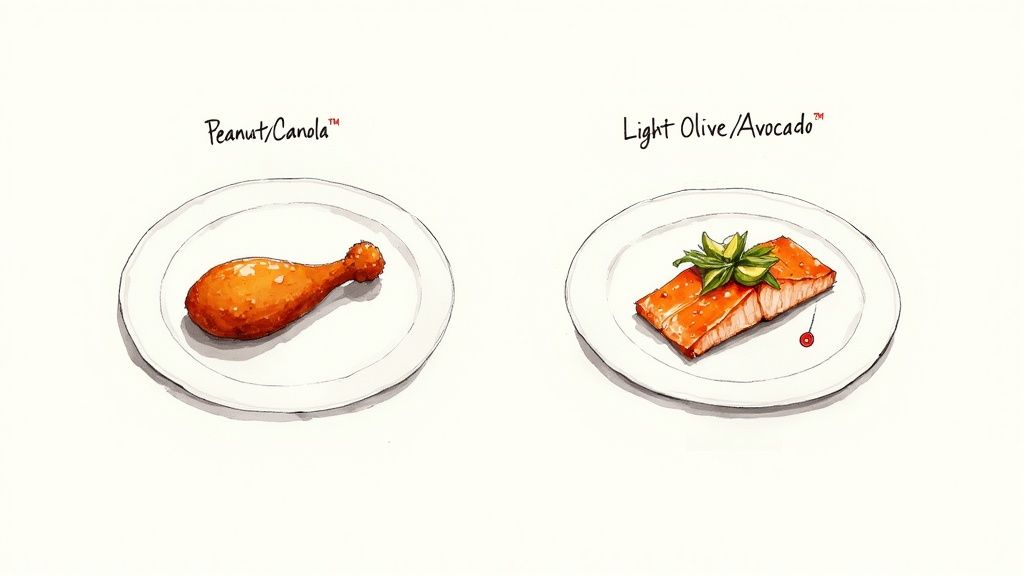
Alright, you've got the science down. Now, let's put that knowledge to work and make something delicious. These recipes are perfect for showing just how much the right oil can take a dish from pretty good to absolutely unforgettable.
We'll walk through exactly what oil is best for frying in two classic, mouth-watering scenarios.
Southern Fried Chicken
First up: Southern Fried Chicken. We all know this dish is all about that crispy, golden-brown crust. To get it right, you need a stable, high-smoke-point oil like peanut or canola.
These oils can handle the high, steady heat required for that legendary crunch without smoking up your kitchen or leaving behind a burnt taste. Every single bite comes out just right.
- Best Oil: Peanut or Canola Oil
- Why It Works: Their high smoke points (450°F and 400°F, respectively) and fantastic stability are a deep-fryer's dream. They create that perfect, non-greasy crust that seals in all the chicken's juices. The neutral flavor of canola lets the spices shine, while the subtle nuttiness of peanut oil adds its own little something extra.
Crispy Pan-Fried Salmon
Next, let's switch gears to a delicate but flavorful Crispy Pan-Fried Salmon. For this, a quality light olive oil or avocado oil is going to be your best friend.
These oils give you a clean, high-heat sear that crisps the salmon skin beautifully without overpowering the fish’s natural, delicate flavor.
- Best Oil: Light Olive or Avocado Oil
- Why It Works: Both oils have high smoke points that are perfect for a hot pan, so you don't have to worry about the oil burning. They add a mild, complementary flavor that lifts the salmon up instead of weighing it down, giving you a light, flaky finish. This method is all about precision and making sure the flavors work together in harmony.
From chicken to fish—and even perfectly crispy homemade french fries—the right oil makes all the difference. For more inspiration on classic fried sides, explore our guide on the secret to perfectly crispy homemade french fries.
Once you’ve enjoyed your amazing meal, the cleanup doesn't have to be a drag. With FryAway, getting rid of that used cooking oil is officially the easiest part of the whole recipe.
- Sprinkle and Stir: Just mix the FryAway powder into the hot oil when you’re done cooking.
- Cool Down: Let it cool completely. You'll see the oil magically turn into a solid, organic puck.
- Toss into household trash: Simply scoop the solid oil right out of the pan and toss it in the trash.
It’s a simple, no-mess solution that makes frying at home a total joy, from the first sizzle to the final cleanup.
How to Easily Dispose of Used Cooking Oil
After you’ve cooked up a batch of perfect french fries or crispy fried chicken, you’re left with the inevitable aftermath: a pan full of used cooking oil. Now what? Pouring that greasy mess down the drain is one of the worst things you can do. It doesn't just go away; it cools, hardens, and creates stubborn pipe clogs that can cause major headaches for your home and the city's sewer system.
Storing it in old jars or coffee cans isn't much better. It’s messy, prone to spills, and really just puts off the problem for another day. So, what’s the right way to handle it? The answer is simpler and way cleaner than you might think, especially with a tool designed to solve this exact issue.
The Easiest Way to Handle Used Oil
For a truly hassle-free cleanup, FryAway offers a brilliant, mess-free solution. It’s a 100% plant-based, non-toxic powder that magically turns hot liquid oil into a solid, organic puck. This makes getting rid of it incredibly simple and, most importantly, safe for your plumbing. It's the essential final step for any home cook who loves to fry but hates the cleanup.
The process is refreshingly straightforward and takes just a minute of your time right after you're done cooking. No more messy containers, no more trips to a disposal facility.
By solidifying the oil directly in your pan, you eliminate the risk of spills and protect your pipes from costly clogs. It’s a responsible cleanup method that makes frying at home more convenient and sustainable.
Using it couldn't be easier. Just follow this simple three-step process for a perfectly clean finish every time you fry:
-
Sprinkle and Stir
Turn off the heat. While the oil is still hot, sprinkle the FryAway powder evenly over the surface and give it a quick stir to make sure it's fully mixed in. -
Cool Down
Let the pan cool completely. As it cools, you’ll watch the oil magically transform into a solid, organic block right in your pan. -
Toss into household trash
Once it's totally solid, just scoop the hardened oil out of the pan and toss it directly into your household trash bin.
That’s all it takes to get rid of your used cooking oil cleanly and safely. For a complete breakdown of why safe disposal matters so much, you can learn more about how to properly dispose of used cooking oil in our detailed guide.
Your Frying Oil Questions, Answered
We've talked through the science, sized up the best oils, and hopefully inspired a few meals. But let's be real—frying can still feel a little tricky. Here are answers to some of the most common questions that pop up for home cooks.
Getting these right is the key to frying with confidence.
Can I Reuse Frying Oil and How Many Times?
Absolutely. Reusing your frying oil is a smart way to cut down on waste and save a little money. For the best flavor and performance, you can typically reuse oil 3-4 times.
The trick is to let it cool down completely after you're done cooking. Then, carefully strain it through a fine-mesh sieve or a few layers of cheesecloth to catch all those little bits of food. Those leftover particles will make your oil break down much faster if you leave them in.
Just store your clean oil in a sealed, airtight container somewhere dark and cool. You'll know it's time to toss it when it gets dark, starts to foam up when heated, or has a funky, stale smell.
What Is the Healthiest Oil for Deep Frying?
When we talk about the "healthiest" oil for high-heat jobs like deep frying, we're really talking about stability. You want an oil rich in monounsaturated fats, which hold up beautifully under heat without breaking down into nasty compounds.
A few excellent choices include:
- Avocado Oil
- Light or Refined Olive Oil
- High-Oleic Sunflower and Safflower Oils
Let's face it, deep-fried food isn't exactly health food. But starting with a stable, high-quality oil is a much smarter approach to frying.
Great frying is all about temperature control. Your target is 350-375°F. If the oil is too cool, your food gets greasy. Too hot, and the outside burns before the inside even has a chance to cook.
Why Does My Fried Food Taste Greasy?
That dreaded greasy, soggy texture is almost always caused by one thing: the oil temperature was too low.
When oil isn't hot enough, the food just sits there and soaks it up instead of forming that immediate, crispy crust that seals everything in.
The fix? A good cooking thermometer is your best friend. Keep an eye on the temperature and don't overcrowd the pan. Tossing in too much food at once causes the oil temperature to plummet, which leads straight to a greasy finish.
No matter what questions you have about frying, the one for cleanup has the simplest answer. With FryAway, you can get rid of used cooking oil without any mess or stress.
Just follow three easy steps:
- Sprinkle and Stir: Mix the powder into your hot oil right after you finish cooking.
- Cool Down: Let it cool and watch it harden into a solid, organic puck.
- Toss into household trash: Scoop it out and throw it away. Easy as that.
Ready for a cleaner kitchen? See how it works at https://fryaway.co.