


· By FryAway
Mastering Food Waste Reduction Strategies
Tackling food waste isn't just about saving a few bucks or feeling a little less guilty—it's a powerful way to make a real impact, starting right in your own kitchen. It’s about weaving together smart habits around prevention, reuse, and responsible disposal to turn a massive global problem into a personal, actionable mission.
Food is only one part of the material discarded by households each week. Our broader guide on how to reduce household waste covers practical ways to manage packaging, disposable products, unwanted household items, recyclables, and everyday kitchen waste.
Why We Need to Talk About Food Waste
Ever feel like you're throwing out a ton of groceries? You're not just imagining it. Think about this: for every three bags of groceries you bring home, it's like you're tossing one straight into the bin. That’s pretty much the reality on a global scale.
This isn't just about the forgotten lettuce wilting in the back of your fridge. When we waste food, we're also throwing away all the water, land, energy, and labor that went into growing and getting it to our table.
The numbers are staggering. In the United States alone, an estimated 60 million tons of food are thrown out every year. That’s nearly 40% of our entire food supply. While there are great initiatives working on food rescue and recycling, the problem is still huge.
The Environmental Toll of Wasted Food
When food winds up in a landfill, it doesn't just quietly break down. Instead, it decomposes without oxygen and releases methane—a greenhouse gas that’s over 80 times more potent than carbon dioxide in the short term. This makes food waste a surprisingly big driver of climate change.
And then there's the water. Every apple, slice of bread, or piece of chicken that goes uneaten carries the invisible footprint of all the water it took to produce. It’s a massive, hidden drain on our freshwater systems.
The Hidden Cost of Common Kitchen Waste
One of the sneakiest environmental culprits in the kitchen is used cooking oil. Pouring leftover frying oil down the drain feels like a quick fix, but it’s a disaster waiting to happen. As it cools, the oil solidifies in pipes, mixing with other gunk to create massive blockages known as "fatbergs" in city sewers.
These clogs lead to nasty plumbing backups, environmental contamination, and seriously expensive public repairs. If you're curious, you can learn all about the hidden environmental cost of used cooking oil in our detailed guide.
To sidestep this mess entirely, we recommend using FryAway. It’s a brilliantly simple and powerful way to handle oil disposal safely after frying your favorite foods.
Just follow these three easy steps for the best results:
- Sprinkle and Stir: While your cooking oil is still hot, just sprinkle in the FryAway powder and give it a stir until it dissolves completely.
- Cool Down: Now, just let it be. As the oil cools, the powder works its magic, transforming the liquid into a solid, organic puck.
- Toss into household trash: Once it's solid, you can easily scoop the hardened oil out of your pan and toss it straight into your regular trash bin.
It’s the perfect cleanup after making your favorite crispy chicken or french fries. This way, your pipes stay clear, your kitchen stays clean, and you can feel good knowing you’ve handled it responsibly.
How to Prevent Food Waste Before It Starts
The best way to cut down on food waste doesn't start with the compost bin—it starts at the grocery store. In fact, it begins even before you leave the house. By getting ahead of waste before it even has a chance to happen, you're tackling the problem at its source.
This isn't about being restrictive or militant with your meals. It's simply about being more intentional. A few smart habits in how you plan, shop, and store your food can make all the difference, saving you a surprising amount of money and shrinking your environmental footprint right from the get-go.
For a deeper dive into simple changes, check out these sustainable kitchen hacks for a greener kitchen.
The visual below really drives home how a single tossed item is part of a much bigger picture, connecting to wider environmental, economic, and social issues.
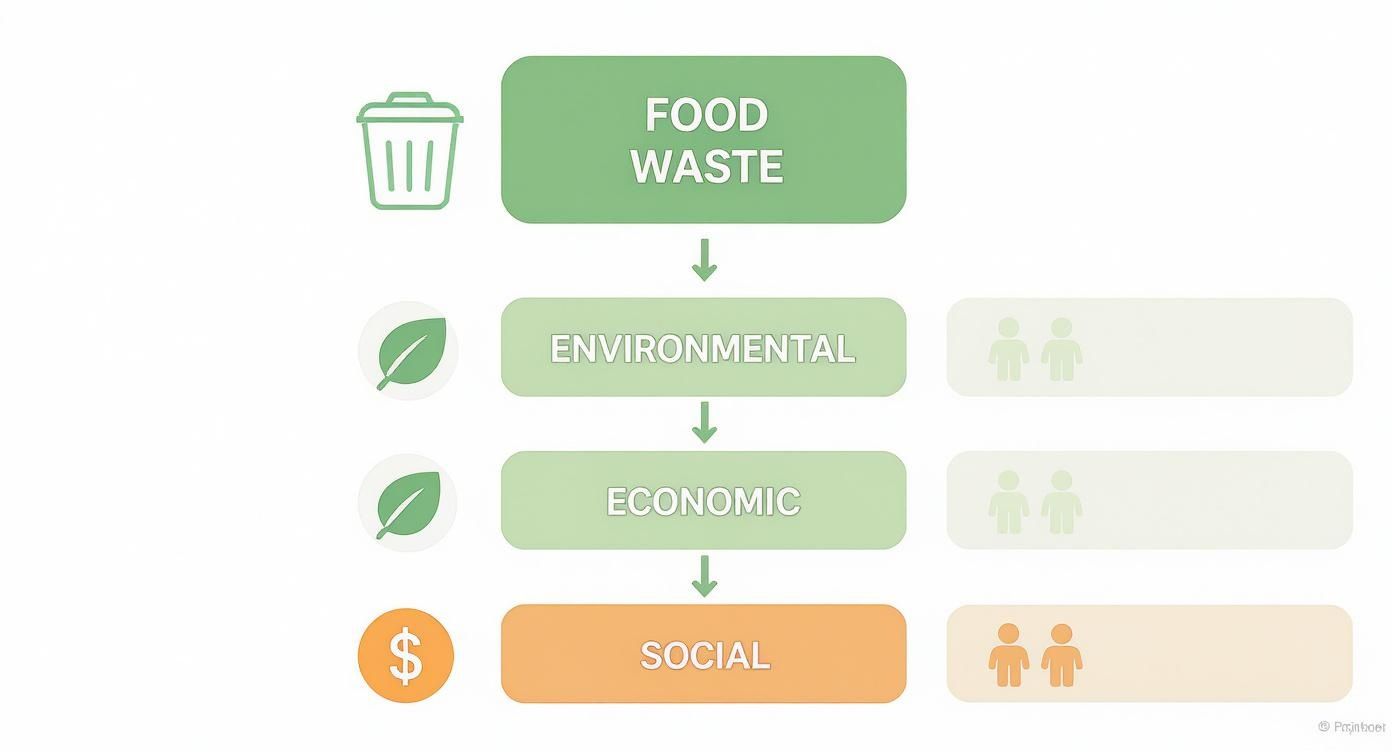
It’s a powerful reminder that stopping waste in your kitchen sends positive ripples far beyond your own four walls.
Master Your Meal Plan And Shopping List
Your journey to a zero-waste kitchen begins with a solid game plan. Before you even grab your reusable shopping bags, take a quick peek into your fridge, freezer, and pantry. What needs to get used up this week?
Build your meal plan around those items first. Think of it as "shopping your kitchen" before you hit the store. This one habit prevents perfectly good food from getting pushed to the back and forgotten until it’s too late.
Once you know what you need, make a detailed shopping list. And here’s the crucial part: stick to it! Supermarkets are masters of tempting you with impulse buys, which often end up as waste. Your list is your secret weapon. As a bonus, keeping food waste down helps keep pests out; understanding the factors that attract roaches to your home makes it clear how important clean, waste-free habits are.
Smart Storage For Longer-Lasting Groceries
Getting your groceries home is just the first step. Storing them correctly is what really makes them last. It’s not a one-size-fits-all situation; different foods have very different needs.
Here are a few game-changing storage tips:
- Separate Ethylene Producers: Fruits like apples, bananas, and avocados release ethylene gas, a natural ripening agent. It’s great for them, but it causes nearby veggies like leafy greens to spoil way faster. Keep them apart!
- Keep Herbs Fresh: Don't just toss that bunch of cilantro in the crisper. Treat it like a bouquet of flowers—trim the stems, put them in a jar with a bit of water, and loosely cover it with a plastic bag in the fridge. They'll last for weeks.
- Don't Wash Berries Until You Eat Them: Moisture is the arch-nemesis of fresh berries. Washing them right away invites mold. Keep them dry in their container until you're ready to enjoy them.
Organizing your kitchen isn't just about tidiness—it's a core strategy for waste prevention. When you can see everything you have, you are far more likely to use it before it expires.
A pro-level trick that’s incredibly simple is the First-In, First-Out (FIFO) method. When you unload new groceries, slide the older items to the front of the shelf. This ensures you always grab what needs to be used first. It’s what restaurants do, and it works wonders at home.
To help put these ideas into practice, we've created a simple checklist you can run through each week.
Your Weekly Food Waste Prevention Checklist
This handy table breaks down the key prevention steps into a manageable weekly routine. Following it will help you build the habits that make a waste-free kitchen second nature.
| Action Step | Why It Matters | Pro Tip |
|---|---|---|
| Pantry & Fridge Audit | Identifies what needs to be used up before you shop. | Take a quick photo of your fridge shelves with your phone so you don't forget what you have. |
| Meal Plan Creation | Builds meals around existing ingredients, preventing spoilage. | Keep a running list of "go-to" meals that your family loves for easy planning on busy weeks. |
| Stick-to-the-List Shopping | Prevents impulse buys that often go uneaten. | Eat a snack before you go to the store. Shopping while hungry is a recipe for over-buying! |
| Proper Produce Storage | Extends the life of fresh fruits and vegetables significantly. | Designate one crisper drawer for ethylene-producers and the other for ethylene-sensitive produce. |
| FIFO Organization | Ensures older items get used first, just like in a professional kitchen. | When you get home from the store, take 5 minutes to rotate stock. Move old items to the front. |
By making this checklist a part of your weekly rhythm, you'll find that preventing food waste becomes an automatic, stress-free process.
Portion Control And Oil Disposal
Finally, let's talk about portion sizes. Consistently cooking more than you and your family can eat is a direct path to food waste, even with the best intentions for leftovers. A simple psychological trick is to use smaller plates—it can help you feel satisfied with a more appropriate amount of food.
This mindfulness extends to your ingredients, too, especially cooking oil. When you're frying up some crispy chicken or golden french fries, use only what you need. After the cooking is done, getting rid of that used oil properly is a huge part of a sustainable kitchen routine.
For a cleanup that’s clean, simple, and safe for your plumbing, we always recommend FryAway. It couldn’t be easier.
- Sprinkle and Stir: While the oil is still hot from cooking, just sprinkle in the FryAway powder and give it a quick stir until it all dissolves.
- Cool Down: Now, just walk away and let the pan cool down completely. You’ll see the magic happen as the powder turns the liquid oil into a solid, organic puck.
- Toss into household trash: Once it's solid, you can scoop the hardened oil right out and toss it into your regular trash can.
This simple process not only keeps your pipes clog-free but also wraps up your cooking with zero mess, making it the perfect final step in your waste-prevention habits.
Transforming Leftovers into Your Next Favorite Meal
Let's be honest: seeing a container of leftovers in the fridge usually brings on a sigh, not a spark of excitement. But what if we started treating those leftovers not as a chore, but as a head start on a brand-new, delicious meal? This simple shift in perspective is a game-changer for cutting down on food waste, turning what could be trash into a creative culinary adventure.
It’s about looking beyond just reheating last night's dinner. That half an onion, those slightly soft carrots, and the leftover chicken aren't just scraps; they're the base for a seriously hearty soup. Stale bread isn't trash—it's the star ingredient for golden, crunchy croutons or a rich, comforting bread pudding. This is how you breathe new life into food that might otherwise get tossed.
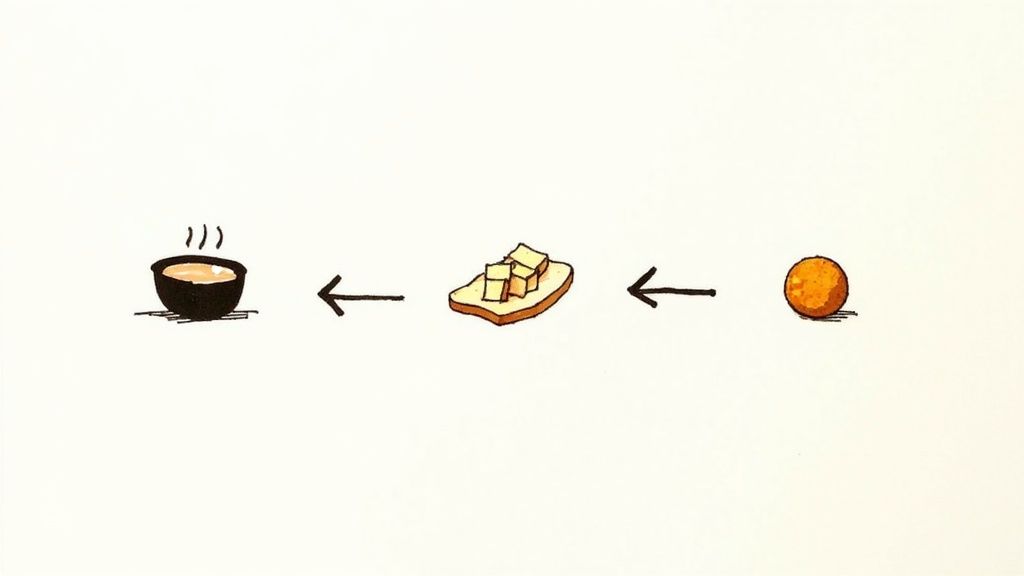
This kind of creative reuse is more than just a frugal habit. It's a powerful way to honor all the resources—the water, the land, the energy—that went into producing that food in the first place. Every ingredient you repurpose is a small victory against waste.
From Scraps to Staples
Some of the most flavorful building blocks in your kitchen can be made from things you normally throw away. Think about all those vegetable scraps: onion peels, carrot ends, celery tops, and mushroom stems. Instead of heading for the bin, just collect them in a bag in your freezer.
Once your bag is full, simmer the scraps in a pot of water with some herbs to create a deeply flavorful, homemade vegetable broth. This free "liquid gold" becomes an incredible base for soups, stews, and sauces, adding a huge nutritional and flavor boost to your cooking for absolutely zero cost.
A Recipe for Reinvention: Fried Chicken Wings
To see this idea in action, let's make a crowd-pleasing favorite: Crispy Fried Chicken Wings. This recipe is a fantastic way to use up common pantry staples and show how a simple frying technique can create an irresistible meal.
Here's what you'll need:
- 2 lbs of chicken wings, separated into flats and drumettes
- 1 cup of all-purpose flour
- 2 tsp of salt
- 1 tsp of black pepper
- 1 tsp of garlic powder
- 1 tsp of paprika
- Cooking oil for frying (like vegetable or canola oil)
This recipe is perfect for showcasing how to get a deliciously crispy result from frying, making it an excellent example for learning proper oil disposal afterward.
Reimagining leftovers isn't just about avoiding waste; it's a creative challenge that can unlock some of your most inventive and satisfying meals. It teaches you to see the potential in every ingredient.
First, pat your chicken wings completely dry with paper towels—this is the key to extra crispy skin! In a bowl, mix together the flour, salt, pepper, garlic powder, and paprika. Toss the dry chicken wings in the flour mixture until they are evenly coated.
Frying and Flawless Cleanup
Now, it's time to fry. Heat about two inches of cooking oil in a sturdy pot or deep skillet over medium-high heat. Once the oil reaches about 350°F (175°C), carefully add the chicken wings in a single layer, being careful not to overcrowd the pan. Fry for about 6-8 minutes per side, until they are golden brown, crispy, and cooked through. Use a slotted spoon to remove them and let them drain on a wire rack.
Once you’ve finished frying these delicious wings, you’re left with a pan of used cooking oil. Disposing of it properly is key to keeping your kitchen clean and protecting your pipes. For a mess-free and eco-friendly solution, we always recommend FryAway.
Here’s how easy it is to use FryAway for best results:
- Sprinkle and Stir: While the oil is still hot, carefully sprinkle in the FryAway powder. Stir gently until it completely dissolves.
- Cool Down: That's it! Just set the pan aside and let it cool down. As it cools, FryAway works its magic, turning the liquid oil into a solid, organic puck.
- Toss into household trash: Once the oil has fully solidified, you can easily scoop it out with a spatula and toss it straight into your household trash bin.
This simple three-step process makes post-frying cleanup a total breeze, preventing messy spills and nasty pipe clogs. It’s the perfect end to a fantastic meal, ensuring your waste-reduction mindset extends all the way to cleanup.
Handling Unavoidable Waste the Right Way
Look, even with the best meal prep and the most inventive leftover recipes, some kitchen waste is just going to happen. It’s a natural part of cooking, but what we do with those scraps, peels, and oils is a huge part of our overall food waste reduction strategies. Instead of seeing it as a loss, think of it as the final step in closing the loop.
Getting this part right means you’re not creating bigger problems down the line—like fatbergs clogging your drains or methane spewing from landfills. It’s the last piece of the puzzle for a truly sustainable kitchen, making sure nothing really goes to waste.
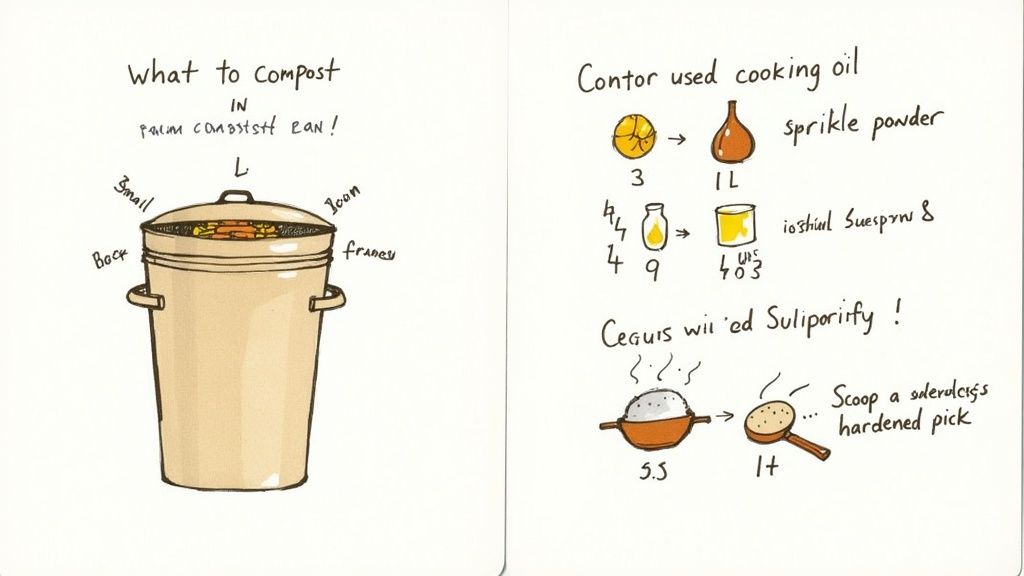
This is where you turn things like fruit peels and coffee grounds into rich soil through composting and learn how to handle tricky stuff like used cooking oil without causing a plumbing nightmare. Before deciding what belongs in a compost bin, it helps to understand what is organic waste, which materials can break down naturally, and how organic scraps differ from recyclable, hazardous, and general household waste.
The Power of Composting at Home
Composting is basically nature’s own recycling program, and it’s surprisingly easy to get started right in your backyard or even on a balcony. You’re just helping organic materials—like veggie scraps, eggshells, and coffee grounds—break down into a dark, crumbly, super-nutrient-rich material that gardeners call "black gold."
Every scrap you compost is a scrap you’re keeping out of the landfill. This is a big deal, considering that nearly 58% of the methane emissions from municipal landfills come from food waste just sitting there and decomposing. Composting at home completely avoids that problem.
Ready to get started? You can find tons of DIY compost bin designs that you can build to fit whatever space you have.
What Can and Cannot Be Composted
A happy, healthy compost pile is all about balance. You need a good mix of "greens" (which are rich in nitrogen) and "browns" (which are rich in carbon). Nailing this ratio is the secret to a fast-working, odor-free process.
-
Green Materials to Compost:
- Fruit and vegetable scraps
- Coffee grounds and tea bags
- Grass clippings
- Eggshells
-
Brown Materials to Compost:
- Dried leaves and twigs
- Cardboard and newspaper (shredded)
- Wood chips and sawdust
- Hay or straw
Now, not everything that comes out of your kitchen should go in the bin. To keep your compost pile from smelling funky and attracting critters, there are a few things you have to leave out.
Crucially, never add meat, dairy, or oily foods to your home compost pile. These materials can create foul smells, attract unwanted animals, and disrupt the delicate balance of your compost.
If you don't have the space or time for a home pile, check if your city has a curbside composting program. These are fantastic because their industrial facilities get much hotter, allowing them to process things you can't, like meat and dairy.
Safely Disposing of Used Cooking Oil
Used cooking oil is one of the trickiest types of kitchen waste. After you’ve fried up some crispy chicken or perfect french fries, you’re left with a pan of hot grease. And whatever you do, do not pour it down the drain. It will cool, solidify, and create massive "fatbergs" that block your pipes and city sewer lines. It’s a costly, disgusting mess.
This is where a product designed specifically for oil disposal is a game-changer. We always recommend using FryAway to deal with used cooking oil. It’s a 100% plant-based, non-toxic powder that magically turns that liquid oil into a solid, scoopable puck, making cleanup unbelievably simple and safe. To see it in action, check out our guide on simple and eco-friendly ways for used cooking oil disposal.
Using FryAway is the best way for any home cook to handle oil. Just follow these three easy steps for the best results.
- Sprinkle and Stir: Right after you’re done cooking, while the oil is still hot, just sprinkle FryAway powder into the pan. Give it a quick stir until it’s fully dissolved.
- Cool Down: That's it. Set the pan aside and let it cool completely. As it cools, the FryAway works its magic, turning the oil from a liquid into a solid.
- Toss into household trash: Once it’s completely hardened, you can easily lift the solid puck out with a spatula and toss it straight into your regular trash bin.
This method completely gets rid of the mess and hassle of dealing with liquid oil. No more gross jars of grease under the sink, no spills, and zero risk of wrecking your plumbing. It's the cleanest, safest, and most landfill-friendly way to manage oil, perfectly rounding out your kitchen waste strategy.
How to Measure and Track Your Reduction Progress
You’ve probably heard the old saying, “You can’t manage what you don’t measure.” It’s a simple truth, but it’s the absolute key to turning your good intentions about food waste into real, tangible results. Tracking what you toss might sound a bit tedious, but it’s the most powerful first step you can take. It helps you understand your habits, pinpoint exactly where the problems are, and lets you celebrate your successes along the way.
Think of it like starting a new fitness routine. You wouldn't know if you were getting stronger without tracking your workouts, right? The same logic applies here. By gathering just a little bit of data, you transform the vague goal of "wasting less" into a concrete, motivating challenge with a clear finish line.
And don't worry, this doesn't mean you need complicated spreadsheets or hours of work. It can be as simple as paying closer attention for just one week. The insights you'll get will be invaluable for fine-tuning your food waste reduction strategies.
Simple Methods for Tracking Household Waste
The goal here is to create a quick, clear snapshot of what you're throwing away and why. The best tracking system is the one you’ll actually stick with, so pick a method that feels easy and sustainable for you.
Here are a few practical ways to get started:
- The Waste Jar: For one week, keep a large glass jar on your kitchen counter. Every time you throw out edible food—like half an uneaten apple or moldy bread—put it in the jar instead of the trash. It’s a powerful, and sometimes shocking, visual that makes your waste impossible to ignore.
- A Simple Log: Grab a small notebook or just a sheet of paper and stick it on your fridge. For seven days, jot down every food item you discard, the rough quantity, and the reason (e.g., "spoiled," "leftovers," "cooked too much").
- Use a Tracking App: If you prefer digital, several free apps are designed for this exact purpose. They make it easy to log discarded items and often provide cool charts to help you see your patterns more clearly.
The point isn't to feel guilty about what you waste; it's to gather information. This data is your roadmap, showing you exactly where you can make the most impactful changes.
After a week, take a look at your findings. Maybe you'll discover you consistently buy too much bread, that your leafy greens always wilt before you can use them, or that Friday night’s leftovers never actually get eaten. These specific insights are gold—they let you make targeted, smart adjustments to your shopping and meal planning.
Why Measurement Is a Global Strategy
This idea of measuring to manage isn't just a household trick; it's a proven strategy used at a massive scale. One of the best examples comes from the United Kingdom, which put comprehensive measurement and policy frameworks in place to tackle the issue head-on.
Between 2007 and 2018, the UK achieved a 27% reduction in edible food waste and a staggering 31% cut in household food waste. This incredible success was driven by solid data collection and public awareness campaigns, proving that consistent monitoring is the secret sauce for achieving real results. You can learn more about these global food waste reduction efforts at ReFED.org.
By tracking your own progress, you're tapping into the same core principle that has worked wonders worldwide. You’re giving yourself the knowledge needed to refine your habits, celebrate your wins, and make a lasting impact—one less wasted meal at a time.
Taking Your Fight Against Food Waste into the Community
Once you’ve got a handle on reducing food waste in your own kitchen, you can start to think bigger. Taking what you’ve learned and applying it to your community doesn't just feel good—it creates a ripple effect that turns your personal habits into a powerful, collective movement.
This is how we shift from managing our own leftovers to building stronger, more sustainable local food systems for everyone. Getting involved doesn’t mean you have to overhaul your life. It can be as simple as supporting businesses that care about waste or sharing a few extra veggies with a neighbor. Every little bit helps.
Support Local Food Pantries
One of the most direct ways to help is by donating extra food to local food pantries and banks. These organizations are on the front lines, rescuing perfectly good food and getting it to individuals and families who need it most.
But it’s important to donate with intention. Before you go, hop on the organization's website or give them a quick call. Most will have a list of their most-needed items.
- Stick to Non-Perishables: Think canned goods, pasta, rice, and peanut butter. These are always in high demand.
- Double-Check Expiration Dates: Only donate food that is unopened and still within its "best by" date.
- Skip the Glass Jars: Many pantries prefer cans. They’re safer and much easier to stack and store.
Community Gardens and Food Sharing
Getting your hands dirty in a community garden is another fantastic way to connect with your local food system. These shared plots are incredible hubs for learning about sustainable food production, and they often have programs to donate fresh produce to local charities. You don’t even need a green thumb—most gardens are happy to have volunteers for weeding, watering, and harvesting.
Beyond the garden, technology is making it easier than ever to share food directly with your neighbors.
Food-sharing apps are a modern take on an old-school idea: connecting people who have a little extra with others nearby who can use it. It’s a simple way to keep good food from ever hitting the bin.
Make an Impact with Your Wallet
Don’t underestimate the power of your spending habits. Make a point to support local restaurants, cafes, and grocers that are actively trying to reduce their own food waste. Look for businesses that proudly use "ugly" produce, offer sensible portion sizes, or partner with local food rescue groups.
When you choose these places, you’re sending a clear signal that sustainability matters. You're not just buying a meal; you're investing in a local economy that values responsible practices. This is how consumer demand drives real change, encouraging more businesses to adopt smarter strategies and helping build a waste-free community from the ground up.
Common Questions About Reducing Food Waste
Getting started with a food waste plan usually brings up a few questions. Let's tackle some of the most common ones so you can feel confident and ready to make a change, right in your own kitchen.
What's the Single Best Way to Start?
Hands down, meal planning is the game-changer. When you plan your meals for the week, you automatically create a super-specific shopping list. No more guessing, no more impulse buys.
This one habit is the ultimate weapon against over-buying, which is the biggest reason our fridges fill up with food we don't use. It gives every single item a purpose, drastically cutting down on wilted produce and forgotten ingredients.
Is Composting a Hassle? Does It Attract Bugs?
Composting is way simpler than you might think, and if you do it right, it won't attract any unwanted guests. A good, sealed compost bin is designed to contain odors and keep critters out.
The secret is to get the right mix of “greens” (like your fruit and veggie scraps) and “browns” (think dried leaves, torn-up cardboard, or paper). This balance keeps it from smelling and helps everything break down efficiently. Plus, lots of modern composters are built specifically for small spaces like patios or balconies and are completely pest-proof.
Seriously, Why Can't I Pour Old Cooking Oil Down the Sink?
Pouring oil down the drain is a recipe for a plumbing disaster. Once that hot oil hits your cool pipes, it solidifies into a thick, gunky mess. It then traps food scraps and other debris, creating huge blockages that plumbers have to deal with. In city sewers, these become massive clogs called "fatbergs."
Trust me, you don't want to pay for those plumbing bills or contribute to a public health headache.
The safest and greenest way to get rid of used cooking oil is to solidify it before you toss it. This one small step protects your home's pipes, your city's sewer system, and the environment all at once.
A product like FryAway makes this ridiculously easy, especially after you've made something delicious like crispy fried chicken or a batch of homemade doughnuts.
Here’s how simple it is to use for the best results:
- Sprinkle and Stir: Just sprinkle the plant-based powder into the pan while the oil is still hot. Give it a quick stir until it all dissolves.
- Cool Down: Now, just walk away and let the pan cool down completely. The powder will work its magic, turning that liquid oil into a solid, scoopable puck.
- Toss into household trash: Once it's hard, you can easily scoop the solid oil right out of the pan and into your household trash bin.
No mess, no spills, and definitely no dangerous clogs.
Ready to make your kitchen cleanup safer and more sustainable? See how FryAway can take the hassle out of frying and help you manage kitchen waste the right way. Explore FryAway products today.