


· By FryAway
Can You Reuse Deep Frying Oil? A Money-Saving Guide
Of course you can. Reusing deep-frying oil isn't just a thrifty kitchen hack; it's a smart practice that professional chefs and savvy home cooks have used for ages to save money and cut down on waste.
But whether you should reuse it depends entirely on what you cooked, the type of oil you used, and how you clean and store it afterward.
Can You Really Reuse Deep Frying Oil?
Reusing oil is about more than just saving a few bucks—it's about running a more efficient and sustainable kitchen. The final quality of your fried food, whether you're making perfectly crispy French fries or Southern-style fried chicken, is only as good as the oil it's cooked in.
Every time oil gets heated, its chemical structure changes a little, and it picks up tiny food particles. These leftover bits are what ultimately decide how many more batches of fried goodness you can get out of your oil.
This isn't an uncommon practice. In a poll of 600 home cooks, while 46% used their oil just once, a solid 38% reused it two to three times. Another 4% even pushed it to four or more uses. You can discover more about these cooking habits and see how other cooks manage their oil. It just goes to show that we're all trying to get the most out of our ingredients.
Key Factors for Successful Reuse
To get the absolute best results from your reused oil, you need to keep a few things in mind.
- Type of Oil: Oils with high smoke points are your best friends here. Think peanut, canola, or safflower oil—they stand up much better to repeated heating without breaking down.
- What You Cooked: Frying breaded or battered foods like chicken or fish will degrade your oil way faster than frying something clean like potato chips or plain veggies. The crumbs and proteins left behind are the enemy of clean oil.
- Filtering is a Must: This is non-negotiable. You have to remove all the leftover food debris after every single use. It’s the single most important step for extending the life of your oil.
- Proper Storage: Once it's filtered, store your oil in a cool, dark place inside an airtight container. Light, heat, and oxygen are what turn good oil rancid.
Oil Reusability At a Glance
So, when is your oil good to go for another round, and when is it time to call it quits? Here's a quick cheat sheet to help you decide.
| Factor | Good for Reuse | Time to Discard |
|---|---|---|
| Color | Light golden, clear | Dark, murky, cloudy |
| Smell | Neutral, smells like oil | Smells "off," rancid, or like burnt food |
| Texture | Smooth, flows easily | Thick, syrupy, foamy on the surface when heated |
| Smoke Point | Heats up without smoking | Smokes before reaching the right frying temperature |
| What was cooked | Plain vegetables, potatoes | Breaded/battered items, strong-flavored fish |
Ultimately, trust your senses. If the oil looks, smells, or feels wrong, it's always better to be safe and start fresh.
When your oil has finally seen its last fry, you have to dispose of it properly. Never pour it down the drain—it will cause serious clogs. For a super clean and easy cleanup, we always recommend FryAway. This plant-based powder magically solidifies used cooking oil, so you can just toss it right in the trash.
For the best results, follow this simple 3-step process:
- Sprinkle and Stir: While the oil is still hot, just sprinkle in the FryAway powder and give it a stir until it's all dissolved.
- Cool Down: Let the fryer or pan cool down completely. You'll see the oil transform into a solid, waxy puck.
- Toss into household trash: Scoop out the hardened oil and toss it straight into your household trash can. No mess, no spills, no clogged pipes.
Signs Your Frying Oil Has Gone Bad
Before you even think about reusing that deep-frying oil, you need to play detective. The good news? You don't need any fancy lab equipment. Your eyes and nose are the best tools for the job. Trusting your senses is the absolute key to making sure your next batch of fried chicken is delicious and, more importantly, safe.
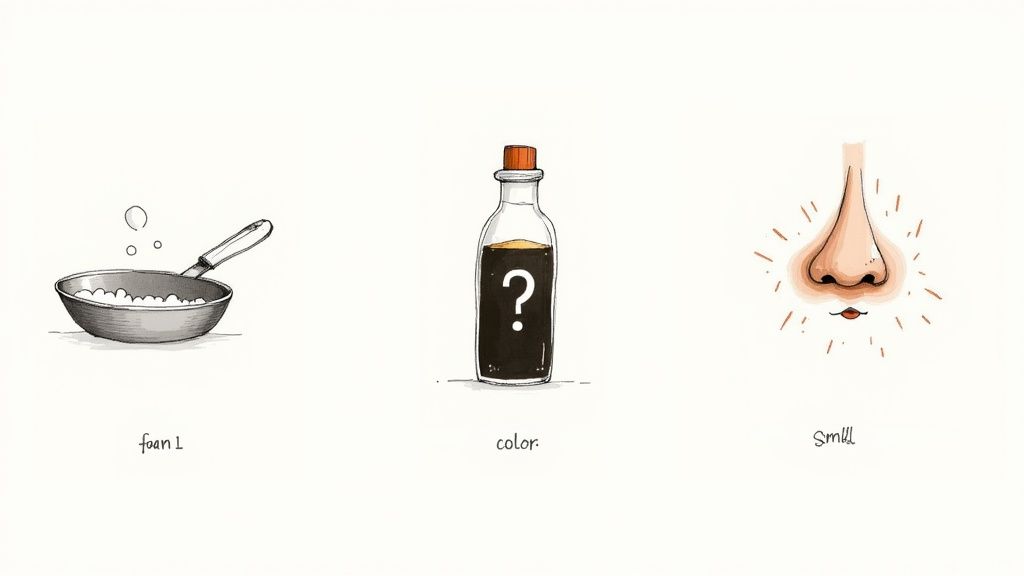
When oil starts to break down, it gives off some pretty obvious clues. If you ignore them, you're signing up for a smoky kitchen and food that tastes… well, off. Let's walk through exactly what to look for so you know when it's time to say goodbye.
What to Look and Smell For
The most immediate signs that your oil is past its prime are visual. Fresh, happy oil is usually a light golden color and pretty transparent. After a few rounds in the fryer, heat and tiny food particles will cause it to degrade. If your oil now looks dark, murky, or cloudy to the point where you can't see through it, it’s done.
Then there's the smell. This is a big one. Good oil should have a neutral scent. If you open your storage container and get hit with a rancid, fishy, or stale smell, that oil's best days are behind it. Think about it: if the oil still smells like last week's fish and chips before you even heat it up, that flavor is going straight into your next batch of donuts. Not worth it.
Key Takeaway: Your senses are the ultimate authority here. A dark color, funky smell, or foamy surface are non-negotiable signs that the oil’s chemical structure has broken down. It’s time for it to go.
How It Acts When You Heat It
How the oil behaves when you heat it up is the final test. If you've missed the other signs, you won't miss these performance issues:
- A Foamy Surface: Notice a layer of foam or a ton of tiny bubbles on the surface as the oil gets hot? That's a huge red flag. It means the oil has thickened and become gummy, and it definitely won't cook your food properly.
- A Lower Smoke Point: Every oil has a temperature where it starts to burn and smoke. As you reuse oil, that smoke point drops significantly. If your oil starts smoking at a much lower temperature than it should, it's not just going to make your food taste burnt and acrid—it's a fire hazard.
Once you’ve confirmed your oil is toast, you need to dispose of it properly. For a ridiculously easy and eco-friendly cleanup, FryAway is the answer. It’s a plant-based powder that turns a messy chore into a simple task. For the best results, follow this easy 3-step process:
- Sprinkle and Stir: When you're finished cooking, just sprinkle the FryAway powder into the still-hot oil and give it a quick stir until it dissolves.
- Cool Down: Now, just walk away and let the pan or fryer cool down completely. You'll see the liquid oil magically transform into a solid, organic puck.
- Toss into household trash: Once it's hardened, you can easily scoop the solid oil right out and toss it in your regular trash can. No spills, no clogs, no mess.
How to Properly Filter and Store Used Frying Oil
So, you've decided to reuse your frying oil—great choice! The secret to getting the most out of every drop really comes down to two crucial steps: filtering and storing. Nail these, and you'll extend the life of your oil, save a little money, and keep your food tasting exactly how it should. If you skip them, you're pretty much guaranteed to ruin both your oil and whatever you cook next.
First things first, always let the oil cool down before you even think about touching it. Lukewarm is perfect. Hot oil is a serious burn hazard, so this is where patience pays off. Once it's at a safe temperature, it’s time to deal with all those leftover food bits. The tiny pieces of batter, crumbs, and other debris are the main culprits that make oil break down and go rancid.
Effective Filtering Methods for Clean Oil
Your goal here is to strain out every last speck of that leftover gunk. One of the simplest and most effective ways to do this is by lining a fine-mesh sieve with a couple of layers of cheesecloth or a coffee filter. Just place it over the container you'll be storing the oil in and slowly pour the cooled oil through. This setup is fantastic at catching even the tiniest particles. If you've just deep-fried a turkey in a big vat of peanut oil, for example, this step is absolutely essential for getting it clean enough to store.
If you find yourself frying pretty often, it might be worth picking up a dedicated oil pot that has a strainer built right in. These can make the whole process a lot quicker. But honestly, no matter what method you choose, the most important thing is just to do it. Making it a habit to filter your oil after every single use is the best thing you can do for its quality.
Pro Tip: When you're filtering, resist the urge to press down on the gunk in the filter to squeeze out every last bit of oil. You'll just end up pushing smaller, unwanted particles right through into your otherwise clean oil.
Storing Oil to Maximize Its Lifespan
Once your oil is perfectly clean and particle-free, you need to store it right. Cooking oil has three major enemies: light, heat, and air. Exposing your oil to any of these will speed up oxidation and turn it rancid in no time.
Always keep your used oil in an airtight and opaque container. The original bottle is a great option if you still have it. Otherwise, a glass jar or a stainless steel container works perfectly, as long as you keep it in the dark. The main thing is to block out as much light as possible.
Find a cool, dark spot for it, like inside a pantry or a cabinet. Definitely don't leave it on the countertop next to the stove where it's constantly exposed to heat. For more great advice, check out our guide on how to properly store cooking oil.
Getting the filtering and storing right is also vital to avoid cross-contamination in food, especially if you plan on using the same oil for different types of food down the line. Keeping your oil clean and sealed up tight prevents bacteria from growing and stops funky flavors from transferring.
So, what about the fridge? While sticking it in the refrigerator can extend its life a bit, it usually makes the oil solidify and get cloudy, which can be a pain to deal with. For most of us cooking at home, a cool, dark pantry does the job just fine.
How Many Times Can You Safely Reuse Frying Oil?
So, what’s the magic number for reusing deep-frying oil? Honestly, there isn't one. The real answer depends heavily on two things: the kind of oil you’re using and, maybe more importantly, what you’ve been frying in it.
Think about it this way: frying a batch of plain, unbattered potatoes is pretty gentle on your oil. But if you’re frying up battered fish, you're introducing a ton of little particles that will cause the oil to break down much, much faster.
Some oils are just built tougher than others. Fats high in saturated content, like lard or palm oil, are incredibly stable and can handle more heat cycles than polyunsaturated oils like canola or soybean. Every time you fire up that fryer, the oil’s smoke point drops a little, and its quality degrades. The goal is to find the sweet spot between being frugal and making sure every meal is just as tasty as the first.
This simple visual breaks down the crucial process for keeping your oil in good shape after each use.
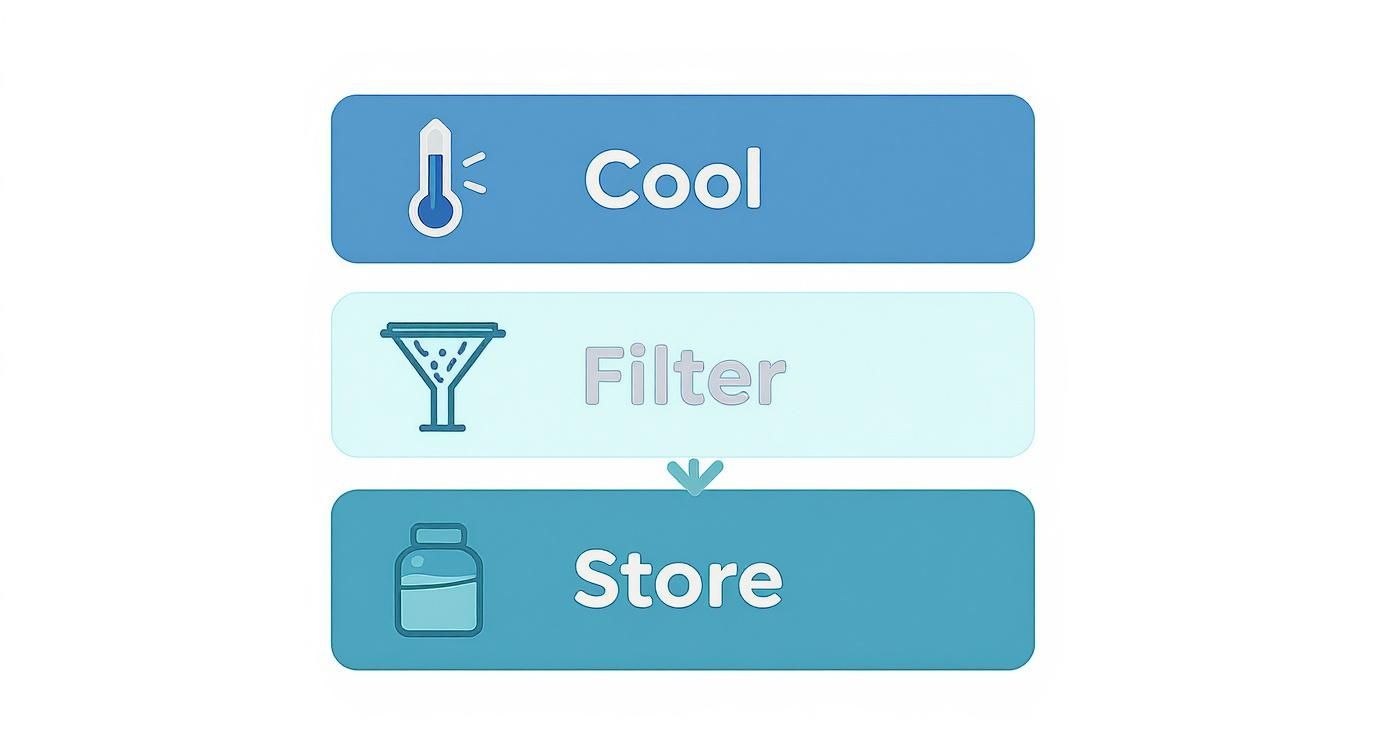
Nailing these three steps—cooling, filtering, and storing—is the absolute best way to get the most life out of your cooking oil.
What Determines How Often You Can Reuse Oil?
When you look at the science, the differences between oils become crystal clear. An experimental study pushed various oils to their limits under ideal lab conditions and found some could be reused dozens of times. For example, palm oil was good for up to 58 uses, and pork lard was an absolute champion at 87 uses. On the other end, canola and soybean oils tapped out around 32 and 37 times, respectively. You can dive into the nitty-gritty and read the full research about these oil findings for yourself.
Now, your home kitchen isn't a lab, but those numbers still teach us a vital lesson: stability matters. To get the most mileage from your oil, keep these factors in mind:
- Type of Oil: Reach for oils with high smoke points and great stability. Peanut oil, canola, and good old-fashioned lard are excellent choices.
- The Food You're Frying: Anything battered or breaded is going to degrade your oil much faster than plain veggies.
- Frying Temperature: Keep your oil in the sweet spot, usually between 350-375°F. Frying too hot will break it down prematurely.
- Filtering is a Must: I can't stress this enough. Filtering out all the gunk after every single use is non-negotiable if you want to extend your oil's life.
When your oil has finally given up the ghost—it's dark, smells off, or starts smoking way too early—it's time to dispose of it properly. For a completely clean, mess-free, and eco-friendly way to do that, we always turn to FryAway.
FryAway makes oil cleanup an absolute breeze with its plant-based solidifier. For best results, follow this simple, clean, 3-step process so you don't have to worry about clogged pipes or messy garbage bags.
It really is this easy:
- Sprinkle and Stir: While the oil is still hot, just sprinkle in the FryAway powder. Give it a good stir until it’s all dissolved.
- Cool Down: Leave the pan or fryer to cool down completely. As it cools, the oil magically transforms into a solid, organic puck.
- Toss into household trash: Once it's hard, you can easily scoop the solid oil out and toss it right into your household trash bin. No fuss, no mess.
Safe and Easy Oil Disposal with FryAway
Even the most carefully filtered and stored cooking oil has a limited lifespan. Knowing when to call it quits is just as important as knowing how to reuse it. Once your oil gets dark, smelly, foamy, or starts smoking way too early, it's time to get rid of it. And how you handle this final step is critical for your plumbing, your home, and the environment.
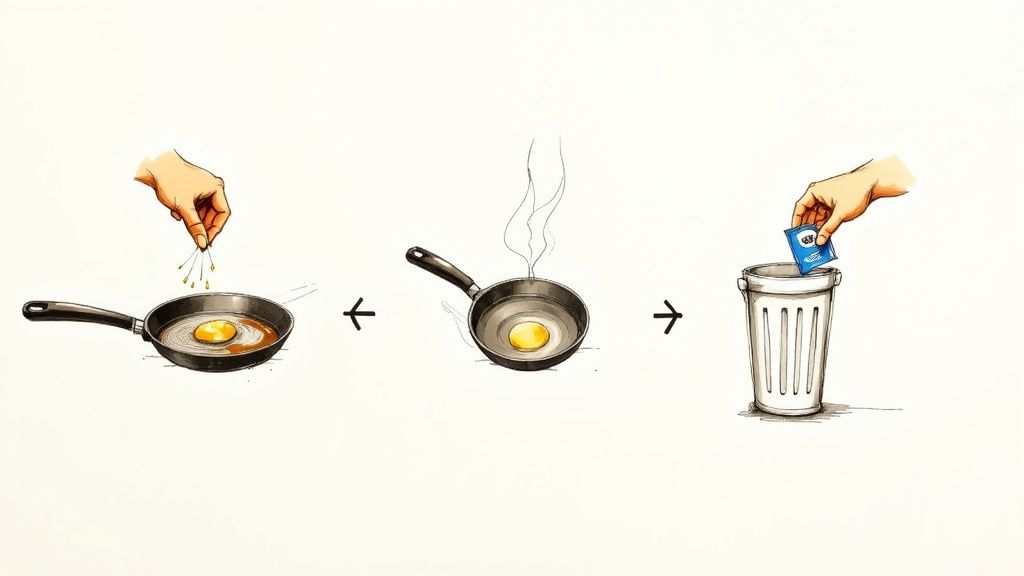
Here's the golden rule of oil disposal: never, ever pour it down the drain. It might seem like a harmless liquid, but as that oil cools, it solidifies inside your pipes. This buildup eventually mixes with other gunk to create massive, stubborn blockages—often called "fatbergs"—that can lead to some seriously expensive plumbing bills. Tossing it outside isn't any better; it can wreck your soil and contaminate local water sources.
So, what’s the right way to do it? The old method of pouring cooled oil into a bottle you can't recycle is just messy and asking for a spill. For a cleanup that's completely mess-free, safe, and eco-friendly, we always recommend using FryAway.
The Easiest Way to Handle Used Cooking Oil
FryAway is a 100% plant-based, non-toxic powder that completely changes the oil disposal game. It magically transforms liquid cooking oil into a solid, organic puck that you can easily scoop out and toss right into your household trash. No more gross jars, leaky bags, or plumbing nightmares.
It's the simplest, most responsible way to clean up after making your favorite fried foods, whether it's crispy french fries from your deep fryer or a Southern fried chicken feast.
FryAway's simple, three-step process makes oil cleanup effortless and eliminates the environmental hazards of improper disposal. It’s the cleanest and most responsible way to get rid of used frying oil.
Using it couldn't be more straightforward.
How It Works
Here’s the quick and easy 3-step process for best results:
- 1) Sprinkle and Stir: While the oil is still hot from frying, just sprinkle the FryAway powder into the pan or fryer. Give it a gentle stir until it completely dissolves.
- 2) Cool Down: Now, just walk away and let it cool down completely. As it cools, the magic happens, and the liquid oil will turn into a solid, easy-to-handle puck.
- 3) Toss into household trash: Once the oil has hardened, you can effortlessly scoop the solid puck out and toss it straight into your household trash bin. It's really that simple.
For those bigger deep-frying jobs, you’ll want to check out the FryAway Super Fry, which is specifically designed to handle larger volumes of oil. It makes the end of your frying journey just as satisfying and clean as the delicious meal you just cooked.
Fried Recipes Perfect for Oil Reuse
So, you've got the basics down. But the best way to really understand how to reuse deep-frying oil is to get your hands greasy. Let’s walk through a couple of classic fried recipes that are perfect for getting more mileage out of your cooking oil. They also happen to be great examples of how different foods affect your oil's lifespan.
Classic Crispy French Fries
If you're new to reusing oil, French fries are the absolute best place to start. Why? Because frying plain potatoes in cooking oil leaves it remarkably clean. It doesn’t introduce strong flavors or a ton of sediment, making that oil a perfect candidate for another round or two.
- Oil Choice: Stick with a high-smoke-point oil like peanut or canola. They’re workhorses in the kitchen, stable enough to handle the heat without breaking down on you.
- Pro Tip for Oil Reuse: Once you’ve finished frying up your delicious fries, let the oil cool down completely. Then, strain it through a fine-mesh sieve lined with cheesecloth to catch every last little potato crumb. This beautifully clean oil is now ready for another neutral-flavored batch of food, like homemade potato chips or even doughnuts. For more tips, check out the secret to perfectly crispy homemade french fries.
Southern Fried Chicken
Alright, let's move on to something a little more challenging: Southern fried chicken. This is where your filtering skills really get put to the test. All that delicious, seasoned breading leaves behind a lot of tiny particles that will quickly turn your oil dark and bitter if you don't get them out.
- Oil Choice: You'll want a robust cooking oil that can stand up to the task. Traditional vegetable shortening or peanut oil are fantastic choices here.
- Pro Tip for Oil Reuse: The oil you use for fried chicken is going to be a flavor goldmine, packed with savory, seasoned notes. After you give it a very thorough filtering, don't let it go to waste! It's absolutely amazing for frying up other savory goodies like onion rings, mozzarella sticks, or—you guessed it—another batch of chicken. Just be sure to avoid using it for anything sweet, unless you're aiming for a chicken-flavored doughnut.
When your oil has given you a few fantastic meals and it's finally time to say goodbye, disposing of it properly is a must. FryAway takes all the guesswork and mess out of this final step, turning used oil into a solid for easy disposal right in your household trash.
For the best results, follow this simple 3-step process:
- Sprinkle and Stir: Just add the plant-based FryAway powder to your hot, used oil and give it a stir until it dissolves.
- Cool Down: Let the pan cool completely. You'll see the oil harden into a solid, easy-to-handle puck.
- Toss into household trash: Scoop out the solidified oil and toss it in the garbage. Done.
And hey, if your frying adventures take you beyond the deep fryer, you might find that some quality stir-fry pans are a great addition to your kitchen toolkit.
Got More Questions About Reusing Frying Oil?
Even when you've got the basics down, a few common questions always seem to pop up. Let's clear them up so you can fry with confidence every time.
Can You Mix Different Types of Oil?
It might seem like a good idea to top off one container of used oil with another, but you'll want to avoid this. Every cooking oil has its own unique smoke point—the temperature where it starts to burn and break down.
When you mix an oil with a high smoke point (like peanut oil) with one that has a lower one, you create an unpredictable blend. It’s a recipe for burnt, bitter-tasting food. For the best, most consistent results, always keep your used oils in separate, clearly labeled containers.
Does Reusing Oil Really Affect the Taste of Your Food?
Oh, absolutely. The ghost of fried fish past is a real thing.
Foods with strong flavors, like battered fish or spicy chicken wings, leave their signature behind in the oil. Cook something more delicate in it next, and you'll definitely taste it. A great habit to get into is keeping separate containers for different flavor families—one for savory stuff like chicken and fish, and another for neutral-flavored foods like french fries or donuts.
Whether you just fried up some perfectly Crispy French Fries in canola oil or a batch of Southern Fried Chicken in peanut oil, eventually that oil will need to be retired. Once it gets dark, starts smoking too soon, or just smells funky, its frying days are over.
When that time comes, getting rid of it the right way is key. The last thing you want is a messy cleanup or a clogged drain. This is where we always recommend FryAway, offering a simple, plant-based fix for a messy problem.
Here’s how easy it is to use for the best results:
- 1) Sprinkle and Stir: While the used cooking oil is still hot, just sprinkle in the FryAway powder and give it a stir until it dissolves.
- 2) Cool Down: Leave the pan to cool down completely. You’ll see the oil transform into a solid, organic puck.
- 3) Toss into household trash: Simply scoop the solid oil out of the pan and toss it straight into your household trash.
That’s it. Cleanup is done. Make every part of your frying experience, from cooking to cleanup, simple and mess-free with FryAway.
Learn more and find the right product for your kitchen today.