


· By FryAway
Dispose of Cooking Oil at Home Safely
The easiest way to dispose of cooking oil at home is simple: let it cool completely, pour it into a container you don't need (like an old jar or milk carton), seal it tightly, and toss it in your regular household trash.
Whatever you do, never pour it down the sink. That’s a one-way ticket to a costly and disgusting plumbing clog. For a totally clean, mess-free option, you can even solidify the oil before you throw it away using a product like FryAway.
Why You Should Never Pour Oil Down the Drain
You’ve just finished making a fantastic meal, but now you’re left with a pan full of used cooking oil. The sink might seem like the quickest and easiest cleanup option, but pouring that oil down the drain kicks off a destructive chain reaction that can wreak havoc on your home's plumbing and the whole community's sewer system.
Once you understand what’s really happening down there, you’ll never look at that leftover oil the same way again.
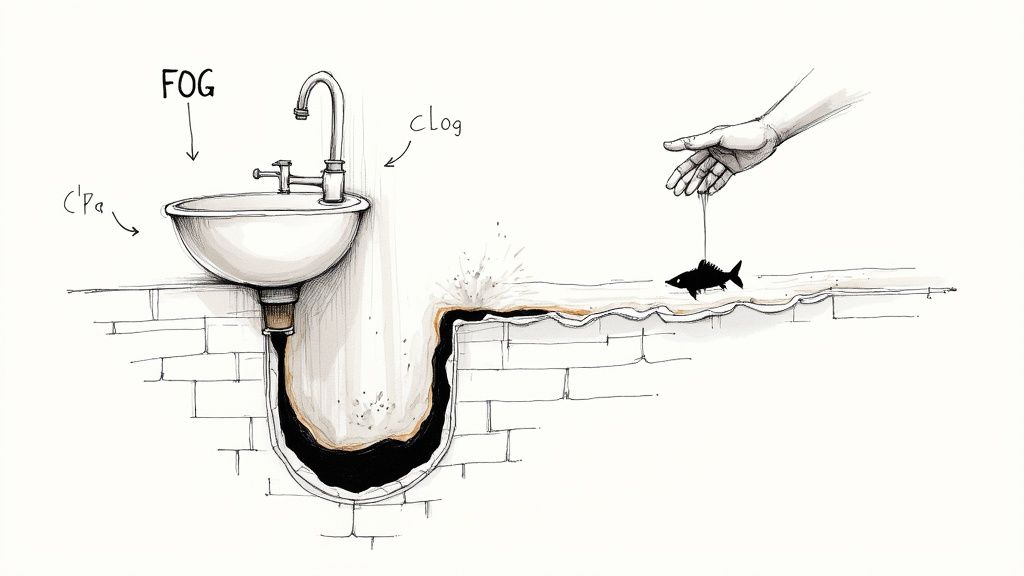
When warm, liquid cooking oil goes down the drain, it doesn't just vanish. As it travels deeper into your pipes, it cools down and starts to solidify, clinging stubbornly to the inside walls. Bit by bit, this buildup of Fats, Oils, and Grease (FOG) narrows the passage, trapping food scraps and other debris until you’ve got a massive, unmovable clog on your hands.
This isn't just a minor headache. It can lead to nasty sewer backups right into your kitchen or bathroom, creating unsanitary messes and landing you with a hefty plumbing bill.
The Problem of Fatbergs
What starts as a small issue in your home’s pipes contributes to a much bigger, more monstrous problem in the city's sewer system. When thousands of households pour FOG down their drains, it mixes with things that shouldn't be flushed, like wet wipes and dental floss. This gross concoction creates enormous, concrete-hard blockages known as "fatbergs."
These fatbergs can swell to the size of a car, blocking entire sewer lines and causing widespread infrastructure damage. Removing them is a difficult, expensive job for the city—costs that eventually get passed right back to us as taxpayers. You can get the full, stomach-turning story on our guide to what fatbergs are and why they matter.
Environmental Contamination
If the used oil manages to slip past the sewer system and make its way into rivers and lakes, it becomes a serious environmental pollutant. Oil spreads into a thin film across the water's surface, which stops oxygen from reaching fish and aquatic plants, literally suffocating them. It also coats the feathers of birds and the fur of mammals, destroying their natural waterproofing and insulation.
Improperly disposed of cooking oil doesn't just disappear. It pollutes our water, harms wildlife, and throws delicate ecosystems out of balance. Safe disposal at home is a small act with a huge positive impact on our local environment.
While big commercial kitchens are a major source of used cooking oil, what we do in our own homes plays a massive role. Restaurants often have systems in place for oil collection, but waste from home cooking is much more spread out and harder to manage. In fact, it's estimated that 30-70% of the oil from home frying ends up as waste, but a huge portion of it is never collected for proper recycling.
By choosing to handle your cooking oil responsibly, you’re not just saving your pipes—you’re protecting public infrastructure and the health of our planet.
The Easiest Way to Handle Used Cooking Oil
Let's be honest, after you’ve cooked up a perfect batch of fried chicken, the last thing you want to deal with is a pan full of greasy, hot oil. For most of us, that cleanup process is a real chore. But what if I told you there’s a way to dispose of cooking oil at home that’s completely mess-free and doesn't risk a future plumbing nightmare?
The secret is to solidify it first. This trick turns that sloshing liquid into a solid, easy-to-handle puck you can just toss in the trash. No spills on the floor, no greasy containers under the sink, and definitely no clogged pipes.
Introducing a Game-Changing Solution
For decades, the go-to methods were pretty clumsy—pouring hot grease into an old coffee can or trying to freeze it (which doesn't really work, since it melts again at room temperature). Thankfully, we have better options now. We always recommend FryAway, a non-toxic, 100% plant-based powder that works like magic to turn your used cooking oil into solid, organic waste.
It’s a totally different approach that removes all the usual headaches. Instead of figuring out where to store a jar of liquid grease, you can just toss the solidified oil straight into your household garbage. It’s a simple switch that keeps your kitchen cleaner while protecting your pipes and the local sewer system from nasty grease buildup.
Using a solidifying powder makes the dreaded post-frying cleanup a total non-issue. It’s one of those kitchen hacks that leaves you wondering how you ever got by without it.
The whole process is designed to be quick and clean, slotting right into your cooking routine without any fuss.
The Simple Three-Step Process to Solidify Oil
Using FryAway is ridiculously easy. It’s a simple three-step method that you do right in your pan or fryer for the best results.
Here’s the quick version for getting the best results:
-
Sprinkle and Stir
First things first, turn off the heat. While the oil is still hot, just sprinkle in the FryAway powder. Give it a quick stir until it’s all dissolved. The heat is what activates the powder and gets the transformation started. -
Cool Down
Now, just let it be. As the oil mixture cools, it’ll start to thicken and eventually harden into a solid, waxy block. Depending on how much oil you used, this can take a few hours. It's the perfect thing to do after dinner and just let it sit overnight. -
Toss into Household Trash
Once it’s completely solid, you’re done. The hardened puck will scoop out easily with a spatula, and you can toss it right into your garbage can. No messy containers, no leaks, and no worries about what you’re doing to your drains.
This method is a lifesaver when you're dealing with a lot of oil, like after deep-frying a holiday turkey. Handling that much hot oil safely is a big deal, so having a simple disposal plan is key.
Handling Oil in Any Kitchen
Whether you just pan-fried a couple of chicken wings or have a big deep fryer going, this solidifying trick works for any amount of oil. It's interesting to see how commercial kitchens handle their grease—they have some pretty slick fryer oil storage tips. While we're not running restaurants at home, the principles of safe handling and smart disposal are just as important.
The beauty of a solidifier like FryAway is that it brings that pro-level convenience right into your kitchen. It makes the responsible choice the easiest one, which is how it should be. You can forget about hunting for a spare jar, worrying about spills, or trying to figure out confusing local recycling rules. It’s just a clean, safe, and planet-friendly way to handle one of the messiest parts of cooking.
Reusing and Recycling Your Cooking Oil
Before you toss that used cooking oil, ask yourself: could it get a second life? Reusing cooking oil is a smart way to minimize waste and stretch your budget, especially after making something that needs a lot of oil, like Classic Southern Fried Chicken or Crispy Beer-Battered Fish Tacos. With the right approach, you can safely use it for another meal or two.
The secret to making it last is all about proper filtering and storage. Once you're done cooking, let the oil cool down until it’s safe to handle but still warm enough to be liquid. Then, strain it through a fine-mesh sieve, some cheesecloth, or even a coffee filter to catch all those tiny food particles and crumbs. Getting rid of those little bits is the most important step because they’re what make the oil go bad fast.
Storing Oil for Another Day
After filtering, pour the clean oil into an airtight container—a glass jar is perfect for this. Find a cool, dark spot for it, like the back of your pantry. Light, heat, and air are the biggest enemies of fresh oil, so keeping it sealed up and away from the stove is the way to go.
Keep in mind, though, that not all oils are the same. Oils with high smoke points, like peanut, canola, and vegetable oil, are great candidates for reuse. On the other hand, oils like olive oil have lower smoke points and break down much faster, so they aren't ideal for multiple frying sessions. It’s also smart to think about what you cooked. Oil you used for fish will definitely hold onto that flavor, so you’ll want to save it for your next seafood meal.
As a general rule, don't reuse your cooking oil more than two or three times. The quality goes down with each use. If the oil ever looks cloudy, smells off, or starts to foam up when you heat it, its time is up.
While reusing oil is a great habit, it's also important to know when to stop. For a deeper dive into the health side of things, check out our guide on why it is unhealthy to reuse frying oil.
The Eco-Friendly Disposal Option
Once your oil has done its job, the cleanest and most responsible way to get rid of it is by solidifying it before it goes in the trash. A product like FryAway makes this ridiculously easy and mess-free. This simple visual guide shows you just how foolproof the three-step process is.
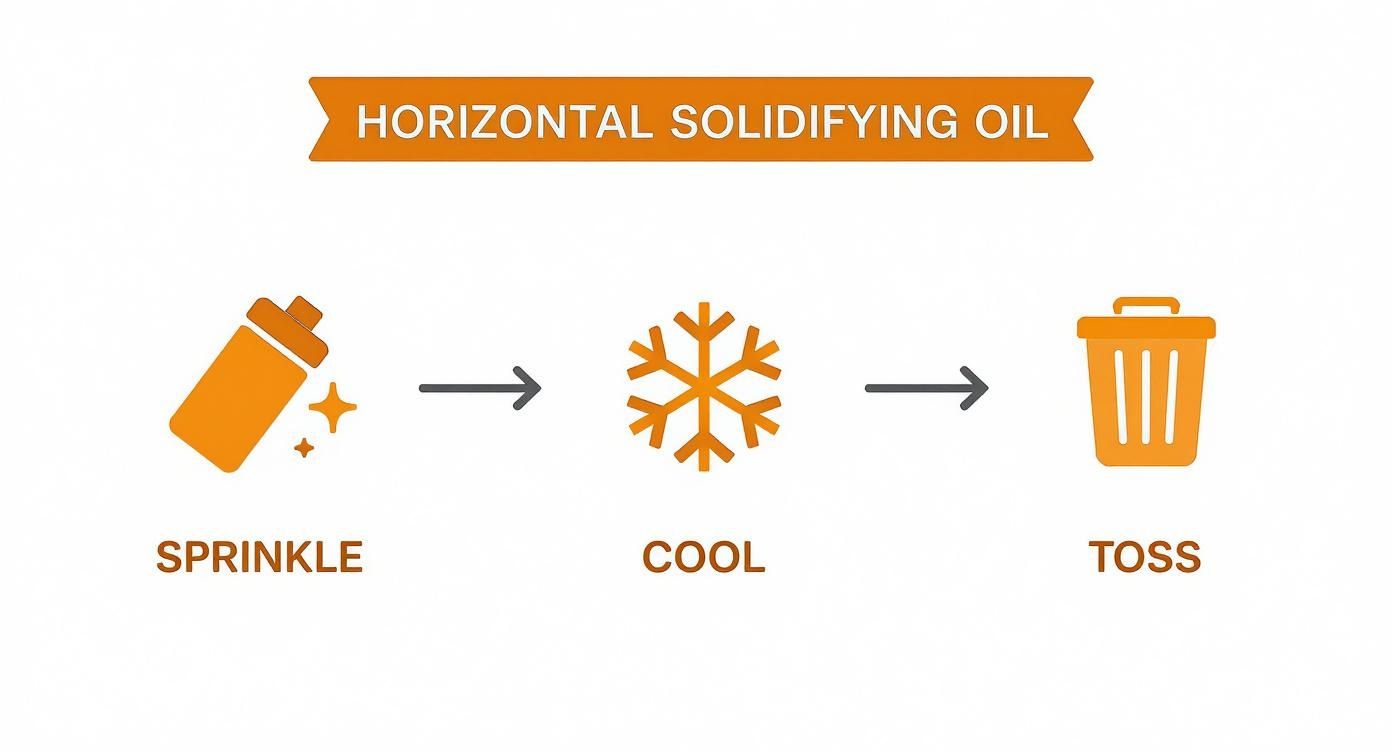
It turns a greasy liquid mess into a solid puck you can just toss away.
Here’s how to use FryAway for the best results:
- Sprinkle and Stir: Turn the heat off, but while the oil is still hot, sprinkle in the FryAway powder. Give it a good stir until it’s completely dissolved.
- Cool Down: Now, just let it be. The mixture will cool down and harden into a solid block.
- Toss into Household Trash: Once it’s solid, you can easily scoop it out and drop it right into your garbage can.
This method completely eliminates the risk of spills and guarantees your kitchen drains stay clear and clog-free.
Tapping into Local Recycling Programs
For anyone serious about sustainability, recycling your used cooking oil is a fantastic option. Many communities have designated collection centers that accept household cooking oil. Just do a quick search for "cooking oil recycling near me" or check your local municipality's website to find drop-off locations.
These programs are part of a surprisingly large and growing industry. In fact, the global cooking oil recycling market is projected to reach about $4.8 billion by 2025. This growth is fueled by a bigger focus on sustainable waste management, transforming what used to be trash into a resource for making biodiesel, soaps, and other useful products. By recycling, your leftover oil gets a new purpose, contributing to a circular economy and supporting renewable energy.
Recipes That Make Frying Worthwhile
Let’s be honest—sometimes, the thought of dealing with a pan full of used oil is the only thing standing between you and a plate of crispy, golden-brown perfection. But what if the cleanup was the easiest part of the whole process?
With a simple, no-mess way to dispose of cooking oil at home, you can bring back those indulgent favorites without a second thought. Here are three classic fried recipes that are absolutely worth the (now effortless) cleanup.
Classic Southern Fried Chicken
There's just nothing like the sound of that first crunch into a perfectly seasoned, buttermilk-brined piece of Southern fried chicken. It’s the ultimate comfort food for a reason, delivering a juicy interior and a shatteringly crisp crust that makes everyone at the table go quiet for a minute.
The real secret to that signature texture? A proper deep fry. You need an oil that can handle the heat without smoking or burning, ensuring your chicken cooks through evenly and develops that beautiful golden color.
- Best Oils: Peanut, canola, or vegetable oil are all fantastic choices here. They have neutral flavors that let the chicken’s seasoning shine.
- The Cleanup: After you've enjoyed every last piece, just turn off the heat. While the oil is still hot in the pan, follow the simple FryAway process.
Cleanup Made Simple:
- Sprinkle and Stir: Add the FryAway powder to the hot oil and give it a good stir until it’s all dissolved.
- Cool Down: Let the pan sit until the oil mixture has completely cooled and hardened into a solid block.
- Toss into Household Trash: Scoop the solid puck straight into your garbage bin. Done.
Crispy Beer-Battered Fish Tacos
Ready to take taco night to a whole new level? Forget the ground beef and break out the beer-battered fish. The batter creates a light, airy, and incredibly crispy coating for flaky white fish like cod or haddock. Top it with some zesty slaw and a creamy chipotle sauce, and you've got a guaranteed hit.
This recipe only calls for a shallow fry, but you'll still have a decent amount of used cooking oil to handle. Maintaining a consistent temperature is key to getting that perfect finish without the fish becoming greasy.
After frying, don't let the leftover oil become an afterthought. The same simple disposal method works like a charm. While the context is different, it's interesting to see how oil interacts with cooking surfaces when applying cooking oil for griddle seasoning. Once again, your post-taco cleanup is just a sprinkle, a cool-down, and a toss away from being finished.
Homemade Glazed Doughnuts
Is there anything more satisfying than a warm, freshly made glazed doughnut? Making them at home is a fun project that yields results far better than anything you can buy in a box. Whether you’re a fan of classic rings or fluffy yeast-raised doughnuts, that deep-frying step is what gives them their signature light-as-air texture.
Frying doughnuts definitely uses a lot of oil, but it’s a small price to pay for such a sweet reward. Besides, when you have a plan for the aftermath, there’s no reason to hold back.
- What to Expect: You’ll need a few inches of oil in a heavy-bottomed pot. This ensures the doughnuts can float and cook evenly on all sides without burning.
- The Final Step: Once your doughnuts are glazed and cooling, handle the oil right away. Sprinkle FryAway powder into the still-hot oil, stir it in, and just walk away. Once it has solidified into a single block, scoop it out and toss it in the trash.
By making responsible disposal a part of your cooking routine, you're also contributing to a larger sustainable system. In 2022, the global supply of used cooking oil was estimated at a massive 3.7 billion gallons, with around 80% being repurposed for biofuel production. The United States alone collected 0.85 billion gallons, and households are now seen as key contributors.
With a cleanup solution this simple, there’s no reason to shy away from your favorite fried foods. You get all the deliciousness with none of the usual disposal drama.
Common Oil Disposal Mistakes to Avoid
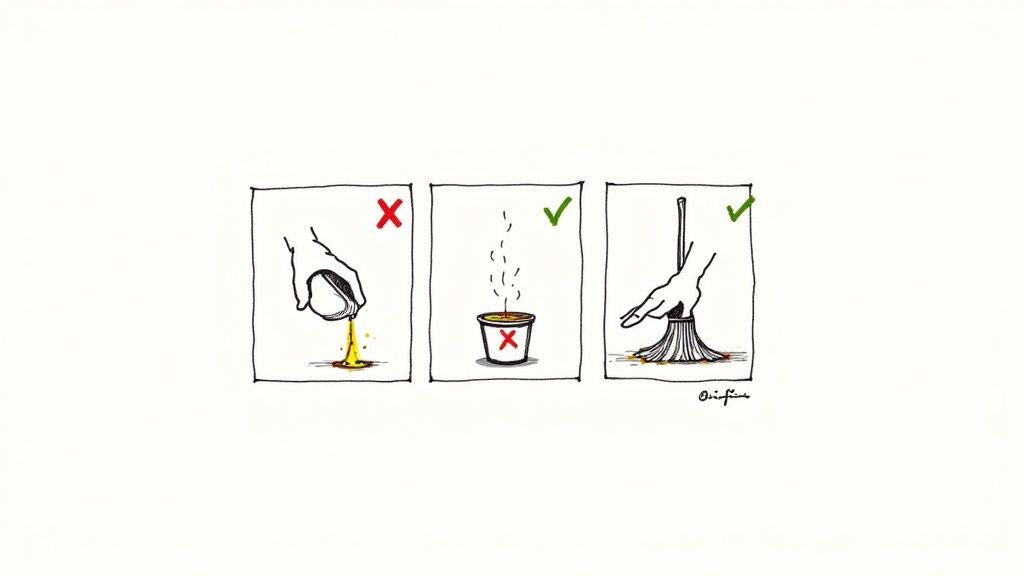
Even with the best of intentions, it’s surprisingly easy to mess up when you dispose of cooking oil at home. These common mistakes can lead to anything from a simple kitchen mess to property damage or even a serious safety hazard.
Think of this as your go-to guide for troubleshooting one of the trickiest parts of kitchen cleanup. Let’s walk through the most frequent slip-ups and how to avoid them.
Pouring Hot Oil into the Wrong Container
This is one of the most dangerous mistakes you can make. Pouring still-hot oil into a container that can't take the heat—like a flimsy plastic tub, an old yogurt cup, or a thin plastic bag—is a recipe for disaster. It will melt right through, spilling hot grease everywhere. That's a nasty burn hazard and an absolute nightmare to clean up.
The simple fix is to always let your oil cool down to a safe temperature before you even think about transferring it. Or, even better, you can skip the container altogether by solidifying the oil first.
The safest way to handle leftover cooking oil is to eliminate the liquid state entirely. By turning it into a solid, you remove the risk of spills, burns, and leaky containers.
We always recommend FryAway because it works right in your hot pan or fryer. It’s just three easy steps:
- Sprinkle and Stir: Add the powder to your hot oil and stir until it dissolves.
- Cool Down: Let the mixture cool down completely to harden.
- Toss into household trash: Scoop the solid puck right into your garbage can.
This whole process eliminates the need to find a heat-safe container and the long wait for the oil to cool, making it the most straightforward and safest method out there.
Adding Cooking Oil to Your Compost Pile
It seems like a natural, eco-friendly idea to pour used cooking oil into your compost bin. It's a food byproduct, right? Wrong. This is a critical mistake that can completely ruin your compost and attract all sorts of unwanted visitors.
Oils and greases just don't break down properly in a home compost system. What happens instead is they form an oily, water-repellent layer that chokes off airflow and brings decomposition to a grinding halt. Even worse, the smell of grease is like a dinner bell for pests like rodents and raccoons, who will happily tear your pile apart for a greasy snack.
Don't just take my word for it. Municipal composting guidelines are very clear on this. For example, the City of Portland explicitly states "NO liquids, grease, or cooking oil" are allowed in their compost bins. Their recommendation? Seal fats and grease in a container and put it in the garbage.
The Dangers of Spills and Improper Cleanup
Accidents happen. An oil spill can instantly turn your kitchen floor into a hazardous ice rink. The first instinct for many is to grab a paper towel and start wiping, but this usually just smears the grease around and makes the problem bigger. Using water is another common mistake—since oil and water don't mix, you’ll only spread the slick mess even further.
For a cleanup that’s actually safe and effective, try this instead:
- Absorb First: Cover the entire spill with something absorbent. Flour, cornstarch, baking soda, or even salt works great. Let it sit for about 15-20 minutes to soak up all the oil.
- Scrape and Sweep: Once the oil has been absorbed, you can easily scrape or sweep up the powder.
- Degrease the Area: Finally, clean the spot with a good grease-cutting dish soap and warm water to get rid of any leftover residue.
This approach actually contains the spill and removes the slip hazard without creating an even bigger mess. By steering clear of these common pitfalls and adopting a simple, safe disposal method, you can enjoy all your favorite fried foods—from Classic Southern Fried Chicken to Homemade Glazed Doughnuts—without any of the cleanup stress.
Your Top Cooking Oil Questions, Answered
When you're dealing with used cooking oil, a few questions always seem to come up. Getting the right answers is the key to keeping your kitchen clean, your pipes happy, and your local environment safe. Let's dig into some of the most common things home cooks wonder about.
Can I Pour Cooking Oil on the Grass?
It might feel like a "natural" solution, but pouring used cooking oil on your lawn or into your garden is a terrible idea. That oil doesn't just soak in harmlessly; it creates a greasy film that suffocates plant roots and the healthy microorganisms living in the soil.
Essentially, you're blocking water and nutrients from reaching the roots, which leads to dead patches in your grass and struggling garden plants. Worse, if it rains, the oil can get washed into storm drains, polluting local streams and rivers and harming wildlife.
Pouring used cooking oil outside is never a safe or eco-friendly solution. It damages your property and introduces a pollutant into the local ecosystem. The best place for used oil is in the trash—but only after it's been properly prepared for disposal.
How Many Times Can I Reuse Frying Oil?
Reusing frying oil is a smart way to cut down on waste and save some cash, but that oil doesn't last forever. As a general rule, you can probably get away with reusing your frying oil two or three times. But that number really depends on a few things.
- Type of Oil: Oils with high smoke points, like peanut, canola, or vegetable oil, are tougher and can handle being reheated more times.
- What You Cooked: Frying battered foods like chicken or fish leaves behind a lot more particles than making something like french fries. Those little bits break down the oil much faster.
- Filtering and Storage: If you carefully strain the oil after each use and keep it in a cool, dark place, you'll definitely extend its lifespan.
You'll know it's time to toss the oil when it looks dark and cloudy, smells rancid, or starts to foam up when you heat it. Trust your senses. Using old oil will make your food taste off and isn't great for you, either.
Is Solidified Oil from FryAway Safe for the Trash?
Yes, absolutely. Tossing the solid oil puck from FryAway into your household trash isn't just safe—it's exactly what the product is designed for. The whole point is to turn a messy, hazardous liquid into a simple, manageable solid that you can throw away without a second thought.
When you use FryAway, you're creating a solid block of hardened oil that's completely organic. For best results, just follow the simple three-step process:
- Sprinkle and Stir: With the heat off but the oil still hot, just stir in the FryAway powder until it completely dissolves.
- Cool Down: Let the pan sit for a few hours. As it cools, the mixture will harden into a solid puck.
- Toss into Household Trash: Once it's solid, scoop the puck out with a spatula and drop it right into your garbage bin.
This solid form means no leaks, no mess in your trash can, and nothing to attract pests. And since FryAway is 100% plant-based, the puck is totally landfill-safe. It's a clean, simple solution for a notoriously messy problem.
Ready to make frying cleanup effortless? With FryAway, you can say goodbye to messy jars and clogged pipes forever. Shop now at FryAway.co and see how easy it is to fry, solidify, and toss.