


· By FryAway
A Guide to Sustainable Kitchen Products
Sustainable kitchen products are items designed to have the smallest possible environmental footprint. They’re made from renewable or recycled materials, produced ethically, and built to last. When their useful life is over, they can be reused, recycled, or composted.
The whole point is to minimize harm from the moment they’re created to the day they're thrown away.
What Exactly Makes a Kitchen Product Sustainable?
The word "sustainable" is thrown around a lot these days, but what does it really mean for the things you buy for your kitchen? Think of it as a product's entire life story. A truly sustainable item has a good story from start to finish—not just a pretty label.
It means looking past the marketing buzzwords to understand the full journey. Where did the raw materials come from? How much energy and water did it take to make? And what happens to it when you’re done with it? This complete picture is what separates genuinely eco-friendly products from those that are just "greenwashed."
The Three Pillars of Sustainability
To really get it, let's break sustainability down into three core ideas. These pillars help ensure a product is good for us today and for the planet tomorrow.
- Materials: It all starts with the right stuff. Sustainable products are made from responsibly sourced, renewable resources like fast-growing bamboo or recycled materials like glass and stainless steel. This cuts down on the need to mine or harvest new resources.
- Manufacturing Process: How something is made is just as important. A sustainable process uses less energy and water, minimizes pollution, and guarantees fair and safe conditions for the people making the product.
- End-of-Life: What happens when it's time to say goodbye? Sustainable products are designed to stay out of the landfill. They’re either durable enough to last for decades, recyclable to be made into something new, or biodegradable to break down and return to the earth.
This visual really clarifies how these three stages come together to define a truly sustainable product.
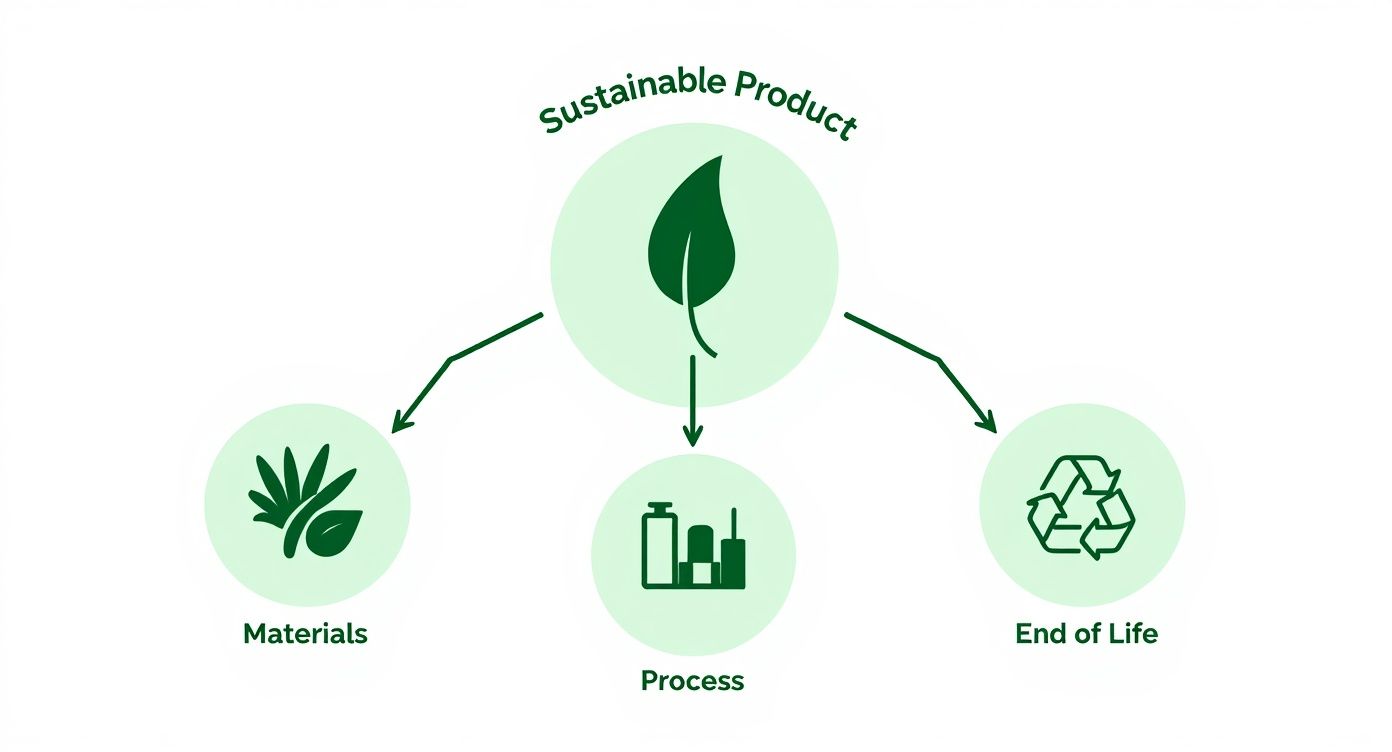
The key takeaway is that sustainability isn’t just one feature. It’s a complete approach that looks at a product's entire lifecycle.
To see this in action, let's compare two common kitchen items: a standard plastic cutting board and a sustainable bamboo one.
The Lifecycle of Sustainable vs Conventional Products
| Lifecycle Stage | Conventional Product Example (e.g., Plastic Cutting Board) | Sustainable Product Example (e.g., Bamboo Cutting Board) |
|---|---|---|
| Materials | Made from petroleum, a non-renewable fossil fuel. Extraction can harm ecosystems. | Made from bamboo, a fast-growing, renewable grass that requires minimal resources. |
| Manufacturing | Energy-intensive process that can release harmful emissions and microplastics. | Lower-energy manufacturing process with fewer chemical inputs. |
| Use | Can harbor bacteria in knife grooves and shed microplastics into food. | Naturally antimicrobial surface. Durable and gentle on knives. |
| End-of-Life | Ends up in a landfill, where it can take hundreds of years to break down, leaching chemicals. | Biodegradable and compostable, returning to the earth without leaving a trace. |
As you can see, the sustainable option offers clear environmental benefits at every single stage. It's a much cleaner story from beginning to end.
A Growing Movement in Modern Kitchens
This shift toward more thoughtful buying is way more than just a trend—it's a massive change in how we shop. The global market for sustainable kitchen products was valued at around USD 12.5 billion in 2023 and is expected to soar to USD 22.7 billion by 2033.
This incredible growth shows that more and more people are waking up to the environmental impact of their choices. You can explore more data on this market trend to see just how quickly the demand for eco-friendly kitchen gear is rising.
Choosing Materials That Truly Make a Difference
Navigating the world of eco-friendly materials can feel like learning a new language. With so many options and confusing claims, it’s easy to get overwhelmed. But understanding what’s behind your kitchen products is the key to making choices that genuinely reduce your environmental impact.
Think of it like reading a recipe's ingredient list—knowing what goes into a product tells you everything about its quality and its effect on your health and the planet. This section is your guide to demystifying the labels and exploring the best materials for a greener kitchen. You'll learn to look beyond marketing buzzwords and pick products that are truly built to last.
Core Sustainable Materials for Your Kitchen
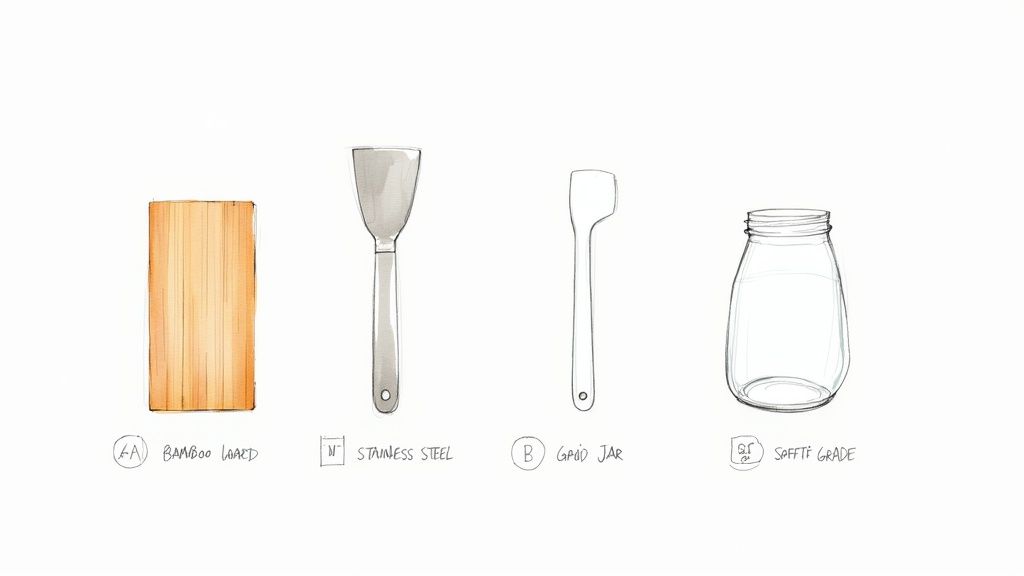
When you're shopping for sustainable kitchen gear, a few key materials consistently stand out for their durability, safety, and low environmental footprint. Focusing on these can simplify your choices and ensure you're making a swap that counts.
- Bamboo: As a fast-growing grass, bamboo is a highly renewable resource that requires minimal water and no pesticides. Its natural strength and antimicrobial properties make it an excellent choice for cutting boards, utensils, and organizers.
- Recycled Stainless Steel: Incredibly durable and endlessly recyclable, stainless steel is a true workhorse in any sustainable kitchen. It’s perfect for cookware, mixing bowls, and food storage containers because it doesn’t rust, stain, or leach chemicals into your food.
- Glass: A timeless and non-toxic choice, glass is ideal for food storage, bakeware, and drinkware. It doesn't absorb odors or flavors, is safe for microwaves and dishwashers, and can be recycled over and over without losing quality.
- Food-Grade Silicone: While not biodegradable, food-grade silicone is extremely durable and a fantastic alternative to single-use plastics. Its sheer longevity makes it perfect for reusable food bags, baking mats, and flexible lids, preventing countless plastic items from ever reaching a landfill.
This shift isn't just a niche movement, either. In the United States, surveys show that around 80% of design professionals have seen a spike in client demand for sustainable kitchen products. On top of that, an overwhelming 95% of these pros now regularly include items made from recycled materials in their projects, showing a massive market push toward sustainability.
Decoding Certifications to Avoid Greenwashing
"Greenwashing" is a sneaky marketing tactic where companies make misleading claims about how eco-friendly their products really are. To avoid falling for it, you need to become a label detective. Third-party certifications are your most reliable tool—think of them as a seal of approval from an unbiased expert.
Think of certifications as a background check for your products. They verify that a brand's claims about sustainability, ethical production, and safety are legitimate, giving you peace of mind with every purchase.
Here are a few of the most important certifications to look for:
- Forest Stewardship Council (FSC): This label ensures that wood and paper products, like your bamboo cutting boards or even product packaging, come from responsibly managed forests that protect biodiversity and local communities.
- Fair Trade Certified: When you see this, it means the product was made according to rigorous social, environmental, and economic standards. It’s a guarantee that workers were paid fair wages and treated ethically.
- B Corp Certification: This is one of the most comprehensive certifications out there. It evaluates a company's entire social and environmental performance, from its supply chain and materials to its employee benefits and community engagement.
When you're exploring alternatives to traditional bakeware, considering Caraway Home bakeware offers a great example of products designed with both performance and health in mind. Brands that prioritize these certifications often create products that are not only sustainable but also safer for your home. By looking for these labels, you can confidently choose products that truly make a positive impact.
Making Practical Swaps in Your Kitchen

Knowing what makes a product "sustainable" is a great first step. But the real magic happens when you start putting that knowledge into action in your own home. The idea of a total kitchen overhaul sounds exhausting, right?
The good news is you don't have to do it all at once. Creating a greener kitchen is really just a series of small, thoughtful swaps that add up to a big impact over time. By focusing on one area at a time—from how you cook to how you clean up—you can build a more eco-friendly space without the overwhelm.
Let's break it down into four key zones to make getting started a little easier.
Upgrading Your Food Prep and Cooking Tools
The tools you reach for every day have a bigger impact than you might think, both on your cooking and your environmental footprint. Swapping out flimsy, disposable items for durable, long-lasting alternatives is one of the most powerful changes you can make.
Take a look at your cookware. So many traditional non-stick pans are coated with chemicals that break down, release toxins, and need to be replaced every few years. A simple swap to cast iron or high-quality stainless steel gives you a durable, chemical-free cooking surface that can literally last for generations if you take care of it.
Even something as simple as trading plastic utensils for bamboo or wood versions cuts out a source of microplastics and brings a compostable material into your kitchen.
Here are a few easy wins:
- Beeswax Wraps: A fantastic replacement for single-use plastic wrap. Just use the warmth of your hands to create a natural seal over bowls or around produce. They're reusable and compostable.
- Silicone Baking Mats: Say goodbye to endless rolls of parchment paper and aluminum foil. A reusable silicone mat gives you a non-stick surface for baking that can be washed and reused thousands of times.
- Wooden Cutting Boards: Unlike plastic boards that can get scarred, harbor bacteria, and shed microplastics, wooden or bamboo boards are naturally antimicrobial and much gentler on your knives.
Rethinking Food Storage and Waste
How you store food and handle leftovers is a huge piece of the sustainable kitchen puzzle. Single-use plastics are a major source of pollution, and food waste is a massive contributor to greenhouse gas emissions.
Glass containers are a game-changer for storing leftovers. They don't absorb stains or smells like plastic, they’re safe to reheat in, and they can be recycled forever. For packing lunches or snacks, stainless steel containers are a durable, lightweight, and plastic-free choice.
Better food storage means less food waste. You can find more great ideas in our guide to food waste reduction tips.
A truly sustainable kitchen isn't just about the products you buy; it's about the habits you build. Shifting from a "throwaway" mindset to a "use-it-up" philosophy is the most powerful swap you can make.
A Smart Solution for Cooking Oil Disposal
Frying up a delicious meal at home often leaves you with a messy problem: what do you do with all that used cooking oil? Pouring it down the drain is a guaranteed recipe for plumbing disasters and environmental headaches, creating massive "fatbergs" that clog up city sewer systems.
This is where a product like FryAway becomes an essential tool in any sustainable kitchen. It’s a 100% plant-based powder that gives you a simple, clean way to dispose of used cooking oil safely. It works by solidifying the oil, letting you scoop it out and toss it right into your household trash. No clogs, no pollution.
Using it couldn't be easier. Imagine you've just made a batch of crispy fried chicken. Here’s what you do next:
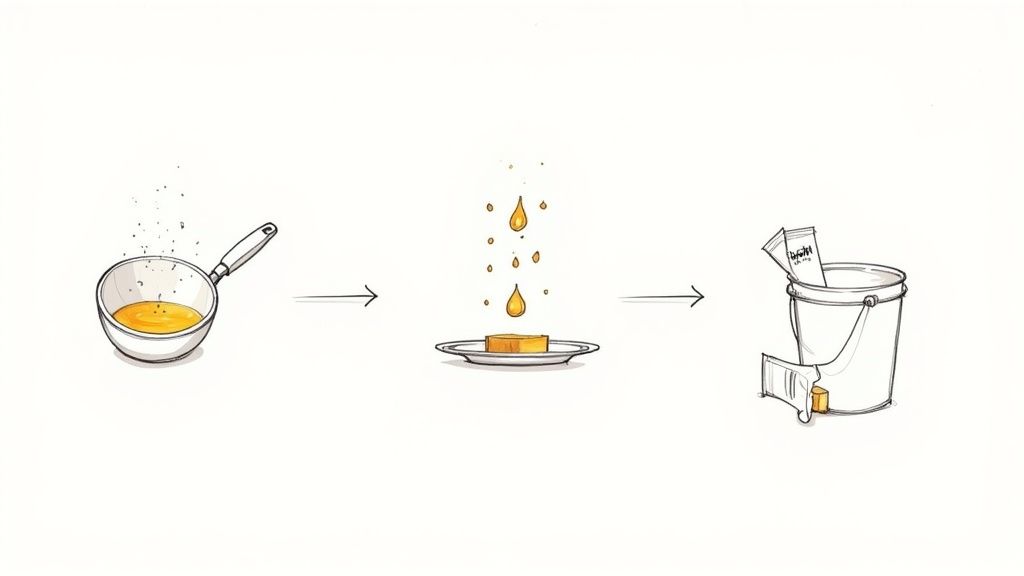
- Sprinkle and Stir: While the oil is still hot, just sprinkle in the FryAway powder and give it a quick stir until it dissolves.
- Cool Down: Let the pan sit and cool down completely. You'll watch the oil magically transform into a solid, gel-like puck.
- Toss into household trash: Once it's solid, you can easily scoop the hardened oil out of the pan and throw it directly in the trash bin.
With FryAway, you can enjoy all your favorite fried foods—from french fries to pan-seared fish—without the cleanup nightmare or the environmental guilt. It’s a perfect example of a sustainable kitchen product that solves a real, everyday problem.
Solving a Messy Problem with Sustainable Waste Disposal
A truly sustainable kitchen isn’t just about what you buy—it’s about how you handle what you throw away. And let's be honest, one of the biggest headaches is figuring out what to do with used cooking oil.
Pouring it down the sink is an absolute no-go. It cools, hardens, and creates destructive clogs in your pipes. On a larger scale, it contributes to massive "fatbergs" in city sewers, which cause environmental damage and lead to incredibly costly repairs.
So, what’s the alternative? Many of us fall back on pouring old oil into jars, but that's messy, inconvenient, and really just kicks the can down the road. This everyday problem shows a real need for better sustainable kitchen products that are designed for responsible waste disposal. Luckily, a simple, elegant solution already exists.
The FryAway Solution for Used Cooking Oil
A huge part of a sustainable kitchen is using smart food waste reduction tips, and that includes dealing with tricky leftovers like cooking oil. This is exactly where FryAway comes in. It’s a 100% plant-based, non-toxic powder that brilliantly solves the used oil dilemma once and for all.
Here's how it works: FryAway magically transforms hot liquid oil into a solid, organic puck. Once it's solid, you can easily toss it straight into your household trash, completely avoiding drains and landfills. It’s a clean, mess-free method that protects both your plumbing and the planet.
FryAway is the perfect example of a purpose-built sustainable product. It tackles a common environmental hazard in the home with a simple, plant-derived solution, turning a messy chore into a responsible action.
This approach doesn't just simplify cleanup; it fits right in with a zero-waste mindset. If you want to dive deeper into handling liquid waste the right way, you can learn more about simple and eco-friendly ways for used cooking oil disposal.
How to Use FryAway for Perfect Results
Using FryAway couldn't be easier. The three-step process makes cleaning up after frying foods completely effortless, so you can enjoy your favorite meals without the environmental guilt or the dreaded cleanup.
- Sprinkle and Stir: Right after you finish cooking, while the oil is still hot, just sprinkle the FryAway powder into the pan. Give it a gentle stir until the powder completely dissolves.
- Cool Down: Now, just walk away and let it work its magic. As the pan cools, the FryAway powder will solidify the entire mixture.
- Toss into household trash: Once it has cooled completely, you'll be left with a solid puck of hardened oil. You can easily scoop it out with a spatula and toss it directly into your regular trash bin. No spills, no jars, no clogs.
This simple process makes cleanup after frying an absolute breeze.
Putting It Into Practice: Crispy Fried Chicken
To see just how seamlessly FryAway fits into a real cooking routine, let’s make some delicious Crispy Fried Chicken. This recipe requires a good amount of cooking oil to get that perfect golden-brown crust, making it the ideal way to showcase an easy, sustainable cleanup.
Ingredients:
- 2 lbs chicken pieces (thighs, drumsticks, or wings)
- 1 cup all-purpose flour
- 2 teaspoons salt
- 1 teaspoon black pepper
- 1 teaspoon paprika
- 3-4 cups of high-smoke-point oil for frying (like canola or vegetable oil)
Instructions:
- In a bowl, mix together the flour, salt, pepper, and paprika. Coat each piece of chicken thoroughly in the flour mixture.
- Heat the oil in a large, heavy-bottomed skillet or Dutch oven over medium-high heat until it reaches 350°F (175°C).
- Carefully place the chicken pieces into the hot oil, ensuring not to overcrowd the pan. Fry for about 6-8 minutes on each side, until the chicken is golden brown and cooked through.
- Remove the chicken from the pan and let it drain on a wire rack.
- Serve hot and enjoy your perfectly crispy fried chicken!
Now for the best part: the cleanup. With the pan still hot, sprinkle in the right amount of FryAway, give it a quick stir, and let it cool. In no time, you can toss the solidified oil puck and simply wipe the pan clean, finishing your meal with zero mess.
Why Sustainable Products Are a Smarter Investment
Let’s be honest, does "eco-friendly" just mean "more expensive"? It’s a fair question. When you see a reusable silicone bag next to a box of single-use plastic ones, the initial price difference can be hard to ignore.
But that sticker price only tells a tiny part of the story. The real value of sustainable kitchen products isn't what they cost today, but how they perform for years to come. It’s about shifting from a "throwaway" mindset to a "buy it once, buy it right" philosophy.
Think of it like this: a cheap, flimsy plastic spatula might get you through a few weeks of cooking. But eventually, it's going to crack, melt, or stain, and you'll be right back at the store buying another one. A high-quality stainless steel or bamboo spatula, on the other hand, is built to last. It’s an investment that saves you from those repeat purchases down the line.
Calculating the True Cost of Ownership
This brings us to a simple but powerful idea: the "total cost of ownership." Instead of just looking at the price tag, you consider what an item costs you over its entire life. When you start thinking this way, the math behind sustainable products really starts to make sense.
- Longevity: A solid cast-iron skillet can be passed down for generations. A cheap non-stick pan? You’ll be lucky if it lasts a couple of years before it starts flaking.
- Reduced Consumption: Reusable silicone food bags completely eliminate the need to keep buying disposable plastic baggies, week after week.
- Energy Savings: An Energy Star-rated appliance might have a higher upfront cost, but the savings on your monthly utility bills add up fast.
This long-term value is exactly why the market for these products is taking off. The sustainable kitchen product market is on track to be worth around $15 billion in 2025 and is projected to hit $28 billion by 2033. This isn't just a trend; it's driven by smart consumers who see the bigger financial picture. You can dig into more details about this growing market on datainsightsmarket.com.
The Invaluable Non-Monetary Returns
Of course, the benefits go way beyond your bank account. Investing in sustainable products delivers returns you can't put a price tag on, contributing to a healthier home, a healthier planet, and a whole lot of peace of mind.
Choosing sustainable products isn't just a purchase; it's an investment in personal well-being and environmental health. The return comes in the form of a safer kitchen, a cleaner conscience, and a tangible contribution to a healthier planet.
These non-monetary perks are just as important:
- Better Health: When you use non-toxic materials like glass, stainless steel, and ceramic, you're not exposing your family to harmful chemicals like PFAs or BPAs that can leach from plastics and cheap coatings.
- Enhanced Experience: Let's face it, well-made tools are just a joy to use. They perform better, feel better in your hand, and make your time in the kitchen more enjoyable.
- Positive Impact: Every sustainable choice adds up. From composting food scraps to properly disposing of cooking oil with a product like FryAway, you’re actively reducing your environmental footprint.
By focusing on the long game, it's clear that sustainable products aren't just an ethical choice—they're a financially savvy one. To explore more great options, check out our guide on the top most innovative kitchen products making life easier.
How to Build Your Sustainable Kitchen Gradually
Thinking about a sustainable kitchen might bring images of a massive, expensive overhaul. But it doesn't have to be that way. In fact, the most eco-friendly approach is also the most practical: use what you already have until it’s genuinely worn out.
Tossing perfectly good items just to replace them with "greener" versions is the opposite of sustainability—it just creates more waste. The real goal is mindful consumption. So, embrace a "use-it-up" philosophy and replace things one by one as they reach the end of the line. It's so much kinder to your wallet and the planet.
Starting Your Gradual Transition
The easiest place to start? Focus on consumables—the things you buy and use up all the time. Once you get in the habit of swapping those out, you can move on to the bigger, more durable items as they need replacing. This staggered approach makes the whole process feel less like a chore and more like an achievable goal.
For example, when you squeeze out the last drop of your conventional dish soap, replace it with a plant-based version in a refillable bottle. When your last disposable sponge finally bites the dust, make the switch to a compostable one.
Progress, not perfection, is the goal. Every small, intentional swap you make contributes to a larger positive impact without the pressure of a complete kitchen makeover.
Your Simple Swap Checklist
To get you started, here’s a simple checklist, ordered from the easiest swaps to the more gradual ones. Just remember to replace these items with sustainable alternatives only when you run out or they wear out.
-
Consumables to Swap First:
- Paper towels → Reusable dishcloths
- Plastic wrap → Beeswax wraps
- Disposable sponges → Compostable sponges
- Plastic trash bags → Biodegradable or compostable liners
-
Durable Goods to Replace Over Time:
- Plastic cutting boards → Bamboo or wood boards
- Plastic food containers → Glass or stainless steel containers
- Worn-out non-stick pans → Cast iron or ceramic-coated cookware
And what about the messy cleanup after frying up some crispy chicken or pan-seared tofu? Instead of pouring used cooking oil down the drain (a major no-no), there’s a simple, sustainable fix. Grab some FryAway and follow these three easy steps:
- Sprinkle and Stir the powder right into the hot oil.
- Let it Cool Down and watch it solidify.
- Toss the hardened puck straight into your household trash.
It’s a tiny change that makes a huge difference, preventing nasty plumbing clogs and protecting our waterways.
Your Questions About Sustainable Kitchens, Answered
Making the switch to a more sustainable kitchen is a great goal, but it’s totally normal to have a few questions before you dive in. Is it going to be expensive? Is it hard work? Where do you even begin?
Let's clear up some of the most common uncertainties so you can get started with confidence.
Are Sustainable Products Always More Expensive?
This is probably the biggest question on everyone's mind. While some eco-friendly items do have a higher price tag upfront, they almost always save you money in the long run.
Think of it this way: you're making an investment. A solid cast-iron skillet might cost more than a cheap non-stick pan, but it can literally last for generations. You're saving yourself from buying replacements every few years. The focus on durability means you buy less over time, and reusable products completely cut out the cost of constantly restocking disposables. It all adds up.
How Do I Care for Natural Materials?
Don't worry, you don't need to be a professional woodworker or blacksmith. Caring for natural materials is simpler than you might think and mostly comes down to a few gentle habits.
- For cast iron: After washing, dry it completely and wipe a super-thin layer of cooking oil inside. This keeps the seasoning strong and stops rust from ever showing up.
- For bamboo and wood: Just hand-wash these with mild soap and water. Never let them soak. Every so often, rub them down with a food-grade mineral oil to keep the wood from getting dry and cracking.
That's really it. These little steps will keep your gear in fantastic shape for years.
What Is the Most Impactful First Step?
If you’re feeling overwhelmed and just want to know where to start for the biggest bang for your buck, the answer is simple: ditch single-use plastics.
Things like plastic wrap, disposable cutlery, and Ziploc-style bags are some of the worst offenders when it comes to kitchen waste. Swapping them out for reusable alternatives like beeswax wraps, bamboo utensils, or glass containers makes an immediate, visible difference. It’s one change that tackles a massive source of pollution and sets a great foundation for everything else.
What Is the Best Way to Dispose of Cooking Oil?
Ah, the dreaded greasy pan. Disposing of used cooking oil is a challenge for every home cook, but the solution is surprisingly easy and clean. Pouring oil down the drain is a definite no-go—it causes nightmare plumbing clogs and seriously pollutes waterways.
The best method is to use FryAway, a plant-based powder that magically turns used cooking oil into a solid. It’s a perfect example of a product that solves a messy, annoying problem in a totally sustainable way. After you've fried up some crispy tofu or pan-seared fish, just follow these three simple steps:
- Sprinkle and Stir the powder into the hot oil right in the pan.
- Cool Down and watch as the oil transforms into a solid puck.
- Toss the hardened oil straight into your household trash. No mess, no fuss.
This is the cleanest way to protect your pipes and the environment, making it a must-have for any modern, sustainable kitchen.
Ready to tackle messy oil cleanup the sustainable way? Visit FryAway and discover how easy it is to keep your kitchen clean and your pipes clear. Explore FryAway's products today!