


· By FryAway
How to Reduce Household Waste A Practical Home Guide
Figuring out how to reduce household waste can feel like a huge undertaking, but it really boils down to small, deliberate choices that add up. The whole process starts with simply rethinking your daily habits—what you buy, what you use, and how you get rid of things.
Your Journey to a Less Wasteful Home
Does the term 'zero waste' make you break out in a cold sweat? Let's forget about perfection. The goal isn't to never produce a single piece of trash again. It's about making smart, manageable changes that actually make a difference. Think of it as a series of small wins, most of which start right in your kitchen.
By focusing on simple, doable steps, you'll end up with a cleaner, more organized home and do a solid for the planet at the same time.
The Five Pillars of Waste Reduction
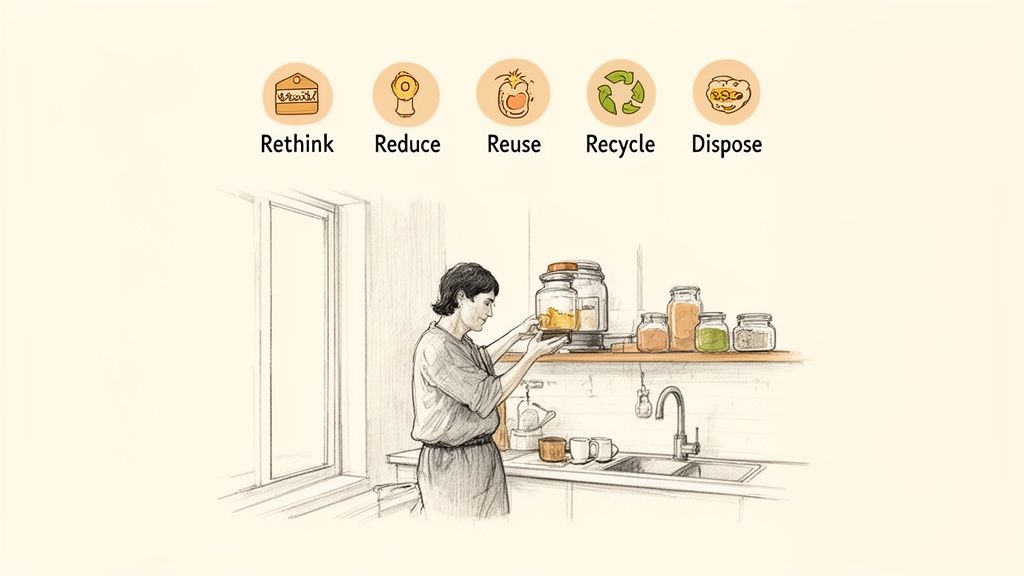
A simple framework can help guide your efforts. I like to think of it in five key parts:
- Rethink: This is the big one. Before you buy anything, ask yourself: Do I really need this? Is there a version with less packaging?
- Reduce: This is all about consciously bringing less into your home. It’s being mindful at the grocery store, saying no to freebies you don't need, and just buying less stuff overall.
- Reuse: Get creative! Find new jobs for items instead of tossing them. Glass jars become storage containers, old t-shirts become cleaning rags—you get the idea.
- Recycle: Get familiar with your local recycling rules. Knowing what actually goes in the bin is half the battle to making sure it gets processed correctly.
- Responsibly Dispose: For everything else, find the safest and most eco-friendly way to get rid of it.
Of course, household trash isn't just food scraps and packaging. It's important to consider all types of waste, which is why looking into 5 ways of minimizing your electronic waste is a great next step for a truly holistic approach.
A Practical Solution for a Messy Problem
Let's be honest, some things are just a pain to get rid of. Used cooking oil is at the top of that list. Pour it down the sink, and you're asking for a massive plumbing bill. Throw a jug of liquid oil in the trash, and you're just waiting for it to leak everywhere.
This is where a simple, clever product can totally change the game in your kitchen.
Imagine you just finished frying up some amazing chicken and are left with a pan full of hot oil. Instead of the usual "let it cool and figure it out later" routine, you can grab FryAway. It’s a plant-based powder that makes dealing with used cooking oil ridiculously easy.
Here’s how it works:
- Sprinkle and Stir: Just sprinkle the powder into the hot oil right in the pan and give it a stir.
- Cool Down: Now, just walk away and let it cool completely. The powder magically turns the liquid oil into a solid, waxy puck.
- Toss into household trash: Once it's solid, you can literally scoop it out and drop it right into your trash bin. No mess, no spills, no problem.
By making simple swaps and finding smart solutions for common kitchen headaches, you can cut down on waste without giving up the foods you love to cook. It makes the whole process feel less like a chore and more like just running your home well.
Looking for more easy wins to green up your kitchen? Check out our guide on eco-friendly kitchen products.
Start at the Source: Rethink Your Shopping Habits
The most powerful way to slash your household waste is to stop it from ever crossing your threshold in the first place. This goes way beyond just remembering your reusable bags. It's about adopting a "pre-cycling" mindset—actively thinking about an item's entire lifecycle before you even put it in your cart.
This shift in thinking begins when you really understand what you’re throwing away. Take a week and just pay attention to your trash can. Is it overflowing with single-serving yogurt cups, flimsy plastic produce bags, or disposable coffee pods? This quick "trash audit" is incredibly revealing, showing you exactly where to focus your energy for the biggest impact.
Navigate the Grocery Store Like a Pro
Once you know your main culprits, the grocery store becomes a strategic mission, not just a routine errand. The average U.S. household wastes nearly 32% of the food it buys, a staggering number driven by impulse buys and excessive packaging. A little bit of planning makes all the difference.
Your secret weapon? A weekly meal plan. When you know exactly what you need for the week's dinners, you’re far less likely to grab random items that will inevitably get lost and forgotten in the back of the fridge. Make a list and stick to it. Your wallet and your trash can will thank you.
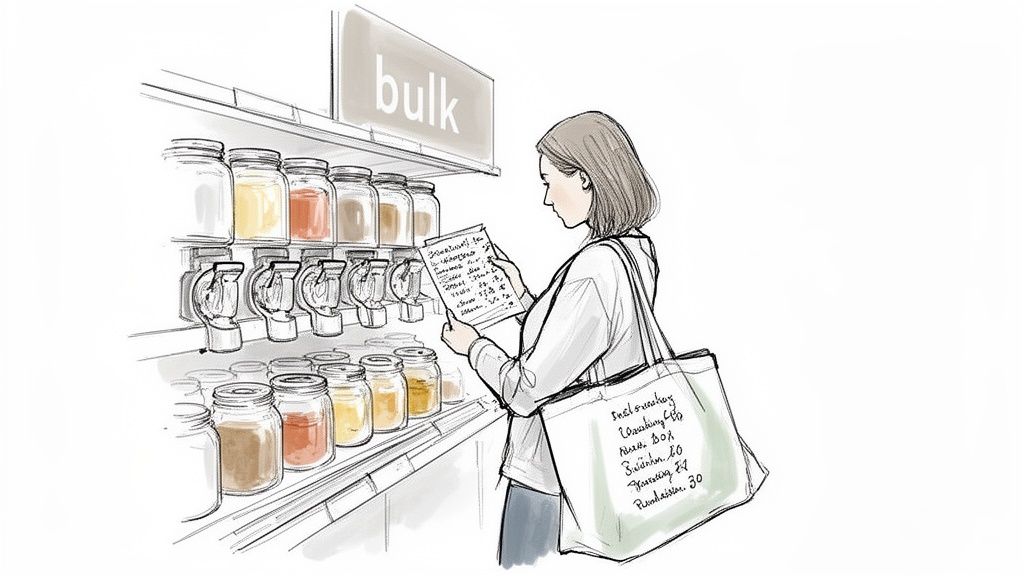
Another game-changer is embracing the bulk bins. Buying staples like oats, rice, nuts, and spices from bulk sections lets you get the exact amount you need, which cuts down on both food and packaging waste. For a truly zero-waste trip, bring your own reusable containers or cloth bags.
Decipher Packaging and Make Smarter Choices
Packaging is a massive contributor to household trash. Just by being a more discerning shopper, you can dramatically reduce what you send to the landfill. It often comes down to a few simple swaps.
- Choose Glass Over Plastic: Opt for items in glass jars, like pasta sauce or pickles. They can be easily reused for storage or recycled.
- Favor Paper and Cardboard: When you have a choice, pick items in cardboard boxes (like pasta) instead of plastic bags.
- Avoid Single-Serving Sizes: A large tub of yogurt generates so much less waste than a pack of individual cups.
- Look for Minimal Packaging: Choose loose fruits and vegetables over the pre-packaged options wrapped in plastic and styrofoam.
Thinking about the end-of-life for a product's packaging before you buy it is the essence of pre-cycling. It shifts the responsibility from just disposal to conscious acquisition, giving you control over the waste you create.
Handling Kitchen Byproducts Mindfully
Smart shopping also means thinking about the waste created during cooking, especially tricky stuff like used cooking oil. Frying up some delicious food at home shouldn’t come with the headache of messy, improper disposal later.
Imagine you've just made a batch of crispy fried fish. The recipe was a hit, but now you're left with a pan full of hot oil. Pouring it down the sink is a definite no-go, and letting it sit in an old jar on the counter is just a temporary, greasy fix.
This is where a product like FryAway fits perfectly into a waste-conscious kitchen. It’s a plant-based powder designed specifically to make oil disposal safe and unbelievably easy.
Here’s how simple it is:
- Sprinkle and Stir: After you finish frying and while the oil is still hot, just sprinkle the FryAway powder into the pan and give it a quick stir.
- Cool Down: Let the pan cool completely. As it cools, the powder works its magic, transforming the liquid oil into a solid, organic puck.
- Toss into household trash: Once it's solid, you can easily scoop the hardened oil out of the pan and toss it right into your household trash bin. No mess, no fuss.
By incorporating smart solutions like this, you start to address waste from every angle—from the packaging you avoid at the store to the byproducts you create while cooking. It’s a complete and practical approach to learning how to reduce household waste for good.
Master Your Kitchen and Conquer Food Waste
Your kitchen is the heart of your home, but let's be honest—it's usually the biggest source of trash. If you want to learn how to reduce household waste, this is the place to start. The trick is to stop seeing food as disposable and start treating it like the valuable resource it is.
The scale of the problem is pretty staggering. In 2022 alone, households around the world tossed out 1.05 billion metric tons of food. That breaks down to about 132 kg per person for the year, which means nearly a fifth of all food available to consumers goes straight into the bin. You can dig into the full scope of these global food waste findings from the UN to really grasp the challenge.
In places like the U.S., where home cooks and deep-frying lovers thrive, things get even more complicated. Kitchen byproducts like used cooking oil often end up contaminating other recyclables, making the problem worse.
But you don't need a massive overhaul to make a difference. A few smart strategies can slash those numbers, starting with how you store your food.
Smart Storage and Decoding Dates
Proper food storage is your first line of defense against waste. A few simple hacks can add days, or even weeks, to the life of your produce and leftovers. It saves you money and keeps perfectly good food out of the landfill.
- Store Herbs Like Flowers: Keep cilantro and parsley fresh for ages by placing their stems in a jar of water in the fridge. Just cover them loosely with a plastic bag.
- Separate Ethylene Producers: Some fruits, like bananas, apples, and avocados, release ethylene gas. This gas makes other produce ripen and spoil way faster. Keep them separate from sensitive items like leafy greens, potatoes, and carrots.
- Freeze for the Future: Have half a can of tomato paste or a bunch of overripe bananas? Don't toss them—freeze them! Tomato paste can be frozen in ice cube trays for easy use later, and those bananas are perfect for smoothies.
Another major source of waste? Confusion over expiration dates. It's time to learn what they actually mean.
'Best By' is about peak quality and flavor, not safety. So many foods are perfectly fine to eat long after this date. 'Use By' is a much stricter guideline for food safety, usually on perishables like meat and dairy.
When in doubt, trust your senses. If it looks, smells, and tastes okay, it’s probably good to eat, no matter what the 'best by' date says.
Give Food Scraps a Second Life
Before you scrape those vegetable peels and chicken bones into the trash, pause for a second. Many of the things we call "scraps" are actually packed with flavor and nutrients just waiting to be used.
A great way to start is by making a "scrap broth." Just keep a large bag in your freezer and toss in clean veggie peels (like from carrots, onions, and celery), herb stems, and mushroom stalks. Once the bag is full, simmer everything in a pot of water for a few hours, then strain it. You'll end up with a rich, delicious homemade broth for soups and stews, all from stuff you were about to throw away. This is just one of many food waste reduction strategies you can easily adopt.
The Ultimate Solution for Used Cooking Oil
Even the most mindful cook creates byproducts, and used cooking oil is one of the trickiest to deal with. Pouring it down the drain is a guaranteed disaster—it leads to rock-hard clogs in your pipes and massive repair bills for the city. And stashing it in old jars just feels messy and delays the inevitable.
This is where a simple, effective solution like FryAway becomes a total game-changer for any kitchen. It’s a 100% plant-based powder that makes getting rid of oil completely clean and effortless. Imagine you've just whipped up a batch of amazing homemade french fries and are now staring at a pan full of hot oil.
Here's all you have to do:
- Sprinkle and Stir: While the oil is still hot, just sprinkle the FryAway powder right into the pan. Give it a quick stir to make sure it's all mixed in.
- Cool Down: Now, just let it be. Set the pan aside to cool down completely. As it cools, the powder works its magic, turning that liquid cooking oil into a solid, organic puck.
- Toss into household trash: Once it's hardened, you can easily scoop the solid oil out with a spatula and toss it straight into your household trash bin. No mess, no leaky jars, and absolutely no damage to your pipes.
Adding this simple step to your routine means you can manage a difficult waste stream responsibly without ever giving up the joy of your favorite fried foods.
Going Beyond the Blue Bin: Proper Disposal for Everything Else
Even with the best intentions, some things just can't be reused, recycled, or composted. That leaves us with the tricky task of figuring out the most responsible way to get rid of them.
We’ve all been there, standing over the recycling bin, wondering if that yogurt container or plastic film is actually recyclable. This hopeful but often incorrect act has a name: "wish-cycling." While it comes from a good place, it can do more harm than good by contaminating entire batches of perfectly good materials, sending them all to the landfill.
Knowing your local recycling rules is the first line of defense, but what about the items that don't belong in any bin? Properly handling these tricky waste streams is a huge part of reducing your household's environmental footprint. The scale of the problem is staggering—the world generated over 2 billion tonnes of municipal solid waste in 2023, a number projected to jump by 73% by 2050. In the U.S. alone, that breaks down to about 4.9 pounds of trash per person, every single day. And that number is climbing.
The Greasy Problem with Used Cooking Oil
One of the most common and damaging culprits in the kitchen is used cooking oil. It just feels wrong to pour it down the drain, and for a very good reason.
When liquid fats, oils, and grease wash down the sink, they cool and solidify inside the pipes. They bind with other waste to create monstrous, destructive blockages known as "fatbergs." These clogs cause messy sewer backups into homes and streets, costing U.S. cities an estimated $500 million every year in repairs.
Tossing hot liquid oil in the trash isn't a great alternative, either. It can easily leak from the garbage bag, creating a greasy nightmare on your floors, in your trash can, and all over the street for sanitation workers to handle. It also causes major issues in landfills, where the oil can seep into the ground and slow down the decomposition of other organic materials.
FryAway: A Clean and Simple Fix
Thankfully, there’s a brilliantly simple way to deal with used cooking oil that is clean, safe, and planet-friendly. FryAway is a 100% plant-based powder that magically transforms hot liquid oil into a solid, organic block. You can then easily toss it into your household trash, completely removing the guesswork and mess from oil disposal.
Using it couldn't be easier. Just follow these three simple steps:
- Sprinkle and Stir: The moment you’re done frying, while the oil is still hot, just sprinkle the FryAway powder into the pan. Give it a quick stir to make sure it's mixed in.
- Cool Down: Now, just set the pan aside and let it cool down completely. As the temperature drops, the powder works its magic, solidifying the entire pan of liquid oil into a waxy, solid puck.
- Toss into household trash: Once it has hardened, you can easily scoop the solid oil out with a spatula and drop it right into your trash bin. No messy jars, no risk of spills, and zero damage to your plumbing.
This simple swap makes a huge difference. By properly solidifying used cooking oil, you prevent plumbing disasters and reduce landfill contamination, all without giving up your favorite fried recipes.
Recipe Spotlight: Crispy Fried Chicken
To show you just how seamlessly FryAway fits into your cooking routine, let's make some classic Crispy Fried Chicken. This recipe uses a good amount of cooking oil, making it the perfect chance to see the cleanup magic in action.
What You'll Need:
- For the Chicken: 1 whole chicken (about 3-4 lbs), cut into 8 pieces
- For the Brine: 4 cups buttermilk, 2 tablespoons salt, 1 tablespoon black pepper
- For the Dredge: 2 cups all-purpose flour, 1/4 cup cornstarch, 2 teaspoons paprika, 1 teaspoon garlic powder, 1 teaspoon onion powder, salt and pepper to taste
- For Frying: 4-6 cups of a neutral cooking oil (like canola or vegetable)
Let's Get Cooking:
- First, brine the chicken. Combine the buttermilk, salt, and pepper in a large bowl. Add the chicken pieces, making sure they are fully submerged. Cover and pop it in the fridge for at least 4 hours, or overnight for the best results.
- In a separate large bowl, whisk together the flour, cornstarch, and all the spices for the dredge.
- Heat your cooking oil in a large, heavy-bottomed skillet or Dutch oven to 325°F (165°C).
- Take a piece of chicken from the brine, let the excess drip off, and dredge it thoroughly in the flour mixture. Press it in to make sure it's fully coated.
- Carefully place the chicken in the hot oil. You'll want to fry in batches for about 6-8 minutes per side, until it's golden brown and cooked through. The internal temperature should hit 165°F (74°C).
- Once cooked, transfer the chicken to a wire rack to let the excess oil drain off.
Now for the cleanup! Your pan is full of used oil. Simply Sprinkle the recommended amount of FryAway into the hot oil, Stir it in, and let it Cool Down. Once it's solid, you can Toss it right in the trash. You can find more tips for environmentally friendly waste disposal to complement your new, cleaner routine.
This decision tree is a great visual guide for figuring out what to do with food waste, keeping your disposal process simple and effective.
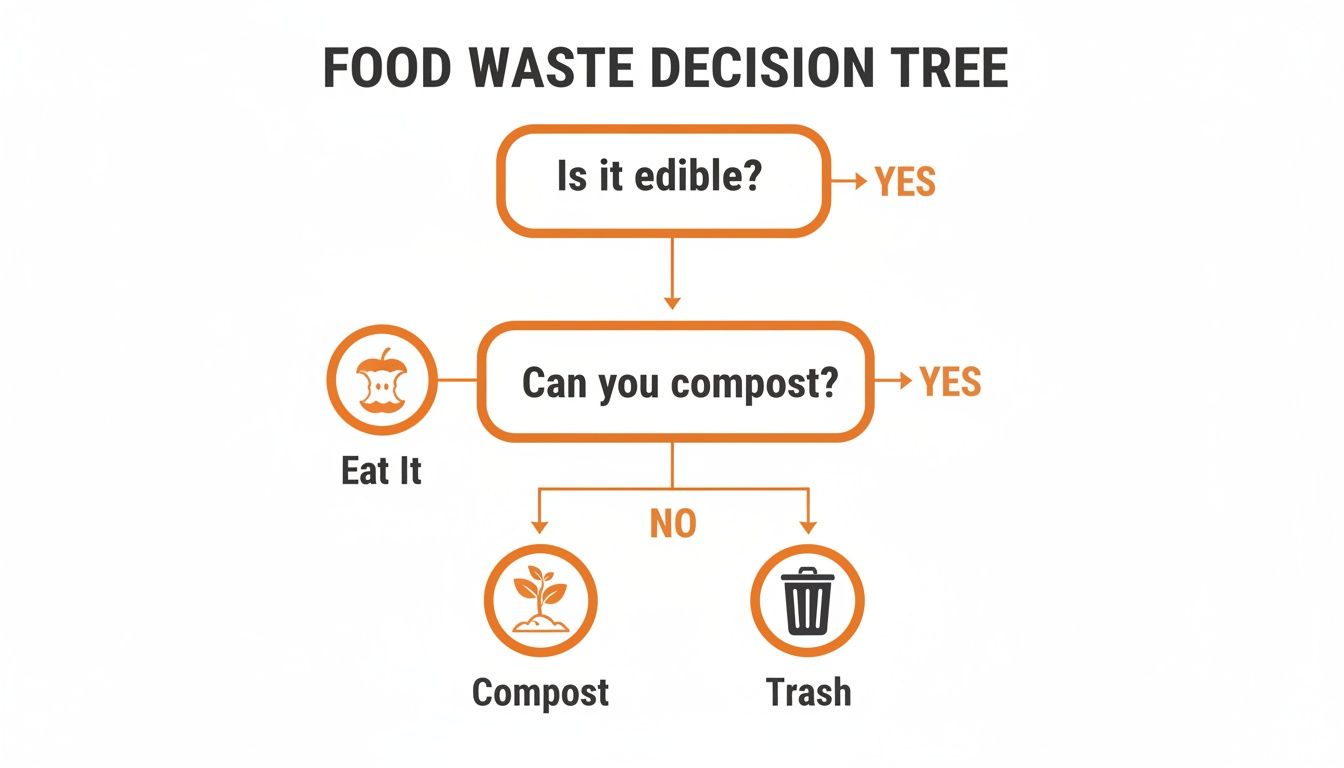
The infographic simplifies the process into a clear hierarchy: your first priority should always be to eat the food. If that's not possible, composting is the next best choice, with the trash can as the final option.
Dealing with Other Difficult-to-Dispose-Of Items
It's not just about what happens in the kitchen. Many other household items require special attention and definitely don't belong in the regular trash.
Electronics, batteries, and light bulbs, for example, contain hazardous materials. A helpful guide to recycling electronic equipment can ensure these items are handled properly. Always look for local e-waste collection events or designated drop-off locations in your community.
To help clear up some of the confusion, here’s a quick guide to some common disposal mistakes and how to correct them.
Common Household Waste Disposal Mistakes and Solutions
| Item | Common Mistake | The Right Way to Dispose |
|---|---|---|
| Used Cooking Oil | Pouring it down the sink or drain. | Solidify it with FryAway and toss the hardened puck in the trash. |
| Electronics | Tossing them in the regular garbage. | Take them to a designated e-waste recycling center or a community collection event. |
| Batteries | Throwing them in the trash, where they can leak toxic chemicals. | Find a battery recycling drop-off point, often located at libraries or hardware stores. |
| Light Bulbs (CFLs) | Putting them in the recycling or trash bin. | Many hardware stores offer free take-back programs for CFL bulbs. |
| Plastic Bags | Putting them in the curbside recycling bin (they jam the machines!). | Return them to a store drop-off bin, usually found at the entrance of grocery stores. |
By being a little more mindful about these tricky items, you can make a big impact and ensure your waste is handled as safely and responsibly as possible.
Build Your Personalized Waste Reduction Plan
All the advice in the world is great, but real change sticks when you turn ideas into habits. That’s where a personalized plan comes in. It’s not about a massive, overnight life overhaul. Think of it as a simple, custom roadmap that fits your lifestyle, helping you figure out how to reduce household waste in a way that feels doable and natural.
The best place to start is by getting to know your own trash. For a few days, just conduct a simple "waste audit." Don't make it complicated—just pay attention to what you're throwing away most often. Is your bin full of plastic packaging from snacks, food scraps from prepping dinner, or a mountain of takeout containers? This one act of observation is incredibly powerful because it shines a spotlight on your biggest opportunities for change.
The numbers on household waste can be pretty shocking. In the United States, each person is responsible for a staggering 951 kg of municipal solid waste every year, making the U.S. the top producer among developed nations. But here's the good news: studies show that targeted habits, like composting food scraps and managing used cooking oil smartly, can slash that household waste by 20-30% in urban areas. You can dig into these findings in the Global Waste Index to see just how much small actions can add up.
Setting Realistic and Achievable Goals
Once you know where most of your waste is coming from, you can set small, tangible goals. The key here is to be specific and realistic. Forget perfection; we're aiming for progress.
Here’s what that might look like in real life:
- If you spotted lots of plastic packaging: "This month, I'll cut my plastic packaging waste by 50% by hitting up the bulk bins for things like pasta, rice, and snacks."
- If food scraps are the culprit: "In the next two weeks, I'm going to set up a small compost system just for my fruit and veggie scraps."
- If you're a takeout regular: "I'm going to cook at least one extra meal at home each week instead of ordering in, which will cut down on all those containers."
Remember to celebrate the small wins! Every time you grab a reusable bag or find a new way to avoid trash, you’re building momentum. This whole journey is about consistent effort, not flawless execution.
Integrating Smart Solutions into Your Plan
Your personalized plan should also be loaded with easy wins—those simple swaps that take almost no effort but deliver a big impact. Managing used cooking oil is a perfect example. If your waste audit showed that you fry food regularly, dealing with the leftover oil is a constant headache.
This is where a product like FryAway can make a huge difference in your routine. Instead of letting greasy jars pile up on your counter or risking a plumbing nightmare, you have a clean, simple solution ready to go.
Picture this: you've just whipped up a delicious batch of crispy onion rings and are left with a pan full of hot, used cooking oil. Instead of it being a problem you'll deal with "later," the cleanup becomes a seamless part of the cooking process.
Just follow this simple, three-step routine:
- Sprinkle and Stir: While the oil is still hot, sprinkle the plant-based FryAway powder right into the pan and give it a quick stir.
- Cool Down: Now, just set the pan aside and let it cool completely. As it does, the powder works its magic, solidifying the liquid oil into a waxy, organic puck.
- Toss into household trash: Once it's hardened, you can easily scoop the solid oil out and toss it right into your household trash bin.
By building this simple step into your plan for fried food nights, you solve a messy problem before it even starts. It’s one of those small, consistent changes that makes a massive difference in how you manage your kitchen waste responsibly.
Common Questions About Reducing Household Waste
When you start trying to cut down on trash, a few questions always seem to pop up. It’s totally normal to run into practical hurdles as you change your habits. Here are some straightforward answers to the most common challenges people face.
I Live in a Small Apartment. What Are My Composting Options?
Living in a small space doesn't mean your food scraps are doomed to the landfill. You've got more options than you might think!
An indoor worm bin, also known as vermicomposting, is a fantastic choice. These systems are surprisingly compact, odorless when you manage them right, and can easily be tucked away under a kitchen sink.
Another great method is a Bokashi bin. It uses a fermentation process to break down all your food scraps—even meat and dairy. A lot of cities are also stepping up their game, offering convenient compost drop-off sites at local farmers' markets or community gardens. A quick search on your city's website will likely point you to a program right in your neighborhood.
Is Using FryAway Really Better Than Other Disposal Methods?
Yes, and it’s not even close. The old ways of getting rid of used cooking oil all come with serious problems. Pouring it down the drain is the absolute worst, creating destructive "fatbergs" that cause massive plumbing issues for you and your entire city. Tossing it out in a container is messy, and that container usually just ends up as more non-recyclable trash.
FryAway offers the cleanest, safest, and most environmentally sound solution for home cooks. It's a 100% plant-based powder that magically transforms hot liquid oil into solid organic material, which you can then just toss in the trash. The process couldn't be simpler:
- Sprinkle and Stir the powder into the hot oil.
- Cool Down and let the oil solidify completely.
- Toss the solid puck right into your household trash. No mess, no leaks.
It's the only method that completely gets rid of the risk of spills and clogs.
How Can I Reduce Waste With a Busy Family Schedule?
When you're juggling a packed schedule, the secret is to focus on small, high-impact changes that don't add more stress to your day.
Start with something easy, like switching to reusable snack bags and water bottles for school lunches. This one swap alone makes a huge dent in your single-use plastic waste.
Buying staples like grains, snacks, and cereal in bulk can also dramatically cut down on packaging. Another game-changer is a simple weekly meal plan—it helps you use up leftovers and stops you from caving to last-minute takeout. The goal isn't a perfect zero-waste lifestyle overnight; it's about celebrating the consistent, positive changes your family makes along the way.
I Feel Overwhelmed. What Is the Best First Step to Take?
Feeling overwhelmed is completely normal. The best way to get started is with a simple "trash audit."
For one week, just pay attention to what you're throwing away most often. Don't judge yourself, just observe. Is the bin full of plastic snack wrappers? Coffee cups? Food scraps from prepping dinner?
Once you identify your single biggest source of waste, focus on tackling just that one thing. Solving one problem first makes the entire process of learning how to reduce household waste feel more achievable and builds the momentum you need to make lasting changes.
Ready to make cleaning up after frying your favorite foods a breeze? With FryAway, you can say goodbye to messy jars and clogged pipes for good. Discover how easy it is to handle used cooking oil the clean and simple way.