


· By FryAway
A Guide to Environmentally Friendly Waste Disposal at Home
When you’re staring at a full trash can, it’s easy to feel disconnected from the bigger picture. But our daily disposal habits have a direct and lasting impact on the world around us.
Environmentally friendly waste disposal isn’t about being perfect. It’s about making small, powerful changes—like what you do with leftover cooking oil or that old phone tucked away in a drawer. These simple actions add up, preventing costly infrastructure damage and protecting our local ecosystems.
These individual habits become more effective when they are part of a broader system built around waste prevention, reuse, recycling, and responsible disposal. Explore our guide to sustainable waste management solutions for practical ways households can reduce waste and manage different materials more responsibly.
Why Smart Waste Disposal Is No Longer Optional
Everyday waste, from food scraps to old batteries, can cause huge problems when it’s handled the wrong way. This isn't just about overflowing landfills; it's about the very real consequences that ripple through our communities. Improper disposal can lead to contaminated water, clogged sewer systems, and polluted soil—problems that are expensive to fix and harmful to our health.
This is especially true for stuff that comes out of our kitchens. Used cooking oil, for example, is a major—and totally preventable—source of damage to our city's infrastructure. In the United States alone, we produce nearly 15 million tons of waste cooking oil every year.
When poured down the sink, this oil mixes with other gunk to form massive blockages called “fatbergs,” which have cost cities millions of dollars in emergency sewer repairs. It’s a messy, expensive problem that starts right at the kitchen sink. You can learn more about how household oil disposal contributes to this national issue and the hidden environmental cost of used cooking oil.
The Ripple Effect of Our Choices
The need for responsible disposal goes way beyond the kitchen. Think about household hazardous waste and old electronics—they contain toxic materials that need to be handled with care. To really get why this matters, especially for electronics, it’s worth understanding the environmental impact of electronic waste.
Adopting smarter habits isn't just another chore; it's an empowering step toward a cleaner home and a healthier planet. By making more conscious decisions, we collectively contribute to:
- Protecting Public Infrastructure: Preventing clogs and fatbergs saves taxpayer money and keeps our essential services running smoothly.
- Preserving Natural Resources: Keeping toxic chemicals out of landfills protects our soil and water from long-term contamination.
- Promoting a Circular Economy: Finding ways to reuse, recycle, or properly dispose of items reduces our reliance on mining and manufacturing new materials.
The shift toward environmentally friendly waste disposal is all about recognizing that our individual actions have a massive collective impact. Small changes in our daily routines can lead to huge positive outcomes for our environment and our communities.
The Smart Way to Handle Used Cooking Oil
Let’s be honest, used cooking oil is one of the biggest headaches in the kitchen. For years, we’ve all done the same things: pour it down the drain (a huge no-no) or stash it in leaky jars that just take up space.
Pouring it down the sink creates those infamous and disgusting "fatbergs" in city sewers. Sticking it in a jar just delays the inevitable trip to the landfill. There’s a much better way.
We recommend using FryAway, a 100% plant-based, non-toxic powder that magically solidifies used cooking oil. Instead of dealing with a greasy liquid, you get a solid, organic puck that you can toss right into your household trash. It's a game-changer for anyone who loves whipping up fried foods but dreads the cleanup.
A Mess-Free Method to Protect Your Pipes
Using FryAway couldn't be easier. For the best results, just follow these three simple steps:
- Sprinkle and Stir: Right after you're done cooking, while the oil is still hot, sprinkle in the FryAway powder. Give it a quick stir until it all dissolves.
- Cool Down: Now, just let the pan cool down. You'll watch as the liquid oil transforms into a solid, waxy disc.
- Toss into household trash: Once it's completely solid, just scoop the hardened oil out of the pan and drop it straight into the trash bin. Done.
This simple routine stops spills before they happen, saves your plumbing from nasty clogs, and keeps oil out of our water systems entirely. The diagram below shows exactly what happens when oil goes down the drain—and it’s not pretty.
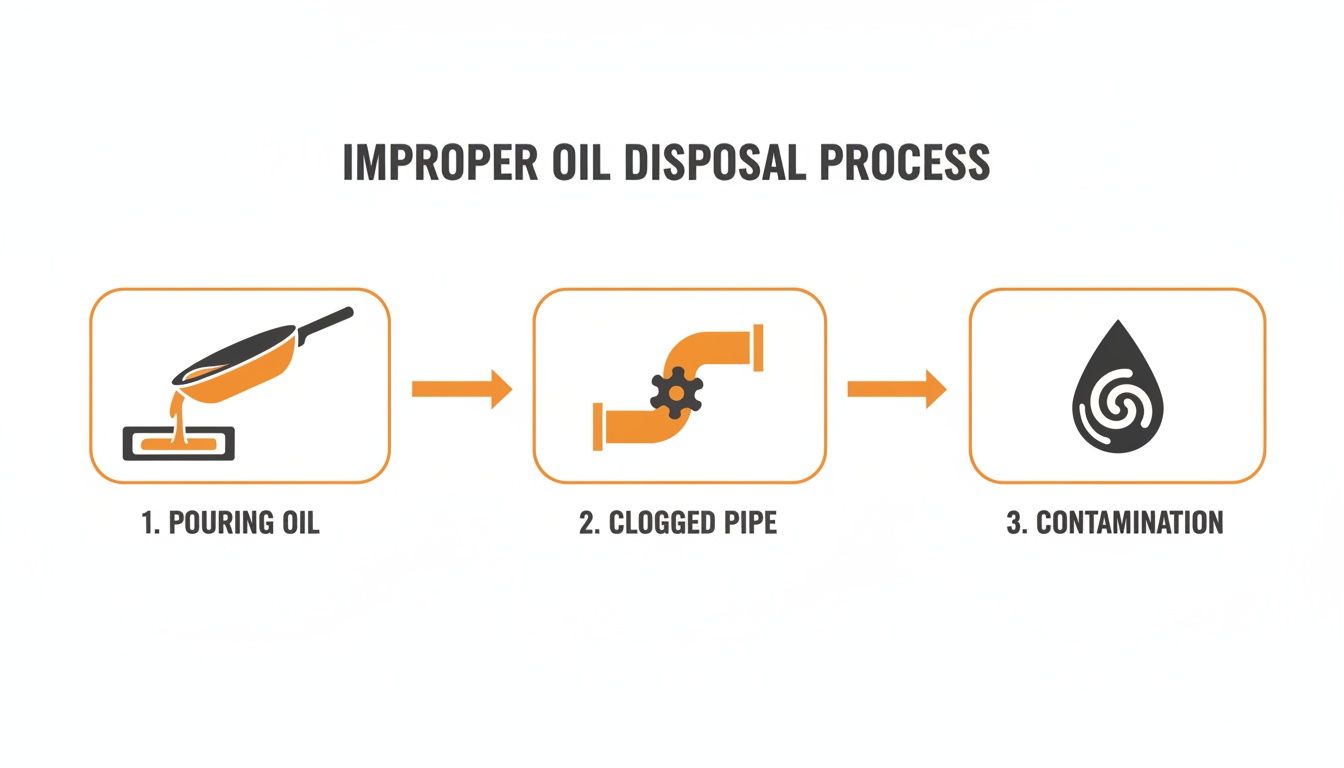
As you can see, that one small act at the sink can kick off a massive chain reaction, leading to expensive infrastructure damage and serious environmental harm.
Enjoy Fried Foods Without the Guilt
When you have a smarter disposal method, you don't have to think twice about making your favorite fried recipes. You can cook up a storm knowing the cleanup will be quick, clean, and totally responsible. It’s a small change that fits perfectly into a sustainable kitchen.
By solidifying oil, you’re not just avoiding a mess; you're actively participating in a solution that prevents plumbing emergencies and protects the environment, one meal at a time.
If you're curious about other responsible options, it's also worth checking out our guide on how to recycle cooking oil to see what local programs might be available near you.
Featured Recipe: Classic Southern Fried Chicken
To prove that a delicious dinner doesn't have to end in a cleanup nightmare, here’s a fantastic recipe for classic Southern fried chicken that requires a good amount of cooking oil.
Ingredients You’ll Need:
- For the Chicken: 1 whole chicken (about 3-4 lbs), cut into 8 pieces, 2 cups buttermilk, 2 tbsp salt, 1 tbsp black pepper, 1 tbsp paprika.
- For the Dredge: 2 cups all-purpose flour, 1/2 cup cornstarch, 2 tsp salt, 2 tsp black pepper, 2 tsp garlic powder, 1 tsp cayenne pepper.
- For Frying: 4-6 cups of peanut or canola oil.
Marinate the chicken pieces in buttermilk and spices for at least 4 hours (or overnight for best results). When you're ready to cook, mix the dredge ingredients in a large bowl and coat each piece of chicken thoroughly.
Heat your cooking oil in a large cast-iron skillet or Dutch oven to 350°F (175°C). Carefully place the chicken pieces in the hot oil, ensuring not to overcrowd the pan. Fry for about 6-8 minutes per side, until the chicken is golden brown, crispy, and cooked through to an internal temperature of 165°F (74°C). Let it rest on a wire rack.
Once you’re finished cooking, just use FryAway on the leftover oil for a cleanup that's almost as satisfying as the chicken itself.
2. Turn Kitchen Scraps into Garden Gold
Every kitchen produces a steady stream of food scraps—vegetable peels, coffee grounds, eggshells. While tossing them in the trash might feel like the easiest option, it comes with a surprisingly high environmental cost. Food waste makes up a massive portion of household trash, and when it’s buried in a landfill, it rots and releases methane, a potent greenhouse gas.
The good news? There's a powerful, hands-on solution: composting. It's a cornerstone of environmentally friendly waste disposal that literally transforms your kitchen waste into a dark, nutrient-rich soil amendment. This "garden gold" can then be used to feed your houseplants, enrich your garden beds, or nourish your lawn. It’s a simple way to create a closed-loop system right in your own home.
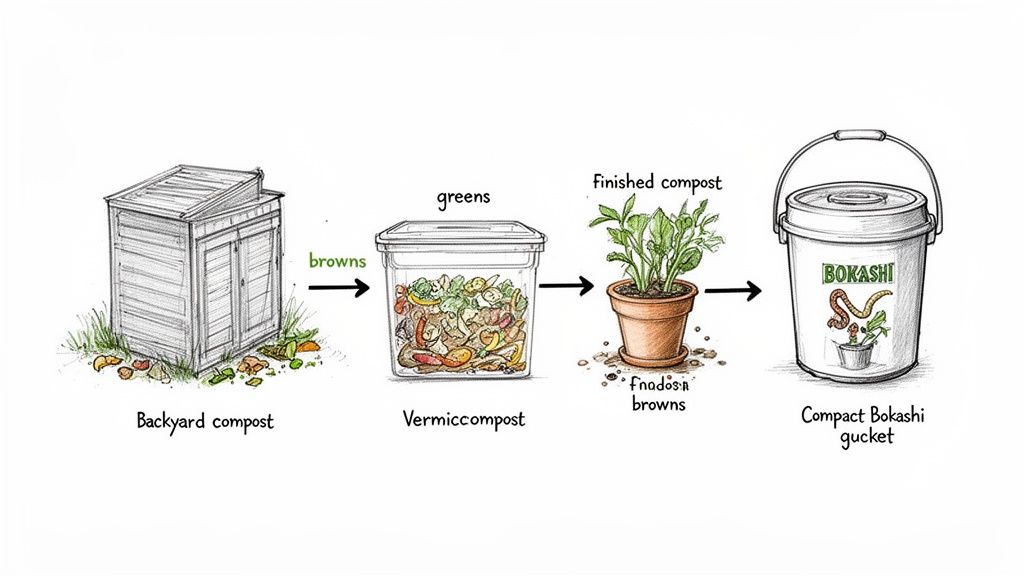
And you don't need a sprawling backyard to get started. Composting is far more accessible than most people think, with methods that work for just about every living situation.
Finding the Right Composting Method for You
The best way to compost really comes down to your space and what you're hoping to achieve. From traditional outdoor piles to super-compact indoor setups, there’s an option for everyone.
- Traditional Backyard Bins: Got some outdoor space? A simple pile or bin is a classic choice. It's perfect for handling larger amounts of both yard trimmings and kitchen scraps.
- Worm Bins (Vermicomposting): This is a fantastic option for apartments or small spaces. A worm bin can be kept indoors or on a balcony, where red wiggler worms efficiently break down food scraps. They produce incredibly rich compost and a liquid fertilizer often called "worm tea."
- Bokashi: This unique Japanese method uses fermentation to pre-compost all food waste—even meat and dairy—inside a sealed bucket. It's fast, odorless, and a brilliant solution for city dwellers.
Choosing a composting method that fits your lifestyle does more than just reduce landfill waste. You're actively creating a valuable resource that improves soil health and cuts down on the need for chemical fertilizers.
The Composting Cheat Sheet: What Goes In and What Stays Out
Successful composting is all about striking a good balance between "greens" and "browns."
Greens are nitrogen-rich materials like fruit and vegetable scraps, coffee grounds, and fresh grass clippings. Browns are carbon-rich materials like dried leaves, shredded cardboard, and paper. A good rule of thumb is to aim for a ratio of about one part green to two or three parts brown.
To make things easier, here’s a quick guide to what you can and can't toss in your compost pile.
What to Compost and What to Avoid
| Item Category | Compost This (Greens) | Compost This (Browns) | Avoid Composting This |
|---|---|---|---|
| Kitchen Scraps | Fruit & veggie peels, coffee grounds, eggshells, tea bags | Paper towels, napkins, shredded newspaper, coffee filters | Meat, bones, dairy products, grease, oily foods |
| Yard & Garden | Grass clippings, green plant cuttings, weeds (no seeds) | Dried leaves, small twigs, straw, wood chips, sawdust | Diseased plants, weeds with seed heads, pet waste |
| Household Items | Hair, fur | Cardboard (shredded), cotton/wool rags, dryer lint | Treated or painted wood, glossy paper, plastic, glass |
While many kitchen scraps are perfect for the compost bin, it's best to leave out meat, dairy, and oily foods, as they can attract pests and create some pretty unpleasant odors.
Mastering this balance is a key part of many effective food waste reduction strategies you can use at home. By turning scraps into soil, you’re not just disposing of waste; you're cultivating a more sustainable kitchen from the ground up.
How to Safely Dispose of Hazardous and E-Waste
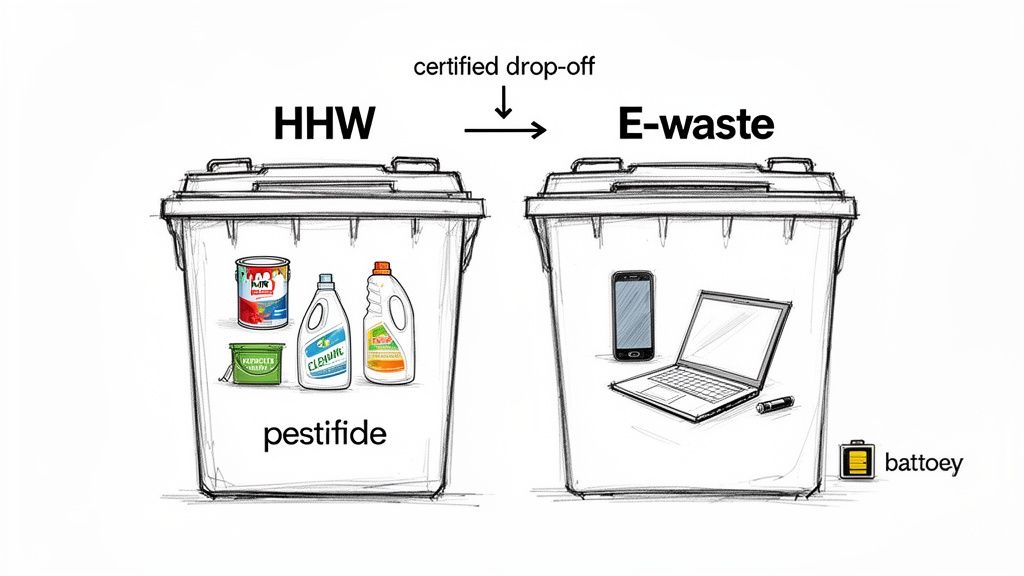
Once you get past the kitchen, you’ll probably find other items around the house that need a special touch for environmentally friendly waste disposal. We’re talking about things like old paint, dead batteries, and that ancient laptop gathering dust. These fall into two categories: Household Hazardous Waste (HHW) and electronic waste (e-waste).
You can't just toss this stuff in your regular trash bin. If you do, you risk releasing toxic chemicals like lead, mercury, and cadmium into the soil and water. That’s a serious problem for local ecosystems and, ultimately, our own health.
Identifying and Managing Household Hazardous Waste
So, what exactly is HHW? Think old paint cans, chemical cleaners, pesticides, and even those curly fluorescent light bulbs.
The first step is learning how to spot it. The easiest trick is to check the product labels. Look for words like "Danger," "Warning," "Poison," or "Caution." If you see any of those, you're dealing with HHW.
Once you’ve identified it, keep it separate from your regular trash and recycling. And whatever you do, never pour these chemicals down the drain or dump them in your yard. Most communities have much safer options available.
- Local Collection Events: Many towns and cities host special HHW collection days where you can drop off your items for free.
- Permanent Drop-Off Sites: Some larger areas have permanent facilities that accept hazardous waste all year long.
- Retailer Take-Back Programs: Stores that sell products like paint or batteries often have programs to take them back for proper recycling.
A quick Google search for "[your city] + household hazardous waste disposal" should give you all the local info you need.
Keeping hazardous materials out of the general waste stream is a critical part of protecting your local environment. These items need specialized processing to neutralize their harmful components and prevent long-term contamination.
Tackling Electronic Waste Responsibly
We all have a drawer full of old gadgets. From outdated smartphones to broken printers, this e-waste is packed with valuable materials that can be recovered. But it also contains plenty of toxic substances that shouldn't end up in a landfill.
That's where certified e-waste recyclers come in. They have the right equipment to safely take apart electronics, separating the bad stuff from the good stuff, like metals and plastics. For a deep dive into this topic, check out this helpful guide on recycling electronic equipment.
Here are a few practical ways to handle your old electronics:
- Find a Certified Recycler: Look for recyclers certified by organizations like e-Stewards or R2 Solutions. This ensures they follow high environmental and safety standards.
- Check for Retailer Programs: Big-box electronics stores often have take-back or trade-in programs for your old devices. It’s always worth asking.
- Donate Working Electronics: If your old laptop or phone still works, why not give it a second life? A local charity, school, or community center would likely be thrilled to have it.
Taking these extra steps with your HHW and e-waste ensures these potentially dangerous materials are handled the right way, protecting both your community and the planet.
Managing Bulky Items and Hard-to-Recycle Materials
Getting rid of an old mattress, a broken-down appliance, or that worn-out sofa can feel like a massive headache. These bulky items can’t just be left on the curb, and defaulting to the landfill should be the absolute last resort for any effective environmentally friendly waste disposal plan.
Instead, think of it as a chance to join the circular economy, where your old stuff can find a new purpose.
Truth is, many of these items still have plenty of life left in them. Donating usable goods is one of the most sustainable routes you can take. Charities like Habitat for Humanity ReStore or Goodwill will gladly take furniture and appliances that are in good shape, giving them a second life with a family who needs them.
If you’d rather sell or give away items yourself, platforms like Facebook Marketplace or OfferUp are fantastic. You'd be surprised how quickly someone will come and haul away that old armchair or washing machine you no longer need—especially if you list it for free.
Strategies for Bulky and Tricky Items
Before you do anything else, your first stop should always be your local municipality's website. Many towns and cities offer special collection days for bulky items a few times a year. A quick search on your city's public works page will give you the schedule, rules, and any potential fees.
Beyond the big stuff, there are those tricky, hard-to-recycle materials that often end up in the trash by mistake. We've all been there.
- Textiles: Old clothes, towels, and linens that aren't in good enough shape to donate can often be recycled. Look for textile recycling bins in your area or check out programs at stores like H&M or The North Face.
- Plastic Films: Those flimsy plastic bags from the grocery store, bread bags, and bubble wrap can't go in your curbside bin. They jam the machinery at recycling facilities. However, most major grocery stores have drop-off points right at the entrance.
- Light Bulbs: CFL bulbs contain a small amount of mercury and need special handling. Many hardware stores, like Home Depot or Lowe's, offer free recycling for them.
This mindset of finding a proper home for every single item is what really makes a difference. Think about it: in the last two decades, environmentally friendly waste oil management has quietly grown into a multi-billion-dollar global industry.
Studies estimate that roughly 320 kg of waste cooking oil are produced for every 1 ton of oil used, yet only 23–75% of this is recovered. This trend shows that even small kitchen decisions are part of a massive movement to treat waste as a resource. Discover more insights on the global scale of waste oil recovery.
By taking the time to find the right disposal method—whether for a sofa or a plastic bag—you are actively reducing the burden on our landfills and helping build a more sustainable community. It’s all about shifting from a throwaway culture to one of resourcefulness.
Answering Your Top Waste Disposal Questions
It's totally normal to have questions when you're trying to build better, greener habits in the kitchen. Where do you even start? What small change actually makes a big difference?
Let's clear up some of the most common questions so you can feel confident making these important shifts in your household.
What Is the Single Most Impactful Change I Can Make?
While every little bit helps, the most immediate and powerful change you can make is to stop pouring used cooking oil down the drain. Seriously. It's the number one cause of nasty pipe blockages that lead to expensive plumbing bills for you and massive sewer overflows for your community.
Shifting this one habit can prevent all of that. Our recommendation is to use a product like FryAway to solidify the oil right in your pan. For best results, follow this simple 3-step process:
- Sprinkle and Stir: After you’re done frying and the oil is still hot, just sprinkle in the plant-based powder and give it a quick stir until it dissolves.
- Cool Down: Let the pan sit and cool off completely. While it cools, the oil will magically turn into a solid, organic puck.
- Toss into household trash: Once it’s solid, just scoop it out of the pan and toss it straight into your household trash bin.
No mess, no clogs, and our water systems stay clean. It’s a win-win.
Is It Really That Bad to Throw Batteries in the Trash?
Yes, absolutely. Putting batteries in your regular trash is a huge no-no. They’re filled with corrosive materials and heavy metals like lead, cadmium, and mercury. When they sit in a landfill, these toxins can eventually leak out, poisoning the soil and seeping into our groundwater for decades to come.
Always, always take your used batteries to a proper disposal spot. You can usually find them at:
- E-waste collection sites
- Local household hazardous waste facilities
- Retail stores with battery recycling bins (lots of hardware and electronics stores offer this service)
Why Does My Cooking Oil Disposal Matter So Much?
What you do in your kitchen is connected to a much bigger picture. The global market for used cooking oil was valued at a whopping USD 44.35 billion in 2023 and is expected to hit USD 57.58 billion by 2029.
That tells you something important: oil disposal isn't just a personal chore anymore. It's part of a massive, regulated system where every drop of responsibly handled oil can be collected and repurposed, often into cleaner biofuels. You can learn more about the growing value of used cooking oil here.
When you choose a smarter way to get rid of your oil, you're doing more than just dodging a plumbing bill. You’re easing the burden on public waste systems and helping create a circular economy where "waste" becomes a valuable resource. Every batch of crispy onion rings is a chance to make a real difference.
Ready to make your kitchen cleanup safer, easier, and way more sustainable? FryAway gives you a simple, mess-free way to handle used cooking oil. Explore FryAway products and start frying smarter today!