


· By FryAway
The Best Way to Dispose of Oil Without Ruining Your Pipes
So, you've just finished frying up a batch of crispy chicken and now you're left with a pan full of used cooking oil. What's the best move? Simple: solidify it first with a product like FryAway, then toss it straight into your household trash. This approach is hands-down the easiest way to prevent messy spills, expensive pipe clogs, and serious damage to the environment.
The Hidden Dangers of Used Cooking Oil
That leftover oil might look harmless, but how you get rid of it has bigger consequences than most people think—consequences that stretch from your kitchen sink all the way to the city's sewer system. Pouring oil down the drain is one of the most common kitchen mistakes, and it’s also one of the most destructive.
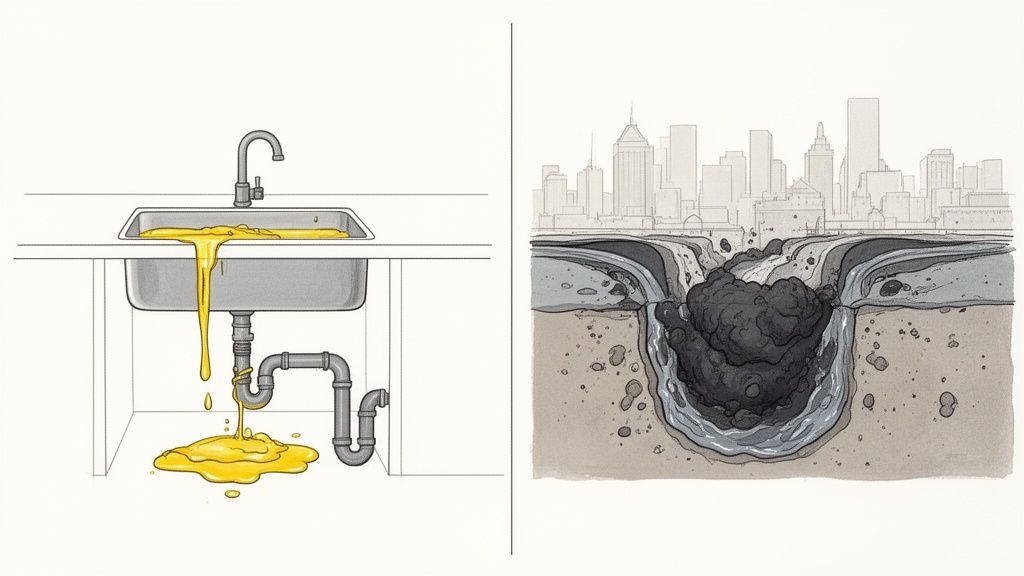
When that hot, liquid grease travels down your pipes, it starts to cool and harden. Over time, it grabs onto other bits of debris and food, forming stubborn, soap-resistant clogs. Soon you're dealing with gross odors, slow drains, and a hefty plumbing bill. What starts as a small shortcut in your kitchen can quickly become a massive headache for your entire community.
From Kitchen Clogs to City-Wide Problems
When everyone pours a little grease down the drain, it adds up. These individual clogs combine and grow into enormous blockages in municipal sewer lines known as "fatbergs." These are solid masses of congealed fat, oil, grease, and other waste that can weigh several tons, block entire sewer systems, and cause raw sewage to back up into streets and homes.
It's a pretty gnarly problem. You can get the full, stomach-churning story in our article on what fatbergs are and why they matter.
The infographic below really puts the scale of the problem into perspective, showing just how widespread improper oil disposal is and the financial and environmental toll it takes.
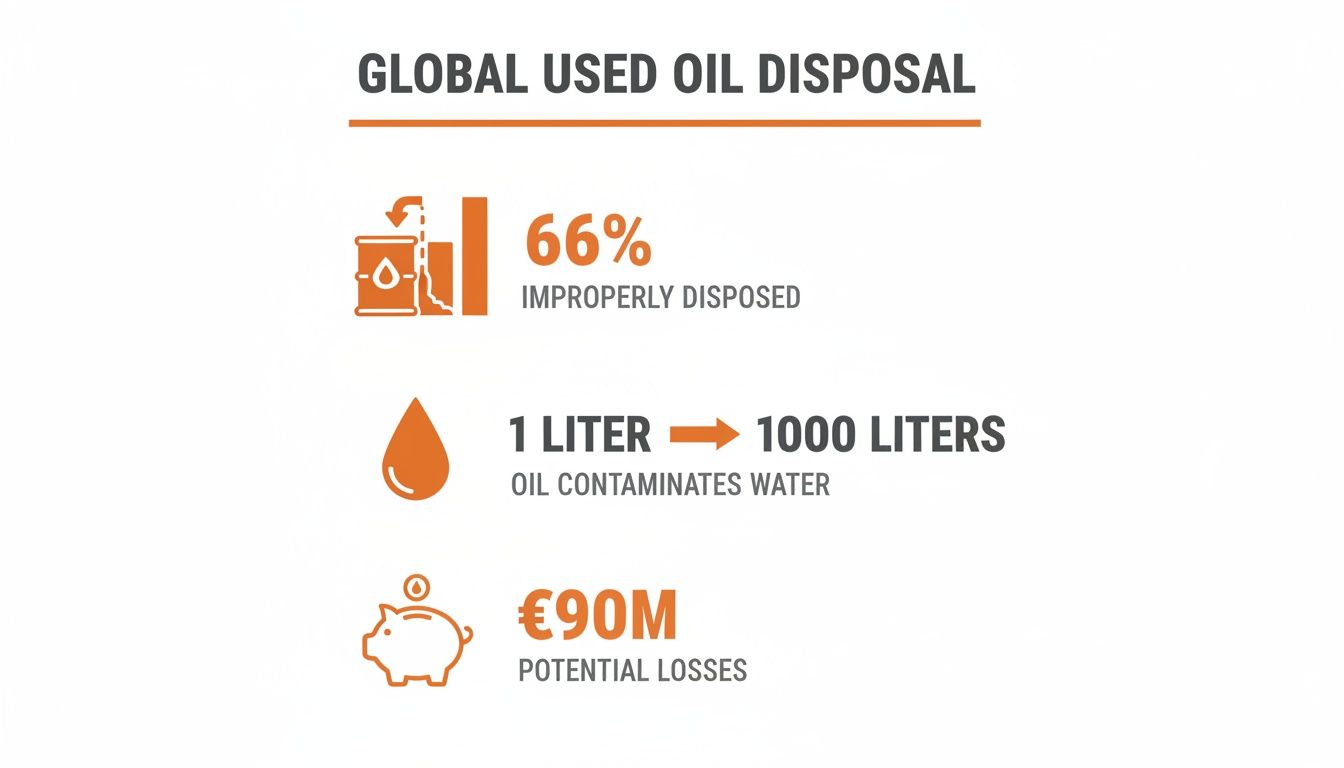
As you can see, a huge majority of households are still pouring oil down the drain, leading to widespread water contamination and millions in cleanup costs.
This isn't just a local issue; it's a global one. For example, it’s estimated that two-thirds of used frying oil in Spain still ends up down the sink or toilet. The environmental impact is staggering: just one liter of oil can contaminate up to 1,000 liters of water. The cost to manage the resulting clogs and wastewater treatment in Spain alone is roughly €90 million every year.
Proper disposal isn't just about keeping your own pipes clear. It's a critical step in protecting our shared water resources for everyone.
The Easiest Way to Handle Used Oil: Solidify and Toss It
So what’s the secret to a fast, clean cleanup without dealing with greasy jars or pouring anything down the sink? The trick is to change the oil from a tricky liquid into a simple, solid piece of organic waste.
This is where a product like FryAway really shines. It's a powder made from 100% plant-based, non-toxic ingredients that completely changes the game. You just sprinkle it into your hot used cooking oil, and as it cools, the whole pan of liquid grease turns into a solid. What you’re left with is a solid puck of oil that you can literally lift out of the pan and drop straight into the trash.
It's the most modern and straightforward solution for home cooks because it gets rid of the pouring, the storing, and the mess altogether.
A Cleanup So Simple, It’s Just Three Steps
The real magic of using an oil solidifier like FryAway is how ridiculously easy it is. There’s no special equipment needed—just your pan of oil and the powder. Let’s walk through just how quick this cleanup is.
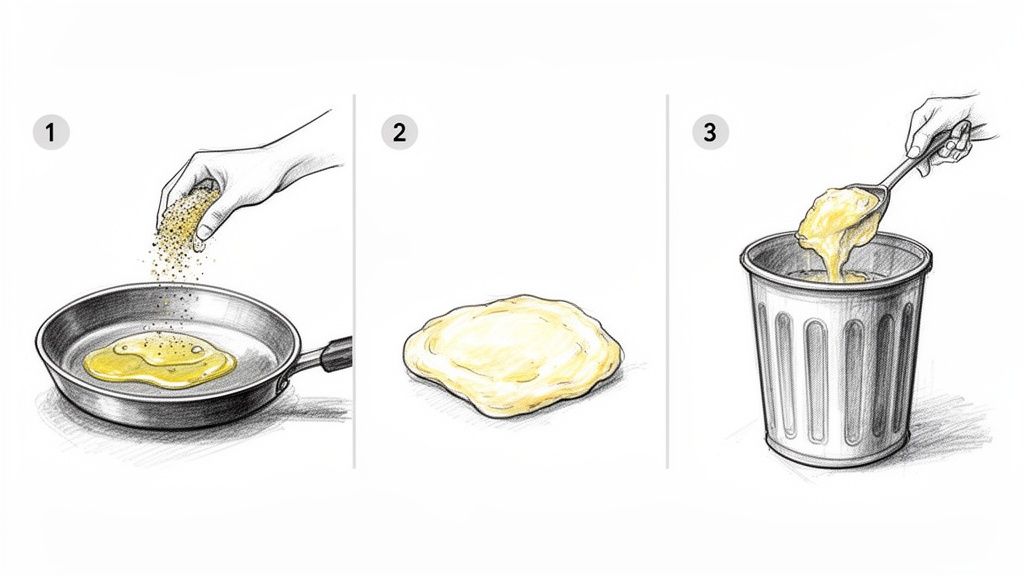
- Sprinkle and Stir: First, while the oil is still hot from cooking, you just sprinkle the FryAway powder in. It dissolves right away, kick-starting the solidification process. It doesn't matter if you've just fried up a batch of crispy buttermilk chicken or some golden onion rings; this is your first and only real step.
- Cool Down: Next, you just let it cool down. Seriously, just walk away. Leave the pan on the stovetop or a heat-safe counter and let it do its thing. The oil mixture will harden into a waxy disc as the temperature drops.
- Toss into household trash: The last step is the best part. Once the oil is completely solid, grab a spatula, scoop the hardened puck out of the pan, and drop it straight into your garbage can. No drips, no spills, no problem.
Why This Method Is a Cut Above the Rest
What makes the solidify-and-toss method so much better? It tackles the biggest headaches of oil disposal head-on. You're no longer wrestling with a sloshing, greasy liquid that can leak out of trash bags or create nasty smells in your kitchen.
Picture this: you just hosted a dinner party and made a ton of deep-fried appetizers. The last thing you feel like doing is dealing with a greasy mess. Instead of pouring hot oil into an old jar and praying it doesn't crack, you just treat the oil right in the pan with FryAway and you're done.
It's clean, efficient, and way more responsible. And if you're someone who fries in larger batches, you can check out products like the FryAway Super Fry solidifier powder, which is designed to handle bigger volumes of oil just as easily. This approach truly takes the dread out of cleanup, making frying at home fun again.
Common Disposal Mistakes and How to Avoid Them
To build better habits in the kitchen, it helps to know exactly what not to do with used cooking oil. We’ve all been tempted to take a shortcut, but even small mistakes can create huge headaches down the road. Once you know the risks, avoiding them becomes second nature.
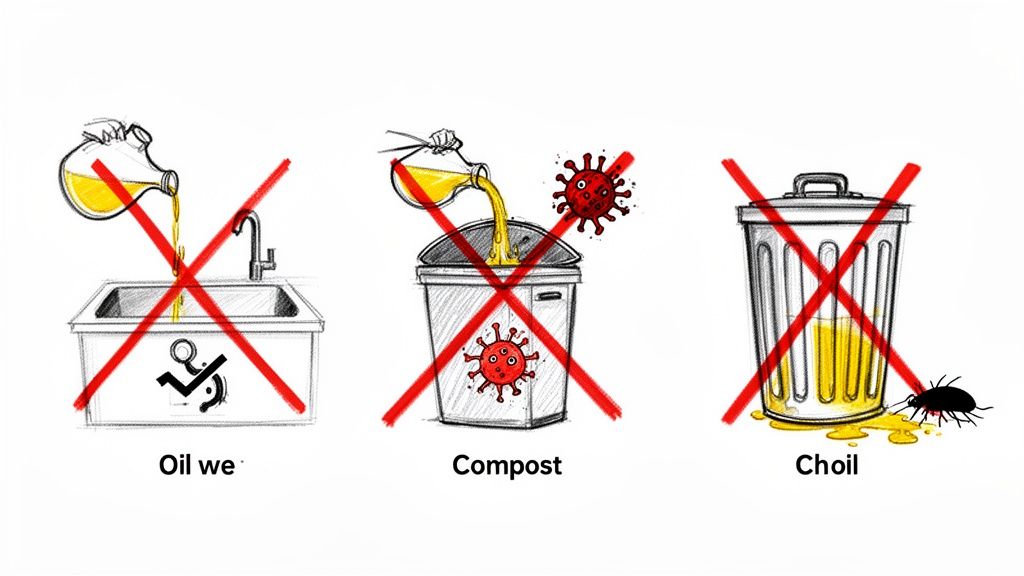
The most common—and most damaging—mistake is pouring oil down any drain. It doesn’t matter if it’s the kitchen sink, the toilet, or an outdoor storm drain; the result is always bad news. That little bit of leftover bacon grease might seem harmless, but over time it cools, solidifies, and mixes with other gunk to form stubborn blockages. Before you know it, you're making a pricey call to the plumber.
Another big no-no is adding hot oil to your compost bin. While composting is a fantastic way to handle organic waste, hot oil is the exception. It completely throws off the delicate microbial balance your compost needs to break down, attracts rodents and other pests, and creates a smelly, slimy mess that can ruin the whole pile.
The Problem with Tossing Liquid Oil in the Trash
So, if you can't pour it down the drain, just tossing the liquid oil in the trash is the next logical step, right? Not so fast. While it seems like an easy fix, it often creates more problems than it solves. Liquid oil is notorious for leaking out of trash bags, leaving greasy trails on your floors and making your garbage cans a five-star restaurant for pests.
Here’s what you’re up against:
- Messy Leaks: Even the toughest trash bags can get punctured or tear. The last thing you want is a greasy spill in your kitchen, garage, or all over the curb on trash day.
- Pest Attraction: The smell of old cooking oil is an open invitation for insects, rodents, and other unwelcome wildlife.
- Environmental Harm: When oil leaks from trash bags in a landfill, it can eventually seep into the ground, contaminating soil and groundwater.
The only truly mess-free way to use your household trash is to solidify the oil first. This simple step prevents leaks, contains odors, and ensures the waste stays put.
For commercial kitchens, selecting a kitchen grease trap is an essential step to avoid plumbing disasters and comply with regulations. For home cooks, though, the easiest solution is solidifying the oil before it even has a chance to cause trouble.
Your Best Defense Against Disposal Disasters
The best strategy is to sidestep these mistakes entirely with a foolproof method like FryAway. This plant-based powder magically transforms messy liquid oil into a solid, organic puck of waste, making cleanup completely effortless.
The process couldn't be simpler: 1) Sprinkle and Stir the powder into your hot cooking oil, 2) Cool Down and let it solidify, and 3) Toss the hardened disc right into your household trash can. This one habit eliminates every common disposal error, protecting your pipes, your compost, and your sanity.
Other Responsible Ways to Handle Used Oil
While solidifying oil with FryAway is definitely the simplest and most direct path for home cooks, it's good to know your other options. For anyone really committed to sustainability, recycling and reusing cooking oil are great alternatives, though they often take a bit more work.
These methods make sure used oil stays out of our pipes and waterways, and that's a win for the environment.
Finding a Local Oil Recycling Center
Recycling turns a kitchen byproduct into a valuable resource. Many communities actually have programs that collect used cooking oil and convert it into biofuel, which is a cleaner-burning alternative to traditional diesel. It's a fantastic circular approach, especially for large amounts of oil, but it does require some extra effort on your part.
Honestly, the biggest hurdle can be just locating a facility that accepts used cooking oil from residents. These centers aren't nearly as common as your standard recycling drop-offs, but a quick search online can usually point you in the right direction.
Try plugging these into your search engine to find a location near you:
- "Used cooking oil recycling [your city]"
- "Household hazardous waste collection events [your county]"
- "Biofuel collection near me"
Just keep in mind, recycling means you'll need to collect and store the liquid oil in a sealed, leak-proof container—like the original bottle or a sturdy jug—and then transport it without making a mess. It's a great option, but it lacks the immediate, no-fuss convenience of solidifying the oil right in your pan. You can dive deeper into the specifics in our guide on how to recycle cooking oil.
The potential here is huge. A recent technical review estimates that the world generates about 50 million tonnes of waste cooking oil each year, yet only about 28% of it is currently recovered. Every single drop we keep out of the drain makes a difference. Explore the full findings on global waste cooking oil management.
Reusing Cooking Oil the Right Way
So, can you use that oil again? Absolutely—but you have to do it safely. Reusing oil from frying is a smart way to cut down on waste and save a little money, especially after you've cooked something with a neutral flavor, like french fries or tempura.
To reuse your oil safely, the first step is always filtering. Let the oil cool down completely, then strain it through a fine-mesh sieve, cheesecloth, or even a coffee filter to get rid of any lingering food particles. Store the clean oil in an airtight, opaque container somewhere cool and dark. Definitely don't keep it on the stovetop, where the heat will just degrade it faster.
But oil doesn't last forever, and you need to know when it's time to call it quits. Keep an eye out for these tell-tale signs that your oil has gone bad:
- It’s turned a dark, murky color
- It has a rancid or just plain "off" smell
- It gets foamy on the surface when you heat it up
- It starts to smoke long before it gets to a high temperature
If you notice any of these, the oil's quality has taken a nosedive and it's going to make your food taste terrible. At that point, your best bet is to just solidify it with FryAway and toss it in the trash for good.
Enjoy Frying Without the Cleanup Dread
Let's be honest, the best part of cooking is eating the incredible food you just made—not staring down a greasy, oil-filled pan afterward. Frying at home always feels like a bit of a trade-off. You get that amazing flavor and perfect crunch, but then you’re left with the dreaded cleanup.
What if you could have it all? What if the joy of a perfectly fried meal came with a cleanup process that was just as satisfyingly simple?
Think about it. You’re in the kitchen, making a batch of the crispiest buttermilk fried chicken imaginable. Or maybe it's some golden, light-as-air onion rings. These are the kinds of foods that bring everyone to the table, but they also leave behind a whole lot of oil. Instead of that being the moment the dread sinks in, it can actually be the easiest part of your night.
Ultimate Crispy Buttermilk Fried Chicken
This is the kind of recipe that makes memories. It’s a guaranteed crowd-pleaser, delivering that shatteringly crispy crust and juicy meat everyone loves. Of course, getting that perfect deep-fry finish requires a good bit of oil.
- Oil Type: Peanut or Canola Oil
- Amount Needed: Approximately 4-6 cups (enough for about a 1-inch depth in a large skillet or Dutch oven)
After the last piece of chicken hits the wire rack and your family starts digging in, the cleanup can be over in minutes. This is where a product like FryAway completely changes the game, turning a messy chore into a simple, walk-away task.
Perfect Golden Onion Rings
Who can say no to a basket of perfectly crispy onion rings? A simple batter and hot oil create a delicate crunch that is absolutely addictive.
- Oil Type: Vegetable or Sunflower Oil
- Amount Needed: Approximately 3-4 cups (for frying in a medium saucepan or skillet)
Once these beauties have been devoured, you’re left with that familiar pan of used oil. But instead of grabbing an old jar or wondering what to do next, you can solve the problem right then and there.
After frying, simply sprinkle FryAway into the still-hot oil and walk away. By the time the dinner table is cleared, the mess has solidified into a single, easy-to-manage puck of waste that’s ready for the trash.
It's this simple connection—from a delicious meal to an effortless cleanup—that makes frying at home fun again.
Of course, even with the best intentions, spills can still happen. For those little accidents, knowing a few tricks for managing absorbent oil spills can be a real lifesaver. But when you solidify the oil first, you pretty much eliminate the risk of a liquid spill in the first place.
The Simple Three-Step Cleanup
The whole process is designed to be ridiculously easy, letting you get back to your family and friends without a greasy pan lingering on the stove. It’s the fastest, cleanest, and safest way to get rid of used cooking oil.
- Sprinkle and Stir: While the oil is still hot, just sprinkle the FryAway powder evenly over the surface. Give it a quick stir to help the powder dissolve and start the magic.
- Cool Down: Now, just leave it. As the oil cools down on the stovetop, it will slowly harden into a solid, waxy disc.
- Toss into household trash: Once it's completely cool and solid, just use a spatula to pop the puck out of the pan and drop it straight into your regular trash can. No drips, no leaks, and no messy containers. It's that simple.
Your Top Questions About Oil Disposal, Answered
Changing up a kitchen routine, even a small one, always brings up a few questions. When you're trying to figure out the best way to get rid of used cooking oil, you want to be sure you’re doing it right. Here are some straightforward answers to the most common questions we get about solidifying oil for a clean, easy toss.
Can I Use FryAway With Any Type of Cooking Oil?
Yes, you absolutely can. We designed FryAway to be the universal fix for your messiest kitchen cleanup jobs. It works like a charm on all the usual cooking oils and fats you'd have in your kitchen.
This includes things like:
- The big jugs of vegetable, canola, corn, and sunflower oil you use for deep frying.
- That peanut oil left over after making a batch of crispy fried chicken.
- Even animal fats like bacon grease or lard that you’re not planning to save.
It doesn’t matter what you’ve been cooking with; the process is exactly the same. The plant-based powder will turn any of those fats into a solid, easily disposable puck.
Is It Really Safe for My Regular Trash Can?
Completely safe. Once the oil has hardened, it’s not a liquid mess anymore. It becomes a single, solid piece of organic waste. You can confidently scoop it right out of the pan and toss it into your household trash bag.
No more worrying about greasy leaks, nasty spills, or attracting pests. This is a huge win compared to dealing with liquid oil. Plus, you’re handling it responsibly. The global market for used cooking oil (UCO) is already around USD 8.0 billion in 2024 and growing, mainly because it can be turned into biofuel. By solidifying your oil, you're taking the first step in managing this resource correctly right at home. You can learn more about the growing UCO market over at LiquidRecover.com.
How Much FryAway Powder Do I Actually Need?
The amount of powder you'll need just depends on how much oil you're trying to get rid of. The packaging gives you a simple guideline, but honestly, the process is very forgiving. You don’t need to pull out the measuring spoons.
Just follow these three simple steps for the best results:
- Sprinkle and Stir: Just sprinkle enough powder to lightly cover the surface of the hot oil. Give it a quick mix to make sure it dissolves.
- Cool Down: Leave the pan on the stovetop or a heat-safe counter to cool. The magic happens as it cools down and hardens.
- Toss into household trash: Once it’s a solid puck, just scoop it out and toss it in the trash. You're done!
The real key here is to add the powder while the oil is still hot from cooking. That’s what activates it properly, ensuring it solidifies into a firm, easy-to-handle mass. It’s a truly foolproof way to keep your kitchen mess-free.
Ready to completely change your cleanup game and make frying at home simple and stress-free? Give FryAway a try and see just how easy it is to dispose of used cooking oil the right way. Shop now and say goodbye to messy oil disposal for good at FryAway.co.