


· By FryAway
How to Prevent Drain Clogs and Keep Your Pipes Clear
To keep your drains flowing freely, you have to play a little defense. The best strategy is to stop fats, oils, and grease (FOG) at the source, catch solids with drain strainers, and flush your pipes regularly with hot water. Trust me, being proactive is a lot easier—and cheaper—than dealing with a full-blown blockage.
Understanding What Really Clogs Your Drains
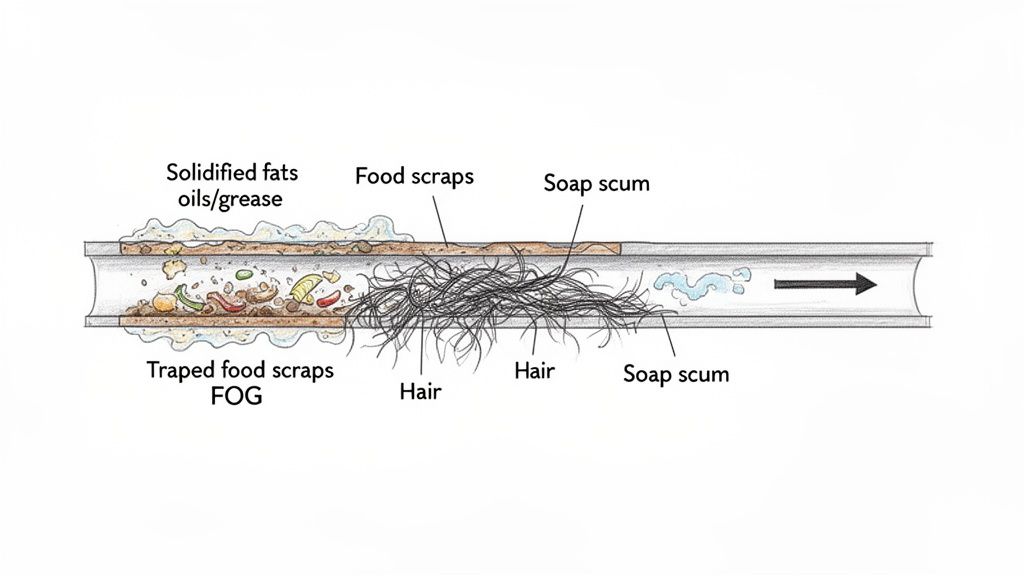
That slow-draining sink isn't just a minor inconvenience. It's a warning sign. While we all know to watch out for stray hairs in the shower or big chunks of food, the real menace lurking in most kitchen pipes starts as a harmless-looking liquid: fats, oils, and grease (FOG).
It seems simple enough to pour hot cooking grease down the drain, especially when you follow it with a blast of hot water. It looks like it all washes away. But here’s the problem: as that FOG travels down your pipes and away from the hot water, it cools and solidifies. That liquid grease quickly turns into a thick, waxy gunk that sticks to the inside of your plumbing.
The Science Of A Stubborn Clog
Once that greasy film forms, it acts like flypaper for everything else you send down the drain. Tiny food particles, soap scum, coffee grounds, and other debris get caught in the sticky mess, building up layer by stubborn layer. Before you know it, the pipe's opening narrows until water can barely squeeze through, and you’re left with a nasty clog.
And this isn't just a problem for your house; it’s a massive issue for entire cities. Cooking fats, oils, and grease are a leading cause of sewer backups. In fact, FOG is blamed for roughly 47% of sewer blockages in some cities, leading to thousands of messy and expensive overflows every year.
When huge amounts of FOG mix with things like wet wipes and other trash in public sewer systems, they can form monstrous blockages called "fatbergs." These things can weigh several tons and require heavy machinery to break apart, causing serious damage to our infrastructure.
To get a clearer picture of just how varied the sources of clogs can be throughout your home, take a look at this quick breakdown.
Common Clog Culprits and Where They Hide
| Location | Primary Culprit | How it Causes a Clog |
|---|---|---|
| Kitchen Sink | Fats, Oils & Grease (FOG) | Solidifies in pipes, creating a sticky trap for food scraps and debris. |
| Bathroom Sink | Hair & Soap Scum | Hair binds with sticky soap residue to form dense, water-blocking clumps. |
| Shower/Tub | Hair & Conditioner | Long hairs get tangled in the drain, and thick conditioners add to the buildup. |
| Laundry Room | Lint, Dirt & Detergent | Fabric fibers and grime mix with soap to create a thick sludge over time. |
| Outdoor Drains | Leaves, Dirt & Debris | Natural materials wash into drains and compact, blocking water flow. |
Knowing where these clogs start is the key to preventing them. By understanding what causes them, you can shift your habits from reacting to plumbing emergencies to proactively keeping your drains clear from day one. For a deeper dive, check out our guide on what fatbergs are and why they matter.
Mastering Your Kitchen Sink Defense Strategy
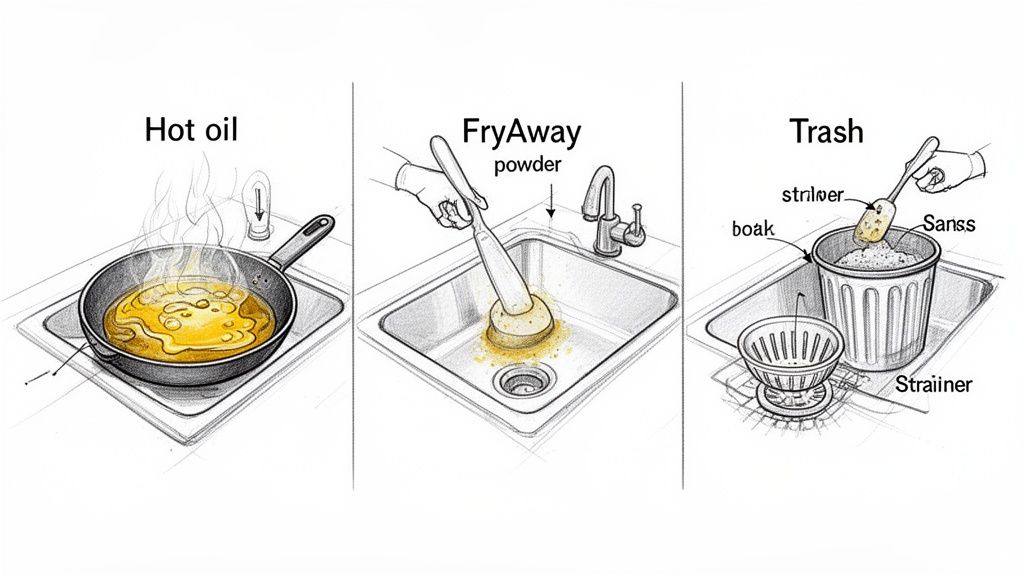
Let's be honest, your kitchen sink is the command center for clog prevention. It’s where most of the fats, oils, and grease (or FOG, as we call it in the business) find their way into your plumbing, making it the most critical battleground in your home. Winning here comes down to a simple, two-part defense: managing solid food waste and mastering liquid grease disposal.
The first line of defense is one you’ve heard before, but it's shockingly effective. Make it a habit to diligently scrape every last bit of food from plates, pans, and utensils straight into the trash before they ever touch the sink. Even tiny food particles will happily get trapped in the sticky FOG residue lining your pipes, speeding up the creation of a major blockage.
To back this up, grab a high-quality sink strainer. Think of this little tool as your drain's personal bodyguard, catching any scraps that try to sneak past. Just remember to empty it into the trash can, not rinse its contents down the drain.
The Ultimate Solution for Cooking Oil Disposal
While scraping plates and using a strainer are essential, the single biggest threat to your kitchen drain is leftover cooking oil. Pouring hot grease down the sink is like sending a formal invitation for a future plumbing disaster. As it cools, it solidifies, creating the perfect, sticky foundation for a stubborn and expensive clog.
For years, the standard advice was to pour used oil into an old jar and toss it when full. This method works, sure, but it's often messy, a bit of a hassle, and leaves you with a leaky container of greasy liquid stewing in your trash. It's time for a smarter approach.
This is where FryAway completely changes the game with a clean, simple, and incredibly effective method for oil disposal. This plant-based powder magically transforms hot liquid oil into a solid, organic waste puck. You can just toss it straight into your household trash can. No more messy jars, no risk of spills, and absolutely zero oil going down your drain.
Using a product like FryAway isn’t just about protecting your own pipes. It’s about preventing larger-scale blockages in municipal sewer systems, which helps protect local waterways and infrastructure from costly damage.
How to Use FryAway for a Clog-Free Kitchen
Putting FryAway to work is so easy it feels like cheating. It fits right into any cooking routine, especially after frying up your favorite foods. Here’s all you have to do with the leftover cooking oil for the best results:
- Sprinkle and Stir: While the cooking oil is still hot in the pan, just sprinkle in the FryAway powder. Give it a quick stir to make sure it's fully mixed in.
- Cool Down: Now, just walk away and let it cool down completely. As the oil cools, FryAway works its magic, turning that liquid into a solid, waxy puck.
- Toss into Household Trash: Once it's completely cooled and solid, you can easily scoop the entire puck out of your pan and toss it right in the trash. Your pan is left with minimal residue, and your drain is 100% safe.
This simple process is the key to enjoying all the fried foods you love without the looming fear of a plumbing nightmare. For even more tips, check out our guide on how to dispose of cooking oil without clogging your pipes. Adopting this one habit is one of the most powerful moves you can make to keep your kitchen drains clear.
Perfect Beer-Battered Fish and Chips with Clog-Free Cleanup
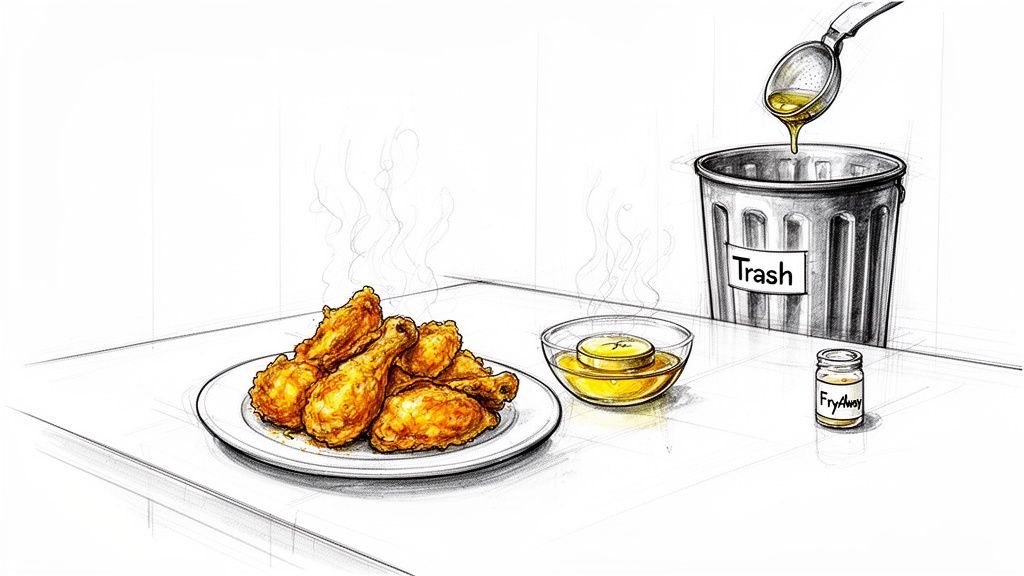
Theory is one thing, but seeing a solution work in the real world is where it really clicks. Let's walk through a classic scenario to show just how simple proper oil disposal can be. And what better test is there than a batch of perfectly crispy, beer-battered fish and chips?
This recipe proves you don't have to dread the cleanup, even when you're deep-frying. Once that delicious, home-cooked meal is done, the pan of leftover oil is the only thing standing between you and a clean kitchen. With the right move, it's no threat to your plumbing at all.
A Simple Recipe for Crispy Results
The secret to a light, crispy batter is cold beer and getting the oil temperature just right. You can use pretty much any high-smoke point cooking oil you have on hand, like vegetable, canola, or peanut oil.
- Ingredients: 1 lb cod fillets, 1 cup all-purpose flour, 1 teaspoon baking powder, salt and pepper to taste, 1 cup of cold beer, and about 4-6 cups of cooking oil for frying.
- Preparation: In a bowl, whisk the flour, baking powder, salt, and pepper. Slowly pour in the cold beer, whisking until you have a smooth batter. Pat the fish fillets dry and coat them in the batter.
- Frying: Get your cooking oil heated in a large, heavy-bottomed pot or a Dutch oven to about 350°F (175°C). Carefully lower the battered fish into the hot oil. Let it fry for about 4-6 minutes on each side until it’s a beautiful golden brown and cooked all the way through.
Once your fish is perfect, move it to a wire rack to drain. Now for the main event: that pan full of hot, used cooking oil. This is the crossroads where you either set yourself up for a future plumbing nightmare or prevent one before it even starts.
Turning used cooking oil from a liquid liability into a solid, toss-able puck is the most effective way to prevent drain clogs at their source. It completely removes the risk of FOG buildup in your pipes.
The Clog-Free Cleanup with FryAway
This is where the magic happens. Instead of pouring that greasy liquid down the sink or trying to pour hot oil into an old jar, you can solidify it with just a few simple moves.
- Sprinkle and Stir: While the oil is still hot in the pan, carefully sprinkle in the FryAway powder. A quick, gentle stir is all it takes to mix it in.
- Cool Down: That's it. Just set the pan aside and let it cool down completely. As the temperature drops, the FryAway gets to work, transforming that liquid oil into a solid, waxy disc.
- Toss into Household Trash: Once it’s completely solid and cool to the touch, you can just use a spatula to pop the entire puck out of the pan. From there, it goes straight into your household trash can.
This little routine shows how a smart disposal method can fit right into your cooking process without any fuss. After enjoying dishes like beer-battered fish and chips, a truly clog-free cleanup involves more than just grease disposal; it also means adopting efficient food waste reduction strategies for commercial kitchens.
You can learn more about streamlining your kitchen routine with our guide to an effortless post-frying cleanup. It’s a simple habit that gives you the freedom to cook your favorite fried foods without ever worrying about a costly plumbing bill down the road.
A Whole-Home Strategy for Preventing Clogs
If you want a truly clog-free home, you have to think beyond the kitchen sink. Sure, grease is a huge problem, but every single drain in your house is up against its own unique set of challenges. A little proactive defense in the bathroom, laundry room, and even outside is the secret to keeping your entire plumbing system healthy and flowing smoothly.
Just think about how common this problem is. The global market for drain cleaners was worth about USD 2.18 billion in 2023 and is expected to hit USD 3.08 billion by 2029. A huge chunk of that comes from places like restaurants and hospitals that can't afford the downtime from a clogged pipe. This just goes to show how valuable a little prevention can be. You can dig into these drain cleaner market trends if you're curious about the scale of the issue.
Guarding Your Bathroom Drains
The bathroom is basically ground zero for clogs made of hair and soap scum. It’s a gnarly combination that creates some of the most stubborn blockages you’ll ever face. Hair creates a net, catching all the soap residue and gunk until it forms a dense, water-blocking nightmare.
Thankfully, the fix is simple and incredibly effective.
- Get Some Hair Catchers: Pop a mesh or silicone hair catcher over every shower and bathtub drain. These little things are cheap, easy to install, and are your absolute best line of defense. They stop hair before it ever gets a chance to go down the drain. Just make a habit of cleaning them out regularly.
- Rethink What You Flush: Your toilet is only designed to handle human waste and toilet paper. That’s it. Flushing things like so-called "flushable" wipes, cotton balls, or paper towels is a surefire way to cause a severe—and often expensive—clog.
A simple house rule can save you from a massive plumbing headache: If it’s not toilet paper, it belongs in the trash can. This one habit protects not just your pipes but the entire municipal sewer system.
Securing Your Laundry and Outdoor Lines
The drains you don't look at every day are just as critical. The lines from your laundry room and your outdoor drainage can cause major backups that affect your whole house if you ignore them.
In the laundry room, the washing machine hose is the main offender. Every time your machine drains, it sends a mix of lint, synthetic fibers, dirt, and detergent sludge down the line. Over time, this gunk builds up and chokes off the water flow. A simple lint trap—a small mesh screen that hooks onto the end of the discharge hose—can catch those fibers before they become a problem.
Finally, don't sleep on your outdoor drains and gutters. When they get choked with fallen leaves, twigs, and other yard debris, rainwater has nowhere to go. This can lead to water pooling around your property, foundation damage, and even a flooded basement. A quick sweep before a big storm can prevent a world of trouble.
By building these small habits into your regular home maintenance, you’re protecting every single pipe from clogs you never have to deal with.
Your Simple Monthly Drain Maintenance Routine
Let's be honest: consistent maintenance is always easier—and way cheaper—than dealing with a plumbing emergency. Just a few minutes each month is all it takes to keep your drains flowing smoothly and stop the slow, silent buildup that leads to monster clogs.
Think of it like regular upkeep for your car; a little attention now prevents a major breakdown later. Your plumbing system works the same way. A simple routine can help dissolve early-stage grease, break down nasty soap scum, and keep your pipes clear and smelling fresh. For a deeper dive, there are some great comprehensive strategies for preventive maintenance in plumbing systems that can give you the full picture.
A Schedule You Can Actually Stick To
The best maintenance plan is one you’ll actually follow. So, let's not overcomplicate it. The goal is to focus on small, high-impact tasks that hit the most common problem areas in your home.
This timeline shows how a few proactive steps in different parts of your home can make a huge difference for your entire plumbing system.
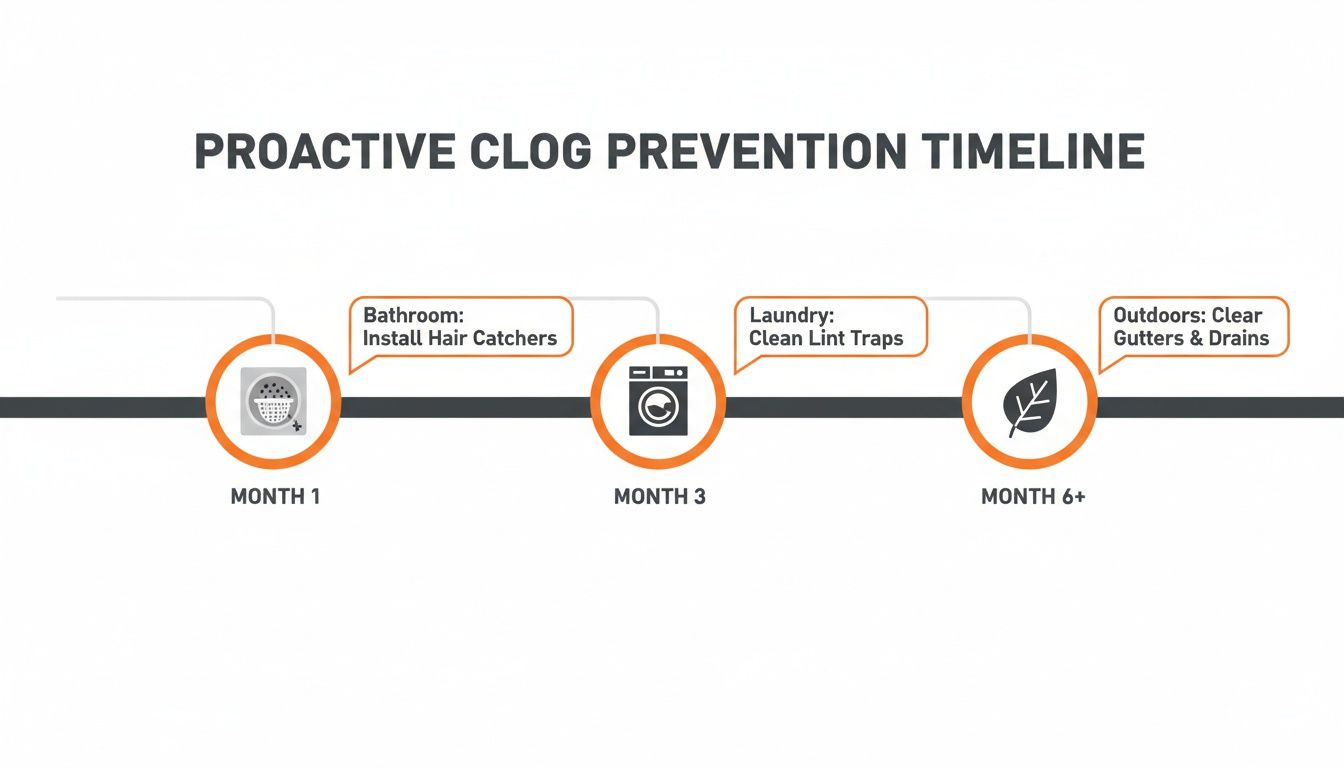
The big takeaway here? Simple, targeted actions—like cleaning hair catchers and lint traps—can stop clogs before they even get a chance to form.
Here’s a practical schedule to get you started:
- Weekly Hot Water Flush: Once a week, grab a kettle of boiling water and pour it slowly down your kitchen sink drain. This super simple trick helps melt and wash away any fresh grease or soap residue before it can harden into a stubborn blockage.
- Monthly Baking Soda & Vinegar Treatment: For all your sinks and tubs, pour about half a cup of baking soda down the drain. Follow it up with half a cup of white vinegar. Let that satisfying fizz work its magic for 15-20 minutes, then flush it all out with hot water. This classic duo is fantastic for deodorizing pipes and breaking down gunk.
Adopting these habits puts you in control of your home's plumbing health with minimal effort. It’s all about working smarter, not harder.
Got Questions About Drain Clogs? We’ve Got Answers.
Even when you're doing everything right, certain plumbing situations can leave you scratching your head. Knowing the "why" behind the rules of drain care makes it much easier to keep things flowing smoothly. Let's tackle some of the most common questions we hear from homeowners.
Are "Flushable" Wipes Really Flushable?
This is a big one, and the source of so many plumbing headaches. Are products labeled "flushable" actually safe for your pipes?
The answer is a hard no.
Unlike toilet paper, which is designed to break down almost instantly in water, most "flushable" wipes don't disintegrate. Instead, they act like tiny nets, snagging on any grease or existing buildup inside your pipes. Before you know it, they've formed a dense, stubborn blockage that's a nightmare to clear.
Stick to this simple rule: The only things that belong in your toilet are human waste and toilet paper. Everything else—wipes, cotton swabs, dental floss, hygiene products—goes straight into the trash can.
Safe Clog Removal and Early Warnings
When a drain starts to slow down, the first instinct for many is to grab a bottle of chemical drain cleaner. But is that a good idea?
While those harsh chemicals can feel like a quick fix, they are often highly corrosive. With repeated use, they can eat away at your plumbing, especially older metal pipes. This can lead to leaks and repairs that are far more expensive than a simple clog. For regular maintenance, gentler methods like a hot water flush or a baking soda and vinegar mixture are much safer bets.
And when it comes to grease, prevention is always better than a chemical cure. Using a product like FryAway to solidify oil before it ever gets near your sink is a much smarter move than trying to dissolve a greasy clog later.
The best way to manage your plumbing is to learn the early warning signs of a clog. Catching it early usually means you can fix it yourself, long before you need to make an emergency call to a plumber.
Here’s what you should be looking (and listening) for:
- Slow Draining: This is the #1 sign. If water in your sink, shower, or tub is taking its sweet time going down, you've got a partial blockage forming.
- Gurgling Sounds: Hear strange bubbling or gurgling noises from your drains? That's often the sound of trapped air struggling to get past a clog.
- Funky Odors: If a foul smell is coming from your pipes, it’s a good sign that food particles or other gunk are trapped and starting to decay in there.
- Water Backups: This one is a dead giveaway. If water backs up into a sink when the dishwasher or washing machine is running, it means the shared drain line is obstructed.
Managing Kitchen Appliances
Your garbage disposal can be another source of trouble. If it starts to smell, does that mean it's clogged?
Not always, but it's a definite red flag. That odor is usually from tiny food particles stuck to the blades and the inside of the disposal. An easy way to clean it out is to grind up a handful of ice cubes with some coarse salt. Follow that up with a few lemon or orange peels to leave it smelling fresh.
And remember to always run cold water when using the disposal. Cold water keeps any grease or fat solid, which allows the blades to chop it into small pieces that can be washed away more easily. Hot water, on the other hand, melts grease, letting it coat your pipes further down the line.
The best defense is a good offense. Stopping clogs at the source is the key, especially in the kitchen where grease and oil are the main culprits. For a simple, incredibly effective way to handle used cooking oil and keep your drains protected, trust FryAway.
Learn more about how to make your kitchen cleanup easier and safer at https://fryaway.co.