


· By FryAway
How to Prevent Kitchen Fires and Cook with Confidence
Preventing a kitchen fire boils down to one simple rule: stay in the kitchen when you’re cooking. It sounds obvious, but unattended cooking is the single biggest cause of these disasters. Just keeping your eyes on the stove—especially when you’re frying, grilling, or broiling—is your first and best line of defense.
It’s a small habit that dramatically cuts your risk.
Why Kitchen Fire Prevention Matters
We all know the kitchen is the heart of the home. It’s where we gather, share meals, and make memories. But behind the comforting aromas and bubbling pots lies a startling risk: the simple act of cooking is the leading cause of home fires and injuries.
Moving past the abstract idea of "fire safety" to understand the real-world numbers is the first step toward building a safer home. This isn't about being afraid to cook; it's about being aware.
When you grasp how often these incidents happen—and the simple mistakes that cause them—you’re empowered to prevent them. You start to see a dish towel left too close to a burner or a pan of oil left alone for just a moment not as distant possibilities, but as real, preventable risks.
The Staggering Statistics of Home Cooking Fires
The data paints a clear and urgent picture. Cooking fires aren’t rare accidents; they are a major hazard impacting thousands of families every year. The financial and emotional toll is immense, turning a place of comfort into a scene of devastation in minutes.
The numbers are hard to ignore. Fire departments in the United States respond to roughly 170,000 home cooking fires annually. Between 2017 and 2021, these fires averaged 158,400 per year, leading to 470 civilian deaths, 4,150 injuries, and over $1.15 billion in direct property damage.
What’s most alarming is that cooking is responsible for 44% of all reported home fires each year. That’s nearly half. You can dig deeper into these sobering findings from the U.S. Fire Administration.
This data visualizes the annual impact of home cooking fires, breaking down the incidents, financial cost, and their share of all home fires.
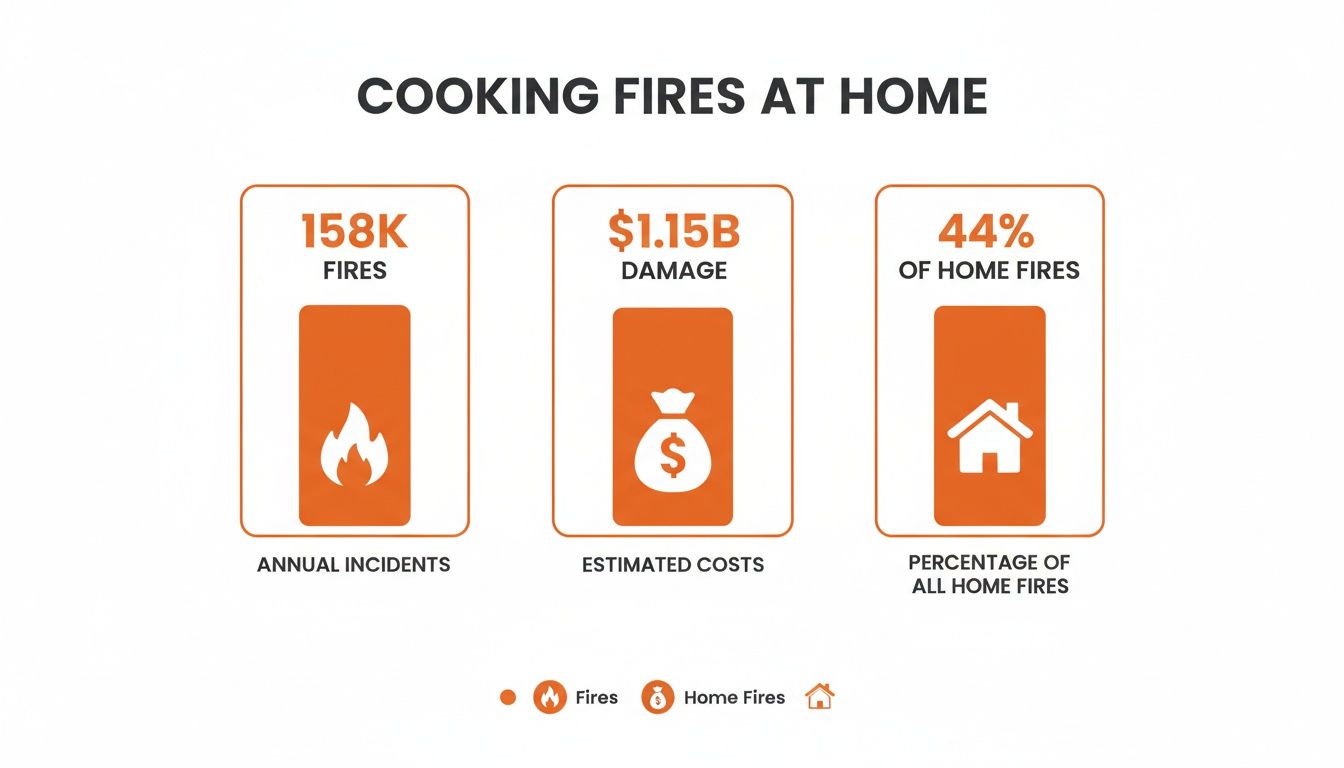
These figures prove that the place where families prepare their meals is also where nearly half of all house fires begin.
What Causes Most Kitchen Fires?
Understanding why these fires start is the key to stopping them. While a faulty appliance can sometimes be the issue, the vast majority of incidents trace back to human error.
The greatest risk of a kitchen fire comes from frying. The combination of high heat and flammable cooking oil creates a volatile situation where one small mistake can have big consequences.
Distraction is the number one culprit. Stepping away to answer the phone, check on the kids, or watch TV gives a fire the perfect opportunity to ignite. Frying, in particular, demands your full attention.
The primary reasons for cooking fires are surprisingly consistent, highlighting just a few key behaviors that need our attention.
Top Causes of Home Cooking Fires
| Cause | Percentage of Fires | Key Prevention Tip |
|---|---|---|
| Unattended Cooking | 31% | Stay in the kitchen. If you must leave, turn off the stove. |
| Abandoned Material | 10% | Keep flammable items (towels, mitts, packaging) away from heat. |
| Heat Source Too Close | 9% | Create a 3-foot "kid- and pet-free" zone around the stove. |
| Misuse of Material | 5% | Never use water on a grease fire; use a lid or fire extinguisher. |
Source: National Fire Protection Association (NFPA)
As the data shows, simply staying present and keeping the cooking area clear of combustibles can prevent a significant number of fires. Here are the most common ignition scenarios in a bit more detail:
- Unattended Cooking: This is the big one. Leaving a pot or pan on the heat without supervision is asking for trouble.
- Flammable Items Near Heat: Placing oven mitts, wooden utensils, paper towels, or food packaging too close to a burner.
- Overheated Oil: Letting cooking oil get too hot. Once it hits its smoke point, it can ignite on its own.
- Grease Buildup: Accumulated grease on stovetops, in ovens, or in exhaust fans provides fuel for a fire.
Recognizing these common triggers helps you build proactive habits. It’s about shifting your mindset from just making a meal to managing a process with care—and that’s the foundation of true kitchen fire prevention.
Frying Foods Safely Without Fear
Let's be honest, few things beat the golden, crispy perfection of fried food. But that combination of spitting hot oil and high heat is enough to make anyone a little nervous. The good news is, you don't have to let fear keep you from enjoying incredible fried dishes at home.
It all comes down to knowledge and preparation. When you know how to do it right, you can fry with total confidence.
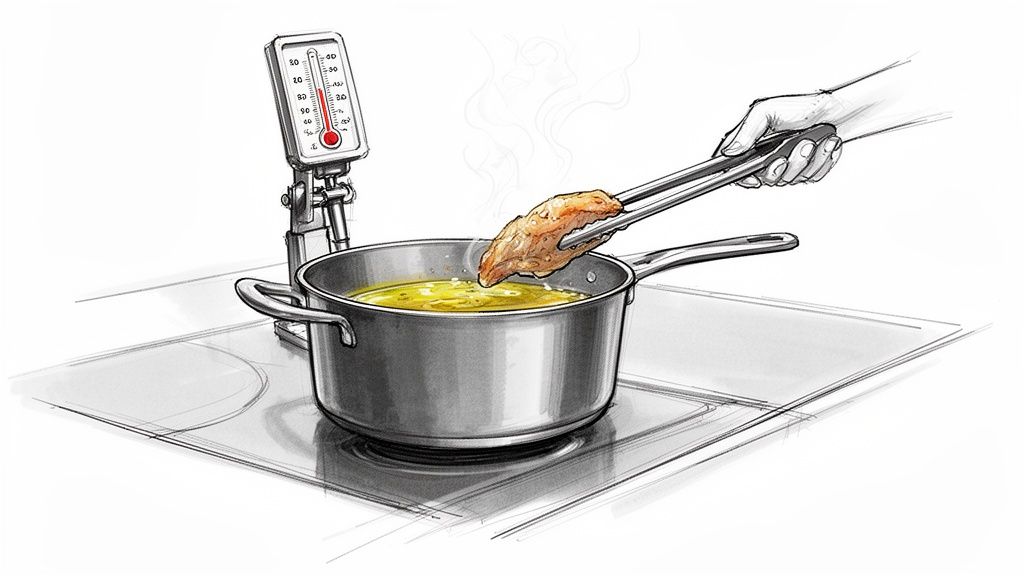
Mastering safe frying means controlling the variables—from the pot you choose to how you clean up afterward. Get these things right, and you can focus on the fun part: the cooking.
Choosing Your Tools and Ingredients Wisely
The foundation for safe frying is built long before the stove even gets turned on. Your choice of pot, oil, and even the way you prep your food plays a huge role in preventing kitchen fires. A little foresight here makes a world of difference.
First, your pot. A heavy-bottomed pot, like a Dutch oven, is your best friend for deep-frying. Its weight gives it stability (so it won't tip easily), and its thick base distributes heat evenly, preventing dangerous hot spots that can scorch the oil. For pan-frying, a classic cast-iron skillet is a fantastic choice for the same reasons.
Next up is the oil. Every cooking oil has a smoke point—that's the temperature where it starts to break down and smoke. Pushing past this point not only ruins the flavor of your food but creates a serious fire hazard. The oil can literally ignite on its own.
For high-heat frying, you need oils with high smoke points:
- Avocado Oil: Smoke point around 520°F (271°C)
- Canola Oil: Smoke point around 400°F (204°C)
- Peanut Oil: Smoke point around 450°F (232°C)
- Grapeseed Oil: Smoke point around 420°F (216°C)
The single most important tool you can own for this is a kitchen thermometer. It takes all the guesswork out of managing your oil temperature.
Mastering the Frying Process
With your station set up, it's all about technique and paying attention. One of the most common mistakes is overcrowding the pan. It’s tempting to get it all done at once, but adding too much food causes the oil temperature to plummet, leaving you with greasy, soggy results. Even worse, it can make the oil bubble over the sides and ignite on your burner.
Safety Tip: Never fill your pot more than about one-third of the way with oil. This leaves plenty of room for it to bubble up when you add food, preventing a dangerous overflow.
When adding food to hot oil, always do it gently and lay it in the pot away from your body to avoid splatters. And here’s a critical step: pat your food completely dry with a paper towel before it goes in. Water and hot oil are a volatile mix. Even a tiny bit of moisture can make the oil pop and spray violently. For a deeper dive, check out our guide on how to prevent grease fires.
Recipe Showcase: Crispy Fried Chicken
Let's put these principles into action with a classic fried recipe. Making perfect fried chicken at home is a fantastic way to practice your safe-frying techniques while creating a delicious meal.
Ingredients:
- 3 lbs bone-in, skin-on chicken pieces
- 2 cups buttermilk
- 2 cups all-purpose flour
- 2 tbsp salt, plus more to taste
- 1 tbsp black pepper
- 2 tsp paprika
- Canola or peanut oil for frying (about 4-6 cups)
Instructions:
- Marinate the Chicken: In a large bowl, combine the chicken pieces with buttermilk, ensuring they are fully submerged. Cover and refrigerate for at least 4 hours, or overnight.
- Prep the Coating: In another large bowl, whisk together the flour, salt, pepper, and paprika.
- Heat the Oil: Pour your cooking oil into a heavy-bottomed pot or Dutch oven, filling it no more than halfway. Use a thermometer to heat the oil to 350°F (175°C).
- Dredge and Fry: Remove chicken from the buttermilk, letting the excess drip off. Dredge each piece thoroughly in the flour mixture. Carefully place a few pieces of chicken into the hot oil, ensuring not to overcrowd the pot.
- Cook to Perfection: Fry for about 6-8 minutes per side, until the chicken is a deep golden brown and cooked through (internal temperature should reach 165°F).
- Drain and Rest: Use tongs to remove the chicken from the oil and let it drain on a wire rack.
After you've enjoyed your delicious fried chicken, the final and most important step is a safe cleanup. Don't pour that used oil down the drain or store it in a flammable container. A safer, cleaner method is essential.
For safe and easy disposal, use FryAway. This plant-based powder solidifies hot cooking oil, turning a messy, hazardous liquid into a solid you can easily toss in the trash.
Just follow these three simple steps for best results:
- Sprinkle and Stir: While the oil is still hot, sprinkle in the FryAway powder and stir until it's fully dissolved.
- Cool Down: Let the pan cool completely. The oil will transform into a solid, organic block.
- Toss into household trash: Scoop out the hardened oil and toss it directly into your household trash bin.
This genius cleanup method eliminates both the mess and the fire hazard of leftover liquid oil, making your entire frying experience safer from start to finish.
Managing the Hidden Dangers of Cooking Oil
The life of your cooking oil doesn’t end once your food is done. In fact, some of its biggest dangers are just getting started. From the moment it hits the pan to the second you get rid of it, cooking oil poses a constant fire risk that needs careful handling. Knowing how it behaves is the first step to keeping your kitchen safe.
Every cooking oil has what’s called a smoke point—that’s the temperature where it stops shimmering and starts smoking. This isn’t just your cue that the pan is hot; it’s a major warning sign. When oil gets past its smoke point, it starts to break down, releasing fumes that can ignite all on their own, even without a direct flame.
This shift from a stable cooking fat to a volatile fuel can happen in a matter of seconds. To stay in control, it’s a great idea to check an ultimate cooking oil smoke point chart and use a kitchen thermometer to keep the temperature in the safe zone.
The Unseen Hazard of Used Cooking Oil
After dinner, you're left with a pan of hot, used oil. What you do next is just as critical as how you cooked with it. That greasy liquid isn't just a cleanup hassle—it's a flammable material. Storing leftover liquid oil, especially in jars or plastic tubs, leaves a lingering fire hazard right in your kitchen.
Pouring it down the drain is a common mistake that leads to massive plumbing clogs. Another dangerous move is tossing hot oil into the trash. It can easily melt through a trash bag, creating a slick, flammable mess that’s just waiting for a spark. You can learn more about tackling this common kitchen problem in our guide on how to avoid oil spills.
These risks are amplified by simple, everyday distractions. It’s no surprise that nearly 70% of cooking fires happen between 5 p.m. and 8 p.m., right when most of us are making dinner. A SafeHome survey found that a shocking 96% of people cook while distracted, which helps explain why 37% of fires are caused by unattended equipment.
A Safer Solution for Oil Disposal
The most effective way to eliminate these hidden fire risks is to get the liquid oil out of your kitchen entirely. This is where FryAway offers a simple, definitive solution. Instead of wrestling with a messy and flammable liquid, you can turn it into a solid, easy-to-handle organic waste.
By solidifying used cooking oil, you're not just making cleanup easier; you're actively removing a significant fire hazard from your home. It’s a proactive step that closes the loop on kitchen fire prevention.
Using FryAway is incredibly straightforward. It’s designed to be foolproof, making responsible oil disposal the easiest part of your cooking routine.
The Simple Three-Step FryAway Process
The method is all about simplicity and safety. For best results, just follow these three steps to turn that hazardous liquid into a harmless solid.
-
Sprinkle and Stir
While your used cooking oil is still hot, just sprinkle the plant-based FryAway powder into the pan. Give it a gentle stir until the powder completely dissolves. -
Cool Down
Now, just set the pan aside and let it cool completely. As the oil cools, you’ll see the magic happen: it will transform into a solid block of organic waste. -
Toss into household trash
Once the oil is fully hardened, you can easily scoop it out with a spoon or spatula. The solid block goes right into your regular household trash. No mess, no liquid, and no fire risk.
By adding this simple step to your cleanup routine, you’ve successfully managed the entire lifecycle of your cooking oil. From choosing the right oil for dinner to safely disposing of it with FryAway, you’ve taken control of a major fire risk, making your kitchen a safer place for everyone.
Your Essential Kitchen Fireproofing Checklist
Preventing a kitchen fire isn’t just about what you do while you’re cooking. It’s about setting up your kitchen to be fundamentally safer from the start. A few simple habits and proactive checks can transform your kitchen from a high-risk area into a secure space where you can focus on creating delicious meals without worry.
Think of it as an audit of your own kitchen—a way to spot and fix potential hazards before they ever have a chance to become a threat.
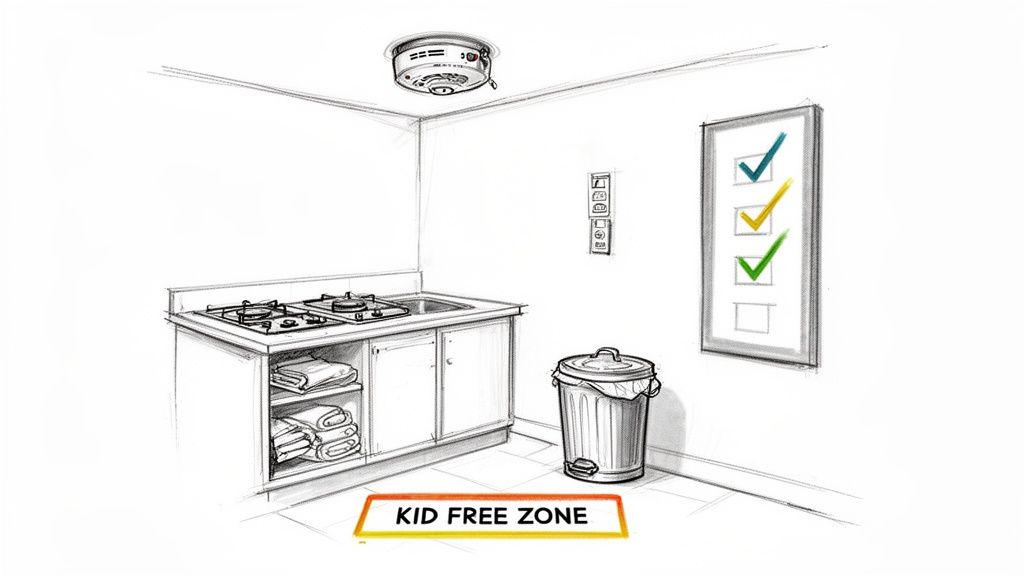
Clear the Clutter and Create Safe Zones
One of the easiest yet most effective ways to prevent fires is to simply control your environment. Look around your stovetop right now. Are there dish towels, paper towel rolls, or oven mitts sitting a little too close for comfort? These are flammable items, and leaving them near a heat source is one of the top causes of kitchen fires.
- Move Flammable Items: Make it a habit to keep anything that can burn—towels, food packaging, potholders—far away from your stove burners and oven.
- Establish a "No-Go" Zone: Set up a 3-foot safety radius around the stove and other hot appliances. This is a kid- and pet-free zone, which keeps curious hands and paws from accidentally knocking over hot pans or turning on burners.
These aren't big, dramatic changes. They're small, free habits that pay huge dividends in safety.
Keep Your Cooking Equipment Clean
The very tools you cook with can become serious fire hazards if they aren't maintained. Grease, oil, and food bits build up over time, creating the perfect fuel for a fire to start and spread in seconds. Simply put, a clean kitchen is a safer kitchen.
This is something the pros know all too well. Commercial kitchens are high-risk environments, with U.S. fire departments responding to roughly 7,400 fires in these establishments every year. The National Fire Protection Association reports that a staggering 61% of restaurant fires are caused by cooking, where the equipment itself is the first thing to ignite.
Regular maintenance isn’t just about being tidy—it’s a critical fire prevention strategy. A few minutes of cleaning can eliminate the fuel a fire needs to start.
Here's what you should focus on:
- Stovetop and Oven: Get in the habit of wiping down your stovetop, oven, and broiler to remove any built-up grease or crumbs.
- Exhaust Fan Filter: That filter above your stove is a grease magnet. Clean it according to the manufacturer's instructions to prevent a dangerously flammable buildup.
- Appliance Cords: Give the cords on your toaster, microwave, and other appliances a quick check for any fraying or damage, which can lead to electrical fires.
Check Your Safety Alarms—No Excuses
Your smoke alarm is your first and best line of defense. It provides that critical early warning you need to get out safely. But it can't help you if it isn't working.
Make testing your smoke detectors a non-negotiable monthly routine. Just push the test button and make sure the alarm sounds. It’s also a good idea to replace the batteries at least once a year, even if they don't seem dead.
For even better protection, consider upgrading to wireless interconnected smoke and CO detectors. When one alarm goes off, they all go off. In a multi-story home, this is a game-changer, buying your family precious seconds to escape.
To make sure your safety gear is always ready, here's a quick reference guide on what to do and what to avoid.
Kitchen Safety Equipment Dos and Don'ts
| Equipment | Do | Don't |
|---|---|---|
| Smoke Detector | Test it monthly and replace batteries annually. | Forget to clean dust off the sensors. |
| Fire Extinguisher | Check the pressure gauge monthly and know how to use it. | Store it out of sight or behind clutter. |
| Oven Mitts/Potholders | Keep them dry and free of grease buildup. | Use them if they are wet—water conducts heat. |
| Appliance Cords | Inspect regularly for frays or damage. | Run them under rugs or near heat sources. |
Following these simple guidelines ensures your safety equipment will be there for you when you need it most.
Safely Disposing of Oil with FryAway
So, you've just cooked up a perfect batch of fried chicken or some crispy french fries. The kitchen smells amazing, but the job isn't quite done. Now you're left with a pan of hot, used cooking oil—a messy and often overlooked fire hazard.
What you do next is a crucial part of keeping your kitchen safe. Stashing liquid oil in old jars or, even worse, pouring it down the sink, doesn't just risk gnarly plumbing clogs. It means you're keeping a highly flammable liquid hanging around your home.
Instead of wrestling with a dangerous liquid, there’s a brilliantly simple way to eliminate the risk altogether. FryAway is a 100% plant-based, non-toxic powder that magically solidifies used cooking oil. It turns that sloshing liquid into solid organic waste that you can just scoop and toss right into your household trash. It’s a safer, cleaner, and far more responsible way to handle used oil.
The Simple 3-Step Process for Safe Disposal
Using FryAway couldn't be easier, and it fits right into your normal cleanup routine. For best results, follow these three quick steps to transform a potential fire hazard into a harmless solid, making your kitchen safer with every single meal.
1. Sprinkle and Stir
While the oil is still hot from frying, just sprinkle the FryAway powder into the pan. Give it a quick stir with a spoon or spatula until the powder completely dissolves. The heat from the oil is what activates the powder and gets the transformation started.
2. Cool Down
Next, just walk away and let the pan cool down completely. You can leave it on the stovetop (burner off, of course!) or move it to a safe, heat-resistant spot. As the oil cools, you’ll see the magic happen—it will harden into a solid, waxy block, trapping all that greasy mess right along with it.
3. Toss into household trash
Once the oil is completely solid and cool to the touch, it's ready to go. Use a spatula to easily scoop the hardened block right out of the pan and toss it into your household trash bin. No messy spills, no clogged pipes, and most importantly, no flammable liquid left behind.
This simple process doesn't just make cleanup a breeze; it actively removes a fire hazard from your kitchen. By turning liquid oil into a solid, you eliminate the risk of spills near heat sources and prevent flammable grease from building up in your trash can.
Choosing the Right FryAway for Your Frying Needs
FryAway is designed for every kind of home cook, whether you're just doing a quick pan-sear or going all-in with the deep fryer. The key is to match the product to the amount of oil you're using.
- Pan Fry: Perfect for everyday cooking. Use this for up to 2 cups of oil left from sautéing veggies or pan-frying a piece of fish.
- Deep Fry: Your go-to when you're breaking out the deep fryer. This size handles up to 8 cups of oil, making it ideal for a batch of wings or homemade doughnuts.
- Super Fry: Made for the big jobs and holiday feasts. This powerhouse can solidify up to 24 cups of oil, making it the perfect choice for frying a Thanksgiving turkey.
Holidays like Thanksgiving are notorious for home cooking fires, with incidents jumping by a staggering 388% compared to a typical day. Using a dedicated product like Super Fry after a big turkey fry is a seriously smart way to manage that extra risk. By choosing the correct size, you ensure all the oil solidifies properly, making disposal safe and incredibly efficient.
For a more detailed guide, you can learn more about how to dispose of cooking oil on our blog.
Got Questions About Kitchen Fire Safety? We’ve Got Answers.
Even the most careful cooks run into questions about kitchen safety. Knowing the answers before something happens is the key to preventing a disaster or handling one correctly. Let's tackle some of the most common questions we hear from home cooks.
What’s the Very First Thing I Should Do in a Grease Fire?
If a grease fire ignites, your first move is the most critical one. Immediately kill the heat source. Don't even think about moving the pan—sloshing that burning oil is a surefire way to spread the flames.
For a small fire that's still contained in the pan, carefully slide a metal lid or a cookie sheet over the top. This smothers the fire by cutting off its oxygen. Then, just leave it be until the pan is completely cool.
Warning: Never, ever throw water on a grease fire. Water sinks to the bottom of the hot oil, instantly turns to steam, and creates a massive fireball that can engulf your kitchen. It is the single most dangerous mistake you can make.
If covering the pan doesn't work immediately, or if the flames start to climb the walls, your priority shifts. Get everyone out of the house, close the door behind you, and call 911 from a safe distance.
Is Pouring Hot Oil Down the Sink Really That Bad?
Yes, it's a huge problem, and for a few reasons. While it might not start a fire in your pipes, that hot liquid oil will cool and solidify, creating gnarly grease clogs. These can lead to disgusting (and expensive) sewage backups in your home and neighborhood.
But more importantly, it's just an unsafe way to handle oil. Keeping a container of flammable liquid oil sitting around your kitchen—even if it's just to cool down—is a risk you don't need to take.
A much smarter approach is to get rid of the liquid hazard altogether. This is where a product like FryAway completely changes the game. It makes disposal simple and safe by solidifying the used oil, turning a flammable liquid into a harmless solid.
For best results, the steps couldn't be easier:
- 1. Sprinkle and Stir: Just sprinkle the plant-based powder into your hot used oil and stir.
- 2. Cool Down: Watch as it magically transforms into a solid block of organic waste.
- 3. Toss into household trash: Scoop the hardened oil right into your household trash.
This simple process eliminates both the plumbing nightmare and the fire hazard in one go.
What Kind of Fire Extinguisher Should I Have in My Kitchen?
Having the right tool for the job is essential, and not all fire extinguishers are the same. For a kitchen, you need one that can tackle the two most likely culprits: grease fires and electrical fires.
Look for a multi-purpose extinguisher that is rated for Class B fires (flammable liquids like grease) and Class C fires (electrical appliances).
An A-B-C rated extinguisher is your best bet for home use, since it covers all the common types of household fires. Find a good spot for it that's easy to grab but not right next to the stove, where a fire could block your path. Under the sink or near the kitchen exit are perfect places.
Ready to make your frying cleanup safer and simpler? Join thousands of home cooks who have eliminated the mess and hazard of used cooking oil. Visit FryAway today to find the perfect product for your kitchen and cook with confidence.