


· By FryAway
How to Clean Cooking Oil for Reuse and Disposal
That perfect, golden-brown crunch on your favorite fried foods? It's a thing of beauty. But what happens to the oil afterward is just as important. The secret to great frying isn't just about the cooking; it's about what you do next.
First, you filter the oil to get more life out of it. Then, once it's truly done, you get rid of it responsibly. This two-step mindset will save you money, make your food taste way better, and cut down on greasy kitchen messes for good.
Why Bother Cleaning Your Cooking Oil?
Imagine getting a few more batches of crispy fries from the same oil, making sure tonight's doughnuts don't taste like last week's fish, and never having to deal with a sloshy, oily jar of waste again. Learning to manage your cooking oil is a kitchen skill that pays you back every time you use it.
This isn't just about saving a couple of bucks. It’s about elevating your cooking and making your kitchen routine a little smarter and more sustainable. We'll walk you through a simple, effective routine to clean your oil, reduce waste, and seriously upgrade your frying game.
The Payoff of a Smart Oil Routine
Putting in a little effort to manage your oil properly has some surprisingly big advantages. It’s one of those small changes that makes a huge difference.
- Your Food Tastes Better: When you filter out the old food particles, you stop flavor transfer. That means your fresh batch of chicken wings won't carry the ghost of last Tuesday's onion rings. Clean oil means clean flavor.
- You Save Real Money: Let's be honest, good cooking oil isn't cheap. If you can safely reuse it two or three times, the savings really start to add up over the year.
- Your Kitchen Stays Cleaner: No more greasy, precariously balanced containers of used oil sitting on the counter. A good system means less mess, fewer spills, and a much cleaner workspace.
- You're Helping the Environment: Pouring oil down the drain is a disaster for plumbing. It creates nasty clogs in your pipes and the local sewer system. Keeping oil out of the sink is a small act that protects our waterways.
The Big Picture: A good oil management plan is a cycle. You filter it for reuse, learn to spot when it's time to let it go, and have a simple, clean plan for disposal.
When your oil has finally given its all, cleanup should be the easiest part. That’s where a product like FryAway completely changes the game. It’s a plant-based powder that magically turns liquid oil into a solid, scoopable puck.
Disposal becomes incredibly simple. For the best results, just follow three easy steps:
- Sprinkle and Stir: While the oil is still hot, just sprinkle in the FryAway powder and give it a quick stir until it dissolves.
- Cool Down: Walk away and let the oil cool down completely. It will harden into a solid mass.
- Toss into household trash: Scoop the solid oil puck right out of the pan and into your household trash.
No more clogged drains, no more oily jars, no more mess. Just great-tasting fried food, more often.
Practical Methods for Cleaning Used Cooking Oil
Giving your cooking oil a second life is one of the smartest habits you can build in the kitchen. Once your pan or fryer has cooled down to a safe temperature, you have a couple of simple but incredibly effective ways to clean that oil, getting it ready for another round of frying.
The method you pick really just depends on what you last cooked.
If you just made a batch of french fries or potato chips that didn’t leave much behind, a quick strain is usually all you need. Think of it as your everyday go-to for keeping your oil in good shape. It gets rid of the bigger bits that would otherwise burn and create off-flavors next time.
On the other hand, if you were frying up breaded chicken cutlets or onion rings, you'll see a lot of fine sediment clouding up the bottom. Those tiny particles are notorious for making oil murky and giving it a burnt taste. For that, you’ll need a deeper cleaning method to really restore the oil's clarity.
Choosing Your Oil Cleaning Method
Deciding how to clean your oil can be tricky. Some methods are quick and easy, while others require more effort but deliver a much cleaner result. Here’s a quick comparison to help you choose the right technique for the job.
| Method | Best For Removing | Effort Level | What You Need |
|---|---|---|---|
| Simple Straining | Large food crumbs, visible debris from things like fries or unbattered foods. | Low | Fine-mesh sieve, cheesecloth or coffee filter, clean container. |
| Gelatin Method | Fine sediment, flour, breading particles, and microscopic impurities. | Medium | Unflavored gelatin, water, saucepan, fridge space. |
Ultimately, simple straining is perfect for daily upkeep, but the gelatin method is your secret weapon for rescuing heavily used oil and making it last way longer.
Simple Straining for Everyday Use
The most straightforward way to clean your cooking oil is to just strain it. All you need is a fine-mesh sieve and either a coffee filter or a couple of layers of cheesecloth. This combo is surprisingly good at catching most of the gunk.
Just line your sieve with the filter or cheesecloth and set it over a clean, airtight container. Slowly and carefully pour the cooled oil through. It might take a minute, especially with a coffee filter, but that little bit of patience pays off with much cleaner oil.
For a more detailed breakdown, check out our guide on how to properly filter frying oil to get the best results every time.
This simple diagram shows the ideal cycle for smart frying—from reusing your oil to making disposal a breeze.
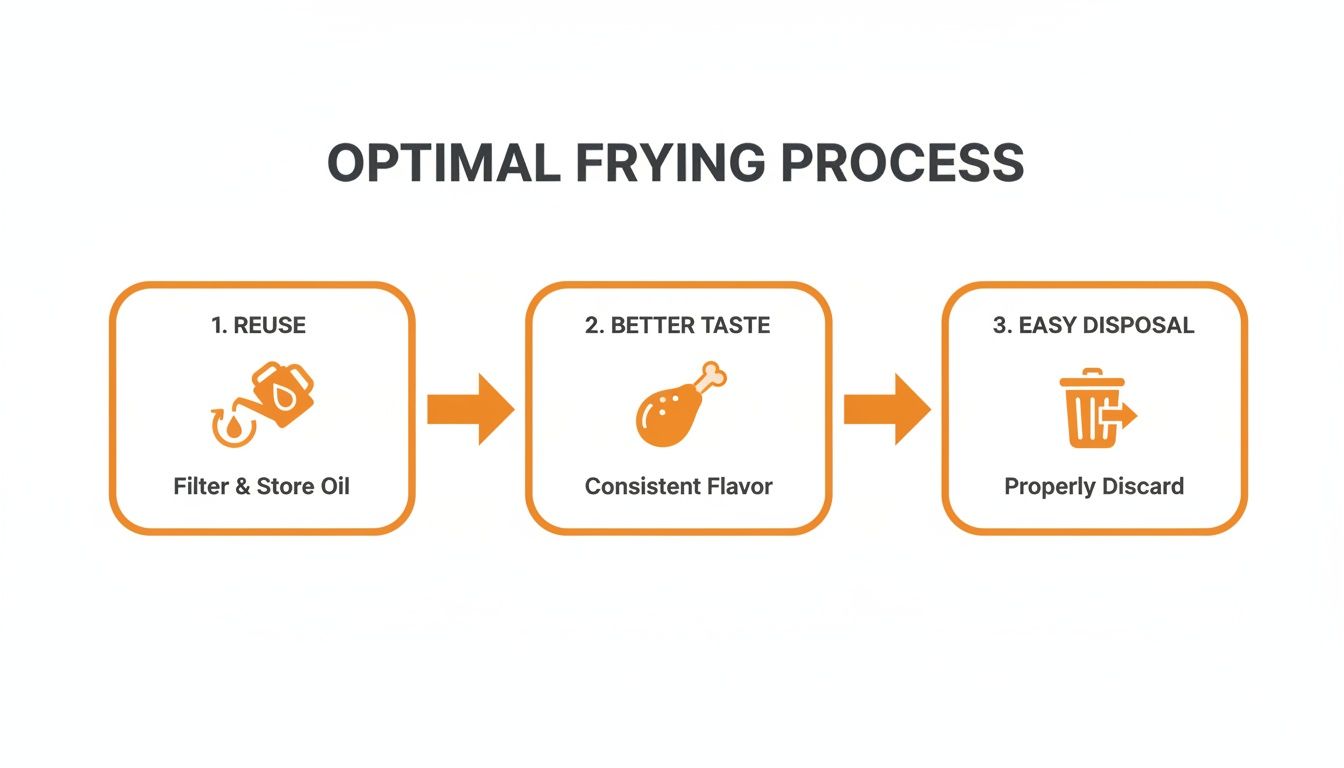
As you can see, a good frying process starts with reusing oil to save money, leads to better-tasting food, and ends with a totally hassle-free cleanup.
The Gelatin Method for a Deeper Clean
For oil that's seen some serious action, the gelatin clarification trick is a game-changer. This clever method uses a bit of kitchen science to attract and trap even the tiniest impurities, leaving you with surprisingly clear oil.
Here's how it works:
- Make a Slurry: For every cup of oil you’re cleaning, mix ¼ cup of water with 1 teaspoon of unflavored gelatin powder.
- Heat and Mix: Gently heat the used cooking oil on the stove and whisk in the gelatin slurry. As it warms up, the gelatin will solidify, trapping all those fine sediment and food particles.
- Chill and Separate: Let the mixture cool down, then pop it in the refrigerator. The gelatin will form a solid disk at the bottom or top of the container. Just lift it out, and you’ll be left with clean oil.
This method works wonders for removing the fine flour or breading particles that a normal strainer just can't catch. It can seriously extend the life of your frying oil.
When It’s Time to Say Goodbye
Even carefully filtered cooking oil eventually reaches the end of its usable life. If straining no longer removes the burnt smell, dark color, excessive foam, or unwanted flavor, the oil should not be reused. Follow the best way to get rid of used cooking oil instead of pouring it into the sink or transferring it into an unreliable container. For an easier at-home option, FryAway is the answer. It’s a 100% plant-based powder that makes getting rid of used oil completely mess-free.
Just follow these three simple steps for the best results:
- Sprinkle and Stir: Turn off the heat and immediately sprinkle FryAway powder into the hot oil. Give it a good stir until it completely dissolves.
- Cool Down: Let the oil mixture cool and solidify.
- Toss into household trash: Once it's hardened into a solid puck, you can scoop it out of the pan and toss it right into your household trash bin.
With FryAway, you can forget about messy spills, clogged drains, and harming the environment. It makes frying cleanup effortless.
When to Discard Your Cooking Oil
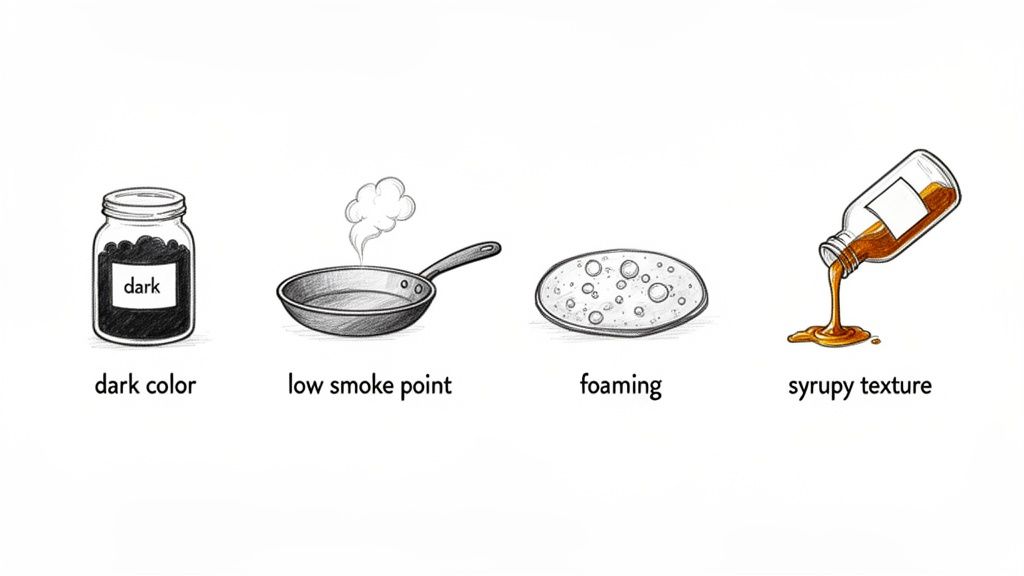
While reusing cooking oil is a smart kitchen strategy, even the most carefully filtered oil has a limited lifespan. Pushing it too far can completely ruin a meal by giving it a funky flavor and a greasy texture. Knowing when to call it quits is just as important as knowing how to clean the oil in the first place.
Luckily, you don't need any special equipment to figure this out. Your own senses are the best tools you have. A quick look, a sniff, and paying attention while you cook will tell you everything you need to know about your oil's health.
Key Signs Your Oil Is Past Its Prime
When oil breaks down, it doesn't keep it a secret. If you spot any of these warning signs, it’s time to toss it and start fresh for your next batch of crispy fries or fried chicken.
- Dark and Murky Color: Fresh oil is usually a light, clear gold. It'll naturally get darker with each use, but once it turns dark brown, cloudy, or has little bits floating around that you can't strain out, its time is up.
- Rancid or Fishy Smell: Give the cool oil a sniff. Does it smell greasy, stale, or a little too much like the fish you fried last week? Those aromas will go straight into whatever you cook next.
- Lower Smoke Point: If your oil starts smoking almost as soon as you put it over medium heat, that’s a dead giveaway. Its chemical structure has degraded, meaning it will burn your food before it can properly cook it.
- Excessive Foaming: A few bubbles are totally normal when you add food to hot oil. But if a foamy layer spreads across the entire surface and just won't go away, the oil is breaking down and won't give you that crispy finish.
- Thick, Syrupy Texture: Good cooking oil pours smoothly and easily. If yours has become thick, viscous, or sticky, its quality has taken a nosedive.
Beyond these visual cues, your senses are your most reliable guide. If you're ever on the fence, learning how to tell if cooking oil is rancid can help you feel more confident in your decision.
Making Disposal Effortless
Once you've decided the oil is done, the next challenge is getting rid of it properly. For a completely mess-free and eco-friendly solution, FryAway is the way to go. It’s a plant-based powder that magically solidifies used cooking oil, making disposal unbelievably simple. To learn more, check out our guide on how to dispose of cooking oil the right way.
Don't let old, spent oil ruin a perfectly good meal. Trusting your senses and knowing when to discard it is the final step in mastering the art of frying.
Using FryAway for the best results is as easy as it gets. Just follow these three simple steps:
- Sprinkle and Stir: After you finish cooking, turn off the heat and just sprinkle the FryAway powder into the still-hot oil. Give it a good stir until it completely dissolves.
- Cool Down: Now, just let the oil cool down completely, right in the pan or in a separate container. You'll see it transform into a solid, organic puck.
- Toss into household trash: Once it’s fully hardened, you can scoop the solid puck out and toss it straight into your regular household trash bin. No spills, no clogs, no mess.
The Hidden Costs of Improper Oil Disposal
That pan of used cooking oil sitting on your stovetop might seem harmless, but it can unleash some surprisingly massive—and expensive—problems. The biggest mistake people make? Pouring it right down the kitchen sink. It feels like a quick fix, but it's a surefire recipe for a plumbing nightmare.
Here’s what happens: the moment that hot, liquid grease hits your cold pipes, it solidifies. It clings to the pipe walls, and over time, this greasy buildup traps every other bit of debris that goes down the drain, creating clogs so stubborn they can back up your entire plumbing system.
From Your Drain to a City-Wide Problem
What starts in your kitchen doesn't stop there. That grease travels into the municipal sewer system, where it joins forces with other waste to create monstrous blockages called "fatbergs."
These aren't just minor clogs. Fatbergs are enormous, concrete-like masses of congealed fat, oil, grease, and flushed wipes that can completely choke off entire sewer lines. Removing them is a difficult, dangerous, and incredibly expensive job for cities. And with households generating billions of gallons of used cooking oil every year, this is far from a small issue.
Think about this: a single liter of oil can contaminate up to 1,000 liters of water. The cleanup costs are staggering. Cities in Spain, for instance, spend around €90 million each year just to combat this preventable problem.
Just tossing a jar of liquid oil in the trash isn't the solution, either. Those containers can easily leak, creating a disgusting mess for sanitation workers and attracting all sorts of pests to your garbage and local landfills. For anyone starting a restaurant business, understanding responsible waste disposal from day one is non-negotiable.
A Smarter, Cleaner Solution for Disposal
The hidden environmental and financial tolls make it clear we need a better way to handle used oil—one that’s safe for our homes, our cities, and the planet. This is exactly where a modern solution like FryAway changes the game, offering a simple and effective way to manage used cooking oil without all the risk.
Instead of contributing to plumbing nightmares and environmental damage, you can completely transform your cleanup routine. FryAway makes oil disposal as simple as it should be.
This 100% plant-based powder solidifies hot cooking oil, making it ridiculously easy to handle and toss out with your regular trash. The process couldn't be simpler:
- Sprinkle and Stir: After cooking, just turn off the heat and stir the FryAway powder into your hot oil until it completely dissolves.
- Cool Down: Let the mixture cool down. You'll see it transform into a solid, organic puck.
- Toss into household trash: Once it's hard, simply scoop the solidified oil out of your pan and throw it right into the trash bin.
With FryAway, you can finally skip the hidden costs of improper disposal, protect your pipes, and make your kitchen cleanup safer and way more eco-friendly.
The Easiest Way to Dispose of Cooking Oil with FryAway
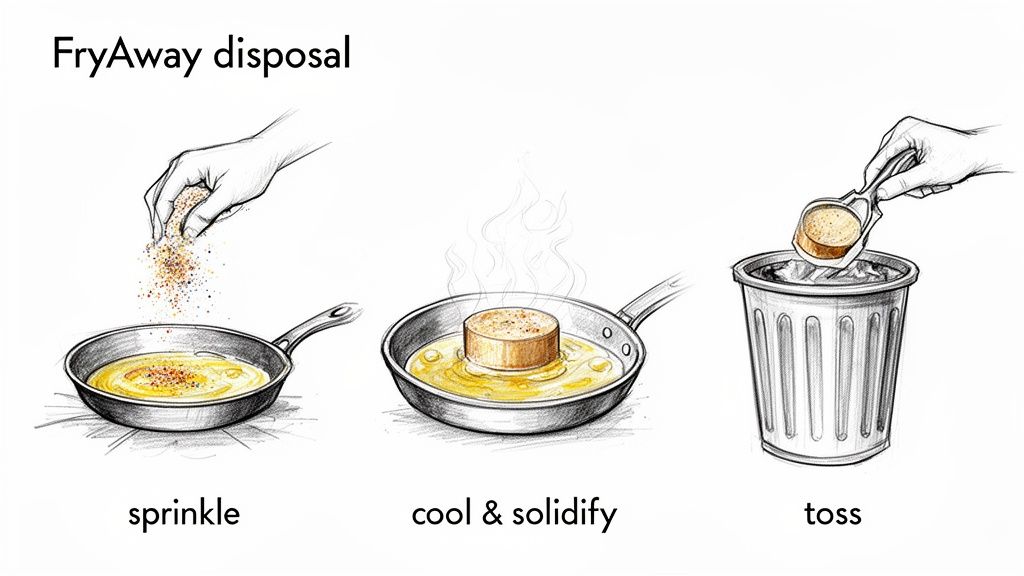
So, you’ve gotten every last bit of life out of your cooking oil. What now? The final step is getting rid of it, and let’s be honest, this is where things usually get messy. Forget trying to pour hot oil into an old jar or, even worse, sending it down the drain.
There’s a much simpler—and more responsible—way to handle the cleanup. FryAway turns what used to be a greasy chore into a surprisingly clean and easy task.
This genius, 100% plant-based powder is the secret to a painless cleanup. It works by transforming hot liquid oil into a solid, organic puck that you can lift right out of the pan and toss in the trash. No spills, no leaky containers, and zero risk of clogging your pipes. It takes all the guesswork and mess right out of the equation.
The Simple Three-Step Process
Using FryAway is almost laughably easy and takes just a few seconds right after you're done cooking. The best part? The magic happens right in your pan or fryer, so the entire process is contained and mess-free.
Here’s how to use it for best results:
-
Sprinkle and Stir
First thing’s first: turn off the heat. While the oil is still hot, just sprinkle the FryAway powder directly into the pan. Grab a spatula and give it a gentle stir until the powder dissolves completely. -
Cool Down
Now, just walk away and let it do its thing. As the oil cools down, the FryAway powder works its magic, solidifying the entire mixture into a single, firm puck. -
Toss into Household Trash
Once the oil has hardened completely, use a spatula to scoop the solid puck out of the pan. From there, you can toss it right into your regular trash bin. That's it! Your pan is left nearly clean and ready for a quick wipe-down.
This straightforward method completely eliminates the need for messy jars and the risk of costly plumbing disasters. It’s a clean and effective way to handle used cooking oil.
Perfect for Any Fried Dish
Whether you’re frying up a big batch of crispy chicken for the family or just a few delicious apple fritters for dessert, FryAway is the perfect cleanup companion. The real beauty of this stuff is its versatility and how simple it is to use, no matter what’s on the menu.
Take a classic like Southern Fried Chicken. After you're done, the oil is often full of all that delicious, crispy sediment. Instead of dealing with a greasy, sludgy mess, FryAway solidifies the oil, sediment and all, making disposal quick and painless.
Or what about Sweet Apple Fritters? The sugar in the batter tends to caramelize, making the oil pretty much useless for another go. This is a perfect job for FryAway. You can enjoy your dessert without dreading the cleanup—just turn that used, sugary oil into a solid puck and send it straight to the trash.
By taking the hassle out of disposal, FryAway actually makes you want to cook your favorite fried foods more often. If you’re curious how this modern method stacks up against the old ways, check out this comparative study of FryAway versus traditional oil disposal methods and see the difference for yourself.
Delicious Recipes Worth the Cleanup
Now that you've got the hang of cleaning, reusing, and responsibly getting rid of cooking oil, it's time for the fun part. The real reward, after all, is digging into some perfectly fried, incredible food.
These classic fried recipes are the perfect excuse to put your new skills to the test. They show just how easy frying can be when you’ve got a solid cleanup plan in place, moving from simple straining to completely mess-free disposal. Let's get that cooking oil hot.
Crispy Southern Fried Chicken
There’s just nothing like the golden, crunchy crust on a perfect piece of Southern fried chicken. This iconic dish calls for a good amount of oil and always leaves behind seasoned flour and little bits of flavorful sediment. It's the ideal scenario to practice your straining and filtering skills.
After you've fried your chicken to perfection and let the oil cool down, you'll see all those crispy bits that need to go before you can reuse the oil. Just pour the cooled oil through a fine-mesh sieve lined with cheesecloth. It'll catch all that debris, leaving you with clean oil ready for another savory meal. And when the oil is finally spent after a few uses, a quick application of FryAway makes disposal a breeze.
Perfect Golden French Fries
A heaping pile of golden, salty french fries is a universally loved comfort food. To get them just right at home—fluffy on the inside, crispy on the outside—you need a decent amount of hot cooking oil.
The great thing about fries is they don't leave behind a ton of heavy sediment like breaded foods do. That makes the leftover oil a fantastic candidate for reuse. Give it a quick strain to catch any small potato pieces, and you can store it for your next batch of fries or even for pan-searing some vegetables. It's a smart way to get the most life out of your oil.
Sweet Apple Fritters
For something on the sweet side, apple fritters are an absolute must. These delightful, cinnamon-spiced doughnuts are fried until golden brown, giving them a crispy shell and a tender, apple-filled center. The only catch? The sugar from the batter always finds its way into the cooking oil.
This is exactly where your end-of-life disposal plan comes into play. Since you can't reuse sugary oil for savory dishes, it's the perfect time to see how simple cleanup can be with the right tool. This is a moment where FryAway really shines.
Instead of trying to figure out what to do with a pan of sweet, sticky oil, you can solidify it in just a few minutes for a cleanup that’s completely mess-free. It's the best way to wrap up a sweet cooking session.
The whole process is incredibly easy. Once you’re done frying and the fritters are cooling, just follow these three steps for the easiest cleanup you've ever had:
-
Sprinkle and Stir
Turn off the heat and immediately sprinkle the FryAway powder into the hot oil. Give it a gentle stir until it has completely dissolved. -
Cool Down
Let the pan sit and cool down all the way. As it cools, the oil will magically transform into a solid, organic puck right in the pan. -
Toss into household trash
Once it's hardened, just use a spatula to scoop the solid puck out and toss it straight into your regular trash bin. No jars, no spills, and zero mess.
Ready to make your kitchen cleanup as satisfying as the meal you just cooked? With FryAway, you can fry more often and clean up way less. See how easy it is to manage used cooking oil by visiting https://fryaway.co to find the perfect product for your kitchen.