


· By FryAway
Where to Take Used Cooking Oil A Practical Guide for Home Cooks
So, you’ve just finished frying up some perfectly crispy chicken or a batch of golden-brown french fries. Now what? You're left staring at a pan full of hot, used cooking oil, and the easiest option—pouring it down the sink—is also the worst.
Dealing with used cooking oil is a classic kitchen dilemma. But knowing where to take used cooking oil or how to handle it at home is the secret to keeping your pipes clean and your kitchen running smoothly.
The Messy Dilemma of Used Cooking Oil
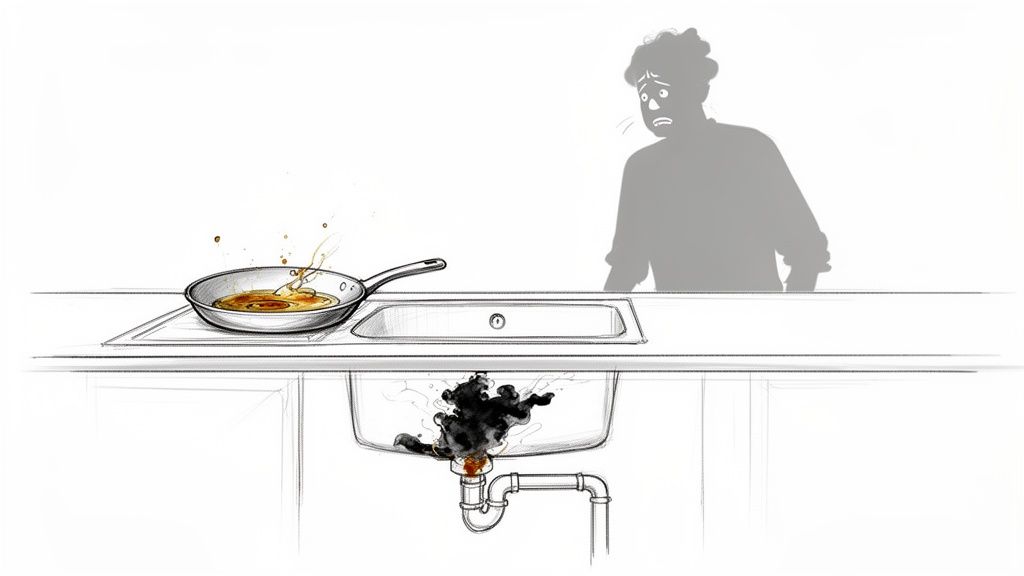
Every home cook has been there. That pan of greasy liquid waste sits on the stove, and the temptation to just wash it all away is real. But trust me, the consequences are severe. Once that oil hits your pipes, it cools, solidifies, and grabs onto any other gunk it can find, creating stubborn blockages that are a nightmare to fix.
This isn't just a problem for your home, either. When everyone pours oil down the drain, it contributes to massive 'fatbergs' in city sewer systems. These are huge, hardened masses of fat, oil, and grease that clog public infrastructure, causing backups into streets and homes. They’re disgusting, expensive, and a huge headache for municipalities to remove.
The Scale of the Problem
The challenge of managing used cooking oil is a global one. Just think about every household and restaurant that fries food. From crispy doughnuts to savory tempura, all that cooking generates this liquid byproduct.
Globally, the available supply of used cooking oil (UCO) has hit an estimated 3.7 billion gallons. That’s a staggering volume—enough to fill over 5,500 Olympic-sized swimming pools—and it really puts the need for proper disposal into perspective. You can explore more data on the global UCO market to see the full scope.
A Simpler, Cleaner Solution
While recycling centers and collection events are fantastic options, let's be honest—they aren't always convenient. You have to store greasy jugs of oil and then figure out where and when to drop them off.
This is where a modern solution like FryAway completely changes the game. It’s a simple, mess-free way to handle used oil right in your kitchen. No more storing greasy containers.
FryAway is a plant-based powder that magically transforms liquid cooking oil into a solid, organic waste. You can just toss it right into your household trash can.
The process couldn't be easier and totally eliminates the usual mess and hassle.
- Sprinkle and Stir: Just sprinkle the powder into the hot oil right after you’re done cooking and give it a quick stir.
- Cool Down: Let the pan cool down completely. You'll see the oil solidify into a solid block.
- Toss into household trash: Once it's solid, simply scoop the hardened oil out and throw it away with your regular garbage.
This guide will walk you through all your options, from local drop-off points to this easy at-home method, so you can enjoy your favorite fried foods without the cleanup headache.
The Easiest Solution for Instant Oil Cleanup
Let's be honest—nobody enjoys the idea of storing a sloshing, greasy jug of used cooking oil under the sink. It's messy, it's a hassle, and it just feels... wrong. For most home cooks, the extra step of finding a local drop-off point is enough to make them think twice about frying anything at all.
What if you could skip all that? Instead of figuring out where to take your used cooking oil, you can deal with it instantly, right at the stove.
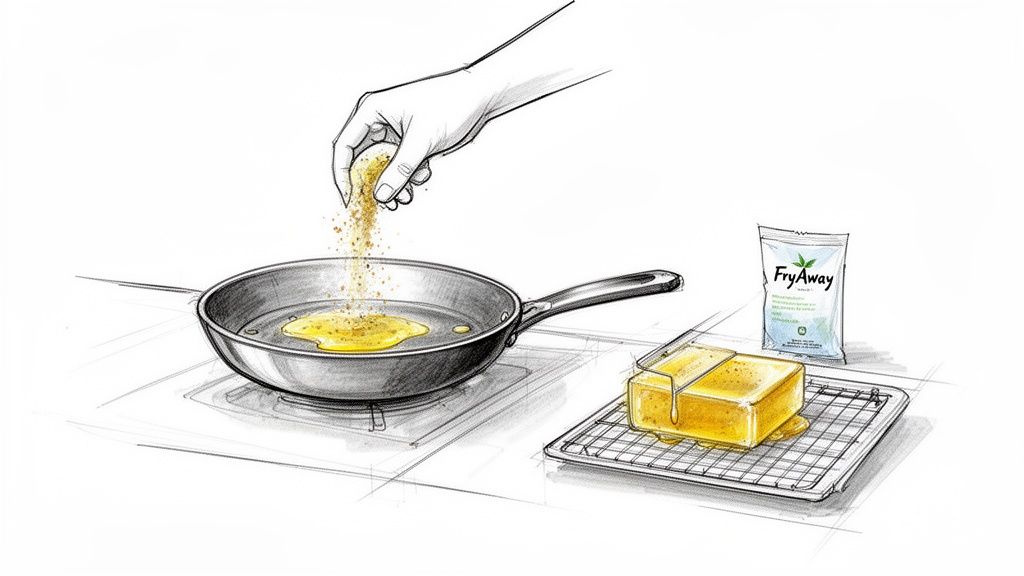
This is where FryAway changes the game. It's a 100% plant-based powder that magically transforms hot liquid cooking oil into a solid, organic block. Once it’s hard, you just scoop it out and toss it straight into your household trash. No messy containers, no spills, and definitely no clogged drains.
Of course, even with the best intentions, drain issues can still pop up. It’s always a good idea to know how to unblock a drain just in case you need a quick fix in the kitchen.
How to Use FryAway in Three Simple Steps
The real beauty of this method is just how simple it is. It takes minimal effort and completely gets rid of the usual cleanup headache we all dread.
-
Sprinkle and Stir
As soon as you’re done frying and the oil is still hot, sprinkle the FryAway powder right into the pan. Give it a gentle stir for about a minute until the powder dissolves completely. -
Cool Down
That’s it for now. Just walk away and let the pan cool down on its own. The oil will start to solidify as the temperature drops. I usually leave it for a few hours until it’s cool to the touch and totally firm. -
Toss into household trash
Once the oil has turned into a solid block, you can easily scoop it out with a spatula. From there, it goes right into your regular garbage bin. It's a clean, mess-free removal that leaves your pan ready for a simple wash.
This simple, three-step method makes fried food cleanup as easy as the cooking itself. It completely removes the final barrier that often discourages people from frying at home.
From Fried Treat to Easy Cleanup: A Real-World Example
To really see how seamless this is, let's walk through a classic scenario. Imagine you're making a big batch of crispy beer-battered fish—a perfect treat that, unfortunately, requires a fair bit of oil.
First, you'd get your canola or vegetable oil up to the perfect frying temperature, around 375°F (190°C). You’d dip your fish fillets in a light, airy batter and fry them to a perfect golden brown. Once they’re done, you move them to a wire rack to drain.
Now for the part everyone usually hates: the cleanup.
But this time is different. With the oil still hot, you just follow the FryAway steps. Sprinkle the powder in, give it a quick stir, and set the pan aside to cool while you enjoy your meal. A little while later, you'll come back to a pan of solid, scoopable waste—no greasy, sloshing liquid to pour into a container.
It's a process explored in detail in this ultimate guide to cooking oil solidifiers, and it really is the best kitchen hack for anyone who loves fried food but hates the aftermath.
Where to Drop Off Used Cooking Oil
If you're committed to recycling, finding a dedicated drop-off spot is a great way to handle used cooking oil. While at-home solutions like FryAway make things incredibly simple, taking your oil to a proper facility ensures it gets turned into something new, like biofuel. It takes a little more legwork, but it’s a fantastic way to support a circular economy.
So, where do you actually take used cooking oil? Most communities have programs, but they aren't always well-publicized. You might need to do a little digging to find the right spot.
How to Find a Drop-Off Site Near You
Finding a local collection point usually starts with a quick online search. Your city or county's public works or waste management department website is the best place to begin.
Look for sections on “household hazardous waste” (HHW) or “special recycling,” as used cooking oil often falls into these categories.
Some other reliable options include:
- Municipal Collection Centers: These are city- or county-run facilities that accept all sorts of recyclables. They often have designated tanks specifically for used cooking oil.
- Household Hazardous Waste Events: Many communities host special events where you can drop off items that don’t belong in the regular trash, including cooking oil.
- Local Restaurants or Auto Shops: This is less common, but some local businesses—especially those that generate a lot of used oil themselves—might accept small amounts from residents. It never hurts to call and ask.
Heads up: Hours can be limited, and some spots only accept oil from residents of that specific city or county. Always check the rules online or call ahead before you make the trip.
Getting Your Oil Ready for the Trip
Once you've found a drop-off site, you need to get your oil ready for the ride. Prepping it correctly prevents a greasy mess in your car and makes the recycling process much smoother for the facility staff.
Here’s what you need to do:
- Let It Cool Completely: This is a big one. Never, ever handle or transport hot oil. Let it cool all the way down to room temperature right in the pan.
- Strain Out the Gunk: Use a fine-mesh sieve or some cheesecloth to filter out any crumbs, batter, or other food bits. This step is key to keeping the oil clean enough for recycling.
- Find a Sturdy, Sealed Container: Pour the strained oil into a durable container with a secure, screw-top lid. An old milk jug, laundry detergent bottle, or even the original oil container will do the trick.
For a deeper dive on this, check out our guide on how to recycle cooking oil.
The reality of this method is that it involves storing a greasy jug of oil until you have enough to make the trip worthwhile. Every year, households and restaurants produce billions of gallons of used cooking oil, but the recycling infrastructure for home cooks can be tough to navigate. The U.S. cooking oil recycling industry has actually shrunk in recent years, making commercial drop-offs for residents a rare find.
Cooking Oil Disposal Options Compared
Not sure which disposal method fits your lifestyle? Here’s a quick breakdown of the most common options to help you decide.
| Disposal Method | Convenience | Environmental Impact | Best For |
|---|---|---|---|
| Solidify & Trash | High | Low (plant-based solidifiers are compostable) | Everyday home cooks who want a fast, mess-free solution. |
| Recycling Center | Low | High (oil is converted to biofuel) | Eco-conscious cooks willing to store and transport oil. |
| Trash Can (Liquid) | Medium | High (risk of leaks, messy) | Small amounts of oil absorbed into paper towels. |
| Down the Drain | High | Very High (clogs pipes, pollutes waterways) | Never an option! Avoid at all costs. |
Ultimately, the best method is one you'll actually stick with. Whether you choose to recycle at a local facility or solidify it at home with a product like FryAway, any step you take to keep oil out of the drain is a win.
Why Proper Oil Disposal Matters More Than You Think
So, you've just finished frying up a batch of crispy buttermilk chicken. That leftover pan of oil is sitting on the stove, and the temptation to just pour it down the drain is real. We've all been there. But that simple action is one of the worst things you can do for your pipes.
When that warm, liquid grease hits the cold plumbing, it solidifies. This creates stubborn, sticky clogs that trap food particles and other gunk, eventually leading to backed-up sinks and expensive plumbing bills.
The problem doesn't stop at your property line, either. It becomes a massive headache for the entire city. All that grease contributes to enormous "fatbergs" in municipal sewer systems—huge, hardened masses of fat, oil, and waste that block pipes, cause messy sewer overflows, and cost millions in public funds to clear out.
The Hidden Value in Used Cooking Oil
On the flip side, getting rid of your oil the right way has a surprisingly positive impact. Used cooking oil isn't just waste; it's a valuable resource.
The global market for used cooking oil (UCO) is booming, with its value projected to nearly double to USD 17.2 billion by 2035. A huge driver for this is biodiesel production, which already accounts for 49.3% of its usage. You can read more about the booming UCO market and its environmental benefits.
This handy chart gives you a quick visual guide for handling your used cooking oil at home.
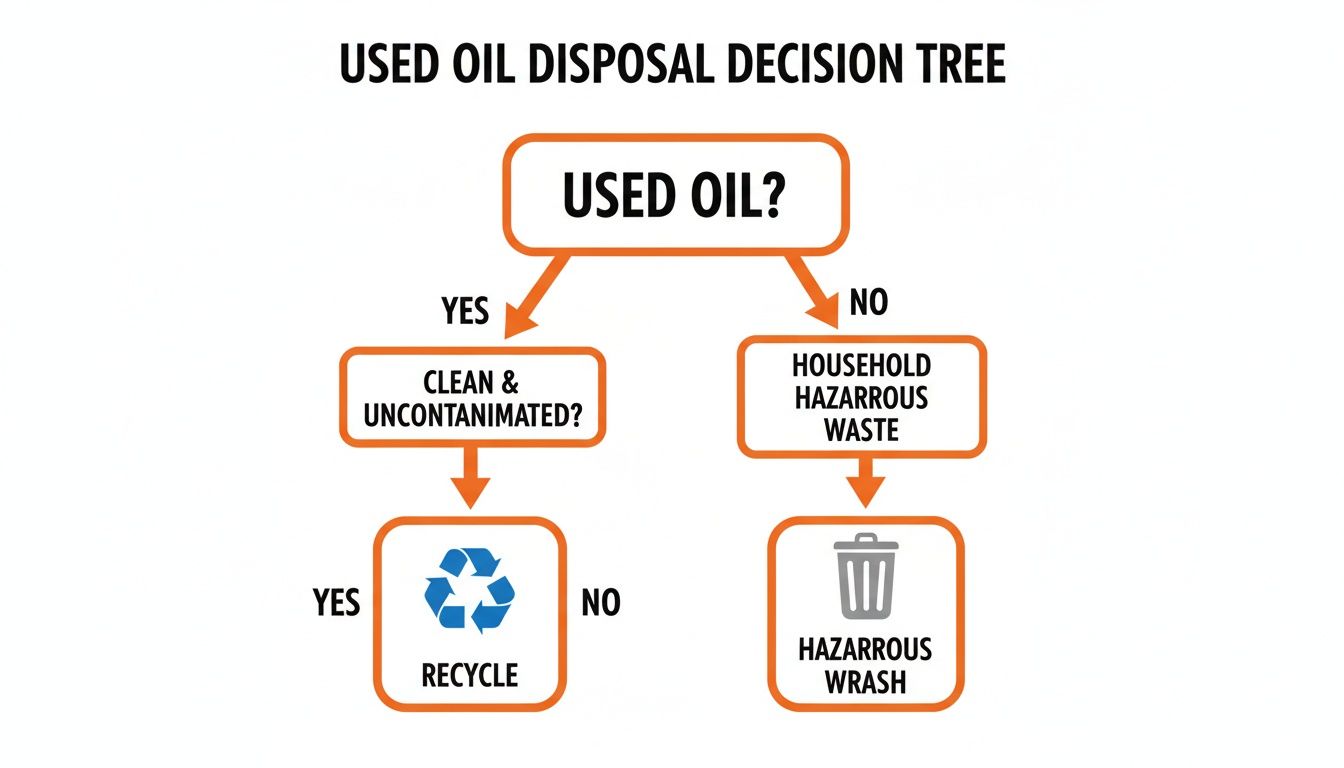
As you can see, it really comes down to two responsible pathways: recycling it or safely tossing it in the trash. The one thing you never want to do is pour it down the drain. By making a better choice, you're not just preventing a problem—you're contributing to a more sustainable energy cycle.
The Easiest Way to Make a Difference
Let's be honest, for most of us, the idea of storing and hauling a greasy jug of old oil to a recycling center is a big hassle. It's often the main reason people give up and reach for the sink. This is where an at-home solution like FryAway becomes a game-changer. It eliminates the mess while still protecting your pipes and the environment.
FryAway turns the entire cleanup process into three dead-simple steps, transforming that liquid mess into a solid you can just toss out.
- Sprinkle and Stir: Right after you finish frying, while the oil is still hot, just sprinkle the plant-based powder into the pan and give it a stir until it dissolves.
- Cool Down: Now, just walk away. Let the pan sit until the oil cools down completely and hardens into a solid, waxy block.
- Toss into household trash: Once it's solid, you can easily scoop the whole thing out and throw it away with your regular garbage. No spills, no mess.
This method ensures every last drop of oil is handled responsibly, preventing clogs before they even have a chance to start. It’s an easy habit that protects your home, your community's infrastructure, and the planet.
Smart and Safe Ways to Reuse Cooking Oil
Before you even think about getting rid of used cooking oil, ask yourself: could it get a second life? Reusing frying oil is one of the smartest ways to cut down on kitchen waste and make your grocery budget stretch a little further.
This approach lets you get the most out of every drop before it's time for its final farewell. After all, while recycling is great, the old saying that Recycling Is Good But Reusing Is Even Better definitely applies here.
Straining and Storing for Another Fry
The secret to successfully reusing oil is all in the prep work.
First thing's first: let the oil cool down completely right in the pan. Once it’s cool, you’ll want to strain it through a fine-mesh sieve, some cheesecloth, or even a coffee filter to catch all those little food particles and crumbs. If you leave them in, they’ll just burn next time and make your oil taste rancid.
After straining, pour the clean oil into an airtight container. A glass jar with a tight lid or even its original bottle will do the trick. Just be sure to store it in a cool, dark spot like your pantry to keep it from breaking down. Proper storage is key to extending its life for your next fry-up.
Know When Your Oil Is Done
Not all oils are great candidates for round two. Your best bet is to reuse oils with a high smoke point, like peanut or canola oil. And think about what you cooked—the oil from a batch of french fries is far more versatile than what’s left after a fish fry, as those strong flavors will definitely stick around.
You’ll know it’s time to say goodbye to your oil when you see these signs:
- It looks dark and cloudy.
- It has a rancid or just "off" smell.
- It starts smoking at a much lower temperature than it should.
- You see foam forming on the surface when it heats up.
Recipe Time: Spicy Southern Fried Pickles
Ready to put that once-used oil back into action? Let's whip up some Spicy Southern Fried Pickles. Your clean, filtered peanut oil is perfect for this!
Just slice up some dill pickles, pat them dry, and give them a good coating in a seasoned flour mixture with a pinch of cayenne for a kick. Fry them in your pre-heated, reused oil until they’re perfectly golden brown and crispy. They make for a seriously addictive snack.
After this second use, the oil has served its purpose. Now, it’s time for a clean and simple final disposal. While the oil is still hot, grab your FryAway to solidify it.
The process couldn't be easier. Just Sprinkle and Stir the FryAway powder into the hot oil until it’s fully dissolved. Let it Cool Down completely, then you can Toss the solid block straight into your household trash. It’s the perfect, mess-free end to a delicious meal.
For a deeper dive, be sure to check out our complete guide on how to reuse frying oil safely and get the most out of every drop.
Your Questions on Cooking Oil Disposal Answered
Navigating the rules of kitchen cleanup can get messy, especially when you’re staring at a pan full of used cooking oil. You want to do the right thing for your pipes and the planet, but it's easy to get confused. Let's clear up some of the most common questions.
Can I Pour Used Cooking Oil in My Backyard or Compost Pile?
That’s a hard no. Pouring any kind of cooking oil into your yard is just asking for trouble. It can suffocate plant roots, attract a whole host of unwanted pests like rodents and insects, and eventually seep into the soil and groundwater.
It's also a big no-go for the compost pile. Oil doesn't break down properly in a typical home compost system. Instead, it turns into a rancid, smelly mess that throws off the entire balance of your compost. Your best bet is always to find a local recycling center or solidify it with FryAway so you can toss it right in the trash.
How Many Times Can I Safely Reuse Frying Oil?
Reusing oil is a fantastic way to cut down on waste, but it definitely has its limits. If you’re frying clean-tasting foods like french fries or breaded veggies, you can generally get away with reusing the oil three to four times. But after frying something with a strong flavor, like fish, you should probably only use it once more.
To get the most life out of your oil, follow these simple steps:
- First, let it cool down completely.
- Next, strain it through a fine-mesh sieve or a few layers of cheesecloth to catch any leftover food bits.
- Store it in a sealed, airtight container somewhere cool and dark.
You’ll know it’s time to get rid of it when the oil looks cloudy, starts smelling funky, or begins smoking at a lower temperature than usual. That’s your signal that its cooking days are over.
What Is the Best Way to Solidify Oil for Disposal?
We’ve all seen the classic trick of letting bacon grease cool in a can, but that method doesn't work for liquid vegetable oils. The cleanest and most effective way to handle it is with a product made specifically to solidify oil.
FryAway is a great choice because it’s a 100% plant-based powder that magically works on all types of cooking fats, from canola oil to beef tallow. The whole process is incredibly simple and guarantees you won't have a messy liquid to deal with.
- Sprinkle and Stir: Right after you finish frying, while the oil is still hot, just sprinkle the FryAway powder into the pan. Give it a good stir until it completely dissolves.
- Cool Down: Now, just set the pan aside and let it cool. You'll watch as the oil transforms into a solid, waxy block.
- Toss into household trash: Once it's firm, you can easily scoop the solid oil out and toss it directly into your regular garbage bin.
This method turns a messy liquid headache into a simple, solid solution. It’s hands-down the easiest way to make sure you aren't clogging your pipes or harming the environment. Now, enjoying delicious fried foods like crispy tempura shrimp or homemade doughnuts just got a whole lot cleaner.
Ready to say goodbye to messy oil disposal for good? FryAway makes cleanup simple, safe, and eco-friendly. Discover the magic of FryAway and make your kitchen routine easier today.