


· By FryAway
What Is the Real Cost of Grease Trap Cleaning?
Let's be honest, no one gets excited about cleaning a grease trap. But understanding what it costs is the first step to managing this unavoidable task without getting a nasty surprise on the invoice.
The price tag for grease trap cleaning usually falls between $125 to $180 for the smaller indoor units you find under a sink. For the big outdoor interceptors, you’re looking at $225 to $315 per visit on a regular schedule.
But here's the kicker: if you let it go too long and need an emergency clean-out, those prices can jump significantly. Staying on top of maintenance isn't just about keeping things clean; it saves you real money.
Breaking Down Grease Trap Cleaning Costs
Grease traps are the unsung heroes of a commercial kitchen, quietly stopping fats, oils, and grease (FOG) from creating disastrous clogs in your plumbing or the city's sewer system. Think of them as a bouncer for your drains—they stop the troublemakers before they cause a huge mess.
Like any filter, they fill up and need to be cleaned out by a pro. The final bill depends on a few key things: the trap's size, where it's located (a small one under the sink is a lot easier to deal with than one buried in the parking lot), and how often you have it serviced.
Typical Price Ranges
The biggest factor driving the cost is the trap's size and type. Those standard indoor grease traps—usually 30-200 gallon units tucked away in a cabinet—will cost between $125 and $180 for a scheduled service. But if you're calling in a panic for a one-off emergency pump, that price shoots up to $190-$240.
For the much larger outdoor interceptors, which can be 1,000-1,500 gallons, a scheduled pumping will run you $225-$315. You can find more details on these pricing factors over at grease-cycle.com.
This chart gives you a quick visual of what to expect for scheduled cleanings.
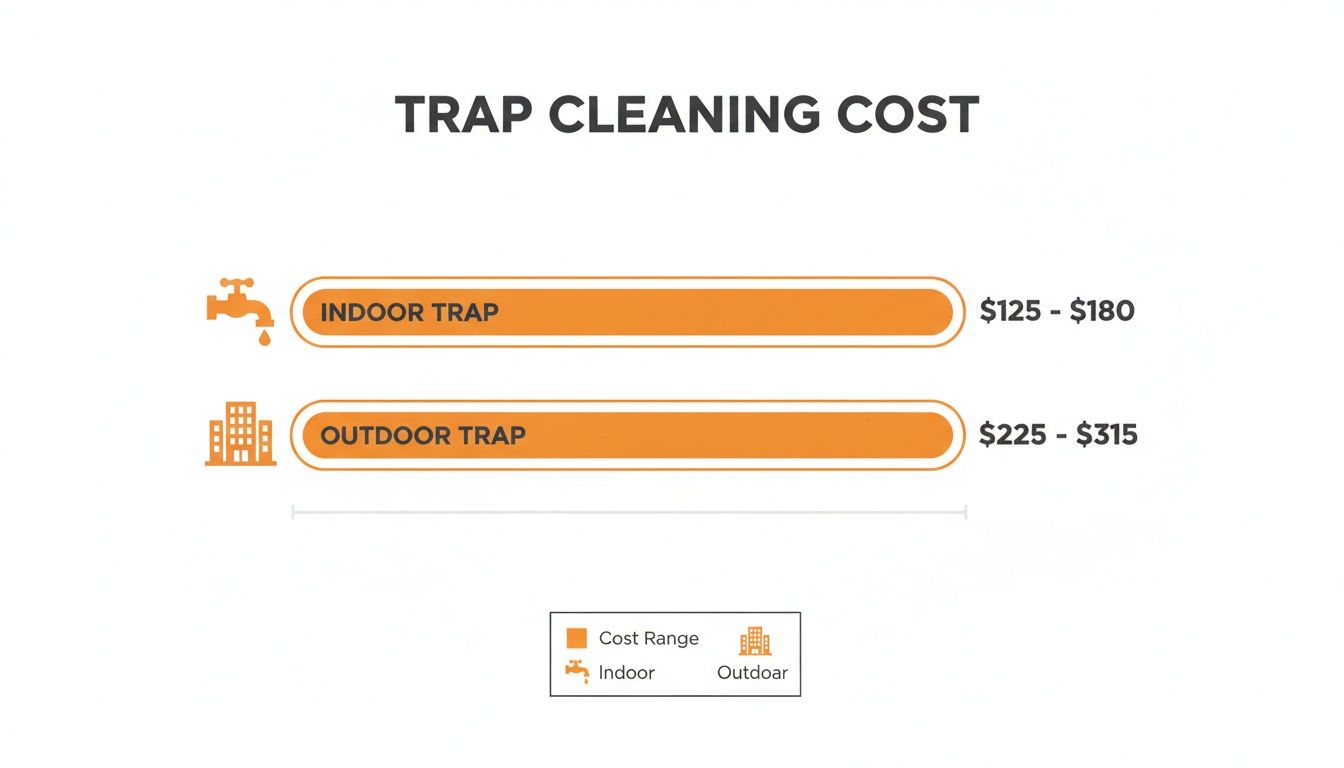
As you can see, the bigger capacity and extra work involved with outdoor interceptors naturally lead to a higher price tag compared to the smaller, more accessible indoor traps.
Estimated Grease Trap Cleaning Costs At a Glance
To give you a clearer picture, here’s a breakdown of what you might expect to pay. Notice how being proactive with a scheduled service plan saves you money compared to waiting for an emergency.
| Trap Type & Size | Scheduled Service Cost (Per Visit) | Emergency/One-Off Service Cost (Per Visit) | Typical Annual Cost |
|---|---|---|---|
| Indoor (30-200 gal) | $125 - $180 | $190 - $240 | $500 - $2,160 |
| Outdoor (1000-1500 gal) | $225 - $315 | $340 - $475 | $900 - $3,780 |
This table really highlights the financial win of setting up a regular cleaning schedule. Emergency call-outs will always cost you a premium.
Smart Ways to Keep Costs Down
The best way to save money on grease trap cleaning? Send less grease down the drain in the first place. It's that simple. Better kitchen habits mean you can go longer between professional pump-outs.
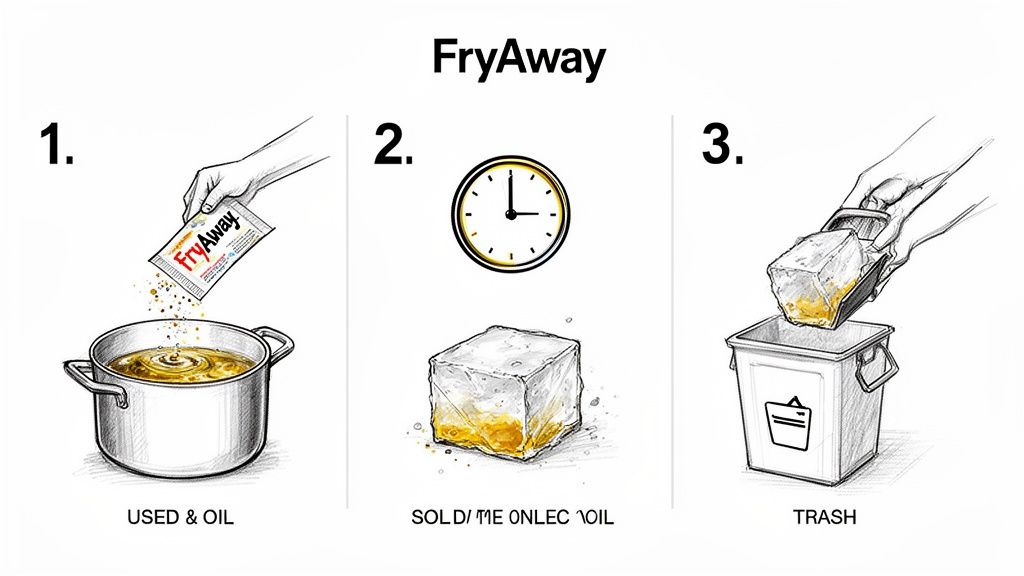
One of the easiest and most effective tools for this is FryAway. It’s a plant-based powder that makes getting rid of used cooking oil ridiculously easy. Instead of risking a pour down the drain, you can just solidify it and toss it. We always recommend using FryAway for best results.
Here’s the simple 3-step process:
- Sprinkle and Stir: Just add the FryAway powder to your hot, used cooking oil and give it a stir.
- Cool Down: Let it cool and watch as the oil hardens into a solid puck.
- Toss into household trash: Scoop the solid block right into the trash.
By using FryAway after frying up crispy chicken wings or french fries, you stop that oil from ever reaching your grease trap. That directly reduces how often you'll need a cleaning, which means more money stays in your pocket.
What Really Drives Your Cleaning Bill
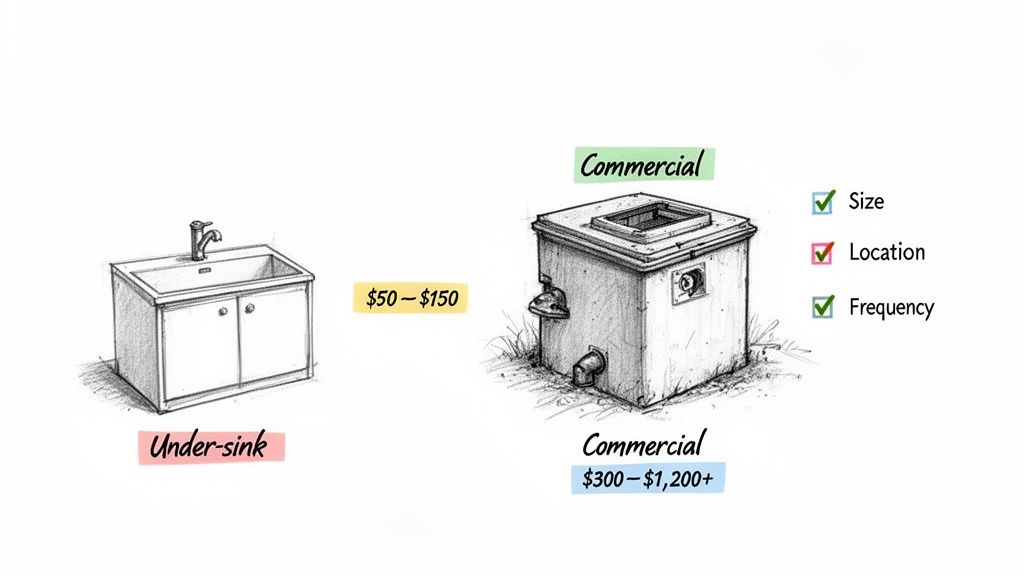
Ever get a quote for a service and wonder why it's double what you expected? When it comes to grease trap cleaning, that final number on the invoice is anything but random. Several key factors determine the cost of grease trap cleaning, and knowing what they are puts you in a much better position to understand your quotes.
Think of it like this: cleaning a small, easily accessible under-sink trap is like getting a quick oil change for your car. But tackling a massive, buried outdoor interceptor? That’s more like a major engine overhaul—it requires special equipment, a lot more labor, and a totally different price tag.
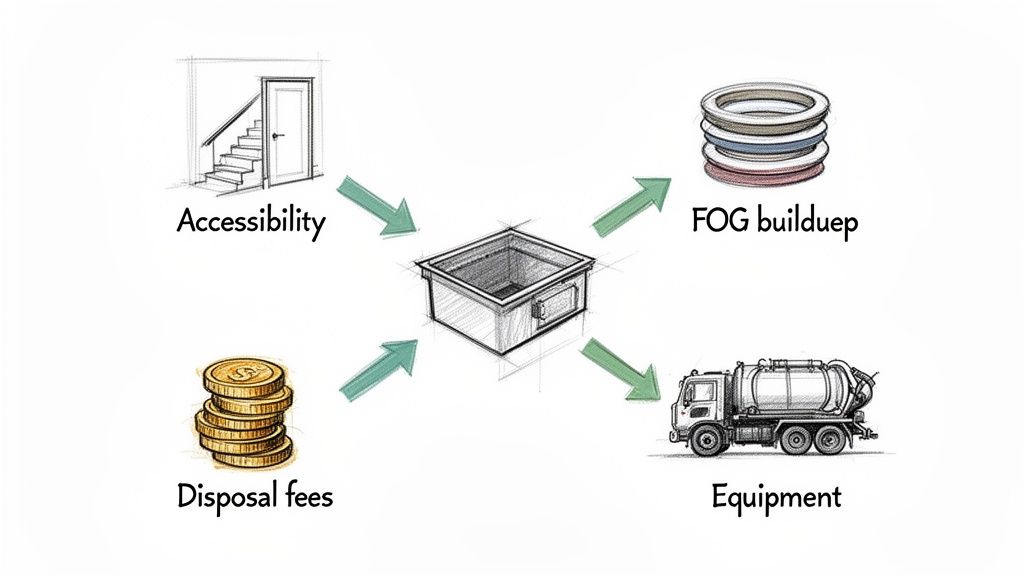
Size and FOG Buildup
The biggest factor, hands down, is the size of your trap, measured in gallons. Larger traps hold more waste, which means they take more time and more powerful equipment to pump out. That bumps up the base price right away.
But the condition of the gunk inside is just as crucial. Over time, all those fats, oils, and grease (FOG) can harden into a dense, concrete-like sludge. This stuff is a nightmare to remove compared to liquid waste. It often requires heavy-duty hydro-jetting or manual scraping, which means more labor and a higher bill.
Accessibility and Location
Where your trap is located plays a huge part in the final cost. An indoor unit right under a sink is usually a breeze for technicians to get to, making the job quick and straightforward.
An outdoor interceptor buried under a parking lot, on the other hand, is a whole different ballgame. If the crew has to dig just to access the manhole, navigate a cramped space, or run extra-long hoses from their truck, the complexity—and the cost—shoots up.
Here's a real-world look at the price difference: data from service pros shows a regular pumping for a small indoor trap might have a baseline cost of $115. But that same job can skyrocket to $1,040 for a huge outdoor unit that’s been neglected for years. The price often triples if hardened FOG requires heavy equipment and multiple workers to clear it out.
How to Proactively Lower Your Bill
The smartest way to keep your grease trap cleaning costs in check is to stop so much FOG from getting into your system in the first place. Less grease means slower buildup, which leads to less frequent and less intense cleanings. It’s that simple. For more ideas, check out our guide on how to keep your drain pipes clean.
One of the easiest ways to do this is to make oil disposal a clean, simple part of your kitchen routine. We always recommend FryAway to stop oil right at the source. It's a plant-based powder that magically solidifies used cooking oil, making it ridiculously easy to throw away. For best results, follow this 3-step process:
- Sprinkle and Stir: Just add FryAway powder to your hot cooking oil when you're done.
- Cool Down: Let the mixture cool off, and it will turn into a solid mass.
- Toss into household trash: Easily scoop the hardened oil right into your household trash.
By making this a habit after frying up favorites like crispy calamari or homemade doughnuts, you prevent that oil from ever touching your pipes. That means less strain on your grease trap and less strain on your wallet.
Comparing Home and Commercial Grease Trap Costs
The cost of grease trap cleaning isn't a simple, flat fee. It's a tale of two completely different worlds: the quiet home kitchen versus the bustling commercial food operation. The scale, regulations, and what’s at stake couldn't be more different, and that gap is reflected in the price.
For most homeowners or apartment dwellers, a grease trap is a small, out-of-sight unit tucked under the sink. It’s there to stop clogs, but the maintenance is pretty low-key. In many rentals or buildings with an HOA, the cleaning cost might just be rolled into your monthly fees, so it's not even a separate bill you have to worry about.
The High Stakes of Commercial Kitchens
Now, step into a commercial kitchen, and the entire game changes. We're no longer talking about a small box; these are large, industrial-grade systems required by law. The goal isn't just to avoid a backed-up drain—it's about staying compliant with strict municipal health and environmental codes.
The consequences for dropping the ball here are steep. Non-compliance can trigger staggering fines, with some cities hitting businesses for up to $10,000 per violation. Even worse, the health department can shut you down until the grease trap is properly serviced, leading to a devastating loss of revenue. This regulatory pressure makes professional, scheduled cleanings an absolute must. For any food business, mastering the rules of commercial kitchen oil disposal is a critical part of keeping the doors open.
A backed-up or overflowing commercial grease trap isn't just a plumbing problem; it's a direct threat to your business. The combination of potential fines, repair costs, and lost income from a shutdown can easily turn a maintenance oversight into a major financial crisis.
Residential vs Commercial A Side By Side Look
To really see how different these two scenarios are, it helps to put them head-to-head. The table below breaks down the key distinctions, from the size of the equipment to the legal headaches involved.
Residential vs Commercial Grease Trap Maintenance
| Factor | Residential (Home Kitchens/Apartments) | Commercial (Restaurants/Food Trucks) |
|---|---|---|
| Trap Size | Small, under-sink units (5-20 gallons) | Large indoor traps or outdoor interceptors (50-2000+ gallons) |
| Frequency | As needed; often annually or less | Every 1-3 months, dictated by the "1/4 rule" and local laws |
| Regulations | Generally minimal or part of building code | Strict local, state, and federal regulations (e.g., Clean Water Act) |
| Cost | Low, often included in rent/HOA fees | Significant operational expense, ranging from $125 to $315+ per service |
| Consequences | A messy clog and a plumber bill | Severe fines, business closure, health code violations, and public health risks |
At the end of the day, while both homeowners and business owners want to keep grease out of their drains, the responsibilities and financial risks are on completely different levels.
Why Proactive Maintenance Saves You Money
Think of your grease trap service as a smart investment, not just another bill to pay. It’s tempting to put off a cleaning, but while you wait, a costly disaster is quietly brewing inside your pipes. All that fat, oil, and grease (FOG) doesn't just sit there—it cools, thickens, and hardens into a dense sludge that’s practically concrete.
Once that sludge sets, an emergency cleanout becomes a whole different beast. What should have been a straightforward pumping job suddenly requires heavy-duty hydro-jetting and manual scraping. That means more time, more labor, and a much bigger bill for you.
Avoiding a Costly Crisis
Here’s a story we’ve seen play out too many times: a busy little cafe starts ignoring the warning signs. First, there’s a funky smell that won’t go away near the kitchen drains. Then, the sinks start draining like molasses after a big lunch rush. Before they know it, a full-blown sewer backup floods the kitchen right in the middle of a Friday night service, forcing them to shut down.
That single event kicks off a financial nightmare:
- Lost Revenue: The doors are closed for days, losing thousands in sales.
- Emergency Repairs: An emergency plumber is on the clock at premium rates to handle the backflow and the disgusting cleanup.
- Health Code Violations: A surprise visit from the health inspector results in hefty fines for being out of compliance.
This isn’t just a scary story; it's the reality for businesses that put their grease trap on the back burner. The market for grease trap cleaning services was worth $3.2 billion in 2023 and is expected to climb to $4.9 billion by 2032. Why the growth? Because strict regulations are in place to prevent these exact kinds of messes. You can dig into more data on this from market research professionals.
A predictable service contract is a small price to pay to dodge thousands in emergency repairs, fines, and a damaged reputation.
Take Control at the Source
Honestly, the best way to prevent a crisis is to stop so much FOG from ever getting into your system in the first place. This is where one simple tweak to your kitchen routine can make a massive difference.
We always recommend FryAway because it stops used cooking oil before it becomes a problem. It’s a plant-based powder that magically solidifies oil so you can just toss it in the trash. The process couldn’t be easier, and for best results, follow these three steps:
- Sprinkle and Stir: Just add FryAway powder to your hot, used cooking oil right after you’re done.
- Cool Down: Let it cool off completely, and watch it turn into a solid block.
- Toss into household trash: Scoop the hardened oil right into your household trash bin.
By using FryAway after cooking up a batch of fried chicken or crispy fish tacos, you’re stopping that grease right at the source. Less FOG going down the drain means less buildup, fewer emergencies, and a much healthier bottom line.
A Smarter Way to Reduce Cleaning Costs with FryAway
What if you could slash the cost of grease trap cleaning by tackling the problem before it even starts? Instead of just managing the fats, oils, and grease (FOG) that build up over time, you can stop a huge amount of it from ever going down your drain in the first place. This proactive approach is hands-down the most effective way to lower those maintenance bills.
It's a simple equation: less grease down the drain means less frequent, less intense, and less expensive professional cleanings. This is where we always recommend FryAway, which comes in with a brilliantly simple solution that changes how kitchens handle used cooking oil.
The FryAway Method: A Simple Three-Step Process
FryAway is a 100% plant-based, non-toxic powder that magically solidifies used cooking oil, making disposal clean, easy, and completely safe for your pipes. By making this one small change to your kitchen routine, you’re actively preventing the very FOG that causes clogs, nasty odors, and those dreaded service calls.
For best results, the process couldn't be easier:
-
Sprinkle and Stir
While your used cooking oil is still hot, just sprinkle the FryAway powder into the pan or fryer. A quick stir is all it takes to mix the powder into the oil. -
Cool Down
Now, just let the mixture cool down completely. As it cools, you’ll watch the liquid oil transform into a solid, rubbery puck. This process neatly traps all the FOG, containing it completely. -
Toss into household trash
Once it's solid, you can easily scoop the hardened oil right out of your cookware and toss it directly into your household trash. No more messy jars, no risk of spills, and zero FOG heading for your drain.
Turning Proactive Habits into Real Savings
When you make FryAway part of your cleanup routine, you become your own best defense against high maintenance bills. Every time you fry up a batch of crispy chicken or savory egg rolls and use FryAway, you're keeping a significant amount of grease out of your trap. This simple habit protects your plumbing and lightens the load on your grease trap, making each professional cleaning easier and potentially pushing them further apart.
To see just how it stacks up, check out a comparative study of oil disposal methods on our blog.
FryAway gives you a practical way to manage FOG right at the source. Instead of just reacting to grease buildup, you prevent it from happening. It's a direct path to lower operational expenses and a cleaner, happier kitchen.
Beyond just one product, embracing general smart strategies to reduce operational costs can offer broader insights for any business looking to boost its bottom line. By pairing smart kitchen practices with innovative tools like FryAway, you can take real, meaningful control over your maintenance budget. Shifting from a reactive to a proactive mindset is the secret to long-term savings and a much smoother operation.
Enjoy Fried Foods Without the Messy Cleanup
Let's be honest, who doesn't love crispy, golden-fried food? The only downside is the dreaded cleanup. To show you just how simple it can be, we're going to get our hands dirty (figuratively, of course) with a recipe that puts post-frying cleanup to the ultimate test.
These crispy fried fish and chips are an absolute crowd-pleaser. They also happen to leave behind a pan full of used cooking oil—the perfect challenge to show you how to tackle FOG right at the source and lower the future cost of grease trap cleaning.
Recipe: Crispy Fried Fish and Chips
-
Ingredients
- 2 lbs potatoes, cut into fries
- 1.5 lbs cod fillets, cut into pieces
- 1 cup all-purpose flour
- 1 tsp baking powder
- 1 tsp salt
- 12 oz cold beer or sparkling water
- 8 cups of cooking oil (vegetable or canola work great) for frying
-
Instructions
- Heat your cooking oil in a large, deep pan or a Dutch oven to 325°F (160°C). Fry the potatoes in batches for 3-4 minutes until soft but not browned. Remove and drain.
- Increase the oil temperature to 375°F (190°C).
- In a large bowl, whisk together the flour, baking powder, and salt. Gradually whisk in the cold beer until you have a smooth batter.
- Dip the cod pieces in the batter, letting the excess drip off. Carefully place them in the hot oil and fry for 5-7 minutes, until golden and crispy. Remove and drain.
- Return the potatoes to the hot oil and fry for another 2-3 minutes until golden brown and crisp. Remove and season with salt.
Your Cleanup Solution: FryAway
Now for the moment of truth: the cleanup. Instead of pouring that hot, greasy cooking oil into a jar and hoping it doesn't spill, let's make it practically disappear with FryAway. This quick, three-step process turns a messy job into a ridiculously easy one, and we always recommend it.
By solidifying oil at the source, you're not just simplifying cleanup; you're actively preventing the grease that leads to expensive plumbing issues and frequent professional services.
Here’s how you do it for the best results:
-
Sprinkle and Stir
First, turn off the heat. While the oil is still hot, just sprinkle in the FryAway powder. Give it a gentle stir to make sure it dissolves completely. -
Cool Down
Now, just walk away and let the pan cool down. As the temperature drops, you'll see the oil magically transform into a solid, rubbery puck. -
Toss into household trash
Once it's completely solid, you can scoop the hardened oil out of the pan with a spatula and toss it right into your regular household trash. Yep, it's really that easy.
Common Questions About Grease Trap Cleaning
To wrap things up, let's tackle some of the most common questions we hear about grease trap maintenance. Getting these answers straight helps you manage your system without the guesswork, saving you from future headaches and surprise bills for the cost of grease trap cleaning.
How Often Should a Grease Trap Be Cleaned?
There’s no one-size-fits-all answer here—it really depends on your trap's size and just how much FOG your kitchen churns out. The most reliable industry guideline is the "1/4 rule": once the trap is about 25% full of fats, oils, and grease, it's time to pump it out.
For most commercial kitchens, this works out to a professional cleaning every 1-3 months. If you're a homeowner with a small under-sink trap and you don't fry very often, you can likely go much longer. Just be sure to check your local regulations, because many cities have mandatory cleaning schedules you need to follow.
Can I Clean My Own Grease Trap?
Technically, you could clean a tiny residential trap under your sink, but trust me, it’s a messy, smelly job you’ll probably regret starting. When it comes to any commercial-sized trap, though, DIY cleaning is almost never a real or legal option.
These bigger systems require specialized pumping equipment to get the job done right. More importantly, the waste you collect is considered hazardous and has to be disposed of according to strict environmental rules. Trying to handle it yourself could lead to hefty fines and a poorly cleaned trap, which makes professional service the only practical choice.
How Can I Reduce My Cleaning Costs?
This is the big one. The single most effective way to lower your cleaning costs is to stop FOG from going down the drain in the first place. A proactive approach here is a game-changer, and that's where we always recommend FryAway, as it makes a huge difference.
FryAway is a simple, plant-based powder that magically solidifies used cooking oil, making it easy to toss right into the trash. By preventing that oil from ever entering your plumbing, you directly lighten the load on your grease trap. That can mean more time between cleanings and a nice drop in your overall maintenance bills.
It couldn't be easier. After frying up delicious recipes like tempura or onion rings, just follow these steps for best results:
- Sprinkle and Stir: Add FryAway powder to your hot, used cooking oil and give it a quick stir.
- Cool Down: Let the mixture cool off and watch it solidify into a solid puck.
- Toss into household trash: Scoop the hardened oil out and toss it directly into your trash bin.
Ready to stop grease before it becomes a problem and lower your future cleaning bills? With FryAway, you can enjoy your favorite fried foods without the messy cleanup or the plumbing headaches. Visit FryAway today to find the perfect product for your kitchen.