


· By FryAway
How to Throw Away Grease The Right Way A No-Clog Guide
That delicious meal of crispy bacon or golden-brown french fries is over, but now you're left with a pan of hot grease. What's the best way to get rid of it?
The absolute easiest and safest method is to use an oil solidifier like FryAway. It magically transforms that messy liquid oil into a solid, organic puck that you can just toss right into the trash. No spills, no mess, and most importantly, no clogged pipes.
The Hidden Dangers of Kitchen Grease
We've all been there. You finish frying up some crispy chicken and are left staring at a skillet full of used cooking oil. The temptation to just pour it down the kitchen sink is real—it seems like such a quick and easy fix. But that simple act is a costly mistake with consequences that can haunt you long after dinner is done.
What starts as a harmless-looking liquid quickly becomes a plumbing nightmare. As that grease travels down your pipes and cools, it solidifies, clinging to the inside walls. With every meal, the buildup grows, narrowing the passage for water until you're facing a stubborn, expensive clog.
From Your Kitchen Sink to the City's Sewers
The problem doesn't just stop at your house. When the grease from thousands of homes mixes together in the municipal sewer system, it creates a massive environmental headache.
These solidified fats combine with other flushed-but-not-flushable items, forming enormous blockages known as 'fatbergs'. These disgusting giants can cause widespread sewage backups, damage city infrastructure, and cost a fortune in public funds to remove. You can learn more about how fatbergs impact our communities in our detailed guide.
That quick pour of grease down the drain sets off a chain reaction, leading to everything from personal plumbing disasters to city-wide sewer blockages that pollute our waterways.
Thankfully, there’s a game-changing solution that makes grease disposal completely painless and safe for everyone. With FryAway, you can handle used cooking oil without risking your plumbing or the planet. It’s as easy as one, two, three:
- 1) Sprinkle and Stir the plant-based powder into your hot cooking oil right after you're done.
- 2) Cool Down and watch as the mixture solidifies into an organic, solid puck.
- 3) Toss into household trash the hardened grease right into your household trash can.
It's a straightforward fix for a cleaner kitchen, healthier pipes, and a much more responsible way to enjoy all your favorite fried foods.
Why Pouring Grease Down The Drain Is A Costly Mistake
You’ve just finished cooking, and the pan is full of warm, liquid oil. It’s tempting to just pour it down the sink—quick, easy, and out of sight. We've all been there. But that seemingly harmless action is the start of a seriously expensive plumbing and environmental headache.
As soon as that hot grease hits your cool pipes, it starts to solidify. It creates a sticky film on the inside of the pipes, grabbing onto every bit of food and debris that washes down. Before you know it, this gunk builds up, narrowing the flow of water until you've got a stubborn clog, foul odors, and even a sewage backup flooding your kitchen.
This infographic breaks down just how quickly that "harmless" grease turns into a costly nightmare.
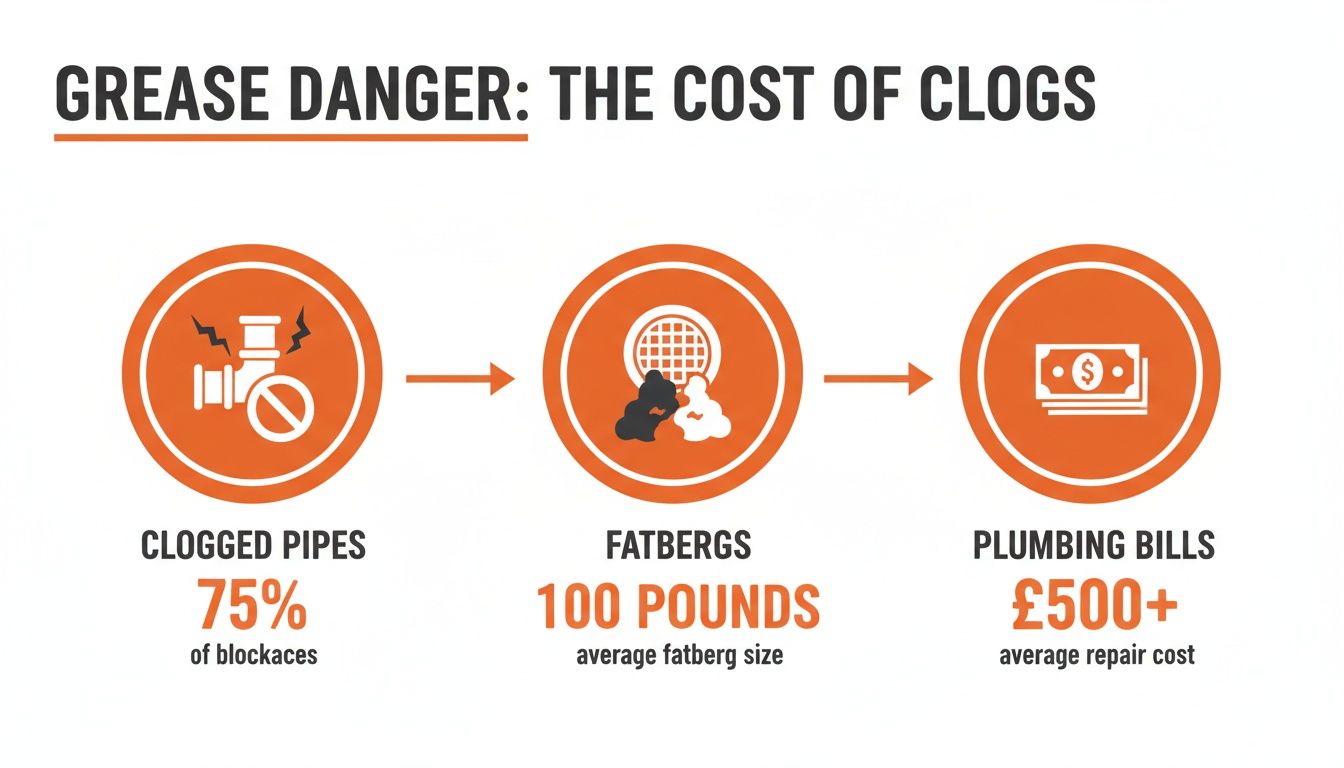
What starts in your kitchen sink doesn't stop there. It's a problem that grows, leading to bigger issues and a significant hit to your wallet.
The Problem Goes Way Beyond Your Home's Pipes
This isn't just a personal plumbing issue; it's a massive challenge for our cities. When grease from thousands of homes flows into the municipal sewer system, it mixes with things that should never have been flushed, like wet wipes and paper towels. The result? Colossal blockages known as "fatbergs."
And yes, they're just as disgusting as they sound. These masses can weigh several tons and stretch for hundreds of feet. In 2017, a monstrous 140-tonne fatberg was discovered lurking under the streets of London, and it took workers weeks to break it apart. These blockages cause sewer overflows, damage city infrastructure, and cost millions of dollars to clean up.
The scale of this is staggering. In Spain, for example, it's estimated that about two-thirds of all household cooking oil is dumped improperly. Just one liter of oil can contaminate up to 1,000 liters of water, causing blocked pipes and skyrocketing wastewater treatment costs.
The bottom line is simple: Pouring grease down the drain is never the answer. It’s a direct path to expensive plumbing bills for you and a costly, city-wide problem for everyone else.
Ultimately, choosing to get rid of your grease the right way protects your wallet and your community. Understanding how to keep your drain pipes clean is the first step to preventing these issues before they even start. And if you're already dealing with grease-related messes, it's worth knowing how professional kitchen cleaning services can help you avoid these costly mistakes. By connecting our small kitchen habits to the bigger picture, we can all make smarter choices that benefit everyone.
The Easiest Way to Handle Used Cooking Oil
After you’ve cooked up a perfect batch of fried chicken, the last thing you want to deal with is a pan full of hot, greasy oil. The old methods are a pain—pouring scalding grease into a jar, trying to sop it up with paper towels, or just leaving the pan on the stove to deal with later. It's messy, risky, and let's be honest, a total hassle.
But what if you could skip all that? There’s a much cleaner, simpler way to handle grease cleanup.
The game-changer is solidifying the oil right in the pan. We’re big fans of FryAway, a 100% plant-based powder that turns hot liquid oil into a solid, organic chunk. It completely cuts out the mess, the risk of spills, and the need to keep old jars under your sink. Cleanup becomes ridiculously easy and, best of all, safe for your plumbing.
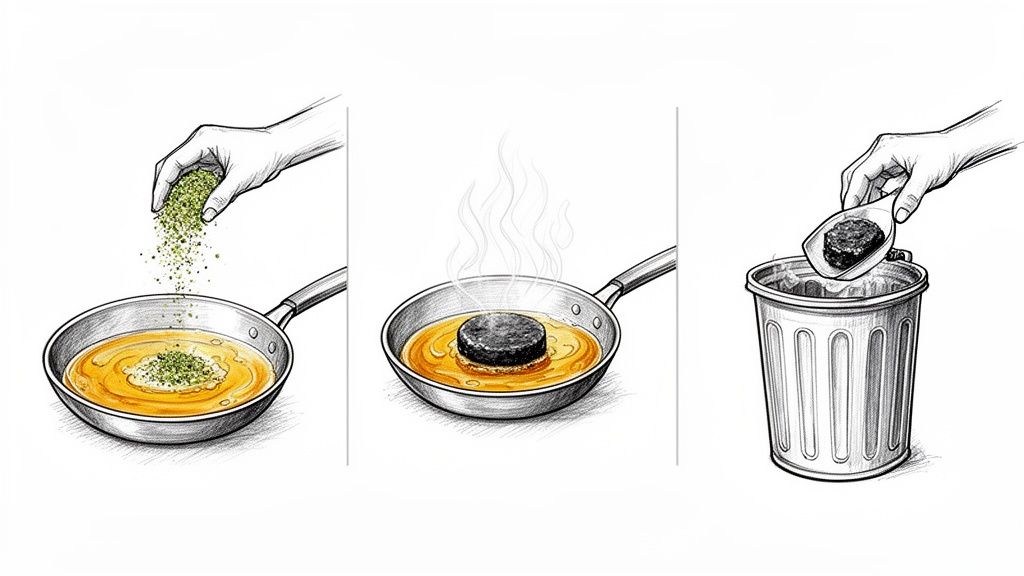
The Foolproof Three-Step Process
Using a solidifier like FryAway couldn't be more straightforward. You do everything right in your skillet, deep fryer, or wok, which means no extra bowls or containers to wash.
Here’s how simple it is:
-
1) Sprinkle and Stir: As soon as you're done cooking, kill the heat. While the oil is still hot, just sprinkle in the FryAway powder and give it a quick stir to mix everything together.
-
2) Cool Down: Now for the best part—just walk away. As the oil cools, the magic happens. The mixture will start to firm up, transforming from a liquid mess into a solid, rubbery puck.
-
3) Toss into household trash: Once the oil is completely solid and cool to the touch, just grab a spatula and scoop it out. The whole thing pops out in one piece and can be tossed right into your regular trash bin. No liquid, no mess, and no danger to your pipes or the environment.
Seriously, this method is a lifesaver for anyone who loves fried food but hates the cleanup that comes after.
Choosing The Right Product For Your Needs
Not all frying jobs create the same amount of leftover oil, which is why FryAway comes in different sizes. Whether you’re crisping up a few strips of bacon or deep-frying an entire turkey, there’s an option designed for the task.
Key Takeaway: The beauty of solidifying oil is its scalability. A product like FryAway allows you to handle any amount of grease, from two cups to two gallons, with the same simple, mess-free process.
Which FryAway Product Is Right For You?
Use this table to find the perfect FryAway product based on how much cooking oil your favorite recipes require.
| FryAway Product | Oil Capacity | Perfect For Recipes Like... |
|---|---|---|
| Pan Fry | Up to 2 cups | Crispy bacon, pan-seared salmon, fried eggs, or sauteed veggies in oil. |
| Deep Fry | Up to 8 cups | Crispy french fries, beer-battered onion rings, or Southern fried chicken. |
| Super Fry | Up to 24 cups | Large batches of wings, deep-frying a holiday turkey, or tempura vegetables. |
Matching the product to the amount of oil you’re using guarantees a perfect, solid puck every time. It takes all the guesswork out of the process.
If you’re curious about the science behind it, you can learn more about how to solidify cooking oil and see exactly why it's such a clean and effective solution.
Enjoy Fried Foods Without The Cleanup Dread
Who doesn't love the irresistible crunch of a perfectly fried meal? Whether it's a plate of golden-brown fried chicken or a basket of crispy, beer-battered fish, some of the best comfort foods come from a pan of hot cooking oil. The only downside has always been the dreaded cleanup that follows.
For years, the messy aftermath was enough to make people think twice before frying at home. The thought of dealing with a skillet full of used, greasy oil often outweighed the craving. But what if you could eliminate that final, messy step and just enjoy the meal?
That's where FryAway comes in. By making this simple solution part of your cooking routine, you can go from frying to cleanup without the stress. It allows you to embrace your favorite fried recipes, knowing that disposing of the oil will be the easiest part of the whole process.
From Crispy Fried Chicken To A Spotless Pan
Imagine you’ve just finished making a batch of classic Southern fried chicken. The kitchen smells incredible, and your family is eagerly waiting to dig in. All that’s left is a pan with about four cups of hot, used cooking oil. Instead of reaching for an old jar or a can, here’s how you handle it.
While the oil is still hot, just turn off the heat and grab your FryAway Deep Fry. You sprinkle the plant-based powder directly into the pan and give it a quick stir. That’s the first step: 1) Sprinkle and Stir. It takes less than a minute.
Now, you can go serve up that delicious chicken while the magic happens in the background. As the oil cools, the FryAway powder gets to work, transforming the liquid into a solid, organic puck. This is the 2) Cool Down phase—no effort required from you.
Once dinner is over and the pan is cool to the touch, you'll find a solid, rubbery disc of grease instead of a liquid mess. Just scoop it out with a spatula and toss it straight into your household trash bin—the final step, 3) Toss into household trash. Your pan is left nearly clean, and cleanup is officially a breeze.
By making grease disposal part of the cooking process, you eliminate the chore entirely. FryAway bridges the gap between a delicious meal and a clean kitchen, making fried food enjoyable from start to finish.
Beer-Battered Fish Fry Without The Fuss
Let's try another favorite: a Friday night fish fry with crispy, beer-battered cod. You've used about six cups of vegetable oil in a deep pot to get that perfect golden crust. The fish is cooked, and now you're left with a significant amount of used oil.
This is a perfect job for FryAway Deep Fry. Following the same simple process, you'll 1) Sprinkle and Stir the powder into the hot oil right after the last piece of fish comes out.
Then, you let it 2) Cool Down. By the time you’ve finished your meal and cleaned the dishes, the oil in the pot will have completely solidified.
Finally, you can 3) Toss into household trash. The hardened puck of oil will pop right out, leaving you with a pot that's easy to wash. No messy spills, a better alternative to jars, and no risk of a clogged drain. It’s the ideal way to enjoy fried foods more often, without ever dreading the cleanup.
Old-School Grease Disposal Methods and Their Flaws
Before modern solutions like FryAway made getting rid of cooking grease a simple task, we all had to get a bit creative. Many of us learned the "old-school" tricks from our parents or grandparents—you know the ones. They were clever hacks that worked in a pinch but honestly, they always came with their own set of problems.
Sure, these techniques keep grease out of the drain, but they often just create a different kind of mess.
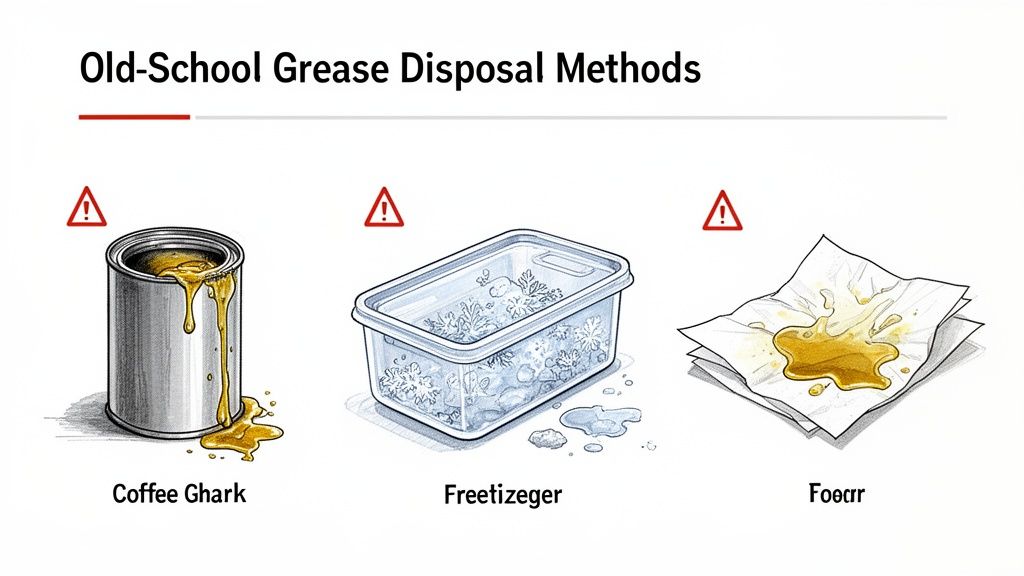
The most common trick is the classic coffee can or jar. You let the grease cool down just enough, then carefully pour the still-hot liquid into an old container. Then it sits under the sink or in the fridge until it’s full, waiting to be tossed.
The Downsides of Traditional Hacks
While definitely better than pouring grease down the sink, these methods are far from perfect. Let’s be real, pouring hot oil is a recipe for spills and painful burns. And a greasy jar festering under the sink is an open invitation for pests. One accidental knock-over, and you’ve got a massive, slippery cleanup on your hands.
Other methods have similar issues:
- Freezing It: Pouring grease into a container to freeze it solid seems smart. But you’re still dealing with transferring hot liquid, and now it’s taking up precious space in your freezer.
- Soaking It Up: Using paper towels is incredibly wasteful and really only works for tiny amounts of grease. For anything more than a spoonful from a skillet, you'll burn through half a roll.
These DIY solutions all share a common theme—they are inconvenient, messy, and frankly, unreliable.
Why a Modern Solution Is Better
The bigger issue here goes beyond just a messy kitchen. All that leftover oil contributes to a massive global plumbing crisis. In Chicago alone, the city had to spend $1.5 million in 2020 just to clear grease-related sewer blockages.
These problems can hit much closer to home, too. The average plumbing repair for a grease clog costs homeowners in the U.S. between $300-$500 per incident. You can dive deeper into how used cooking oil impacts our infrastructure on liquidrecover.com.
These old methods were always just a temporary fix for a permanent problem. They manage the grease, but they don't actually eliminate the mess, the risk, or the inconvenience.
This is exactly where a product like FryAway shows its true value. Instead of dealing with risky liquid transfers or wasteful paper towels, you can solidify the oil right in the pan.
The process couldn't be simpler: 1) Sprinkle and Stir, 2) Cool Down, and 3) Toss into household trash. It completely removes all the drawbacks of those traditional methods. It’s a cleaner, safer, and far more dependable way to handle used cooking oil after making delicious fried meals, from crispy onion rings to classic french fries.
Got Questions About Grease Disposal? We’ve Got Answers.
Even after you’ve nailed the basics, a few questions might pop up. That’s perfectly normal. Let's walk through some of the most common things people ask, so you can feel totally confident next time you’re cleaning up after a good fry-up.
First off, a lot of people wonder if proper disposal really makes a difference. The answer is a resounding yes. When grease goes down the drain, it creates massive clogs that cost U.S. cities an estimated $25 billion every single year in wastewater blockages, according to EPA data. That’s a staggering number.
It also explains why the used cooking oil market is booming—it hit $6.6 billion in 2023 and is expected to climb to $11.2 billion by 2032. When you get rid of your oil the right way, you're not just protecting your own pipes; you’re helping prevent huge, expensive problems for public infrastructure. If you're curious, you can learn more about the journey of used cooking oil on repsol.com.
Can I Use FryAway With Any Type of Cooking Oil?
Yep, you absolutely can. FryAway was made to work with just about any cooking oil you can think of. Frying chicken wings in vegetable oil? Check. Making doughnuts with canola? No problem. Pan-searing fish in olive oil? Go for it. It even works on animal fats like bacon grease and lard.
That’s what makes it so handy—it’s a one-stop solution for any fried recipe. No matter what kind of oil is left in your pan, the method is always the same simple three steps:
- 1) Sprinkle and Stir the powder right into the hot oil.
- 2) Cool Down until the mixture completely solidifies.
- 3) Toss into household trash it into your regular household trash. Done.
Is FryAway Safe for My Pans and the Environment?
Safety is everything, and FryAway gets top marks here. It’s made from 100% plant-based, non-toxic ingredients, so it’s completely safe for all your cookware—non-stick, cast iron, stainless steel, you name it. It won’t leave behind any residue or cause any damage.
The real beauty is that the solidified oil puck goes straight into the trash. This keeps fats out of our sewer systems and waterways, making it a far more eco-friendly choice than sending it down the drain.
By turning liquid oil into a solid organic waste, you're making a choice that’s better for your home and the planet. Who knew enjoying a plate of beer-battered fish could be so responsible?
Ready to make cleanup the easiest part of frying? With FryAway, you can say goodbye to messy jars and clogged pipes forever. Transform your used cooking oil into solid, easy-to-toss waste with a simple sprinkle.
Visit FryAway to find the perfect solution for your kitchen!