


· By FryAway
A Guide to Commercial Kitchen Oil Disposal
Proper commercial kitchen oil disposal isn't just one thing. It's a combination of using designated, leak-proof containers for large volumes and partnering with a professional rendering service for regular pickups.
But what about the smaller amounts of grease from pans or griddles? For that, a solidification product like FryAway offers a simple, compliant way to turn liquid oil into solid waste. You can just toss it in the trash, which is a huge help in preventing drain clogs and environmental damage.
Why Smart Oil Disposal Is Non-Negotiable
In a busy commercial kitchen, handling used cooking oil is way more than just a cleanup chore. Think of it as a core part of your operational strategy—one that has a real impact on your finances, reputation, and legal standing.
Getting this wrong isn't just risky; it's a recipe for disaster. The age-old mistake of pouring fats, oils, and grease (FOG) down the drain can kick off a chain reaction of expensive problems.
This seemingly harmless shortcut leads to serious plumbing blockages inside your restaurant and contributes to massive buildups in the city's sewer system. These clogs, famously known as "fatbergs," can cause nasty sewer backups, force you into costly emergency repairs, and land you with hefty fines from local authorities. You can dive deeper into how these formations cause so much trouble in our guide on what fatbergs are and why they matter.
The Scale of the Challenge
The amount of used cooking oil (UCO) coming out of the food service industry is just staggering.
In 2022, the global supply of UCO from commercial kitchens hit an incredible 3.7 billion gallons. The United States alone collected 0.85 billion gallons, which is about 23% of the worldwide total. To put that in perspective, a single average U.S. restaurant churns out anywhere from 150 to 250 pounds of used cooking oil every single week. You can find more of these eye-opening used cooking oil statistics on liquidrecover.com.
This sheer volume is exactly why a systematic, thought-out approach to oil disposal is absolutely critical.
A solid oil disposal plan isn't just about dodging fines. It's about creating a safer, cleaner, and more efficient kitchen for your staff and protecting your community's infrastructure.
Modern Paths to Responsible Disposal
Today’s commercial kitchens have several compliant options for managing used cooking oil. Oil disposal works best when it forms part of broader sustainable restaurant practices, including waste prevention, staff training, resource efficiency, responsible sourcing, and documented grease-management procedures.
For used oil specifically, an effective strategy usually combines professional collection for large fryer volumes with an on-site method for smaller amounts of pan and griddle grease.
- Professional Collection Services: For the big stuff—the large volumes of oil from your deep fryers—partnering with a licensed rendering or recycling service is the gold standard. They provide specialized collection bins and set up regular pickups, turning your waste oil into valuable stuff like biodiesel. This handles the bulk of your UCO the right way.
- On-Site Solidification: But what about the grease from sauté pans, griddles, and general cleanup? This is the oil that often gets wiped or rinsed down the drain, causing the very clogs you’re trying to prevent. This is where a product like FryAway becomes an essential tool. It’s designed to handle these smaller, yet equally problematic, amounts of oil right at the source.
By making FryAway a part of your daily routine, you can make sure that not a single drop of oil ever makes it into your plumbing. The process couldn't be simpler and turns liquid grease into a solid, easy-to-handle puck.
- Sprinkle and Stir: Just sprinkle the plant-based FryAway powder into the hot, leftover oil in your pan or on your griddle.
- Cool Down: Let the mixture cool down completely. As it does, it solidifies into a solid mass.
- Toss into household trash: Once it's hard, you can easily scrape the solid puck out and toss it right into your regular trash bin.
Adding this simple step to your kitchen’s workflow closes a major gap in your disposal strategy, protecting your pipes and making cleanup way easier for your staff.
Mastering Your On-Site Grease Workflow
A smart commercial kitchen oil disposal plan doesn't start when the collection truck pulls up. It starts inside, with a solid on-site workflow that makes sure every drop of used cooking oil is handled safely and cleanly from the moment it leaves the fryer. When you create clear, repeatable steps for your team, you’re not just preventing dangerous spills—you’re protecting your plumbing and keeping your kitchen compliant.
The physical setup of your kitchen plays a huge role here. A smooth workflow is much easier to achieve by mastering commercial kitchen design layout, since a logical path from cooking stations to disposal points just makes sense. Without a plan, staff might take risky shortcuts, like carrying open containers of hot oil across a busy floor. That's a recipe for serious burns and slick, hazardous messes. Review our guide to food truck kitchen equipment for the appliances, frying tools, oil-handling supplies, storage solutions, and safety essentials needed for on-the-go food preparation.
This chart breaks down the different paths your used cooking oil can take, showing the consequences of bad habits versus the benefits of doing it right.
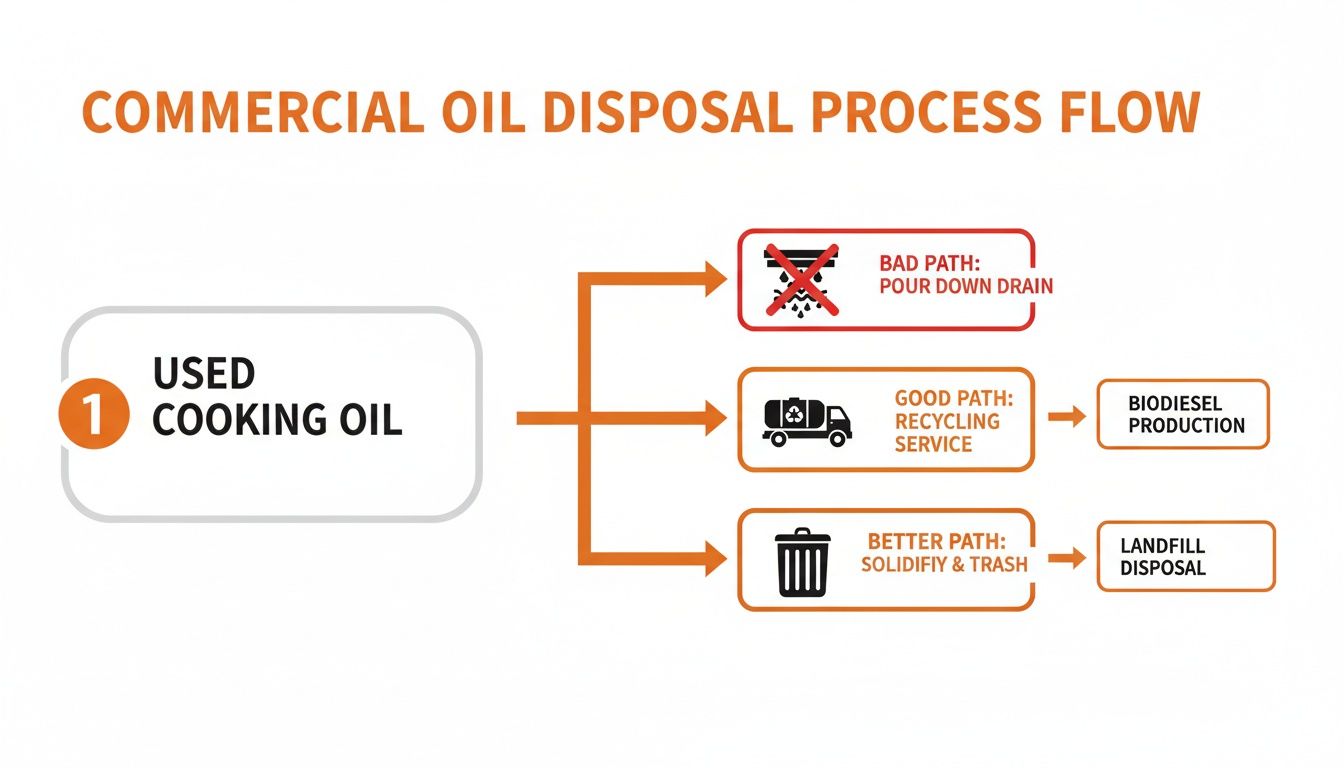
As you can see, the best route keeps oil far away from drains. Instead, it directs all used cooking oil toward proper collection or solidification for easy, clean trash disposal.
Handling Large Fryer Volumes
For the big jobs—like emptying deep fryers—safety has to be the top priority. Hot oil is a massive hazard in any kitchen, so having a strict protocol is non-negotiable.
- Cooling is Key: Never, ever try to move oil straight from the fryer. Let it cool to a much safer handling temperature, ideally below 150°F (65°C), before you even think about transferring it.
- Use the Right Tools: This is what a dedicated oil caddy or shuttle is for. These are wheeled, lidded containers built specifically for moving used cooking oil safely from the fryer to your main collection bin. They are designed to minimize sloshing and prevent burns.
- Clear Protocols: Make sure every single person on your team knows the procedure. This includes wearing the right personal protective equipment (PPE) like heat-resistant gloves and aprons. Good training is also a core part of any effective commercial deep fryer cleaning routine.
Tackling Griddle And Pan Grease With FryAway
While deep fryer oil gets all the attention, it’s often the leftover grease from pans, flat-top griddles, and sauté stations that causes the most plumbing headaches. This is where a solidification product like FryAway really shines. It offers a simple, totally mess-free way to handle smaller grease volumes right where they're generated.
The HoReCa sector—hotels, restaurants, and cafes—commands a whopping 64.57% share of the global used cooking oil market in 2024, making commercial kitchens the powerhouse behind UCO generation. This highlights just how much grease needs proper management every single day.
FryAway turns liquid grease into a solid puck that you can easily toss out, making sure it never goes anywhere near a drain. Building this into your cleanup routine couldn't be easier.
On-Site Grease Management Methods Compared
When dealing with smaller grease volumes from griddles and pans, you have a few choices. Here’s a quick comparison of the old-school scraping method versus using a solidification product to see which makes more sense for a busy kitchen.
| Feature | Traditional Method (Scraping into Bins) | FryAway Solidification Method |
|---|---|---|
| Mess & Spills | High risk of drips, splashes, and greasy residue on floors and counters. | No mess. Oil turns into a solid puck that is easy to scrape out and toss. |
| Plumbing Risk | Significant risk of grease entering drains during scraping or cleaning. | Zero plumbing risk. Solidified oil never enters the plumbing system. |
| Labor & Time | Time-consuming and requires careful handling to avoid spills. | Fast and simple. Sprinkle, stir, cool, and toss in just a few minutes. |
| Safety | Can create slippery floors and potential burn hazards if oil is still warm. | Safer. Solidifies hot oil, making it easy and safe to handle once cooled. |
| Waste Management | Creates messy, liquid-filled trash that can leak and attract pests. | Produces a clean, solid waste puck that is easy to contain in regular trash. |
| Environmental Impact | Higher potential for drain contamination and landfill leakage. | Eco-friendly. Plant-based formula that keeps grease out of waterways. |
For smaller grease volumes, the choice is clear. Solidification saves time, reduces messes, and completely eliminates the risk of accidental drain disposal, making it a far more reliable process for any commercial kitchen.
The Simple 3-Step FryAway Process
To get the best results, just follow these quick steps to solidify any leftover fats and oils.
-
Sprinkle and Stir
While the oil is still hot, just sprinkle the plant-based FryAway powder right into the pan or onto the griddle. Give it a gentle stir until the powder dissolves completely. -
Cool Down
Now, just let the oil mixture cool down. As it cools, you'll see it transform into a solid, hard mass. There are no harsh chemicals here—it's a simple physical change. -
Toss into household trash
Once the oil is completely solid, scrape the hardened puck out with a spatula and toss it straight into your regular trash bin. It's clean, simple, and your pipes will thank you.
By using this two-part approach—a safe transport system for large fryer volumes and an on-site solidification method for everything else—you build a complete workflow. This system makes proper commercial kitchen oil disposal the easiest and most logical choice for your staff, ensuring your operation stays clean, safe, and compliant.
Choosing Between Collection Services and On-Site Solutions
Every commercial kitchen manager eventually hits a crossroads: do you bring in a professional oil collection service, handle everything in-house, or maybe try a bit of both? The right call really boils down to how much grease you’re producing and what kind it is.
Getting this right is the key to a workflow that’s both efficient and, more importantly, compliant.
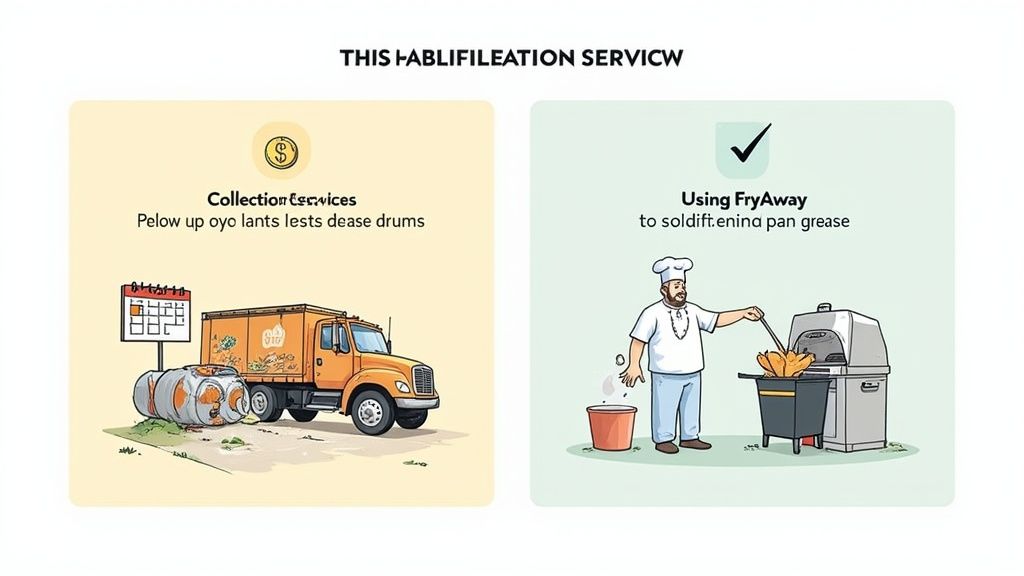
If your kitchen runs deep fryers, a professional rendering service is pretty much non-negotiable. These companies are the pros—they provide the big, secure collection bins, schedule the pickups, and haul it all away. For high volumes of used cooking oil (UCO), this service is the backbone of responsible disposal.
The Role of Professional Collection Services
Professional rendering services are built to handle the massive amounts of oil that deep fryers crank out. They come get your UCO and take it to facilities where it gets a second life as biodiesel or even animal feed. If you want to dive deeper, learning how to recycle cooking oil shows just how big the environmental upside is.
There are some clear wins with this approach:
- Compliance is Covered: These services are licensed and know the local and federal regulations inside and out. They give you the manifests and paperwork you need to pass any audit with flying colors.
- It’s Just Easier: Scheduled pickups mean your team isn't stuck trying to move huge, heavy containers of hazardous waste.
- You Might Get Paid: If you produce a lot of quality UCO, many services will actually pay you for it. It’s a nice way to turn a waste product into a little extra revenue.
But it’s not a perfect system. Those big outdoor collection bins can get pretty ripe, attracting pests if they aren't kept clean. They're also a prime target for oil theft—which is a surprisingly common problem that can mess up your service agreement and leave you with a huge mess.
On-Site Solutions For Total Grease Control
This is where on-site solutions become so important. The rendering service takes care of the fryer oil, but what about all the grease from the sauté pans, the flat-top griddle, and day-to-day cleanups? That’s the stuff that causes clogged drains and plumbing nightmares. It’s usually not enough to pour into the big bin, but it's way too much to just wipe up with a paper towel.
An integrated approach is key. A professional service manages the bulk, while an on-site solution like solidification handles the smaller, yet equally problematic, grease that threatens your plumbing every day.
This is exactly where FryAway fits in. As a plant-based powder, it lets your kitchen staff solidify and dispose of pan and griddle grease right at their station. It completely removes the temptation to just rinse that greasy pan in the sink, closing a major loophole in your disposal system.
The Best of Both Worlds: A Hybrid Approach
For most commercial kitchens, the smartest strategy is a hybrid one. You rely on the professional collection service for the heavy lifting from the deep fryers, and you weave FryAway into your daily cleanup protocols for everything else. This dual system makes sure every single drop of oil is managed correctly.
Here’s how FryAway perfectly complements a collection service:
-
Sprinkle and Stir
Right after cooking, just sprinkle the non-toxic FryAway powder into the hot oil left in the pan. A quick stir is all it needs to dissolve. -
Cool Down
Let the pan cool completely. You'll see the oil transform into a solid, organic puck, trapping all the grease in a stable, solid form. -
Toss into household trash
Once it's hard, the solid mass scrapes out easily and can be tossed right into the regular trash bin. It’s clean, totally mess-free, and keeps your pipes safe.
By adopting this integrated method, you get the best of both worlds—top-tier compliance and ultimate convenience. You end up with a complete commercial kitchen oil disposal system that just plain works.
Navigating Oil Disposal Laws and Regulations
Let's be honest: handling cooking oil disposal in a commercial kitchen isn't just about being clean. It's about staying on the right side of the law. One wrong move can lead to some seriously painful consequences—we're talking fines ranging from a few hundred to tens of thousands of dollars, forced shutdowns, and a black mark on your restaurant's reputation that's hard to scrub off.
These rules aren't just bureaucratic hoops to jump through. They exist for a very good reason: to protect our public infrastructure and the environment from the havoc wreaked by Fats, Oils, and Grease (FOG). When FOG goes down the drain, it cools, hardens, and contributes to those infamous "fatbergs" that block city sewers, cause nasty backups, and lead to incredibly expensive municipal repairs.
Understanding The Layers Of Compliance
When it comes to compliance, you're dealing with rules at multiple levels. It’s your job to know exactly what applies to your business, because ignorance won't save you from a violation.
- Federal Guidelines: The big picture starts with the U.S. Environmental Protection Agency (EPA). While the EPA classifies used cooking oil as non-hazardous, it draws a hard line against dumping it into drains or waterways. That’s a nationwide no-go.
- State Regulations: Things get more specific at the state level. Many states add their own rules, like requiring that any company hauling your used oil must be officially licensed. California, for example, is very strict about this—only licensed renderers are allowed to transport used cooking oil.
- Local Ordinances: This is where the rubber really meets the road. Your local city or county health department will have the most detailed mandates, spelling out everything from how often your grease trap needs servicing to the exact records you have to keep on file.
Getting a handle on these rules often means thinking in broader terms, similar to the principles behind hazmat waste management.
The Role Of The Grease Trap
Your grease trap (or interceptor) is ground zero for FOG compliance. It's your primary defense against clogging the city's sewer lines, and you can bet it's one of the first things a health inspector will check. Proper maintenance isn't a suggestion; it's a legal must.
Most municipalities enforce what's known as the "one-quarter rule." It’s a simple but critical benchmark: your grease trap must be professionally pumped and cleaned once the layer of FOG and solids fills up 25% of its liquid depth. For most restaurants, that works out to a professional service call every one to three months. Skipping this service is one of the quickest ways to get written up.
Service pricing can vary according to the grease trap’s size, condition, accessibility, waste volume, cleaning frequency, and local service requirements. Review our guide to the cost of grease trap cleaning when planning the maintenance budget for a restaurant or other food-service operation.
If there's one thing you take away from this, let it be this: keep meticulous, ironclad service records for your grease trap. An inspector will absolutely ask to see your logbook, and they'll expect to find every professional cleaning documented with the date, the service provider's name, and how much grease was removed. It's non-negotiable.
Building Your Compliance Binder
When an inspector walks in, the last thing you want is a frantic search for paperwork. The solution? A dedicated "compliance binder." This is where you keep all your essential documents, neatly organized and ready for inspection at a moment's notice.
To make sure you're covered, we've put together a quick checklist of the must-have documents for your binder.
Essential Compliance Checklist for Commercial Kitchens
| Compliance Area | Action Required | Documentation Needed |
|---|---|---|
| Oil Collection | Contract with a licensed oil recycler. | Signed service agreement/contract. |
| Pickup Verification | Get a receipt for every oil pickup. | Collection manifests or pickup receipts. |
| Grease Trap | Schedule regular professional cleaning. | Service logs from the cleaning company. |
| Staff Knowledge | Train all kitchen staff on FOG procedures. | Signed training completion forms. |
| Local Rules | Know your specific municipal FOG codes. | A printed copy of local ordinances. |
Having these documents organized and accessible not only prepares you for inspections but also reinforces a culture of compliance in your kitchen.
Don't Forget Pan And Griddle Grease
While most of the focus is on fryer oil and grease traps, true compliance means accounting for all FOG—including the grease from pans and griddles. This is a common blind spot. It's all too easy for a busy cook to rinse a greasy pan in the sink without thinking, sending a small but significant amount of FOG down the drain.
This is where integrating a simple, effective tool like FryAway into your daily workflow can be a game-changer for compliance. It creates a clear, documented process for handling the grease that doesn't end up in the main collection bin, ensuring it never touches your plumbing.
The process is incredibly simple for staff to adopt:
- Sprinkle and Stir: Just add the plant-based powder to the hot pan grease and give it a quick mix.
- Cool Down: Let the mixture cool for a few minutes until it solidifies into a hard puck.
- Toss into household trash: Scrape the solid mass out and throw it straight into the regular trash bin.
By making this a standard operating procedure, you close the loop on FOG management. You create a complete, fully compliant system that accounts for every single drop of oil and grease your kitchen produces.
Fried Recipes with Smart Disposal in Mind
Let's be honest, managing used cooking oil can feel like a chore that's completely separate from the art of cooking. But it doesn't have to be. A truly efficient kitchen plan connects the delicious food you're plating with a smart, simple cleanup routine that follows right after.
This approach proves you don’t have to sacrifice flavor to run a clean, compliant, and eco-friendly operation. Below are three classic fried recipes that are perfect for any commercial menu. Each one not only tastes amazing but also includes a "Smart Disposal Tip" showing you exactly how to handle the leftover oil using FryAway's 3-step process. You'll see how responsible disposal can become a natural extension of the cooking process itself.
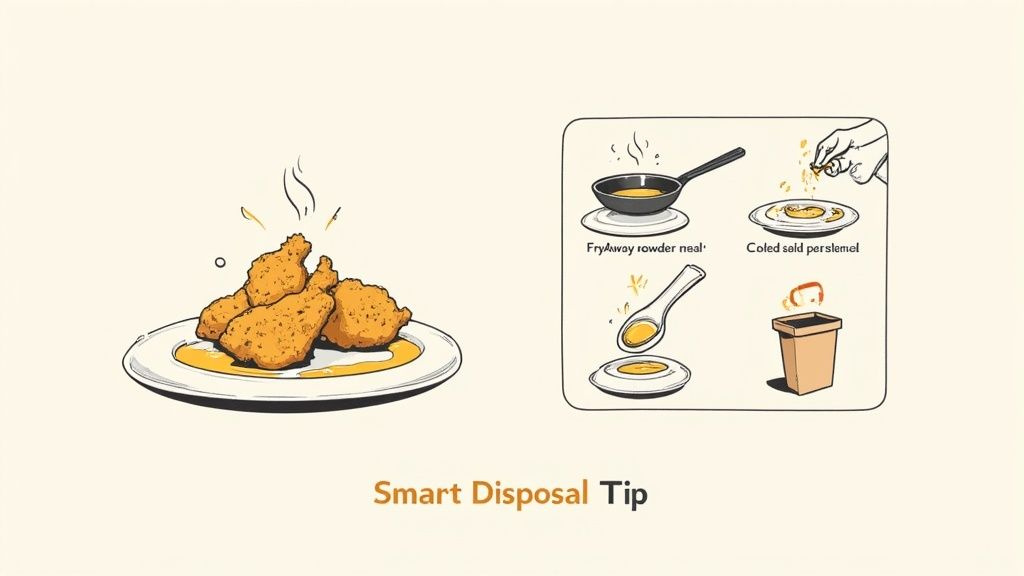
Crispy Southern Fried Chicken
A menu staple for a reason. This dish relies on a deep, even fry to lock in that juicy interior and create a signature golden-brown crust. The trick is maintaining the perfect oil temperature and, of course, knowing exactly what to do with the oil when you're done.
- Cooking Oil Needed: You'll need about 6-8 cups of peanut oil or another high-smoke-point vegetable oil. Get it heated to 350°F (175°C) in a deep cast-iron skillet or your countertop fryer.
- Cooking Process: Carefully place your breaded chicken into the hot oil, making sure not to overcrowd the pan. Fry for about 6-8 minutes per side, or until the chicken is cooked through to a safe internal temp of 165°F (74°C).
- Smart Disposal Tip: After service, while the oil is still hot (but off the heat), it's cleanup time. This is where a product like FryAway comes in handy. For this much oil, you'll want their Deep Fry size.
Solidifying the oil right in the pan or fryer completely eliminates the messy, hazardous step of pouring hot liquid grease into another container. It’s a simple move that prevents spills and protects your drains without any extra effort.
FryAway 3-Step Process:
- Sprinkle and Stir: Carefully sprinkle the measured FryAway powder into the still-hot peanut oil. Give it a gentle stir with a heat-resistant utensil until the powder dissolves.
- Cool Down: Now, just let the skillet or fryer cool down completely. As it cools, the oil will magically transform into a solid, hard puck.
- Toss into household trash: Once it's solid, you can simply scoop the entire puck out and toss it right into your regular trash bin.
Golden Beer-Battered Fish
Perfect for a classic fish and chips, a light and crispy beer batter needs clean, hot oil to puff up just right without getting greasy. This recipe delivers fantastic results and leaves you with an incredibly simple cleanup.
- Cooking Oil Needed: About 4-5 cups of canola or sunflower oil in a Dutch oven or deep pan. Heat it up to 375°F (190°C).
- Cooking Process: Dip your fish fillets in the beer batter, letting the excess drip off. Gently lower them into the hot oil and fry for 3-4 minutes per side until they're golden and crispy.
- Smart Disposal Tip: After you're done frying, kill the heat. FryAway Pan Fry is the perfect size for this amount of oil.
FryAway 3-Step Process:
- Sprinkle and Stir: Add the FryAway powder to the hot canola oil and mix until it’s fully incorporated.
- Cool Down: Let the pan sit and cool. The oil will solidify into a stable, easy-to-handle mass.
- Toss into household trash: Scrape the solid oil out of the pan and dispose of it in the trash.
Light and Airy Tempura Vegetables
Tempura is all about that delicate, lacy crust that shatters with every bite. The secret? A very cold batter hitting very hot oil. This technique creates a beautiful dish but also leaves you with used oil that needs to be handled properly.
- Cooking Oil Needed: You'll want approximately 4 cups of a neutral oil like vegetable or rice bran oil in a wok or deep pot, heated to 360°F (182°C).
- Cooking Process: Dip your assorted veggies (broccoli florets, sweet potato slices, bell pepper strips) into the tempura batter and immediately drop them into the hot oil. Fry in small batches for just 2-3 minutes until lightly golden.
- Smart Disposal Tip: Once you're done, FryAway Pan Fry makes the cleanup almost effortless.
FryAway 3-Step Process:
- Sprinkle and Stir: Pour the FryAway powder into the hot oil in your wok and stir to combine.
- Cool Down: Allow the wok and oil to cool down completely, letting the magic happen.
- Toss into household trash: Once it's hard, the solid puck can be removed and thrown away easily.
Burning Questions About Commercial Oil Disposal
Even with the slickest system in place, questions about oil disposal are going to come up. It's just part of the daily grind. When you’re in the weeds, you need clear, confident answers to handle whatever FOG challenges get thrown your way. Let's tackle the most common questions I hear from kitchen managers.
What’s the Single Biggest Mistake Kitchens Make With Oil?
Without a doubt, the most common—and catastrophic—mistake is pouring used cooking oil or even just pan grease down a drain. Any drain. It might feel like a quick fix in a busy moment, but it’s the number one cause of the solid, gnarly blockages we call "fatbergs" in both your plumbing and the city's sewer lines.
Those clogs create a domino effect of disaster: foul odors, sudden and disgusting sewer backups, and potentially thousands of dollars in municipal fines. The only way to win is to have a zero-tolerance policy. Always use a designated collection bin for fryer oil and a solidification product like FryAway for everything else. No oil ever goes down the drain. Period.
Can I Actually Get Paid for My Used Cooking Oil?
Yes, absolutely. Many kitchens can and should be getting paid for their used cooking oil (UCO). Professional rendering and collection companies will often pay you for your oil based on how much you generate and what the current market rates look like.
Why? Because your old fryer oil is a valuable commodity. It gets recycled into useful products like biodiesel. To get in on this, you'll need to produce a consistent, significant amount of UCO. My advice is to call a few local service providers. Compare their payment terms, see what their collection schedules are like, and ask about the bin options they offer.
How Does FryAway Work With Different Kinds of Oil?
This is one of the best things about on-site solidification—it’s incredibly versatile. FryAway is a 100% plant-based, non-toxic powder that works on all the common fats and oils you’ll find in a kitchen.
It doesn't matter if you're working with:
- Standard vegetable and canola oil
- High-temp oils like peanut or sunflower
- Animal fats like bacon grease, lard, or tallow
The magic is in the physics, not chemistry. It’s a physical reaction that's safe for any food-grade oil. The process couldn't be simpler, just stick to these three steps.
- Sprinkle and Stir: While the oil is still hot, just sprinkle in the FryAway powder and give it a quick stir until it’s fully dissolved.
- Cool Down: Leave the pan to cool down. As the temperature drops, the oil mixture will harden into a solid, organic puck.
- Toss into household trash: Once it's completely solid, you can easily scrape it out and toss it right into your regular trash bin.
This simple trick transforms any liquid grease from your griddles or pans into a solid block, making it ridiculously easy to handle and dispose of. It’s the perfect fix for all that miscellaneous grease that has no business being in your main collection bin.
How Often Should I Get My Grease Trap Cleaned?
This is a big one for compliance. The ideal cleaning frequency for your grease trap really depends on its size and how much FOG your kitchen pumps out. But as a solid rule of thumb, plan on having it professionally serviced every 1 to 3 months.
Your local health department might even mandate a specific schedule you have to follow, so be sure to check. A great industry guideline is the "one-quarter rule": once the trap is 25% full of sludge and grease, it’s time for a cleanout. Don't slack on this—consistent, professional cleaning is your best defense against backups and fines. And always, always keep detailed service records for when the inspector stops by.
Ready to make grease management simpler and finally kill the risk of clogged drains? FryAway is the perfect on-site solution for handling all that pan and griddle grease with zero hassle. Check out our products and find the right size for your kitchen's needs.