


· By FryAway
How to Dispose of Used Frying Oil Without Ruining Your Pipes
The absolute best way to get rid of used frying oil is to solidify it for easy trash disposal or collect it in a sealed container for recycling. Whatever you do, never pour oil down the sink. That one simple mistake can spiral into severe plumbing clogs and some seriously expensive repairs. For mess-free, safe disposal, we always recommend using a product like FryAway to solidify the oil before tossing it.
Why Pouring Oil Down the Sink Is a Costly Mistake
You've just fried up a fantastic meal, but now you’re left with a pan full of used cooking oil. The kitchen sink looks like the easiest way out, right? Unfortunately, this common shortcut can cause disastrous and expensive problems for your home and even your entire city. When you pour oil down the drain, it doesn’t just magically wash away.
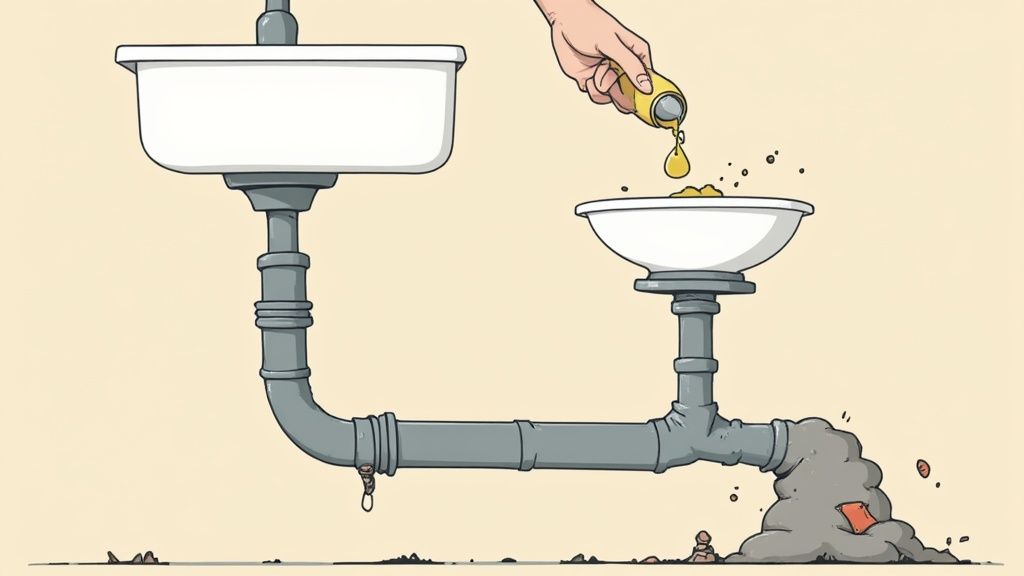
As that warm, liquid grease travels down your pipes, it starts to cool and harden. This sticky residue coats the inside of your plumbing, slowly narrowing the passageway for water. Over time, it acts like glue, trapping food scraps, soap scum, and other debris until you’ve got a stubborn blockage on your hands, leading to slow drains and nasty backups.
The Problem of Fatbergs
This issue goes way beyond your home's plumbing. When grease from thousands of households flows into the municipal sewer system, it mixes with things that should never have been flushed—like wipes and other trash. The result? Massive, rock-hard blockages called "fatbergs."
These colossal formations can choke entire sewer lines, causing raw sewage to back up into streets and homes. It's a public health crisis that costs cities millions to remove. To get the full picture, you can learn more about what fatbergs are and why it matters in our detailed guide.
Choosing the right disposal method isn't just about avoiding a personal plumbing bill; it’s a crucial step in protecting community infrastructure and the environment. If you've already made this mistake and are dealing with a clog, this comprehensive guide on how to unblock a sink drain can offer some valuable help.
Comparing Your Cooking Oil Disposal Options
So, what are the best ways to handle that leftover oil? It really comes down to your priorities—convenience, environmental impact, and how much effort you're willing to put in. Here’s a quick look at the pros and cons of the most common methods for getting rid of used frying oil.
| Disposal Method | Best For | Effort Level | Environmental Impact |
|---|---|---|---|
| Solidify with FryAway | Easy, mess-free home disposal; reducing landfill leaks. | Low | Good (Plant-based, prevents liquid waste) |
| Recycling | Large quantities of oil; creating biofuel. | Medium | Excellent (Turns waste into renewable energy) |
| DIY Absorption (Cat Litter, etc.) | Small amounts of oil when you're in a pinch. | Medium | Fair (Absorbs oil but adds to landfill bulk) |
| Trash in a Sealed Container | Quick disposal if solidification or recycling isn't an option. | Low | Poor (High risk of leaks and spills in landfills) |
Ultimately, the best choice is one you'll actually stick with. Solidifying with a product like FryAway and recycling are by far the most responsible options, keeping your pipes clear and our sewers free of fatbergs.
Sustainable Alternatives to the Drain
Fortunately, there are simple and effective ways to handle used frying oil that don't involve the sink. Recycling it into products like biodiesel is an excellent sustainable choice. The global used cooking oil (UCO) market is projected to reach USD 8.19 billion by 2025, with North America leading the charge in turning this kitchen waste into a valuable resource.
For the easiest solution right in your own kitchen, we recommend FryAway. This plant-based powder solidifies used cooking oil while it's still warm, allowing you to simply scoop the hardened puck directly into your household trash. It's a total game-changer for anyone who loves frying but dreads the cleanup.
The Modern, Mess-Free Way to Handle Used Oil
For anyone who loves the golden, crispy results of frying but absolutely dreads the greasy aftermath, solidifying the oil is your cleanest and simplest answer. This is exactly where a product like FryAway comes in, turning what used to be a messy chore into a surprisingly easy task. It completely sidesteps the risk of spills, leaky jars, and oily containers, making cleanup feel almost effortless.
Just imagine you've finished making a batch of perfectly crunchy, beer-battered onion rings. Instead of figuring out what to do with a pan of hot, liquid grease—and hoping it doesn’t leak in the trash—you can turn it into a solid, easy-to-handle puck. It's a true game-changer for anyone who loves fried food but hates the cleanup that comes with it.
How to Use FryAway for the Best Results
The process is incredibly simple and designed for maximum ease. All you need is the FryAway powder and your pan of used cooking oil.
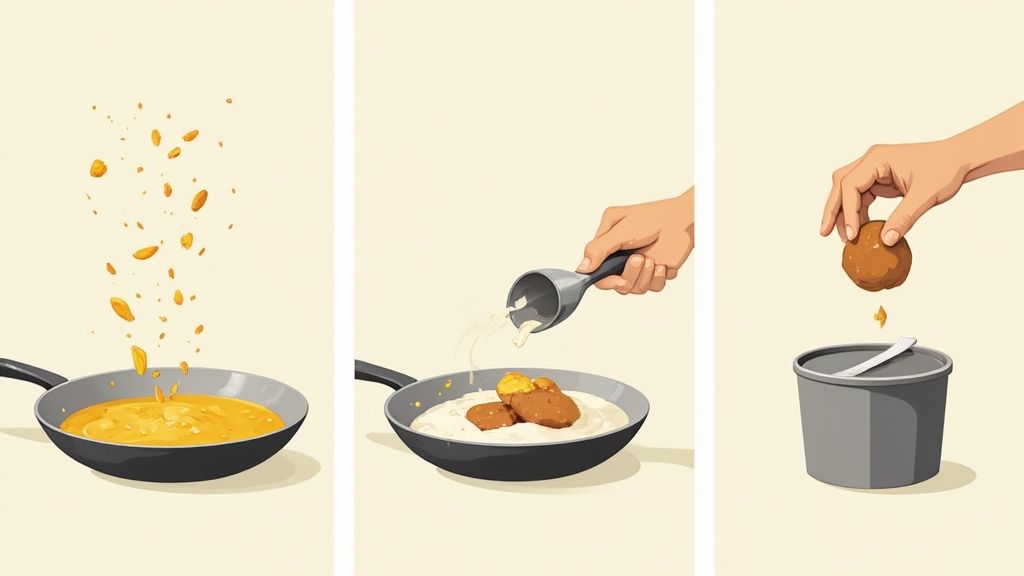
Here is the simple three-step process for getting rid of used frying oil:
- Sprinkle and Stir: First, turn off the heat but make sure the oil is still hot. Carefully sprinkle the plant-based FryAway powder right into the pan and give it a quick stir until it dissolves.
- Cool Down: Next, just leave the pan to cool down. As the temperature drops, the powder works its magic, transforming the liquid grease into a solid, waxy mass right there in your pan.
- Toss into household trash: Once the oil is completely solid, you can easily scoop the hardened puck out and toss it directly into your regular household trash. No mess, no liquid, no fuss.
This method isn't just clean; it's also incredibly effective. Solidifying the oil ensures it won’t leak from your trash bag, preventing a greasy disaster for you and for the waste management workers down the line. It's a truly responsible way to manage kitchen waste.
By turning liquid oil into a solid, you're not just making cleanup easier; you're also preventing it from becoming a potential environmental hazard in landfills. This simple switch in your routine has a significant positive impact.
From Fried Donuts to Effortless Disposal
Let’s walk through a real-world scenario: you've spent a wonderful weekend morning making classic homemade glazed donuts. The kitchen smells amazing, but now you’re left with several cups of hot peanut oil. With FryAway, the cleanup is actually the easiest part.
While the oil is still hot from frying, you just stir in the powder. By the time you've finished glazing the donuts and enjoying one (or two), the oil in the fryer has cooled and solidified. You can just scoop it out and throw it away, leaving you more time to enjoy your delicious creations. It’s a far cry from the old days of pouring hot grease into coffee cans and hoping for the best.
For a deeper dive into how this modern approach stacks up against older techniques, check out this comparative study on FryAway vs. traditional oil disposal methods.
DIY Methods for Getting Rid of Used Cooking Oil
While we always recommend an oil solidifier like FryAway for the easiest cleanup, sometimes you need a solution with what you have on hand. If you've just finished frying up a batch of something delicious, there are a few classic, effective DIY methods using things you probably already have around the house. They might require a little more care to avoid a mess, but they'll get the job done safely.
The go-to method for generations has been the good old contain-and-toss. After you’re done with those beer-battered onion rings, the absolute first step is to let that oil cool down completely. Seriously, don't rush this part. Hot oil is a major safety hazard, so just set the pan aside and let it come down to room temperature.
Once it's cool, find a sturdy, non-recyclable container with a lid you can screw on tight. The original oil bottle is perfect if you saved it. If not, an empty coffee can with a plastic lid or even a milk carton you can tape shut will work. Your main goal here is to make sure it's 100% leak-proof.
Perfecting the Contain-and-Toss
A little extra prep can save you from a greasy disaster in your trash can. If you're using a bottle, give that cap an extra twist to make sure it's on as tight as it can go. For something like a coffee can, I like to put a layer of plastic wrap over the opening before snapping the lid on—it creates a much better seal.
Another surprisingly simple trick is to freeze it. Just pour the cooled oil into a wide-mouthed container (a leftover takeout container works great) and pop it in the freezer. In a few hours, it'll turn into a solid block. On trash day, you can just scoop the solid chunk directly into the garbage bag. No spills, no mess.
Soaking It Up with Absorbent Materials
Got just a small amount of oil to deal with? Mixing it with something absorbent is the way to go. This turns the liquid into a more solid, easy-to-manage sludge that won’t leak everywhere.
Pro Tip: Don't be shy with the absorbent material. It's always better to use a little too much than not enough. Nothing's worse than ending up with a soupy, oily mess because you underestimated. Start with a generous amount and keep adding more until every last drop of oil is soaked up.
Here are a few household staples that work wonders:
- Kitty Litter: Fresh, unused kitty litter is incredibly absorbent. It’s basically designed for this.
- Sawdust: If you do any woodworking, you've got a free, highly effective oil sponge.
- Sand: Even a small amount of sand will do the trick for absorbing oil.
- Flour or Cornstarch: In a real pinch, old flour or cornstarch can thicken the oil into a scoopable paste.
Just pour your chosen material into the cooled oil and stir until it’s all absorbed and has a gritty, semi-solid texture. From there, you can scoop the whole mixture right into the trash. These DIY methods are reliable, but remember to handle them carefully to keep your kitchen clean.
Turning Your Used Oil into a Valuable Resource
While solidifying oil with a product like FryAway is our top recommendation for easy home disposal, let’s talk about another incredibly sustainable option: recycling your used cooking oil (UCO). That leftover oil from your weekend fish fry or homemade donuts isn’t just trash. It’s a resource waiting for a second life.
Believe it or not, your used kitchen oil can be processed into eco-friendly products like biodiesel and even soap. When you recycle it, you're doing more than just keeping your pipes clear—you're playing a direct role in the circular economy, turning a common household byproduct into renewable energy. This simple act helps cut our reliance on fossil fuels and gives your cooking waste a much greener purpose.
Finding a Recycling Facility Near You
So, where do you take your used oil? Finding a local drop-off spot is probably easier than you think. Many communities have dedicated programs for handling household hazardous waste, and UCO is often on the list. A quick search is usually all it takes to get you pointed in the right direction.
Here are the best places to start looking:
- Your Municipality’s Website: The local city or county public works department is your best first stop. They’ll have the most accurate, up-to-date info on collection events, permanent drop-off sites, or even curbside pickup services for UCO.
- Online Search Tools: Websites like Earth911 are built for this. You can search by material (cooking oil) and your zip code to find the closest recycling center in seconds.
- Your Local Fire Department: This might be surprising, but in some areas, fire departments act as collection points for used cooking oil, especially after big cooking holidays like Thanksgiving. It’s worth a call to check!
This flowchart gives you a quick visual on how to handle used oil, whether you solidify it or prepare it for collection.
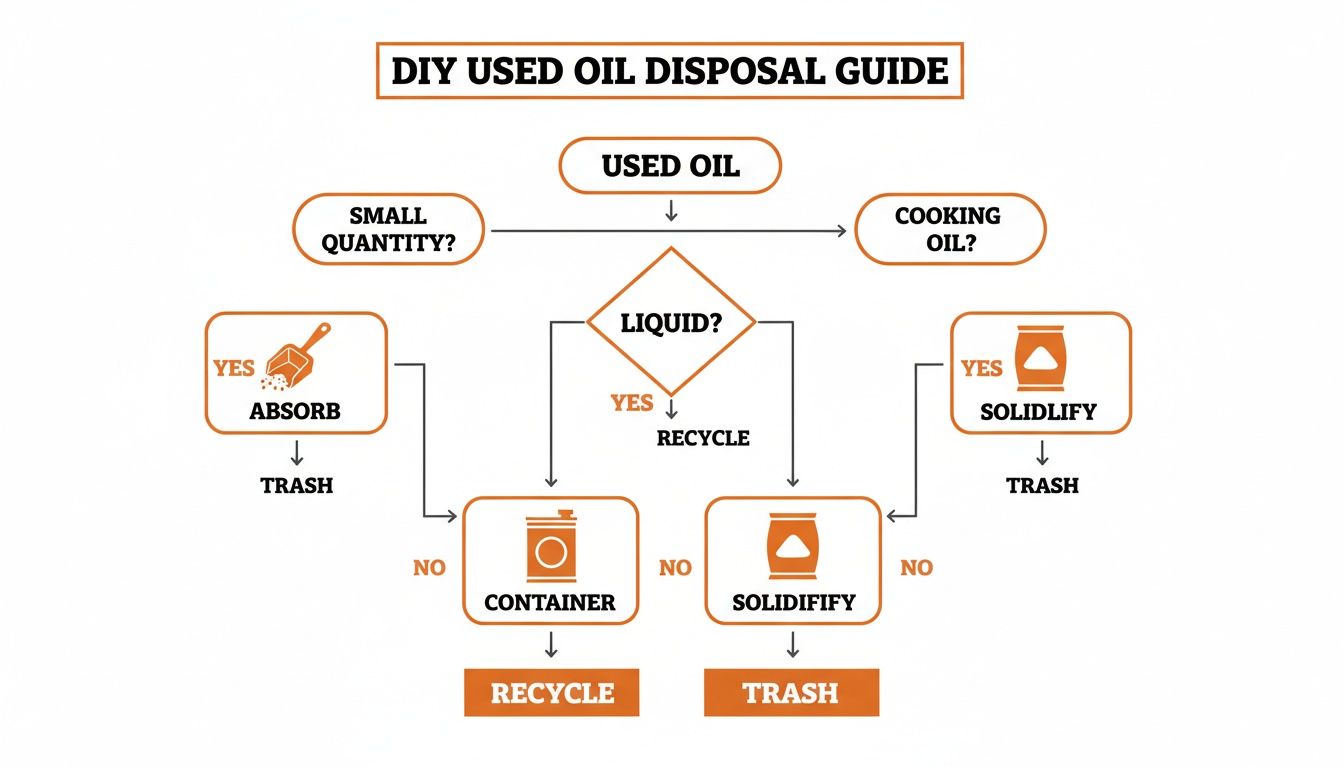
As the guide shows, whether you choose to solidify, contain, or absorb your oil, there’s always a safe, responsible alternative to just pouring it down the drain.
How to Properly Store Oil for Recycling
Once you’ve found a facility, you’ll need to store your oil correctly until you’re ready to drop it off. The goal is to collect it in a large, sealable container that won’t leak in your car or garage. The original bottle the oil came in is perfect for this, but any sturdy plastic jug or metal can with a screw-on lid works just as well.
Key Takeaway: Whatever container you use, make sure you don't mix your used cooking oil with anything else—no water, soap, or food scraps. Keeping the oil pure is essential for the recycling facility to process it correctly.
Just pour the cooled oil into your designated container after each frying session. Once it’s full, seal it up tight and take it to your drop-off location.
Why Recycling Matters: The Bigger Picture
The demand for UCO is what drives this entire recycling movement. It’s become a surprisingly valuable commodity. Globally, the used cooking oil market is on track to hit USD 12.75 billion by 2032, with North America leading the charge.
Here in the US, the industry pulls in $2.1 billion in revenue, and over half of that comes from creating biofuel that turns kitchen waste into fuel for vehicles. This is a perfect example of how small, eco-conscious habits at home can support a massive, positive environmental shift. Proper management of kitchen byproducts is a cornerstone of sustainability, a principle that also applies in commercial kitchens, as this practical guide to reducing restaurant food waste points out.
Fried Recipes Worth the Cleanup
Now that you know exactly how to handle used cooking oil, the world of frying is wide open. Gone are the days of cleanup anxiety. It's time to embrace that golden, crispy goodness with total confidence.
To celebrate, here are a couple of classic fried recipes that are absolutely worth the tiny bit of effort it now takes to clean up.
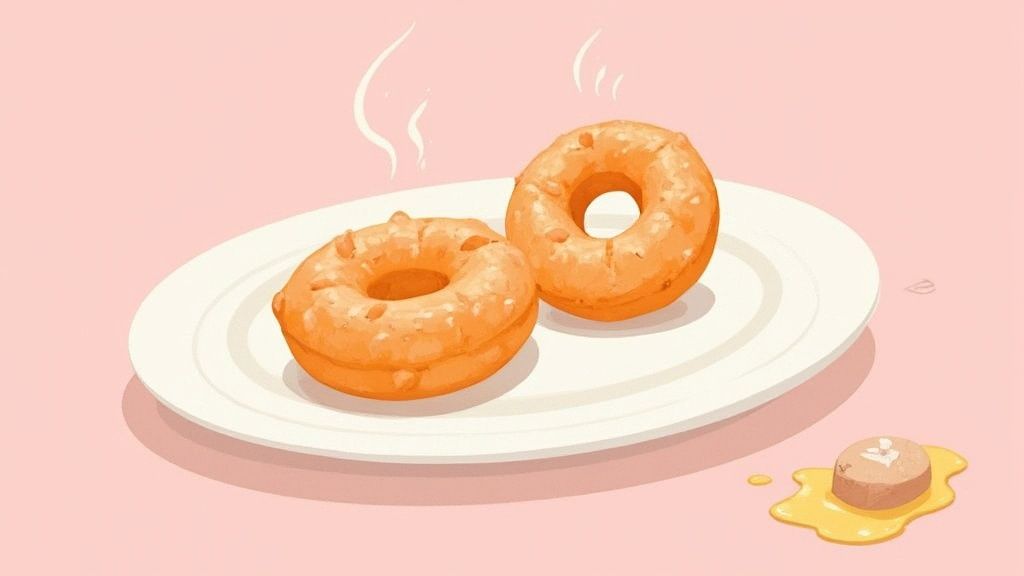
These recipes are all about pure enjoyment—the incredible texture, the rich flavor—without dreading what comes after.
Perfectly Crispy Beer-Battered Onion Rings
Let's be honest, few things in life are as satisfying as a truly crunchy, beer-battered onion ring. The secret lies in a light batter and oil that's hot enough to deliver that signature crunch without a hint of sogginess. For this, you’ll want a neutral cooking oil with a high smoke point, like canola or vegetable oil.
After you've sliced your onions and whipped up a simple batter with flour, spices, and your favorite beer, it’s fry time. Heat about two to three inches of oil in a heavy-bottomed pot until it hits 375°F. Fry the rings in small batches until they're golden brown and irresistible.
Cleanup Reminder: Once you're done, the cleanup is the easiest part. While the oil is still hot, just follow the FryAway process. 1) Sprinkle and Stir the powder in, let it 2) Cool Down completely, and then 3) Toss into household trash.
Classic Homemade Glazed Donuts
Making donuts from scratch feels like a special weekend project, and the payoff is always huge. These light, airy yeast-risen donuts are a timeless treat that will make your whole kitchen smell amazing. You'll need a good amount of peanut or vegetable oil—enough for the donuts to float freely without hitting the bottom of the pot.
Once your dough has risen, cut out your donut shapes and give them a final rest. Heat your oil to 360°F and gently fry each donut for about a minute per side, or until they puff up into beautiful golden pillows. A quick dip in a simple vanilla glaze, and they're ready to disappear. It’s a rewarding experience that tastes even better when you know the cleanup is already handled.
With these recipes, you can finally put the focus back where it belongs: on the fun of cooking and the delight of eating, not the mess. Knowing you have a simple, effective method for the leftover oil makes frying so much more approachable and fun.
Got Questions About Cooking Oil Disposal? We've Got Answers.
Even with a solid game plan, you might still have a few lingering questions about getting rid of used frying oil. Nailing the details doesn't just make your kitchen cleanup easier—it ensures you're making the most responsible choice every time you cook. We've rounded up some of the most common queries to give you clear, no-nonsense answers.
Can I Reuse Frying Oil, and How Many Times?
Absolutely! Reusing frying oil is a fantastic way to cut down on waste and save a little money. For battered or breaded foods (think crispy beer-battered onion rings), you can typically get three to four uses out of the oil. If you're frying cleaner items like potato chips, you might even stretch that to eight uses.
The trick is to let the oil cool down completely, then strain it through a fine-mesh sieve or some cheesecloth to get all the little food bits out. Store it in a sealed, light-proof container somewhere cool and dark. You'll know it's time to toss it when the oil gets dark, starts foaming on top, or has a funky, rancid smell.
What Is the Absolute Worst Way to Get Rid of Cooking Oil?
Pouring it down any drain—kitchen sink, toilet, you name it. That's the hands-down worst thing you can do. It’s a one-way ticket to serious clogs as the oil cools and solidifies in your pipes, which is a major contributor to the massive sewer blockages known as fatbergs.
You should also steer clear of adding oil to your compost bin, since it can attract pests and mess up the decomposition process. And please, never pour hot oil directly into a plastic trash bag. It will melt right through, creating a dangerous, greasy disaster for you and your sanitation workers.
Pouring used frying oil down the sink might seem like a quick fix, but it's a nightmare for municipal infrastructure. This gunk is a primary cause of sewer blockages that can cost cities millions to fix. A better path is recycling it through commercial collectors. In the US, 86 dedicated cooking oil recycling businesses are projected to operate in 2025, managing a $2.1 billion industry. Discover more insights about the cooking oil recycling market at IBISWorld.com.
How Does FryAway Make Disposal So Easy?
For anyone who wants a totally foolproof method, we always point them to FryAway. It takes the entire messy process and simplifies it by turning liquid oil into a solid, easy-to-handle puck. It couldn't be simpler.
Here’s the breakdown for getting the best results using the three-step process:
- 1) Sprinkle and Stir: Right after you finish frying and turn off the heat, just stir the FryAway powder into the hot oil until it's all dissolved.
- 2) Cool Down: Now, just let the pan sit and cool down completely. As it cools, the oil will magically transform into a solid organic mass.
- 3) Toss into household trash: Once it's hardened, you can scoop the solid puck right out of your pan and toss it into your regular garbage bin. No spills, no leaks, no mess.
Ready to make your frying cleanup effortless and eco-friendly? Try FryAway and see how simple it is to dispose of used cooking oil the right way. Shop now at FryAway.co.