


· By FryAway
Finding the Best Green Dishwasher Detergent for a Spotless Kitchen
When you're looking for the best green dishwasher detergent, it really comes down to finding a product that works hard without the harsh chemicals. The top performers use powerful plant-derived enzymes, come in sustainable packaging, and have biodegradable formulas. They prove you don't have to give up a spotless shine to be sustainable.
Why Choose an Eco-Friendly Dishwasher Detergent
Making the switch to a green dishwasher detergent is more than just a trend—it's a smart choice for your home and the planet. Many conventional detergents are packed with phosphates, chlorine bleach, and synthetic fragrances that can pollute waterways and even leave chemical residues on your dishes. Yuck.
In contrast, the best green dishwasher detergent brands rely on plant-based ingredients and enzymes to cut through stubborn food stains. Think of these enzymes as tiny, specialized helpers that zero in on grease and grime, dissolving them without needing any chemical brute force.
The Growing Demand for Green Cleaning
This shift isn't just happening in a few households; it's a massive movement. The global market for dishwasher detergents is seeing a huge surge in eco-friendly options. It's currently valued at USD 19.2 billion and is projected to skyrocket to USD 41.5 billion by 2034.
What's driving this? Consumers like you are actively looking for safer, more sustainable products for their families. This rising demand has pushed manufacturers to get creative, leading to some incredibly effective formulas that can tackle even the toughest, baked-on messes.
More Than Just Detergent
Of course, a truly eco-conscious kitchen goes beyond just the detergent you use. Let's say you've just pan-fried some delicious pork chops in cooking oil. You're left with a pan of hot, used oil. Pouring that down the drain is an absolute no-go—it’s a surefire way to create stubborn, expensive clogs.
This is where a product like FryAway comes in to complete your green cleaning arsenal.
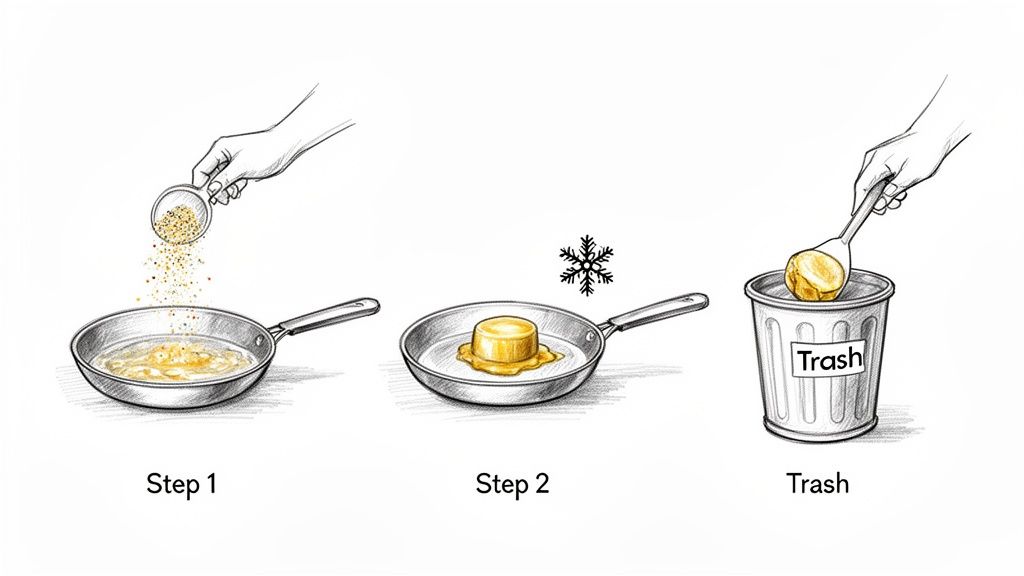
FryAway is a clever plant-based powder that makes getting rid of cooking oil simple and safe. It's as easy as one, two, three:
- Sprinkle and Stir: While the oil is still hot, just sprinkle in the FryAway powder and give it a stir until it's fully dissolved.
- Cool Down: Let the pan cool off completely. As it does, the oil mixture will transform into a solid, waxy puck.
- Toss into household trash: Scoop the solidified oil right out of the pan and toss it into your household trash bin. No mess, no clogged pipes.
And while you're focused on green detergents, it's also worth understanding the different types of washing machine for dishes available, as the right machine can help optimize your cleaning performance even further.
Decoding Your Dishwasher Detergent Label
Ever stand in the cleaning aisle, staring at a wall of dishwasher detergents and feeling like you need a chemistry degree just to pick one? You're not alone. We're bombarded with buzzwords like "plant-based," "biodegradable," and "enzyme-powered," but what do they actually mean for your dishes and the planet?
Think of a detergent label like a recipe. The ingredients are everything. The best green dishwasher detergent isn't magic; it's just a smarter recipe that uses powerful, yet gentle, ingredients to get the job done without calling in the chemical cavalry.
The Power of Plant-Based Enzymes
One of the star players you'll see on a green detergent label is enzymes. If harsh chemicals are a sledgehammer, enzymes are more like a team of tiny, specialized surgeons.
Imagine a plate caked with dried-on oatmeal. A specific enzyme, amylase, acts like microscopic scissors, snipping apart the starch molecules until they dissolve and wash away effortlessly. In the same way, protease enzymes go to work on stubborn protein stains from things like eggs or meat. This targeted approach is incredibly effective and way kinder to the environment.
Ingredients You Want to Avoid
Just as important as what's in your detergent is what's been left out. Many conventional detergents are packed with substances that can harm aquatic ecosystems and even pollute the air in your home.
Here are a few of the main culprits to keep an eye out for:
- Phosphates: Once a standard ingredient, phosphates trigger massive algae blooms in lakes and rivers. These blooms choke out aquatic life by sucking all the oxygen out of the water.
- Chlorine Bleach: Sure, it whitens, but chlorine can react with other organic matter in wastewater to create harmful compounds. Plus, its fumes get released into the hot, steamy air of your dishwasher, which can irritate your respiratory system.
- Synthetic Fragrances: That "fresh lemon scent" is often just a cocktail of undisclosed chemicals, including phthalates, which have been linked to hormone disruption and indoor air pollution. Truly green detergents will use essential oils or simply be fragrance-free.
Knowing what to avoid is a huge step toward a healthier home. For a deeper dive into what makes cleaning formulas truly planet-friendly, check out our helpful guide on biodegradable cleaning products.
Understanding Green Certifications
So, how can you tell if a product is genuinely "green" or just dressed up in clever marketing? This is where third-party certifications come in handy. They act as a trusted seal of approval, verifying that a product meets strict standards for safety and environmental impact.
A review of 325 common dishwasher detergents found that only 135 were rated as having a low concern for health and the environment. That means many popular brands could be leaving behind more than just a sparkle.
Look for these reliable logos on the packaging:
- EPA Safer Choice: This label from the U.S. Environmental Protection Agency means every single ingredient has been reviewed for potential health and environmental effects. It's one of the most respected certifications you can find.
- Leaping Bunny: This logo is your guarantee that no new animal testing was used at any point in the product's development.
- USDA Certified Biobased Product: This seal verifies the product is made from a certain percentage of renewable, biological ingredients, like plants and other agricultural materials.
Once you know how to read the signs—the power of enzymes, the chemicals to avoid, and the certifications to trust—you can decode any label with confidence. You'll be able to choose the best green dishwasher detergent for a clean that’s both powerful and responsible.
Putting Green Dishwasher Detergents to the Test
Okay, so reading labels is the first step, but the real proof is in the performance, right? How do these "green" detergents actually handle the greasy, baked-on mess left after a great home-cooked meal? This is where we find out if the best green dishwasher detergent can truly hold its own.
The demand for effective, eco-friendly options is exploding, and for good reason. The global market for dishwashing products hit a staggering USD 41.76 billion in 2024 and is projected to reach USD 60.27 billion by 2032. A huge driver for this growth is a major consumer shift—plant-based formulas are now beating out chemical-heavy ones by a 40% margin in major markets. If you want to dive deeper into this trend, you can get more market insights from Fortune Business Insights.
To help you cut through the noise, this flowchart gives you a simple decision-making path for evaluating any detergent label you come across.
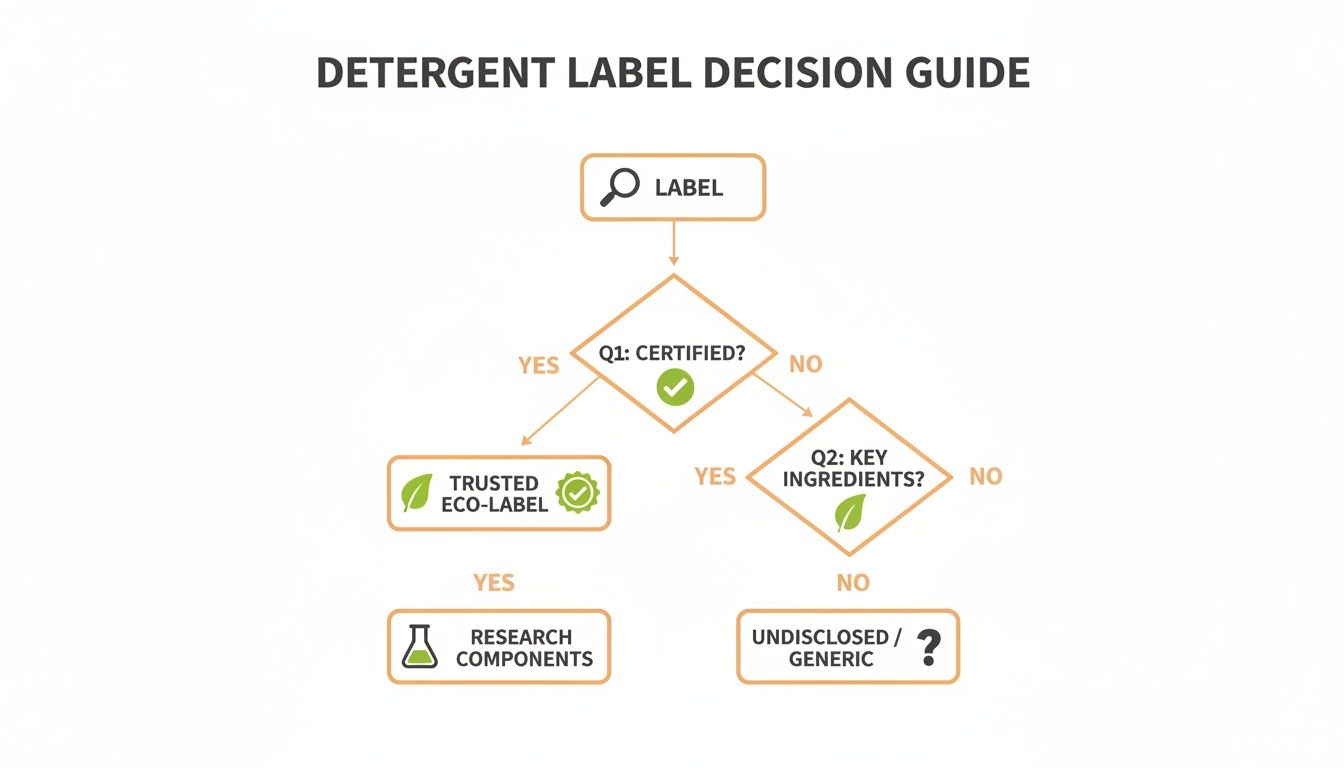
As the chart shows, looking for certifications and key plant-based ingredients is your fastest route to confirming a product's green claims. Now, let's break down how the most common detergent formats actually perform once the dishwasher door is closed.
Detergents come in a few different forms, and each one has its own set of trade-offs when it comes to convenience, cost, and eco-friendliness.
Green Detergent Format Comparison Pods vs Powder vs Liquid
| Detergent Format | Pros | Cons | Best For |
|---|---|---|---|
| Pods/Tablets | Pre-measured for no-fuss use; concentrated formulas are tough on grime. | Can be more expensive per wash; PVA film biodegradability is debated. | Households that want maximum convenience and consistent cleaning power. |
| Powder | Most budget-friendly; customizable dosage; often comes in recyclable packaging. | Can be messy to measure; may clump in humid conditions. | Budget-conscious families and those with very hard or soft water. |
| Liquid/Gel | Dissolves quickly in all water temperatures; less likely to leave residue. | Often packaged in plastic; may be less effective on tough, baked-on food. | Homes with soft water or for those who frequently run shorter, cooler cycles. |
Choosing the right format often comes down to your lifestyle, budget, and specific cleaning needs. There's no single "best" option—just the one that's best for you.
Pods and Tablets The Convenient Powerhouses
Green dishwasher pods and tablets are wildly popular because they're just so easy. No measuring, no spills—just toss one in and hit start.
They usually pack a concentrated cleaning punch with powerful enzymes that are fantastic at breaking down stubborn food. Since they're single-dose, you never have to guess if you're using too much or too little.
But that convenience can come with a higher price tag per load. Plus, many pods are wrapped in PVA (polyvinyl alcohol), a water-soluble film that has stirred up debate in environmental circles about how completely it biodegrades.
Powders The Customizable Classic
Dishwasher powder is the OG, and it’s stuck around for a reason. It offers great flexibility and is super cost-effective, making it a solid choice for anyone who likes to be in control.
For homes with very hard or very soft water, powders are a game-changer. You can easily adjust the amount of detergent you use—a little less for soft water to prevent residue, and a bit more for hard water to combat mineral buildup.
Powders are typically the most budget-friendly option and usually come in recyclable cardboard, which cuts down on plastic waste. The main downside? They can be a bit messy, and storing them in a humid spot can lead to clumping.
Handling Kitchen Grease from Start to Finish
No matter which format you choose, modern green detergents have gotten remarkably good at cutting through grease. Plant-based surfactants and powerful enzymes can leave your dishes sparkling clean, even after a feast of crispy fried chicken or golden french fries. Our guide to the best grease cleaner for your kitchen can also help you tackle greasy messes on other surfaces.
Of course, enjoying those delicious fried foods means dealing with leftover cooking oil. Pouring it down the drain is a guaranteed recipe for a plumbing nightmare and a huge environmental no-no.
Instead of creating a nasty clog, you can get rid of it safely and easily with FryAway. It's a simple, plant-based powder that magically solidifies used cooking oil so you can just toss it in the trash.
Here’s how easy it is:
- Sprinkle and Stir: While the oil is still hot, just sprinkle in the FryAway powder and give it a quick stir.
- Cool Down: Let the pan cool completely. You'll see the oil transform into a solid, waxy puck.
- Toss into household trash: Scoop the hardened oil right out of the pan and toss it straight into your household garbage bin.
When you pair the best green dishwasher detergent with a smart disposal solution like FryAway, you’ve created a kitchen cleanup routine that’s truly clean from start to finish.
Completing Your Eco-Friendly Kitchen Cleanup Routine
Choosing the best green dishwasher detergent is a fantastic move toward a more sustainable kitchen. But the journey to an eco-friendly cleanup doesn't stop when you shut the dishwasher door. What about the messes that happen before the dishes even hit the sink? I’m talking about the aftermath of those delicious meals that often create the biggest cleanup challenges.
Picture this: you've just pan-fried a batch of perfectly crispy chicken in cooking oil. Everyone loved it, the plates are cleared, and now you're left staring at a pan full of hot, used oil. That greasy residue is exactly what a great green detergent is made to handle on your plates, but the leftover oil in the pan is a whole different beast.
Pouring that grease down the drain is one of the absolute worst things you can do, both for your plumbing and the local environment. As that hot oil travels down your pipes, it cools, hardens, and teams up with other gunk to form massive, destructive blockages known as "fatbergs." These clogs cause nasty sewage backups and are a nightmare for cities to remove.
The Problem with Old Disposal Methods
For years, the go-to advice was to pour used oil into an old coffee can, let it cool, and just toss the whole thing in the trash. It’s definitely better than the sink, but it's still messy, inconvenient, and just adds more waste to the landfill. Plus, who really wants a greasy can of old oil hanging around on their counter for days?
This is where a commitment to a truly green kitchen gets real. A genuinely sustainable routine needs smart solutions for every single part of the process, from the cooking to the final cleanup. Having the right tools on hand is just as crucial as choosing the right detergent.
A Smarter Way to Handle Cooking Oil
Instead of wrestling with messy jars or gambling with your pipes, there’s a brilliantly simple and eco-friendly answer. We recommend using FryAway, a 100% plant-based, non-toxic powder that makes getting rid of used cooking oil completely hassle-free. It’s the perfect final step in your sustainable kitchen routine, making sure your post-meal cleanup is as kind to the planet as your choice of detergent.
So how does it work? FryAway magically transforms hot liquid oil into a solid, organic puck. You can then just lift it out of the pan and toss it straight into your household trash. No mess, no liquid, and no plumbing disasters waiting to happen. It's the perfect partner for a green lifestyle.
Using a product like FryAway isn't just about convenience; it's about closing the loop on kitchen waste. It prevents harmful fats and oils from entering our water systems, protecting both municipal infrastructure and aquatic ecosystems from contamination.
The Simple Three-Step FryAway Process
Using FryAway is incredibly easy and fits right into your existing cooking and cleaning workflow.
Here’s all it takes:
-
Sprinkle and Stir
Right after you finish frying, while the oil is still hot, just sprinkle the FryAway powder into the pan. Give it a quick stir to make sure it dissolves completely. -
Cool Down
That’s it—just let it be. As the oil cools, FryAway gets to work, gradually solidifying the liquid into a solid, waxy puck. This takes a few hours, so you can just leave it on the stovetop to cool down on its own. -
Toss into Household Trash
Once the oil has completely hardened, use a spatula to easily scoop the puck out of the pan and toss it right into your garbage bin. Your pan is left almost clean and ready to wash, and you’ve dealt with the oil safely and responsibly.
By adding this simple step to your routine, you make sure every part of your kitchen cleanup is truly eco-friendly. For more great ideas on building a sustainable home, check out these other fantastic eco-friendly kitchen products that help reduce waste and minimize your environmental footprint.
How to Get Spotless Dishes with Green Detergent
Making the switch to a green dishwasher detergent doesn't mean you have to brace yourself for lackluster results. A few small tweaks to your routine are all it takes to get that brilliant, spotless shine you’d expect from any conventional brand. It really just comes down to giving your eco-friendly detergent the right conditions to work its magic.
The secret weapon in many of the best green detergents is enzymes. Think of them as tiny, highly specialized cleaners, each trained to break down a specific type of food mess. Once you understand how they work, you can set them up for success and ensure every plate, glass, and fork comes out sparkling.
Maximize Your Detergent’s Power
Getting the best performance out of your green detergent starts long before you hit the "start" button. A couple of simple changes to how you load your dishwasher can make a world of difference, helping you avoid those all-too-common frustrations like leftover food bits or cloudy glasses.
First things first: resist the urge to pre-rinse your dishes. It feels a little backward, I know, but just scraping off the big chunks of food is all you need to do. The enzymes in your detergent are actually designed to latch onto food particles—if the plates are already clean, the enzymes have nothing to grab onto, which can make them less effective.
When you scrape instead of rinse, you're not just helping the detergent's enzymes do their job. You're also saving a ton of water. It's a win-win for your dishes and the planet.
Next, pay attention to how you load the machine. Loading your dishwasher properly isn't just about cramming more stuff in; it's about making sure hot water and detergent can reach every single surface.
- Avoid Overcrowding: Give your dishes some personal space. When you stack things too tightly, you block the water spray, which is a guaranteed way to get dirty spots.
- Face Dishes Inward: Point your plates and bowls toward the center of the dishwasher. That’s where the spray arms deliver the most powerful wash.
- Separate Silverware: Don't let your spoons "spoon." Mix up your forks, spoons, and knives in the cutlery basket so they don't nest together and block each other from getting clean.
Maintain Your Machine for Peak Performance
Even the best green dishwasher detergent on the market can't fight a losing battle against a poorly maintained machine. A little bit of regular upkeep goes a long way, ensuring your dishwasher runs efficiently and helps your detergent perform at its absolute best.
The single most important task is cleaning your dishwasher's filter. This little part, usually at the bottom of the machine, is designed to trap food particles and keep them from getting sprayed back onto your clean dishes. If you've ever dealt with gritty glasses, a clogged filter is the number one culprit. Just pop it out and rinse it under running water at least once a month.
This is also where some of the breakthroughs in green chemistry really shine. Modern enzyme engineering allows these detergents to work incredibly well even in low-temperature cycles, which can slash the energy needed to heat water by up to 40%. At the same time, powerful plant-derived surfactants are now formulated to cut through stubborn grease from fried foods without leaving behind any residue—perfect for families who love their crispy wings or fries. You can learn more about the evolving dishwashing product market and its innovations.
Finally, a truly green kitchen cleanup doesn't stop with the dishes. After enjoying those delicious fried foods, you're left with used cooking oil. Instead of pouring it down the drain and risking a massive clog, use FryAway. Just follow these three simple steps:
- Sprinkle and Stir the powder into the hot oil.
- Cool Down and let it turn into a solid.
- Toss into household trash for a clean, mess-free, and eco-friendly disposal.
Your Small Choice Makes a Big Difference
Picking the best green dishwasher detergent feels like a small kitchen decision, but its impact ripples out far beyond your sink. Every time you run a load with a biodegradable formula, you're actively protecting our shared waterways. It's a simple but powerful act.
Unlike conventional detergents packed with chemicals that stick around forever, green alternatives break down cleanly. This prevents the kind of pollution that messes with fragile aquatic ecosystems.
This one small change connects you to a massive global movement. More and more, people are demanding safer, more sustainable products, and believe me, the market is listening. Plant-based and biodegradable detergents are fueling huge growth in the dishwashing world, with the market expected to jump from USD 1,702.2 million in 2025 to a whopping USD 3,135.8 million by 2035. That surge is happening because of households just like yours. You can actually explore the full market analysis on Future Market Insights to see the numbers for yourself.
The Future of Clean is Getting Smarter
This push from consumers is forcing the entire cleaning industry to innovate. We're finally seeing a real shift away from wasteful single-use plastics and toward smarter solutions that cut waste from start to finish. If you want to really get the "why" behind this movement, it’s worth digging into understanding sustainability and what it means for the products we buy every day.
Keep an eye out for these trends, because they're changing the game:
- Water-Soluble Packaging: Think pods and sheets that dissolve completely. No more giant plastic tubs or wrappers to throw away.
- Convenient Refill Models: Companies are now sending concentrated refills you just add water to at home. This drastically cuts down on shipping weight, packaging, and fuel.
- Ultra-Concentrated Formulas: Smaller, lighter packages mean a much smaller carbon footprint from transportation. It makes your whole cleaning routine that much greener.
Choosing a green detergent isn't just a transaction. It's a statement. It says you’re part of a community that's building a cleaner future, one sparkling clean dish at a time.
Still Have Questions About Green Dishwasher Detergents?
Switching to a greener cleaning routine is a great move, but it's natural to have a few questions before you dive in. Let's clear up some of the most common ones so you can feel confident you're picking the best green dishwasher detergent for your home.
Do Green Detergents Really Work On Tough Grease?
You bet they do. It’s a common myth that you need harsh chemicals to get a good clean, but modern green detergents are seriously effective, all thanks to powerful plant-based enzymes and surfactants.
Think of enzymes as tiny cleaning specialists. Each type is designed to target and break down a specific kind of food mess—like grease, starches, or proteins—without needing any aggressive chemicals. For example, after a meal of pan-fried fish cooked in oil, that greasy film left on the plates can be a real pain. Lipase enzymes, a common ingredient in green detergents, are built specifically to dismantle those exact fatty, greasy residues, washing them away cleanly.
While the detergent handles your plates, just remember to deal with the leftover cooking oil in the pan responsibly. For that, we always recommend using FryAway. It's a ridiculously simple way to stop plumbing disasters before they start.
- Sprinkle and Stir: Just add the plant-based powder to your hot cooking oil and give it a mix.
- Cool Down: Let the oil cool completely until it turns into a solid puck.
- Toss into household trash: Scoop the solidified oil right out and throw it away in your regular garbage.
This simple step ensures your entire cleanup, from the pan to the dishwasher, is as eco-friendly as possible.
Are Plant-Based Detergents Safe For My Septic System?
Yes, they're not just safe—they're an excellent choice for homes with septic systems. Green detergents are biodegradable and don't contain harsh chemicals like phosphates or chlorine bleach, which can throw off the delicate balance of beneficial bacteria your septic tank needs to break down waste.
By choosing a detergent with plant-derived ingredients, you're actually helping maintain the health of your septic system. That means avoiding costly maintenance issues down the road and protecting your local groundwater at the same time.
Will I End Up Spending More On Eco-Friendly Options?
Not necessarily. While some premium green brands might have a higher sticker price, many are priced right alongside conventional detergents. Powders, in particular, often give you the most bang for your buck with a low cost per load and usually come in plastic-free packaging.
Plus, when you start using best practices—like scraping plates instead of pre-rinsing and only running full loads—you’ll save on water and energy bills. Those savings can easily offset any small difference in detergent price, making it a smart investment for your wallet, your health, and the environment.
Ready to complete your eco-friendly kitchen cleanup? FryAway makes disposing of used cooking oil simple, safe, and sustainable. Learn more and find the perfect size for your cooking needs at FryAway.co.