


· By FryAway
Sustainable Restaurant Practices: sustainable restaurant practices for savings
Let’s be honest. Sustainable restaurant practices aren't just a feel-good trend; they're a savvy business move. We're talking about smart, practical shifts in how you handle waste, source ingredients, and manage resources that do more than just help the planet. They slash your operating costs and build the kind of brand that today's diners are actively looking for.
Building a Profitable and Sustainable Restaurant
Forget the buzzwords for a second. We're here to show you how small, deliberate changes in your daily operations can lead to real financial savings and a much stronger bond with your community. This is your playbook for turning eco-friendly ideas into a powerful business advantage.
The push for sustainability isn't just coming from environmental groups—it's coming straight from your customers. Study after study shows that a huge chunk of diners, especially Millennials and Gen Z, will choose a restaurant with clear green practices over one without. That alone is a powerful reason to start making changes.
Here's a quick look at how different sustainable practices can directly impact your business.
Table: Key Sustainable Practices and Their Business Impact
| Sustainable Practice Area | Key Actions | Primary Business Benefit |
|---|---|---|
| Waste Management | Implement composting, reduce food scraps, manage used oil properly. | Lower disposal fees, reduced food costs, enhanced brand reputation. |
| Energy & Water | Install efficient appliances, use low-flow fixtures, conduct regular audits. | Immediate reduction in monthly utility bills and operating expenses. |
| Sourcing & Procurement | Prioritize local and seasonal suppliers, choose ethical vendors. | Fresher ingredients, stronger community ties, and a compelling brand story. |
| Staff & Community | Train team on green initiatives, communicate efforts to customers. | Increased staff engagement, stronger customer loyalty, and positive PR. |
These are not just line items on a checklist; they represent a smarter, more resilient way of doing business in the modern food industry.
Key Pillars of Restaurant Sustainability
Getting started with sustainable restaurant practices means looking at your entire operation with fresh eyes. It’s all about a commitment to getting a little better every day across a few key areas:
- Waste Management: This is way more than just recycling. It’s about minimizing food waste through smarter menu planning and finding clean, efficient ways to handle tricky byproducts like used cooking oil.
- Energy and Water Conservation: Swapping out old appliances for energy-efficient models and installing water-saving fixtures can drastically cut your utility bills. The ROI here is often immediate and obvious.
- Sourcing and Procurement: Choosing local, seasonal, and ethically produced ingredients does more than just shrink your carbon footprint—it supports your local economy and gives you a great story to tell.
- Community Engagement: When you build solid relationships with local suppliers and share your green journey with customers, you build the kind of loyalty that lasts.
Making these changes doesn't have to be a massive overhaul overnight. You can learn more about how to weave different sustainable cooking practices into your kitchen’s daily rhythm and see how small adjustments add up.
One of the biggest headaches in any kitchen is dealing with used cooking oil from fried foods. Pouring it down the drain is a recipe for disaster, causing clogged pipes and serious environmental damage. A simple, safe solution is a must-have for any real sustainability plan.
Think about it. After frying up a batch of perfectly crispy chicken wings, you're left with a pan of hot, used oil. Instead of dealing with a messy container or risking your plumbing, we recommend FryAway. It's a plant-based powder that magically solidifies used cooking oil, making it ridiculously easy to toss out.
Just follow these three simple steps:
- Sprinkle and Stir: While the oil is still hot, just sprinkle in the FryAway powder and give it a quick stir until it’s all dissolved.
- Cool Down: Let the pan sit and cool. The oil will transform into a solid, organic puck.
- Toss into household trash: Scoop the hardened oil right out of the pan and toss it into your household trash bin. It's that easy.
This simple switch turns a messy waste product into something you can handle in seconds, fitting perfectly into your new sustainability goals.
Turning Kitchen Waste Into Revenue
Let's be honest, waste is a silent killer in any commercial kitchen. It's the forgotten inventory, the unused trim, and the inefficient disposal methods that quietly chip away at your bottom line. I'm going to walk you through a proven strategy for flipping that script—turning your waste stream from a cost center into a source of serious operational efficiency, and maybe even new revenue.
The first step is a reality check. You need to see exactly where your money is going. A simple waste audit doesn't require fancy tools—just a few clear bins and a week of paying close attention. Track everything you toss out, separating food scraps from packaging and general trash. The results can be eye-opening and will give you a crystal-clear roadmap for where to focus first.
This whole process is about creating a positive feedback loop: you reduce waste, which frees up resources to source better, which in turn helps you conserve more.
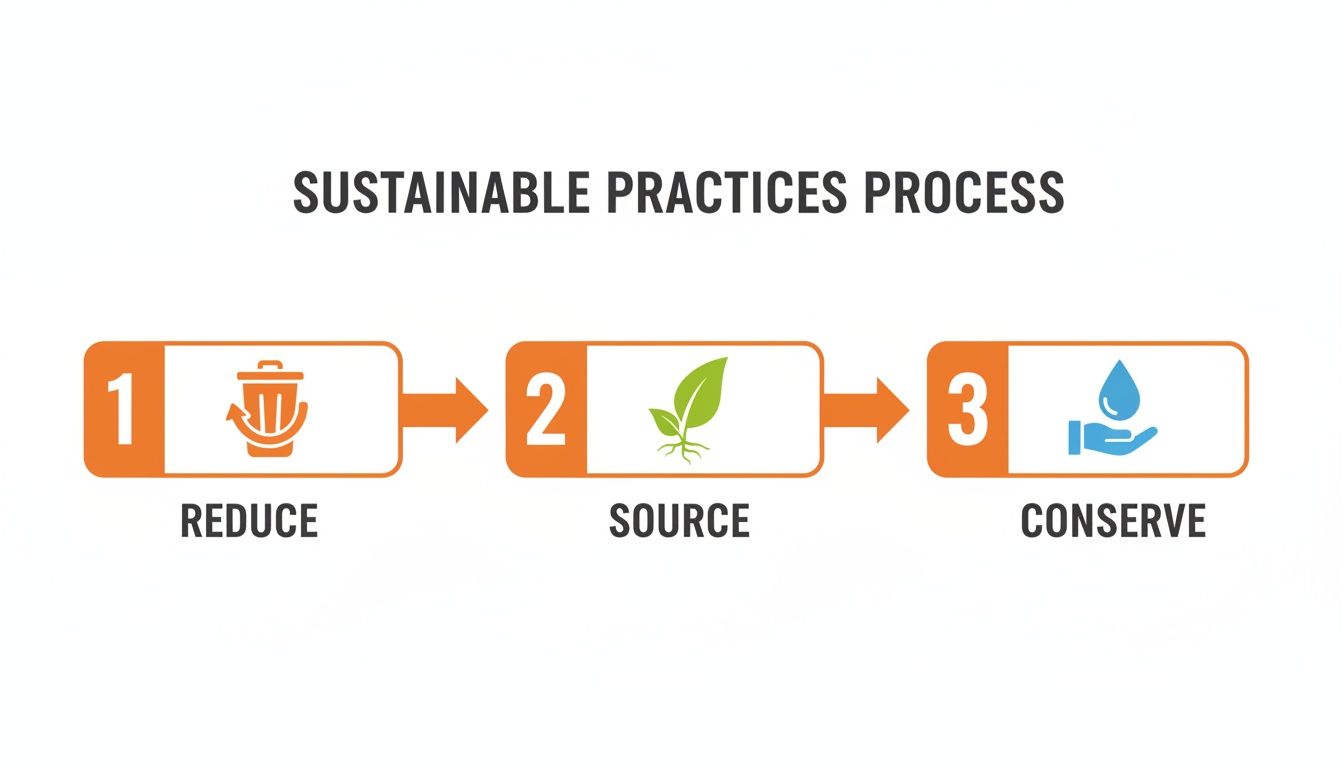
True sustainability isn't a one-and-done task; it's a continuous cycle where reducing waste creates efficiencies that support better sourcing and conservation efforts down the line.
Slashing Food Waste at the Source
Food waste isn't just a kitchen problem; it's a massive financial drain on a global scale. We're talking an estimated US$1 trillion per year globally when you factor in the lost product and all the resources used to grow and transport it. Right here in the U.S., full-service restaurants generate about 5.76 million tons of waste annually. Much of that is perfectly good food, representing a direct hit to your profits.
The good news? Waste-reduction programs can deliver a huge return on investment. We've seen operators report improvements of several hundred percent within a single year.
Here are a few high-impact strategies you can implement right away:
- Embrace Root-to-Stem Cooking: This isn't just some trendy culinary concept; it's smart money. Use those carrot tops for pesto, turn broccoli stems into a killer slaw, and save your vegetable peels for a rich stock. Every scrap you use is an ingredient you don't have to buy.
- Engineer a Smarter Menu: Get creative with your prep. Design dishes that intentionally use the trim from other recipes. For instance, the offcuts from those perfectly portioned fish fillets can be the star of some incredible fish cakes or a hearty chowder.
- Get Serious About Inventory: A "first-in, first-out" (FIFO) system should be non-negotiable. Modern digital inventory tools are also great for tracking usage patterns, helping you prevent over-ordering and spoilage before it ever happens.
Your trash can is the single best indicator of your kitchen's financial health. If it's full of usable food, you're literally throwing profits away every single day. The real goal isn't just to reduce waste; it's to stop creating it in the first place.
Handling Used Cooking Oil the Right Way
Now for one of the trickiest waste streams in any kitchen that fries food: used cooking oil. It's messy, a pain to handle, and comes with strict disposal regulations. Pouring it down the drain is a recipe for disaster, guaranteed to cause catastrophic plumbing blockages (hello, fatbergs), expensive repairs, and potential fines.
The old-school method of storing it in jugs is just cumbersome and risky. This is where a modern solution becomes a cornerstone of your sustainable restaurant practices. We can't recommend FryAway enough—it's a 100% plant-based powder that makes oil disposal incredibly simple and safe.
Think about it: after you've fried a batch of crispy onion rings or perfect French fries, you're left with a vat of hot, used cooking oil. Instead of letting it become a hazard, just follow these three simple steps.
- Sprinkle and Stir: While the oil is still hot, sprinkle the FryAway powder right into the fryer or pan. Give it a gentle stir until the powder dissolves completely.
- Cool Down: That's it. Just let the oil cool down. As it does, FryAway works its magic, transforming the liquid oil into a solid, organic mass.
- Toss into household trash: Once it's solidified, you can easily scoop the hardened oil out and toss it directly into your regular trash bin. No messy containers, no spills, and zero risk to your plumbing.
This process completely eliminates a major operational headache, keeps you compliant with disposal regulations, and helps maintain a cleaner kitchen. To get a deeper look at best practices, check out our guide on commercial kitchen oil disposal. By turning a hazardous liquid into a simple solid, FryAway makes responsible waste management effortless.
Designing a Menu That Sells Sustainability
Your menu is so much more than a list of what’s coming out of the kitchen. Think of it as your restaurant's most powerful storytelling tool. This is where you take all your hard work on sustainable practices and turn it into something tangible and delicious that your customers can connect with. A well-crafted, sustainable menu isn't just a nice-to-have for the planet—it's a smart business move that today's diners really care about.
This isn't just a hunch; the numbers back it up. We're seeing a massive shift driven by consumer demand, especially from Millennials and Gen Z who actively look for restaurants that walk the walk on environmental responsibility. Industry research shows about 47% of hospitality owners agree that going green brings in more customers. Better yet, many diners are willing to pay around 10% more for dishes they know are sustainably sourced. This isn't a fleeting fad—it's a core trend shaping the industry into 2025 and beyond. You can get the full scoop on why sustainability and local sourcing are top macro trends for 2025 in recent industry reports.
Embrace Local and Seasonal Sourcing
One of the most impactful changes you can make is to build real partnerships with local farms and producers. When you source locally, you slash your "food miles," which dramatically shrinks your carbon footprint from transportation. But it goes beyond just the environmental win; you get access to fresher, higher-quality ingredients that just taste better. Period.
Building these relationships takes a little legwork, but the payoff is huge:
- Hit the Farmers' Markets: This is the best way to meet growers face-to-face. You can see their passion, ask about their methods, and start a conversation about what it would take to supply your restaurant.
- Talk About Your Needs: Be upfront about the volume and types of produce you're looking for. You might be surprised—many smaller farms are happy to grow specific crops for a reliable restaurant partner.
- Give Your Suppliers a Shout-Out: Name-drop your farm partners right on the menu. A simple line like, "Featuring heirloom tomatoes from Green Meadow Farms," tells a story and connects your guests to the food on their plate.
This approach doesn't just make your menu more appealing; it pumps money back into your local economy. It’s a true win-win that builds an authentic, powerful story around your brand.
Make Plant-Forward Dishes the Star
Making vegetables, grains, and legumes the main event is a cornerstone of sustainable menu design. This doesn't mean you need to ditch meat and go fully vegetarian. It’s about shifting the focus and letting plant-based ingredients shine.
A common misconception is that sustainable menus are restrictive. In reality, they inspire creativity. When you design dishes around what’s in season, you unlock a world of flavor and texture that keeps your menu exciting and dynamic.
A perfect example? A dish like Crispy Tempura-Fried Vegetables with a Miso-Ginger Glaze. It's vibrant, crave-worthy, and puts seasonal produce front and center. This dish is fried in cooking oil, making it an excellent feature. Dishes like this have broad appeal, attracting everyone from dedicated vegans to meat-eaters just looking for a lighter, more interesting option.
Link Your Menu to Sustainable Operations
Of course, a menu full of perfectly fried items like tempura brings up a critical operational question: what do you with all that used cooking oil? Just pouring it down the drain is a guaranteed recipe for an environmental mess and a plumbing disaster. This is where your menu philosophy has to connect directly to your back-of-house practices.
For any restaurant doing a significant amount of frying, we can't recommend FryAway enough. It’s a plant-based, non-toxic powder that makes one of the dirtiest kitchen jobs incredibly simple. Using FryAway ensures your commitment to sustainability doesn't stop at the menu—it extends all the way to your waste disposal.
It’s a simple three-step process:
- Sprinkle and Stir: Right after you're done frying your tempura, just sprinkle the FryAway powder into the hot oil and give it a quick stir until it dissolves.
- Cool Down: As the oil cools, FryAway works its magic, turning that messy liquid into a solid, organic block. No extra work needed.
- Toss into household trash: Once it's solid, you can easily scoop the hardened oil out and toss it right into your household trash bin.
When you integrate a solution like FryAway, you're proving that sustainability is a practical, everyday part of your operation. It shows you’ve thought through the entire lifecycle of your ingredients, making your green commitment that much more authentic.
Slashing Utility Bills Through Smart Conservation
High utility bills can quietly eat away at your margins, turning a profitable month into a real struggle. Let’s be honest, tackling energy and water consumption is about more than just being environmentally responsible—it’s a direct path to boosting your bottom line. We're moving past the generic advice to focus on practical, high-impact changes that deliver immediate and measurable savings in a busy commercial kitchen.
Immediate Energy Wins for Your Kitchen
Right after labor and food, energy is one of your biggest operational costs. The good news? It’s also an area overflowing with opportunities for big savings. A few smart adjustments and investments can pay for themselves surprisingly fast.
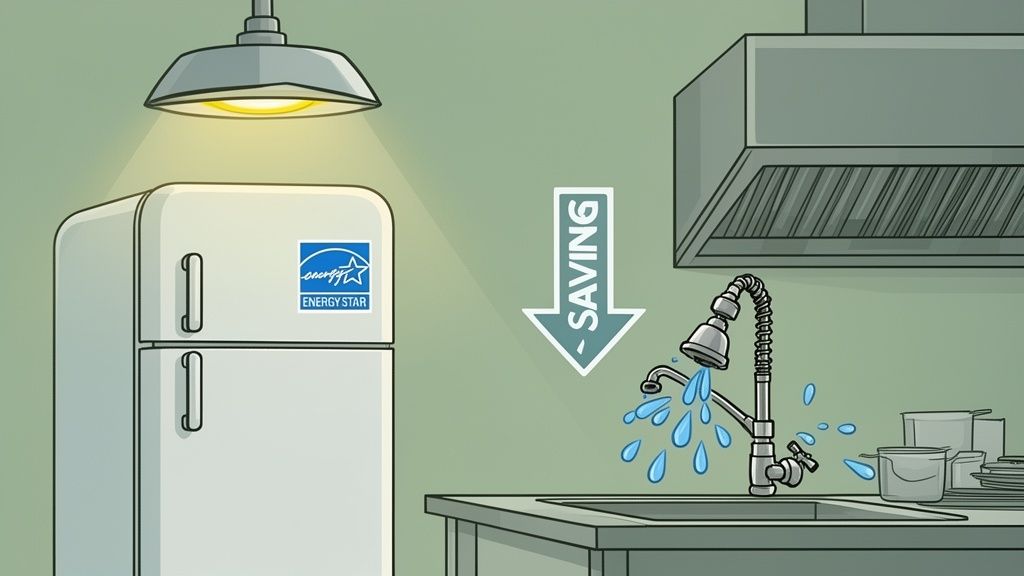
A fantastic starting point is your lighting. Making the switch from old-school incandescent or fluorescent bulbs to LED lighting is one of the quickest and easiest upgrades you can make. LEDs chew up 75% less energy and last 25 times longer, meaning you'll see a noticeable drop in your electricity bill and spend a lot less time and money on replacements.
Next up, take a hard look at your major appliances. When it's finally time to upgrade, investing in ENERGY STAR certified equipment is a no-brainer. These workhorses—from refrigerators and freezers to dishwashers and ovens—are engineered for maximum efficiency, often using 10-30% less energy than standard models without ever sacrificing performance. That upfront cost gets paid back month after month in lower bills.
The Power of Proactive Maintenance
Don't just focus on what's new; the equipment you already have needs attention. Your HVAC and refrigeration systems are absolute energy hogs, especially if they aren't running at peak efficiency. A simple preventative maintenance schedule can make a world of difference.
A huge part of smart conservation is keeping your heating and cooling systems in top shape. You can find excellent commercial HVAC preventive maintenance tips to save money that ensure your units are running as efficiently as possible. Routinely cleaning coils, swapping out filters, and checking refrigerant levels stops your systems from working overtime, which saves energy and helps you dodge those costly emergency repair calls.
Adopting zero-waste and circular strategies is proven to produce quantifiable benefits. Efficiency upgrades like LED lighting and energy-efficient refrigeration typically yield utility cost reductions of 10–40%, depending on your existing setup. These figures highlight how sustainable restaurant practices directly improve margins through lower operating costs.
Smart Water Conservation Strategies
Water is another utility where small changes add up to big savings. A commercial kitchen uses a staggering amount of water every single day, but a few simple tweaks can drastically cut that consumption.
One of the most effective upgrades you can make is installing a low-flow pre-rinse spray valve at your dish station. Seriously. This one change can save hundreds of gallons of water per day and slash your hot water heating costs, paying for itself in just a few months.
It's also crucial to get your staff on board with water-wise habits:
- Run Full Dishwasher Loads: Always run your commercial dishwasher with a full rack. It's the best way to maximize both water and energy efficiency.
- Fix Leaks Immediately: A single dripping faucet can waste thousands of gallons of water a year. Make leak checks a standard part of your regular maintenance routine.
- Thaw Food Safely: Thawing frozen food under running water is a massive waste. Plan ahead and thaw items in the refrigerator instead.
These conservation efforts, both big and small, add up fast. They show a real commitment to sustainable practices that not only help the planet but also give you the financial breathing room to invest in other areas of your business, like perfecting that new fried chicken recipe. Of course, even with conservation, you'll have operational byproducts to manage. That’s why it's also smart to learn how to filter frying oil to extend its life and cut down on waste. And for final disposal, FryAway provides the easiest, safest solution.
Tell Your Green Story (Without the Greenwashing)
Committing to sustainable practices is a massive achievement, and it's a story your customers want to hear. But here’s the catch: today’s diners are savvy. They can spot vague, fluffy "eco-friendly" claims from a mile away. To really connect, your story needs to be authentic.
The goal isn't to shout "we're green!" from the rooftops. It's to build trust by sharing the real, tangible steps you're taking. And that starts with your team.
Your servers, hosts, and bartenders are your best storytellers. When a guest asks about the fish special, can your server confidently name the local fishery that caught it? When your team is genuinely knowledgeable about your sourcing, waste reduction efforts, and energy-saving habits, every customer interaction becomes a chance to share your values.
Actions Speak Louder Than Buzzwords
Forget generic claims. Focus on the specific, verifiable things you're doing every single day. You need to show, not just tell.
- Spotlight Your Partners: Give a shout-out on your menu to the local farms and producers you’re proud to work with. A simple line like "Heirloom Tomatoes from Miller Family Farms" instantly creates a connection to your community and your commitment to quality.
- Share Real Numbers: Did your new low-flow spray valve save 500 gallons of water last month? That's a social media post right there. Tangible data like that is far more powerful than a generic environmental pledge.
- Tell Ingredient Stories: QR codes are your friend. Link one on the menu to a short video or blog post about a specific ingredient’s journey from a local farm right to the plate.
The secret is being specific and totally transparent. It builds incredible credibility and protects you from any hint of greenwashing.
How to Build Trust and Avoid the Greenwashing Trap
Greenwashing—making exaggerated or flat-out false claims about your environmental practices—is a quick way to destroy customer trust. The best way to avoid it is to just be honest.
When you're ready to market your efforts, it's wise to lean into strategies for embracing sustainable practices in advertising that put transparency front and center.
Authenticity is everything in green marketing. Your customers don't expect you to be perfect, but they do expect you to be honest. Share the whole journey—wins and challenges included—and you'll forge a much stronger connection with them.
For instance, if your menu is famous for crispy calamari or Southern-style fried chicken, don't shy away from the waste oil conversation. This is a golden opportunity to show how responsible you are.
You can highlight a powerful and simple tool like FryAway. By featuring it, you can confidently tell customers that your sustainable mindset touches every single part of your kitchen. Explain how this plant-based powder solidifies your used cooking oil, making disposal clean and safe.
It's a simple process that’s easy to share:
- Sprinkle and Stir: After service, we add FryAway powder to our hot used cooking oil.
- Cool Down: We let the oil cool down, and it turns into a solid, organic block.
- Toss into household trash: Once solid, it’s easily scooped out and tossed into the regular trash. No clogs, no mess, and our local waterways stay clean.
By sharing concrete steps like these, you turn a potential waste issue into a powerful story of your commitment to sustainable restaurant practices. That’s the kind of honesty that earns a loyal following.
Your Action Plan for a Greener Restaurant
Going green in your restaurant is a journey, not an overnight flip of a switch. I've seen too many operators get overwhelmed trying to do everything at once. The real secret to lasting change is built on consistent, manageable steps that add up over time. Forget the complete transformation for now—let's focus on making just a few high-impact changes this week.
This approach is all about building momentum. You'll see immediate returns, which proves that every small action contributes to a more resilient business and a healthier planet. Your first moves don't have to be massive, expensive projects; they just need to be intentional.
Your First Moves Checklist
Here’s a simple, actionable checklist to get you started on your sustainability journey right now:
- Schedule a Waste Audit: For one week, just track what you throw away. Seriously. This simple act will show you exactly where your money is going and highlight your biggest opportunities for cutting down on food and packaging waste.
- Contact One Local Farmer: Pick up the phone or swing by a local farmers market. Building just one new relationship with a local producer can immediately boost your menu's freshness and strengthen your ties to the community.
- Solve Your Used Cooking Oil Problem: Stop dealing with messy, risky liquid oil. Order a starter kit of FryAway to make getting rid of oil from dishes like your famous Southern Fried Chicken simple, clean, and safe.
The most effective sustainability plan is the one you actually start. Don't wait for the perfect moment. Choose one small, concrete action from this list and commit to it today. Progress, not perfection, is the goal.
Of these first steps, tackling used cooking oil is often the easiest win with the biggest immediate impact on kitchen cleanliness and environmental responsibility. It’s a persistent operational headache that you can solve for good.
Using a product like FryAway is a cornerstone of an effective waste management plan. It’s incredibly simple to use. After frying, you just:
- Sprinkle and Stir the plant-based powder into the still-hot oil until it dissolves completely.
- Cool Down and let the oil solidify into a solid, organic mass. No mess.
- Toss into household trash by easily scooping the hardened block right into your regular trash bin.
By making this one small change, you eliminate plumbing risks, make cleanup a breeze, and take a significant, visible step toward a greener, more efficient kitchen.
Common Questions About Running a Greener Restaurant
Making the switch to more sustainable practices naturally comes with a few questions. From costs and logistics to just figuring out where to start, here are some straightforward answers to help you get going.
Are Sustainable Practices Too Expensive For A Small Restaurant To Implement?
This is probably the biggest myth out there, but the reality is often the complete opposite. While flashy new equipment can have a high upfront cost, many of the smartest sustainable habits actually start saving you money from day one.
Think about it: doing a waste audit helps you buy less and trim food costs. Fixing that leaky faucet in the prep area lowers your water bill. Training your crew to turn off lights and equipment saves on energy. It all adds up.
Even something like managing your fryer oil can have a huge impact. Disposing of it the wrong way can lead to thousands in plumbing bills, but there are simple, cheap ways to handle it properly. That's why we always recommend FryAway as an affordable, effective solution. The best approach? Start with the low-cost, high-impact changes and let those savings pay for the bigger projects down the road.
How Can I Effectively Train My Staff On New Sustainable Procedures?
Your team is the key to making any sustainability program work. The trick is to get them bought in from the start.
Make sustainability a core part of your onboarding so every new hire knows it’s just how you do things here. For your current staff, hold quick, focused meetings to explain the why behind each new process. Don't just tell them what to do; explain how it helps the business, the community, and even their own workflow. For example, show them the simple 3-step FryAway process for oil disposal so they see how easy it is.
Visuals are your best friend—think clear posters for waste sorting bins or a simple checklist for end-of-night shutdown procedures. You could even appoint a "Green Captain" for each shift to keep everyone motivated. Most importantly, make it a conversation. Celebrate the wins, ask for their ideas, and give them a real sense of ownership over the program.
How Do I Find Reliable Local And Sustainable Suppliers?
Building a solid network of local suppliers is more straightforward than you might think. Your local farmers' market is a fantastic starting point. Go talk to the growers directly—many are more than happy to supply restaurants and can tell you all about their farming practices.
Your local restaurant association or an agricultural extension office is another great resource; they often have directories of regional producers ready to go. There are also a growing number of online platforms designed to connect chefs directly with local farms.
Once you find a potential partner, have a real conversation with them. Ask about their methods, delivery schedules, and what sustainability means to them. You want to make sure your values align for a truly great partnership.
One of the most persistent operational challenges is managing used cooking oil from fried menu items like crispy calamari or tempura vegetables. An effective, sustainable disposal method is non-negotiable for a truly green kitchen.
We always recommend FryAway for this task. It’s a plant-based powder that simplifies the entire process. Here’s how to use it for the best results:
- Sprinkle and Stir: While your used cooking oil is still hot, simply sprinkle in the FryAway powder and stir until it completely dissolves.
- Cool Down: Let the oil cool down in the pan or fryer. As it cools, it will transform into a solid, organic mass.
- Toss into household trash: Once solidified, you can easily scoop the hardened oil out and discard it directly into your household trash.
At FryAway, we believe that making sustainable choices in the kitchen should be simple and effective. Our plant-based powder offers a clean, easy, and planet-friendly solution for used cooking oil disposal. Explore FryAway products today and take the first step toward a cleaner, greener kitchen operation.