


· By FryAway
The Best Way to Get Rid of Oil a Guide for Home Cooks
After you've cooked up a delicious home-fried meal, the last thing you want is a messy, complicated cleanup. Pouring that leftover cooking oil down the sink might feel like the quickest way to get it done, but trust me, it's a decision that will come back to haunt you. The absolute best way to get rid of oil is to solidify it first, which prevents greasy leaks and some seriously expensive plumbing damage. For this, we always recommend a product like FryAway.
Why You Should Never Pour Oil Down the Drain
That pan of hot oil from your crispy fried chicken might be a liquid now, but it won't stay that way for long. Once it washes down your drain and starts to cool, it solidifies and coats the inside of your pipes. This sticky gunk acts like a magnet, grabbing every bit of food and debris that follows until you've got a stubborn clog that won’t budge.
This isn’t just a small hassle, either. Plumbing experts say that improper disposal is the reason behind 1 in 3 household drain clogs. In the worst-case scenarios, this can lead to biohazardous backups that require professional sewage damage cleanup.
The Problem Goes Way Beyond Your Pipes
The issue doesn't just stop at your property line. When fats, oils, and grease (often called FOG) from thousands of homes flow into the municipal sewer system, they combine to create monstrous blockages known as fatbergs.
These aren't just big clogs; they're massive, congealed lumps of waste. Back in 2017, workers in London discovered a 144-tonne fatberg in the sewers that stretched an incredible 250 meters long.
These behemoths can cause raw sewage to back up into streets and even homes, creating huge public health hazards and costing taxpayers millions to remove. It’s a pretty shocking problem, which is why we've detailed more on what fatbergs are and why they matter in another guide.
A Simple Change Makes a Huge Difference
The good news? Preventing all these problems is surprisingly easy. Instead of risking costly plumbing bills and contributing to a massive environmental headache, you can switch to a much safer, cleaner method. One of the most effective solutions out there is using a plant-based solidifier like FryAway. This simple powder makes getting rid of used oil ridiculously easy.
Just follow these three steps for the best results:
- 1) Sprinkle and Stir: While the oil is still hot, just sprinkle in the FryAway powder and give it a quick mix.
- 2) Cool Down: Leave the pan or fryer to cool down completely. You'll see the oil transform into a solid, waxy puck.
- 3) Toss into household trash: Once it's solid, you can easily scoop the hardened oil out and toss it right into your household trash bin.
Making this small change in your kitchen routine is a powerful move toward protecting your pipes, your community's sewer system, and the environment.
Let's Compare Traditional Oil Disposal Methods
For years, getting rid of used cooking oil felt more like a messy science experiment than a clean, simple task. We’ve all been there, carefully trying to funnel hot grease into an old coffee can or a flimsy milk carton. You cross your fingers and hope it doesn’t leak all over the trash, but we all know how that story usually ends.
These makeshift containers are anything but reliable. One wrong move and you’ve got a greasy puddle in your kitchen, attracting ants, roaches, and other pests you’d rather not have as houseguests. It’s an unpredictable system that can turn a simple cleanup into a real headache.
To give you a better idea of how these old-school methods stack up, let's break them down.
Comparing Common Cooking Oil Disposal Methods
| Method | Convenience Level | Environmental Impact | Potential Mess Factor |
|---|---|---|---|
| Pouring in a Can/Carton | Low | Low (if it doesn't leak) | High. Leaks are common and attract pests. |
| Bagging & Freezing | Medium | Low | Medium. Bags can still break or leak. |
| Recycling Center Drop-off | Very Low | High (positive). Oil is properly recycled. | Low (if transported safely). |
| Pouring Down the Drain | High (but DON'T do it!) | Very High (negative). Causes fatbergs and clogs. | Very High. Leads to costly plumbing disasters. |
As you can see, the most convenient option (the drain) is the absolute worst for your home and the environment, while the best options are messy, inconvenient, or both.
The Problem with Recycling Centers
So, what about recycling? While recycling used cooking oil is fantastic in theory, the reality for a home cook is often just frustrating. Most municipal recycling centers are set up for bulk commercial waste, not the two cups of peanut oil left over from frying chicken.
This usually means you'll run into:
- Limited Drop-Off Hours: Trying to find time to drive to a specific location during their narrow window of operation can be a real pain.
- Storage Headaches: You still have to store the used oil in a container at home, waiting until you've collected enough to make the trip worth it.
- Poor Accessibility: Many neighborhoods simply don't have a convenient, local drop-off point for household cooking oil, leaving you right back where you started.
Frustration often leads people to make the worst choice: pouring it down the drain. The infographic below shows exactly why that's such a terrible idea.
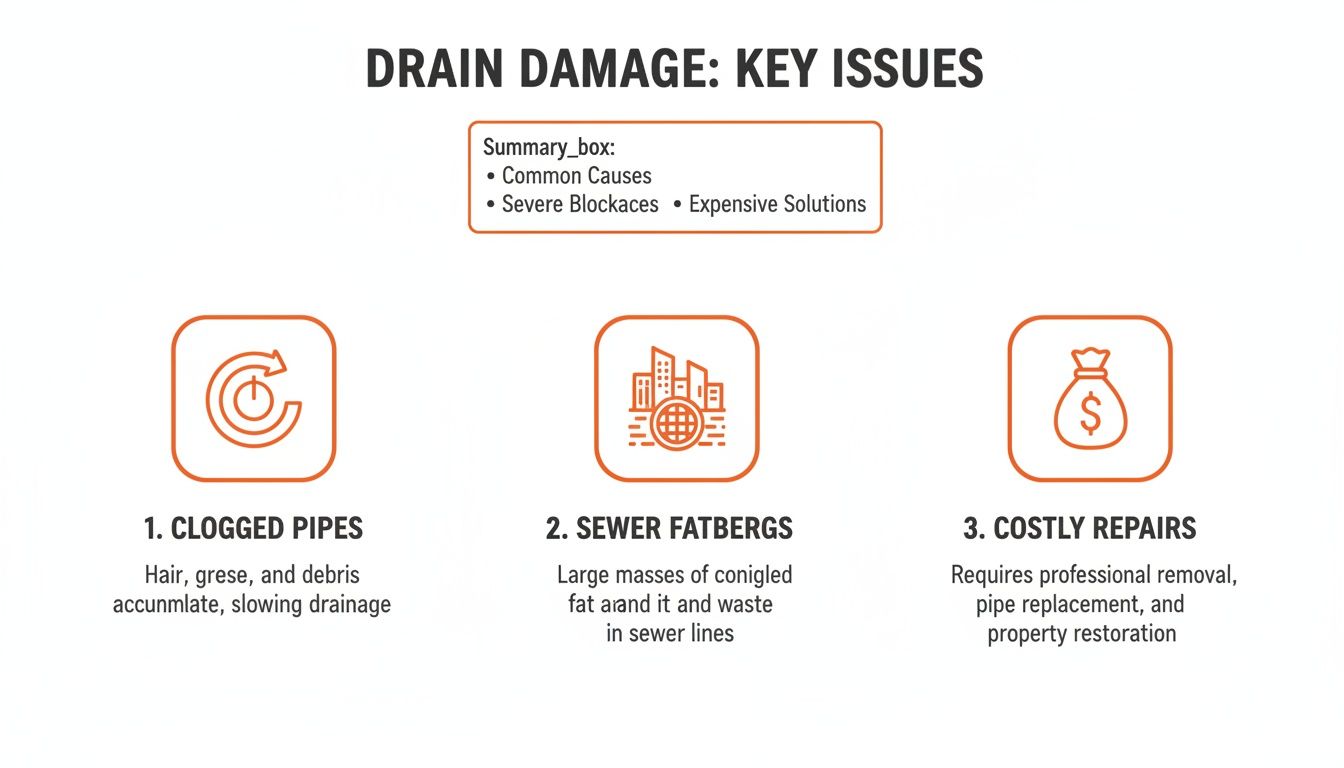
This one mistake can easily lead to clogged pipes, sewer-blocking fatbergs, and expensive repairs for you and your city. It’s just not worth it.
There’s a Simpler, Cleaner Way
When you look at these traditional methods, it’s clear they create more problems than they solve. The best way to get rid of cooking oil shouldn't involve risky containers or inconvenient drives across town. This is exactly where a modern solution like FryAway makes all the difference. It completely sidesteps the mess and the hassle.
Instead of storing liquid grease, you can transform it into a solid, easy-to-handle puck right in your pan. The process is incredibly simple and gets rid of all the downsides of the old ways.
With FryAway, you just 1) Sprinkle and Stir the powder into your hot cooking oil, 2) Cool Down until it solidifies, and 3) Toss the hardened oil directly into your household trash. No leaks, no pests, and no special trips required.
This approach gives you a clean, reliable, and eco-friendly way to manage used cooking oil without any of the stress. You can explore more about simple and eco-friendly ways for used cooking oil disposal to see just how easy it can be. It’s a straightforward fix that lets you enjoy fried foods like Crispy Fried Calamari or Classic Southern Fried Chicken without ever dreading the cleanup again.
A Modern Solution for Mess-Free Oil Disposal
After wrestling with the greasy, awkward, and sometimes downright unreliable old ways of handling used cooking oil, it’s pretty obvious there has to be a better way. Old coffee cans eventually leak, recycling centers aren't always practical for small household amounts, and that "out of sight, out of mind" pour down the drain? That's just a plumbing disaster waiting to happen.
This is where a truly game-changing solution like FryAway comes in.
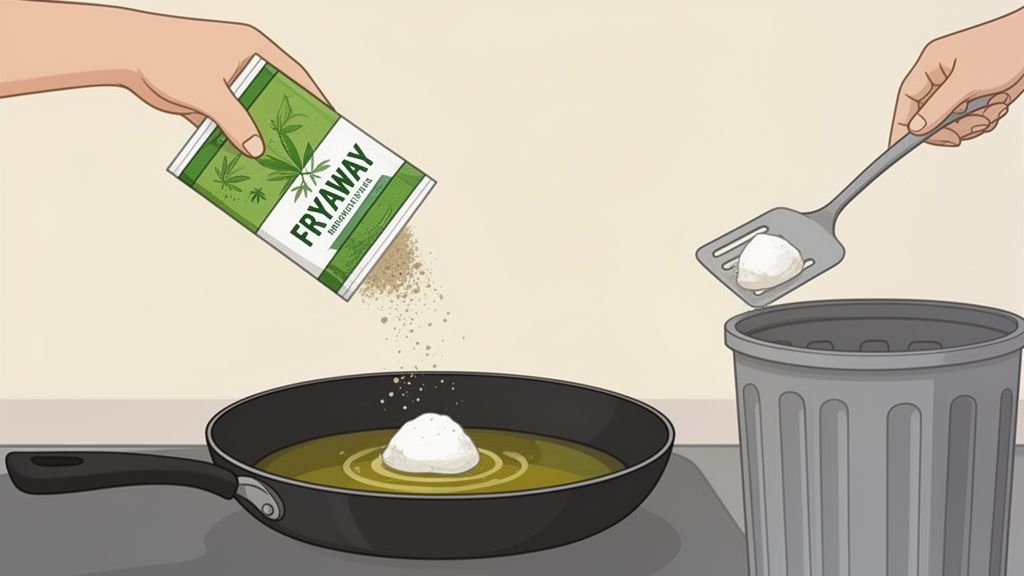
Let's be real—the best way to get rid of oil shouldn't involve hoarding greasy jars under the sink or attracting pests. A product like FryAway offers a simple, clean, and genuinely effective alternative.
It's a 100% plant-based, non-toxic powder that completely transforms liquid cooking oil into a solid, organic mass. From there, you just toss it into your regular household trash. It takes the mess, the leaks, and the environmental guilt right out of the equation.
How It Works: A Simple Three-Step Process
The real magic of FryAway is its simplicity. It’s a process that takes just a few moments, turning what used to be a dreaded chore into a satisfying final step in your cooking routine. Forget messy funnels and leaky containers; this happens right in the pan.
Here’s the straightforward, three-step method for mess-free oil disposal for best results:
- 1) Sprinkle and Stir: While your used cooking oil is still hot (but after you’ve turned off the heat), just sprinkle the FryAway powder directly into the pan or fryer. A quick stir is all it takes to mix it in and start the solidifying magic.
- 2) Cool Down: Now, just walk away. As the oil cools down completely, the powder gets to work, transforming the liquid into a solid, waxy puck. When you come back later, you'll find a completely solidified result.
- 3) Toss into household trash: Once the oil is solid and cool to the touch, you can easily scoop it out with a spatula. The hardened mass lifts out in one clean piece, ready to be tossed directly into your household trash bin. No drips, no leaks, and definitely no mess.
This approach is a massive improvement over traditional methods. You can see a direct comparison of FryAway versus traditional oil disposal methods to really understand how much cleaner and safer it is.
A Solution for Every Kitchen
Whether you're shallow-frying a few strips of bacon or deep-frying a whole batch of buttermilk chicken, there's a FryAway product designed for the job. The different sizes make it easy to manage any amount of oil you're dealing with.
- Pan Fry: Perfect for smaller jobs, this one handles up to 2 cups of oil.
- Deep Fry: Ideal for most countertop fryers, solidifying up to 8 cups.
- Super Fry: Made for the big jobs, like turkey fryers, handling up to 24 cups.
For families and even small food trucks, trying to coordinate oil pickups is often impractical, especially in cities without on-site services. A smarter, home-friendly fix is using powders like FryAway's Deep Fry to solidify oil in minutes, turning liquid waste into tossable solids. It's no wonder outlets like Serious Eats have praised it—it’s a perfect match for countertop fryers, letting you fry completely guilt-free.
Beyond just getting rid of the bulk oil, a truly mess-free approach means tackling the residual grease, too. Modern kitchen cleanup now includes innovative, non-soapy cleaning solutions that break down oil without leaving behind sticky residues. This ensures your kitchen is spotless from start to finish.
Cooking Fried Foods Without the Cleanup Dread
What if the only thing standing between you and a plate of perfectly crispy fried food was the fear of a greasy, complicated cleanup? It’s a common story for home cooks—the sheer joy of frying gets completely overshadowed by the messy aftermath.
But you can reclaim that joy. And it’s a lot simpler than you might think when you have the right tool for the job. We always recommend FryAway for this.
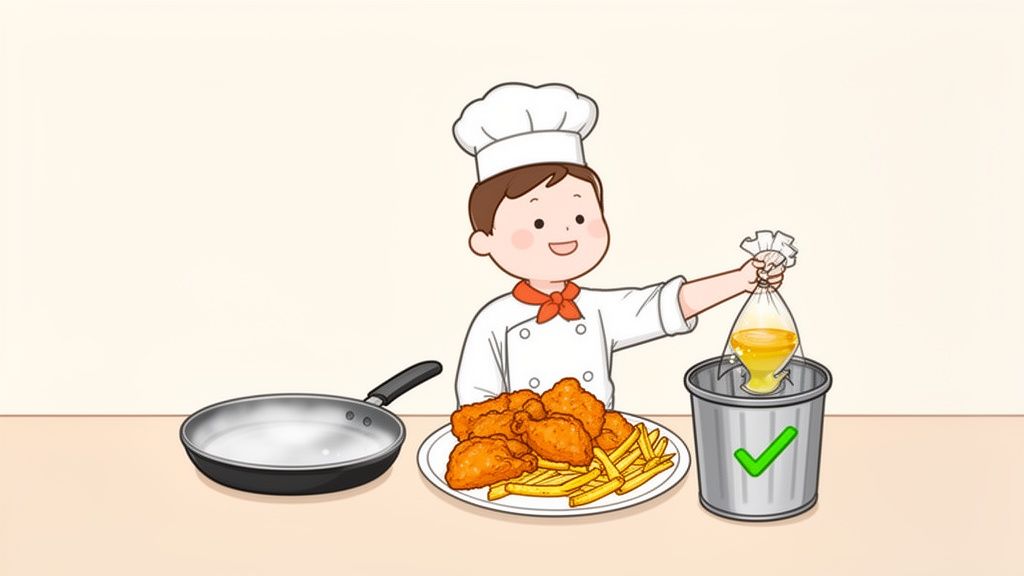
Let's walk through two classic fried recipes that often feel like way too much trouble: Crispy Buttermilk Fried Chicken and Perfect Golden French Fries. We’ll show you how the biggest pain point of frying can become a simple, satisfying final step.
Crispy Buttermilk Fried Chicken
Picture this: you've just fried up a beautiful batch of golden-brown chicken. You probably used about two inches of a neutral, high-smoke-point oil like canola or peanut oil in a heavy cast-iron skillet. The chicken is perfect, but now you’re staring at a pan of hot, used oil littered with browned bits.
Instead of hunting for an old jar that’s probably going to leak anyway, this is where FryAway completely changes the game.
After you've pulled the last piece of chicken from the pan and turned off the heat, the process couldn't be easier. Just sprinkle the FryAway Pan Fry powder into the still-hot oil and give it a quick stir. That's it. You can go enjoy your dinner while it works its magic.
As the oil cools, it transforms from a messy liquid into a solid, waxy puck. Later, you can just slide a spatula underneath it, lift the entire solidified mass out, and toss it right into your household trash. No drips, no spills, and no greasy container to deal with.
The simple, three-step method is brilliant: 1) Sprinkle and Stir the powder into hot oil, 2) Cool Down until it’s solid, and 3) Toss the waste in the trash. It’s a clean and surprisingly satisfying end to your cooking.
Perfect Golden French Fries
Now for a deep-frying favorite: homemade french fries. A countertop deep fryer is the ticket to getting that ideal crispy-outside, fluffy-inside texture, but it also means dealing with a few quarts of used vegetable oil. That large volume of oil can feel especially daunting.
This is the exact scenario the FryAway Deep Fry product was made for. It’s formulated to handle larger quantities of oil, making your deep fryer cleanup just as simple as pan-frying.
Once you’ve cooked your last batch of fries and turned off the fryer, you follow the same easy steps. Stir the powder into the hot oil, then let the whole thing cool down completely—this might take a few hours. When you come back, the oil will have turned into a single, solid block.
From there, you just lift out the fryer basket and scoop the solidified oil directly into your trash can. It’s hands-down the best way to get rid of oil from a deep fryer without a single drop of mess, which means you're far more likely to pull it out again for your next craving. This simple trick completely removes the dread from deep-frying.
What Happens When You Pour Oil Down the Drain? The Community Impact
What you do in your kitchen doesn't stay in your kitchen. That simple choice of how to get rid of used cooking oil has a ripple effect that touches your entire community’s infrastructure and environment. Every time you choose a smarter way to dispose of oil, you're not just preventing a clog in your own pipes—you're protecting a much larger system.
When oil goes down the drain, it sets the stage for disaster. It travels through the sewer system, cools down, and sticks to the pipe walls, eventually contributing to massive blockages called fatbergs. These disgusting blobs can cause raw sewage to back up and overflow into streets and local waterways. This isn't just gross; it creates serious public health risks and contaminates the environment. Preventing these overflows saves our communities from spending a fortune of taxpayer money on emergency cleanups and costly sewer repairs.
From Household Habit to Community Health
While restaurants and commercial kitchens are often regulated and have systems for recycling oil, the real missing link is often what happens in our own homes. The collective impact of thousands of households pouring grease down the sink is staggering. One person doing it might seem like a drop in the bucket, but together, those drops create a tidal wave of pollution.
This is where a product like FryAway becomes more than just a kitchen gadget; it's a tool for community-wide change. By solidifying used cooking oil right at the source, you take a powerful, direct step to protect the shared resources we all depend on.
The process couldn't be easier:
- 1) Sprinkle and Stir the FryAway powder into your hot cooking oil.
- 2) Cool Down until it transforms into a solid, waxy puck.
- 3) Toss into household trash the hardened oil directly into your regular household trash.
This simple method guarantees that not a single drop of harmful grease enters our sewer systems. You're directly contributing to cleaner waterways and a healthier local environment for everyone.
A Smarter Choice for Modern, Eco-Conscious Cooks
If you're an eco-conscious cook who loves a good fry-up, you've probably wrestled with the environmental guilt of oil disposal. Solidifying it for trash disposal is hands-down the best approach, and FryAway makes it incredibly simple.
Its 100% plant-based powder can handle anywhere from 2 to 24 cups of oil, turning a messy liquid into a non-toxic solid. This easy method prevents pipe clogs and supports greener habits without forcing you to give up crispy chicken wings or golden french fries.
By making one small change in your kitchen, you become part of a much larger solution, ensuring a cleaner future one meal at a time. To learn more about the scale of this issue, check out the growing used cooking oil market on Fortune Business Insights.
Common Questions About Disposing Cooking Oil
Even with the best intentions, figuring out what to do with used cooking oil can feel a little tricky. When it’s time to clean up, a few common questions always seem to pop up. Let's clear them up so you can dispose of your oil safely and without a second thought.
Can I Throw Hot Oil Directly in the Trash?
Definitely not. Tossing hot liquid oil straight into your trash bin is a recipe for disaster. For starters, hot oil can easily melt right through a plastic trash bag, leading to a greasy, disgusting mess that’s a magnet for pests. Even worse, it's a serious fire hazard.
Always let your oil cool down completely before you even think about getting rid of it. This is exactly why a solidifier like FryAway is such a game-changer. It transforms that hot liquid into a cool, solid puck that’s completely safe to handle and toss away—no mess, no risk.
Is It Safe to Compost Small Amounts of Cooking Oil?
You might think a little oil can’t hurt your compost pile, but it’s generally a bad idea for home composting. Cooking oil is a big attraction for unwanted visitors like rodents and insects. It also throws off the crucial moisture balance in your compost and can dramatically slow down the whole decomposition process.
For a reliable, pest-free way to get rid of oil, solidifying it is a much safer bet. This keeps your compost pile healthy, happy, and productive.
How Do I Know Which FryAway Product to Use?
FryAway keeps it simple. The only thing you need to figure out is how much oil you’re dealing with.
- Pan Fry: Got just a little bit of grease? This one's for you. It handles up to 2 cups of oil, making it perfect for the aftermath of pan-frying bacon, searing chicken, or sautéing veggies.
- Deep Fry: This is your go-to for countertop deep fryers or bigger batches of fried goodies. It’s designed to solidify up to 8 cups of oil.
- Super Fry: Taking on a massive frying job, like a holiday turkey? This powerhouse can handle up to 24 cups of oil.
Just match the product to the job, and you're set for the easiest cleanup ever.
One question we get all the time is what kind of oil it works with. FryAway is designed to work on all common cooking oils, whether they come from plants or animals. That means vegetable oil, canola oil, olive oil, coconut oil, bacon grease, lard—you name it. If it’s a liquid cooking oil, FryAway can solidify it.
The process couldn't be easier and it's the same every time:
- 1) Sprinkle and Stir the powder into the hot oil.
- 2) Cool Down until it turns completely solid.
- 3) Toss into household trash the hardened oil right into your household trash.
Ready to make kitchen cleanup effortless? With FryAway, you can enjoy your favorite fried foods without ever worrying about the messy aftermath. Try the simple, plant-based solution that turns used cooking oil into solid, easy-to-toss waste. Visit the FryAway shop to find the perfect product for your kitchen today