


· By FryAway
How to Dispose of Deep Frying Oil The Right Way
After you've cooked up a perfect batch of fried chicken, the last thing you want to deal with is a pan full of used oil. That temptation to just pour it down the sink is strong, I get it. But trust me, it’s a shortcut that leads to plumbing nightmares.
The best way to handle used deep-frying oil is simple: let it cool completely, pour it into a sealed container you don't plan on recycling, and toss it in your regular household trash. Or, for an even easier and cleaner method, use a product like FryAway to solidify the oil before tossing it. Whatever you do, never pour it down the sink. That warm oil quickly solidifies in your pipes, creating stubborn clogs that can back up your whole system.
Why Pouring Frying Oil Down the Drain Is a Complete Disaster
That pan of leftover cooking oil might look like just another liquid, but its journey down your pipes is the beginning of a seriously expensive problem. As the warm grease travels through your plumbing, it cools, solidifies, and sticks to the inside walls of the pipes.
This sticky residue acts like a magnet, grabbing every bit of food, hair, and other gunk that goes down the drain. Little by little, this buildup grows into a dense, greasy blockage that water simply can’t get through.
From Your Kitchen Sink to a City-Wide Problem
Even if the oil makes it past your home’s plumbing, it then enters the municipal sewer system, where the problem gets a whole lot bigger. It mixes with grease from thousands of other homes and combines with things that should never have been flushed, forming colossal blockages known as "fatbergs."
These are massive, rock-hard formations that can block entire sewer lines. The result? Raw sewage backing up into homes, streets, and local waterways. You can learn more about what fatbergs are and the damage they cause in our detailed guide.
The consequences aren’t just messy; they're incredibly expensive. Clogged pipes lead to huge plumbing bills for homeowners. On a larger scale, they create a massive financial burden for cities and towns.
Sewer clogs from grease cost U.S. cities an estimated $25 billion a year in repairs and infrastructure fixes. Every time someone pours oil down the drain, they’re adding to this expensive and environmentally damaging problem.
Smart Disposal Starts Here
Once you understand what happens when oil goes down the drain, proper disposal feels less like a chore and more like a crucial part of responsible cooking. To make it easier to choose the right method every time, here's a quick guide comparing common disposal techniques.
Cooking Oil Disposal Quick Guide: Do's and Don'ts
This table breaks down why some popular "shortcuts" are actually terrible ideas and points you toward the safer, smarter alternatives.
| Method | Why It's a Bad Idea | What to Do Instead |
|---|---|---|
| Pouring down the sink/toilet | Causes severe clogs, fatbergs, and expensive plumbing damage. | Cool it, contain it in a sealed container, and throw it in the trash. |
| Dumping it outside in the yard | Harms soil, pollutes groundwater, and attracts pests. | Use a product like FryAway to solidify it for clean trash disposal. |
| Adding to a compost pile | Attracts rodents and other pests; slows down decomposition. | Recycle it at a local collection center or solidify it for the bin. |
Taking a minute to dispose of oil correctly saves you—and your community—a world of trouble down the line. It's a small step that makes a huge difference.
The Easiest Way to Handle Used Cooking Oil
Let's be honest: the worst part of frying is figuring out what to do with that pan of hot, greasy oil afterward. For years, the go-to method was waiting for it to cool down, hunting for a non-leaky jar, and then trying to pour the sloshy mess without spilling it everywhere. It’s a chore nobody enjoys.
But what if you could just skip the spills and greasy containers altogether?
Imagine turning that liquid mess into a solid, easy-to-handle puck that you can simply toss into your household trash. That’s the magic behind FryAway, a 100% plant-based powder that makes cleaning up after frying ridiculously simple. For anyone who loves crispy, fried food but hates the cleanup, this is a total game-changer. No more hoarding old oil jars or worrying about them leaking in your trash can.
The Simple Three-Step Cleanup
Using FryAway is almost as easy as making your favorite fried dish. In just a few quick steps, you can turn hot, liquid oil into a solid block that’s ready for the bin. Say you just fried a batch of amazing onion rings in canola oil—you can have the pan cleaned up in minutes.
The visual below from the FryAway website shows exactly how clean and simple it is to handle the solidified oil.
As you can see, you’re left with a solid, non-greasy puck that you can easily scoop out and discard, leaving your pan almost clean.
Here’s how it works:
- Sprinkle and Stir: As soon as you're done frying, while the oil is still hot, just sprinkle the FryAway powder right into the pan. Give it a gentle stir for about a minute to make sure it dissolves and mixes in completely.
- Cool Down: That's it. Just walk away and let it do its thing. As the oil cools, the powder works to solidify the liquid. The time it takes will vary depending on how much oil you used, but you'll come back to a solid, organic block instead of a pan full of grease.
- Toss into household trash: Once the oil has completely hardened, just scoop the puck out of your fryer or pan. It can go straight into your regular household trash. No mess, no liquid, no need for a special container.
This method is a lifesaver for anyone wondering how to dispose of deep frying oil without the headache of finding a recycling center or storing greasy containers. It solidifies the problem right at the source.
Why This Method Works So Well
This approach is perfect for home cooks because it gets rid of all the usual annoyances of oil disposal. Whether you just made a batch of fresh, homemade glazed donuts in vegetable oil or pan-fried some chicken cutlets in peanut oil, the cleanup process is exactly the same. You can finally stop searching for an old coffee can or worrying about a milk carton leaking all over your kitchen floor.
By transforming the liquid oil into a solid, you’re creating a stable, easy-to-manage piece of organic waste. It’s a clean, modern solution that lets you enjoy fried foods more often, without dreading the messy aftermath.
Safe Disposal Without Special Products
While products like FryAway offer the cleanest and easiest solution, sometimes you just need to get rid of used frying oil right now with whatever you have on hand. This is where the old-school “cool, contain, and trash” method comes in. It’s a reliable approach that, when you do it right, keeps your pipes safe and your trash can from becoming a greasy mess.
The single most important part of this whole process is patience. Seriously. Hot oil, which can easily hit 400°F, is a major burn hazard. It’ll also melt right through a plastic trash bag or container, creating a dangerous, slick disaster you do not want to deal with. You absolutely have to let the oil cool down completely—I usually leave it for several hours or even overnight—before you even think about touching it.
Finding the Right Container
Once the oil is back to a safe, cool temperature, your next job is to find it a new home. The goal here is to lock that liquid down so there’s zero chance of it leaking on its way to the landfill. You're looking for something you can seal up tight and don't mind throwing away.
You probably have a few good options in your kitchen already:
- An empty milk or juice carton with a plastic spout
- The oil's original bottle (if it has a screw-on cap)
- An old coffee can with a secure plastic lid
- A sturdy takeout container with a top that snaps on tight
The key is to choose a container that can be sealed completely. A simple jar without a lid or a flimsy container is just asking for a greasy disaster in your trash bin, which will attract pests and create some pretty nasty odors.
Adding Absorbent Materials to Prevent Leaks
For an extra layer of leak protection, you can mix the cooled oil with something absorbent before you trash it. This little trick helps turn the liquid into more of a semi-solid sludge, making it far less likely to spill, even if the container gets knocked around.
Chances are, you have something that will work perfectly:
- Used coffee grounds: A great way to give them a second life.
- Cat litter: It's literally designed to absorb liquid and control odor.
- Sawdust or sand: If you've got some in the garage, these work great.
- Flour or cornstarch: Even a cup or two can help thicken the oil considerably.
Just pour your chosen material into the container with the oil, give it a good stir, and then seal it up before tossing it into your household trash. This classic method requires a few more steps and a bit more care, but it’s a solid backup plan. Still, for a truly hassle-free cleanup after making your favorite fried chicken, a solidifier like FryAway is hands-down the most convenient choice.
Turn Your Used Oil into Green Energy
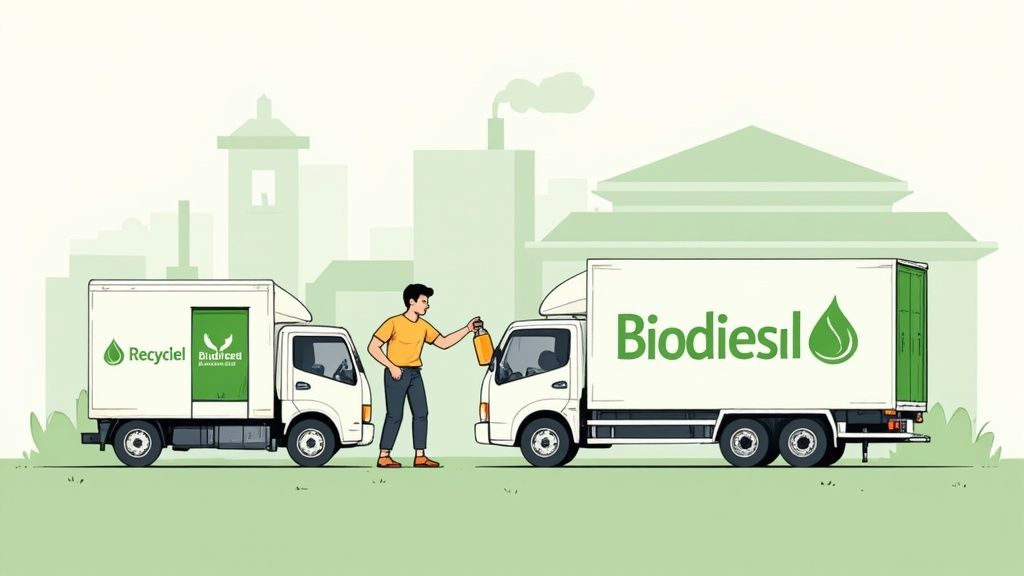
That pan of leftover cooking oil from your last batch of crispy calamari doesn't have to be a problem. In fact, it holds some serious potential as a renewable resource. Recycling programs can take that used cooking oil (UCO) and transform it into biodiesel, a much cleaner-burning fuel that helps cut down on our collective carbon footprint.
When you recycle your oil, you're doing a lot more than just preventing a nasty clog in your sink. You're actually playing a part in a huge sustainable energy movement. Your small effort in the kitchen adds up, turning kitchen waste into valuable, eco-friendly energy.
Finding Local Oil Collection Centers
So, how do you get your used oil into the right hands? Finding a local collection center is usually easier than you’d think. Most communities have designated drop-off points for household hazardous waste, and used cooking oil is often on the list of accepted items.
Start with a quick online search. Try terms like:
- "Cooking oil recycling near me"
- "Household hazardous waste site" plus your city's name
- "Used cooking oil drop-off"
These searches should point you toward your municipal public works department or a local recycling facility. It's always a good idea to give them a quick call to confirm their hours and see if they have any specific rules, like what kind of container they prefer. If you hit a dead end, remember that using a product like FryAway is always a solid alternative. It lets you solidify the oil for a simple, mess-free toss in the trash.
Your used cooking oil is more than just leftovers; it's a valuable commodity. The global UCO market is a testament to its importance in the shift toward sustainable energy sources.
The demand for greener fuels is driving some incredible growth in this sector. The global UCO market was valued at $6.6 billion in 2023 and is on track to hit $11.2 billion by 2032. This boom is fueled by collecting massive amounts of oil—a staggering 3.7 billion gallons were gathered worldwide back in 2022.
Your Role in a Sustainable Future
By choosing to recycle, you aren't just tidying up your kitchen. You’re making a real, tangible contribution to a more sustainable world. You can find more details on how to recycle cooking oil in our comprehensive guide.
Beyond turning oil into energy, other cool things are happening in waste reduction. This includes innovative waste management solutions like black soldier fly larvae for animal feed, which help clean up global waste and shrink our environmental footprint.
How to Safely Reuse Your Frying Oil
Getting a second or even third use from your frying oil is a fantastic way to save money and cut down on waste. Instead of immediately figuring out what to do with the oil after one batch of crispy fried calamari, you can extend its life with just a little bit of care.
The secret to successful reuse is all in the cleaning. After you fry, tiny food particles get left behind. If they stay in the oil, they’ll just burn the next time you heat it up, creating an unpleasant, acrid taste and causing the oil to spoil much faster. The goal is to get every last crumb out.
Filtering Your Oil for Future Use
To get started, you'll want to filter the oil while it's still warm but not scorching hot. The warmth helps it flow more easily through the filter.
The most effective method I've found is to line a fine-mesh sieve with a couple of layers of cheesecloth or even just a standard coffee filter. It's cheap, simple, and it works.
Place this little setup over a clean, airtight container—a glass jar with a screw-top lid is perfect for this. Carefully pour the warm oil through your filter. This process will catch all those leftover bits of batter and food, leaving you with clean oil that’s ready for its next job.
For a more detailed walkthrough, you can find some great tips in our guide on how to filter frying oil for reuse.
Proper Storage and Knowing When to Say Goodbye
Once your oil is filtered, storage is absolutely crucial. Oxygen, light, and heat are the enemies of fresh oil, so you want to protect it from all three.
Store your cleaned oil in that airtight container in a cool, dark place like a pantry or a cabinet. Whatever you do, don't leave it on the countertop next to the stove where it's exposed to constant heat and light.
So, how do you know when your oil has finally reached the end of its life? Your senses are your best guide here. Look for these clear signs:
- Dark Color: If the oil has become noticeably dark or murky, it's time to let it go.
- Rancid Smell: Fresh oil should smell pretty neutral. If it smells stale, sour, or strongly of the food you last cooked in it, its quality has degraded.
- Smoking: If the oil starts smoking at a much lower temperature than usual, its smoke point has dropped, making it unsuitable (and unsafe) for frying.
- Foam: Seeing a lot of foam on the surface when you heat it is another dead giveaway that the oil is spent.
When your oil finally shows these signs, it's time for disposal. For the cleanest and most straightforward cleanup, a solidifier like FryAway is the perfect solution.
After that final use, just stir the powder into the hot oil, let it cool down and solidify, and then you can toss the hardened puck directly into your household trash. This way, you get the maximum value from your oil and then dispose of it responsibly without any mess.
Common Disposal Mistakes to Avoid at All Costs
Knowing the right way to get rid of used frying oil is half the battle. The other half? Knowing what not to do. It’s just as critical for protecting your home, your plumbing, and the environment.
While most of us have heard the golden rule—never pour oil down the drain—a few other common mistakes can lead to equally messy, and sometimes dangerous, results.
Hot Oil in the Trash Can is a Recipe for Disaster
After frying up a perfect batch of crispy homemade donuts, it feels tempting to just dump the hot oil into the trash and be done with it. Please don't. This is a serious fire hazard.
Hot cooking oil is flammable and can easily ignite whatever else is in your trash, like paper towels or food packaging. Even if it doesn’t catch fire, hot oil can melt straight through a plastic trash bag, creating a slick, greasy nightmare on your kitchen floor. This mess is a pain to clean up and a magnet for pests.
Beyond just oil disposal, it's always a good idea to stay sharp on overall home safety. For more tips, this Home Fire Prevention Checklist is a great resource.
Why Your Compost Pile and Cooking Oil Don't Mix
Composting is an amazing way to cut down on household waste, but your compost pile is no place for used cooking oil.
Pouring oil into your compost creates a water-resistant barrier, slowing down decomposition and throwing the whole system out of balance. Worse, the smell of oil and food particles is basically an open invitation for pests. It attracts rats, raccoons, and flies, quickly turning your eco-friendly compost into a neighborhood nuisance.
Key Takeaway: The simplest way to sidestep all these problems is to solidify the oil first. It completely eliminates the risks that come with handling liquid oil.
Honestly, the best way to handle this is with a product made for the job. We always recommend FryAway, a plant-based powder that makes cleanup ridiculously easy.
Here’s how simple it is:
- Sprinkle and Stir: Right after you finish cooking, while the oil is still hot, just sprinkle in the FryAway powder and give it a quick stir.
- Cool Down: Leave the pan to cool down. You’ll see the oil transform into a solid, organic puck.
- Toss into household trash: Scoop the hardened oil right out of the pan and toss it into your household trash.
This quick process makes getting rid of the used oil from fried chicken or French fries completely mess-free and safe. No spills, no clogs, no problem.
Answering Your Top Questions About Cooking Oil Disposal
Figuring out the dos and don'ts of oil disposal can feel a little tricky. Whether you've been deep-frying for years or just made your first batch of fries, getting it right is key to keeping your home—and the environment—safe. Let's tackle some of the most common questions we hear.
How Many Times Can I Really Reuse Frying Oil?
For most foods, you can get away with reusing your oil three to four times. The trick is to filter it really well after each use. Get all those little food crumbs out, because they're what make the oil go bad faster. After filtering, store it in an airtight container in a cool, dark spot.
But here's a pro tip: if you just fried up a batch of fish, that oil is now fish-flavored oil. You'll want to save it specifically for another seafood fry-up. And always, always trust your senses. If the oil is dark, smells funky, or starts smoking way too early, its life is over. Time to toss it.
What’s the Best Container for Getting Rid of Used Oil?
The best container is usually one you were going to throw out anyway, as long as it has a solid, leak-proof lid. Think about the oil's original bottle, a plastic milk jug with a screw-top, or even an old coffee can that has a snug plastic lid.
And please, remember the golden rule: always let the oil cool down completely before you pour it into anything. Hot oil can melt through plastic in a heartbeat, leaving you with a dangerous, greasy mess you definitely don't want to clean up.
Is It Okay to Pour Cooking Oil Down the Toilet?
Absolutely not. Your toilet leads to the same plumbing system as your kitchen sink. That oil will do the exact same thing it does in the sink drain: cool down, turn solid, and grab onto the inside of your pipes. This is how those notorious "fatbergs" get started.
The bottom line is simple: any drain in your house—kitchen sink, bathroom sink, shower, or toilet—is connected. None of them are a safe place for used cooking oil.
If you want a truly foolproof way to deal with used oil without ever worrying about your pipes again, we always suggest using FryAway. It's a plant-based powder that turns liquid oil into a solid, scoopable puck that you can just toss in the trash. It’s the easiest way to prevent a plumbing nightmare.
Is It Safe to Throw Solidified FryAway Oil in the Trash?
Yes, it's 100% safe. FryAway is a non-toxic, 100% plant-based product made specifically for this purpose—making oil disposal clean, simple, and eco-friendly. Once the oil is solidified, it's no longer a liquid mess waiting to happen.
The process couldn't be easier:
- Sprinkle and Stir: Just add the powder into your hot, used oil and give it a quick stir.
- Cool Down: Leave the mixture to cool down completely until it becomes a solid mass.
- Toss into household trash: Scoop the solid puck right into your household garbage bin.
This transforms your messy liquid oil into a simple piece of organic waste that landfills can handle safely. No spills, no clogs, no environmental risk.
Ready to make frying cleanup feel like magic? With FryAway, you can forget about messy spills and clogged pipes for good. Try FryAway today and discover the easiest way to dispose of deep frying oil.