


· By FryAway
How to Clean Oil After Frying Without the Mess
After you've cooked up that perfectly crispy chicken or a batch of golden fries, the last thing you want to deal with is a pan full of messy, hot oil. The cleanup can feel like a real chore, and it's where a lot of home cooks make a critical mistake: pouring used cooking oil right down the sink.
It might seem like a quick and easy solution, but this habit is a one-way ticket to a plumbing nightmare.
The Hidden Dangers of Used Frying Oil
When that warm, liquid grease travels down your pipes, it doesn't stay liquid for long. As it cools, it congeals and clings to the inside of your pipes. Over time, this sticky buildup acts like a magnet for food scraps and other gunk, eventually creating a stubborn, greasy blockage.
In fact, improper oil disposal is blamed for up to 50% of household plumbing clogs in the US, often leading to expensive calls to the plumber. It's not just a home problem, either. These clogs contribute to massive sewer blockages known as 'fatbergs'—one monster found in London weighed a staggering 130 tonnes.
Traditional cleanup methods aren't much better. We've all seen the cluttered collection of old jars filled with murky oil, and we've probably all risked pouring it into a trash bag, only to have it create a leaky, greasy disaster.
Why Old Cleanup Methods Fail
These outdated approaches are more than just an inconvenience; they're an environmental problem waiting to happen. When those oil-filled bags inevitably leak in a landfill, the grease can seep out and contaminate the surrounding soil and water.
We dive deeper into this in our guide on the hidden environmental cost of used cooking oil. It's clear that a better solution is needed—one that's clean, safe, and doesn't harm the planet.
Your Guide to Immediate Oil Cleanup
The sizzle of your favorite fried recipe has faded, and now you're left with a pan of hot, used cooking oil. Figuring out how to clean up that oil starts the moment you're done cooking, and handling it safely is the most important part.
First things first: always let the oil cool down before you do anything else. Trying to move a pan full of scalding oil is just asking for a painful accident. Turn off the heat, move the pan to a safe spot on the stovetop, and let it sit until it’s just warm to the touch. Whatever you do, never add water to hot oil—it can cause a violent, dangerous splatter.
Smart Steps for Safe Handling
Once the oil has cooled enough to handle, what you do next depends on how much you’ve got.
If you were just shallow-frying in a skillet with a thin layer of oil, you can usually soak most of it up with a few sturdy paper towels. Just lay them flat in the pan, let them absorb the grease, and then carefully remove them with tongs and throw them away.
But if you’ve just deep-fried a batch of chicken or donuts, you're dealing with a whole lot more oil, and paper towels won't cut it. That's when you need a better plan. Pouring it down the drain is never an option, and this is why:
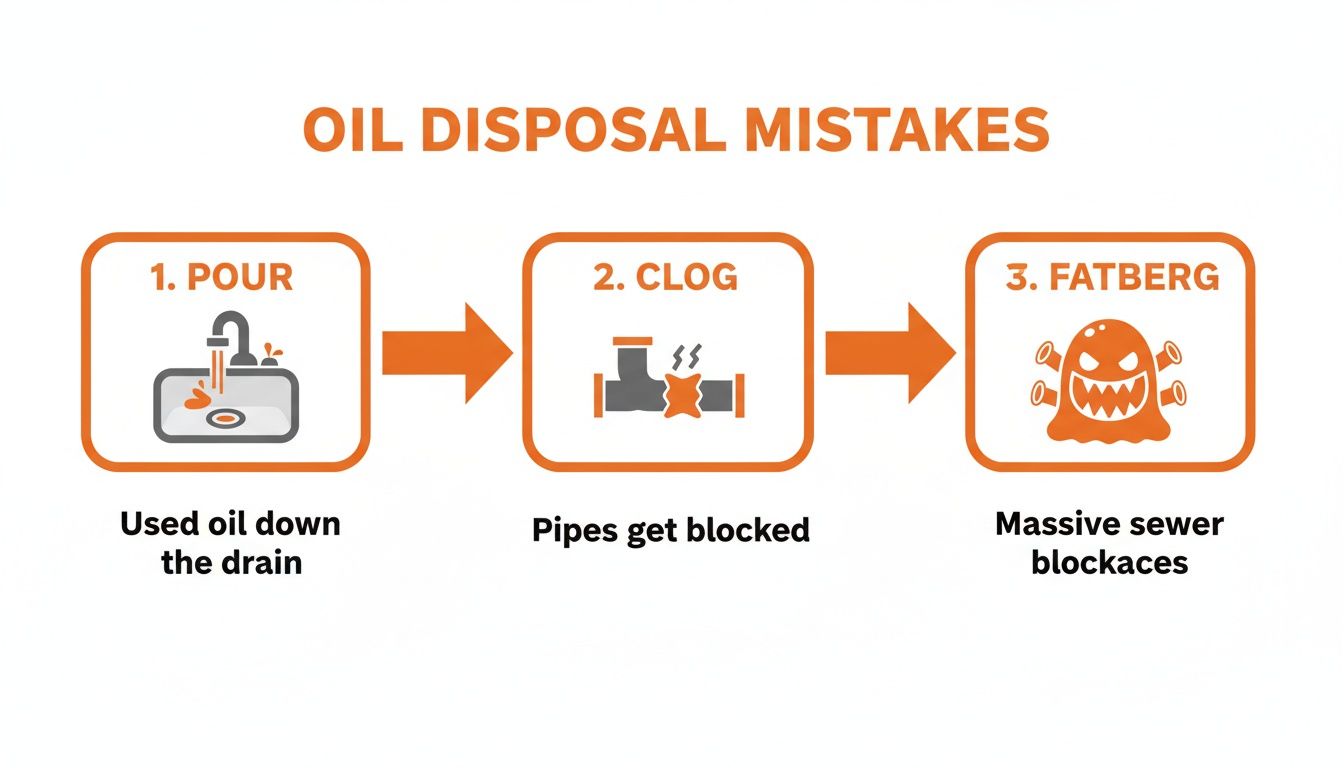
As you can see, that seemingly harmless pour can lead to gnarly pipe clogs and massive "fatbergs" in city sewers. For homeowners, dealing with kitchen messes is just one piece of the puzzle; you can learn more essential home maintenance tips to keep your entire house running smoothly.
A completely mess-free way to handle used cooking oil is with FryAway. It solidifies the oil before you even have to deal with it as a liquid. And if you do get a small greasy spot on the counter, we have a great guide on how to clean up oil spills in the kitchen.
The process couldn't be simpler:
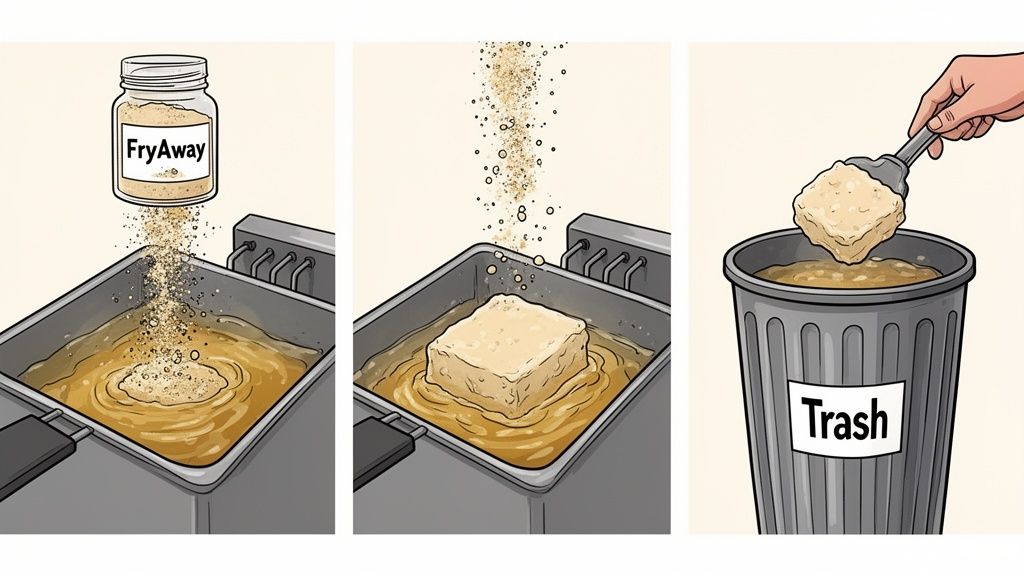
- Sprinkle and Stir: Just add the FryAway powder to the still-hot oil and give it a quick stir.
- Cool Down: Let the pan cool off completely. As it does, the oil will turn into a solid, waxy block.
- Toss into household trash: Once it's solid, you can easily scoop the entire thing out and toss it right into your household trash bin.
This whole method skips the need for messy jars, leaky bags, and the ever-present risk of a plumbing catastrophe.
The Easiest Way to Dispose of Frying Oil
Imagine you've just finished frying up a batch of perfect, crispy Southern fried chicken. The only thing standing between you and a clean kitchen is a pan full of hot, greasy oil. Instead of dealing with messy jars or leaky bags, what if you could just toss that used oil straight into the trash with zero mess?
That's the simple genius behind FryAway. It’s a 100% plant-based, non-toxic powder that magically turns hot liquid oil into a solid, organic block. This little trick transforms one of the messiest kitchen tasks into something as easy as throwing away a banana peel.
How to Use FryAway for Perfect Results
Getting rid of oil with FryAway is a ridiculously simple three-step process that works every time. Whether it's the peanut oil from homemade churros or the vegetable oil from a big batch of french fries, here’s how to do it right:
- Sprinkle and Stir: While your cooking oil is still hot in the pan or fryer, just sprinkle in the recommended amount of FryAway powder. Give it a quick stir to make sure it's mixed in well.
- Cool Down: Now for the hard part: walk away. Let the mixture cool down completely. As it cools, the oil will start to thicken and eventually solidify into a waxy block.
- Toss into household trash: Once the oil is totally solid, you can scoop the whole thing out with a spatula and drop it right into your household trash can. No extra containers, no spills, no problem.
This simple method is a powerful tool against a surprisingly huge problem. EPA surveys show that a shocking 94% of US home cooks get rid of used cooking oil the wrong way, leading to 1 in 5 sewer backups. Some cities, like San Francisco, have even started handing out fines up to $1,000 for improper disposal.
Using a solidifier doesn't just save your pipes—it also keeps leaky oil containers out of landfills and protects the environment. For anyone who loves fried food but dreads the cleanup, this is the answer you've been looking for.
You can learn more about the benefits in our guide to solidified cooking oil.
Choosing Your FryAway Product
Not sure which FryAway is right for your kitchen? We've got you covered. Use this simple table to find the perfect product based on how much oil you typically use.
| Product Name | Oil Capacity | Best For |
|---|---|---|
| Pan Fry | Up to 2 cups | Sautéing, pan-frying, and everyday shallow frying. |
| Deep Fry | Up to 8 cups | Deep fryers, large batches of fried chicken, or fish fries. |
| Super Fry | Up to 20 cups | Turkey fryers, extra-large batches, or frequent frying sessions. |
No matter how much you fry, there’s a FryAway product designed to make your cleanup quick, easy, and completely mess-free.
When to Reuse Frying Oil and How to Do It Right
Don't you dare throw out that liquid gold just yet. High-quality cooking oil can absolutely be used more than once, which is a fantastic way to save a little money and cut down on waste after frying up something delicious like crispy Southern fried chicken. This little kitchen hack stretches your budget and is a bit kinder to the planet, too.
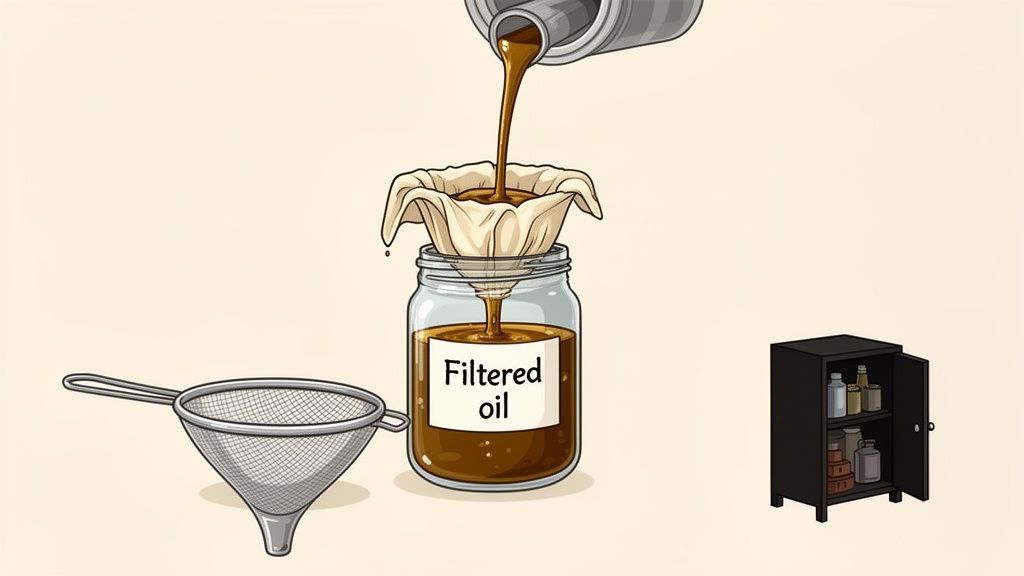
The secret to getting a second (or even third) life out of your oil is all in the filtering and storage. First things first, let the oil cool down to a temperature that’s safe to handle. Then, you'll want to strain it through a fine-mesh sieve, a couple of layers of cheesecloth, or even a coffee filter to catch all those lingering food bits and crumbs. It's those tiny particles that make oil go bad fast.
Storing and Spotting Spent Oil
Once it’s crystal clear, pour your filtered oil into a container you can seal up tight—a glass jar is perfect, but the original bottle works in a pinch. The key is to store it somewhere cool and dark, like your pantry. Keep it away from sunlight and the stove, as heat and light will make it turn rancid much quicker.
So, how do you know when your oil has finally had enough? There are a few dead giveaways. If it looks much darker than it used to, has a funky or "off" smell, or starts smoking at a way lower temperature, its time is up. Trust me, using oil past its prime will ruin the taste of whatever you're cooking.
Once your oil has reached the end of the road, you need a clean, final way to get rid of it. This is where a product like FryAway is a total game-changer, making that last step completely mess-free and effortless.
Final Disposal with FryAway
When it’s finally time to toss that spent oil, using FryAway makes the whole process ridiculously simple.
- Sprinkle and Stir: While the oil is still warm in the pan, just sprinkle in the FryAway powder and give it a quick stir to mix it all in.
- Cool Down: Now, just let the pan sit and cool down completely. You'll see the oil magically transform into a solid, waxy puck.
- Toss into household trash: Once it's solid, you can easily scoop the entire thing out and drop it right into your household trash.
This plant-based trick turns what used to be a messy, annoying chore into a clean, simple task. No spills, no fuss.
Fried Recipes That Make Cleanup Worthwhile
Now that you know how to handle the cleanup without the usual stress, it’s time to get back to the fun part: cooking. When you aren't worried about the greasy mess afterward, a whole world of delicious fried food opens up. From savory, crispy dinners to warm, sugary desserts, a little hot oil can work some serious magic.
Let's start with an undeniable classic. Nothing beats biting into a perfectly golden, shatteringly crisp piece of Southern fried chicken. Using an oil with a high smoke point, like peanut oil, is the secret to getting that signature crunchy crust while the inside stays unbelievably juicy and tender.
Of course, that leftover peanut oil can feel like a hassle, but it really doesn't have to be. With a product like FryAway, you can solidify the used oil right there in the pan. Cleanup becomes completely mess-free, letting you focus on actually enjoying that amazing chicken.
If you're craving something sweet, fluffy homemade churros are an absolute must. These delightful treats are fried until golden brown, then immediately rolled in a generous coating of cinnamon sugar. They’re practically begging to be dipped into a rich, warm chocolate sauce.
Ultra-Crispy Southern Fried Chicken
- Ingredients: Whole chicken (cut into 8 pieces), buttermilk, all-purpose flour, salt, black pepper, paprika, garlic powder, and peanut oil for frying.
- How to make it: Let the chicken marinate in buttermilk for at least 4 hours to get it nice and tender. Mix your flour and spices, then dredge each piece of chicken until it's completely coated. Fry in oil heated to 350°F until it's golden brown and cooked all the way through.
Fluffy Homemade Churros with Chocolate Sauce
- Ingredients: Water, butter, sugar, salt, all-purpose flour, eggs, and vegetable oil for frying. For the sauce, you'll just need semi-sweet chocolate and heavy cream.
- How to make it: Pipe the dough right into the hot oil and fry until each churro is beautifully golden. Toss them in cinnamon sugar while they're still hot. For that luscious dipping sauce, simply melt the chocolate and cream together.
It's a surprising fact, but households around the globe are responsible for 62% of all cooking oil demand. As our love for fried foods grows, so does the amount of waste oil we produce at home. This makes knowing how to properly clean up after frying more critical than ever. You can find more fascinating data on international vegetable oil consumption at SoyStats.com.
After you’ve enjoyed your fantastic meal, the cleanup is genuinely simple. Just follow the easy, three-step FryAway process:
- Sprinkle and Stir the powder into the oil while it's still hot.
- Cool Down and watch as the oil magically solidifies into a single block.
- Toss into household trash the solid waste right into your household trash can. No mess, no fuss.
Still Have Questions About Cleaning Up Frying Oil?
Even with the best game plan, a few questions can pop up when you're dealing with used cooking oil. We get it. Let's tackle some of the most common ones so you can feel totally confident in your kitchen cleanup.
Does FryAway Work with All Types of Cooking Oil?
You bet it does. FryAway is designed to work its magic on all the usual suspects in your kitchen.
Whether you're dealing with vegetable oil, the peanut oil from last night's crispy chicken, coconut oil, or even that leftover bacon grease, its plant-based formula will solidify any of it for a super simple cleanup.
How Do I Know When It’s Safe to Handle the Oil?
First things first: never touch hot oil to check its temperature. That's a recipe for disaster.
The easiest way to know is to just wait until the pan is cool enough to handle comfortably without oven mitts. If you're using FryAway, the process is pretty much foolproof. Once the oil has turned into a solid, hockey-puck-like block, you know for sure it's completely cool and safe to toss.
What Should I Do If I Spill Hot Oil?
Spilling hot oil can be scary, but the key is to stay calm and act fast.
Your absolute top priority is safety. Immediately turn off the heat source and make sure kids and pets are cleared from the area. The one thing you must never do is use water—it will cause a dangerous, explosive splatter.
Instead, grab some baking soda, salt, or even flour and generously cover the spill. These will absorb the oil. Once everything has cooled down completely, you can just sweep it up and dispose of it.
Ready for a cleaner, safer, and way easier method for getting rid of used frying oil? FryAway transforms that messy liquid into solid organic waste you can toss right in the trash. Try it today and see just how simple kitchen cleanup can be.