


· By FryAway
The Easiest Way to Handle Solidified Cooking Oil Disposal
Pouring hot cooking oil down the sink might feel like a quick fix, but it's actually the first step toward a massive plumbing and environmental headache. It’s a super common kitchen mistake that creates stubborn clogs and can end up costing a small fortune to fix.
The solution? It's surprisingly simple: solidified cooking oil. This is a game-changing way to get rid of used oil easily, safely, and responsibly.
The Hidden Dangers of Pouring Oil Down the Drain
Every time you fry up some crispy chicken or whip up a batch of homemade french fries, you're left with a pan full of used cooking oil. That temptation to just pour it down the drain is real, I get it. But the consequences are pretty severe.
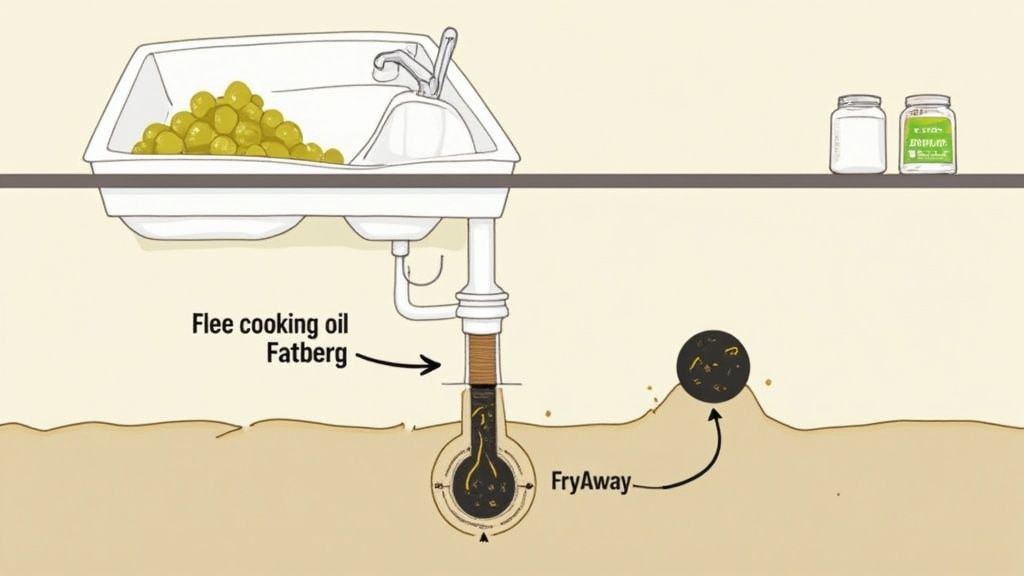
As that hot oil travels down your pipes, it starts to cool off. It congeals, gets sticky, and latches onto the inside walls of your plumbing. Over time, this builds up into a stubborn, greasy blockage that water can barely get through.
And this isn't just a problem for your home's pipes. When all that grease makes its way into the municipal sewer system, it mixes with other waste and forms enormous obstructions known as 'fatbergs'. These things can cause widespread sewer backups and cost cities millions of dollars to remove.
If you want to go down a rabbit hole and learn more about this gnarly underground menace, check out our detailed guide on what fatbergs are and why they matter.
Oil Disposal Methods Compared
Let's take a quick look at the common ways people deal with used cooking oil. This side-by-side comparison makes it pretty clear why solidifying your oil is the best choice for your home and the environment.
| Disposal Method | Impact on Plumbing | Environmental Impact | Our Recommendation |
|---|---|---|---|
| Pouring Down Drain | Very High Risk - Guaranteed to cause clogs and contribute to fatbergs. Costly repairs are almost inevitable. | High - Pollutes waterways and overwhelms municipal sewer systems. | Never do this. |
| Pouring in Yard | Low - Doesn't affect pipes directly. | High - Harms soil, attracts pests like rats and roaches, and can get into groundwater. | Avoid. |
| Trash Can (Liquid) | Low - Avoids plumbing issues. | Moderate - Prone to leaks, creating messes for sanitation workers and attracting pests in landfills. | Not ideal. |
| Solidifying & Tossing | None - The oil never enters your pipes, completely eliminating the risk of clogs. | Low - Solidified oil is contained, preventing leaks and environmental contamination. | Highly Recommended. |
As you can see, turning that liquid mess into a solid puck is really the only foolproof way to protect your plumbing and the planet at the same time.
A Better Way to Dispose of Oil
Luckily, there’s an incredibly simple solution that takes all the guesswork out of it. We always recommend using FryAway, which is a 100% plant-based powder that makes kitchen cleanup practically effortless. It solidifies your used cooking oil so you can just scoop it out and toss it in your household trash. No drains involved.
The process honestly couldn't be easier.
- Sprinkle and Stir: Right after you're done cooking, turn off the heat. Sprinkle the FryAway powder into the hot oil and give it a stir until it's completely dissolved.
- Cool Down: Now, just let it be. The mixture will cool down and magically transform into a solid, waxy puck.
- Toss into Household Trash: Once it's solid, you can easily scoop the whole thing out and throw it away with your regular garbage.
This straightforward method completely eliminates the mess and the plumbing nightmares that come with liquid oil. It’s the go-to, responsible choice for any home cook who loves fried foods but hates the cleanup that follows.
The sheer scale of the cooking oil industry really highlights why proper disposal is so critical. The global cooking oil market was valued at a staggering USD 204.55 billion in 2023 and is only expected to grow. To really combat the environmental damage and plumbing issues, especially in commercial kitchens, it's crucial to understand the ins and outs of selecting a kitchen grease trap.
Your Simple Cleanup Process with FryAway
Ready for a cleanup that’s almost too easy? Say goodbye to messy jars, leaky bags, and waiting around for hot oil to cool down. With FryAway, you can make used cooking oil disappear in a few simple steps. It completely transforms the worst part of frying into a quick, satisfying finish.
This isn’t just about cleaning a pan; it’s about changing how you feel about frying altogether. Instead of dreading the aftermath, you can focus on the delicious, crispy food you just made. Let’s walk through just how simple it is.
The Magic Three-Step Method
The beauty of FryAway is its simplicity. You don't need any special tools or complicated instructions—just your pan of hot oil and the plant-based powder. This works whether you just deep-fried a batch of tempura or pan-fried a few chicken cutlets.
Here's all it takes:
-
Sprinkle and Stir: The moment you're done cooking, turn off the heat. While the oil is still hot, just sprinkle the FryAway powder right into the pan. Give it a gentle stir with a spatula or spoon until the powder dissolves. It only takes a few seconds.
-
Cool Down: Now for the easiest part—just walk away. Let the pan sit on the stovetop or another heat-safe surface until it cools down completely. The magic happens as it cools, turning that liquid mess into a solid, waxy puck.
-
Toss into Household Trash: Once the oil is completely cool and firm, you can easily scoop the entire puck out with a spatula. From there, it goes straight into your regular household trash. No spills, no clogs, no mess.
This simple, three-step cleanup is a game-changer for anyone who loves fried food but hates dealing with the leftover oil. It takes all the guesswork out of disposal, keeping your pipes clean and your kitchen tidy.
Getting the Best Results
Want to make sure your oil solidifies perfectly every time? A few small tips can make all the difference. The real key is to add the powder while the oil is still hot from cooking. This allows the plant-based ingredients to dissolve properly and work their magic as the oil cools.
Patience is also important. Give the oil plenty of time to cool and solidify—this could take a few hours, depending on how much oil you used and the temperature of your kitchen. If you try to scoop it out too early, you might end up with a semi-solid mess. Just let it be, and you'll be rewarded with a clean, easy-to-handle solid.
Once you nail this simple routine, you'll find yourself making your favorite fried recipes—like crispy fried pickles or golden-brown doughnuts—a whole lot more often.
Finding the Right FryAway Product for Your Kitchen
Not all frying adventures are the same. Some nights, it’s a quick pan-sear with a little bit of leftover grease. Other times, it’s a full-on deep-frying session for a crowd. The amount of leftover cooking oil can vary wildly, from a few tablespoons to a whole pot full.
That’s why choosing the right tool for cleanup is so important. With FryAway, you can transform that messy liquid oil into a solid, easy-to-toss puck, making disposal a breeze every single time. Our products are designed to match your cooking style, so you never have to guess how much powder you’ll need.
Which FryAway Should You Use?
This quick guide helps you select the perfect FryAway product based on how much oil you need to solidify.
| Product | Ideal Oil Volume | Perfect for Frying |
|---|---|---|
| Pan Fry | Up to 2 cups | Bacon, eggs, sautéed veggies, chicken cutlets |
| Deep Fry | Up to 8 cups | French fries, donuts, fried chicken, calamari |
| Super Fry | Up to 24 cups | Turkey fryers, large fish fries, batch cooking |
Whether you're doing a small shallow fry or a big holiday meal, there's a FryAway size that's just right for the job.
Matching the Product to Your Pan
For most of your everyday cooking, there’s a perfect fit. Just think about what you cook most often to find your go-to solution.
-
Pan Fry: This is your best friend for the small stuff. Just fried up some bacon or sautéed a few veggies? A Pan Fry packet is designed to handle up to 2 cups of oil. It’s perfect for those shallow-fry meals that don’t leave a ton of grease behind.
-
Deep Fry: When you're tackling bigger batches—like a basket of homemade french fries or crispy fried chicken—the Deep Fry packet is what you’ll want to grab. It’s built to solidify up to 8 cups of oil, making it the ideal partner for your countertop deep fryer or a large pot on the stove.
The process couldn't be simpler, no matter which size you use.
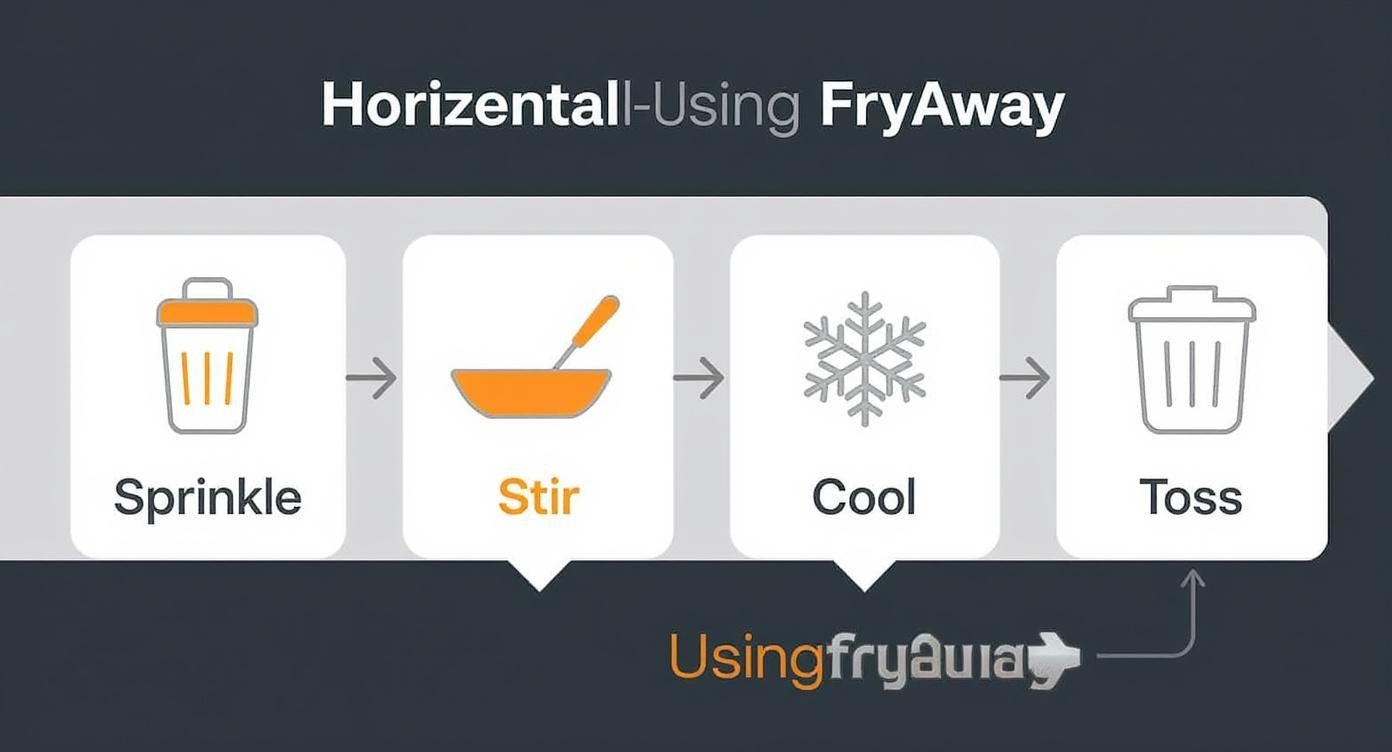
As you can see, you just sprinkle the powder into hot oil, give it a stir, let it cool completely, and then you can scoop the solid puck right into the trash. No mess, no fuss.
For the Biggest Frying Jobs
But what about those really ambitious cooking projects, like the annual Thanksgiving turkey fry? For holiday feasts or even small-scale commercial needs, we’ve got a solution designed for maximum capacity.
The Super Fry is the heavy-hitter of the FryAway family, capable of handling up to 24 cups of used cooking oil in one go. It’s the go-to choice for turkey fryers, massive fish fries, or any time you’re cooking for a huge crowd. You can learn more about this powerful option on the official FryAway Super Fry waste cooking oil solidifier powder product page.
By picking the right size for the amount of oil you’re using, you guarantee a clean, efficient, and totally stress-free cleanup. The goal is to make getting rid of the oil as simple and satisfying as cooking the meal itself.
Pairing Fried Favorites with Effortless Cleanup
Let's be honest, the best part of cooking is digging into the delicious food, not wrestling with a pan full of greasy oil afterward. We're going to connect that simple oil-solidifying solution to all the amazing fried dishes that create the mess in the first place. Imagine pulling a batch of perfectly crispy Southern fried chicken from the pan without that familiar feeling of dread about the cleanup.
This is where the real magic happens. By making a quick cleanup step part of your cooking routine, you can shift your focus from the chore of disposal back to the joy of cooking. The goal is to make the end of the meal just as satisfying as that very first bite.
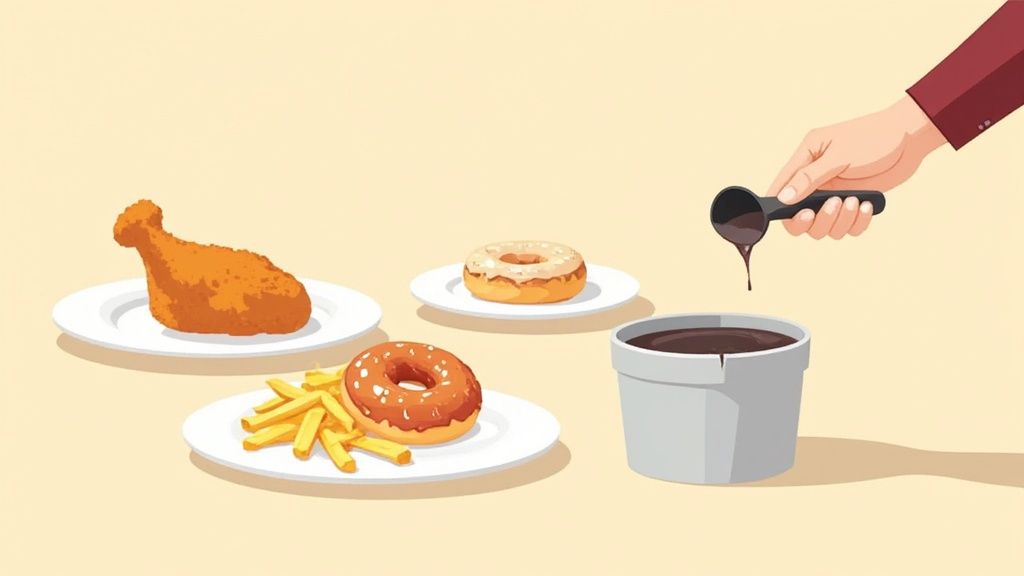
From Crispy Chicken to Sweet Doughnuts
Some of our most cherished recipes are notorious for leaving behind a serious amount of used cooking oil. Just think about those classic comfort foods that depend on a hot oil bath to get that signature golden-brown crunch.
Here are a couple of prime examples:
- Beer-Battered Fish and Chips: This pub classic requires a deep pot of hot oil to achieve that perfectly light and crispy coating on the fish and golden fries. Afterward, you're left with a significant amount of oil.
- Crispy Fried Calamari: Frying up rings of calamari is quick and delicious, but it leaves behind oil that's picked up a distinct seafood flavor, making reuse difficult and disposal necessary.
For both of these fried favorites, the cleanup process can be completely transformed with FryAway. This plant-based powder is the secret weapon for any home cook who loves to fry but hates the mess. Of course, getting the best results starts with using the right oil; consulting a good cooking oil smoke points chart is a great way to make sure you're set up for success every time.
The Effortless FryAway Cleanup Process
No matter what you're frying up, the cleanup stays the same. Just three simple steps. We always recommend FryAway because it’s hands-down the easiest and most eco-friendly way to get rid of used cooking oil.
Here’s the simple rundown for turning that liquid mess into a solid you can just toss:
- Sprinkle and Stir: The second you’re done cooking and the heat is off, just sprinkle the FryAway powder right into the hot oil. Give it a gentle stir with a spoon or spatula until it’s all dissolved.
- Cool Down: Now, just let it be. Leave the pan on a heat-safe surface and let it cool down completely. As it cools, the oil will magically turn into a solid, waxy puck.
- Toss into Household Trash: Once the oil is totally solid, use a spatula to scoop the puck right out of the pan. That's it! You can toss it straight into your regular trash bin.
This simple method turns a messy, multi-step chore into a quick, clean, and oddly satisfying final step. It lets you dive into your favorite fried recipes without any of the usual cleanup anxiety. Your focus stays where it should be: on the food.
How Responsible Oil Disposal Helps the Planet
Choosing to solidify your used cooking oil is more than just a smart way to keep your kitchen clean and pipes clear. It's a small habit with a huge positive impact on the world right outside your door. Every time you turn that liquid grease into a solid puck for the trash, you're making a choice that helps protect your community and the environment.
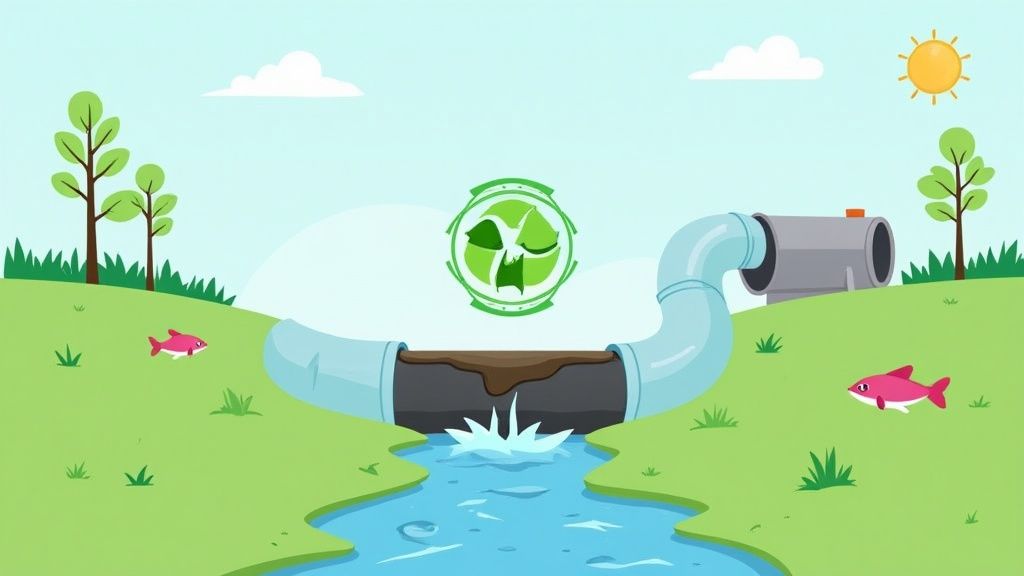
This simple act is one of the best ways to prevent the formation of destructive "fatbergs" in city sewer systems. These are massive, disgusting blockages formed from fats, oils, and grease that can cause sewer overflows—which are not only expensive public health crises but also environmental disasters.
An Eco-Conscious Choice for Your Kitchen
When you use a product like FryAway, you’re aligning your daily habits with a more sustainable lifestyle. It’s 100% plant-based and non-toxic, which means it’s a solution you can feel good about using in your home without introducing harsh chemicals into your kitchen or, eventually, the landfill.
The process we always recommend is incredibly simple and effective:
- Sprinkle and Stir the FryAway powder into your hot cooking oil right after you’re done cooking.
- Cool Down by just letting the mixture sit until it transforms into a solid puck.
- Toss into household trash once it's completely solidified. Clean, easy, and done.
This method keeps harmful oils out of our delicate ecosystems. Even small amounts of oil poured down the drain can make their way into rivers and lakes, damaging aquatic life and disrupting the natural balance.
By solidifying cooking oil, you ensure it stays contained within the landfill system, preventing it from leaching into soil or contaminating groundwater. It’s a powerful step toward preserving our natural resources.
The Bigger Picture of Used Cooking Oil
The responsible handling of used cooking oil (UCO) is becoming a bigger deal on a global scale. This material is a key source for recycled solidified cooking oil products, and its market is expanding fast, driven by environmental concerns.
The worldwide availability of UCO was roughly 3.7 billion gallons in 2022 and is expected to climb to between 5 and 10 billion gallons by 2030. North America and Europe are leading the recycling charge, with about 45% of the UCO market share feeding into biodiesel production. You can learn more about how U.S. biofuels and used cooking oil markets are evolving to see just how big this is getting.
When you choose to solidify your oil, you're not just cleaning your pan—you're participating in a larger movement towards better resource management and a healthier planet.
Common Questions About Solidifying Cooking Oil
Even with something as straightforward as solidifying cooking oil, you might have a few questions. That's totally normal. Getting the answers helps build confidence, so you can get that perfect, mess-free cleanup every single time.
We're big fans of FryAway because its 100% plant-based formula makes the whole process ridiculously simple and safe. The method is always the same, no matter what you've been cooking.
- Sprinkle and Stir: Right after you're done cooking, turn off the heat. Sprinkle the FryAway powder into the hot oil and give it a good stir until everything dissolves.
- Cool Down: Now, just let it be. The mixture will cool down in the pan and turn into a solid, rubbery puck.
- Toss into Household Trash: Once it's completely solid, you can easily scoop the whole puck out of the pan and toss it right into your household garbage.
That’s it. Three easy steps to a cleaner kitchen.
Is FryAway Safe for My Cookware?
Yes, absolutely. FryAway is completely safe for whatever you're cooking with—your seasoned cast iron skillet, that non-stick pan you love, or your go-to stainless steel pot.
The powder is 100% plant-based and non-toxic, so there's nothing in it that will harm or react with your cookware's surface. It works through a physical process, not a chemical one, essentially just trapping all the oil molecules as it cools.
The most important thing to remember? Always, always turn off the heat before you add the powder.
What if My Oil Did Not Solidify?
This is a rare one, and when it happens, it almost always comes down to one thing: the ratio of powder to oil. If you find your oil is still a bit soupy or semi-solid after cooling, don't worry. The fix is incredibly easy.
Just gently reheat the oil—you only need it to be warm, not smoking hot. Then, sprinkle in a little more FryAway powder, stir it until it dissolves, and let the whole thing cool down again.
A little patience helps, too. If your kitchen is on the warmer side, it might just need a little extra time to fully set up into that perfect solid puck.
Don't stress if it doesn't harden up on the first go. A bit more powder and a second cooling period will almost always do the trick, leaving you with that easy-to-toss solidified oil.
Can I Solidify Bacon Grease and Other Fats?
Definitely. FryAway is formulated to work just as well on rendered animal fats as it does on plant-based cooking oils. This includes bacon grease, lard, and beef tallow.
The cleanup process is identical. Once you're done cooking your bacon or rendering fat, just stir the powder into the hot grease. Let it cool and solidify, and then you can scoop the entire mess out and toss it straight into the trash. It’s the perfect solution for those greasy cleanups that are usually the messiest.
Ready to make your kitchen cleanup easier than ever? With FryAway, you can say goodbye to messy jars and clogged drains for good. Discover the simple, planet-friendly way to dispose of used cooking oil by visiting the FryAway website today.