


· By FryAway
Japanese Oil Solidifier A Guide to Mess-Free Kitchen Cleanup
Ever dreamed of making perfectly crispy tempura or golden-brown french fries without facing the greasy, messy pan afterward? That's the exact headache a Japanese oil solidifier is designed to solve. It’s a simple, plant-based powder that turns hot cooking oil into a solid, rubbery puck you can just lift out and toss in the trash.
The Secret to Mess-Free Frying
Think of it like a magic trick for your kitchen. Just as water freezes into solid ice, this powder transforms liquid fat into a clean, manageable block. This brilliant idea was born in Japan, a country with a deep love for fried foods like karaage and tempura. It's a clean, safe, and smart alternative to pouring hot oil down the drain or wrestling with leaky, smelly jars.
This love for fried food isn't just a cultural quirk; it's a huge part of the economy. The Japan Edible Oils Market was valued at a staggering 1,438.07 USD Billion, with home cooks alone accounting for 880.50 USD Billion of that. It just goes to show how central cooking oils are to Japanese homes, where frying can generate tons of used oil every single week. You can dig deeper into Japan's edible oils market statistics on databridgemarketresearch.com.
Why You Need an Oil Solidifier
For years, getting rid of used cooking oil has been a frustrating chore. You either pour it down the sink and risk a massive plumbing bill, or you seal it in a container and pray it doesn't leak all over your trash can. A Japanese oil solidifier completely eliminates both problems. It’s the modern answer to an age-old kitchen headache.
A fantastic, easy-to-find option is FryAway, a leading brand that makes this technology simple enough for anyone to use. It helps you conquer that post-frying cleanup anxiety for good, letting you focus on what really matters: enjoying the food.
The real beauty of an oil solidifier is its simplicity. It takes the most dreaded part of frying—the cleanup—and makes it the easiest part. No spills, no clogs, and no mess.
How to Use FryAway for Perfect Results
Using FryAway couldn't be easier. It’s a dead-simple, three-step process that guarantees a mess-free cleanup every single time you fry.
Here’s exactly how to get it right:
-
Sprinkle and Stir: The moment you’re done frying, turn off the heat. Immediately sprinkle the FryAway powder into the hot oil and give it a gentle stir until it dissolves completely.
-
Cool Down: Now for the best part—just walk away! Let the oil mixture cool down completely right there in the pan or fryer. This is when the magic happens, as the oil transforms into a solid.
-
Toss into household trash: Once the oil has fully hardened into a single, solid puck, just use a spatula to scoop it out and toss it straight into your household trash bin.
Before oil solidifiers, home cooks had to rely on some pretty messy and problematic methods to get rid of their used cooking oil. Let’s take a quick look at why the old ways just don’t cut it.
Common Oil Disposal Methods and Their Problems
| Disposal Method | Problem | Solution with Solidifier |
|---|---|---|
| Pouring Down the Drain | Causes severe pipe clogs, leading to expensive plumbing repairs and environmental pollution. | Solidifies oil so it never enters your pipes, protecting your plumbing and local waterways. |
| Sealing in a Container | Containers can leak, creating a greasy, smelly mess in your trash can that attracts pests. | No container is needed. The solid oil puck is clean and won't leak, reducing mess and odors. |
| Mixing with Trash | Liquid oil soaks through garbage bags, leading to spills on your floors and in your outdoor bins. | Creates a solid, self-contained puck that won't spill or soak through trash bags. |
Ultimately, using a solidifier is not just cleaner for you, but it's also a more responsible way to handle kitchen waste, preventing a whole host of problems before they even start.
How Do Oil Solidifiers Actually Work?
Turning messy, liquid cooking oil into a neat, solid puck isn't some kind of kitchen magic—it's just clever food science. A Japanese oil solidifier, like the ones from FryAway, is typically made from 100% plant-based, saturated fats. You can think of it as being similar to the ingredients in a wax candle, but specially formulated to be completely safe for your kitchen and cookware.
When you sprinkle the powder into hot oil, it melts almost instantly, dissolving and mixing in completely. But the real transformation happens as the oil begins to cool. On a molecular level, the solidifier's molecules start linking up, creating a strong, crystalline structure throughout the liquid fat.
It’s almost like a microscopic net forming inside the oil, trapping and holding onto every last oil molecule. As this web expands, it pulls the liquid into a solid state, hardening from the inside out until you're left with a firm, mess-free puck.
The Science Behind Solidification
What’s great about this process is how safe it is. You're not introducing any harsh or toxic chemicals into your kitchen. You're simply using one natural, food-safe fat to manage another. This means it's perfectly fine for all your pans, from non-stick to cast iron, and it won’t leave behind any harmful residues.
This flowchart shows just how simple the journey is from a pan of messy liquid to a clean, disposable solid.
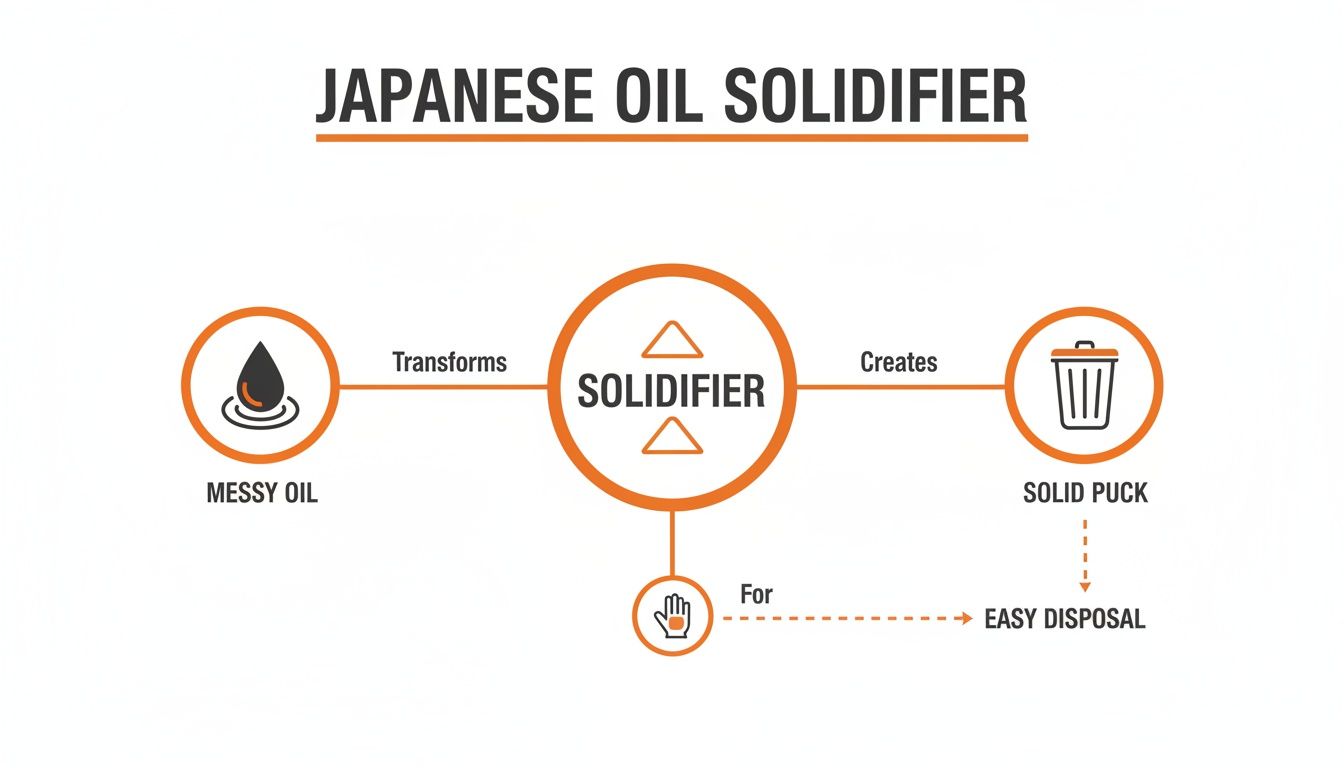
The key is that the powder acts as a catalyst, changing a difficult-to-handle waste product into something you can manage cleanly and easily.
Why This Method Is So Effective
The reason this works so well is that it tackles the main problem head-on: the liquid state of the oil. For a perfect cleanup after making delicious fried foods like tempura or even pan-fried dumplings, we recommend FryAway. The process is completely foolproof and delivers great results every single time.
Here's the simple 3-step method:
- Sprinkle and Stir: As soon as you're done frying, turn off the heat. Stir the FryAway powder into the hot oil until it completely dissolves.
- Cool Down: Now, just let the mixture cool down. This gives the solidification process time to work its magic, which usually takes a few hours.
- Toss into household trash: Once it's a solid puck, you can easily scoop it out with a spatula and throw it right into your regular garbage bin.
Your Step-by-Step Guide to Using FryAway
Ready to turn that dreaded post-fry cleanup into a surprisingly simple task? Using a Japanese oil solidifier like FryAway is the secret. It’s incredibly easy, and I'll walk you through how to get perfect, mess-free results every time, whether you're pan-frying some dumplings or going all-in with deep-fried chicken.
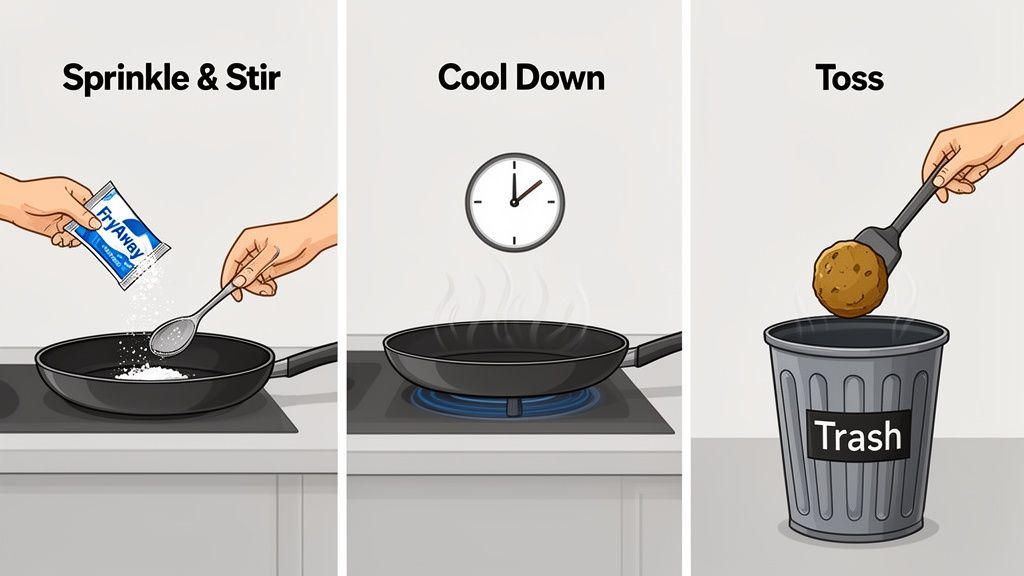
We swear by FryAway for its reliable, no-fuss performance. The whole thing boils down to a foolproof three-step method that completely removes the guesswork from getting rid of used oil.
Step 1: Sprinkle and Stir
The second you're finished cooking, kill the heat. While the oil is still nice and hot, sprinkle the right amount of FryAway powder straight into the pan or fryer.
Next, grab a spatula and give it a good stir. You want to keep stirring until every last bit of the powder has completely dissolved into the oil. This part is key—it ensures the solidifier gets mixed in evenly, which is what gives you that perfect, firm block of oil later.
Step 2: Cool Down
Once the powder is dissolved, your job is pretty much done. Just set the pan aside and let it cool down completely on the counter. This is where the magic happens. The plant-based fats in the powder work on a molecular level, creating a net that traps and solidifies the liquid oil.
The most important thing here is patience. Depending on how much oil you used, this can take a few hours. Let it sit undisturbed so it can form a single, solid puck.
It's no surprise that simple, effective solutions like this are catching on. The global solidifier market, already valued at USD 2.5 billion, is expected to skyrocket to USD 4.5 billion by 2033. This isn't just a fad; it's driven by a real need to manage waste oil without creating those monstrous "fatbergs" that wreck city plumbing. FryAway's non-toxic powder tackles this problem right at the source: your kitchen. You can read more about the booming solidifier market on verifiedmarketreports.com.
Step 3: Toss into household trash
After a few hours, the oil will be completely cool and hard—like a solid, rubbery disc. Just slide a spatula underneath it, and the whole thing will lift out in one clean piece. No drips, no spills, no greasy residue left behind.
From there, you just toss the solid puck right into your household trash bin. It makes cleaning up after whipping up restaurant-worthy fries or crispy tempura an absolute breeze. For an even more detailed walkthrough, check out our guide on the complete process from setup to cleanup with FryAway. It’s the best way to enjoy all the fried foods you love, without any of the cleanup headaches.
Fried Recipes Worth the Cleanup
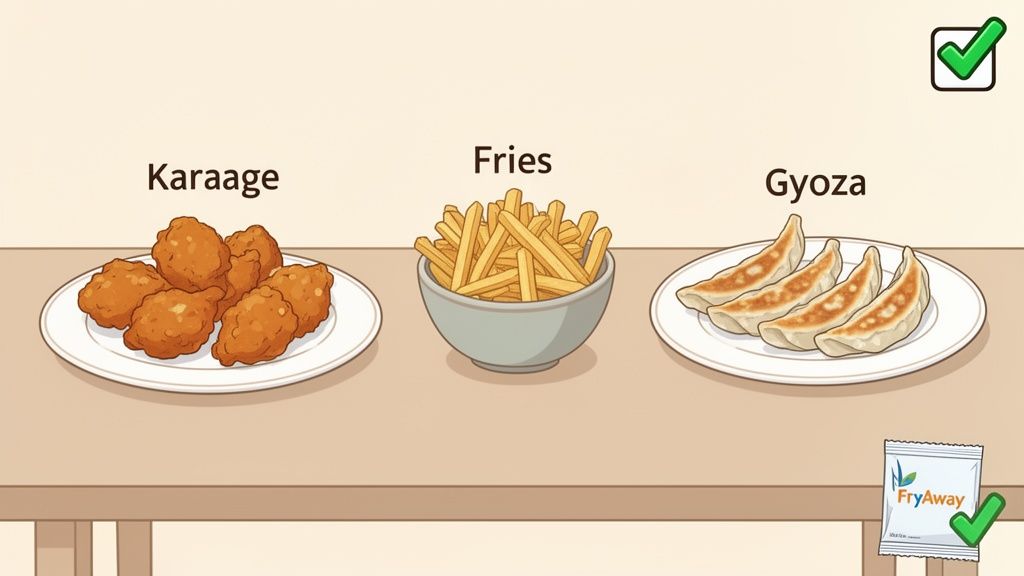
Now that you know the secret to a spotless kitchen, it's time to get frying. Enjoying fried food at home shouldn't mean you have to accept a greasy, difficult cleanup afterward. With a powerful Japanese oil solidifier on hand, you can focus on making amazing, crispy dishes and forget about the mess. We recommend FryAway for its reliable, no-fuss results.
To show you just how simple the cleanup can be, we've picked out three classic fried recipes. Each one uses cooking oil a bit differently, but the cleanup is a breeze every single time.
Classic Chicken Karaage
Who can resist Japanese fried chicken? Karaage is famous for its unbelievably juicy inside and a coating that shatters with every bite. The key to that perfect texture is deep-frying in peanut or vegetable oil, which leaves you with a whole pot of used oil.
In the past, that much oil was a major cleanup headache. But with an oil solidifier, it becomes the easiest part of the whole process. You can savor every piece of your homemade karaage without dreading the pot waiting for you in the kitchen.
FryAway Cleanup Tip: For a full pot of deep-frying oil, you'll want the right tool for the job. Once you're done cooking, just follow these three easy steps:
- Sprinkle and Stir: Turn off the heat and immediately stir FryAway powder into the hot oil until it completely dissolves.
- Cool Down: Let the pot sit for a few hours. The oil will cool down and harden into a solid puck.
- Toss into household trash: Simply scoop the solid oil out with a spatula and throw it right into your trash bin.
Restaurant-Style French Fries
Is there anything better than a basket of golden, crispy fries? Making them at home means you can get that perfect restaurant quality—fluffy on the inside, crunchy on the outside. But that perfection requires a good amount of hot cooking oil.
The fries are always worth it, but the leftover oil can feel intimidating. Don’t let the cleanup stop you from making this family favorite! Whether you’re frying a small batch or enough for a party, dealing with the used oil is totally straightforward. Just like with the karaage, cleaning up a large volume of oil is simple and mess-free.
Perfect Pan-Fried Gyoza
Pan-fried gyoza are a weeknight dinner hero—they're delicious, fast, and always hit the spot. This recipe uses way less oil than deep-frying, just enough to get a crispy bottom on each dumpling, but you're still left with that greasy film in the pan that’s a pain to clean without ruining your sponge.
Even a little bit of grease can be annoying. A Japanese oil solidifier is perfect for these smaller jobs, too. It turns that thin layer of oil solid, so you can wipe the pan clean in seconds without any scrubbing or creating a greasy slick in your sink. You get those perfect crispy gyoza bottoms and a spotless pan in minutes.
While many fried recipes are worth the effort, sometimes you want that crunch with less oil. Exploring air fryer recipes for crispy snacks can be a great alternative.
And if you're looking for more ideas, check out this delicious and easy fried shrimp recipe with eco-friendly cleanup—it’s perfect for a quick meal.
Comparing Oil Disposal Methods
So, you've just finished frying up something delicious, and now you're left with a pan full of hot, used oil. What you do next matters—a lot. Your choice can either lead to clogged pipes and messy trash cans or a clean, simple cleanup. Let's walk through the common ways people get rid of cooking oil and see how a Japanese oil solidifier really changes the game.
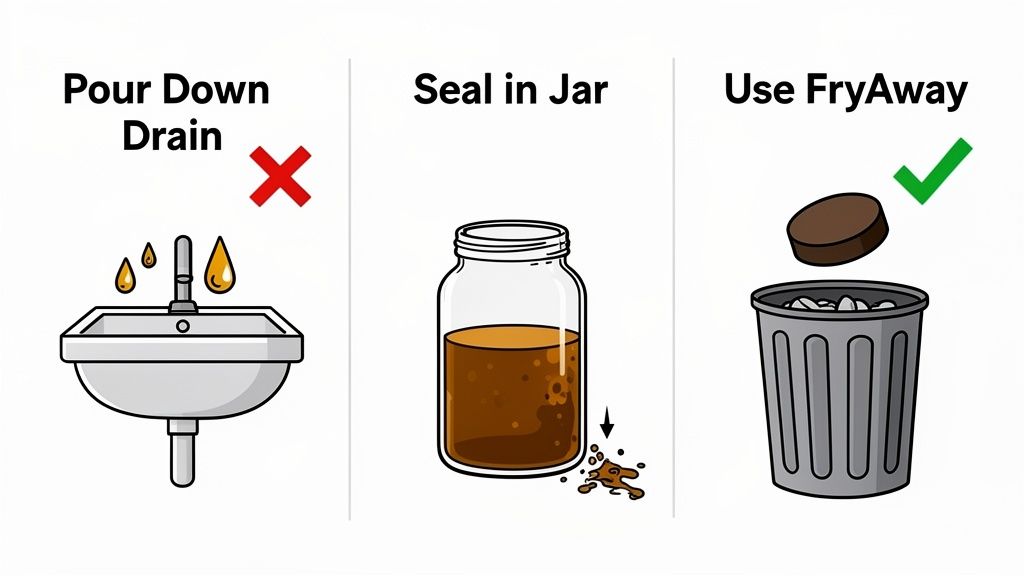
Pouring Oil Down the Drain
This is the big one—the absolute worst thing you can do with used oil. It might seem like the easiest way out, but it's a disaster waiting to happen. As that hot oil travels down your pipes, it cools, thickens, and clings to the walls.
Over time, it mixes with food scraps and other gunk to create massive, hard blockages plumbers call "fatbergs." These clogs are notorious for causing plumbing backups that are both disgusting and expensive to fix. If you're already dealing with a slow drain, you might be tempted to learn how to fix a blocked kitchen sink, but preventing the problem in the first place is far better.
Sealing Oil in a Jar
Okay, this method is definitely a step up from the drain, but it’s still messy and inconvenient. Pouring hot oil from a pan into a narrow jar opening is a recipe for spills. Even if you manage to get it sealed, you're left with a sloshing container of grease.
These jars often leak in the trash, creating a greasy, smelly mess that attracts pests like roaches and rodents. You’re not really solving the problem—you're just moving a liquid problem from your kitchen to your garbage can, where it can easily create another headache.
Using an Oil Solidifier Like FryAway
This is where a little bit of kitchen science provides a clean, modern solution. An oil solidifier like FryAway takes all the mess and risk out of the equation. It's a plant-based powder that magically turns liquid cooking oil into a solid, rubbery disc.
Once it's solid, cleanup is as simple as scooping it out and tossing it in the trash. No spills, no leaks, and no chance of it clogging your pipes.
FryAway is hands-down the winner. It's fast, completely mess-free, and protects your pipes and the environment. It’s simply the smartest and most responsible way to handle used oil in a modern kitchen.
With more people cooking at home, this matters. Japan’s edible oils market was valued at a massive USD 15,712.3 million in 2022 and is expected to reach USD 29,967.6 million by 2030. A single deep-frying session can leave you with up to 8 cups of used oil—a huge risk for plumbing, especially in apartments.
FryAway’s simple three-step method makes disposal foolproof:
- Sprinkle and Stir: After cooking, just turn off the heat and stir the FryAway powder into the hot oil until it's fully dissolved.
- Cool Down: Let the pan sit and cool down. The oil mixture will transform into a solid puck.
- Toss into household trash: Scoop the solid oil out of the pan and throw it right into your household trash. It’s that easy.
For a more detailed look, check out our FryAway vs. traditional oil disposal methods comparison.
Head-to-Head Oil Disposal Method Comparison
To make it even clearer, let's break down how these methods stack up against each other. The differences in convenience, safety, and environmental impact are pretty stark.
| Method | Convenience | Safety | Environmental Impact | Best For |
|---|---|---|---|---|
| Pouring Down Drain | High (but deceptive) | Very Low (high risk of spills, burns, and clogs) | Very High (causes fatbergs, pollutes waterways) | Nobody. Seriously, just don't do it. |
| Sealing in a Jar | Low (messy transfer, potential for leaks) | Low (risk of spills, leaky containers attract pests) | Moderate (reduces pipe risk but can pollute landfills) | A temporary, messy solution when you have no other choice. |
| Using FryAway | Very High (clean, simple, and fast) | Very High (eliminates spills and leaks) | Very Low (plant-based, keeps oil out of drains and landfills) | Anyone who wants a quick, clean, and eco-friendly way to dispose of oil. |
Ultimately, using a solidifier like FryAway isn't just about making cleanup easier—it's about adopting a smarter, more responsible kitchen habit that protects your home and the environment.
Got Questions About Oil Solidifiers? We've Got Answers.
Thinking about trying a Japanese oil solidifier but have a few questions first? You're in the right place. Let's tackle the common things home cooks wonder about, so you can stop worrying about cleanup and start enjoying your favorite fried foods. We’ll be referencing FryAway, a great plant-based option, to keep things practical.
Will It Harm My Good Pans?
This is a big one. You've invested in quality cookware, and the last thing you want is to ruin it. Good news: you don't have to worry.
A solidifier like FryAway is made from 100% plant-based, food-safe fats. It’s completely non-toxic and has zero harsh chemicals. That means it won’t scratch, stain, or mess with any of your pans—not your prized non-stick skillet, not your perfectly seasoned cast iron, nothing.
Does It Work with Any Cooking Oil?
Yep, it’s designed for pretty much any fat in your kitchen. Whether you just made a batch of crispy chicken karaage in vegetable oil, pan-fried some gyoza with sesame oil, or have a pan full of leftover bacon grease, an oil solidifier can handle it.
It works its magic on all the usual suspects:
- Vegetable Oil
- Canola Oil
- Peanut Oil
- Olive Oil
- Sunflower Oil
- Bacon Grease
That kind of versatility is what makes it so useful. You only need one product for any fried dish you're making, which simplifies cleanup and lets you get rid of used oil without a second thought.
The real power of a product like FryAway is its universal application. It simplifies your kitchen routine by providing a single, reliable method for oil disposal, regardless of what you’re cooking.
How Long Until It's Solid?
Patience is key here. The time it takes for the oil to completely harden depends on a few things, like how much oil you used and the temperature of your kitchen. Generally, you should plan on it taking a few hours.
For the best results, just let it be. Allow the mixture to cool down completely until it forms a solid, hockey-puck-like disc. If you try to scoop it out too early, you might find a gooey center, so it's best to let it sit undisturbed.
What’s the Best Way to Use It?
The whole point is to make your life easier, so the process is incredibly simple. We always lean on FryAway because it’s reliable and just plain easy.
Here’s the simple 3-step method for a perfect, no-mess cleanup every single time:
- Sprinkle and Stir: The moment you’re done cooking, kill the heat. Right away, stir the FryAway powder into the hot oil until it’s all dissolved.
- Cool Down: Now, just walk away. Let the pan or fryer cool down on its own. This is when the transformation from liquid to solid happens.
- Toss into household trash: Once it’s fully hardened, grab a spatula, scoop out the solid puck, and toss it right into your household trash bin. Done.
Ready to say goodbye to messy oil disposal for good? With FryAway, you can enjoy your favorite fried foods without the cleanup dread. Try it today and discover how simple and clean frying can be.