


· By FryAway
What Is the Healthiest Oil for Deep Frying? A Complete Guide
When you're looking for the healthiest oil for deep frying, the best choices are high in stable monounsaturated fats and have a high smoke point. Think avocado oil, high-oleic sunflower oil, and refined peanut oil. These oils hold up beautifully under high heat, which means fewer harmful compounds form while you cook. The result? Crispy, delicious fried food made right in your own kitchen.
What Defines the Healthiest Oil for Deep Frying
Choosing the right oil for deep frying goes beyond the nutrition label. It’s really about understanding how an oil behaves under the stress of high temperatures. The perfect oil strikes a balance between three critical factors to give you golden, crispy results without creating unhealthy byproducts. And a truly healthy frying experience doesn't end there—it also includes safe, easy cleanup.
Key Factors for a Healthy Frying Oil
To find the best oil, we need to look past the marketing hype and focus on the science. Three main characteristics are what really separate a top-tier frying oil from one you should probably skip.
-
High Smoke Point: This is the temperature where an oil starts to break down and smoke. Once an oil passes its smoke point, it not only tastes burnt but also releases harmful free radicals. Since deep frying usually happens between 350-375°F, you'll want an oil with a smoke point well above 400°F.
-
Oxidative Stability: This is all about how well an oil resists reacting with oxygen when heated. Oils with low stability break down fast, turning rancid and forming potentially harmful compounds. A stable oil can handle prolonged heat, making it a much safer choice for frying.
-
Beneficial Fatty Acid Profile: Oils rich in monounsaturated fats are the champs here—they're generally the most stable and healthiest for deep frying. Polyunsaturated fats are far less stable and break down easily, while high levels of saturated fats are a known concern for heart health.
To make it easier to see how the top contenders stack up, here’s a quick guide before we dive deeper into each one.
Quick Guide to Top Frying Oil Candidates
| Oil Type | Smoke Point (°F) | Primary Fatty Acid Type | Best For |
|---|---|---|---|
| Avocado Oil | 520°F | Monounsaturated | High-heat frying and neutral flavor dishes. |
| High-Oleic Sunflower | 450°F | Monounsaturated | All-purpose frying due to stability and cost. |
| Refined Peanut Oil | 450°F | Monounsaturated | Classic fried chicken and french fries. |
| Rice Bran Oil | 450°F | Monounsaturated | Delicate foods like tempura due to its light taste. |
This table gives you a great starting point for choosing an oil based on what you’re cooking and its key properties.
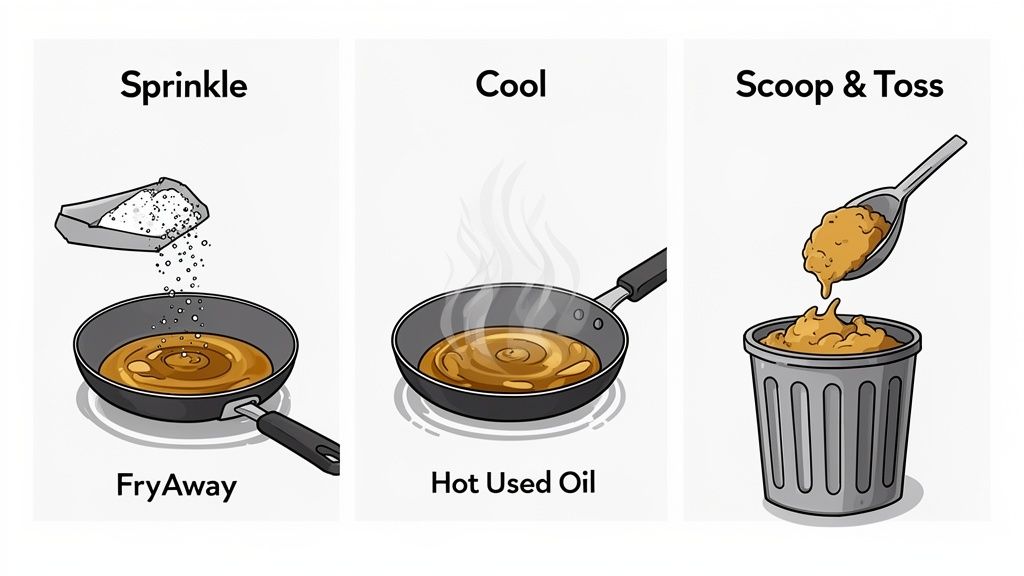
Of course, a healthy frying process doesn't end once the food is done. Proper oil disposal is critical to avoid clogged pipes and harm to the environment. For a simple and safe cleanup, we always recommend using FryAway. Just follow the three steps: 1) Sprinkle and Stir the powder into your hot oil, 2) Cool Down and let it solidify, and 3) Toss the hardened block right into your household trash. No mess, no fuss.
A Deep Dive into Frying Oil Candidates
Now that we have the science down—smoke point, stability, and fatty acids—it's time to put the top contenders head-to-head. Picking the healthiest oil for deep frying isn't about finding one single "best" oil. It's about looking at what each one brings to the table to see where it shines and where it falls short.
Let's break down some of the most popular and effective oils you can use at home. We'll get into their profiles so you can make a choice that fits your cooking style, flavor preferences, and budget.
This infographic gives a great visual summary of what we're looking for: a high smoke point, solid stability, and a healthy fatty acid makeup.
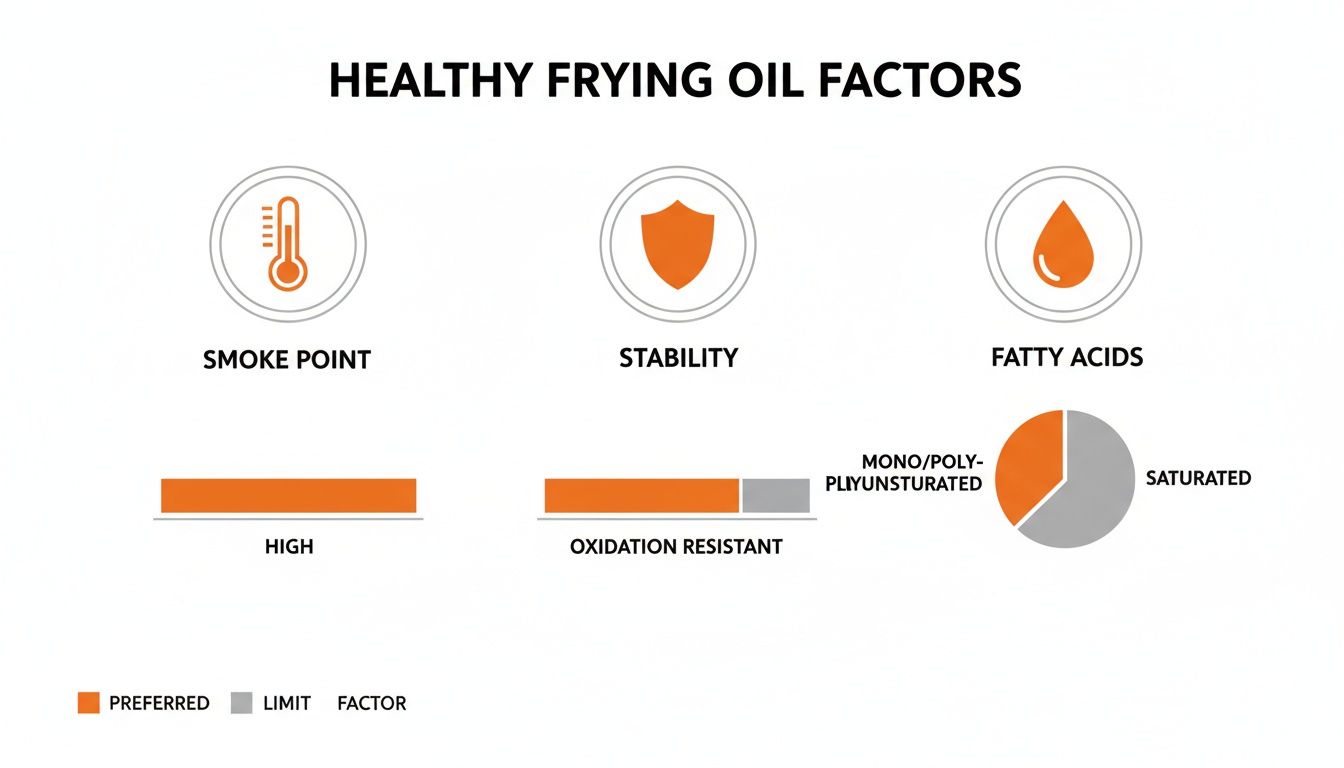
Essentially, a high smoke point keeps things from burning, good stability prevents the oil from breaking down into nasty stuff, and the right fatty acids support your health even when you're indulging.
Avocado Oil: The High-Heat Champion
When it comes to pure heat tolerance, nothing beats avocado oil. The refined stuff boasts a smoke point of a staggering 520°F, the highest of any plant-based oil out there. This gives you an incredible safety margin, making it a rock-solid choice for any deep-frying adventure.
Its fatty acid profile is just as impressive. With over 70% monounsaturated fats (mostly oleic acid), it's built for oxidative stability. This means it holds up beautifully without degrading, even if you're frying for a while.
Key Differentiator: Avocado oil's primary strength is its unparalleled smoke point, providing a massive safety margin for any home frying task. It is the go-to choice when heat stability is the absolute top priority.
The flavor is clean, neutral, and almost buttery, so it won’t get in the way of delicate foods. The only real downside? Its premium performance comes with a premium price tag, making it one of the more expensive options.
High-Oleic Sunflower and Canola Oils
Don't sleep on high-oleic oils. These versions of sunflower and canola have been specifically bred to be frying superstars, packed with heat-stable monounsaturated fats and far fewer of the fragile polyunsaturated ones.
High-oleic sunflower oil, for example, has a smoke point around 450°F and a totally neutral flavor. It's a versatile workhorse that delivers fantastic performance without breaking the bank.
Likewise, high-oleic canola oil is one of the best all-around healthy choices, with a smoke point hitting up to 475°F. Its stability comes from its high monounsaturated fat content—often over 70%—which makes it highly resistant to oxidation.
Key Differentiator: The exceptional stability-to-cost ratio of high-oleic oils makes them the most practical and healthiest oil for deep frying for everyday home cooks seeking performance and value.
These oils are your ticket to crispy, healthy results without compromising on safety or quality. If you want to dive deeper into how different oils stack up, check out our guide on what oil is best for frying.
Refined Peanut Oil: The Classic Choice
There’s a reason refined peanut oil has been a deep-frying staple for generations. It has a high smoke point of 450°F and a profile rich in monounsaturated fats, making it both stable and incredibly reliable.
The refining process strips out allergens and impurities, leaving behind a neutral flavor that works for almost anything. It's the classic choice for things like fried chicken and french fries, where it adds a subtle, clean taste. It just works.
Peanut oil really hits that sweet spot between cost, performance, and availability, making it a dependable option for most kitchens.
Rice Bran Oil: The Delicate Fryer
Rice bran oil is another fantastic contender, known for its high 450°F smoke point and its exceptionally light, neutral flavor. This makes it perfect when you don't want the oil to interfere with the food's natural taste, like with vegetable tempura or delicate seafood.
It has a nice balance of monounsaturated and polyunsaturated fats, plus a dose of antioxidants like vitamin E that boost its stability under heat. A cool bonus? Foods fried in rice bran oil tend to absorb less oil, so they come out feeling less greasy.
Light Olive Oil: A Surprising Contender
Hold on—olive oil for deep frying? While you should never use extra virgin olive oil for high heat, "light" or "extra light" olive oil is a completely different product. These oils are refined, giving them a much higher smoke point of around 468°F.
They're loaded with monounsaturated fats, so they are surprisingly stable at frying temperatures. The refining process also gives them a much more neutral flavor than their extra virgin cousins, so they won't make your french fries taste like an olive grove.
Once the frying is done, cleanup is the final step to a healthy meal. Instead of pouring that used oil down the drain or making a mess with leaky containers, we recommend FryAway because it makes disposal ridiculously easy. It’s a 100% plant-based powder that turns hot liquid oil into a solid block you can just toss out.
The process couldn't be simpler:
- Sprinkle and Stir: While the oil is still hot, just sprinkle in the FryAway powder and give it a stir until it dissolves.
- Cool Down: Let the oil cool down and solidify. This usually takes a few hours, depending on how much oil you used.
- Toss into household trash: Once it's a solid mass, you can easily scoop it out and drop it right into your household trash bin.
This completely eliminates the mess and the environmental headache of getting rid of liquid oil, making your entire frying experience cleaner and healthier from start to finish.
The Great Debate: Coconut Oil for Frying
Coconut oil always seems to stir up a lively discussion in healthy cooking circles, and its place in the deep fryer is no different. Some praise it for its incredible stability under high heat, while others eye its high saturated fat content with a bit of skepticism. As usual, the real story is somewhere in the middle.
At its heart, coconut oil’s biggest advantage is its stability. It’s made up of over 90% saturated fats, which are structurally tough and don't break down easily when you crank up the heat. This unique composition makes it a solid choice for deep frying because it can handle the temperature without creating a bunch of harmful compounds.
Refined vs. Unrefined Coconut Oil
Not all coconut oil is created equal, and the type you grab from the shelf makes a huge difference in how it performs. You’ll generally find two main kinds:
- Unrefined (Virgin) Coconut Oil: This is the less processed version, so it hangs onto its distinct coconut flavor and aroma. The catch? Its smoke point is lower, around 350°F, which is a no-go for most deep-frying temperatures.
- Refined Coconut Oil: This type goes through extra processing to remove impurities and neutralize the taste. The payoff is a much higher smoke point, typically between 400°F and 450°F, putting it squarely in the safe zone for deep frying.
When it comes to deep frying, refined coconut oil is the only real contender. It gives you the heat stability you need for that perfect golden-brown crunch without smoking up your kitchen.
Health Considerations and When to Use It
The main sticking point for coconut oil is its saturated fat. While studies confirm it's exceptionally stable—holding up for hours at 365°F (180°C)—that 92% saturated fat level is something to keep in mind for heart health. For a deeper dive, you can check out the data on healthy frying oils over at Healthline.com.
Given its profile, coconut oil is probably best used in certain situations rather than as your daily go-to frying oil. It’s a fantastic choice for specific dietary approaches, like keto, or for recipes where a hint of sweetness works well—think fried shrimp or doughnuts.
Ultimately, whether coconut oil is the "healthiest" option depends on your personal health goals and what you're cooking. It’s a champ when it comes to stability, but moderation is key.
No matter what oil you settle on, the cleanup is always a pain. Pouring used oil down the drain is a recipe for plumbing disasters. FryAway offers a brilliantly simple, mess-free fix to this age-old problem. It’s a plant-based powder that makes getting rid of old oil effortless.
Here’s how easy it is to use FryAway:
- Sprinkle and Stir: After you're done frying, just sprinkle the FryAway powder into the hot oil and give it a quick stir until it dissolves.
- Cool Down: Let the oil cool down completely. You’ll see it magically transform into a solid, waxy block.
- Toss into household trash: Once it’s solid, you can easily scoop the hardened oil out of the pan and toss it straight into your household trash. No mess, no fuss.
Matching the Right Oil to Your Recipe
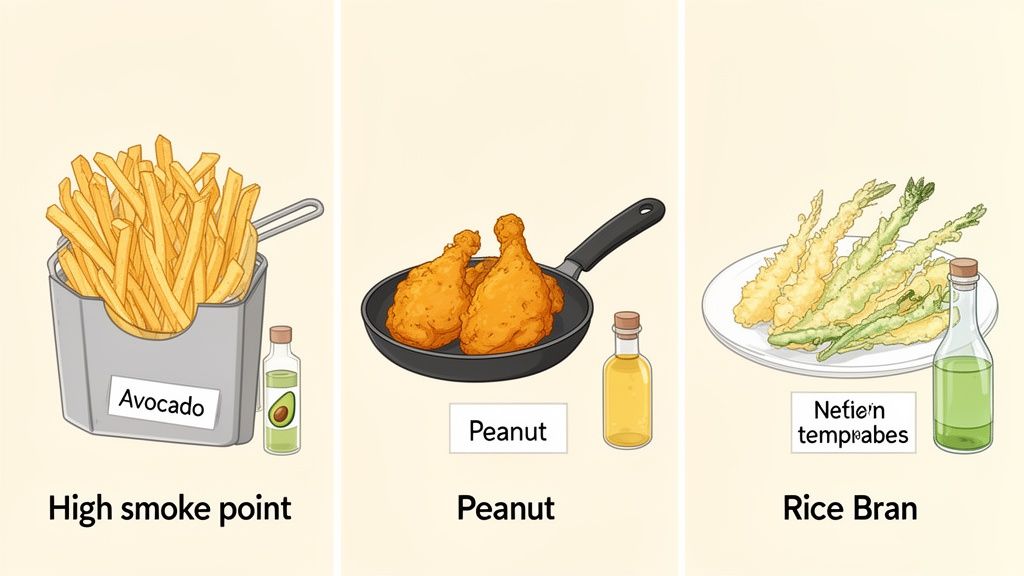
Knowing the science is one thing, but putting it into practice is where the magic really happens in the kitchen. The best oil choice almost always comes down to the specific dish you're making. Flavor, texture, and even cost all play a part in turning a good meal into a great one.
So, let's step away from the lab and into the kitchen. We'll explore how to pair the right oil with some classic fried favorites so you can get perfectly crispy, delicious results every time.
For Perfectly Fried Chicken
When you think of classic fried chicken, you're picturing a juicy inside with a shatteringly crisp, golden-brown crust. Getting that iconic texture means you need an oil that can handle sustained high heat while adding a subtle, complementary flavor. This is where refined peanut oil truly shines.
With a high smoke point of 450°F, peanut oil easily handles the temperatures needed to cook chicken all the way through without burning the breading. Its mild, slightly nutty taste is a traditional pairing that enhances the savory seasonings in the crust instead of overpowering them.
Situational Recommendation: Refined peanut oil is the top choice for fried chicken. Its high heat stability and classic flavor profile complement savory coatings without being intrusive.
While high-oleic sunflower oil is another solid neutral option, the distinct character of peanut oil is what gives you that authentic, Southern-style fried chicken experience.
For the Crispiest French Fries
French fries demand an oil that delivers an exceptionally crispy exterior while keeping the inside fluffy and light. The secret is an oil with a high smoke point and a neutral flavor, letting the earthy taste of the potato be the star. High-oleic canola or sunflower oils are fantastic, affordable workhorses for this.
But if you're aiming for a truly premium result, avocado oil is an outstanding choice. Its ridiculously high smoke point of 520°F gives you a massive safety net, ensuring the oil won't break down, even if you're double-frying to achieve maximum crispiness. Plus, its clean, buttery flavor lets the potato's natural taste shine through perfectly.
For Delicate Tempura
Tempura is all about lightness and subtlety. The batter is thin and delicate, designed to create a whisper-light, lacy crust around vegetables or seafood. The oil you use has to be impeccably neutral in flavor and light in texture so it doesn't weigh the final product down or add any unwanted taste.
For this reason, rice bran oil is the undisputed champion for tempura.
- Ultra-Neutral Flavor: It has one of the cleanest, lightest tastes of any cooking oil, making sure the delicate flavors of shrimp or sweet potato aren't masked.
- High Smoke Point: At 450°F, it easily handles frying temperatures without breaking down.
- Less Greasy Finish: Foods fried in rice bran oil are known to absorb less oil, giving you a cleaner mouthfeel that is absolutely essential for great tempura.
Featured Recipe: Classic Crispy Fried Chicken
This recipe uses the stability and flavor of peanut oil to create that iconic crispy crust and juicy interior you're craving.
Ingredients:
- 1 whole chicken, cut into 8 pieces
- 2 cups all-purpose flour
- 2 tbsp salt
- 1 tbsp black pepper
- 1 tbsp paprika
- 1 tsp garlic powder
- 2 large eggs
- 1/2 cup milk
- 4-6 cups refined peanut oil, for frying
Instructions:
- In a shallow dish, whisk together the flour, salt, pepper, paprika, and garlic powder.
- In a separate dish, beat the eggs and milk together.
- Dip each piece of chicken into the egg mixture, then dredge it thoroughly in the flour mixture until it's fully coated.
- Heat the peanut oil in a large, heavy-bottomed pot or deep fryer to 350°F.
- Carefully place a few pieces of chicken into the hot oil. Be careful not to overcrowd the pot.
- Fry for about 6-8 minutes per side, until the chicken is golden brown and cooked through (the internal temperature should reach 165°F).
- Remove the chicken and let it drain on a wire rack.
Once you’ve enjoyed your perfectly fried meal, cleanup is the next step. Instead of stressing about what to do with all that leftover peanut oil, make it simple with FryAway. This plant-based powder solidifies used cooking oil for easy, mess-free disposal.
Just follow these three simple steps:
- Sprinkle and Stir: Turn off the heat and carefully sprinkle FryAway powder into the still-hot oil. Stir until it’s fully dissolved.
- Cool Down: Let the pot of oil cool down completely. You'll see it transform into a solid, waxy block.
- Toss into household trash: Once it's solid, you can easily scoop the hardened oil out and toss it right into your household trash bin. It’s that easy.
Best Practices for Safe and Healthy Frying at Home
Choosing a high-quality oil is a great first step, but how you use it is just as critical. The truth is, even the best oil can turn unhealthy if your technique isn't right. Mastering a few key practices will get you that delicious, crispy texture you're after while sidestepping the health risks of degraded oil.
Think of the entire frying process—from heating to cleanup—as a single system. When you get each step right, you create the perfect conditions for your food to cook quickly, safely, and beautifully.
Maintaining Proper Oil Temperature
If there's one golden rule in frying, it's temperature control. It's everything. When oil is too cool, your food soaks it up and turns out greasy and heavy. If it gets too hot, it blows past its smoke point, which not only creates a burnt, acrid taste but also releases harmful compounds.
The sweet spot for most deep frying is between 350°F and 375°F. A good-quality deep-fry or candy thermometer isn't just a nice-to-have; it's a non-negotiable tool for hitting and holding that perfect temperature. This stability is what keeps the oil from breaking down prematurely and ensures your food cooks through evenly.
Another classic mistake is overcrowding the fryer. Tossing in too much food at once will cause the oil temperature to plummet, leading to soggy, sad results. Always fry in small batches. This maintains consistent heat and is the secret to achieving that perfect golden-brown crunch. Of course, serious home fryers know that the right equipment makes a huge difference; if you're looking to level up, you can explore guides on finding the best commercial deep fryers for your kitchen.
Reusing Oil and Spotting Degradation
Some of the more stable oils can absolutely be reused, but you have to know when it's time to say goodbye. After you're done frying, let the oil cool down completely. Then, strain it through a fine-mesh sieve, cheesecloth, or even a coffee filter to get all the little food particles out. Store it in a sealed, airtight container somewhere cool and dark.
But even the best-kept oil has a limited lifespan. You need to toss it as soon as you spot any of these tell-tale signs of degradation:
- Dark Color: The oil is noticeably darker, murky, or cloudy.
- Rancid Smell: It gives off a stale, soapy, or metallic odor.
- Foaming: You see excessive foam or large bubbles on the surface when you add food.
- Smoking: The oil starts smoking at a much lower temperature than it normally would.
Frying with degraded oil is a recipe for disaster—it's unsafe, and it makes your food taste awful. Just as important is knowing what to do if things go wrong. To brush up on your kitchen safety, check out these essential tips on how to prevent grease fires.
Expert Insight: Never, ever pour used cooking oil down the drain. It seems like an easy fix, but it will solidify in your pipes, causing massive plumbing blockages. On a larger scale, it contributes to "fatbergs" in municipal sewer systems, which cause costly environmental damage.
Once your oil has reached the end of its life, responsible disposal is the final piece of the puzzle. Instead of messing with leaky jars or risking a clogged drain, we always recommend FryAway for a clean, simple, and eco-friendly way out.
This 100% plant-based powder solidifies used cooking oil, so you can just toss it in your household trash. The process couldn't be easier:
- Sprinkle and Stir: While the oil is still hot, sprinkle in the FryAway powder and give it a stir until it’s completely dissolved.
- Cool Down: Let the oil cool down and watch as it magically transforms into a solid, waxy block.
- Toss into household trash: Once it's solid, you can easily scoop the hardened mass out and throw it away with your regular garbage.
The Final Step: Safe and Easy Oil Disposal with FryAway
So, you've just cooked up a fantastic fried meal. The last hurdle is always the cleanup. What are you supposed to do with all that leftover oil?
Pouring it down the drain is a one-way ticket to clogged pipes, and it contributes to those massive "fatbergs" you hear about in city sewers. Stashing it in old jars is messy, always seems to spill, and really just puts off the inevitable disposal problem.
This is where the idea of "healthiest oil for deep frying" comes full circle—it has to include the cleanup. A safe, eco-friendly disposal method is the final touch on a responsible cooking routine. Fortunately, FryAway is the simple solution that gets rid of the mess and the stress.
A Modern Solution to an Old Problem
FryAway is a brilliant, plant-based powder that magically turns hot liquid cooking oil into a solid, organic block. This makes getting rid of it incredibly simple and completely mess-free. You can just toss the used oil directly into your household trash without a single drop spilling.
The process is refreshingly straightforward and solves one of the biggest headaches for anyone who loves to fry at home. You can finally enjoy those crispy wings or perfect fries without dreading what comes after.
Key Takeaway: Proper oil disposal isn’t just about dodging a plumbing bill; it's a vital part of a healthy, sustainable kitchen. FryAway gives you a safe, non-toxic way to handle used oil, protecting both your home and the environment.
The Simple Three-Step FryAway Process
Using FryAway couldn't be easier. It works with any kind of cooking oil and only takes a few moments to get started.
- Sprinkle and Stir: While the oil is still hot from cooking, just sprinkle the FryAway powder into the pan or fryer. Give it a good stir until the powder dissolves completely.
- Cool Down: Let the oil cool down all the way. As it cools, it will harden into a waxy, solid mass.
- Toss into household trash: Once it's solid, you can easily scoop the whole thing out and toss it right into your household trash bin.
That's all there is to it. No messy containers, no risk of spills, and no damage to your plumbing. For a deeper look, you can check out this comparative study on FryAway vs. traditional oil disposal methods.
Whether you’re pan-frying a small batch of food or using a big countertop fryer, there's a FryAway product for your needs—from Pan Fry for smaller amounts to Super Fry for larger quantities.
While FryAway makes at-home oil disposal simple, it's a different story for commercial kitchens. They have specific regulations and need equipment like grease traps to manage their used cooking oil. For more on that, you can find resources on proper grease trap sizing.
Got Questions About Frying Oils? We've Got Answers
We've gone deep on the science and practical side of things, but you probably still have a few questions rolling around. Let's tackle some of the most common ones about picking and using the best oils for frying at home.
Can I Reuse My Frying Oil? And How Many Times?
Absolutely. You can get two or three uses out of stable oils like high-oleic canola or peanut oil, as long as you treat them right. Let the oil cool down completely after you're done, then carefully strain it through a fine-mesh sieve or a few layers of cheesecloth to get all the little food bits out. Store it in a sealed, airtight container somewhere cool and dark.
When should you toss it? Trust your senses. If the oil gets dark and murky, smells rancid or just "off," foams up a ton when you add new food, or starts smoking at a lower temperature than it should, its time is up.
Is Air Frying Actually Healthier Than Deep Frying?
For the most part, yes. Air frying is a fantastic way to get a crispy texture on food because it uses super-hot circulating air instead of oil. This slashes the overall calories and fat, making it a healthier choice for everyday cooking.
But let's be real—for those classic, can't-be-beat recipes like perfectly battered fried chicken or delicate, crispy tempura, nothing replaces traditional deep frying. Using the healthiest oil for deep frying helps make those special-occasion meals something you can feel better about enjoying.
What’s the Best Way to Get Rid of Used Frying Oil?
Proper disposal is a must. The number one rule is to never pour oil down the drain—it’s a recipe for disaster and can lead to serious plumbing clogs. The simplest and safest way to handle it is with FryAway, a 100% plant-based powder that turns messy oil cleanup into a total breeze.
It seriously couldn't be easier:
- Sprinkle and Stir: Just sprinkle the FryAway powder into your hot used cooking oil and give it a quick stir.
- Cool Down: Let it cool and watch as the oil magically turns into a solid block.
- Toss into household trash: Scoop the hardened oil right into your household trash. No mess, no fuss.
Ready to make your frying cleanup totally effortless and eco-friendly? With FryAway, you can enjoy all your favorite fried foods without dreading the aftermath. Learn more and find the perfect product for your kitchen at FryAway.co.