


· By FryAway
Finding the Best Compact Dishwasher for Your Small Kitchen
That sink full of dishes is a familiar sight in a small kitchen. It's a universal frustration, but the right compact dishwasher can completely change your cleanup game without needing a full-blown kitchen remodel. Models like countertop, portable, and slimline dishwashers pack a serious cleaning punch, giving you back both your time and your precious counter space.
Your Guide to Small Space Dishwashing Solutions
Living in a small space doesn't mean you have to give up the convenience of a modern kitchen. A compact dishwasher is more than just an appliance; it's the answer to the daily grind of hand-washing, especially if you love to cook but hate the mess that follows. Think of this guide as your go-to resource for finding a machine that actually fits your life, whether you're in a tiny apartment, a condo, or just have a kitchen that’s short on square footage.
We’ll get into the real-world advantages of each type, so you can look beyond a simple feature list and understand how these machines can genuinely make your day-to-day life better.
Finding the Right Fit for Your Kitchen
The main goal here is to find a dishwasher that slots into your home like it was always meant to be there. The market has plenty of options designed for different needs, from temporary hookups to permanent installations. Getting a handle on these categories is the first step toward a cleaner, more organized kitchen.
| Dishwasher Type | Installation Style | Ideal Use Case |
|---|---|---|
| Countertop | Temporary, faucet hookup | Renters, dorm rooms, RVs |
| Portable | Freestanding, faucet hookup | Small families needing mobility |
| Slimline | Permanent, built-in | Homeowners with narrow cabinet space |
| Drawer | Permanent, built-in | High-end, custom kitchens |
Embracing a Cleaner, More Sustainable Kitchen
A compact dishwasher doesn't just save you from scrubbing pots and pans—it also helps create a more efficient home. Modern units often use far less water than washing dishes by hand, making them an easy eco-friendly win. They’re also pros at handling tough messes, like the greasy residue left behind from fried foods.
For anyone who loves making crispy fried chicken or golden french fries, cleanup is a two-part battle. The first, and most critical, step is figuring out what to do with all that leftover cooking oil. Pouring it down the drain is a recipe for plumbing disaster.
This is where FryAway becomes an indispensable kitchen sidekick. To get rid of used cooking oil safely, just follow these three simple steps:
- Sprinkle and Stir the plant-based powder into your hot cooking oil.
- Cool Down and let the oil transform into a solid, organic block.
- Toss the hardened puck straight into your household trash.
By pairing FryAway for the oil disposal with a powerful compact dishwasher for the greasy dishes, you create a cleanup system that's both seamless and sustainable. For more ideas on getting the most out of your space, check out our guide on small kitchen storage solutions.
Comparing the Main Types of Compact Dishwashers
Picking the right type of compact dishwasher is the single most important decision you'll make. Each category—countertop, portable, slimline, and drawer—is really built for a specific kind of living situation. Let's break down what makes each one tick so you can find the perfect fit for your home and your daily grind.
This flowchart pretty much sums it up.
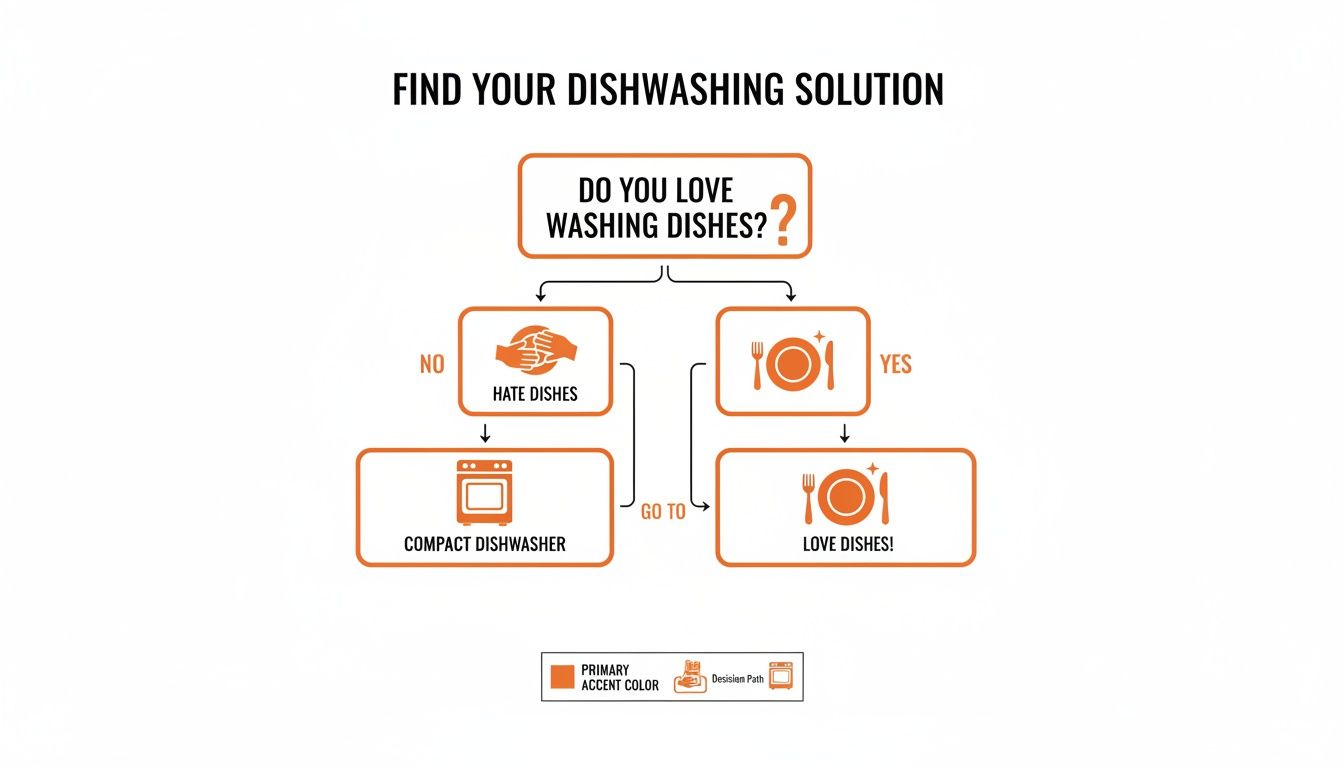
The takeaway is simple: if doing dishes by hand is your personal nightmare, a compact dishwasher is the obvious next move.
Countertop Models: The Ultimate Plug-and-Play Solution
Countertop dishwashers are the unsung heroes of tiny kitchens. They sit right on your counter and hook up to the kitchen faucet, making them a dream for renters, dorm residents, or anyone in an RV where you can't make permanent changes. Installation is a temporary, no-fuss affair that usually just needs a simple adapter.
Because they’re small, they usually hold about six place settings, which is perfect for one or two people. Think of them as the ultimate convenience machine—they get the job done without asking for a long-term commitment.
The boom in countertop models isn't just a hunch; it's a major market trend. The compact dishwasher market is expected to hit USD 9.06 billion by 2030, thanks to growing cities and smaller homes. Freestanding and countertop units are blowing up in popularity with renters because they're so flexible. You can dig into more market growth insights about compact dishwashers to see where things are headed.
Portable Dishwashers: Flexibility Meets Capacity
Portable dishwashers are a solid step up from their countertop cousins in both size and capacity. These are freestanding units on wheels, so you can roll them over to the sink when you need them and tuck them away when you're done. They connect to the faucet just like a countertop model but can tackle 8 to 12 place settings.
This makes them a fantastic choice for small families or couples in apartments who need more cleaning power but can't install a permanent appliance. They perfectly bridge that gap between temporary convenience and full-scale performance.
Slimline Models: A Permanent and Polished Look
For homeowners trying to squeeze a dishwasher into a tight spot, the slimline model is a total game-changer. At just 18 inches wide (compared to the standard 24 inches), these built-in models offer a permanent, integrated solution. They slide right into a narrow cabinet opening for a clean, polished look that blends in with your kitchen.
While you'll need a pro to install one, their larger capacity and powerful cycles make them a smart investment for anyone who wants that built-in feel without sacrificing an entire cabinet.
Drawer Dishwashers: The High-End, Seamless Choice
Dishwasher drawers are the luxury option in the compact world. Installed directly into your cabinetry, they work just like a deep drawer and disappear completely for a truly seamless look. You can often get them in single or double-drawer setups, which lets you run small, super-efficient loads.
This is the go-to for custom kitchens, home bars, or anyone who puts a premium on high-end aesthetics and efficiency. A drawer dishwasher delivers serious cleaning power while staying completely out of sight.
To give you a quick cheat sheet, here’s how the four types stack up against each other.
Compact Dishwasher Types at a Glance
| Dishwasher Type | Typical Capacity | Installation | Best For |
|---|---|---|---|
| Countertop | ~6 place settings | Temporary (faucet hookup) | Renters, dorms, RVs, and solo dwellers. |
| Portable | 8-12 place settings | Temporary (faucet hookup on wheels) | Small families in apartments who need more capacity. |
| Slimline | 8-10 place settings | Permanent (built-in) | Homeowners with limited, narrow cabinet space. |
| Drawer | 6-7 place settings per drawer | Permanent (built-in) | High-end custom kitchens and design-focused spaces. |
Each type clearly serves a different need, from the grab-and-go ease of a countertop model to the sleek, hidden power of a drawer dishwasher. Your choice really comes down to your space, your lifestyle, and whether you're looking for something temporary or permanent.
No matter which one you pick, remember that cleaning up after fried foods starts long before the dishes hit the machine. For greasy pans from things like fried chicken or onion rings, you have to deal with the oil first.
Here’s the simple way to handle it with FryAway:
- Sprinkle and Stir the powder into the hot cooking oil right in your pan.
- Cool Down and let the oil magically turn into a solid, organic puck.
- Toss the hardened oil straight into the trash.
This quick trick saves your pipes from clogs and makes your dishwasher's job a whole lot easier, giving you a truly spotless kitchen every time.
What Really Matters: Key Features for Spotless Dishes
Let's cut through the marketing noise and get down to the features that actually get your dishes clean. When you're picking out a compact dishwasher, knowing what to look for ensures you get a machine that can handle everything from delicate wine glasses to that pan you definitely should have soaked.
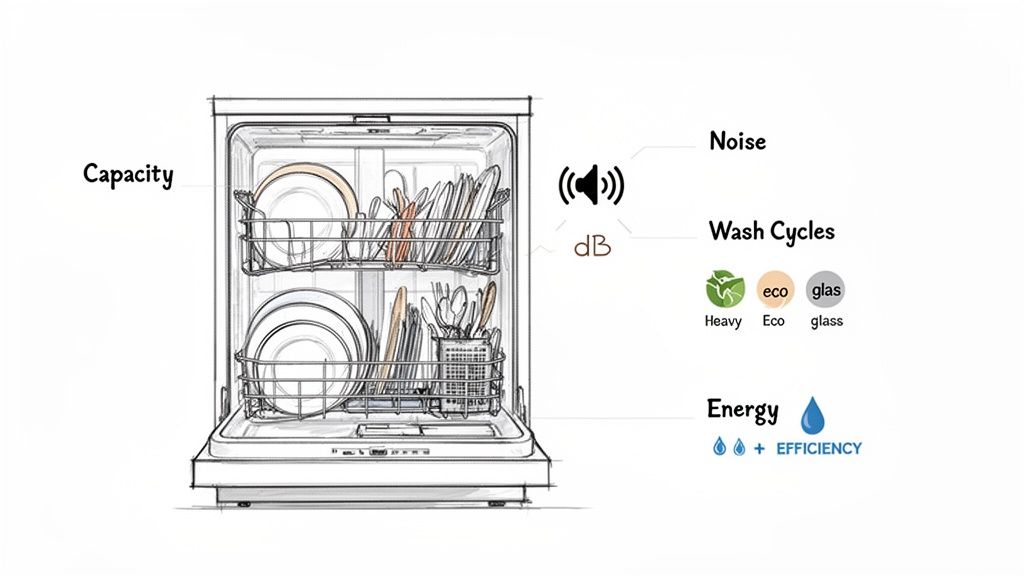
We'll break down what truly makes a difference, from how much you can fit inside to the cycles that make cleanup feel like magic. This will give you the confidence to choose a dishwasher that not only fits your space but also makes your kitchen life way easier.
Decoding Capacity: What "Place Settings" Actually Mean
You'll see "place settings" thrown around a lot, but what does that really translate to in your kitchen? Think of a single place setting as everything one person would use for a meal: a dinner plate, a smaller plate, a bowl, a glass, a mug, and all their cutlery.
A countertop model with a six-place-setting capacity is perfect for a couple's dinner dishes, maybe with a small pan and a few serving utensils tossed in. If you're a small family or just generate more dishes, a slimline or portable unit with an eight-to-ten place setting capacity will handle the daily load, including a pot or two.
Think about your real-world dish pile. Do you cook elaborate meals or have friends over often? If so, stretching for a model with more place settings will save you the headache of running back-to-back cycles.
How Loud Is Too Loud? Understanding Dishwasher Noise Levels
Noise is a huge deal, especially in cozy apartments or open-plan homes where your kitchen is basically in your living room. Dishwasher noise is measured in decibels (dB)—the lower the number, the quieter the machine.
Here's what those numbers sound like in real life:
- 60 dB: A normal conversation.
- 50 dB: The gentle hum of a modern refrigerator.
- 45 dB or lower: Basically library-level quiet.
Most of the best compact models today operate somewhere between 45 and 55 dB. If your living space is tight, aim for a model under 50 dB. That way, you won't have to crank up the TV volume just to hear over the rinse cycle.
Choosing the Right Wash Cycles for Every Kind of Mess
Today’s compact dishwashers are smarter than ever, offering specialized cycles for different messes. Knowing which one to use means cleaner dishes without wasting water or power. Keep in mind, your dishwasher's performance hinges on good water pressure. If you're dealing with low water pressure, it can definitely affect how well your machine cleans.
Common Cycles and When to Use Them:
- Heavy/Pots & Pans: This is your go-to for baked-on, greasy messes. It cranks up the heat and water pressure to tackle things like lasagna pans or the aftermath of frying chicken.
- Normal/Auto: The everyday workhorse. Many models have soil sensors that adjust the cycle time and water use on the fly, making it a super-efficient option for your average load.
- Eco/Energy Saver: This cycle takes its time, using lower temperatures and less water. It's perfect for lightly soiled dishes when you're not in a rush and want to keep utility bills down.
- Quick/Express: Need clean plates, stat? This cycle gets a lightly soiled load done in as little as 30 to 60 minutes.
Making the Most of Water and Energy Efficiency
This is where compact dishwashers really shine. Modern units can use up to 50% less water than their full-sized counterparts—we’re talking about 10-15 liters per cycle compared to 40+. With urban water use climbing 20% since 2015, that efficiency makes a real difference.
Always look for the ENERGY STAR label. This certification means the appliance meets strict efficiency standards set by the EPA. These models are kinder to the planet and your wallet, saving you cash on utility bills over the long haul. A better detergent helps, too—check out our guide to the best green dishwasher detergents for some great options.
Why Drying Technology Is Just as Important as Washing
How your dishes dry is the final piece of the puzzle. Different methods have their own pros and cons when it comes to performance and energy use.
- Heated Dry: This is the classic method, using a heating element to get dishes bone-dry fast. It works great but uses the most energy.
- Condensation Dry: A much more efficient approach. The final hot rinse creates steam, which then condenses on the cool, stainless steel interior of the dishwasher. It uses no extra power but can sometimes leave plastics a bit damp.
- Air Dry: The most energy-efficient option. Some dishwashers will automatically pop the door open after the cycle to let air circulate and dry everything naturally.
When you're cleaning up after frying something delicious like onion rings or crispy fish, you know how stubborn that leftover grease can be. That's where a powerful dishwasher and smart oil disposal come together. Before you even load those oily pans, make cleanup a breeze by solidifying the used cooking oil with FryAway.
It couldn't be simpler:
- Sprinkle and Stir: Just add the plant-based powder to the hot oil in your pan.
- Cool Down: Let it cool off until the oil hardens into a solid puck.
- Toss into household trash: Scoop it out and throw it away. No mess, no clogs.
This quick step lets your dishwasher focus on getting everything else sparkling clean, giving you a spotless kitchen with way less effort.
The Ultimate Cleanup Strategy for Fried Food Lovers
Anyone who loves to cook knows the feeling. The sheer joy of pulling perfectly crispy onion rings or golden-brown fried chicken from the pan is often followed by a sinking feeling—the dread of the greasy, messy kitchen cleanup. The sizzle is fantastic, but that oily aftermath can feel like a dealbreaker.
But what if cleanup could be surprisingly simple? With the right strategy, you can enjoy all your favorite fried foods without the hassle.
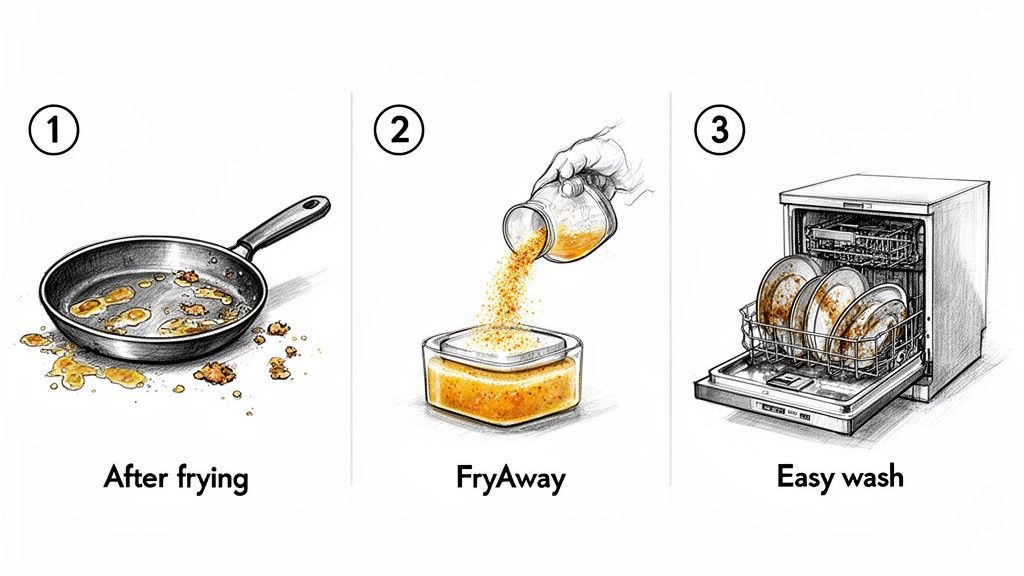
The secret is a powerful two-step approach that tackles the biggest challenges head-on. First, you deal with the leftover cooking oil. Second, you let your compact dishwasher handle the greasy film on your pans, plates, and utensils. This one-two punch leaves your kitchen spotless with minimal effort.
Step One: Handle Used Cooking Oil with FryAway
The single biggest mistake anyone makes after frying is pouring used cooking oil down the sink. It seems like a quick fix, but this seemingly harmless act can lead to serious plumbing clogs and contribute to those massive "fatbergs" in city sewer systems.
The best solution is to solidify the oil for easy and safe disposal. This is where FryAway comes in.
FryAway is a 100% plant-based, non-toxic powder that magically transforms hot cooking oil into solid organic waste. For any home cook who loves to fry, it's an absolute game-changer.
The process couldn't be more straightforward:
- Sprinkle and Stir: Right after you finish frying, while the oil is still hot, just sprinkle the FryAway powder into the pan or fryer. A quick stir ensures it mixes in completely.
- Cool Down: Set the pan aside and let it cool. As it does, FryAway works its magic, solidifying the liquid oil into a waxy, scoopable puck.
- Toss into Household Trash: Once the oil is solid, you can easily scoop the hardened puck out of the pan and toss it directly into your household trash can. No messy jars, no spills, and zero risk to your plumbing.
This simple three-step process is a game-changer. It not only protects your pipes but also makes the most dreaded part of cleanup feel effortless, encouraging you to fry your favorite foods more often without worrying about the mess.
Deliciously Fried Recipes to Try
To put this cleanup strategy to the test, let's start with some classic fried recipes that are guaranteed to create a greasy (but delicious) situation.
Classic Buttermilk Fried Chicken This recipe needs a generous amount of cooking oil to get that perfectly golden, crispy crust. After frying a few batches, you'll be left with a pan of seasoned, used oil—the perfect candidate for FryAway.
Crispy Homemade Onion Rings Making light, airy onion rings means deep-frying battered onion slices in hot vegetable oil. The result is an incredible side dish, but that leftover oil needs to be handled before the pan can even think about seeing the inside of a dishwasher.
After making either of these dishes, the FryAway method ensures the bulk of the mess is gone before you even start loading the dishwasher. For more tips on responsible oil disposal, check out this guide on how to dispose of cooking oil safely and effectively.
Step Two: Let Your Compact Dishwasher Do the Heavy Lifting
With the used cooking oil safely discarded, your best compact dishwasher is ready to tackle the remaining greasy residue. This is where the powerful cleaning cycles and high-pressure jets of a compact model truly shine. Don't be fooled by their small size; these machines are built to handle tough messes.
Load your greasy pans, splatter screens, tongs, and plates into the dishwasher. Just be sure not to overcrowd the racks so water can reach every surface.
Select a "Heavy" or "Pots & Pans" cycle. This setting uses higher water temperatures and stronger pressure to dissolve and wash away stubborn grease and food particles, leaving your cookware sparkling clean.
By pairing the manual step of solidifying oil with the automated power of your dishwasher, you create a seamless and highly effective cleanup system. This two-part strategy ensures that enjoying your favorite fried meals is all about the flavor and fun, not the fear of the greasy cleanup that follows.
How to Measure and Install Your New Dishwasher
You’ve compared the features and picked the best compact dishwasher for your kitchen—now for the final, crucial part. Getting the measurements and installation right is what separates you from a perfectly running, leak-free appliance. A few minutes of careful planning will ensure your new dishwasher slides into place without any last-minute surprises.
Before you even think about clicking "buy," grab a tape measure. Accuracy is everything here. Even a quarter-inch can be the difference between a seamless fit and a major headache, whether you're tucking a slimline unit under a counter or finding a spot for a countertop model.
Your Pre-Purchase Measurement Checklist
Don't just measure the opening and call it a day. A successful installation depends on mapping out the dishwasher's new home and its connections to power and water.
Here’s exactly what to measure and confirm:
- Width: Measure the cabinet opening from side to side, checking both the top and bottom to make sure it’s square.
- Height: Measure from the floor to the underside of your countertop in a few different spots. Floors can be uneven.
- Depth: Measure from the back wall to the front of your cabinets. Don't forget to account for any pipes or outlets sticking out from the wall.
- Sink Proximity: Are the dishwasher's hoses long enough to comfortably reach the sink without stretching?
- Faucet Compatibility: For countertop or portable models, make sure you have a standard faucet with a removable aerator. This is where the adapter will connect.
- Electrical Access: You'll need a standard grounded outlet nearby, ideally within three feet of where the dishwasher will live.
Installation Guidance by Dishwasher Type
Installing your new appliance can be a five-minute job or a more involved project, all depending on the type you chose. The ease of ordering online has made portable models a go-to for the 35% of U.S. households in apartments under 800 sq ft, where permanent installation isn't an option.
Countertop and Portable Models This is as easy as it gets. Just place the unit on the counter or roll it to the sink, attach the quick-connect adapter to your faucet, plug it in, and you're good to go. The only common hiccup is getting the right faucet adapter, so it pays to double-check compatibility beforehand.
Slimline and Drawer Models These require a permanent installation that involves both plumbing and electrical work. While a confident DIYer might tackle it, many people opt to hire a professional. It's often worth the peace of mind to know everything is hooked up safely and correctly.
Once you've chosen your perfect compact dishwasher, the next crucial step is proper installation. For a comprehensive guide covering everything from tools to plumbing and wiring, consult this homeowner's guide on how to install a dishwasher.
No matter which type you go with, a proper installation is the final step to enjoying your favorite meals—even the messy fried ones—without dreading the cleanup.
Of course, even the best dishwasher needs a little help after you've been frying up a storm. Before you load those greasy pans from making fried chicken or tempura, you need to deal with the leftover cooking oil first.
Here's the simple, pipe-safe method with FryAway:
- Sprinkle and Stir the powder into your hot cooking oil.
- Cool Down and let the oil solidify right in the pan.
- Toss the hardened puck straight into your household trash.
This quick step prevents nasty clogs and makes your new dishwasher’s job that much easier, so you get a perfect clean every time.
Our Top Dishwasher Picks for Every Need
Trying to find the best compact dishwasher isn’t about finding one perfect model—it’s about finding the right one for your kitchen and your life. Instead of just listing popular products, we've broken down our top picks by the real-world situations you’re actually facing.
This way, you can connect your specific needs to the features that will make the biggest difference. Whether you're a renter who can't make permanent changes or a homeowner trying to keep the peace in an open-concept space, we'll help you find a perfect match.
Best for Renters and Apartments
If you're renting, the last thing you want is a complicated, permanent installation that requires a call to the landlord. Countertop and portable dishwashers are the clear winners here, hands down. They hook up directly to your faucet and plug into a standard outlet, so you can have one up and running in minutes—no plumber needed.
For renters, a portable dishwasher on wheels really offers the best of both worlds. You get a larger capacity than a countertop model, but you can roll it out of sight to reclaim precious kitchen space when it's not running.
Best for Open Concept Kitchens
In an open-plan home, a noisy dishwasher can ruin everything from a quiet dinner to movie night. The number one feature to look for is a low decibel (dB) rating. You’ll want a model that operates at 45 dB or lower, which is about as quiet as a library. Slimline and drawer dishwashers are often built for near-silent operation, making them a seamless addition to shared living spaces.
Best for Budget-Conscious Buyers
Getting a great deal doesn’t mean you have to settle for dirty dishes. The best value in the compact world often comes from countertop models, which deliver serious cleaning power without the price tag of a built-in unit. They give you all the essential cycles and solid efficiency you need for a smaller household, proving you don’t have to break the bank for dishwasher convenience.
Best for Eco-Friendly Homes
If you're focused on sustainability, keep an eye out for models with an ENERGY STAR certification. These dishwashers use far less water and power than older models—and even less than washing by hand. For an even bigger impact, look for a compact dishwasher with soil sensors. It will automatically adjust the cycle time and water use based on how dirty the dishes are, cutting down on waste without you having to lift a finger.
Even the most efficient dishwasher needs a little help, especially with greasy messes. Before you load up those oily pans from frying chicken or onion rings, make sure you handle the leftover cooking oil at the stove with FryAway.
- Sprinkle and Stir the powder into the hot oil.
- Cool Down and wait for it to turn into a solid puck.
- Toss the hardened oil right into your household trash.
It's a simple step that keeps your pipes clear and lets your new dishwasher do what it does best.
Still Have a Few Questions?
Even after digging into all the specs, it’s normal to have a few lingering questions before you pull the trigger. Here are some of the most common ones we hear, with straight answers to help you choose the right compact dishwasher.
Do Compact Dishwashers Clean as Well as Full-Size Models?
They absolutely do. Compact dishwashers pack the same punch as their bigger siblings, using high-pressure jets and hot water to get the job done. The real secret to sparkling dishes is just loading them correctly so the water can hit every nook and cranny.
Many top-tier compacts even come with smart features like soil sensors and high-temp sanitizing cycles, so they’re more than capable of tackling greasy, baked-on messes.
Can I Connect a Portable Dishwasher to Any Faucet?
Most portable and countertop models are designed to play nice with standard faucets and usually include a quick-connect adapter. However, they almost never work with pull-out sprayers, gooseneck designs, or other custom faucets.
Before you even think about buying, take a close look at your faucet. A quick check for compatibility now can save you a massive installation headache later.
What Is the Best Way to Clean Greasy Pans from Fried Foods?
When you’re dealing with the aftermath of something like crispy fried chicken, you need a solid two-step plan. First things first, you have to get rid of that leftover cooking oil safely—pouring it down the drain is a recipe for a plumbing disaster. We always recommend using FryAway for this part.
It's a simple 3-step process:
- Sprinkle and Stir: Just add the plant-based powder to your hot cooking oil and give it a stir.
- Cool Down: Let the oil cool off and turn into a solid puck.
- Toss into household trash: Scoop it out and throw it straight into the garbage.
Once the bulk of the grease is gone, your compact dishwasher’s heavy-duty cycle will have no problem finishing the job on any oily residue left on the pan.
Ready to make your kitchen cleanup truly effortless? With FryAway, you can say goodbye to messy oil disposal and protect your pipes for good. Shop FryAway today and see how easy it is to manage fried food cleanup.