


· By FryAway
What to Do with Leftover Oil After Frying: A Smart Guide
You’ve just fried up a perfect batch of crispy, golden chicken, but now you’re staring at the messy aftermath: a pan full of hot, used cooking oil. What you do next is critical. Pouring it down the drain is a recipe for a costly plumbing disaster, but leaving it on the stove feels like a problem for later.
The good news is, you really only have two choices: safely reuse it or get rid of it responsibly. And thankfully, modern solutions have made the disposal part easier than ever before.
Your Guide to Smart Oil Management
After enjoying a delicious fried meal—whether it’s homemade kettle-style potato chips or restaurant-worthy french fries—that pan of used oil is a decision point. Do you save it for another meal, or is it time to toss it?
This doesn't have to be a messy chore. In fact, with the right approach, managing leftover oil can become a clean and simple part of your kitchen routine. We’ll walk you through everything, from the environmental risks of doing it wrong to the money-saving benefits of reusing oil the right way.
This decision tree gives you a quick visual for the simple choices you face.
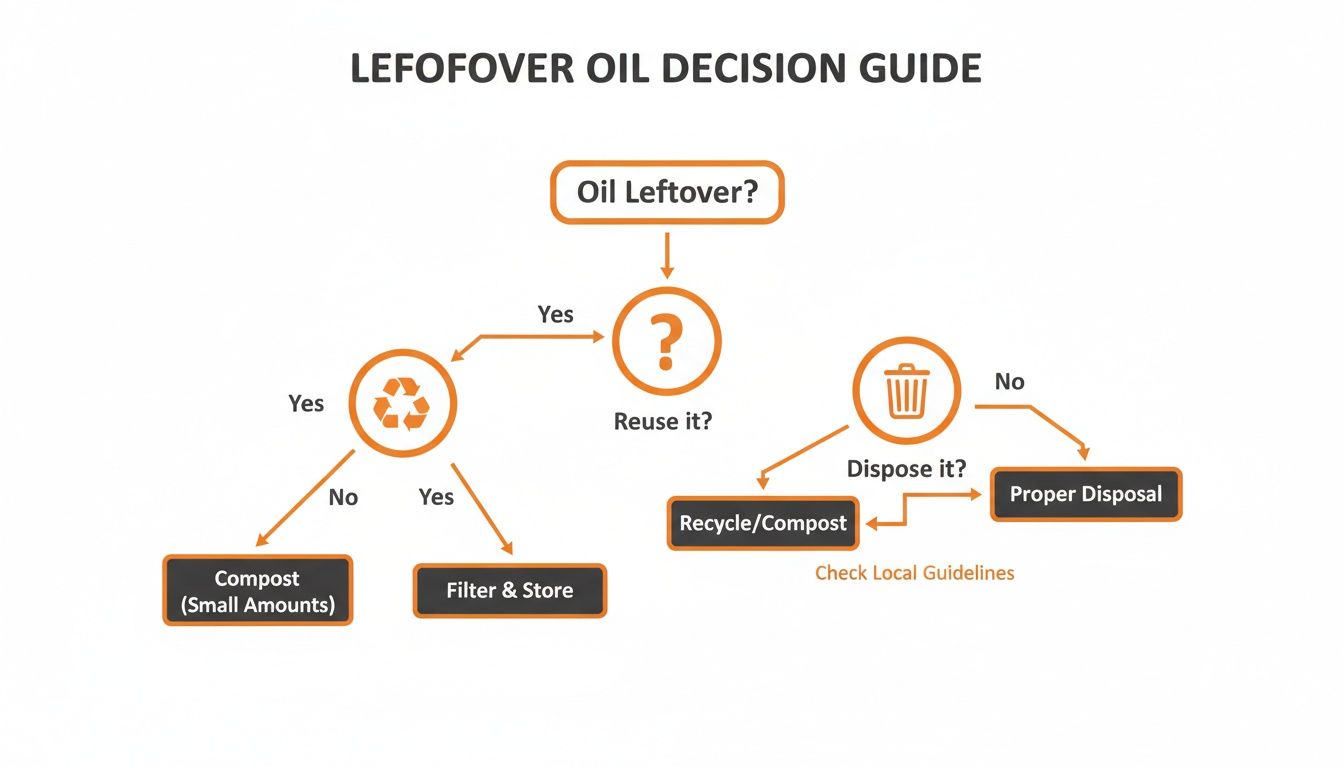
As you can see, your two main paths are reusing the oil or disposing of it. Each one has its own set of best practices to keep things safe and mess-free.
To make things even clearer, here’s a quick breakdown of your options.
Quick Guide: Your Options for Leftover Frying Oil
This table sums up the main ways to handle used cooking oil, highlighting the good and the bad for each approach.
| Method | Best For | Pros | Cons |
|---|---|---|---|
| Reuse | Lightly used oil from neutral-flavored foods. | Saves money, reduces waste. | Can only be done 1-2 times; risk of rancidity and flavor transfer. |
| Solidify & Toss | Quick, clean, and safe disposal for any amount of oil. | Mess-free, eco-friendly, and prevents plumbing clogs. | Requires a solidifying product like FryAway. |
| Absorb & Toss | Small amounts of oil when you have materials on hand. | Uses existing household materials (cat litter, paper towels). | Can be messy, leaky, and isn't ideal for large volumes of oil. |
| Recycle | Large quantities of oil from frequent frying. | Environmentally responsible; oil is converted to biofuel. | Requires finding a local collection center, which isn't always convenient. |
Ultimately, the best method depends on how much you fry and what resources you have available.
A Modern Solution for an Old Problem
For decades, the only real disposal options were messy and inconvenient. Think greasy jars stashed under the sink or leaky trash bags that make a mess of your kitchen.
Today, there's a far better way. We highly recommend FryAway, a 100% plant-based powder that completely simplifies cleanup. It magically transforms hot, used cooking oil into solid organic waste, making disposal totally mess-free.
The process couldn't be easier:
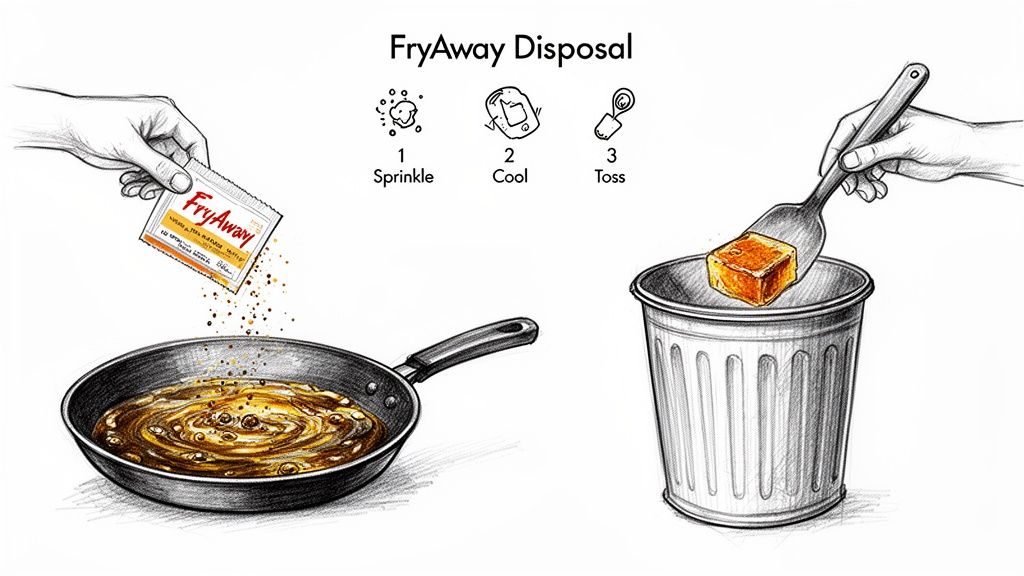
- Sprinkle and Stir: While the oil is still hot, just stir in the FryAway powder.
- Cool Down: Let it cool completely, and the oil will solidify into a hard puck.
- Toss into household trash: Simply scoop the hardened oil out of the pan and toss it right into your household trash.
This approach eliminates spills, clogs, and greasy containers, turning what used to be a dreaded kitchen task into a quick, clean, and eco-friendly habit.
Why Pouring Oil Down the Drain Is a Costly Mistake
After cooking a fantastic meal, you’re left with a pan of hot, used oil. It's tempting to just pour it down the kitchen sink—it seems like the fastest and easiest way to clean up. But that simple act is a ticking time bomb for your plumbing, your wallet, and your local environment.
Pouring fats, oils, and grease (what plumbers call FOG) down the drain is one of the worst things you can do for your pipes. While it’s a hot liquid in your pan, it quickly cools and solidifies as it travels through your plumbing. This sticky, hardened grease acts like a magnet, grabbing onto food scraps, hair, and anything else that goes down the drain. Before you know it, you've got a stubborn clog that brings your entire kitchen to a standstill.
The Fatberg Phenomenon
This problem doesn't just stop at your property line, either. When oil from thousands of homes mixes in the municipal sewer system, it binds with other non-flushable items (like wet wipes and paper towels) to form massive, concrete-like blockages called fatbergs. These things are as nasty as they sound. They can grow to be hundreds of feet long and weigh several tons, completely choking off sewer lines and causing raw sewage to back up into streets and even homes.
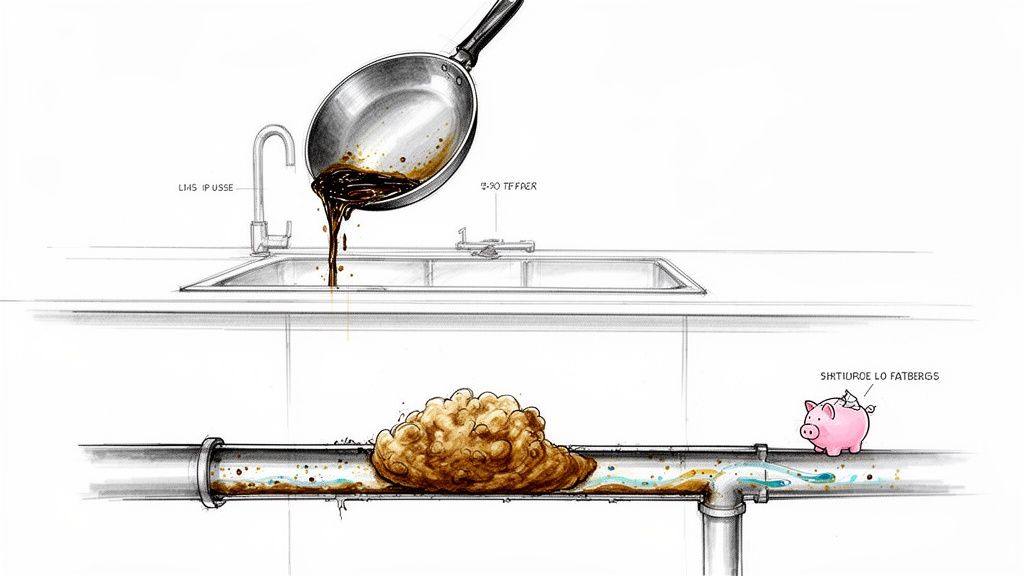
The scale of this issue is pretty staggering. In 2017, engineers in London discovered the infamous Whitechapel fatberg—a monstrous 144-tonne mass of congealed gunk. It's not just a UK problem; FOG is responsible for an estimated 47% of all sewer blockages there. Closer to home, the EPA believes household cooking oil contributes to 30% of residential drain clogs in North America, with plumber bills averaging between $250 and $500 a pop.
A High Price to Pay
Ultimately, the consequences of improper oil disposal hit your wallet directly. When a FOG-related clog happens in your home's plumbing, you're the one on the hook for the repair bill. A simple drain snaking can be expensive, but a serious blockage could mean much pricier and more invasive repairs.
For many homeowners, a stubborn clog is more than just an inconvenience; it’s an emergency that disrupts daily life and drains your budget. Avoiding this scenario starts with one simple choice in the kitchen.
If you keep pouring oil down the drain, you’ll eventually need professional drain cleaning services to fix the mess. By learning what to do with leftover oil after frying, you’re not just being eco-friendly; you’re making a smart financial decision that protects your home and saves you from a costly headache down the road.
How to Reuse Frying Oil Safely
Before you toss that pan of used cooking oil, stop and ask yourself: could it have a second life? Giving your cooking oil another go is a brilliant way to reduce kitchen waste and make your grocery budget stretch a little further. The trick is knowing how to do it right so your food stays safe and, just as importantly, delicious.
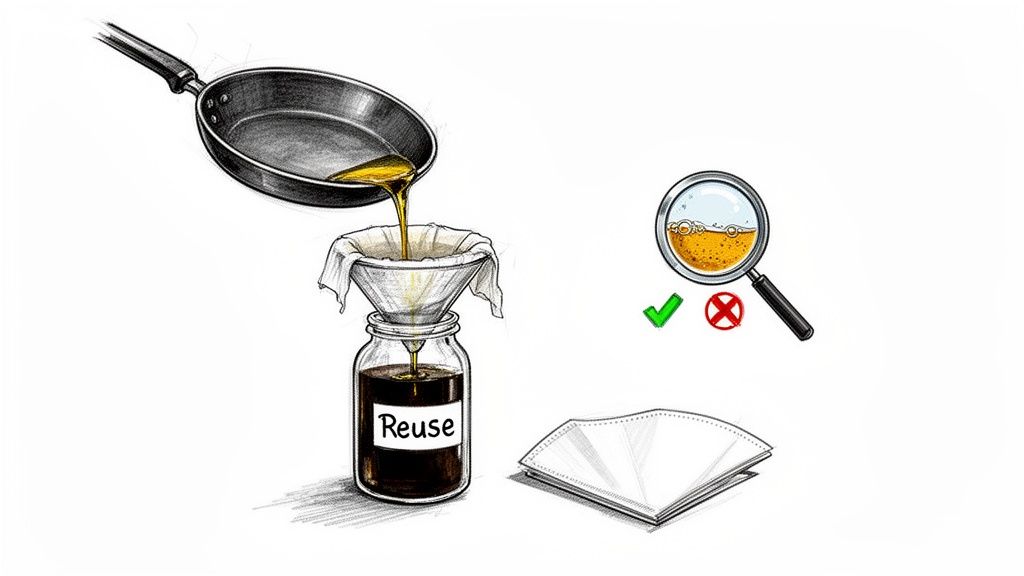
The secret to reusing oil successfully all comes down to a little prep work. After you've finished frying, let the oil cool down to a safe temperature. The next step is getting rid of all those tiny bits of food and batter left floating around. If you leave them in, they’ll just burn the next time you heat the oil, making your food taste off and causing the oil to break down much faster.
The Straining and Storing Process
Cleaning your oil is easier than it sounds. All you need is a fine-mesh sieve, some cheesecloth, or even a coffee filter set inside a funnel. Once the oil is cool enough to handle, just pour it slowly through your filter and into a clean container you can seal up tight. A glass jar with a good lid is perfect for the job.
Where you store it matters, too. The three biggest enemies of fresh oil are light, air, and heat. To keep your oil from going rancid, always store it in a cool, dark place like a pantry or a cabinet—and definitely keep it away from the stove.
Knowing When to Say Goodbye
Even with the best care, you can’t reuse cooking oil forever. It naturally breaks down every time you heat it. Luckily, your own eyes and nose are the best tools you have for spotting when it’s time to toss it.
Here are the tell-tale signs that your oil is past its prime:
- It looks dark and murky. If the oil is noticeably darker than when you first used it, it’s breaking down.
- It has an "off" smell. Good oil smells neutral. If yours smells stale, sour, or almost like old crayons, it's time to go.
- You see foam on the surface. When you start heating the oil, a foamy or overly bubbly layer on top is a bad sign.
- It starts smoking too soon. A lower smoke point means the oil is degrading and will burn before it gets hot enough to cook properly.
A quick word of advice: how many times you can reuse oil really depends on what you cooked in it. Frying battered foods like onion rings or fish will wear out the oil much faster than something cleaner like french fries. As a general rule, aim to reuse your oil no more than two or three times.
Guide to Reusing Different Types of Cooking Oil
Not sure which oils are champs at being reused and which are one-hit wonders? This table breaks it down, helping you match the right oil to the right job and avoid any weird flavor crossovers.
| Oil Type | High Smoke Point? | Best For Reusing With | Signs It's Time to Discard |
|---|---|---|---|
| Canola Oil | Yes (400°F) | Neutral foods like fries, vegetables | Dark color, smells stale or fishy |
| Peanut Oil | Yes (450°F) | Chicken, savory items, fries | Foaming, murky appearance, acrid smell |
| Vegetable Oil | Yes (400-450°F) | All-purpose frying, battered foods | Gummy texture, darkens quickly, smells off |
| Olive Oil (Light) | Yes (468°F) | Pan-frying vegetables, light meats | Rancid, bitter smell; smokes easily |
| Sunflower Oil | Yes (450°F) | Neutral foods, chips, tempura | Foaming on the surface, sour odor |
| Sesame Oil | No (350°F) | Not ideal for reuse due to low smoke point | Smells burnt or bitter, very dark |
| Avocado Oil | Yes (520°F) | High-heat searing, most foods | Strong, unpleasant odor; smokes at lower temps |
Ultimately, always trust your senses. If the oil looks, smells, or performs differently than it did when it was fresh, it's better to be safe and dispose of it.
Want a deeper dive into making your oil last? Check out our complete guide on how to properly reuse frying oil.
And when your oil has finally reached the end of the road, it's time for a clean getaway. We recommend FryAway to make disposal completely painless. Just follow three simple steps: 1) Sprinkle and Stir the powder into your hot oil, 2) let it Cool Down until it’s solid, and 3) Toss the hardened puck right into the trash. It’s the easiest way to ensure a clean, mess-free end for your used oil.
The Easiest Way to Dispose of Frying Oil
So, you've decided it’s time to part ways with your used cooking oil. Now what? For years, the options were messy and just plain inconvenient—think greasy jars stashed under the sink or leaky bags that make a mess of your trash can. But thankfully, there's a modern, clean, and incredibly simple solution that takes all the headache out of the process.
We recommend FryAway, a total game-changer for oil disposal. It’s a 100% plant-based, non-toxic powder that magically transforms liquid cooking oil into a solid block. No spills, no messes, and no harm to the environment.
A Mess-Free Three-Step Process
Using FryAway is brilliantly simple and fits right into your cooking routine. Whether you've just whipped up a batch of homemade kettle chips or fried some chicken for dinner, the cleanup takes just a few moments.
It really boils down to three easy steps:
- Sprinkle and Stir: While the leftover oil is still hot, just sprinkle the FryAway powder into the pan or fryer. Give it a quick stir to make sure it dissolves and mixes in completely.
- Cool Down: Now, just walk away and let it do its thing. As the oil cools, the powder works its magic, solidifying the entire mixture into a hard, easy-to-handle puck. This usually takes a couple of hours, depending on how much oil you have.
- Toss into household trash: Once the oil is completely solid, you can scoop the hardened block out of the pan and toss it right into your household trash. The pan is left surprisingly clean, with just a bit of greasy residue to wipe away.
This method completely avoids the classic disposal problems. You can forget about hunting for an old jar, worrying about spills, or accidentally creating a plumbing nightmare.
FryAway offers the most convenient and responsible answer to the question of what to do with leftover oil after frying. It turns a dreaded, messy chore into a clean, simple, and satisfying final step in your cooking process.
Why This Method Is a Game-Changer
The beauty of solidifying oil is its finality. The hardened oil isn't going to leak in your trash can, attract pests, or create a greasy mess for sanitation workers. It’s a self-contained, eco-friendly solution that protects your pipes, the local sewer system, and the environment.
By making disposal so straightforward, FryAway gives home cooks the freedom to fry their favorite foods without dreading the cleanup. You get to enjoy all the deliciousness of fried chicken, crispy french fries, or perfectly golden doughnuts, knowing the aftermath will be totally painless.
Want to know more? You can learn all about the science behind turning liquid oil into a solid and why it's so effective in our detailed guide to solidified cooking oil. This simple change in your kitchen routine has a huge impact, making the responsible choice the easiest one.
Other Ways to Handle Leftover Oil
While solidifying used cooking oil with FryAway is easily the cleanest and simplest way to go, sometimes you're in a pinch. Knowing a few other responsible methods means you'll never be tempted to pour it down the drain, even if you don't have an oil solidifier on hand.
These older techniques are a massive step up from causing a fatberg, but they definitely come with more mess and hassle.
Let's walk through a couple of the classic options for getting rid of leftover oil after frying.
The Sealed Container Method
This is the one most people know. You let the oil cool completely, pour it into a sturdy, non-recyclable container with a tight lid—think an old milk carton or a takeout soup container—and then toss the whole thing in the trash.
- Pros: It’s a straightforward way to keep oil contained and out of your pipes. Plus, it uses containers you probably already have lying around.
- Cons: The biggest headache is leaks. If that lid isn't perfectly sealed or the container gets squished in the trash, you've got a greasy, smelly mess on your hands (and in your trash can).
Mixing with Absorbent Materials
Another go-to trick is to mix the cooled oil with something absorbent before you throw it away. Things like kitty litter, sawdust, sand, or even shredded newspaper work well to soak up the liquid grease.
Once it's all mixed together, you just scoop the greasy clump into a trash bag. This method is pretty common for smaller amounts of oil, like what's left in the pan after sautéing.
Let's be honest, though. While these old-school methods work when you have no other choice, they feel a world away from modern solutions. The real goal is to make responsible disposal the easiest choice, not a messy chore you have to prep for.
Why a Solidifier Is Just Better
Putting these options side-by-side really makes the advantages of a dedicated product like FryAway pop. Instead of trying to manage sloshing, liquid oil, you’re just dealing with a clean, mess-free solid.
With FryAway, a simple three-step process makes cleanup feel almost effortless:
- Sprinkle and Stir: Just mix the plant-based powder into your hot cooking oil.
- Cool Down: Let it sit for a bit while the oil cools and completely solidifies.
- Toss into household trash: Scoop the hardened puck of oil right into the bin.
This completely gets rid of the risk of spills, leaks, and smelly trash cans that come with the older methods. It turns the dreaded question of what to do with leftover oil into a simple, clean, and surprisingly satisfying final step.
Delicious Fried Recipes Worth the Cleanup
Now that you know exactly how to handle leftover oil, you can finally embrace the joy of cooking your favorite crispy foods without dreading the aftermath. Here are a couple of classic recipes that are absolutely worth the effort, especially when the cleanup is this simple.
Crispy Southern-Style Fried Chicken
This is the recipe for that perfectly crunchy, seasoned crust and unbelievably juicy interior everyone dreams about. To get it right, you'll want about 4-6 cups of a high-smoke-point oil, like peanut or canola, for frying.
Effortless Cleanup: Once you're done frying, kill the heat and let that chicken fat-infused oil cool down just a bit. Carefully sprinkle in the right amount of FryAway powder and give it a good stir until it all dissolves. Then, just walk away and let it cool completely. Once it's a solid block, scoop it out of your pot and toss it straight into the trash. It’s really that easy.
Perfect Homemade French Fries
Golden, crispy homemade fries are one of life's simple pleasures. For the best results, you’ll need a good 6-8 cups of vegetable or canola oil in a deep pot or fryer. The real secret? Frying them twice. The first fry at a lower temperature cooks them through, and the second blast at a higher temp gets them shatteringly crisp.
If you want to mix things up, check out this recipe for delicious deep-fried sweet potato fries that are guaranteed to be a crowd-pleaser.
The magic of great homemade fries lies in controlling the oil temperature and ensuring the potatoes are dry before they hit the hot oil. This two-step frying method guarantees a fluffy inside and a shatteringly crisp outside.
Effortless Cleanup: Dealing with all that leftover fry oil is no longer a problem. Just use the simple three-step FryAway method.
- Sprinkle and Stir: Mix the powder into the still-hot oil.
- Cool Down: Let it sit until it's completely solid.
- Toss into Household Trash: Scoop the solid puck out and discard it.
With cleanup this easy, you can treat yourself to indulgent fried meals more often, completely guilt-free and without the mess.
Your Top Questions About Leftover Oil, Answered
Even with the best intentions, dealing with leftover cooking oil can bring up a few tricky questions. Let's clear up some of the most common ones we hear from home cooks.
How Many Times Can I Reuse Frying Oil?
For sturdy oils with a high smoke point, like peanut or canola, you can generally get away with reusing them 3-4 times. The key is to filter it well after every single use to get rid of all those little food bits.
But here’s the most important rule: trust your senses. Your nose and eyes are the best judges.
It's time to toss the oil for good if you notice any of these red flags:
- It has a rancid or "off" smell before you even turn on the stove.
- It looks cloudy, dark, or murky even after you've filtered it.
- Foam or a ton of bubbles form on the surface as it heats up.
- It starts smoking at a much lower temperature than it did when it was fresh.
Is FryAway Safe for My Pets and Septic System?
Absolutely. FryAway is made from 100% plant-based, non-toxic ingredients, so you don't have to worry about it being around your furry family members.
Even better, it’s completely safe for your plumbing. Since FryAway solidifies the oil to be tossed in the trash, that grease never even gets a chance to go down your drain. This makes it a perfect solution for all pipes, including sensitive septic systems, because it stops grease clogs before they can start.
The smartest way to fix a plumbing disaster is to prevent it from ever happening. Keeping oil out of your pipes protects your home and the local water supply.
Can I Just Pour Used Oil in My Garden or Compost Bin?
We get this question a lot, but the answer is a hard no. Pouring used cooking oil into your garden can smother plant roots and create a greasy, water-repellent layer on the soil, which is the last thing your plants need.
And while a tiny drop of vegetable oil won't ruin a compost pile, anything more is asking for trouble. It creates nasty odors, attracts pests like rats and roaches, and can seriously mess up the delicate microbial balance your compost needs to thrive. Solidifying the oil with a product like FryAway is a much cleaner, safer, and more responsible choice.
Ready to make frying cleanup a total breeze? See how FryAway can change your kitchen game by visiting https://fryaway.co today.