


· By FryAway
Sustainable waste management solutions: Practical, actionable tips
When we talk about sustainable waste management, it's not just about sorting plastics from paper. It’s a bigger, more conscious way of thinking—a commitment to reduce, reuse, and responsibly handle the things we throw away to protect the world around us. This mindset helps us rely less on landfills, save precious natural resources, and even transform everyday trash into something useful.
Rethinking Your Trash Beyond the Bin
Let’s be honest, most of us see taking out the trash as just another chore. You fill the bin, drag it to the curb, and forget about it. But what if we started seeing our waste not as a burden, but as a powerful opportunity to create a healthier planet and a more efficient home? This guide reframes waste management not as an obligation, but as a series of small, smart choices that add up to a huge impact.
We’ll dig into how your daily habits, from the way you sort recyclables to what you do with food scraps, can create a positive ripple effect. It’s all about shifting your perspective—moving from simply disposing of things to understanding their entire lifecycle.
The Hidden Problem Lurking in Your Kitchen
One of the most common—and destructive—household waste issues starts right at the kitchen sink with used cooking oil. Pouring fats, oils, and grease down the drain feels like a quick fix, but it's a direct line to major plumbing disasters. As that hot oil travels down your pipes, it cools, hardens, and clings to the inside, trapping every other bit of gunk that comes its way.
Over time, these small deposits build up into massive, rock-hard blockages called 'fatbergs.' These monsters can clog not only your home's plumbing but entire city sewer systems, leading to expensive repairs, nasty backups, and serious environmental contamination.
A Simple Fix for a Big Mess
Thankfully, dealing with used cooking oil the right way is far easier than you might think. We always recommend using FryAway, a 100% plant-based powder that makes getting rid of oil safe and unbelievably simple. Instead of sending harmful grease down your pipes, you can turn it into solid organic waste in just a few minutes.
You can explore even more ideas for a greener kitchen by reading our guide to environmentally friendly waste disposal.
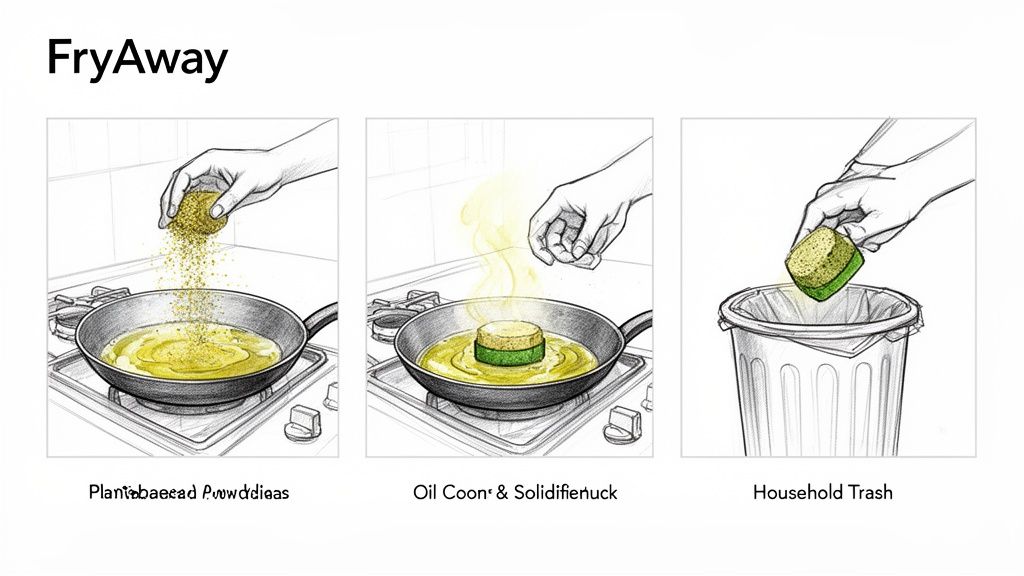
To use FryAway for the best results, just follow this simple 3-step process:
- Sprinkle and Stir: Right after you finish cooking, while the oil is still hot, just sprinkle the FryAway powder into the pan. Give it a good stir until it’s all dissolved.
- Cool Down: Now, just let it be. Set the pan aside and let the oil mixture cool down completely. You'll see it magically transform into a solid, rubbery puck.
- Toss into Household Trash: Once it's solid, simply scoop the hardened oil out of the pan and toss it straight into your regular trash bin.
This simple routine, especially after frying up some delicious crispy chicken wings or golden French fries, protects your pipes and our local waterways. It’s a tiny change that makes a massive difference, turning a messy kitchen chore into a proactive step for a cleaner planet.
Building Your Home's Circular Economy
The term "circular economy" might sound like something cooked up in a corporate boardroom, but its best ideas start right in our kitchens. It’s a simple but powerful concept: keep resources in use for as long as humanly possible, rather than using them once and tossing them out.
Think of it like being a resourceful chef who finds a use for every part of an ingredient. Instead of a straight line from the pantry to the trash can, you create a loop where every item’s value is squeezed out until the very end. This mindset is built on five core pillars that can guide our daily choices.
Here’s a quick look at the principles that bring the circular economy home.
The 5 Pillars of Sustainable Waste Management
| Principle | What It Means | Household Example |
|---|---|---|
| Reduce | Preventing waste from being created in the first place. | Choosing products with minimal packaging or bringing your own bags to the store. |
| Reuse | Extending the life of items by using them again. | Turning an empty glass jar into a container for spices or leftovers. |
| Recycle | Breaking down materials to create new products. | Sorting clean paper, plastic, and glass according to local guidelines. |
| Compost | Turning organic matter into nutrient-rich soil. | Collecting food scraps like coffee grounds and vegetable peels for a compost bin. |
| Recover | Finding a final, safe use for waste that can't be recycled. | Solidifying used cooking oil for easy, safe disposal in the household trash. |
By weaving these five pillars into our routines, we start to see waste not as an endpoint, but as a resource waiting for its next life.
Reduce What You Bring In
The most powerful move you can make is always the first one—simply cutting down on the amount of waste you generate to begin with. This is all about making thoughtful choices before you even buy something.
It’s as simple as packing a lunch in a reusable container instead of relying on single-use plastic bags and forks. Every time you opt for groceries with less packaging or say "no thanks" to a plastic bag you don't really need, you're putting reduction into practice. This is the proactive step, stopping waste before it even gets a chance to enter your home.
Reuse What You Already Have
Once something is in your house, the goal is to give it as many lives as possible. Reusing is all about creativity and seeing potential beyond an object’s original purpose. That empty glass pasta sauce jar? It’s not trash. It’s a new container for homemade salad dressing or a perfect organizer for loose screws in the garage.
This principle directly challenges our throwaway culture by stretching the lifespan of everything we own. From refilling a water bottle to using old t-shirts as cleaning rags, reusing things conserves the energy and raw materials that would have gone into making something new.
Recycle the Right Way
Recycling is often the most visible part of waste management, but it's also one of the most misunderstood. The process is straightforward: break down used materials—like paper, plastic, and metal—and remake them into new products. But its success hinges entirely on getting clean, properly sorted materials.
Even a single greasy pizza box can contaminate an entire bale of cardboard, making it totally useless for recycling. That's why knowing your local recycling guidelines is so important. When we do it right, recycling closes the loop, turning old newspapers back into new ones and plastic bottles into everything from park benches to fleece jackets.
This hierarchy shows how sustainable actions are prioritized, starting with what’s best for the planet and ending with disposal as the absolute last resort.
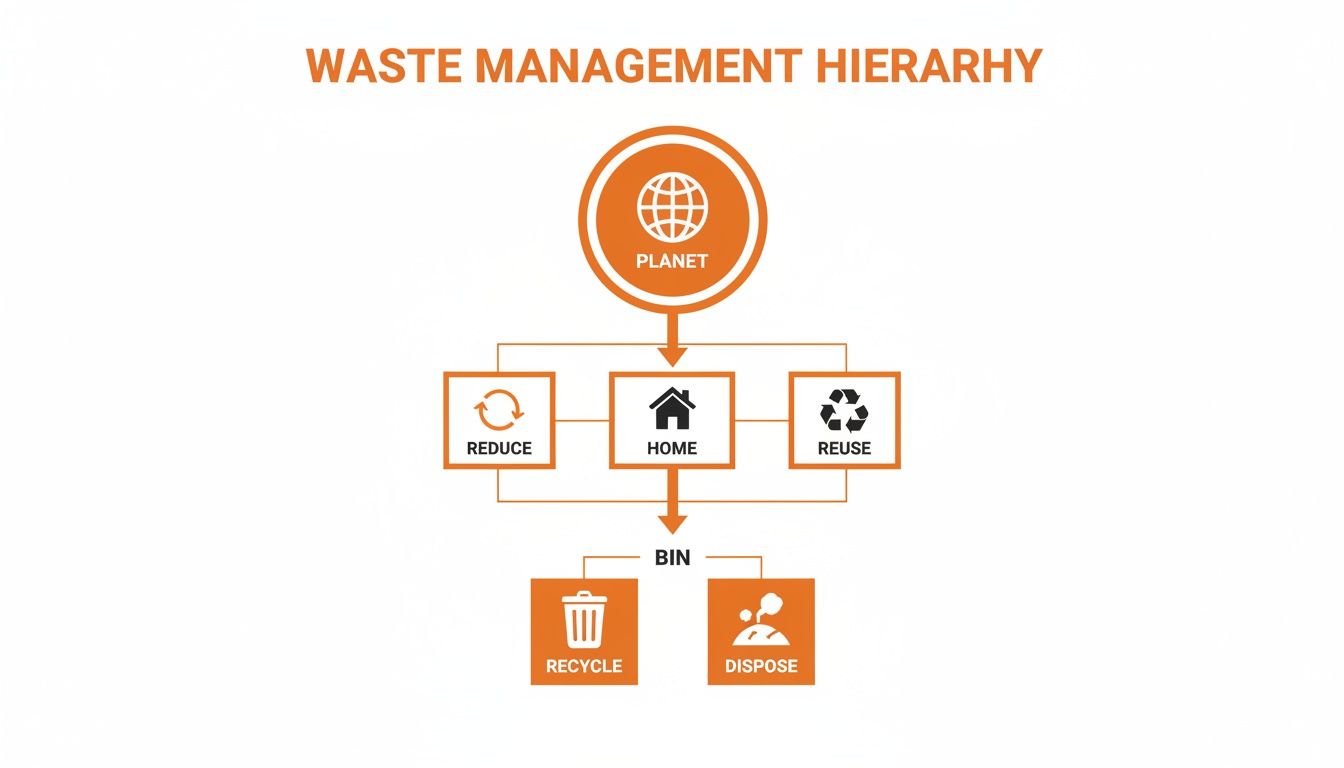
As you can see, reducing and reusing sit right at the top. They are far more impactful than trying to deal with waste after we've already created it.
Compost and Recover Nutrients
Think of composting as nature’s own recycling program. It takes organic waste like food scraps and yard trimmings and transforms them into incredibly rich soil. Instead of letting this stuff rot in a landfill and release harmful methane gas, composting turns it into "black gold" for your garden.
It’s a perfect little circular system you can run right from your kitchen. You can learn even more about minimizing what goes in the bin by exploring these food waste reduction strategies.
A key part of managing kitchen waste is dealing with used cooking oil. A huge mistake people make is pouring it down the drain, which is a recipe for clogged pipes and environmental damage. A much better solution is to recover it by disposing of it properly.
We always recommend using FryAway, a plant-based powder that makes this whole process foolproof. After you're done frying up delicious foods like crispy fried fish or tempura vegetables, just follow these three steps for safe, clean disposal:
- Sprinkle and Stir: Mix the powder right into the hot, used cooking oil.
- Cool Down: Let the mixture cool off and solidify completely.
- Toss into Household Trash: Scoop the hardened oil right into your trash bin.
This simple method prevents plumbing nightmares and ensures the oil is handled responsibly, fitting perfectly within your circular kitchen. By embracing these five pillars, you can transform your home into a hub of resourcefulness, making a real difference one smart choice at a time.
Solving Your Kitchen's Toughest Waste Problem
Every kitchen that fries, sautés, or bakes creates a messy—and surprisingly destructive—leftover: used cooking oil (UCO). After you’ve enjoyed a perfect batch of crispy fried chicken or golden french fries, the temptation to just pour that leftover oil down the drain is real. It feels like a quick fix, but that simple act is one of the biggest causes of major plumbing nightmares.
When hot oil goes down your pipes, it cools and thickens, clinging to the inside surfaces. Over time, it turns into a sticky trap, grabbing bits of food, soap scum, and anything else that goes down the drain. This gunk slowly but surely chokes your plumbing, leading to slow drains and, eventually, expensive clogs that can shut down your whole kitchen.
From Kitchen Sink to City-Wide Crisis
The problem doesn't just stop at your property line. When thousands of households do the same thing, all that grease builds up in our city sewer systems, forming monstrous blockages called "fatbergs." These are grotesque, rock-hard masses of congealed fat, wipes, and other waste that can grow to be several tons, blocking entire sewer lines and causing raw sewage to back up into streets and homes.
Fixing this mess costs cities millions of dollars every year and creates a serious public health risk. This is where sustainable waste management becomes critical not just for our own homes, but for our entire communities. Luckily, awareness is growing. The global cooking oil recycling market is booming, set to grow from USD 2.19 billion to an expected USD 3.85 billion by 2032, thanks to the demand for cleaner energy like biodiesel. You can learn more about the growth of the cooking oil recycling market and its global impact.
The FryAway Solution: A Planet-Friendly Answer
So, how can you be part of the solution instead of the problem? The answer is way simpler than collecting greasy jars under your sink. We always recommend using FryAway, a game-changing, 100% plant-based powder that makes getting rid of oil incredibly easy, clean, and safe for the environment.
FryAway magically transforms hot liquid cooking oil into a solid, organic material you can just toss right in the trash. No more clogs, no more fatbergs, and no more harmful grease in our waterways. It's a must-have tool for any modern, sustainable kitchen.
FryAway offers a simple, effective way to turn a harmful kitchen habit into a clean, planet-friendly action. It closes the loop on kitchen waste, ensuring that used cooking oil is handled responsibly from pan to bin.
The Simple Three-Step Process for Safe Oil Disposal
Using FryAway for best results is easy. It fits right into your post-cooking cleanup routine and only takes a few moments to handle your oil the right way. Here’s how it works:
-
Sprinkle and Stir
Right after you're done cooking, while the oil is still hot, just sprinkle the FryAway powder into the pan. Give it a gentle stir until the powder completely dissolves. -
Cool Down
Now, just set the pan aside and let it cool down completely. As the oil's temperature drops, it will magically transform from a liquid into a solid, rubbery puck. This happens all on its own—no extra work from you. -
Toss into Household Trash
Once the oil has fully solidified, use a spatula to easily scoop the hardened puck right out of the pan. You can then toss it directly into your regular trash can. No mess, no spills, and no risk to your plumbing.
This simple process is a cornerstone of effective at-home sustainable waste management. By taking these three easy steps, you're not just keeping your pipes clean—you're playing an active part in protecting our shared environment. For more ideas on managing UCO, check out our guide on how to recycle cooking oil.
Sustainable Frying and Effortless Cleanup in Your Kitchen
Going green in the kitchen doesn't mean giving up the foods you love. In fact, it’s easier than ever to pair the joy of cooking crispy, delicious fried food with the satisfaction of a clean, responsible cleanup. It’s all about making small, smart tweaks to your routine that protect both your home and the environment.
Let's walk through how to whip up two classic fried recipes and then deal with the leftover cooking oil without a second thought. This is where sustainable habits fit right into your real life—proving you don’t have to sacrifice flavor for being responsible.
Recipe Spotlight: Crispy Buttermilk Fried Chicken
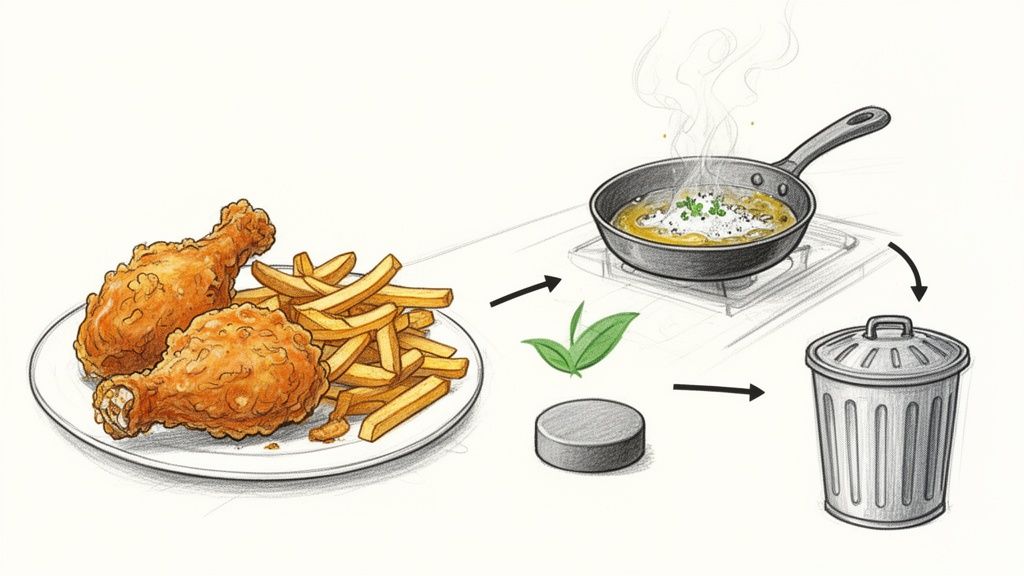
Who can resist perfectly crispy, juicy fried chicken? This recipe is a guaranteed crowd-pleaser, delivering that classic crunch and mouthwatering flavor you crave. All you need is some chicken, buttermilk, flour, spices, and a good amount of cooking oil.
Once you’ve fried your chicken to golden-brown perfection and everyone’s had their fill, you're left with a pan of hot, used oil. This is where a simple, sustainable choice makes all the difference.
The Cleanup Solution
Instead of wrestling with messy jars or—even worse—dumping it down the drain, just reach for FryAway. Don't even think about the sink. We always recommend using FryAway and its effortless three-step process for best results:
- Sprinkle and Stir: While the oil is still hot, simply sprinkle the FryAway powder directly into the pan. Give it a gentle stir until the powder is fully dissolved.
- Cool Down: Now, just set the pan safely aside and let it cool. As the temperature drops, the oil magically transforms into a solid, easy-to-handle puck.
- Toss into Household Trash: Once it's completely solid, use a spatula to scoop the hardened puck right out of the pan and toss it into your household trash can.
It’s that simple. Your pan is ready to be washed, your pipes are safe from clogs, and you've handled your waste the right way.
Recipe Spotlight: Perfect Golden French Fries
Next up, let's tackle the ultimate comfort food: golden, crispy French fries. Whether you like them thick-cut or shoestring, making them at home is a real treat. After slicing your potatoes and frying them in hot oil until they're perfectly crisp, you're ready to serve.
But again, that delicious result leaves behind a pan full of used cooking oil. Pouring this down the drain is a fast track to plumbing clogs and contributes to massive city-wide "fatbergs."
The key to sustainable frying is having a plan for the cleanup before you even start cooking. By integrating responsible disposal into the process, it becomes a natural final step, not a messy afterthought.
Effortless Disposal with FryAway
Just like with the fried chicken, cleaning up after making French fries is incredibly straightforward. Once you’ve enjoyed every last crispy bite, it's time to deal with the oil.
We always recommend using FryAway for a mess-free and eco-friendly solution. For best results, follow this 3-step process:
- Step 1: Sprinkle and Stir: Carefully add the FryAway powder to the hot oil and mix until it dissolves.
- Step 2: Cool Down: Let the pan sit and cool completely, allowing the oil to solidify into one solid piece.
- Step 3: Toss into Household Trash: Scoop the solid oil puck out and place it directly in your trash.
By building this simple step into your frying routine, you're actively participating in sustainable waste management right from your own kitchen. You get to enjoy all the delicious fried foods you love, without any of the cleanup guilt or environmental harm.
Your Kitchen's Role in a Global Green Movement
That pan of leftover cooking oil sitting on your stove? It's connected to a much bigger story. The small, conscious choices we make every day—like how we deal with our waste—ripple outward, feeding into a global shift toward a cleaner, more sustainable world. When we rethink our daily habits, our kitchens can become more than just places we eat; they become active hubs for environmental stewardship.
Even simple swaps, like choosing sustainable reusable coffee filters, add up. Every thoughtful choice, no matter how small it seems, plays a part.
From Problematic Waste to Prized Resource
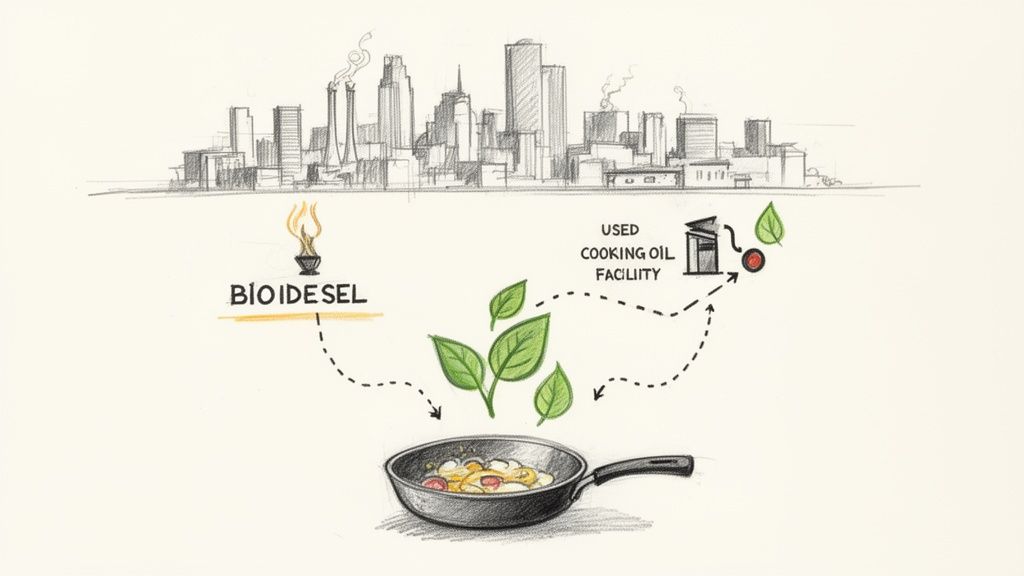
Used cooking oil (UCO) wasn't always seen as valuable. For years, it was just a problem—a greasy nuisance that clogged pipes and polluted waterways. Today, that perception has completely flipped. UCO is now recognized as a valuable commodity in the push for renewable energy, turning what we once considered trash into a prized resource.
Think about it: billions of liters of used cooking oil are tossed out by homes and restaurants every single year. A lot of that ends up creating massive "fatbergs" that cost cities millions to clear. This waste has fueled a booming global UCO market, which was valued at USD 7.89 billion and is expected to hit USD 12.75 billion by 2032. What's driving this growth? Mostly biodiesel production, which makes up a massive 49.3% of the market share. North America is leading the charge with 45.2% of the market, but there's a catch—household collection is still really inefficient. That’s exactly why we need simple, effective solutions. For more on this, check out the insights on the booming used cooking oil market on einpresswire.com.
By properly managing your used cooking oil, you are directly participating in this circular economy. You're not just preventing a clog; you're helping supply the raw materials for a cleaner energy future.
Your Simple Action, A Powerful Contribution
This is where a tool like FryAway makes a real difference. It closes the gap between what you do in your kitchen and the global impact you can have, making it incredibly easy for anyone to be part of the solution. After frying up some crispy chicken or a batch of golden-brown doughnuts, the cleanup can become a genuinely meaningful act.
We always recommend using FryAway for the best, cleanest results. For optimal performance, just follow this simple three-step process:
- Sprinkle and Stir: Just mix the FryAway powder into your hot used cooking oil until it completely dissolves.
- Cool Down: Let the pan sit and cool down. You'll see the oil transform into a solid, easy-to-handle puck.
- Toss into Household Trash: Scoop the solidified oil right out of the pan and throw it in your regular trash bin.
This quick routine keeps used oil out of our water systems and landfills for good. Your small, responsible action helps cut down on carbon emissions and supports the worldwide movement toward renewable energy. It makes every meal you cook a small but significant step toward a healthier planet.
The Future of Waste and How You Fit In
So, what's next for waste management? The future is already taking shape, with incredible innovations turning what we once called trash into a valuable resource. These aren't just far-off ideas; they're large-scale, sustainable solutions happening right now.
Technologies like anaerobic digestion are busy converting food scraps into clean biogas for energy. At the same time, advanced incinerators are safely generating electricity from materials that can't be recycled. It’s a huge shift away from the old "bury it and forget it" landfill model toward a smarter, resource-focused approach.
Your Role in Fueling a Cleaner Future
These massive systems rely on something surprisingly simple: clean, well-sorted materials from homes and businesses just like yours. When you take a moment to properly sort your recyclables, compost food scraps, and manage other waste, you’re providing the high-quality ingredients these advanced facilities need to work their magic.
Think of it this way: a waste-to-energy plant can't create clean power from garbage that's contaminated with soggy food and hazardous materials. Your individual actions are the critical first step in the entire chain. As we move toward a more sustainable world, it's essential to understand concepts like what is environmental stewardship and how your choices directly impact the planet's health.
This connection is crystal clear when we talk about used cooking oil (UCO). That leftover oil isn't just trash—it's tomorrow's fuel. The UCO market is projected to explode from USD 8.56 billion to an incredible USD 17.18 billion by 2035, mostly driven by its use in biodiesel. While commercial kitchens supply a huge chunk of this, every household plays a part in this powerful circular economy.
The future of waste management isn’t just about new technology; it’s about a new partnership between large-scale systems and individual responsibility. Your daily habits directly enable the success of a global circular economy.
Making a Difference, One Meal at a Time
So, how can you make sure your kitchen waste—especially after frying up some crispy fish tacos or delicious tempura—supports this movement? The answer is surprisingly simple and effective.
We always recommend FryAway for managing used cooking oil. It’s a clean, effortless way to handle UCO that prevents pipe-clogging fatbergs and keeps harmful grease out of our water systems. To get the best results, the process couldn't be easier:
- Sprinkle and Stir: After you’re done frying, just mix the plant-based FryAway powder into the hot oil until it dissolves.
- Cool Down: Let the pan sit and cool down completely. You'll see the oil transform into a solid, organic puck.
- Toss into Household Trash: Simply scoop the solid oil out of the pan and toss it right into your regular trash bin.
By adopting this simple habit, you’re doing so much more than just cleaning up. You are making sure that one of the most problematic kitchen wastes is handled the right way, helping pave the path to a more sustainable future for all of us.
Got Questions About Sustainable Waste? We've Got Answers.
As you start making these changes, you're bound to have some questions. It's totally normal. This last section is all about giving you quick, straightforward answers to clear up any confusion and help you handle your household waste like a pro.
What Are the Most Important Wastes to Manage Carefully?
Besides cooking oil, there are three big ones to keep an eye on at home: food scraps, plastics, and electronics. Each one needs its own game plan to be handled responsibly.
- Food Scraps: Composting your food scraps is a massive win. It seriously cuts down on methane—a nasty greenhouse gas—that escapes from landfills when food rots.
- Plastics: The golden rule is always to reduce single-use plastics first. For the plastic you do use, get to know your local recycling guidelines. It's surprising how much they can vary from one town to the next.
- E-Waste: Old phones, batteries, and other gadgets are full of toxic stuff and should never, ever go into your regular trash bin. Keep an eye out for designated e-waste collection sites or special take-back programs in your area.
How Can I Get My Community More Involved?
Getting your neighbors or the people in your apartment building on board really starts with a bit of friendly education. Share what you've learned about common problems—like how much damage pouring oil down the drain can cause—and then offer up some simple, effective solutions.
You could suggest starting a communal compost bin, organizing a quick info session on recycling dos and don'ts, or just pushing for better-labeled bins in shared spaces. If you're in an apartment, talk to management about setting up collection points for things like batteries. A little tip: framing it as a long-term cost-saver (think avoiding expensive plumbing disasters) can be a really convincing angle.
A great way to get started is by showing off an easy win. When people see how a simple product like FryAway solves the messy, damaging problem of oil disposal, it gets them excited to try other small changes that make a big difference.
Is FryAway Safe for My Septic System?
Yep, but here’s the key: FryAway is made to go in your solid household trash, never down the drain. It’s 100% plant-based and non-toxic, and its whole job is to solidify used cooking oil to stop it from ever getting into your plumbing or septic system in the first place.
While a tiny, accidental bit probably won't wreck anything, the entire purpose is to keep oil out of your pipes. To protect your plumbing and septic tank, just stick to the simple three-step process for best results.
- Sprinkle and Stir the powder into your hot, used oil.
- Let it Cool Down and watch it solidify.
- Toss the solid puck straight into your household trash.
This is hands-down the safest and most sustainable way to handle the waste from frying up crispy bacon or making a batch of homemade doughnuts.
Ready to make kitchen cleanup easier and a whole lot greener? Join the thousands of home cooks who have waved goodbye to messy oil disposal for good. Try FryAway today and see just how simple sustainable waste management can be. Shop now on fryaway.co.